When people picture Busan pork soup, they usually imagine a thick, milky white broth.
This place does the opposite.
The broth at Halmae Gukbap (할매국밥) in Beomil-dong is almost clear, and the boiled pork comes in big, rough-cut chunks.

If you arrive expecting something polished, you might pause for a second.
But if you want a bowl that’s all about the basics done right, it tends to stick with you.

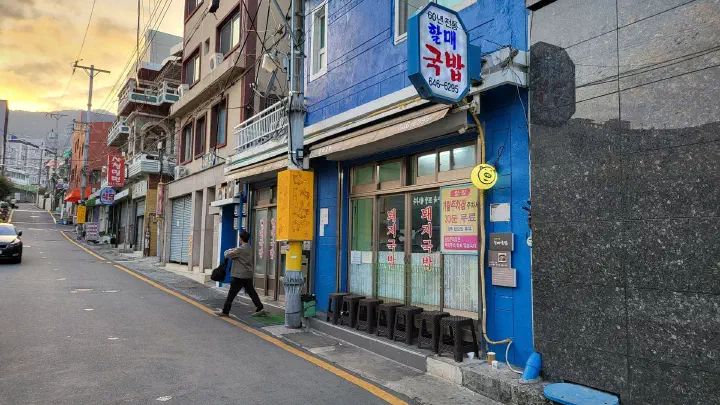
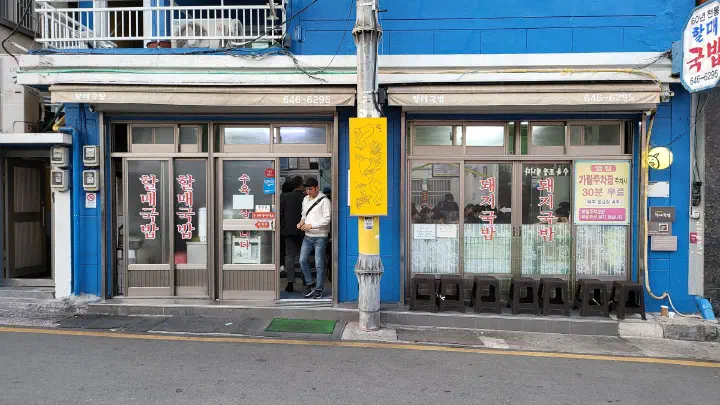
Storefront of Halmae Gukbap in Beomil-dong, Busan

The basics

  • Address: 4 Jungang-daero 533beon-gil, Dong-gu, Busan
  • Phone: 051-646-6295
  • Hours: Mon-Sat 10:00-19:00 (last order 18:30, no break time)
  • Closed: Sundays
  • Parking: 30 minutes free at Garam parking lot nearby
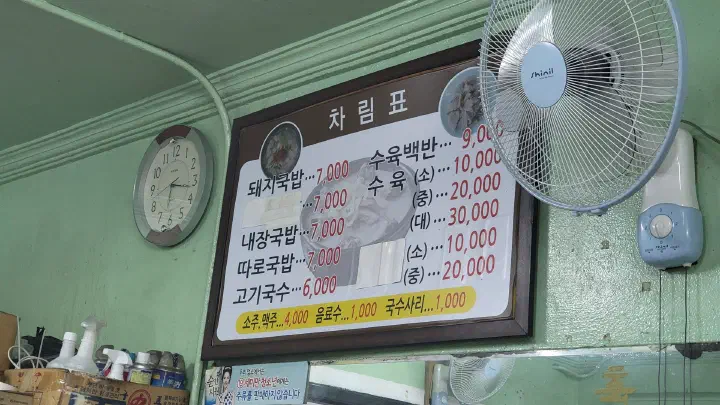
  • Menu: dwaeji/naejang/ttaro gukbap 8,000 won each / suyuk baekban (수육백반) 10,000 won / gogi guksu (고기국수) 7,000 won

📍 View Halmae Gukbap (60년전통할매국밥) on Google Maps →

The sign says “60 years,” but the place is closer to 70 years old by now.
Locals have long called it “Gyotongbu Halmae Gukbap (교통부 할매국밥),” after an old transit office that used to mark the neighborhood.

It has appeared on Korean food shows like Wednesday Foodie Tales (수요미식회) and a couple of others, and more recently in a YouTube video by the actor Lee Si-eon.
After the TV exposure the lines got long for a while, though they’ve calmed down since.

Getting there and the wait

It’s about a 440 m walk from Exit 7 of Beomil Station (범일역) on Line 1.
It’s not near Haeundae or Gwangalli; coming from the Busan Station side is the easiest.

A small note for getting around: Google Maps walking and transit directions are often unreliable in Korea, so use Naver Map or KakaoMap instead.
A short walk away you’ll pass a filming spot from the Korean movie Friend (친구), an old pedestrian overpass and stairway that still feels very old-Busan.

The wait depends a lot on timing.
At lunch peak a line forms in the alley, and there’s sometimes a wait even around 4 p.m. on weekdays.
The good news is that tables turn over quickly.

To skip the line, come before 11 a.m. or around 3 p.m.
There’s no waitlist sign-up, so when you queue, make sure the owner sees your face.
If you just sit down and wait quietly, you can get bumped behind people who came after you.

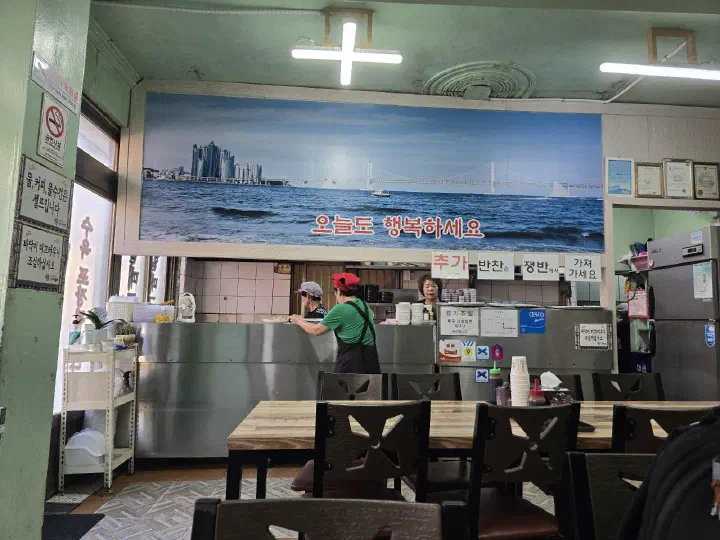
Interior seating at Halmae Gukbap

Seating is split between standard tables and a raised floor section with low tables.
It’s a small room, maybe ten tables, and the crowd ranges from solo older regulars to couples and families.
At peak hours, sharing a table with strangers is normal here.

What to order - suyuk baekban is the signature

Menu and prices at Halmae Gukbap

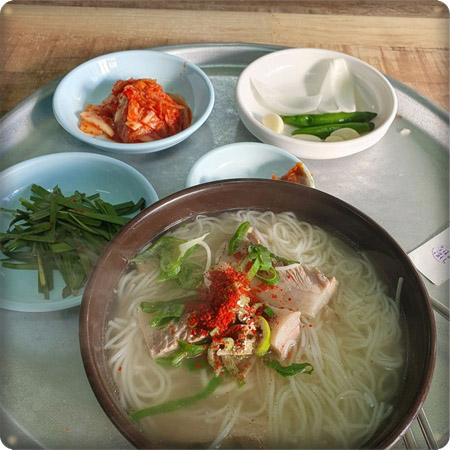
The menu is short: pork soup, offal soup, “separated” soup (rice on the side), pork noodle soup, suyuk baekban, and plates of boiled pork.
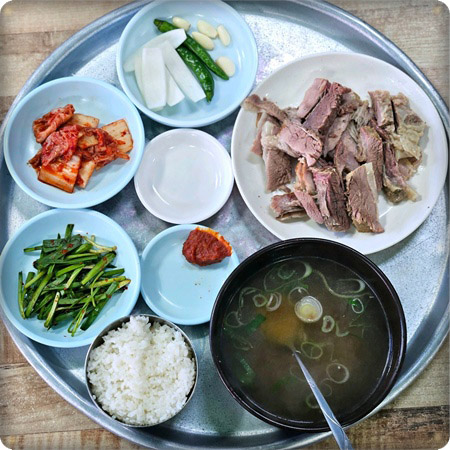
The most ordered item is the suyuk baekban (수육백반).
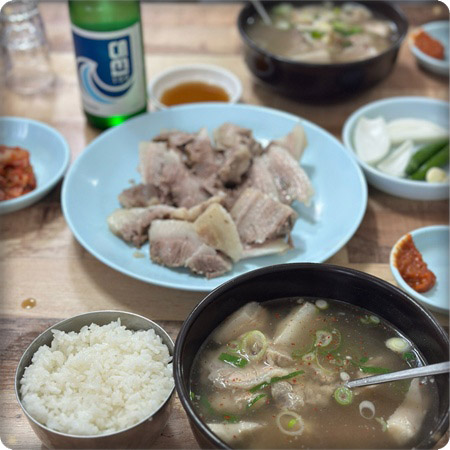
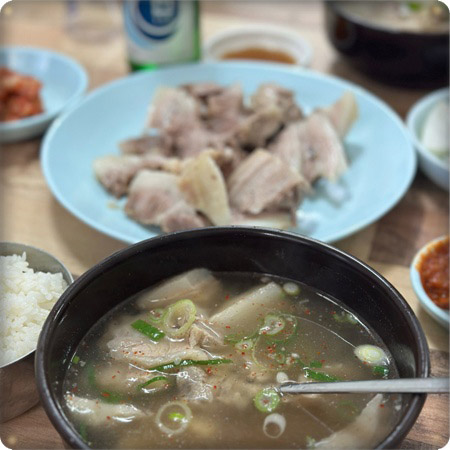
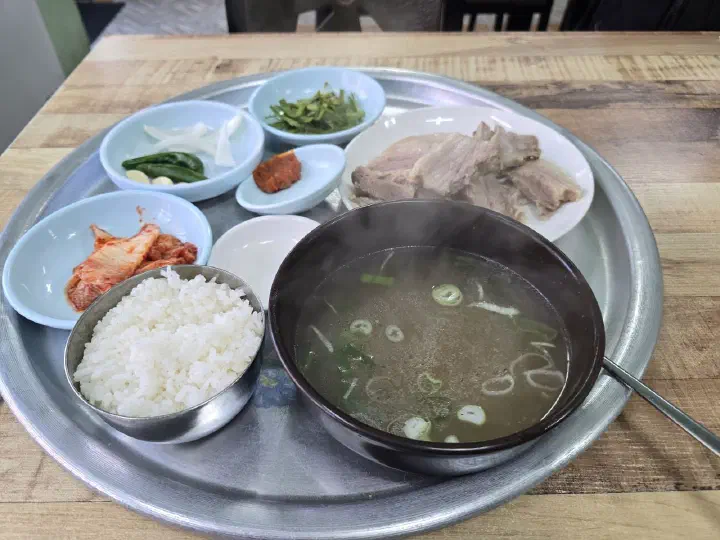
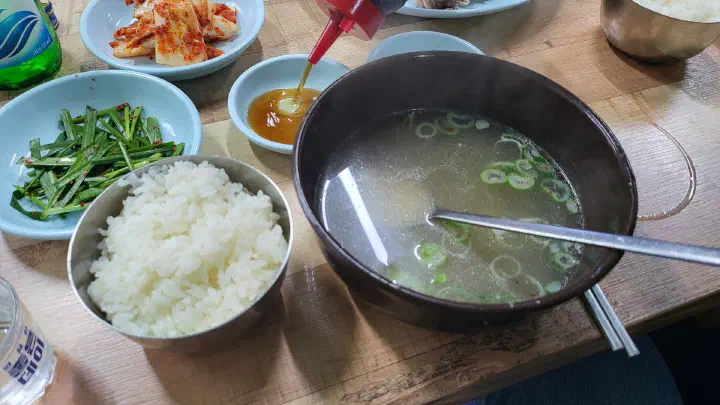
For 10,000 won you get a plate of thick boiled pork, a bowl of clear broth, and a separate bowl of rice.

Suyuk baekban set on the table

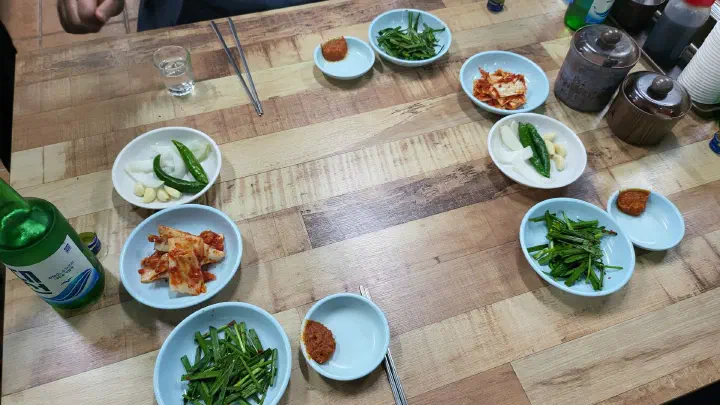
The side dishes are simple: kimchi, seasoned chives, garlic, onion, peppers, and ssamjang.
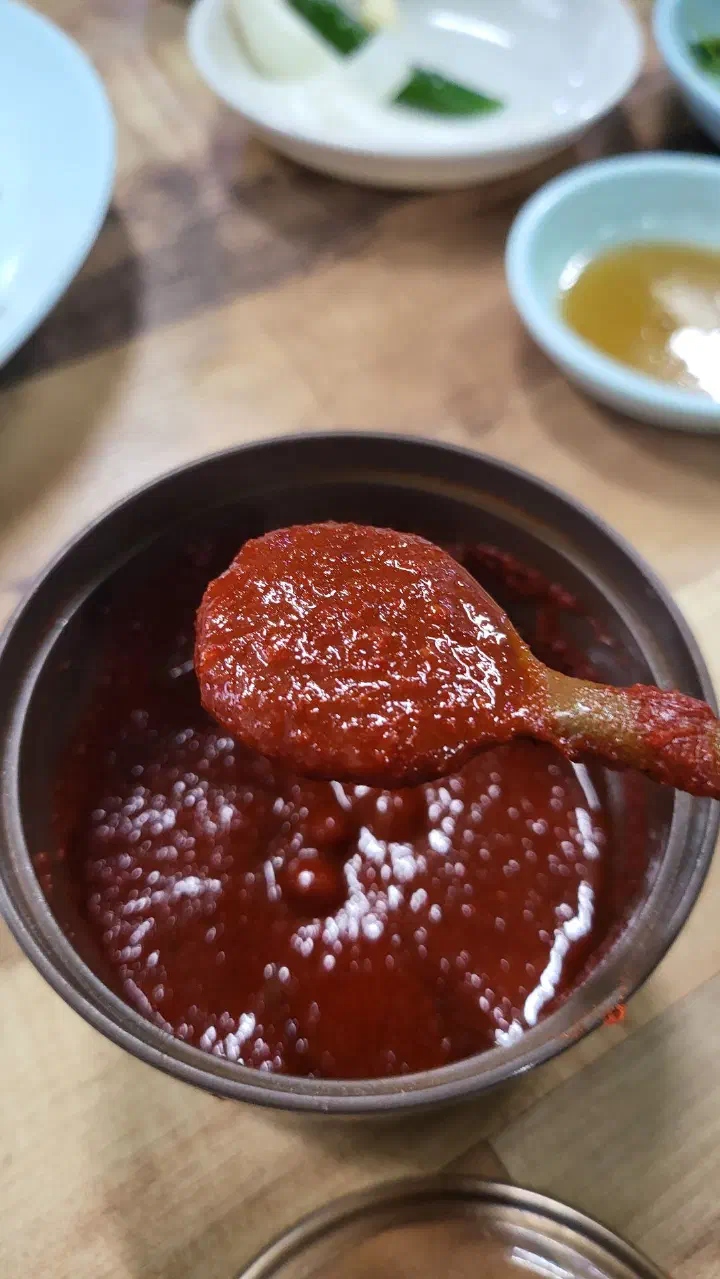
Salted shrimp (saeujeot), chili paste, and a soy-based sauce sit on each table, so you season to taste.
If a side runs low, you can refill it yourself near the counter.

Basic side dishes, kimchi and seasoned chives

Suyuk - rough-cut but that’s the charm

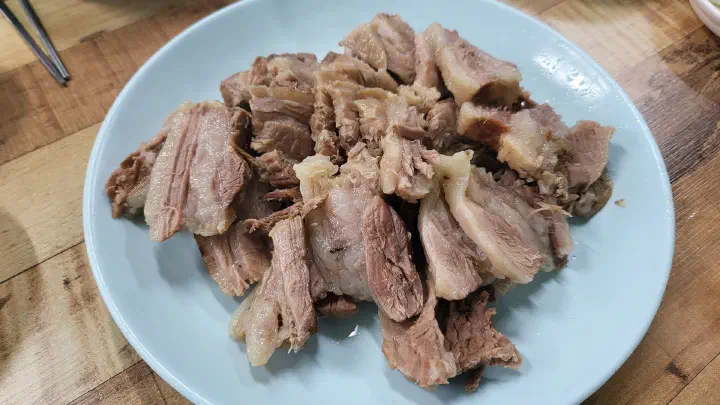
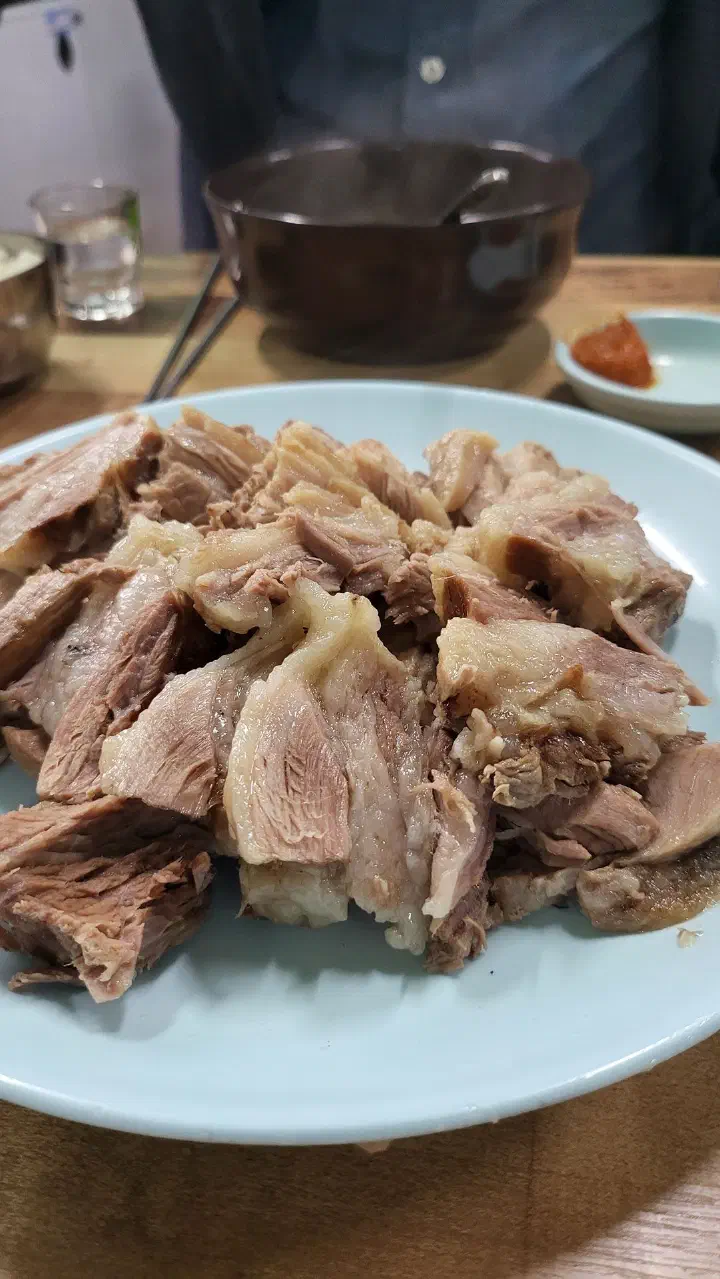
Thick-cut boiled pork at Halmae Gukbap

The boiled pork isn’t neatly sliced.
It comes in big, rough chunks, as if cut quickly with scissors.
It looks more like home-style pork from a village feast than something plated for a photo.

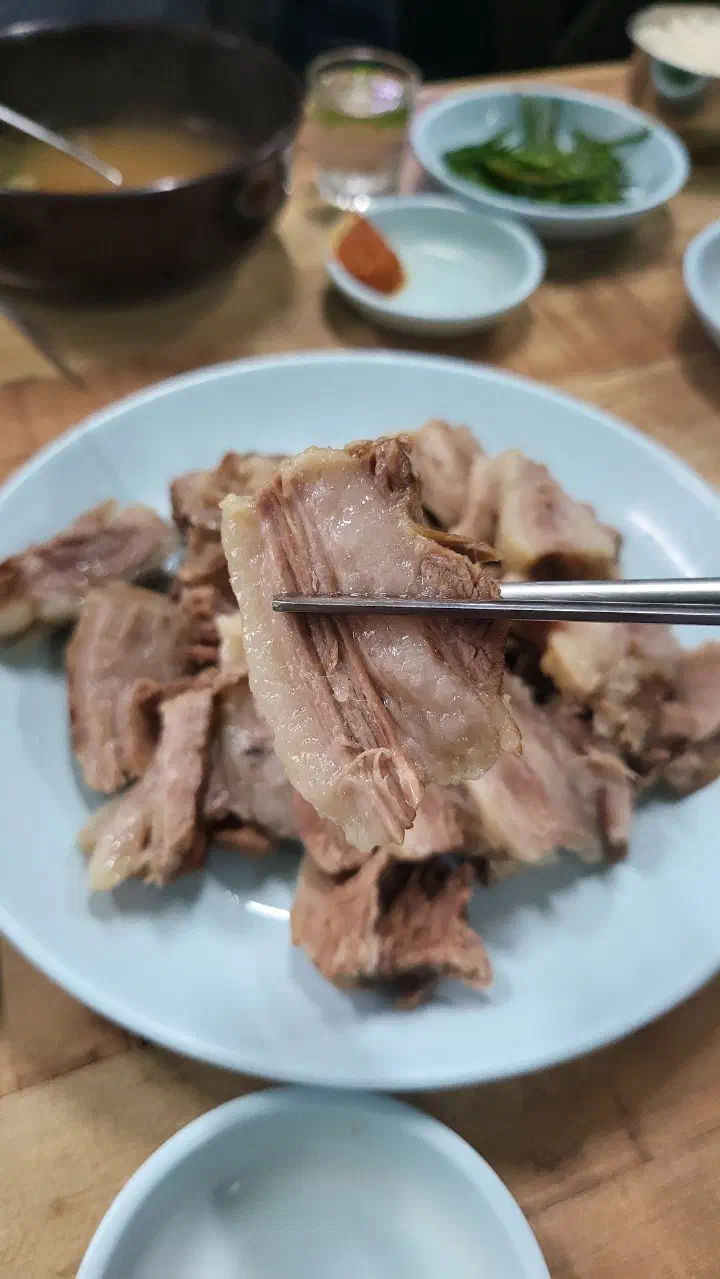
Close-up of tender boiled pork

There’s a good mix of lean meat and fat, so it doesn’t feel dry, and there’s very little of the gamey pork smell.
Dip it lightly in the soy sauce, add a touch of salted shrimp, and it works well.

One honest downside: because tables turn fast, the pork seems to be sliced ahead of time, so the surface can feel a little dry on some days.

Plate of thick-cut suyuk with fat and lean meat

Dwaeji gukbap - clear and gentle

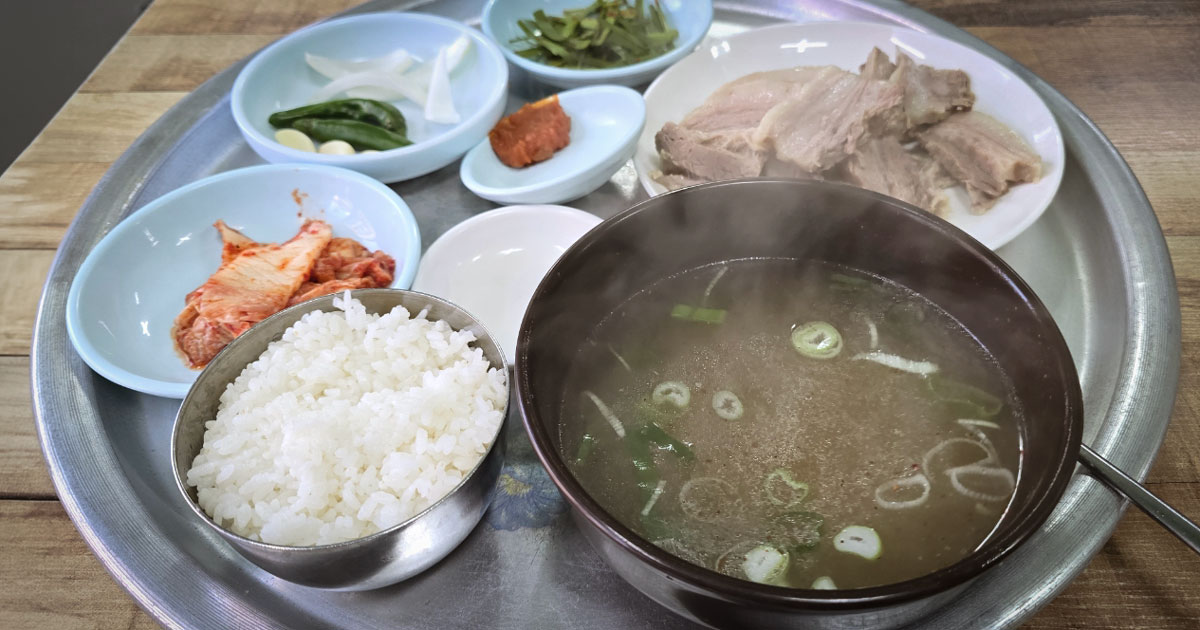
Clear-broth dwaeji gukbap at Halmae Gukbap

The broth is the other half of what makes this place.
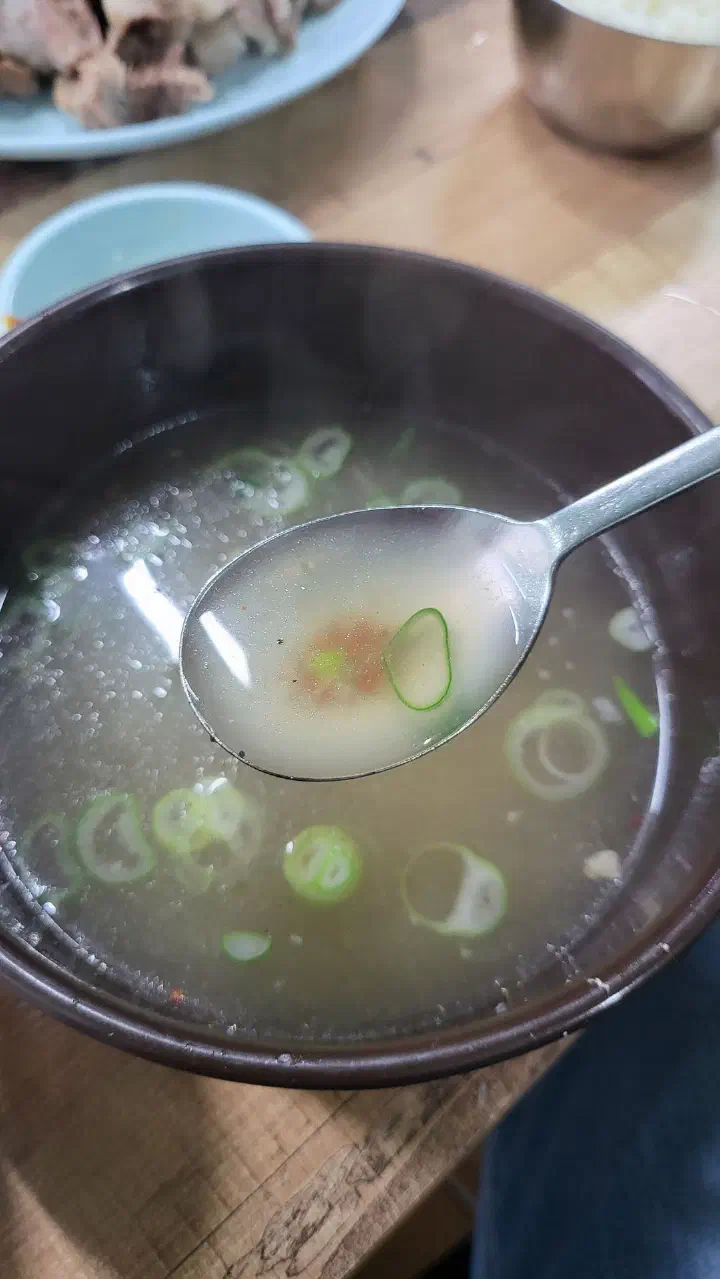
The first spoonful surprises you with how clear it is, not the cloudy, fatty broth many expect.

Rice already mixed into the gukbap

People often describe it as “warm naengmyeon broth.”
It’s mild, but you keep going back for another spoonful.
If you’re used to bold, punchy soups, it may seem faint at first.

The trick is the chili powder settled at the bottom of the bowl.
Stir it up and the soup turns sharp and warming.
A faint pepper note backs it up without overpowering anything.

Clear gukbap broth with chili powder

Taste it plain first, then season gently with salted shrimp.
Go easy on the chili paste, since too much hides the clean flavor.
If your broth runs low, carry the bowl to the kitchen and they’ll top it up.

Close-up of the clear gukbap broth

A note on spice: the chili here is mild by Korean standards, so most visitors will be fine.
If you load up the chili paste, though, it can climb quickly, so add it bit by bit.

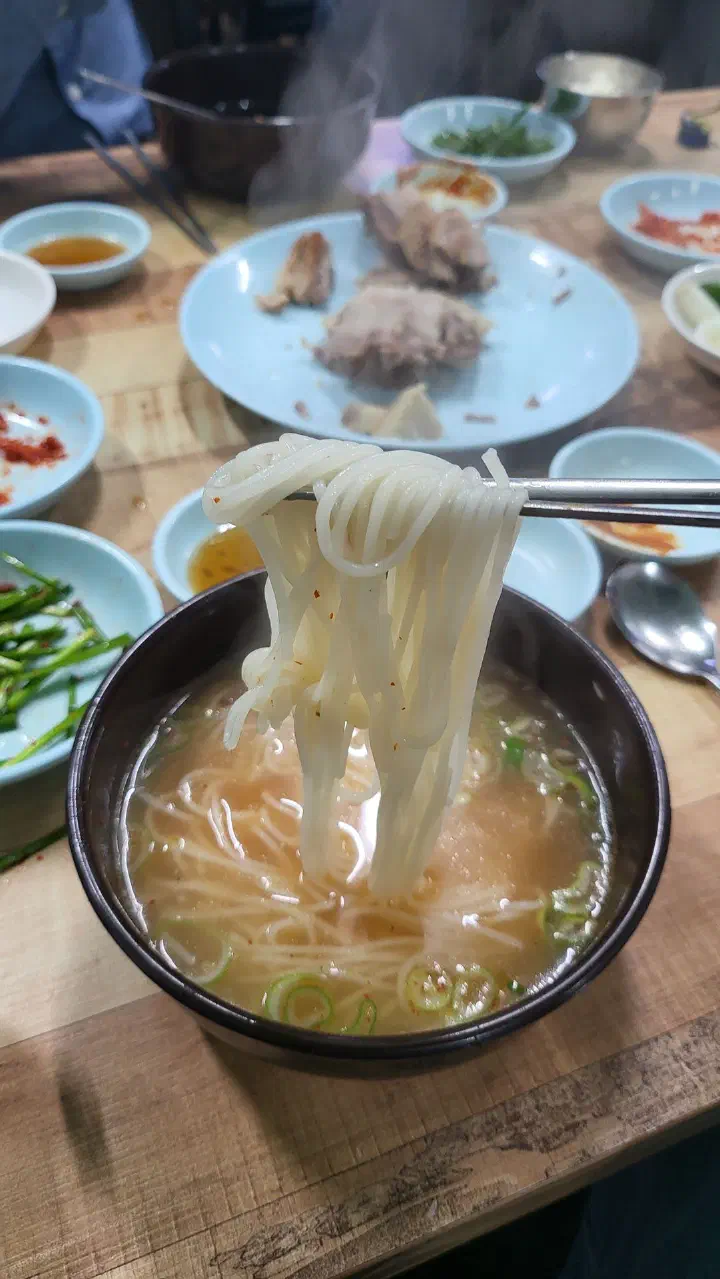
Naejang gukbap and pairings

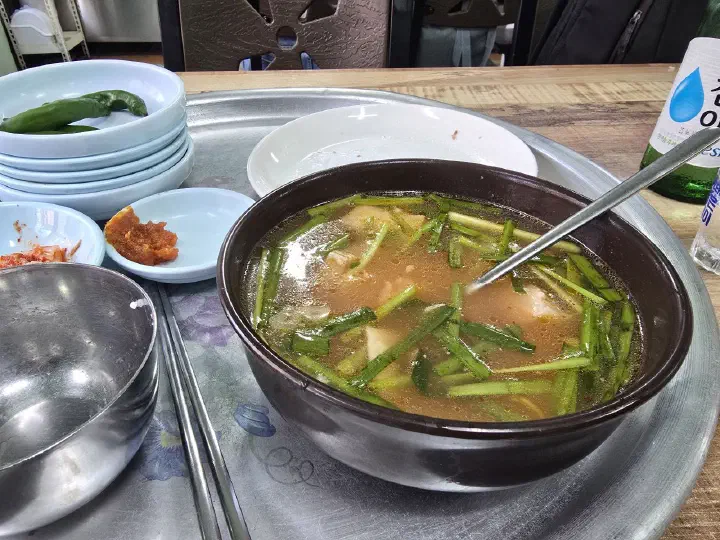
The offal soup uses the same clear base.
You can ask them to mix in some regular pork too.

Pork soup with mixed meat and offal

Many people pair the boiled pork with a drink.
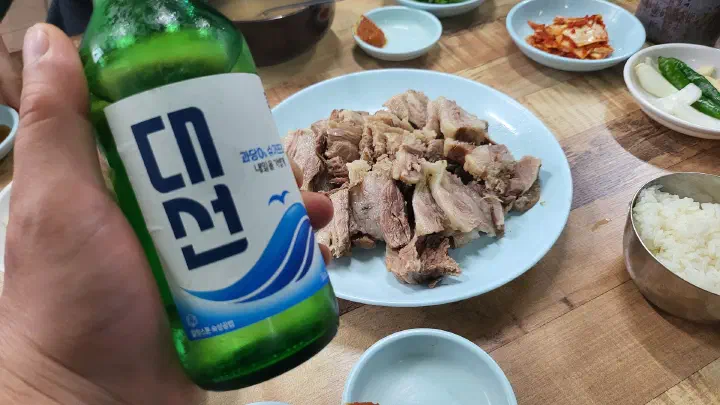
A bottle of Busan soju, Daeseon or Joeunde, suits the mood.
Pour a little of the soy sauce over the seasoned chives and eat them with the pork for a fresher bite.

Daeseon soju paired with boiled pork

Dadaegi, the chili seasoning

Portions and value

The amount of pork in a single suyuk baekban is generous.
For two people, one gukbap and one suyuk baekban is usually plenty.

Bite-size pieces of boiled pork

The prices are the real surprise.
Soups are 8,000 won and the suyuk baekban is 10,000 won.
With today’s prices, finding this much food under 10,000 won is getting rare even in Busan.

Old reviews show the change over time: the soup sat at around 6,000 won for a while, and it’s 8,000 won now.
Even so, the generosity hasn’t really changed.

Half-plate portion of suyuk

Atmosphere and the honest downsides

This is not a freshly renovated space.
It carries the worn-in feel of an old shop, tidier than before but far from glossy.

Old storefront in a Beomil-dong alley

A few honest caveats.
First, cleanliness draws steady complaints, with some reviewers wary of the condiment containers, utensils, and tables.
Second, during busy hours service can feel brusque, though others find it friendly, so it varies.
Third, the broth is clear and mild, so if you love a rich, heavy soup, it may not be your thing.

Kimchi and other side dishes

There isn’t much else to wander around nearby, so whether you make a special trip or just fit it into a day in Busan is up to you.

A few practical notes for visitors

Ordering is easy even without Korean: the menu is short, and you can point to what you want.
Staff may not speak much English, but no one expects a conversation here.

Like almost everywhere in Korea, card payment is fine, so any internationally accepted card works without worry.
There’s also no tipping culture in Korea; you don’t need to tip, and trying to may just confuse the staff.
You pay at the counter on your way out, not at the table.

Final thoughts

This isn’t a loud, attention-grabbing bowl.
It’s a place with a clear identity: clean broth and rough, honest boiled pork.
It’s a good stop when you want to set your own baseline for Busan pork soup.

If you love boiled pork, start with the suyuk baekban.
If you’re curious about the broth itself, start with the plain dwaeji gukbap.

📍 View Halmae Gukbap (60년전통할매국밥) on Google Maps →