If you walk down from Beomeosa Temple and start thinking about duck for lunch, this is one of the names that keeps coming up.

No flashy sign, no long line out front. Just the kind of place that makes you think “I’d come back here” once you’ve eaten.

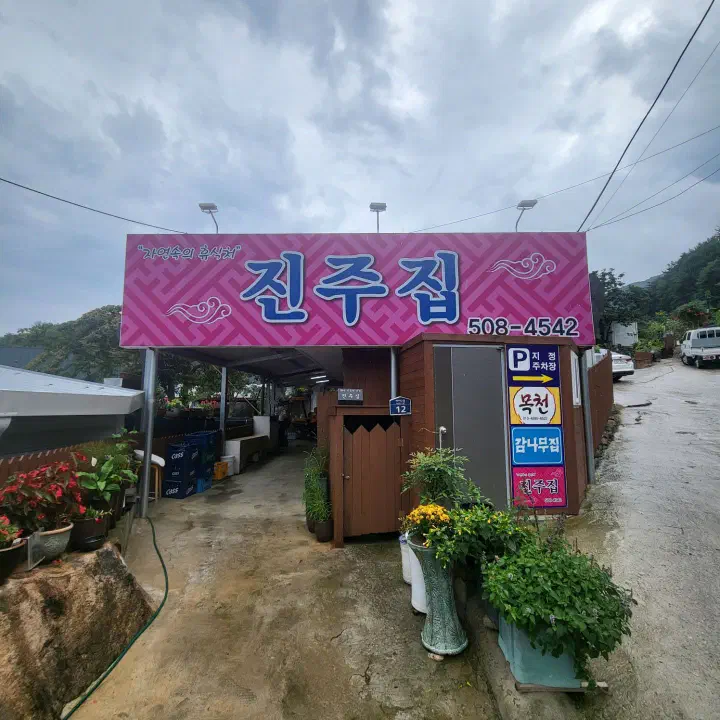
Jinjujip (진주집) sits tucked inside Hamamaeul village. It has held the same spot for more than fifty years, and it’s now run by the third generation of the same family.

Here’s a walk through the menu, dish by dish, plus the practical stuff like parking and booking.

Jinjujip exterior in Hamamaeul

The basics

  • Address: 12 Hama 2-gil, Geumjeong-gu, Busan
  • Phone: 051-508-4542
  • Hours: Tue-Sun 11:00-20:00 (last order 19:30)
  • Closed: Mondays
  • Features: private rooms, group seating, parking, takeout, reservations, pets allowed (in rooms)

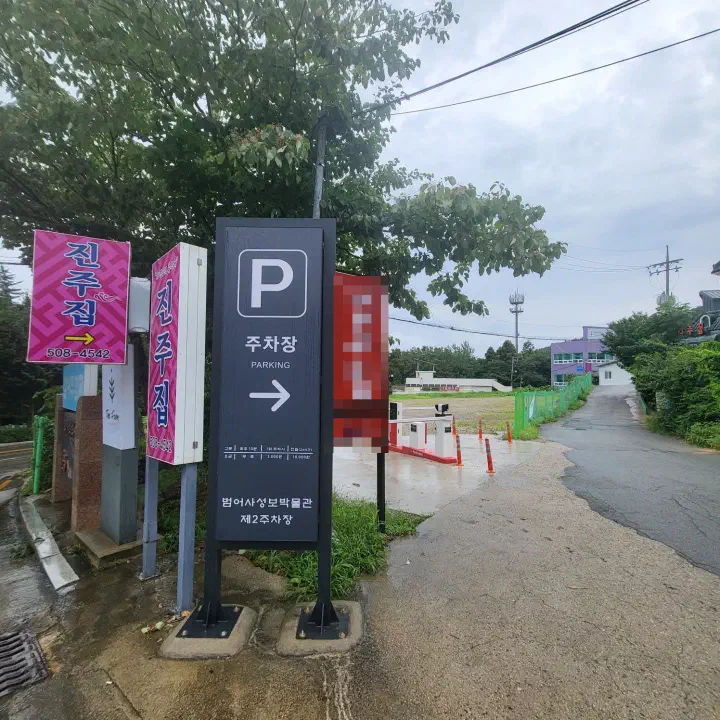
You reach it by heading into the alley behind the Hamamaeul Seongbo Museum No. 2 parking area near Beomeosa. The road name changed over the years, but the restaurant has stayed put. It used to open at 11:30; now the doors open at 11:00.

📍 View Jinjujip (진주집) on Google Maps →

Hamamaeul village sign near Jinjujip

Who it suits

Jinjujip works best when there are two or more of you. The marinated duck bulgogi (양념오리불고기) starts at two portions, so solo diners are a bit out of luck here.

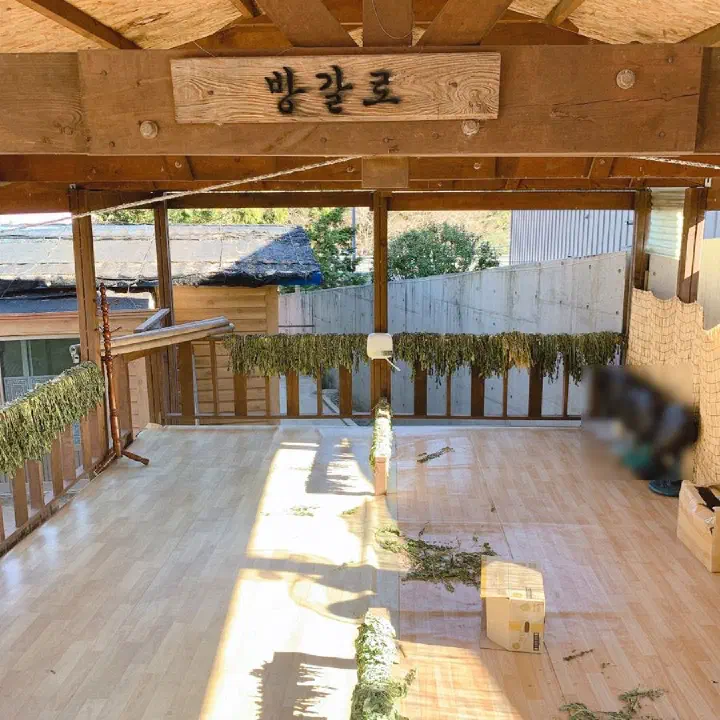
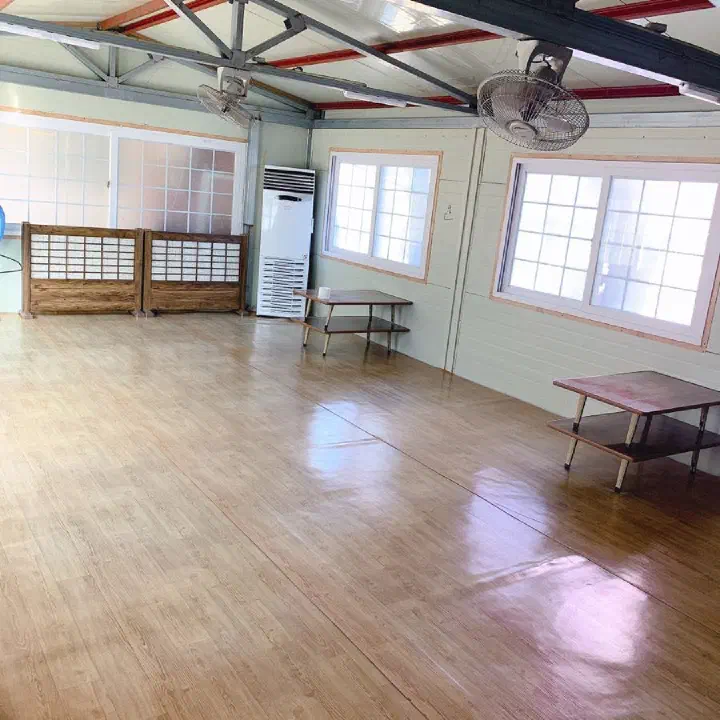
Every table is its own private room, which makes it a natural fit for family meals or dining with older relatives. There’s also a separate hall that holds 60 to 70 people, so group bookings are common.

One thing worth knowing upfront: the seating is all floor-style (좌식). The heated floor is cozy in winter, but if your knees aren’t fond of sitting cross-legged, plan accordingly.

Private room interior

Heated floor seating room

The signature: marinated duck bulgogi

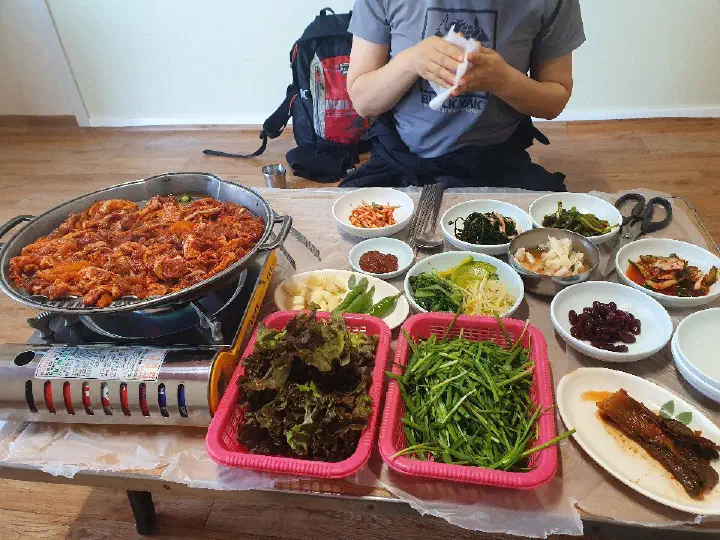
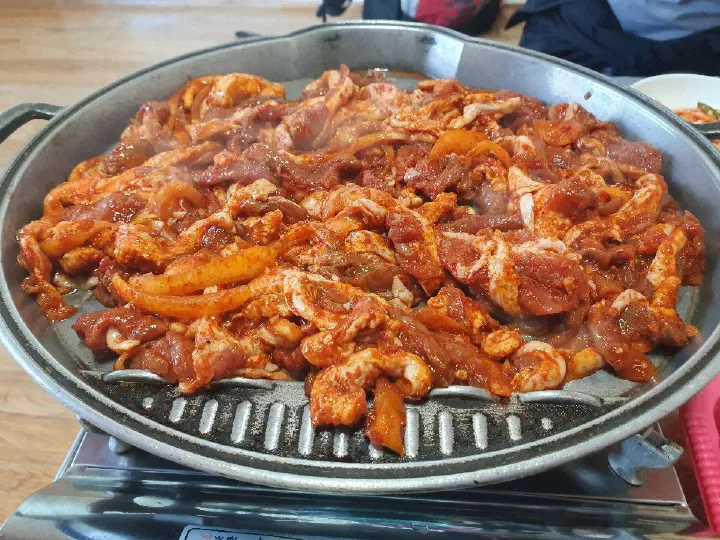
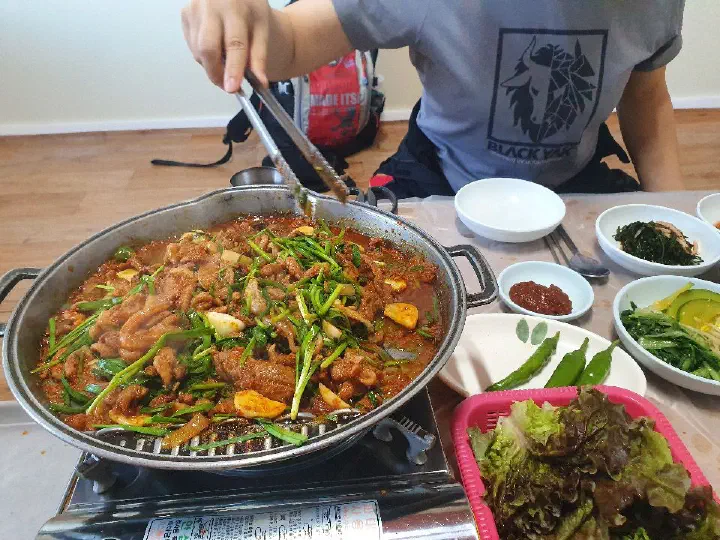
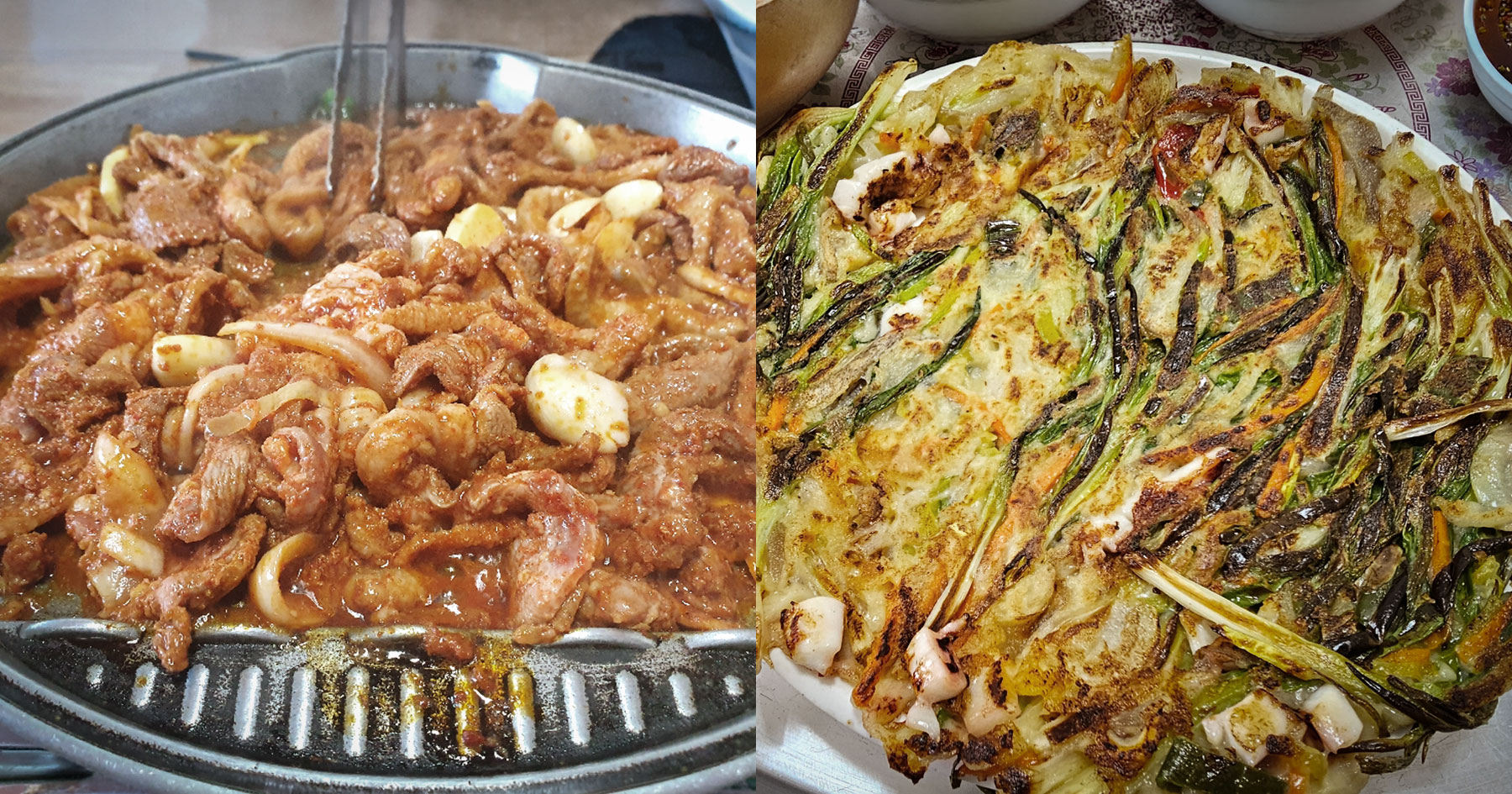
The dish most people order is the yangnyeom duck bulgogi (양념오리불고기) - fresh duck marinated in a sweet-and-spicy sauce, grilled on a wide pan at your table.

Duck can easily turn gamey or chewy when it’s handled badly, but here there’s a faint medicinal-herb note running through it and almost no off-smell. It doesn’t render too much grease either, so it stays light even toward the end.

The marinade isn’t aggressive. People around here describe the meal as feeling almost like a tonic, and after a plate of it that makes sense.

A full table of duck bulgogi

Sweet and spicy marinated duck

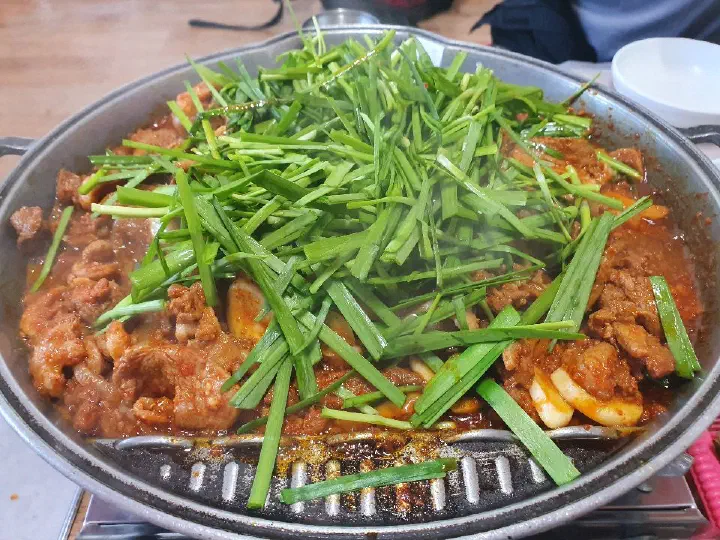
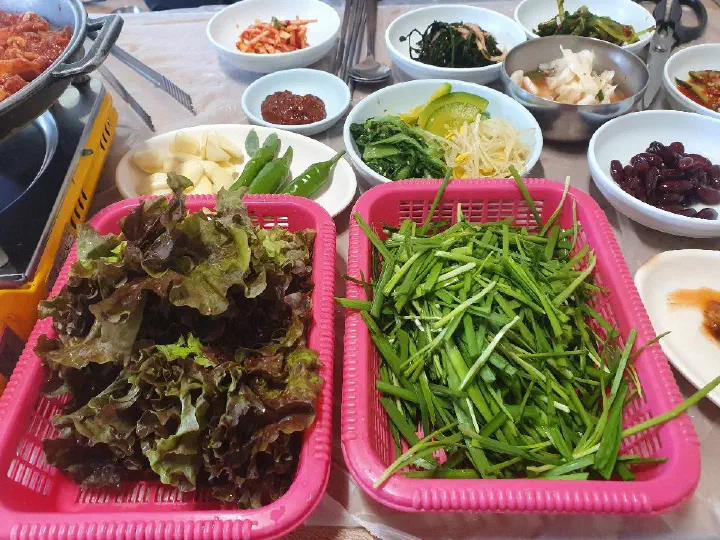
Once the meat is partly cooked, the house move is to pile on a generous handful of garlic chives (부추, called jeonguji locally). As they wilt down, the duck’s flavor steps up a notch.

Duck bulgogi topped with chives

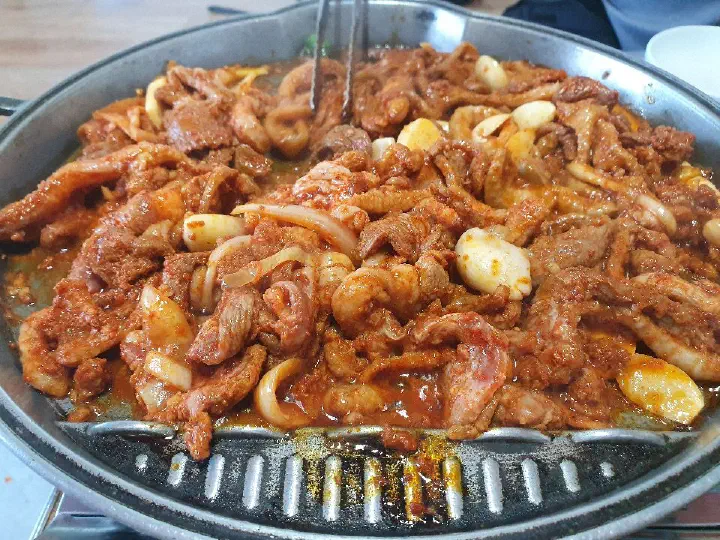
The grilling takes some attention. Sometimes the staff cook it in the kitchen and bring it out, sometimes they finish it beside your table - the duck fat spatters and the timing is tricky, so they keep an eye on it for you.

Duck bulgogi cooking at the table

And the ending is always fried rice. They stir-fry rice in the leftover sauce, and locals will tell you that skipping it means you didn’t really eat at Jinjujip.

Finished marinated duck bulgogi

Pricing sits in the low-20,000-won range per portion. Duck isn’t a cheap protein to begin with, so yes, a few people do call it a touch pricey. But factoring in the side dishes and the freshness, most feel it’s fair.

A quick note for international visitors: duck here is on the milder side of Korean spice, so the marinade shouldn’t catch you off guard. Even if there’s a language gap, ordering is easy - point at the menu and hold up the number of portions, and you’re set.

When you want something restorative: ott-duck baeksuk

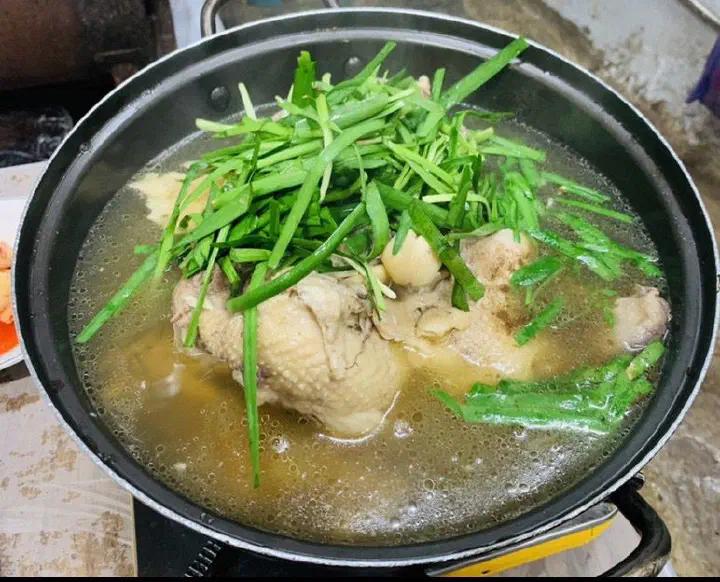
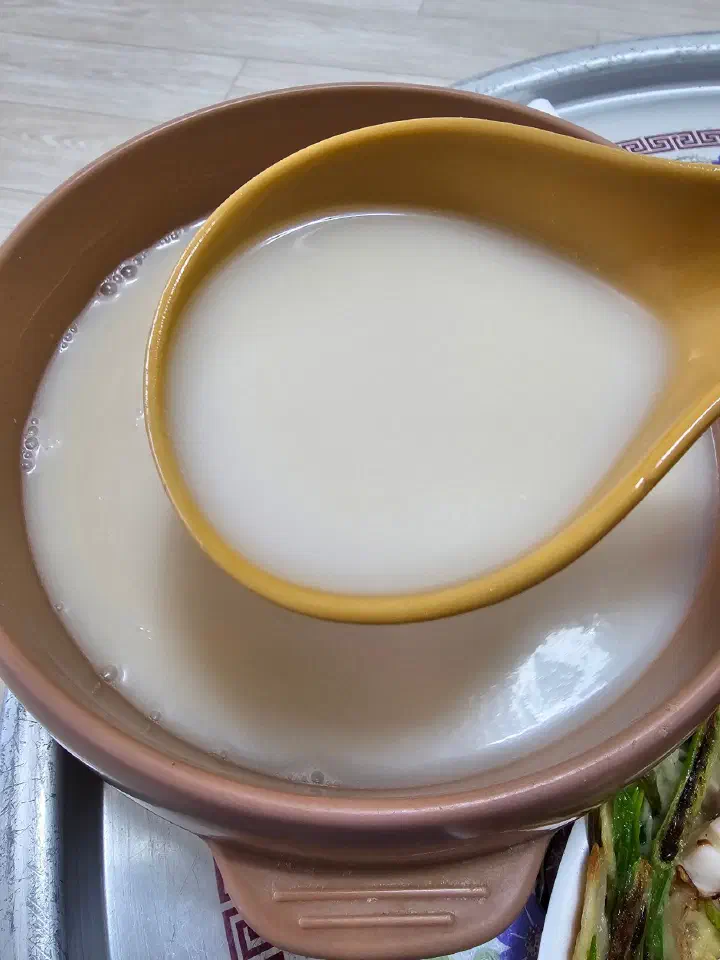
In summer, or when people want a pick-me-up, they go for the ott-duck baeksuk (옻오리백숙) - a whole duck simmered for over an hour in a broth steeped with lacquer-tree wood. The lacquer note settles gently into the soup without overpowering it.

Ott-duck baeksuk broth

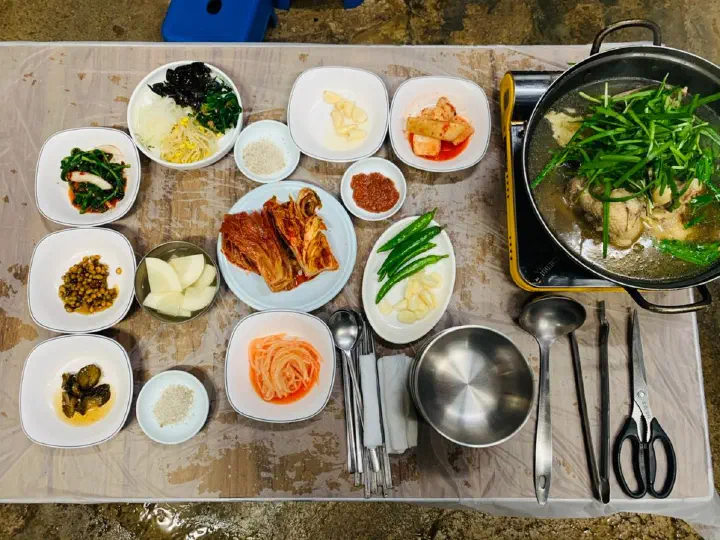
Baeksuk table setting

Here’s the key tip: call ahead about an hour before you arrive to order the baeksuk. It needs long simmering, so without a heads-up you’ll be waiting a while. Pre-order, and it’s plated almost the moment you sit down.

A bowl of ott-duck baeksuk

The sides pull their weight too

The duck alone would be enough, but the sides are no afterthought.

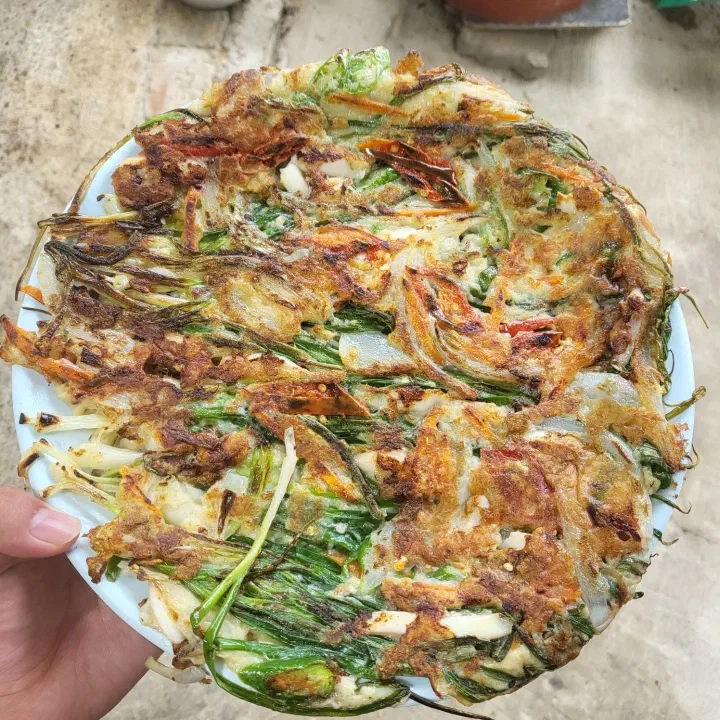
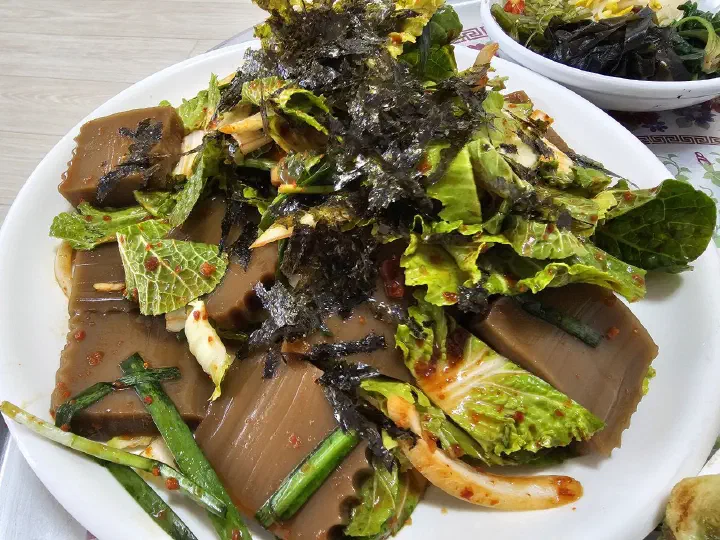
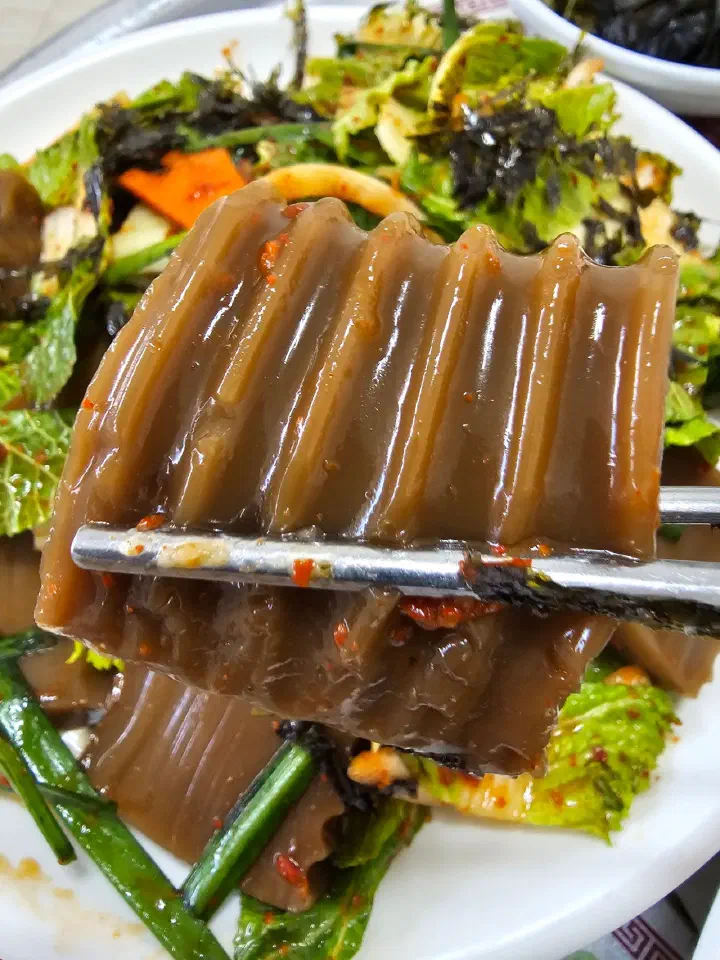
The seafood pancake (해물파전, haemul-pajeon) comes out thick, and the acorn jelly salad (도토리묵무침, dotorimuk-muchim) is made by hand from acorns they gather themselves. The tangy-sweet dressing really wakes up your appetite.

Jinjujip seafood pancake

House-made acorn jelly salad

Acorn jelly close-up

A cup of dongdongju (동동주, unfiltered rice wine) alongside it is what hikers coming down the mountain call a reward well earned.

A cup of dongdongju

The quiet stars: banchan and doenjang stew

Plenty of people say what actually keeps them coming back are the side dishes and the doenjang stew.

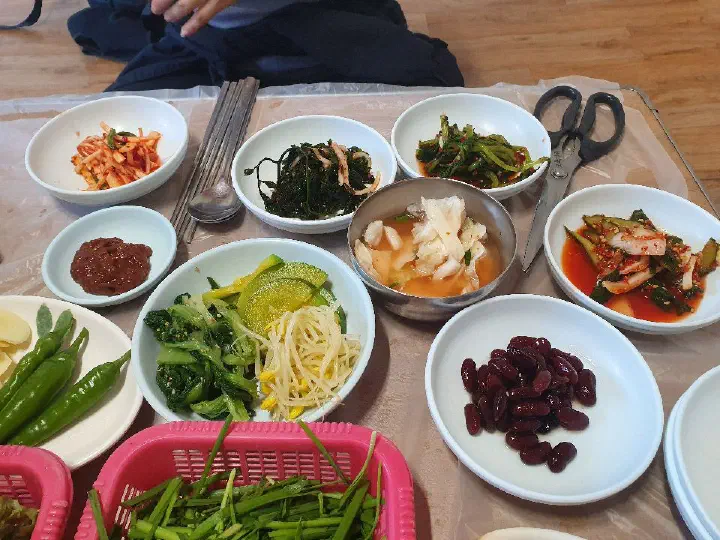
The banchan comes from organic vegetables grown in the owner’s own garden. They make their own soybean paste and salted seafood, and even pound garlic by hand in a mortar. That’s why everything tastes gentle and clean rather than salty.

A spread of garden banchan

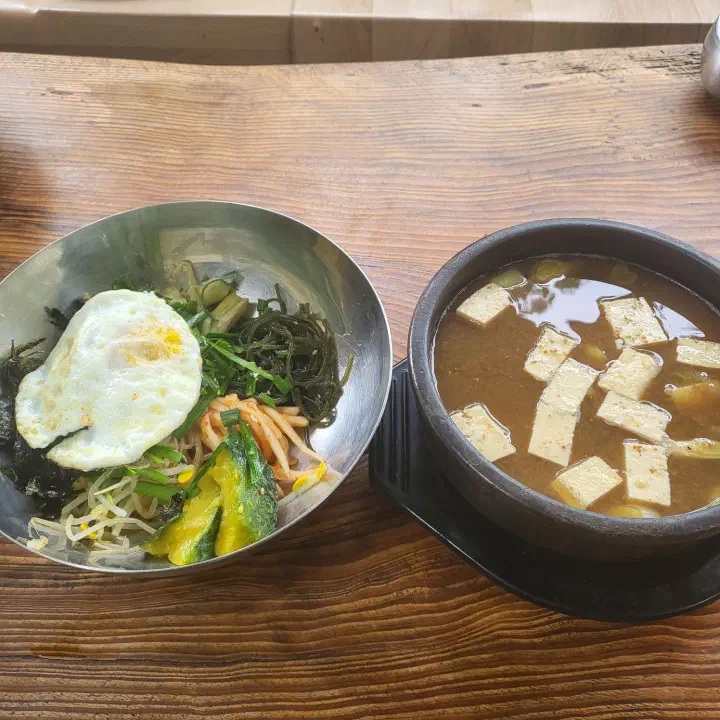
The doenjang jjigae is simmered with plenty of anchovies - proper countryside-style stew. There are a surprising number of reviews along the lines of “they could open a doenjang restaurant on its own.”

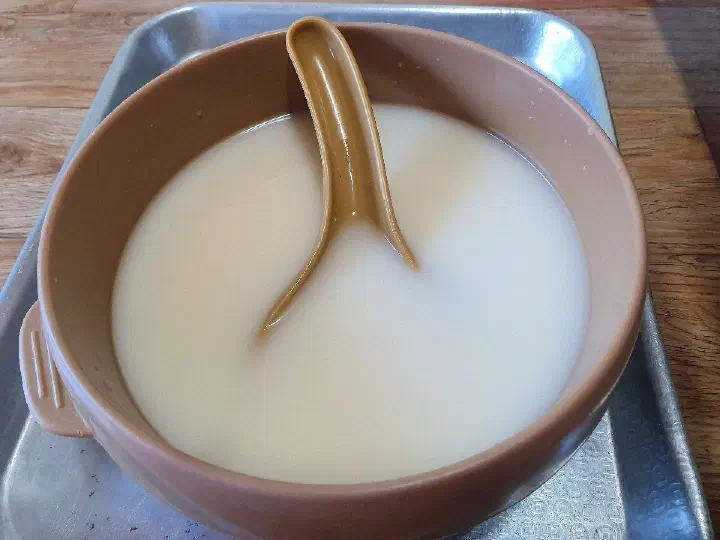
A bowl of sungnyung (숭늉, toasted-rice tea) at the end settles everything nicely.

Comforting sungnyung

Chive side dish

The owner carries the table on her head

There’s one scene unique to this place. When you order, the owner brings the whole table, set and ready, balanced on her head, all the way to your room.

The courtyard floor sits at different heights, and carrying it this way turns out to be the most practical method. It looks startling at first, but it feels as warm and old-fashioned as the cooking itself, now in its third generation.

The current host took over roughly nine years ago, when her mother’s health declined, and she keeps to her mother’s methods. That long continuity is where the place’s warmth seems to come from.

Parking and getting there

There are two parking options:

  • A dedicated lot up the road to the right of the restaurant (small, free)
  • A public lot on the way in (by the Seongbo Museum No. 2 alley, free)

By public transit, take a village bus from Beomeosa Station, get off at Hamamaeul, and follow the lane in on foot. For directions in Korea, Naver Map or KakaoMap works far better than Google Maps for walking and transit routes; the KakaoTalk taxi app (Kakao T) is handy if you’d rather ride.

📍 View Jinjujip (진주집) on Google Maps →

Jinjujip dedicated parking

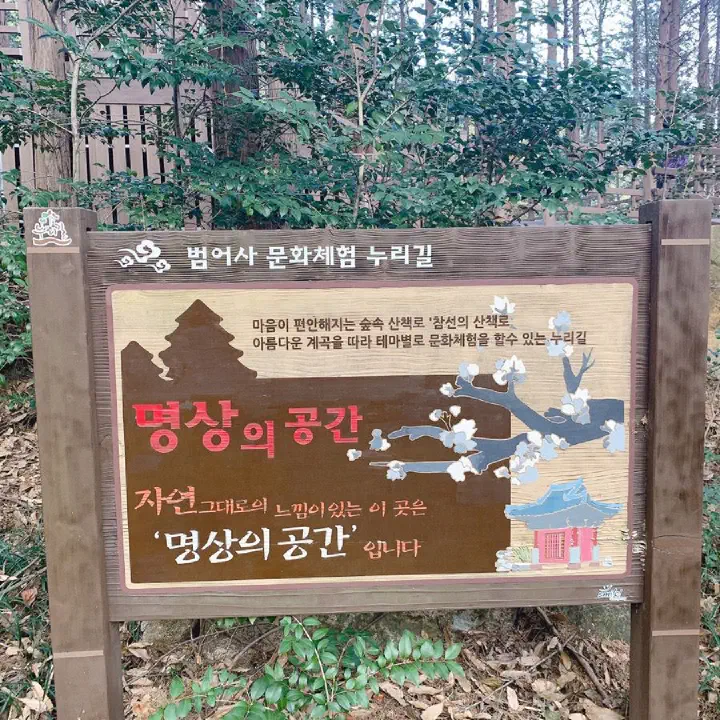
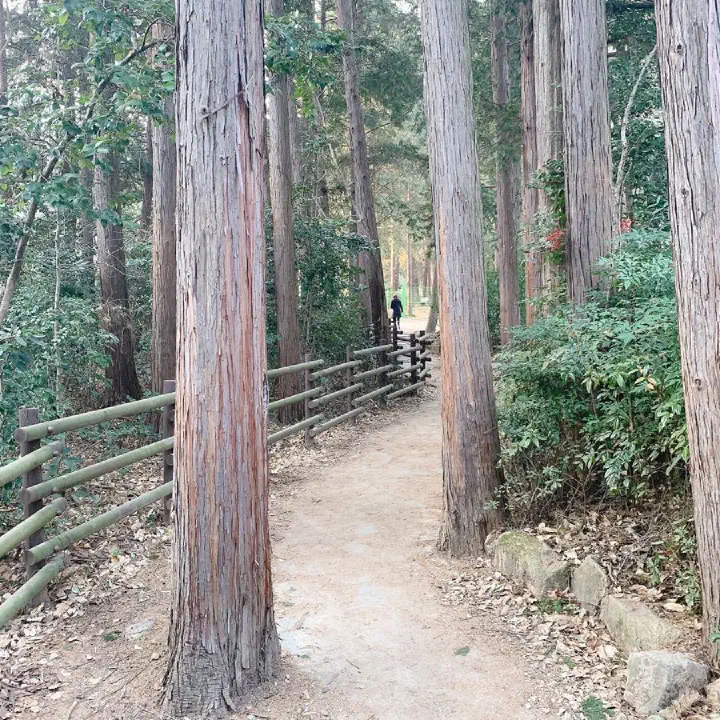
Beomeosa Nurigil walking trail

A few honest caveats

  • Duck is never the cheapest meal, so this isn’t a budget stop.
  • All seating is on the floor, which won’t suit everyone.
  • The baeksuk needs a reservation, so it’s not a spur-of-the-moment dish.

A couple of practical notes for travelers: like most restaurants in Korea, Jinjujip takes credit cards, so an internationally accepted card should be fine. Tipping isn’t a thing here - you don’t need to, and staff may be puzzled if you try. English isn’t widely spoken, but ordering is straightforward enough.

Even with the caveats, between the fresh ingredients, the careful side dishes, and the calm of a private room, it’s the kind of place you end up returning to after a day around Beomeosa.

There are other duck restaurants nearby, like Gyeongjujip and Gamnamujip; if you prefer a quieter, calmer room, Jinjujip leans that way.

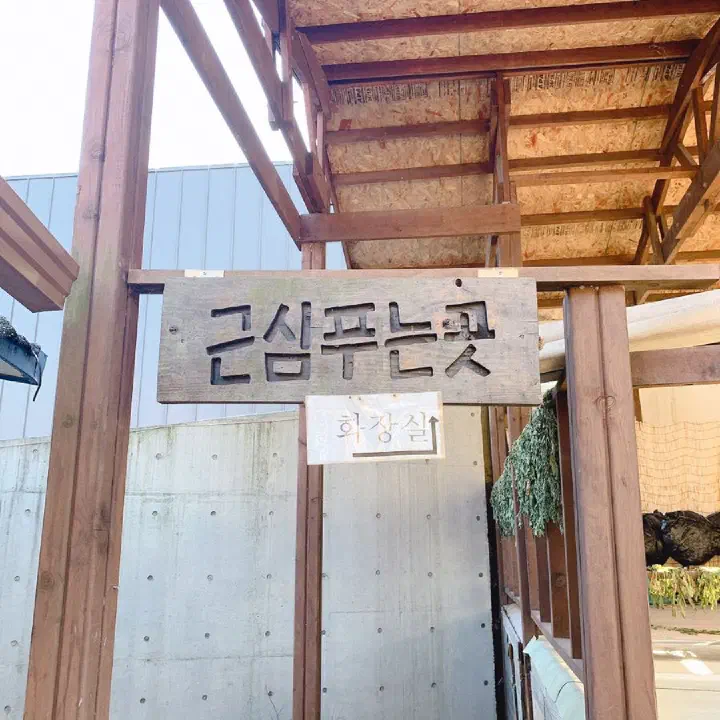
Jinjujip signboard

So if a warm duck spread sounds right after autumn leaves or a hike around Beomeosa, keep this one in mind.