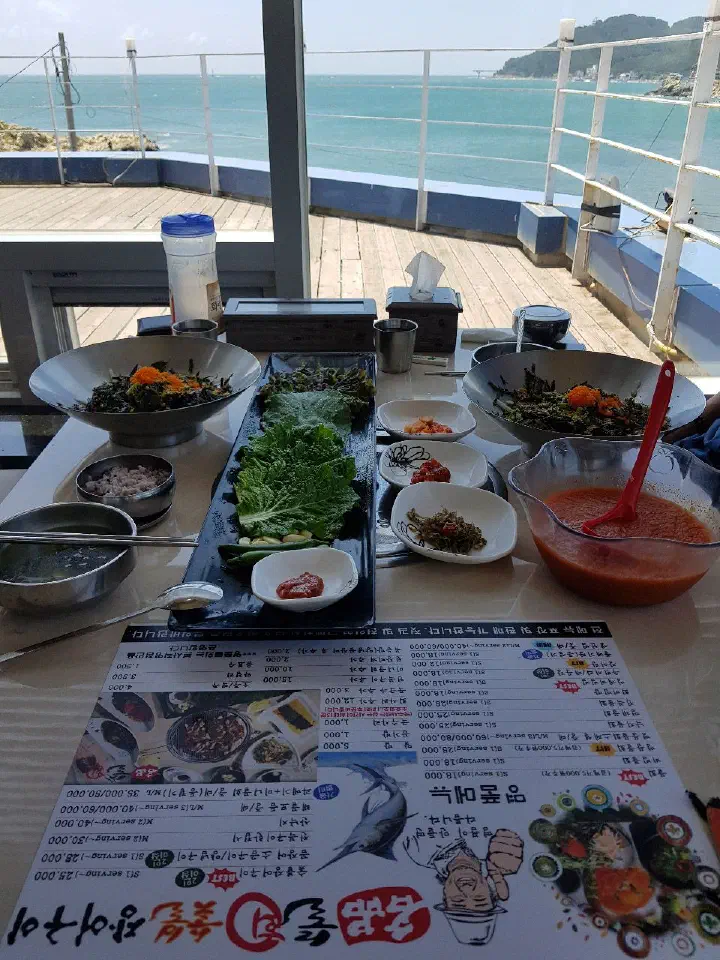
When people in Gijang think of mulhoe (물회), cold raw fish soup, this is usually the first name that comes up.

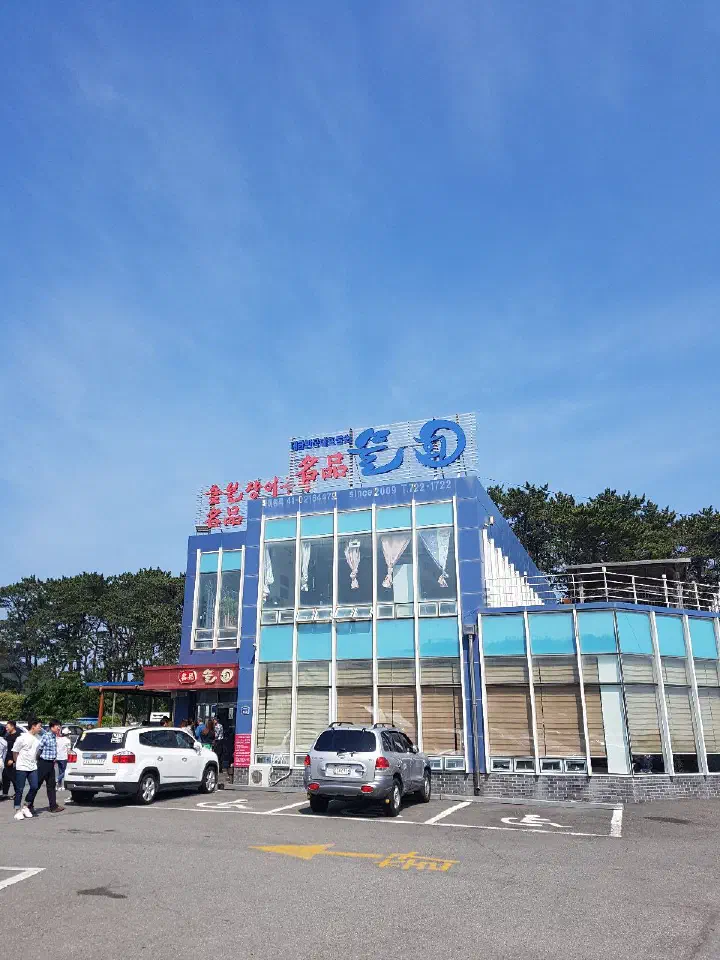
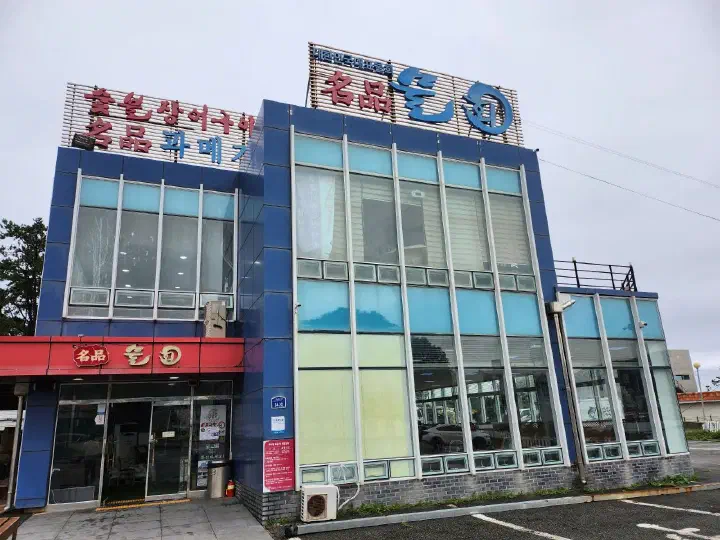
It sits right at the entrance to Gijang, just past Songjeong, with its back to the sea. The building is big and easy to spot from the road.

Exterior of Myeongpum Mulhoe with its sign in Gijang

There are a lot of mulhoe places around here, so a spot that has lasted this long is doing something right. Most of it comes down to one thing: the iced broth. But the menu range and a few honest drawbacks are worth knowing too.

The basics

Address: 34-20 Gijanghaean-ro, Gijang-eup, Gijang-gun, Busan. Phone: 051-722-1722.

Hours differ on weekdays and weekends. Mon-Fri it runs 10:30 to 20:30 (last order 19:50). Sat-Sun and holidays it runs 10:30 to 21:30 (last order 20:50).

📍 View Myeongpum Mulhoe (명품물회) on Google Maps →

There’s a large private parking lot right out front, so driving here is easy. A quick tip for getting around Korea: Google Maps walking and transit directions can be unreliable, so Naver Map or KakaoMap works much better for navigation.

Who it suits

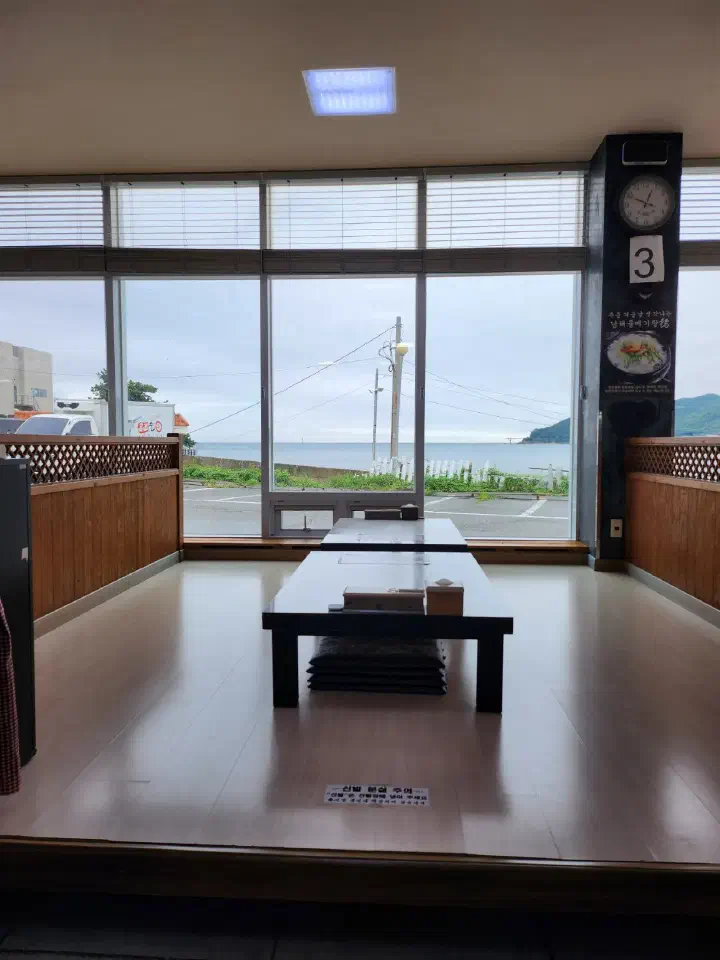
The dining room is large, split between table seating and floor seating. That makes it an easy choice for family gatherings or bigger groups, and you’ll often see parents and kids here.

Interior seating at Myeongpum Mulhoe

Sit facing out and you get the Gijang sea through the windows. On a clear day at lunch, the water turns a bright emerald.

Gijang sea view through the window

If you don’t have a car, you can reach this stretch of coast by taking the train to Songjeong or Gijang station and grabbing a short taxi or bus from there. The KakaoT app is the easiest way to call a taxi in Korea.

Waiting and turnover

In summer, expect a line at lunch. Waiting is registered on-site through the CatchTable or Tabling apps; you can’t put your name down remotely from far away.

That said, this is a one-bowl-and-go kind of place, so tables turn over fast. If you skip the noon-to-1pm peak and come closer to 3pm, you can often sit right away. The outdoor waiting area is small, so on a hot day it’s more comfortable to wait in the car and watch for the app alert.

The menu and how to order

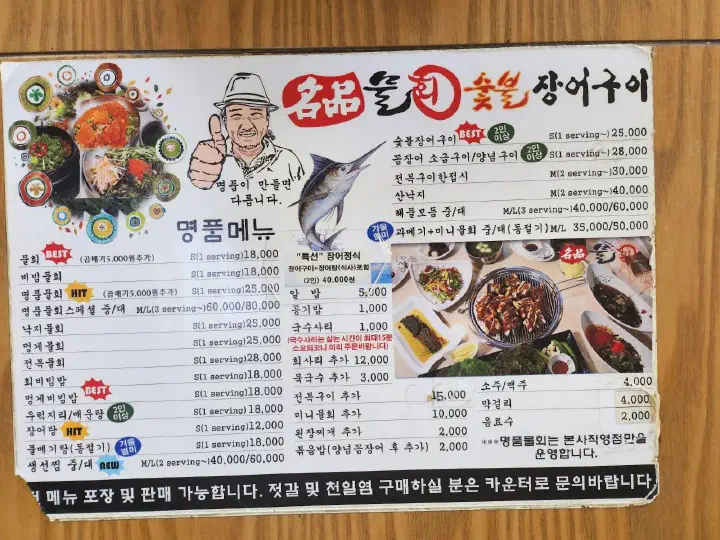
Mulhoe is the star. The basic mulhoe is 20,000 won, and the “myeongpum” (premium) version with abalone, sea cucumber, and gaebul (a type of marine worm) is 28,000 won.

Photo menu on the tablet

If you love seafood, go premium; if plain raw fish is enough for you, the basic bowl is plenty. The premium bowl used to be 25,000 won, so the price has crept up over time.

Beyond mulhoe there’s hoe-bibimbap (회비빔밥) with spicy fish stew, mulhoe with sea squirt, charcoal-grilled eel, an eel set, and seasonal gwamegi (half-dried fish) in winter. So even if someone in your group doesn’t do raw fish, there’s something for them.

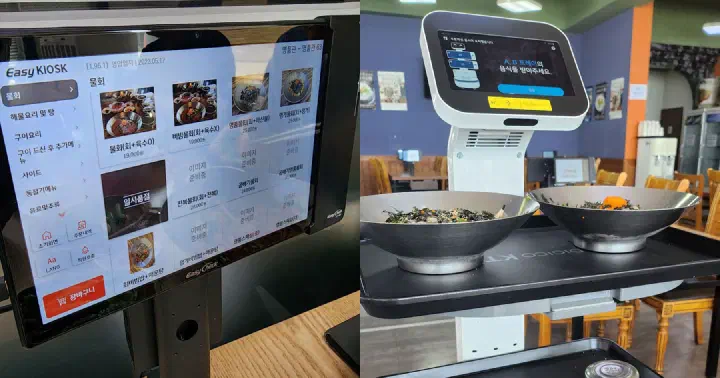
You order and pay yourself at the tablet on each table, and a robot brings the food out. It used to be served by staff, but it’s switched to this system now.

Tablet ordering and robot serving

A couple of practical notes for visitors: nearly every restaurant in Korea takes credit cards, so any internationally accepted card is fine here. There’s no tipping culture in Korea, so you don’t need to leave a tip; doing so can actually confuse the staff. English isn’t really spoken, but the tablet has photos, so pointing at what you want works perfectly well.

The heart of it: iced broth

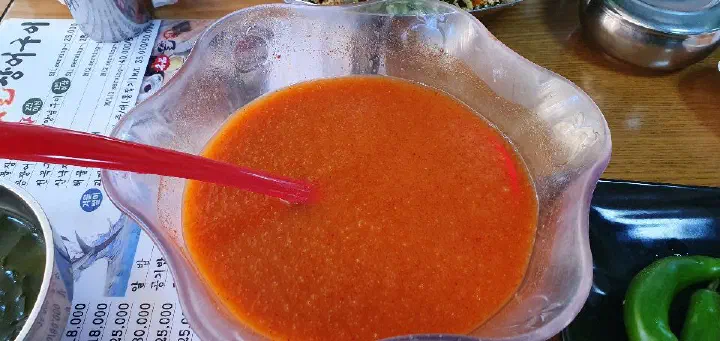
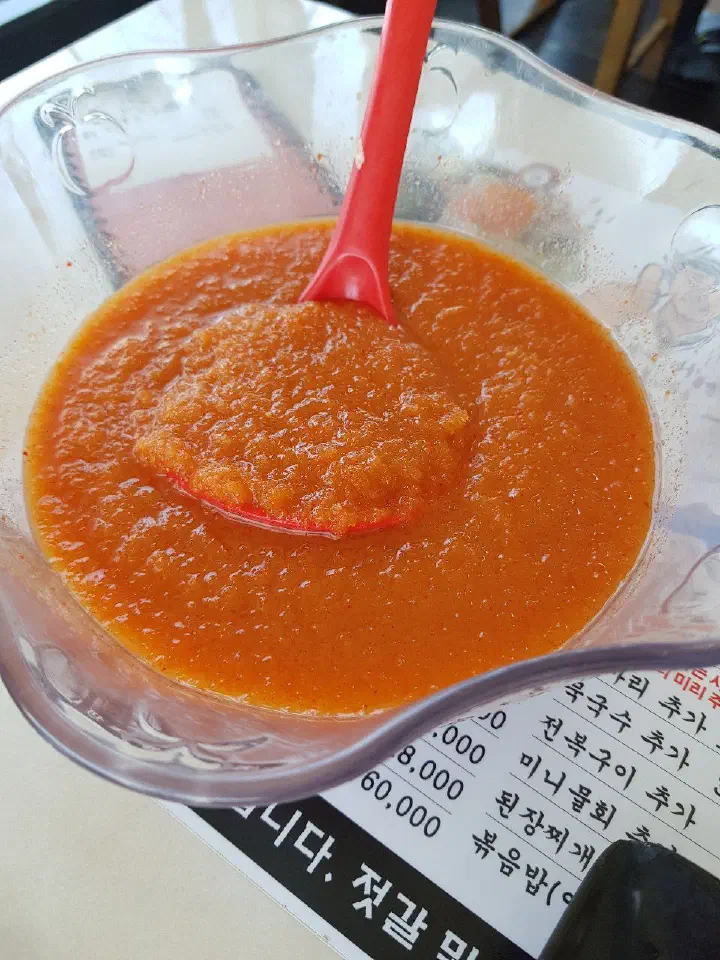
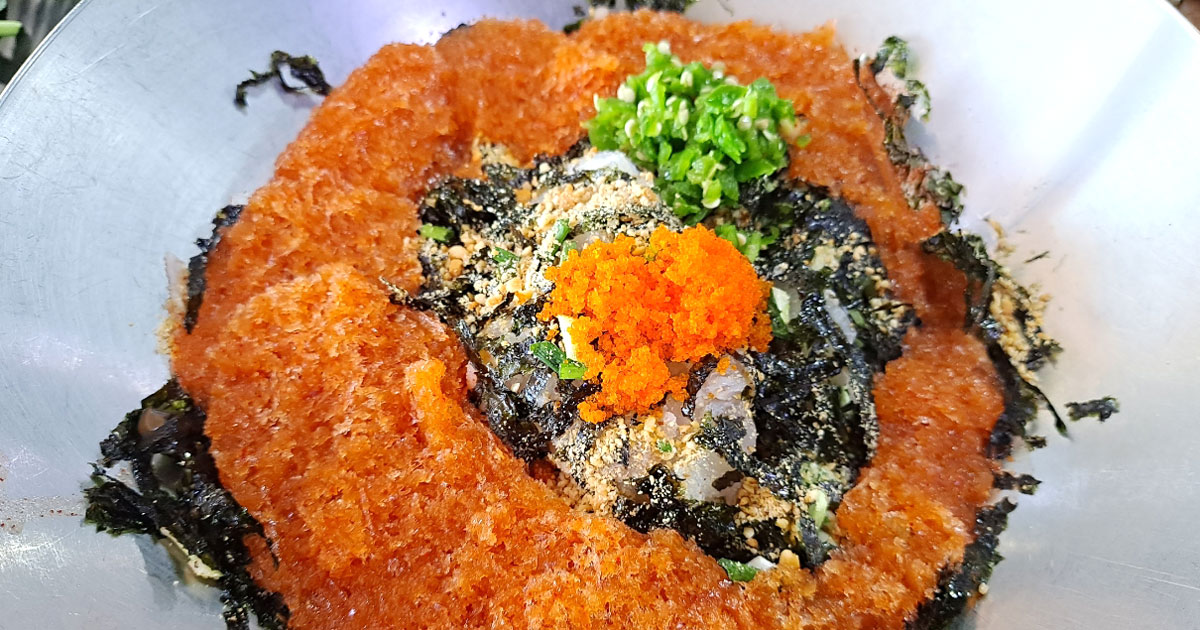
The broth is what sets this place apart. It comes separately in a big container, half-frozen into slush, and you ladle as much as you like over your bowl.

Ladling the iced broth

As you pour, it melts down between the fish and vegetables and chills everything almost instantly.

The flavor is sweet and tangy with a kick at the end. It’s spicier than it looks, and worth flagging: what reads as “a little spicy” to Koreans can hit foreign palates much harder, so brace yourself if you’re sensitive to heat. If you run low on broth, just ask and they’ll top it up.

Close-up of premium mulhoe with iced broth

Regular vs. premium mulhoe

Even the basic bowl comes piled with fish. There’s a lot of pear and cucumber in the mix, but the fish portion is generous too.

That said, some reviews note that, depending on the day, the pear-and-cucumber ratio can feel heavier than the fish. It seems to vary a bit from visit to visit.

Premium mulhoe with gaebul and seafood

The premium bowl adds abalone, sea cucumber, and gaebul for more texture. The sea cucumber is on the firm, chewy side, which is a love-it-or-leave-it thing.

A spicy bowl of mulhoe

Mulhoe comes with either rice or somyeon (thin wheat noodles) by default, and you can swap rice for noodles at no extra charge. If you want both, order the extra on the “side” tab; an extra noodle portion costs 1,000 won and takes a little time.

A cup of the sweet-spicy iced broth

Hoe-bibimbap, fish stew, and eel

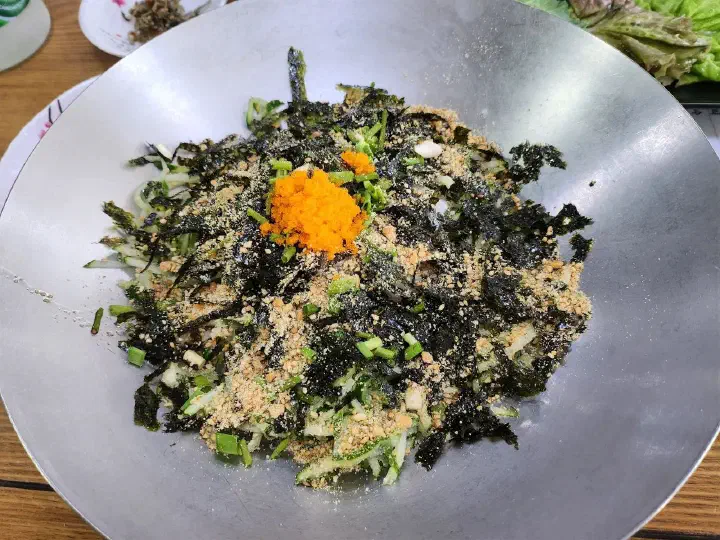
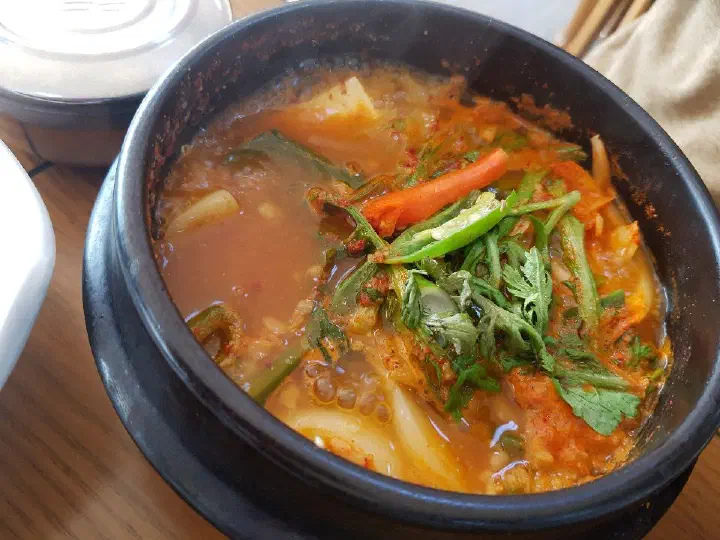
It’s not all mulhoe. The hoe-bibimbap comes with a side of spicy fish stew.

Hoe-bibimbap, raw fish rice bowl

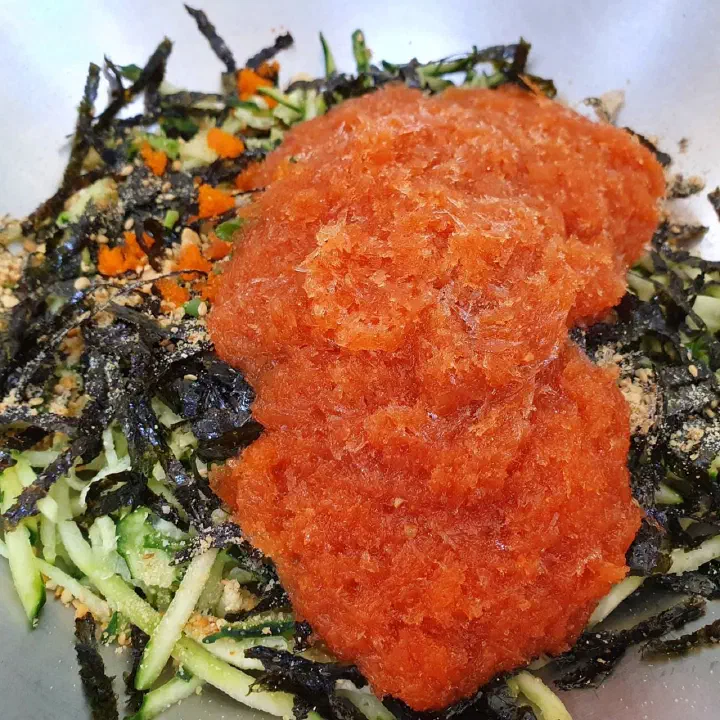
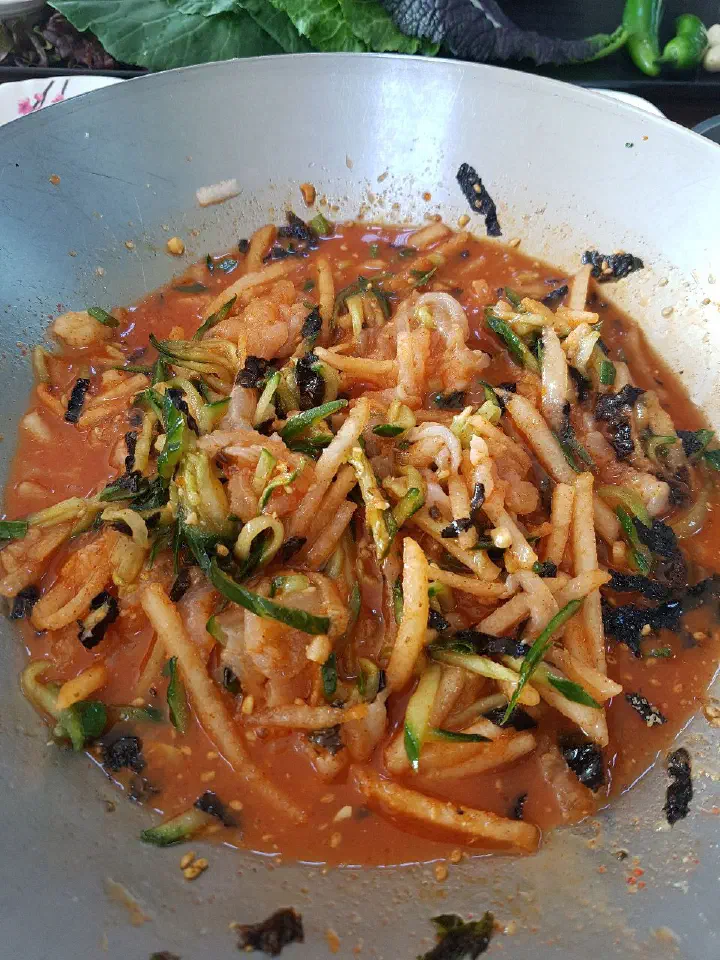
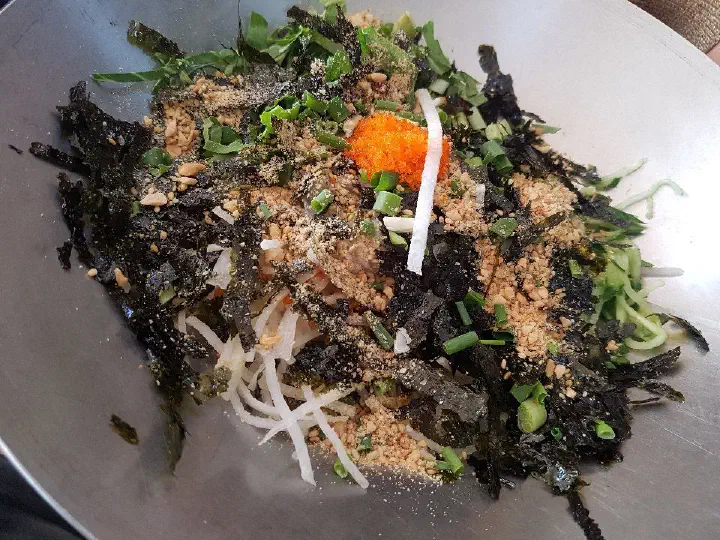
You mix the julienned vegetables and raw fish with chojang (sweet chili-vinegar sauce); like the mulhoe, it’s heavy on vegetables.

Hoe-bibimbap mixed together

The fish stew it comes with is on the salty, bold side, great for spooning over a bowl of rice.

Spicy fish stew, maeuntang

There’s also an eel set and charcoal-grilled eel. Charcoal-grilled eel with eel soup makes a hearty meal, a nice option for older family members who’d rather skip cold raw fish. One catch: the eel set isn’t always available on weekends and holidays, so check first.

Charcoal-grilled eel dish

Banchan and the self-bar

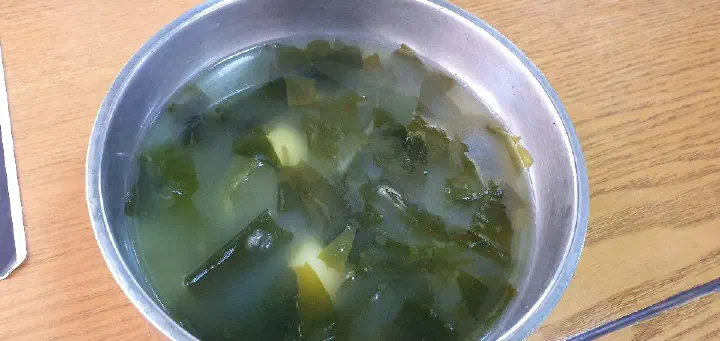
When you sit down, everyone gets a bowl of miyeok-guk (seaweed soup). It’s quietly one of the highlights. When the mulhoe starts to feel too spicy, a few sips cut the heat and make it easy to finish the bowl.

Seaweed soup with rice balls

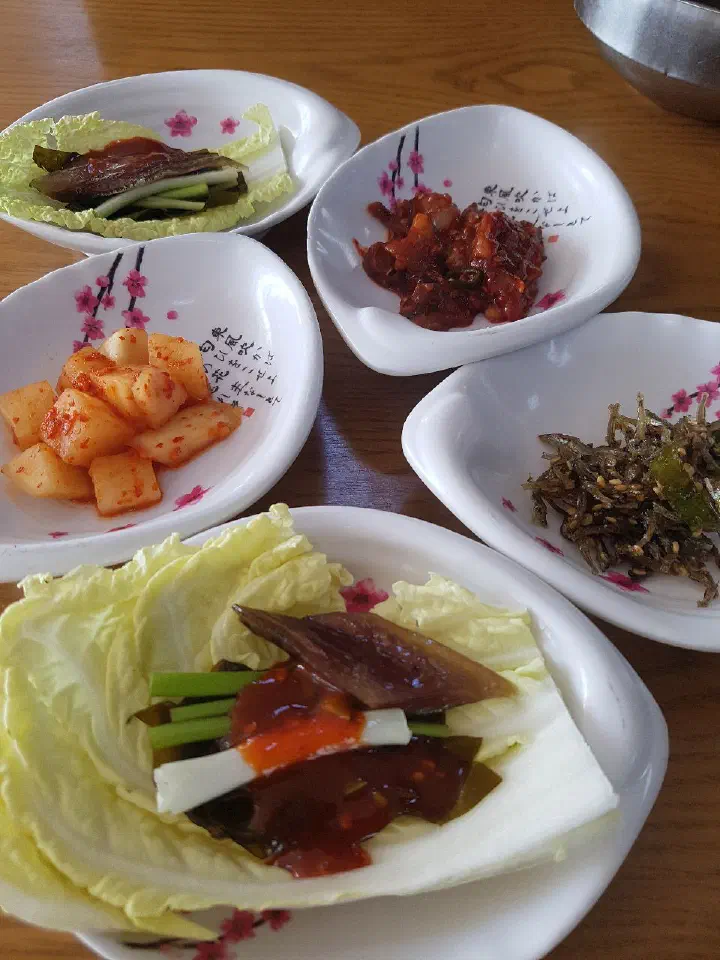
The standard side dishes are simple: kkakdugi (cubed radish kimchi), stir-fried anchovies, and seasoned seaweed stem. Mulhoe doesn’t need a big spread of sides, so the minimal approach fits.

The standard banchan set

There’s a self-bar on one side where you help yourself to lettuce, chili, garlic, ssamjang, and sauces. Water and extra side dishes are self-serve too.

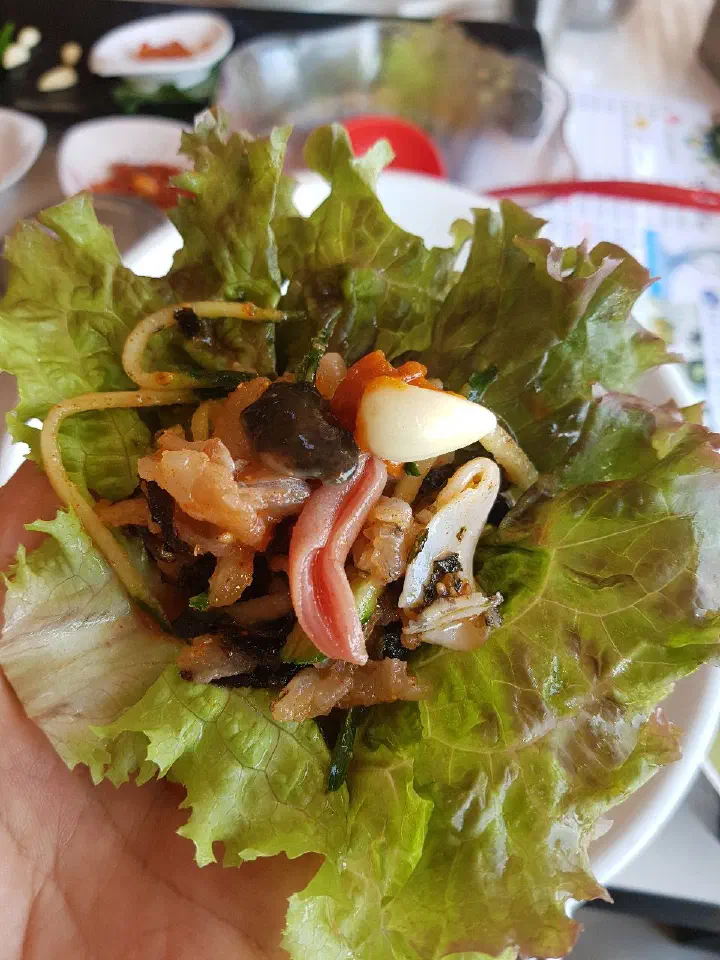
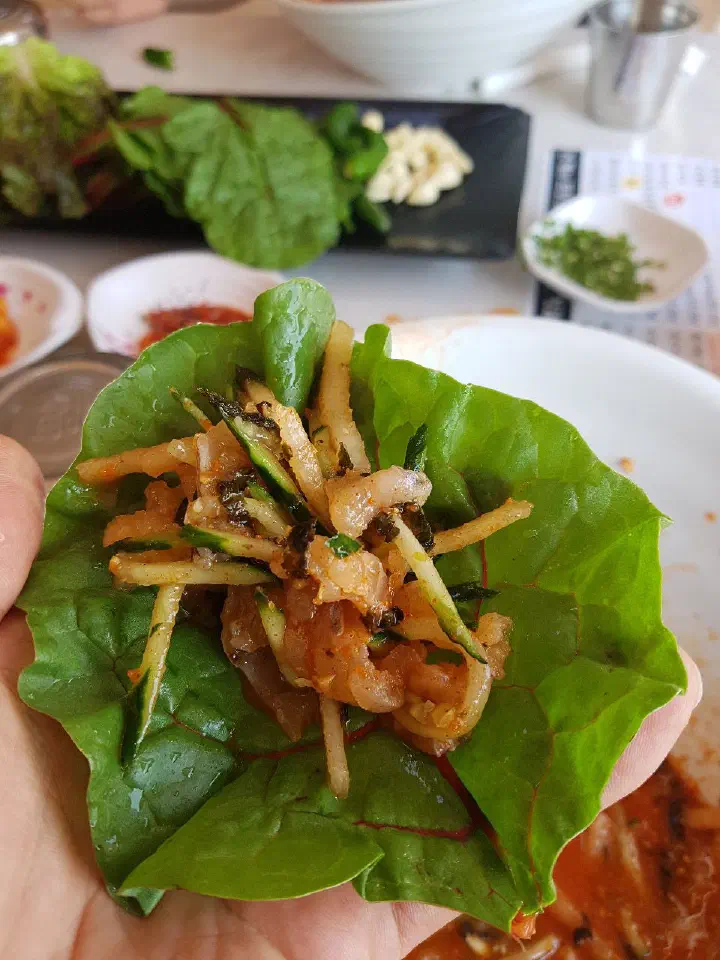
Plenty of people wrap their mulhoe in lettuce. After eating it straight from the broth, switching to a wrap gives it a whole different feel, which I’d recommend trying.

Seaweed soup and rice spread

The downsides

It’s not all good, so here’s the honest part.

One, a lot of people find the rice portion small. If you eat a hearty amount of rice, you may want to order extra.

Two, prices have steadily gone up, so opinions split on value for money.

Three, during the busy peak, service can feel rushed and curt. Come at a quieter hour and this is much less of an issue.

A spread of mulhoe set on a group table

Final thoughts

For a proper bowl of iced mulhoe in Gijang, this is a fairly safe bet.

The cold broth, the big parking lot, and the fast turnover are clear strengths; the rice portion and peak-time service are the weak spots.

Set your expectations to “solid local mulhoe spot” rather than something legendary, and a cold bowl here delivers a lot of satisfaction. Korea is generally very safe, so an evening trip out to this stretch of coast is easy and worry-free.

📍 View Myeongpum Mulhoe (명품물회) on Google Maps →