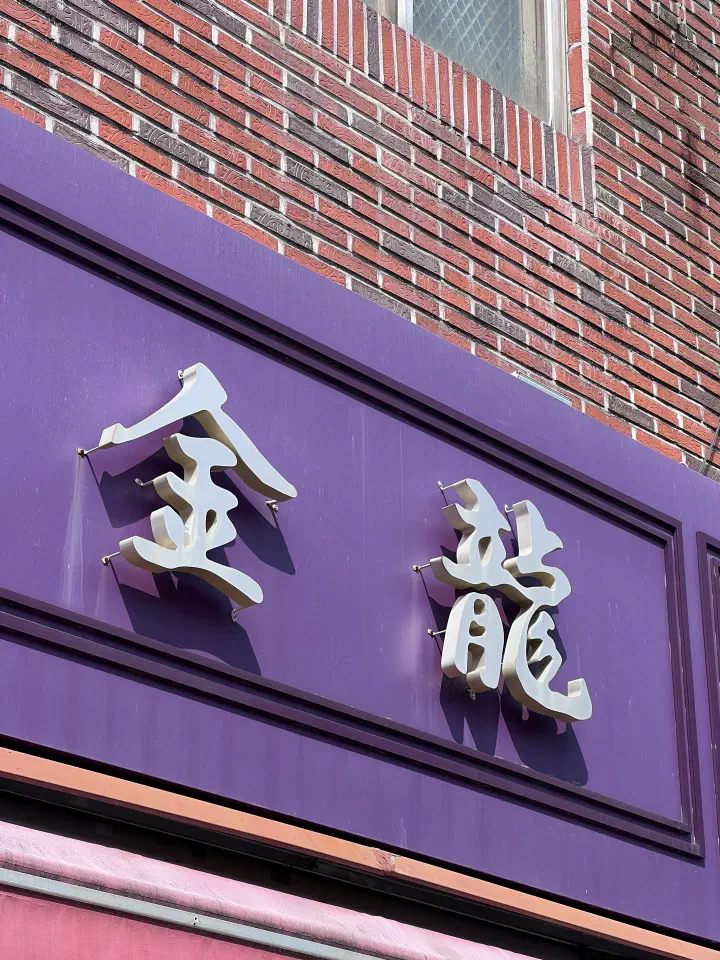
Step out at Gupo Station and you’ll spot a purple sign just across the road.

That’s Geumyong Mandu (금용만두), a name that comes up almost every time people in Busan talk about dumplings.

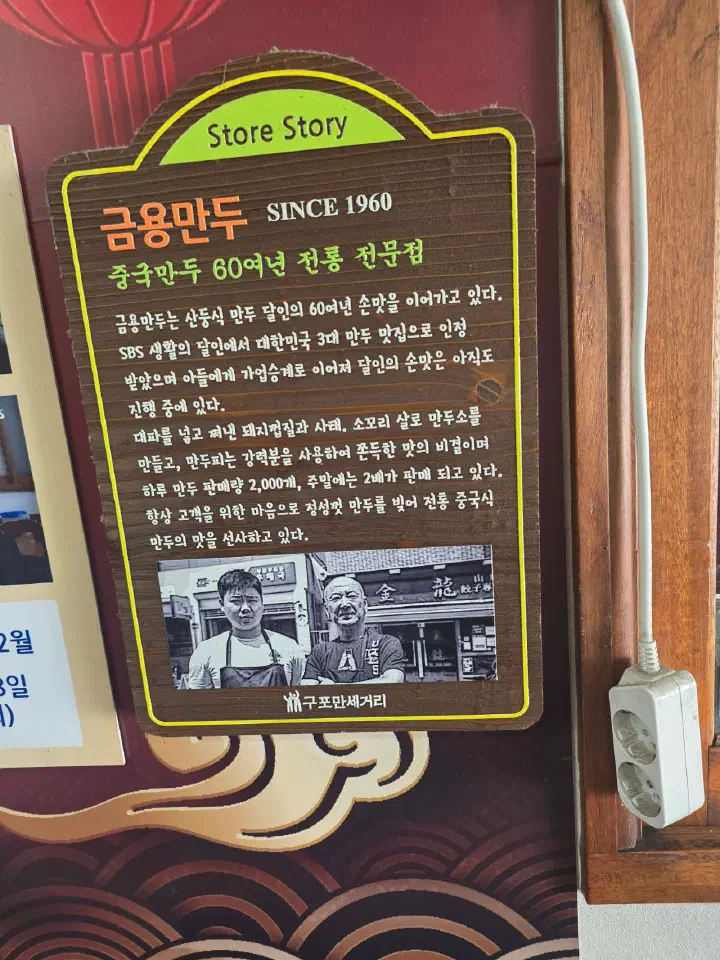
It opened in 1960, run by an ethnic-Chinese (화교) family in the Shandong dumpling tradition, and the kitchen is now moving into its third generation.

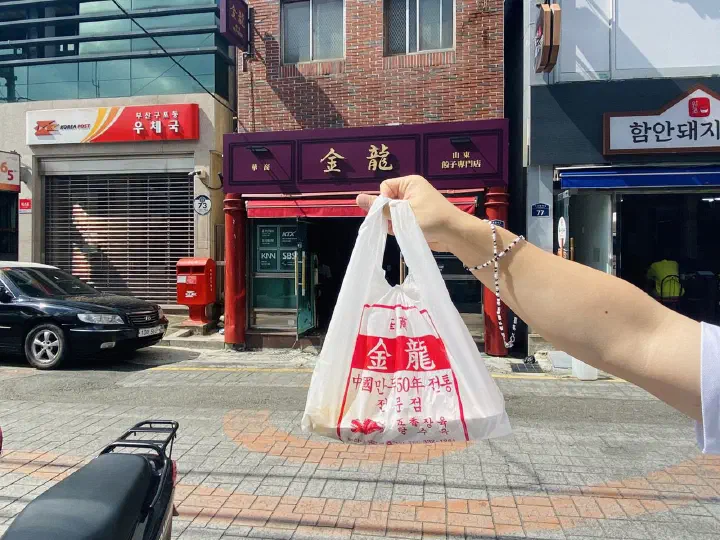
Purple storefront sign of Geumyong Mandu near Gupo Station

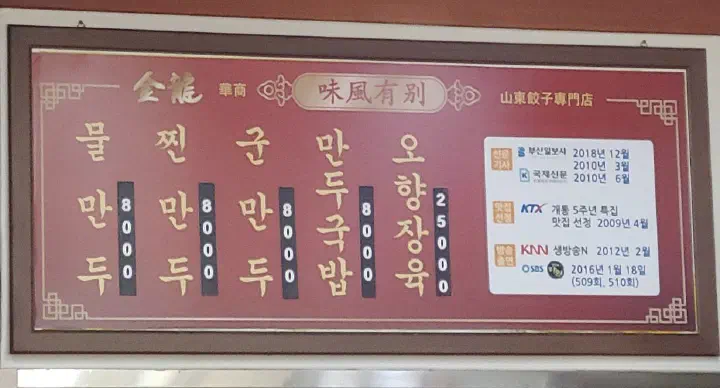
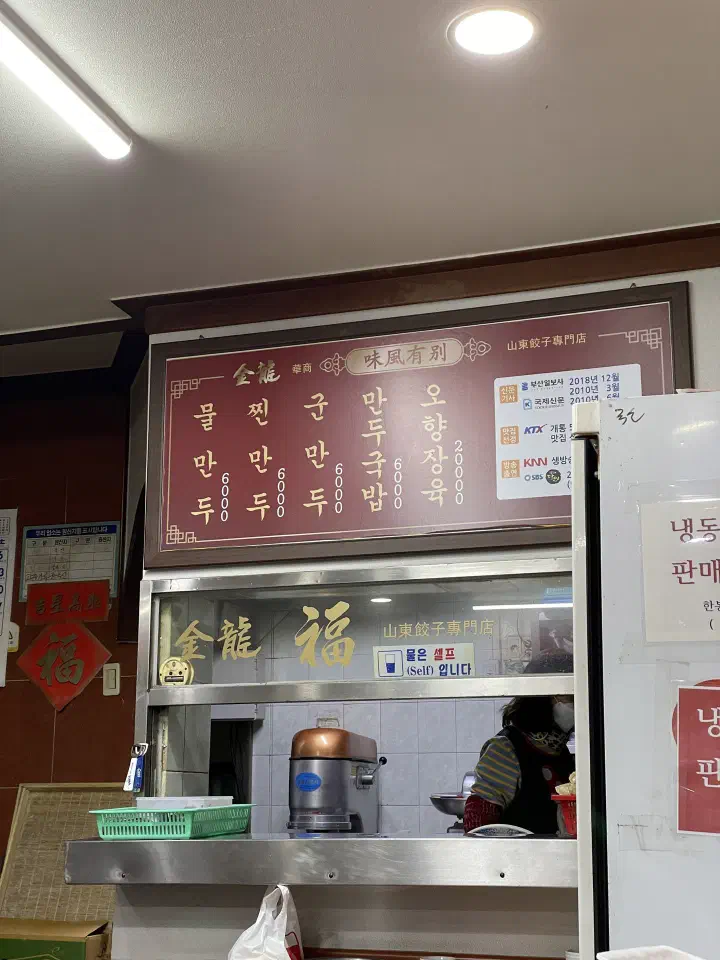
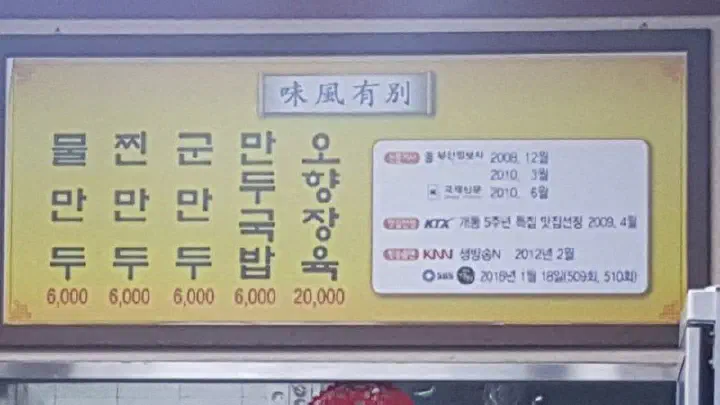
The menu has only five items, yet there’s still a line out front. So let’s go through what those five actually taste like.

The basics

  • Address: 75 Gupomanse-gil, Buk-gu, Busan (next to Gupo Post Office)
  • Phone: 051-337-8868
  • Hours: Weekdays 10:30-20:30 / Fri, Sat, Sun & holidays 11:00-20:30
  • No break time. Last order about 30 minutes before close, and they may close early if ingredients run out.
  • Closed the 2nd and 4th Tuesday each month
  • No private parking (use nearby paid lots)
  • Takeout available, free Wi-Fi

One thing trips people up. Naver Map lists the weekday opening as 10:30, but on Friday, Saturday, Sunday and holidays the doors open at 11:00.

If you’re aiming for a weekend morning, plan around 11:00 so you don’t end up waiting outside.

A quick navigation tip: Google Maps walking and transit directions can be unreliable in Korea, so use Naver Map or KakaoMap to actually find the place.

📍 View Geumyong Mandu (금용만두) on Google Maps →

Street leading to Geumyong Mandu in front of Gupo Station

Who it suits

It’s an easy stop before or after a train. The shop sits about a minute from Exit 3 of Gupo Station, just across the street, so it’s perfect when you have an awkward gap before a KTX.

Plenty of people eat alone here, and you’ll see older locals having a beer with their dumplings in the afternoon. With only nine or ten four-top tables, it’s a small, worn-in place that’s more about the dumplings than a big group dinner.

Interior of Geumyong Mandu with old-school dining room and menu

Waiting and turnover

Weekday lunch and weekends usually mean a line. On a busy weekend afternoon, expect roughly 20 to 30 minutes.

The upside is that turnover is fast. Most people just eat dumplings and go, so tables clear quickly.

There’s no waiting app or ticket system, so you line up in person. Takeout, though, is separate from the line, you can order it straight at the counter. If you’re only doing takeout, just tell the owner first.

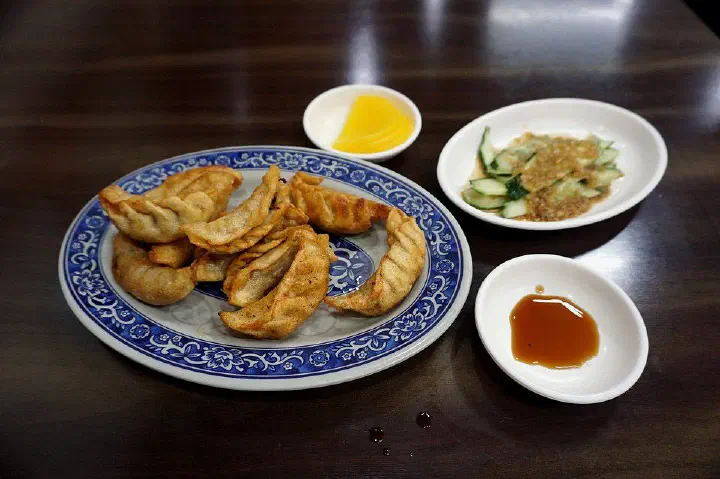
A spread of fried and steamed dumplings with cucumber side

The signature: gunmandu

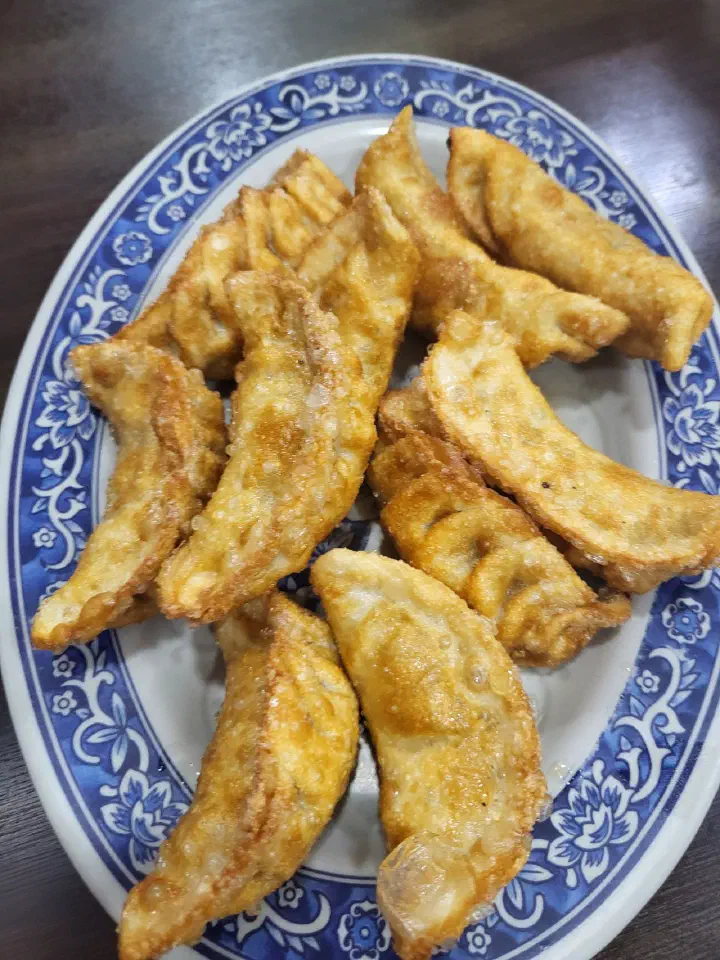
Gunmandu (군만두, pan-fried dumplings) is the face of this place. Order one round and you’ll notice almost every table has a plate of them.

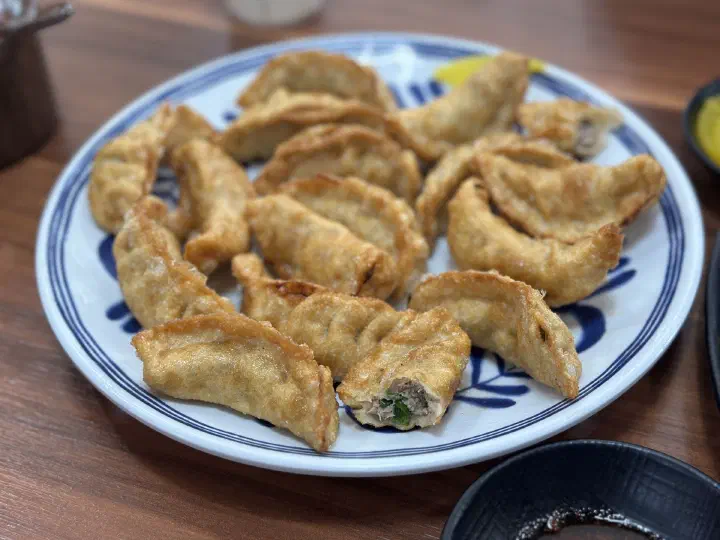
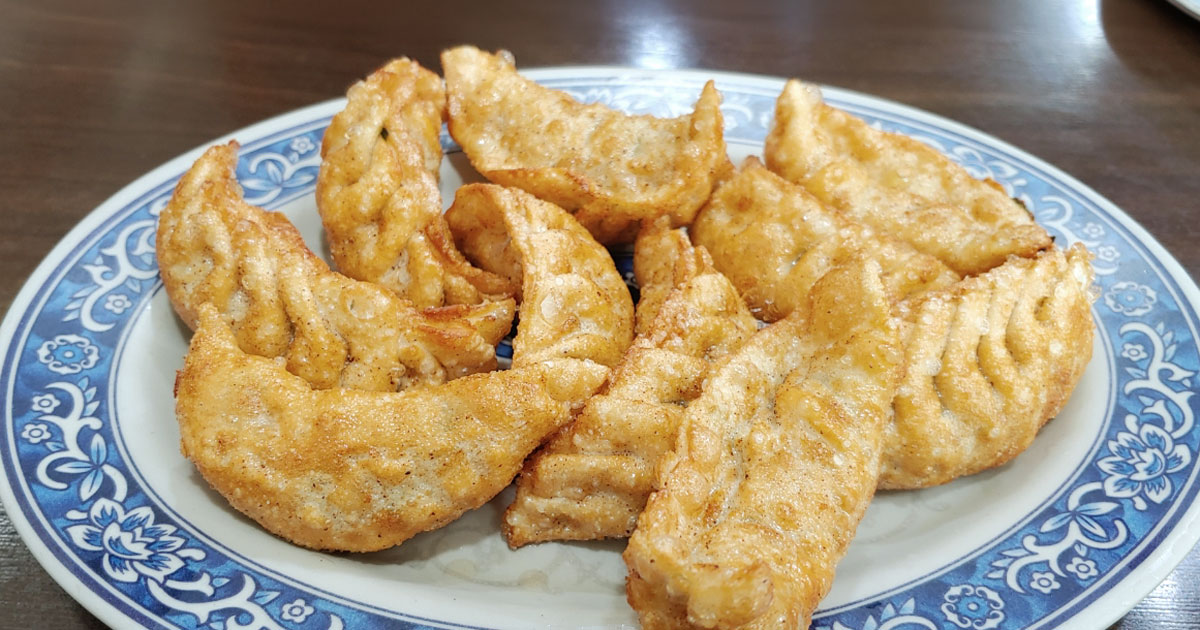
Close-up of crispy pan-fried gunmandu at Geumyong Mandu

They’re fried until the skin turns cracker-crisp. The first bite has a real crunch, and the filling releases a little burst of juice.

Cross-section of gunmandu packed with pork and chives

Split one open and the pork and chives are packed in tight, with almost no gamey smell and just enough chive. The filling is said to use green onion along with steamed pork skin, shank, and oxtail, which leans the flavor toward clean and savory rather than greasy. That’s probably why you can keep eating without getting tired of them.

A plate of golden fried dumplings

A plate comes with about ten pieces for 8,000 won, which feels fair once you taste them.

Steamed and boiled dumplings

If gunmandu alone feels like too little, jjinmandu makes a common pairing.

Freshly steamed jjinmandu at Geumyong Mandu

Jjinmandu (찐만두, steamed dumplings) arrive still steaming. The skin is chewy and soft, a different mood from the crisp gunmandu.

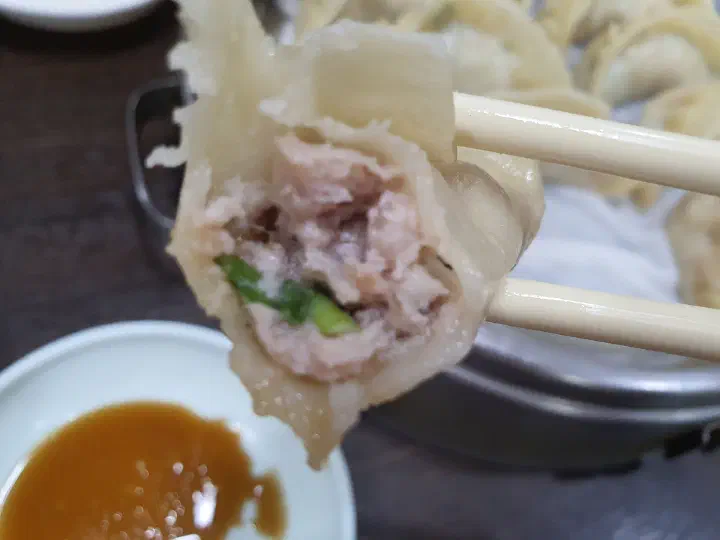
Inside a steamed dumpling showing chunky pork

The filling isn’t finely minced; the meat sits in bigger chunks, so you really feel the pork as you chew. That heartiness is a Shandong-style trait.

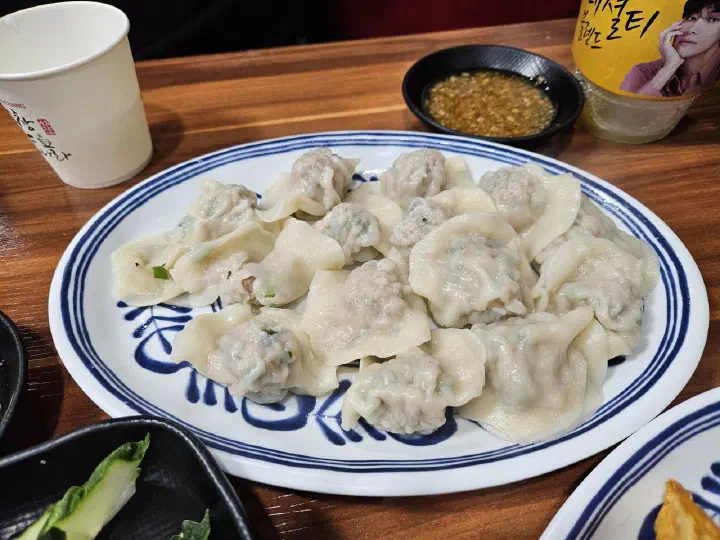
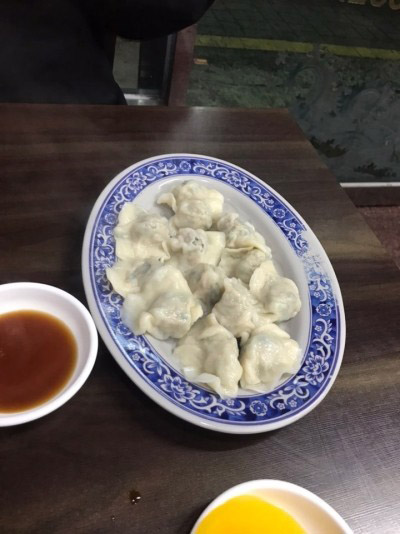
A plate of boiled mulmandu

Mulmandu (물만두, boiled dumplings) is more divisive. The skin is on the thicker side, so if you’re expecting a silky, slippery boiled dumpling, it reads differently.

Most people find it less memorable than the fried or steamed ones. If you only pick one, go gunmandu; for two, add jjinmandu. Also note that right at opening or during peak hours, they sometimes pause mulmandu and the dumpling soup.

The cucumber side is the real hook

People talk about the free cucumber side almost as much as the dumplings.

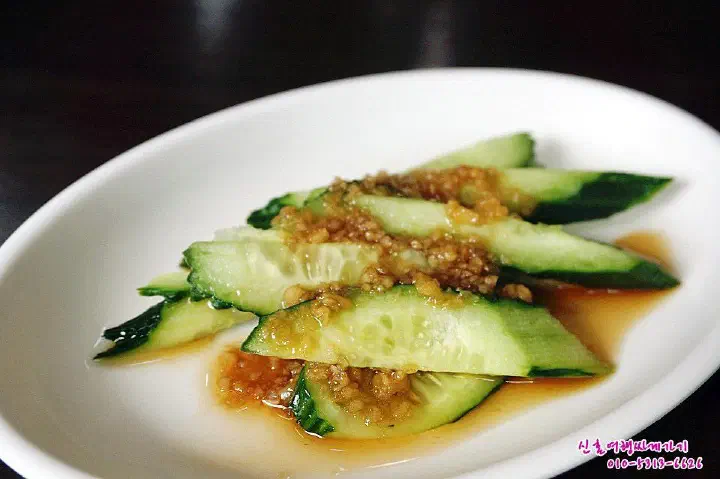
House garlic cucumber banchan at Geumyong Mandu

It’s a Chinese-style cucumber dish loaded with sharp garlic. Tangy and crunchy, it cuts right through the richness of the dumplings. This is genuinely why people say they can keep eating. Pickled radish comes too, but everyone reaches for the cucumber.

Soy, vinegar and chili dipping sauce for the dumplings

You mix your own sauce from soy, vinegar, and chili flakes. Shandong dumplings are traditionally dipped in a garlicky sauce, and here the garlicky cucumber side plays that role instead. Add a generous spoon of chili flakes to thicken it and it clings to the dumplings better.

Dumpling soup and five-spice pork

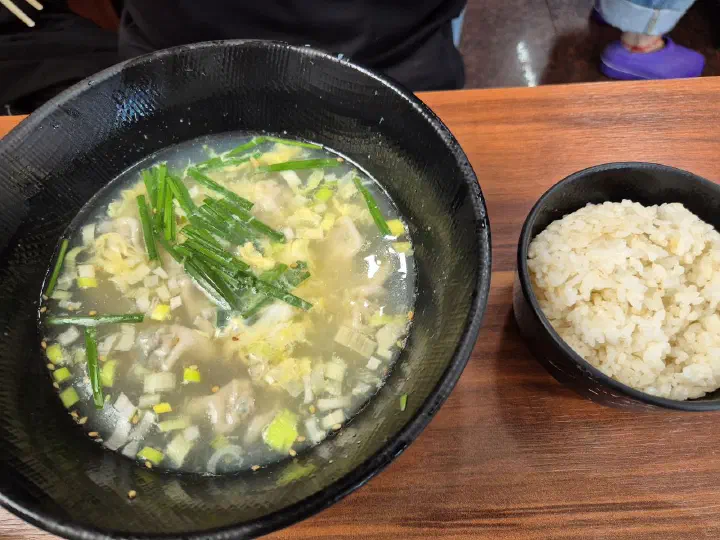
Mandu-gukbap dumpling soup with steamed dumplings

Mandu-gukbap (만두국밥, dumpling soup with rice) has a clean, mild broth in the style of a light beef soup. It’s gentle on the stomach and nice on a cold day.

Don’t expect fireworks, though. Because the broth is so mild, some find it a touch plain.

Five-spice pork, ohyang-jangyuk

Ohyang-jangyuk (오향장육, five-spice pork) is the priciest item at 25,000 won. Thin slices of pork come with a garlic-mustard sauce and cucumber, tender and free of off-notes, with a faint herbal aroma. It’s a nice side, but quite a few people feel the portion is small for the price, so it works best as an add-on rather than a main.

Atmosphere, service, and honest gripes

Being an old shop, the walls are covered in Blue Ribbon stickers and TV appearance photos.

Blue Ribbon Survey recognition at Geumyong Mandu

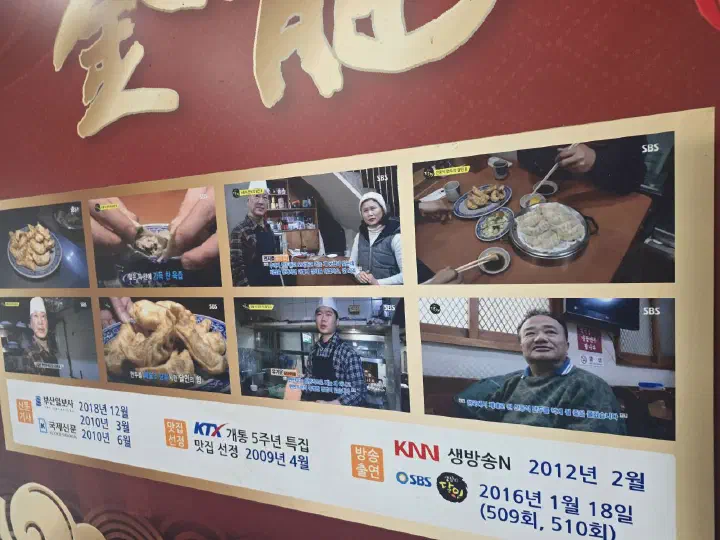
It has been picked for the Blue Ribbon Survey for twelve years running, and it has appeared several times on SBS’s “Master of Living” (생활의 달인), including episode 558 in early 2017. Local outlets like Busan Ilbo, Kookje Shinmun, and KNN have featured it too.

Wall of TV features and press clippings at Geumyong Mandu

A few honest caveats, though.

First, service can feel curt when it’s busy, especially for small orders, and some guests mention feeling rushed. Others report friendly service, so it varies.

Second, when crowds hit, some reviewers note the dining room and kitchen could be tidier.

Third, there’s a recurring comment that the gunmandu has gotten a bit smaller than before.

Seating and tables inside Geumyong Mandu

Walk in with sky-high expectations and it might read as ordinary. But on the gunmandu alone, most people agree it shows what a veteran Busan dumpling house can do.

Parking, takeout, and practical notes

No private parking is the biggest drawback. It’s right by Gupo Station, so street parking nearby is tight too.

You’ll end up using the nearby Gupo lot or a private paid lot, roughly 1,500 won per 30 minutes up to around 3,000 won per hour. Honestly, public transit is the easier call.

Takeout dumplings from Geumyong Mandu

For takeout, calling ahead cuts the wait. That said, they taste best fresh in the shop, so eat in if you can. One more tip: if you want two or more orders packed separately, say so when ordering, otherwise it all comes in one box.

A few notes for visitors from abroad. Card payment is fine here, so an internationally usable card works without worry. There’s no tipping culture in Korea, so you don’t need to tip, and trying to leave one may just confuse the staff. English isn’t really spoken, but ordering is easy enough; the menu is short, and you can simply point and hold up fingers for how many. One heads-up on spice: the chili sauce you mix can run hotter than expected for those not used to Korean heat, so go easy at first.

📍 View Geumyong Mandu (금용만두) on Google Maps →

Bottom line

Menu board at Geumyong Mandu

It isn’t a flashy restaurant. It’s a noodle-and-dumpling-era survivor that has held one corner for over 60 years on five menu items and solid fundamentals.

A plate of gunmandu, the garlic cucumber, and a cold beer is honestly enough for a satisfying stop at Gupo. If Gupo Station lands on your Busan route, it’s worth ducking in around your train time.