There are not many places in Korea where people line up from early morning for a pork cutlet.
Tonshou Gwangan (톤쇼우 광안점), a tonkatsu specialist tucked behind Gwangalli Beach in Busan, is one of them.
The reason is simple: after deep-frying, they finish the cutlet over charcoal, and that smoky edge is something you will not find at most tonkatsu shops anywhere.

The catch is the wait. Walk in blind and you can lose half a day.
Know the system, and it becomes very manageable.

The basics

Address: 1F, 13 Gwanganhaebyeon-ro 279beon-gil, Suyeong-gu, Busan.
It sits in a small alley a short walk from Gwangalli Beach, so pairing the meal with a beach walk is the natural move.

Hours are 11:00 to 22:00 every day, last order at 20:50, no closing days.
There is no dedicated parking lot, so walking or taking a bus or taxi is easier than driving. Kakao T, Korea’s taxi app, works well here.

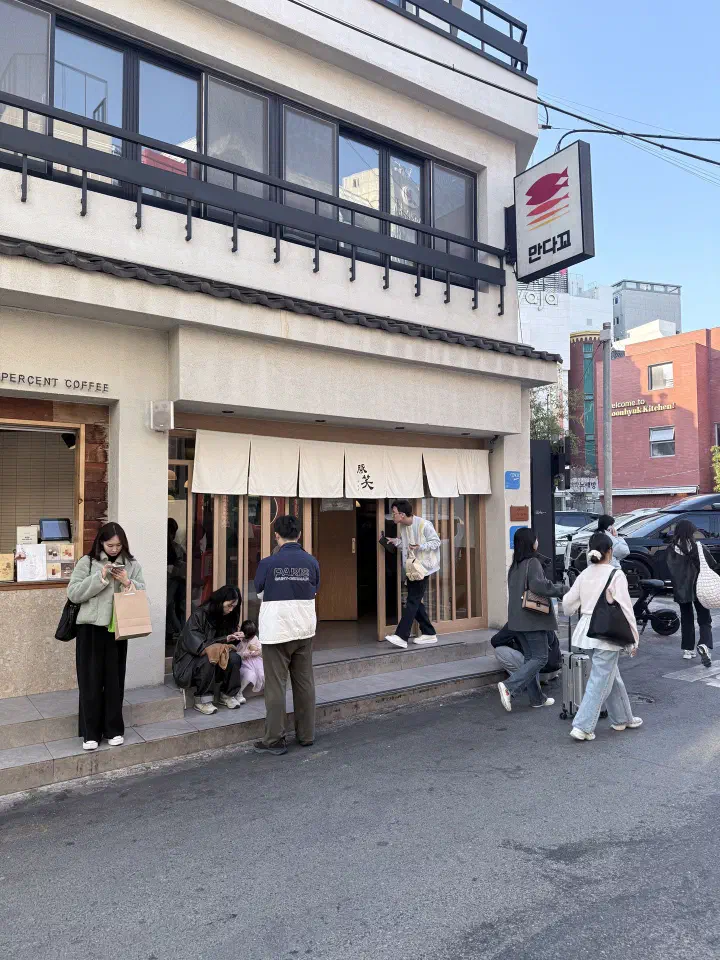
Exterior of Tonshou Gwangan tonkatsu restaurant in Gwangalli, Busan, with customers waiting outside

📍 View Tonshou Gwangan (톤쇼우 광안점) on Google Maps →

One practical note for foreign travelers: Google Maps is unreliable for walking and transit directions in Korea.
Naver Map or Kakao Map will serve you much better for getting around.

How the waitlist actually works

There are three ways in, and picking the right one matters more than anything on the menu.

The first is the walk-in list.
It opens at 10:00 in the morning and takes only the first 60 parties.
The physical line forms well before that - on weekends, arriving around 8:30 can mean being first, and by a little after 9:00 the early numbers are gone.
Getting into the first seating has a real perk: the limited-quantity cutlets are still available.

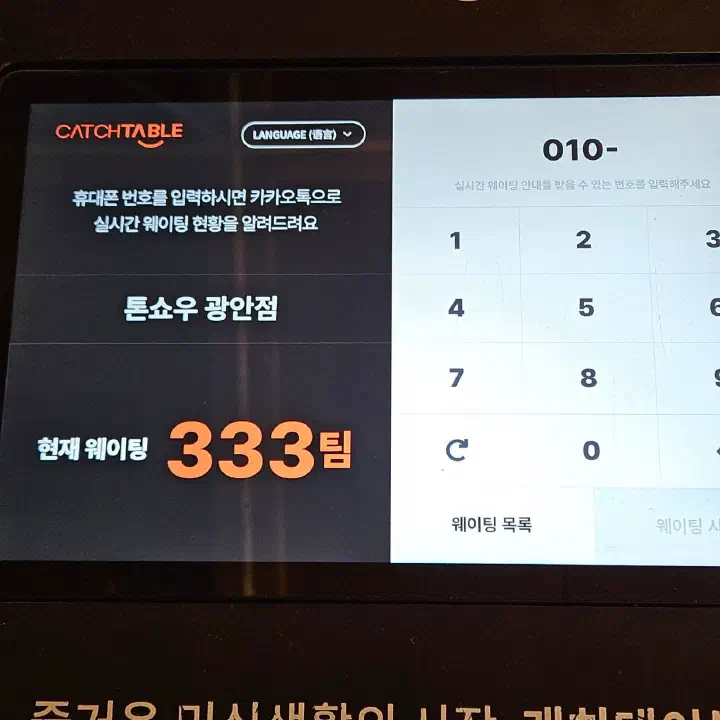
The second is the remote waitlist on Catch Table, a Korean restaurant app.
It opens at 11:00 sharp, and even instant registrations often land in the triple digits; weekend numbers can pass 300.
Roughly 25 parties move through per hour.
The app lets you defer your turn up to two times, which is how most people handle it: register in the morning, spend the day around Gwangalli, and walk in around dinner.
Be warned that mid-afternoon slots suddenly speed up because everyone defers past them, and if you miss the entry confirmation, your spot can be cancelled.

Catch Table waitlist tablet at Tonshou Gwangan showing 333 parties currently waiting

The third is an actual reservation.
On the 10th of every month at noon, the app releases bookings for the month after next, in three slots only: 10:50, 11:00, and 11:10.
They vanish almost immediately, but a cancellation alert can be set - spots go to whoever taps first, not to whoever signed up first.

One quirk applies to every route: you choose your food when you join the list, not at the table.
Pick anything to secure the spot; the order can be changed in the app later.
Even after being called inside, there is a second wait of 10 to 20 minutes on a bench behind the counter.

The Catch Table app is in Korean, so it can be awkward for visitors.
If the app feels like too much, the 10:00 walk-in list with an early arrival is the simplest path.

What it feels like inside

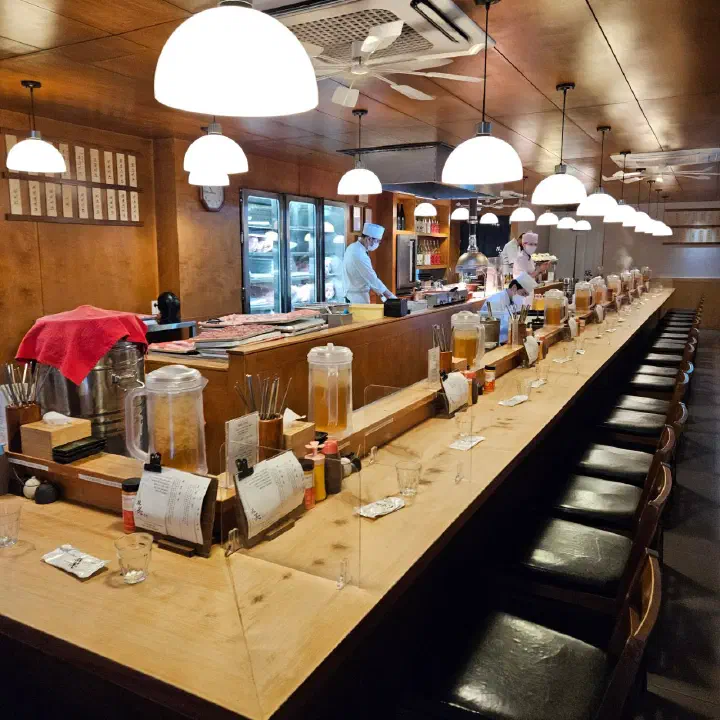
The room is one long counter wrapped around an open kitchen.
Butchering, breading, frying, and the charcoal finishing all happen in front of the seats, and the kitchen runs like a drill team even at full tilt.
Watching the line cooks is genuinely part of the meal, and the counter format makes solo dining completely comfortable.
Blue Ribbon and other Korean dining-guide plaques line the wall, which tells you how long this place has been on the radar.

Long counter seating wrapped around the open kitchen inside Tonshou Gwangan, with chefs preparing tonkatsu

The menu splits into two tiers.
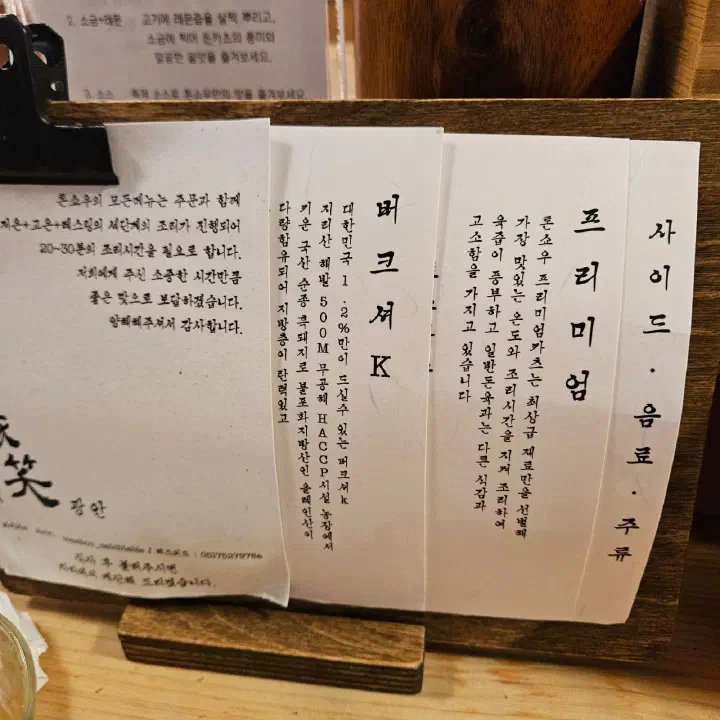
The Berkshire K line uses black pigs raised on a farm near Jirisan mountain; the standard line covers the classics.

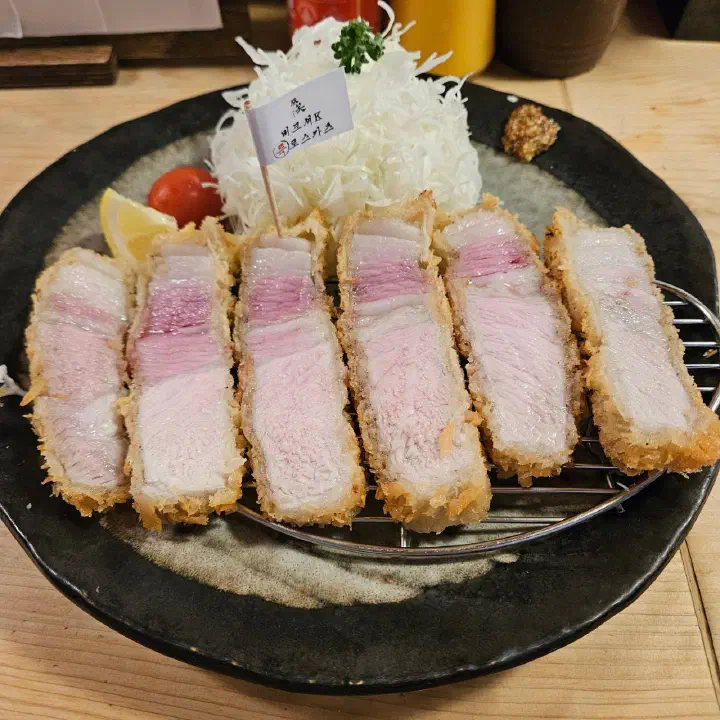
Berkshire K roskatsu (버크셔K로스카츠) is 18,000 won and the signature.
Berkshire K special roskatsu (버크셔K특로스카츠), 21,000 won, comes with a cap of about 70 servings a day and sells out by late entry times.
Hirekatsu (히레카츠), the tenderloin cutlet, is 15,000 won.
Other options include roskatsu at 14,500, kanjuku katsu (칸쥬쿠카츠) at 14,000, ebi katsu (에비카츠, shrimp) at 14,500, an assortment plate at 18,000, and katsu sando (카츠산도) at 13,000.
Sides: Japanese-style curry at 3,500 won, single pieces of menchi katsu at 3,500 or shrimp katsu at 4,000.

Tonshou Gwangan menu board explaining the Berkshire K and premium katsu lines

For two people, two different cutlets plus one curry lands around 36,000 to 40,000 won, and that is the order I would suggest.

The Berkshire K roskatsu

The kitchen fries each cutlet twice, at low then high temperature, rests it, and gives the Berkshire K cuts a final pass over charcoal.
The smoke reaches you before the plate does.

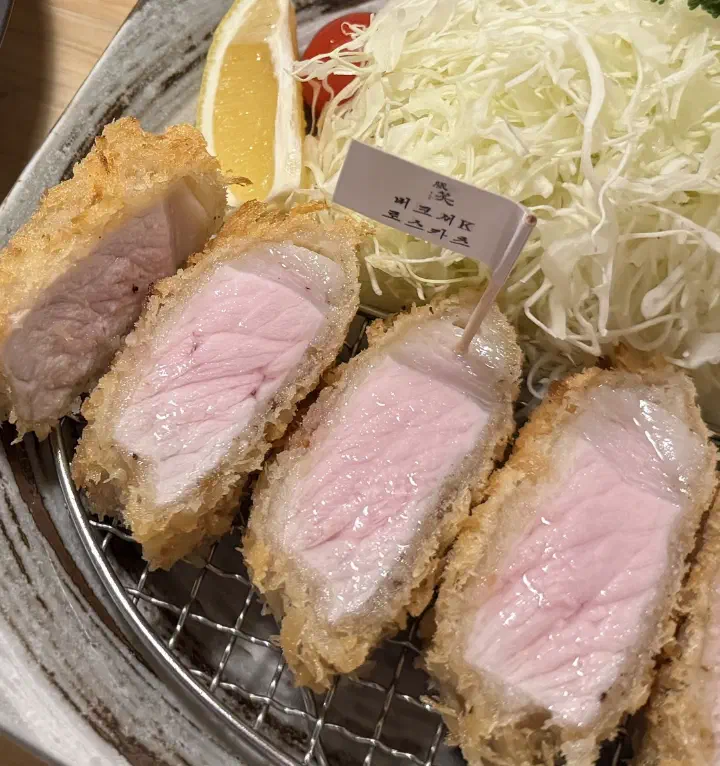
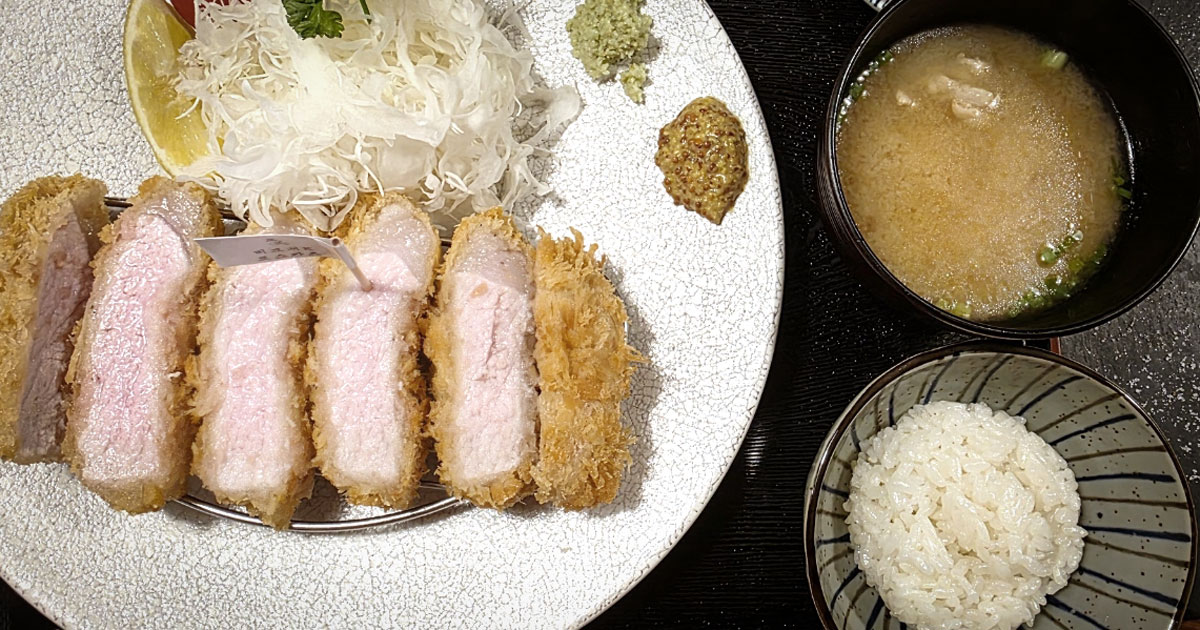
Cross-section of the charcoal-smoked Berkshire K roskatsu at Tonshou Gwangan showing a faint pink blush, served with shredded cabbage

The cross-section shows a faint pink blush - fully safe, deliberately not overcooked - and the thick cut stays tender enough that chewing feels optional.
The fat carries most of the flavor, nutty and clean, closer to a good pork steak than to a fried dish.
The special version adds a chewier cap of neck meat, but its thicker fat can feel heavy by the last piece.

Berkshire K special roskatsu at Tonshou Gwangan with a thick fat cap and neck meat

Hirekatsu and the rest

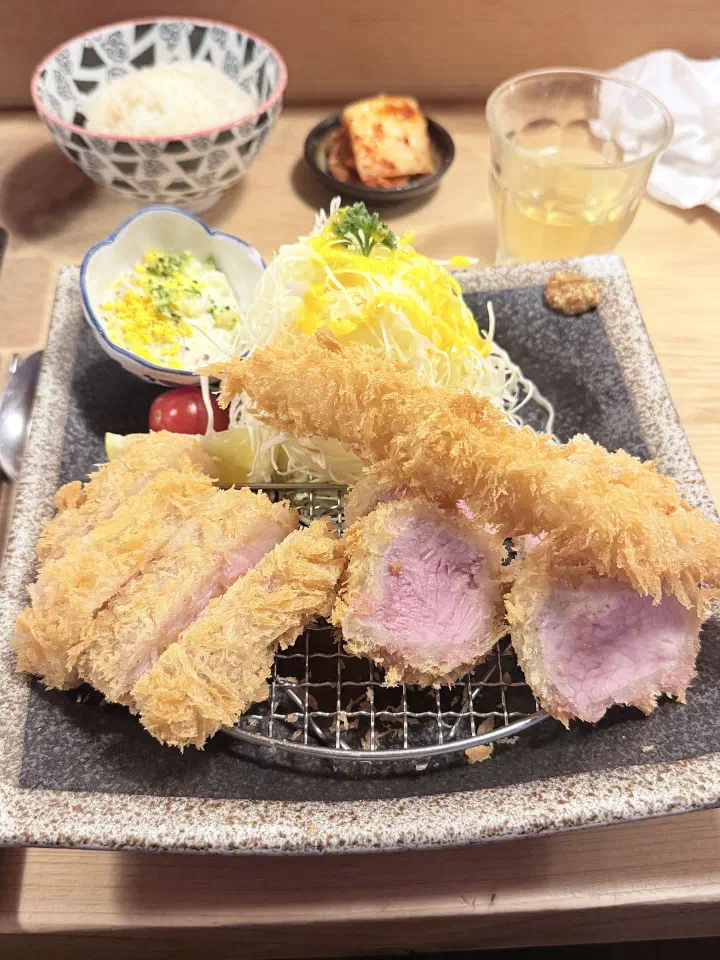
If rich fat is not your thing, the hirekatsu is the safe harbor.
Lean tenderloin, fine-grained and soft, consistent from first bite to last, though it skips the smoke treatment.
Kanjuku katsu is sliced thin and cooked through with no pink at all, which makes it the easy pick for kids or anyone uneasy about blushing pork.
The shrimp katsu holds a whole snappy shrimp in a thin crust, and the single-piece add-on works nicely as a palate change between bites of pork.

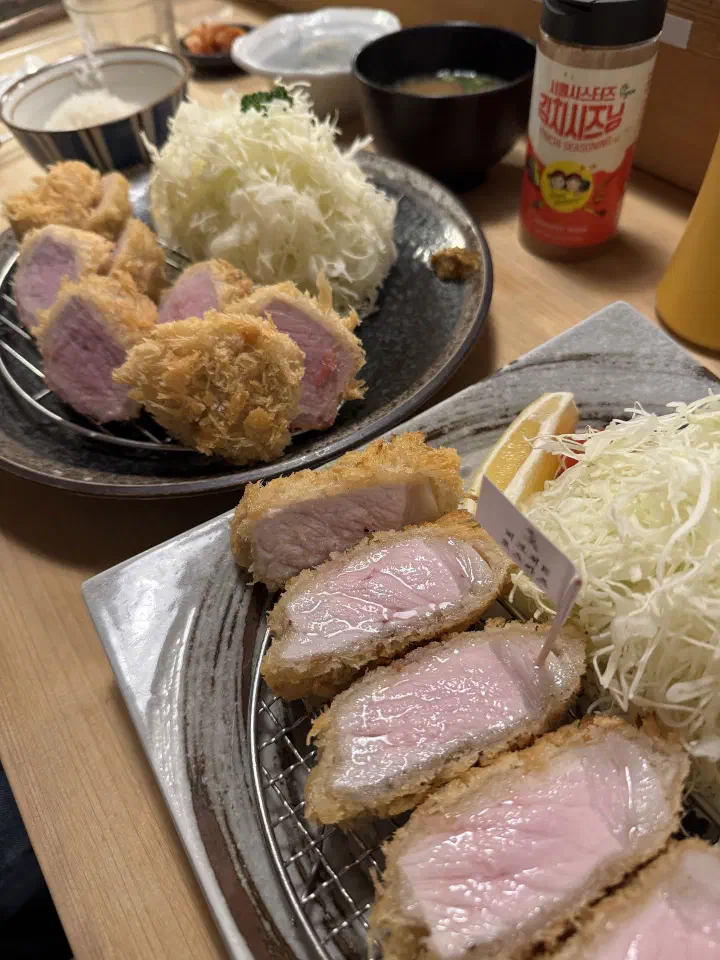
Hirekatsu pork tenderloin cutlet served with whole-shrimp ebi katsu at Tonshou Gwangan

Sauces and sides

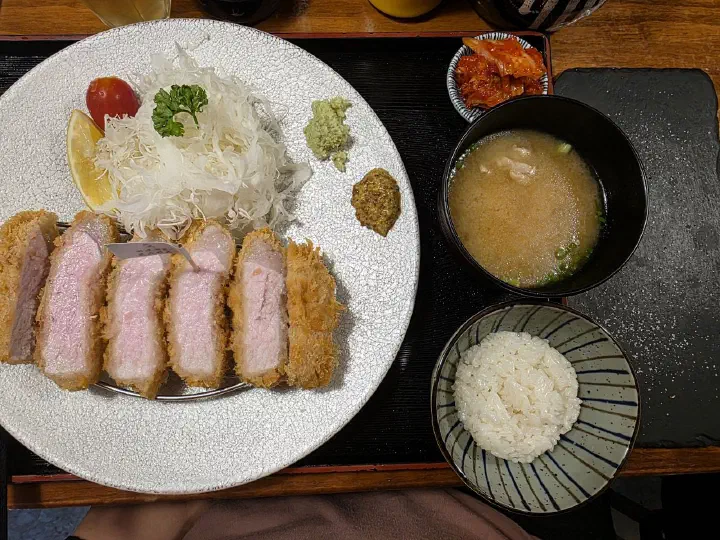
Each seat gets Maldon salt, wasabi, katsu sauce, lemon kosho, and a kimchi seasoning powder.
Try the first piece plain, then move to a pinch of salt with a dab of wasabi - that combination shows the meat best.

The starter soup changes with the seasons: chilled corn soup in summer, a warm soup in the cold months.
The miso soup comes loaded with pork and tofu and has a faint chili warmth that cuts the richness.
Rice, soup, and the yuzu-dressed cabbage salad are refillable with one main per person.
None of the food here is spicy in the Korean sense, so no bracing required.

Full tonkatsu set at Tonshou Gwangan with rice, miso soup, kimchi, and shredded cabbage salad

Where it falls short

The honest downsides.
The wait is the main cost - back-of-the-queue weekend numbers can mean five hours or more, and expectations inflate with every hour spent waiting.
Because the kitchen preps against a constant queue, the cutlet occasionally arrives less than piping hot.
It is sliced, so it cools fast; eat it the moment it lands.
And the fattier loin cuts genuinely do get heavy toward the end, which is why sharing two different cutlets beats ordering the same one twice.

Two plates of hirekatsu and Berkshire K roskatsu side by side at Tonshou Gwangan with kimchi seasoning on the counter

Payment and practical notes

Cards work without issue, including international ones, as in almost every Korean restaurant.
There is no tipping in Korea - offering one mostly causes confusion.
Staff English is limited, but it barely matters here: the food is already chosen when you join the waitlist, so the table interaction is minimal, and pointing at the menu covers anything else.

Getting there

The shop is a few minutes on foot from Gwangalli Beach, in the alleys behind the beachfront strip.
The classic pattern is to register on the waitlist, walk the beach or sit in a cafe, and come back on the entry alert.

📍 View Tonshou Gwangan (톤쇼우 광안점) on Google Maps →

Verdict

The smoke-finished Berkshire K cutlet is a real, distinctive thing, not marketing.
Whether it justifies the queue depends entirely on how you play the system: with a reservation or an early walk-in number, absolutely; with a 300-something weekend ticket, think twice.
The price you pay here is measured in hours, not won - manage the hours and this is one of the best tonkatsu experiences in Korea.