Cross the road from Busan Station and you walk straight into a small Chinatown with red lanterns strung over the street.
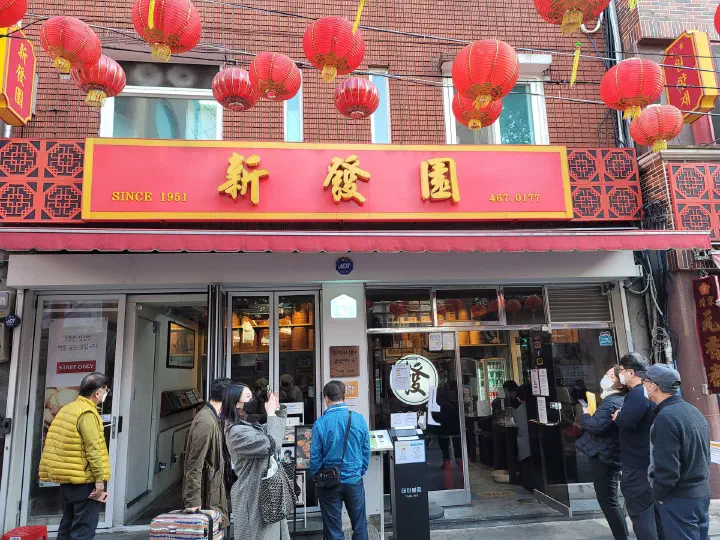
At the entrance of that alley sits Sinbalwon (신발원), a dumpling house that has been steaming and frying since 1951.
Quick verdict up front: the dumplings are juicy, honest, and cheap for what you get.
The catch is the queue system and a strict no-reorder rule, so it pays to know how the place works before you line up.

The basics
Sinbalwon is at 62 Daeyeong-ro 243beon-gil, Dong-gu, Busan, about a three-minute walk from Busan Station exit 5.
Hours are 11:00 to 20:45, last order at 20:15, closed every Tuesday.
No break time in between.
There is no parking lot; drivers use the public Chinatown lot nearby.
📍 View Sinbalwon (신발원) on Google Maps →
One heads-up for navigation: Google Maps is unreliable for walking directions in Korea.
Naver Map or Kakao Map will get you there without detours, though for this place you barely need an app.
You can see the queue from across the street.
A little history
The restaurant was opened in 1951, during the Korean War, by a Chinese immigrant family, and the third generation runs it now.
The name Sinbalwon (新發園) roughly means “a garden of new growth.”
It holds a government “Century Shop” designation, has collected Blue Ribbon awards (Korea’s homegrown restaurant guide) every year since 2013, and has been on Korean TV repeatedly, including Baek Jong-won’s Three Great Kings, a popular food show.
Dumplings are made in-house and steamed to order, sold the same day they are made.
None of that guarantees anything, of course, but it explains why the line never really disappears.
The queue, and when to go
There is no remote waitlist app.
No reservations either.
You physically stand in line outside the door, old-school.
Weekends are the crunch.
People start lining up before the 11:00 opening, and arriving at opening time often means close to an hour of waiting.
The sweet spot is a weekday late afternoon, roughly 4 to 6 pm, when you can sometimes walk right in.
The dining room is small, which is half the reason the line looks long, but turnover is quick and the queue moves faster than it appears.
In summer the staff put out parasols and a shade canopy for the line.
Solo diners sometimes get pulled in early when a counter seat opens up, which is a quiet perk of eating alone here.
While you wait, a staff member comes down the line to ask how many you are and roughly which dumplings you want.
That is just stock planning; the real order happens at the table.
Ordering: one shot, no reorders
Each table has a tablet with photos of every dish, and you order and pay in one go.
The menu photos make it easy even if you do not read Korean, and you can always point at the pictures.
Staff English is limited, but ordering here is genuinely one of the easiest in the city because of the tablet.
The rule that trips people up: at busy times, especially weekends, you cannot order again after the first order.
Whatever you punch in first is your meal, so order generously.
When the room is full there is also a one-hour table limit.
Dishes come out one by one as each batch finishes cooking, not all at once.
International credit cards work fine here, as they do at almost every restaurant in Korea, so there is no need to carry much cash.
And no tipping — Korea has no tipping culture, and leaving money on the table will only confuse people.

What to order
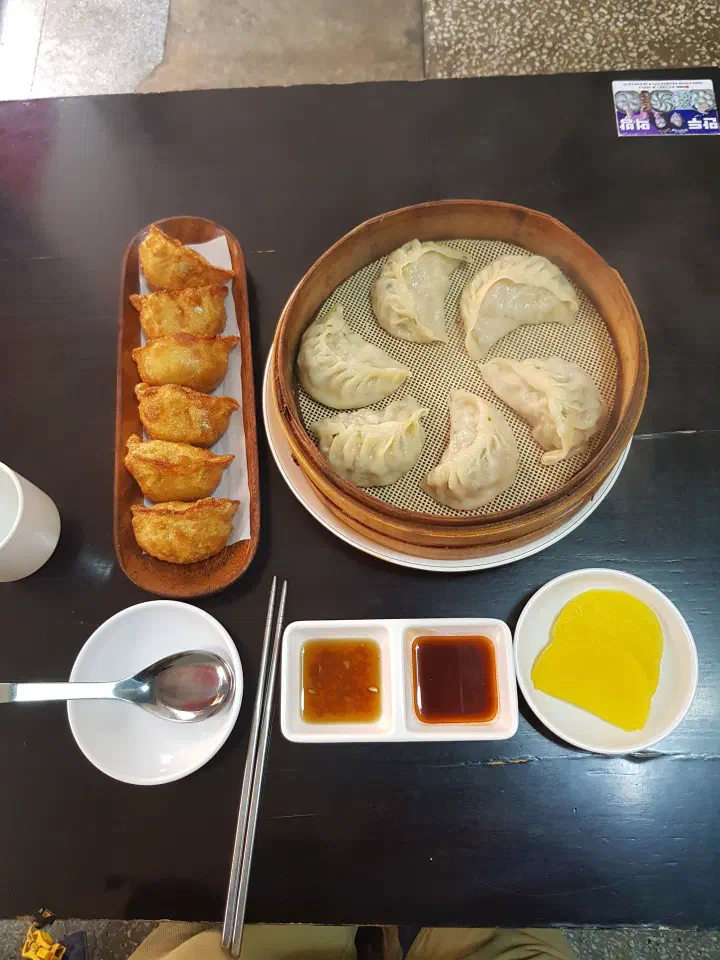
Dumplings come four to a portion.
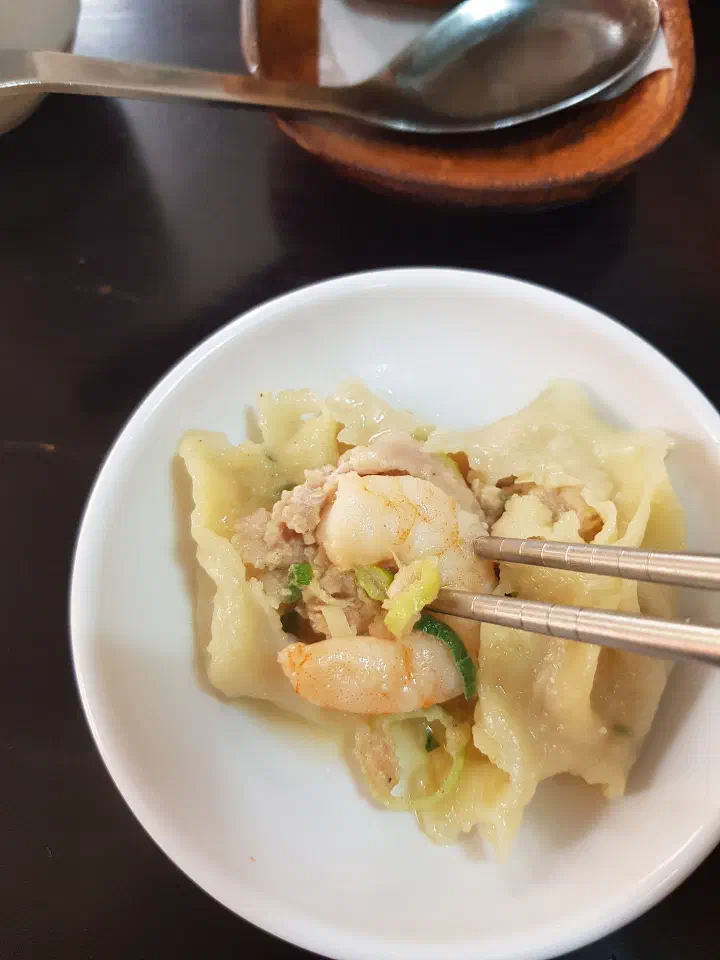
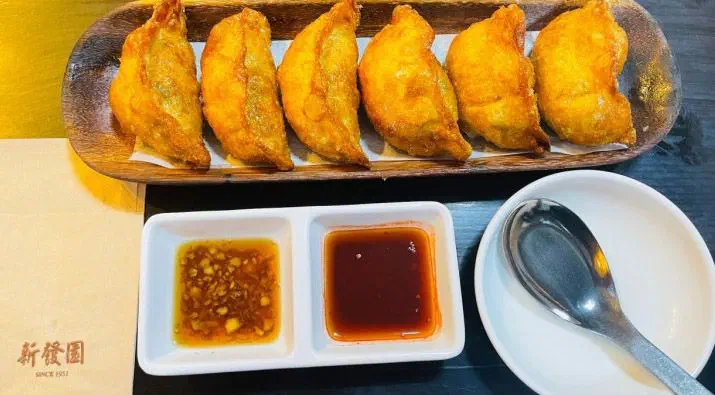
Steamed pork dumplings (gogi mandu, 고기만두) are 4,800 won, fried dumplings (gun mandu, 군만두) 5,500 won, shrimp dumplings (saeu mandu, 새우만두) 6,500 won.
A sampler called gogunsae (고군새, 8,500 won) gives you two of each, and the gogunsae set (18,000 won) adds cucumber salad and a draft Kirin beer.
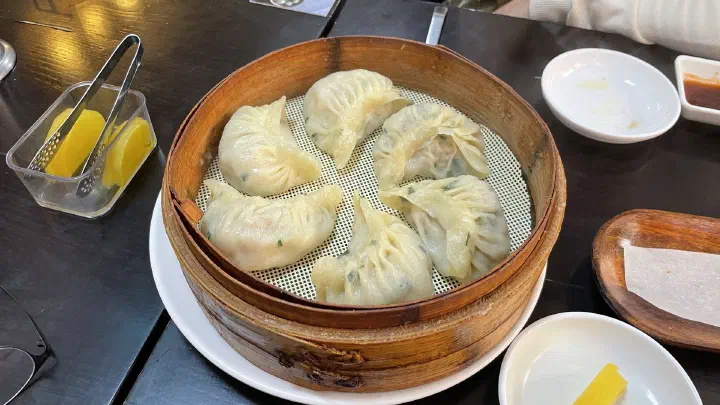
The steamed pork dumpling is the house signature.
The wrapper is made from fermented dough, slightly thick and chewy, and the filling releases a rush of hot broth when you bite in.
The filling is already seasoned, so you do not really need the soy dipping sauce.
Seasoning runs salty overall — worth knowing if you prefer mild flavors.

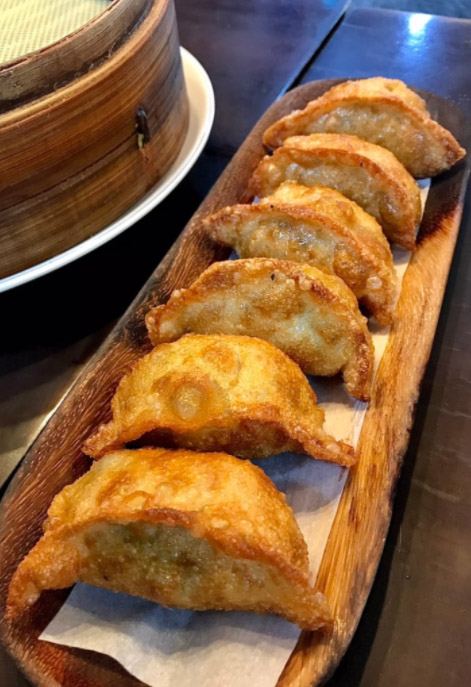
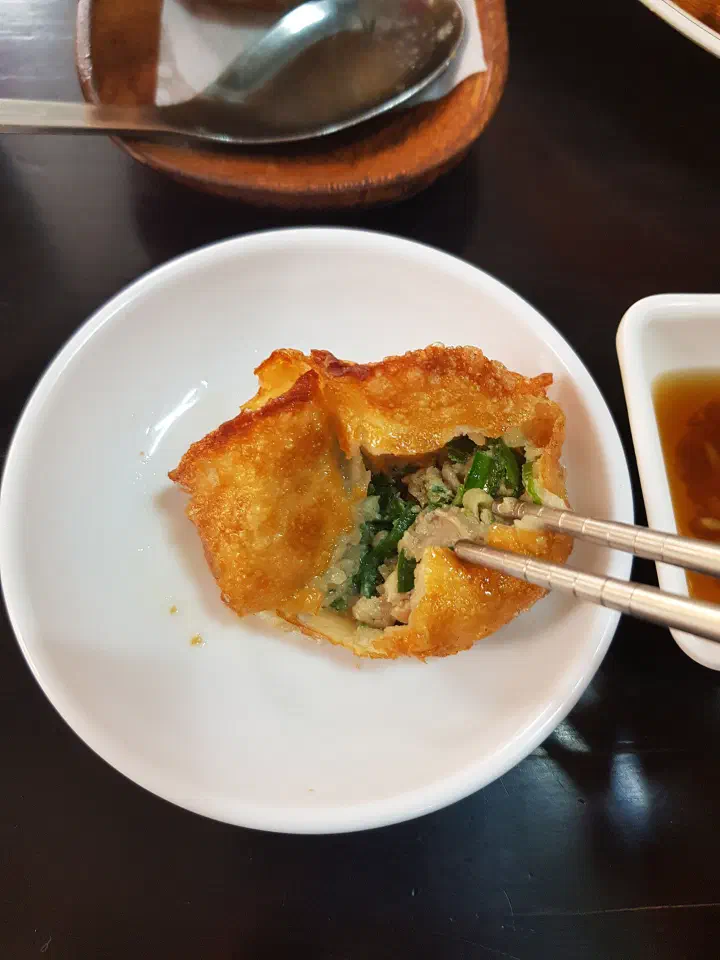
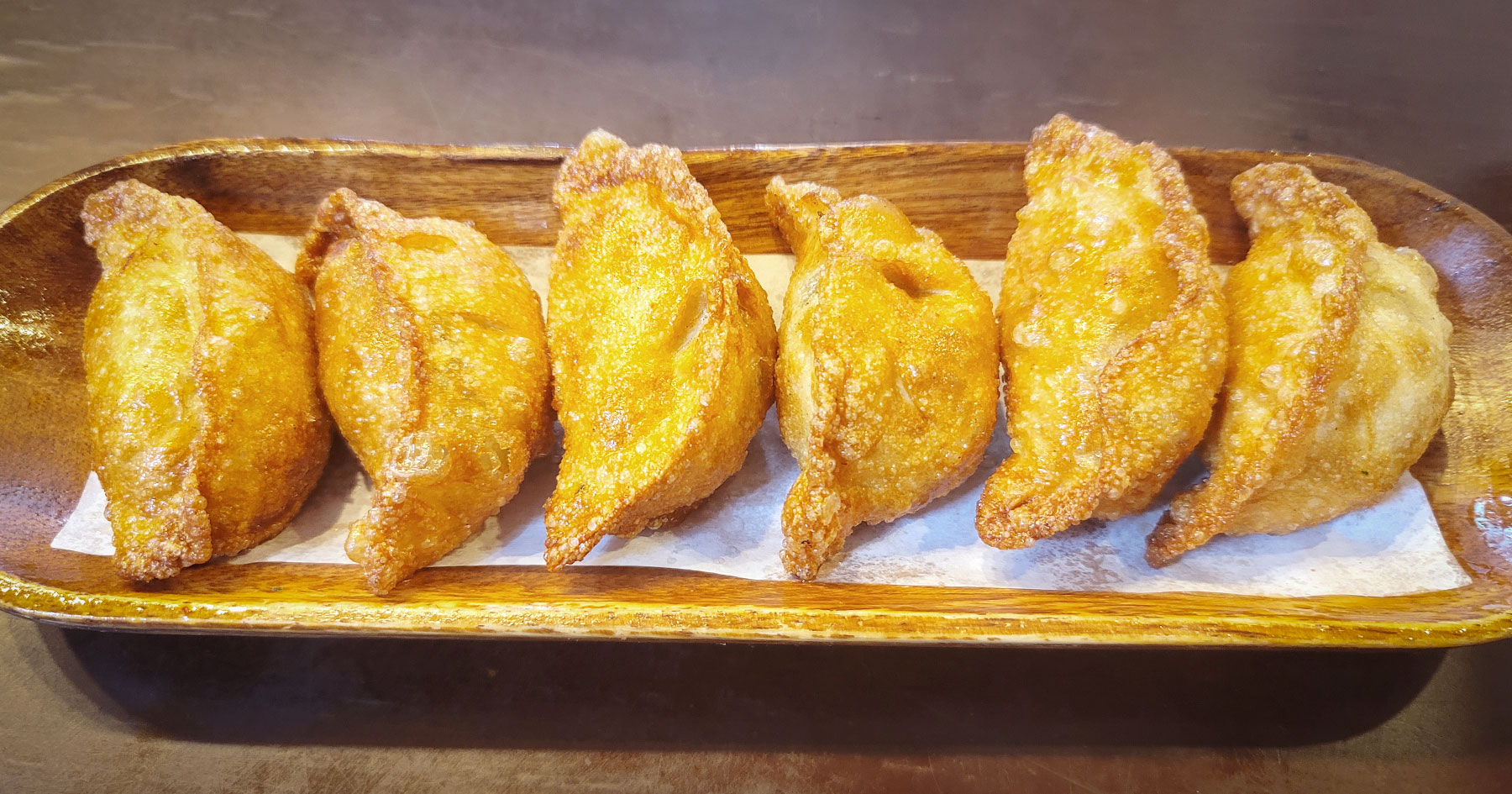
The fried dumpling is the crowd favorite, and deservedly so.
Thin, crackly skin outside, steamed-dumpling juiciness inside.
It comes out scorching hot, so give it a minute.
A practical eating order: steamed ones first, fried ones last, since they hold their warmth longest.

Shrimp dumplings have whole shrimp inside with a snappy bite that sets them apart from the pork ones.
The mala dumplings are labeled spicy but are mild by any standard — if you are hoping for real Sichuan-style numbing heat, these will undershoot.
Nothing else on the menu is spicy at all, so spice-sensitive eaters are safe here.

Kung fu myeon (쿵푸면, 5,900 won) is a noodle dish topped with fried scallions, bean sprouts, and a savory pork sauce.
Mixed fresh it is fragrant and moreish; left sitting it turns greasy and salty, so eat it right away.
The kongguk set (콩국, 4,500 won) is Taiwanese-style warm soy milk with a stick of fried dough for dunking, faintly sweet and soothing.
Some find it comforting, others find it bland — it is that kind of dish.
The cucumber salad (오이무침, 2,500 won) with garlicky, tangy dressing is the best counterweight to all the richness.
For two people, the gogunsae set plus one extra plate of fried dumplings lands around 23,500 won, which is a fair deal for the quality.
A meal here takes 30 to 40 minutes once seated.

The room
The interior was renovated a while back, so despite its age the place feels bright and tidy — wood tables, clean lines, none of the clutter you might expect from a 75-year-old shop.
Seating is mostly two-tops with a few four-tops and a counter along the back, so it is snug.
The counter makes solo dining completely comfortable.
Staff work the room constantly and are noticeably kind for a place this busy.
If you have a stroller or big luggage, though, the tight spacing works against you.
Skip the line: Sinbalwon Oejeon
Right next door is Sinbalwon Oejeon (신발원 외전), a takeout-only branch with almost no wait.
When the main line stretches past an hour, this is the sane move: grab dumplings and eat them nearby or back at your hotel.
The takeout shop also sells frozen dumplings, mooncakes, twisted doughnuts, and gonggalppang (공갈빵) — a hollow, crackly Chinese-style sweet bread that has been a quiet bestseller here for decades.
It makes a decent edible souvenir if you are heading back on the KTX.
Verdict
The downsides are real: standing in line with no app, the no-reorder rule, and expectations inflated by an hour-long wait.
These are old-fashioned dumplings that win on fundamentals, not fireworks, and a few people walk out wondering what the fuss was about.

But juicy handmade dumplings at these prices, three minutes on foot from the main train station, is a rare combination.
It suits travelers with a KTX ticket and an hour to spare, dumpling enthusiasts, and solo eaters.
It is the kind of place people end up returning to every time they pass through Busan Station, which is probably how the line has lasted 75 years.
Getting there
From Busan Station, take exit 5, cross the main road, and walk toward the Chinatown gate.
Follow the alley toward the overseas Chinese school and look for the red signboard — about three minutes on foot.
If you arrive by KTX, this works neatly as a first or last stop of a Busan trip.
Taxis are cheap in Korea and the Kakao T app works well, but honestly, walking is faster here.