There’s one sotbap (솥밥, Korean rice cooked and served in a stone pot) place I keep coming back to whenever I’m near Gwangalli Beach.
That’s Handasot (한다솥), the main branch.

My first visit was years ago. My husband had seen their charcoal-grilled fish on a Korean TV show and wanted to try it.
Back then it wasn’t the kind of place with a line out front. Now there’s almost always a wait at meal times.

So this isn’t a one-visit write-up. It’s more of a “what I’ve noticed after going several times” kind of post, the good and the slightly annoying both.

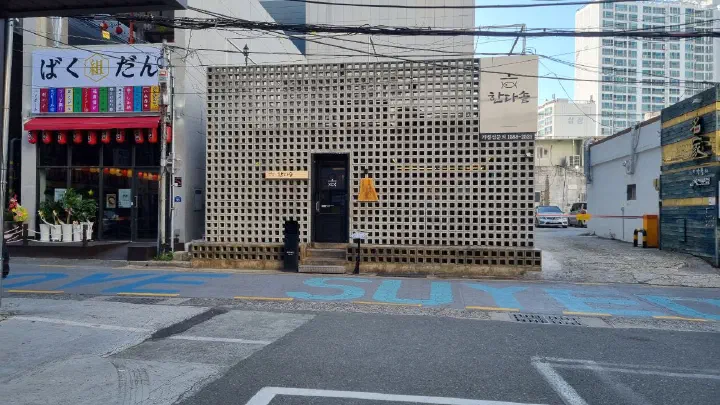
Exterior of Handasot main branch in Gwangalli, a lattice stone building

The basics

  • Address: 101 Namcheonbada-ro 33beon-gil, Suyeong-gu, Busan (near Gwangalli Beach, Namcheon-dong)
  • Phone: 051-752-0840
  • Hours: 11:00 – 21:00 daily, no afternoon break
  • Parking: Gwangan Tower lot across the street, first hour covered
  • Payment: credit cards and Zero Pay, paid at the counter on your way out

📍 View Handasot (한다솥) on Google Maps →

No afternoon break is a bigger deal than it sounds.
In Gwangalli a lot of restaurants close between lunch and dinner, so finding a real meal around 2 or 3 p.m. can be surprisingly hard. Handasot stays open straight through, and I’ve leaned on that more than once.

As with most restaurants in Korea, any international card works fine here, and there’s no tipping culture, so you don’t need to leave anything extra. The staff didn’t really speak English when I was there, but ordering was easy anyway (more on that below).

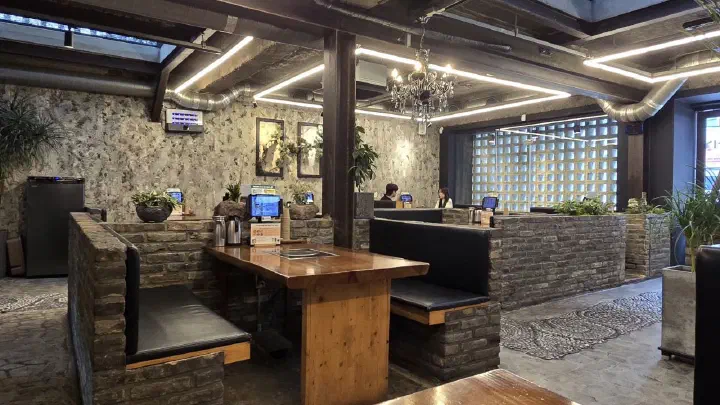
Interior of Handasot, charcoal oven and wood furnishings

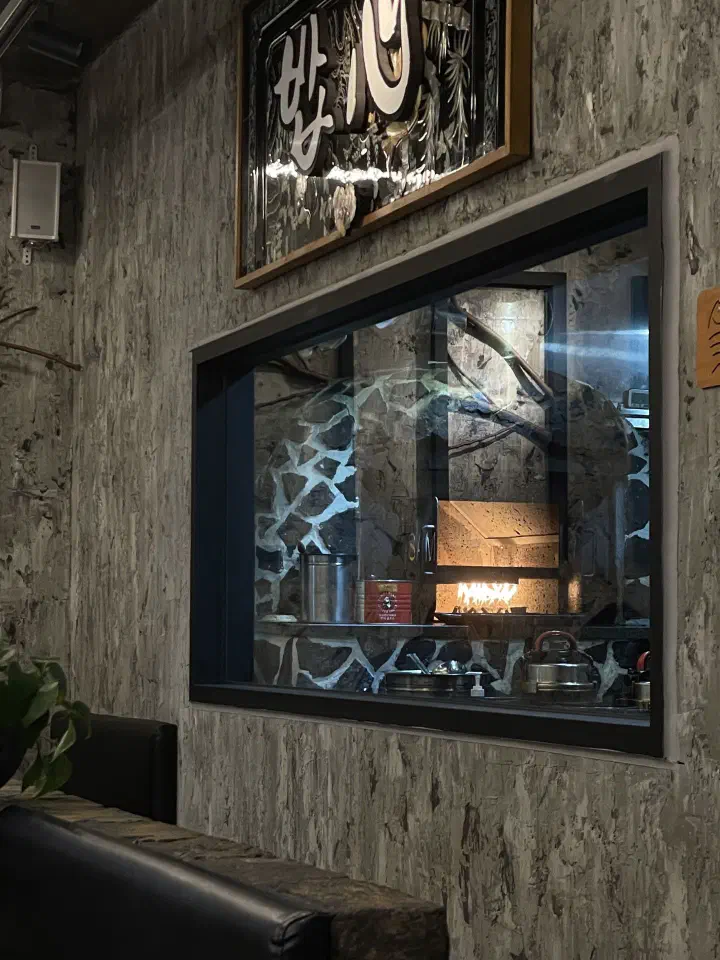
Stone-walled entrance of Handasot main branch

Parking, explained (the confusing part)

Gwangalli is notorious for parking, so let me be specific here.

Handasot doesn’t have its own lot. You use Gwangan Tower, a mechanical paid parking tower directly across the street. Park there and the restaurant covers your first hour.
Because it’s a tower system, the owner often parks the car for you, so just ask when you arrive.

One thing to know: search results say “1 hour parking support,” which makes it sound free, but anything past that first hour costs extra, roughly 2,000 won per 30 minutes.
If the wait is long or your meal runs slow, you may pay a few thousand won on the way out. Once, with the wait included, I ended up paying about 4,000 won. They don’t always mention it before charging, so keep an eye on the time.

If you’re not driving, it’s an easy walk from Geumnyeonsan Station, and it’s close enough to fold into a Gwangalli Beach stroll.

A quick travel note: Google Maps is unreliable for walking and transit directions in Korea. Use Naver Map or KakaoMap instead, and if you need a taxi, the Kakao T app is the standard way to call one.

Waiting and ordering

On weekends and at peak lunch/dinner hours, expect a wait.
There’s a CatchTable (테이블링/캐치테이블) kiosk out front where you put your name in the queue through the app. I usually register, then walk the beach or grab a coffee nearby while the line moves. On weekday mornings or late afternoons I’ve often walked straight in.

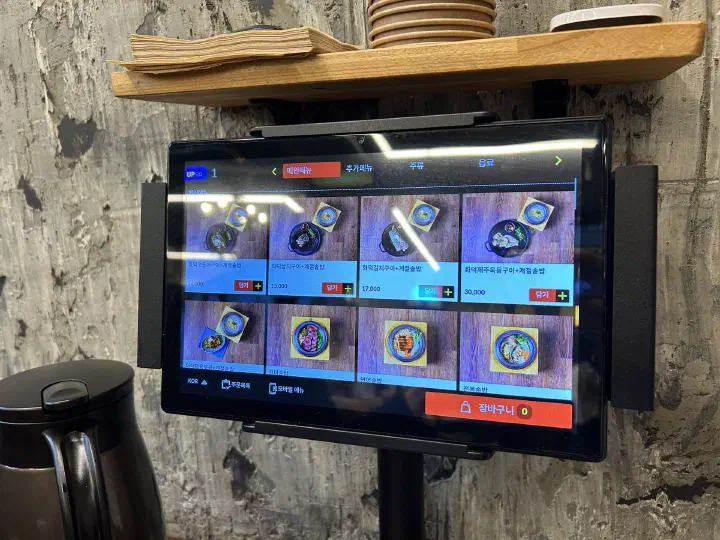
Tablet ordering screen at the table, Handasot

You order from a tablet ordering device right at your table, which makes the whole thing easy. Tap “English” and the entire menu switches over, so everything is explained in English, which is genuinely convenient. Best of all, each item shows a photo of the dish next to it, so you can tell exactly what you’re getting. That part I really want to praise. A few of the English phrases come out a little awkward here and there, but nothing that gets in the way. This is why I keep saying ordering is no trouble at all.

One rule: anyone elementary-school age or older has to order their own main dish. You can’t just add a bowl of rice to share. Seaweed soup comes one bowl per main ordered.

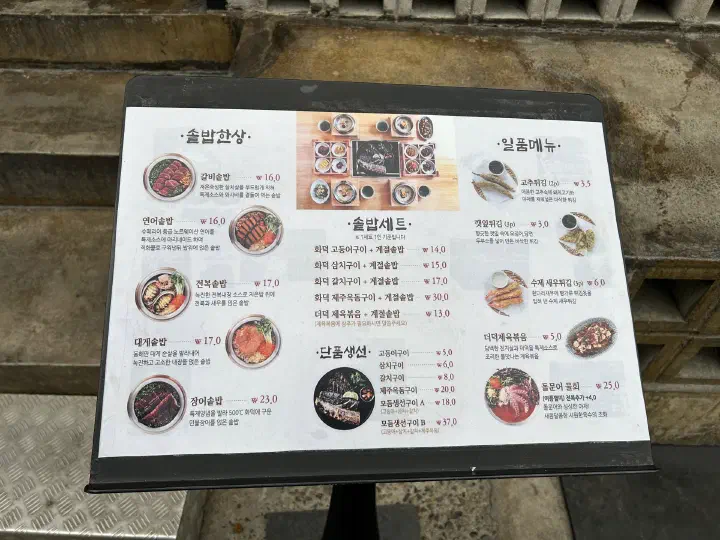
Handasot menu board

The side dishes and soup come first, and they’re good

The things that arrive before the main are part of why I like this place.
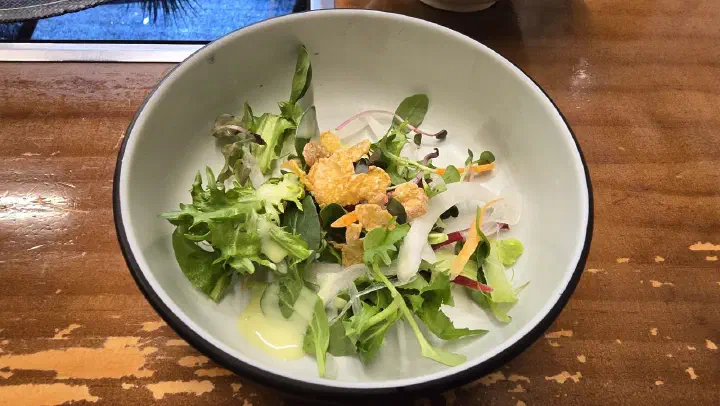
First comes a salad with a sweet-tangy dressing, a nice little wake-up for the palate.

Salad served with the sotbap set at Handasot

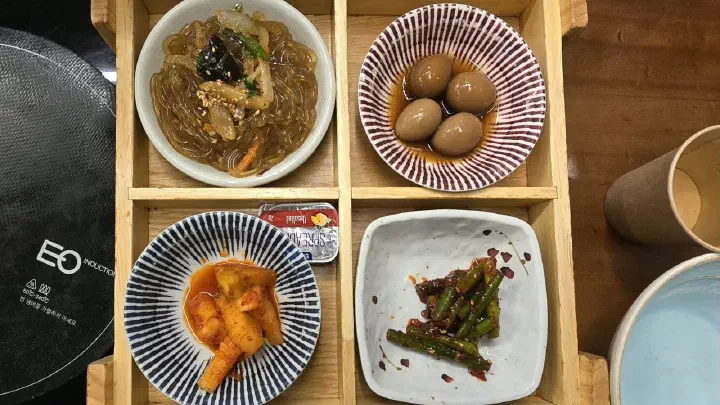
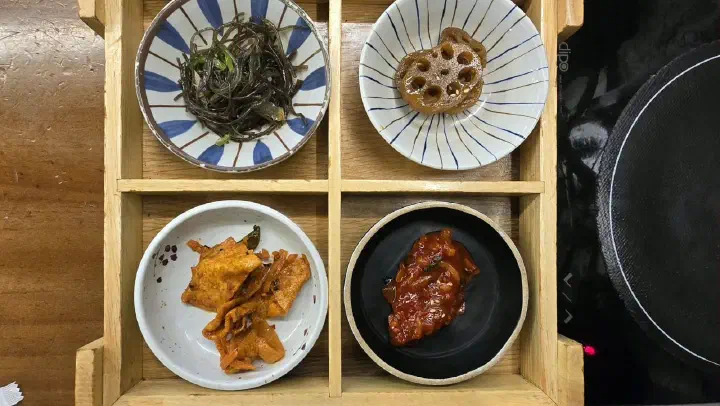
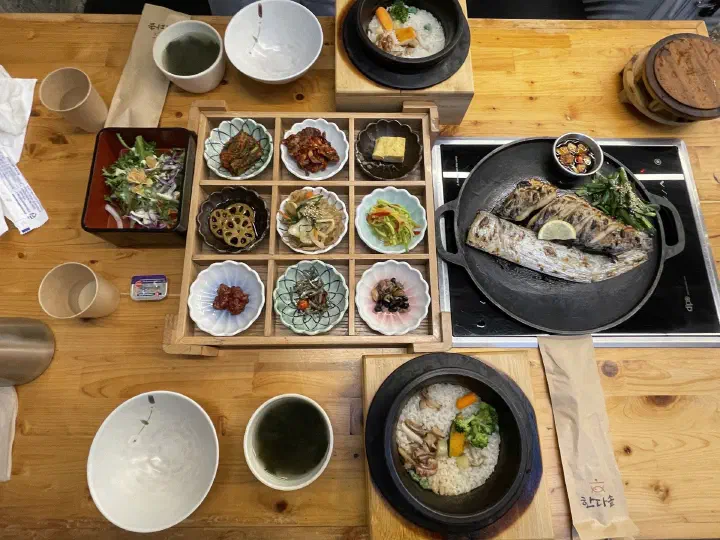
Then the banchan (반찬, Korean side dishes) spread, usually around eight small plates: japchae, rolled egg, stir-fried anchovies, braised lotus root, various pickles. The ones you like can be refilled.
A lot of them lean salty and pickled on purpose, since you’ll want them later with the soupy rice at the end.

Handasot banchan side dishes

A spread of side dishes at Handasot

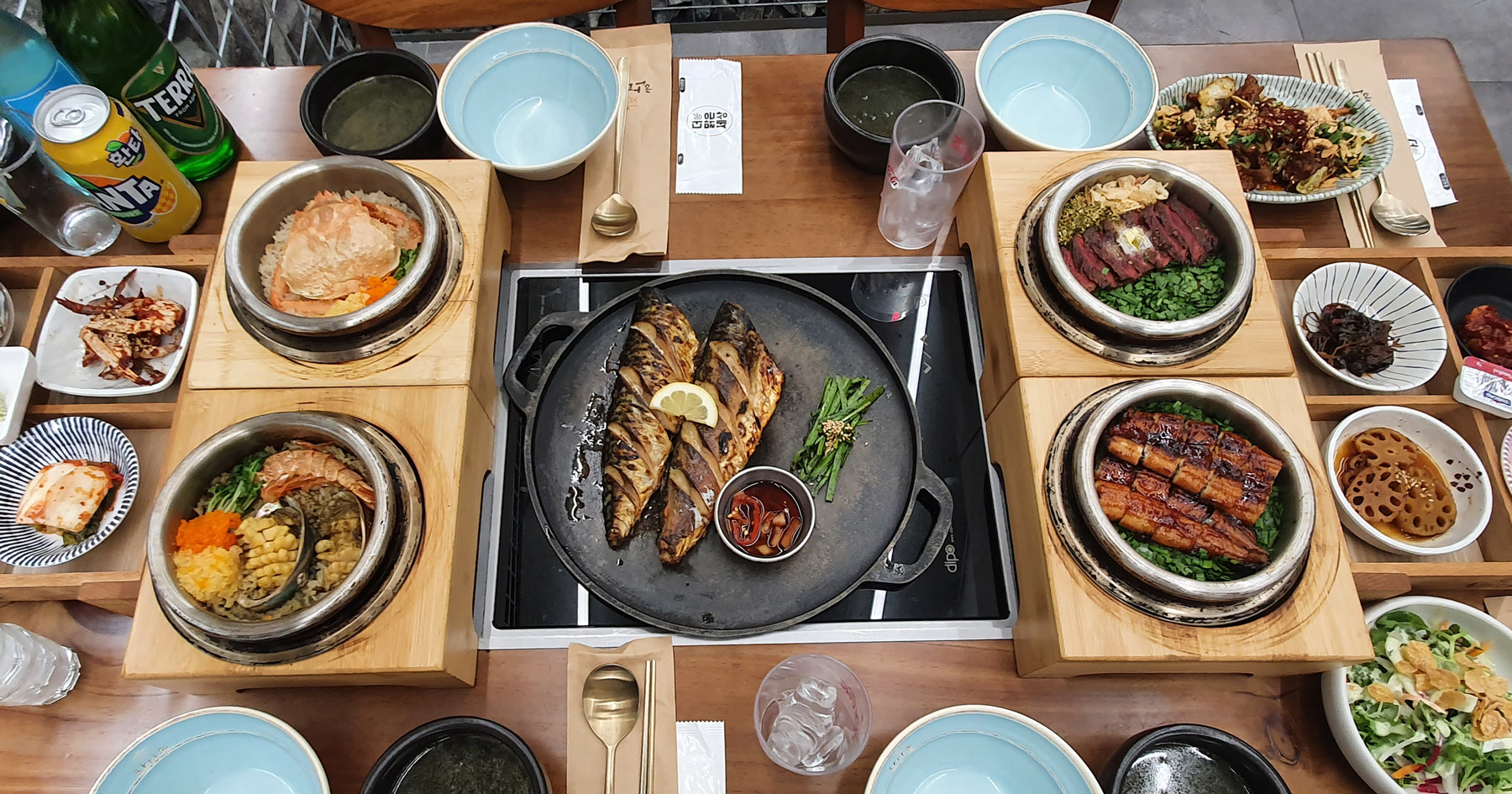
Full sotbap set table at Handasot

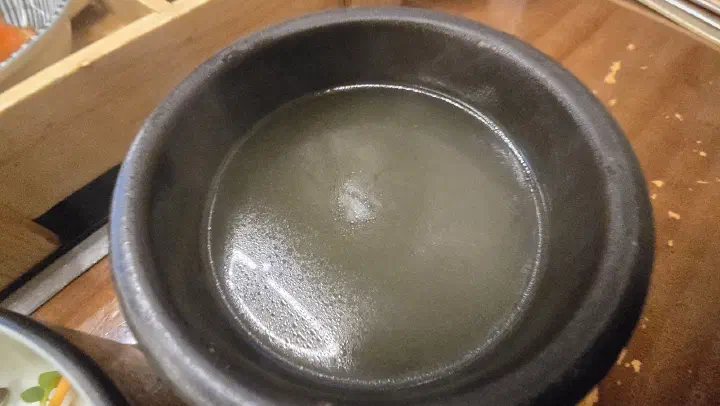
And the miyeokguk (미역국, seaweed soup).
Regulars keep calling it the highlight, and they’re not wrong. It comes out rich and deep, and on a chilly evening one spoonful warms you right up.

Individual bowl of seaweed soup at Handasot

Sotbap: the galbi one is the safe pick

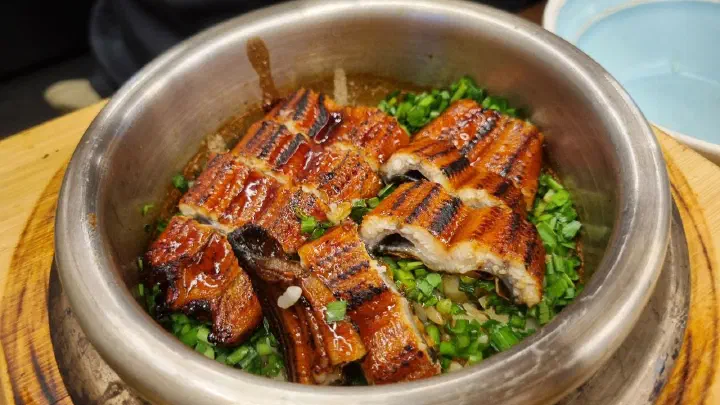
There are a lot of pot rice options: beef galbi, abalone, snow crab, eel, salmon, and a seasonal one.
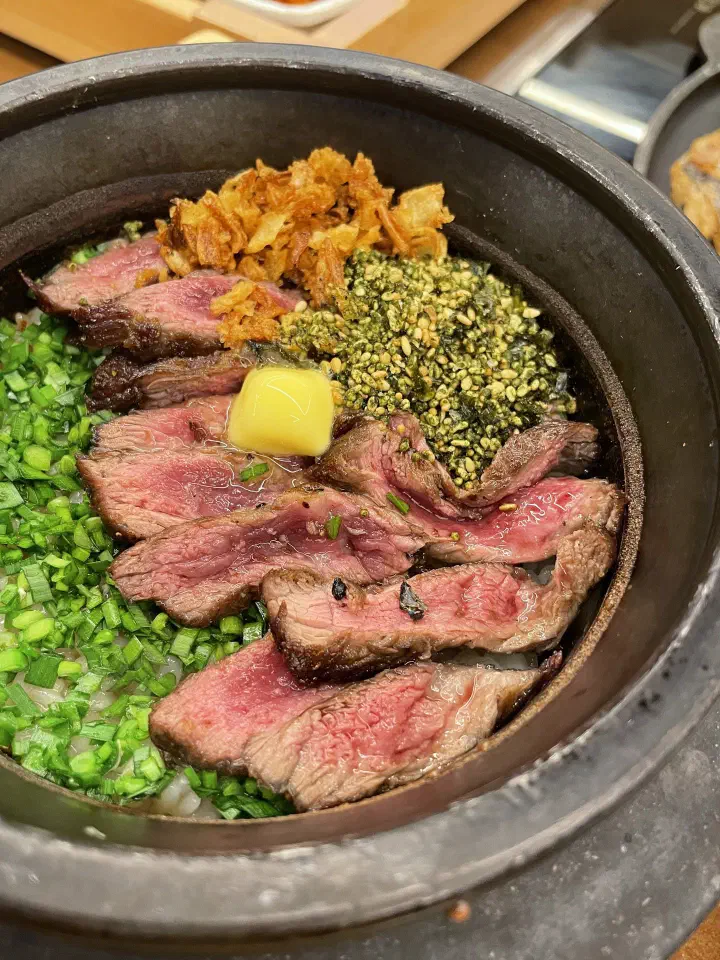
I’ve worked through most of them over the years, and the one that pleases just about everyone is the galbi sotbap (갈비솥밥).

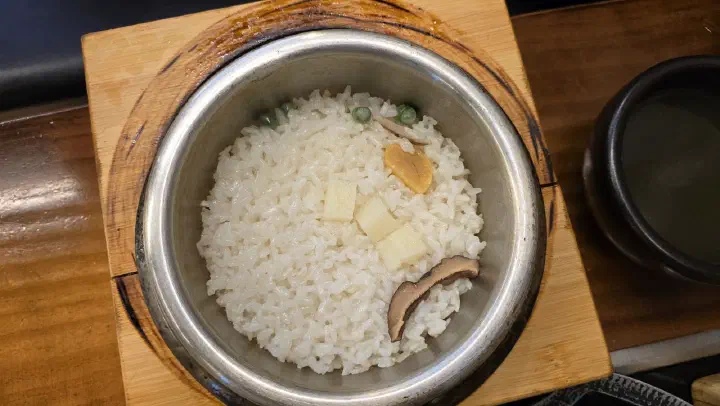
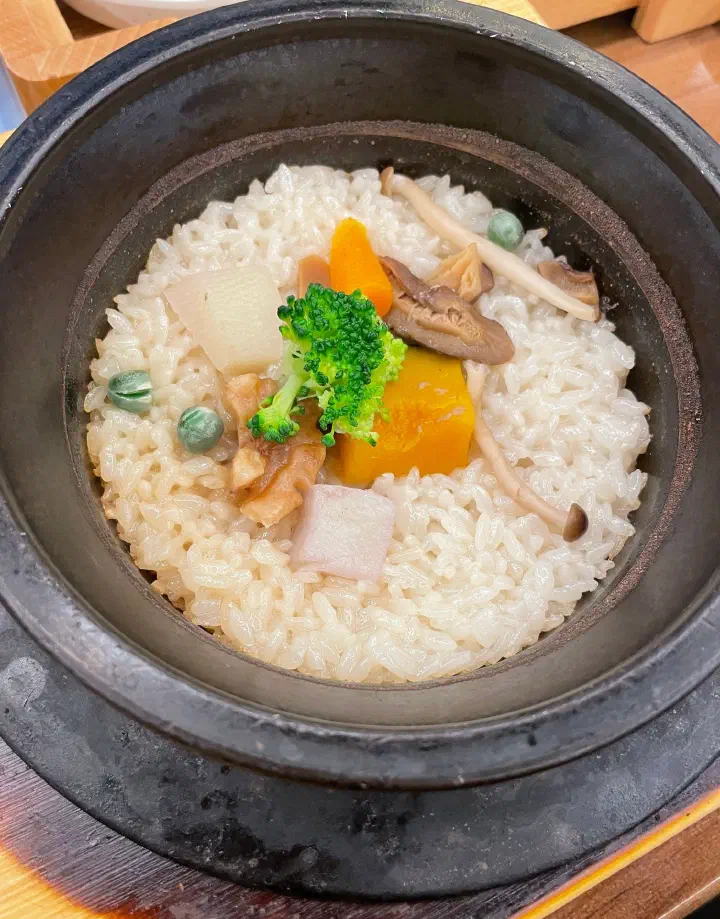
Seasonal sotbap with freshly cooked white rice in a stone pot at Handasot

Handasot galbi sotbap, sliced beef over rice in a stone pot

It’s low-temperature-aged chuck flap, cooked tender and eaten with a house sauce and a dab of wasabi. Even people who don’t love seafood are happy with it, so when I’m with a meat-leaning crowd it’s almost automatic.

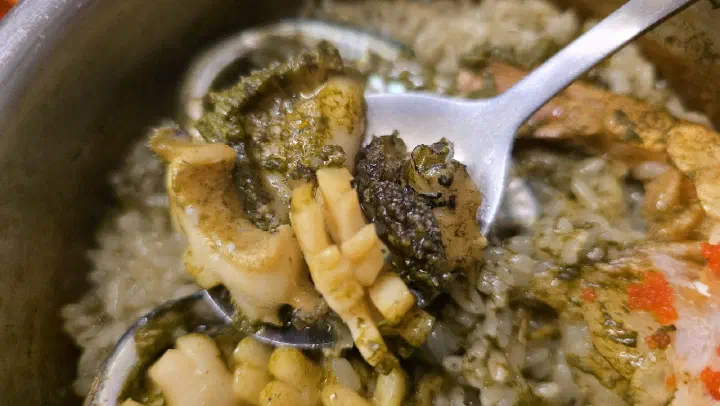
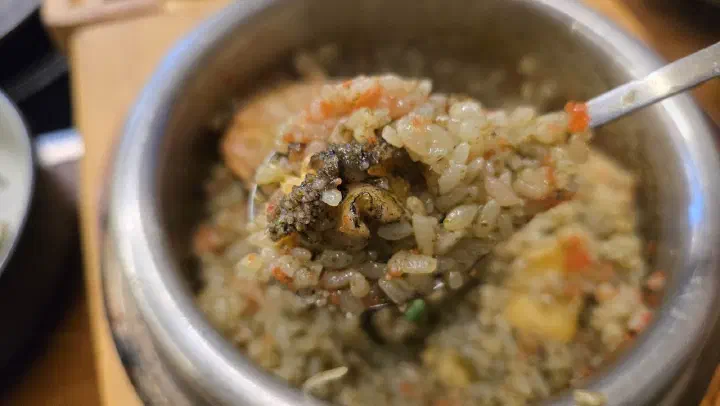
Close-up of abalone sotbap at Handasot

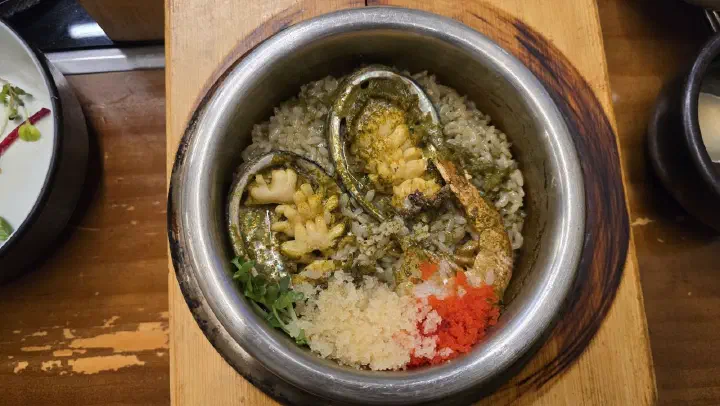
The jeonbok sotbap (전복솥밥, abalone) comes with more abalone than I expected, and it’s tender rather than rubbery, a nice one for a small occasion.
The daege sotbap (대게솥밥, snow crab) has crab meat topped with the rich roe; it’s good but a bit more divisive.

Seasonal sotbap at Handasot, topped with seasonal ingredients

There’s a little guide on the table for eating sotbap the proper way.
You scoop all the rice into your bowl and mix it there, then pour the hot barley water into the empty pot, put the lid back on, and eat the crispy scorched rice at the bottom like a soup at the end.
I always do it this way; that last bowl of nurungji (누룽지, scorched-rice tea) is a quiet little treat. A touch of wasabi changes it up too.

I’ll be honest: the rice itself has varied between visits.
It used to come out firmer and more separate; lately it’s sometimes a bit wetter, and the banchan lineup shifts a little year to year. On a rare day the bottom was slightly over-scorched.
Even so, my overall satisfaction has stayed pretty steady.

Charcoal-grilled fish and the seafood platter

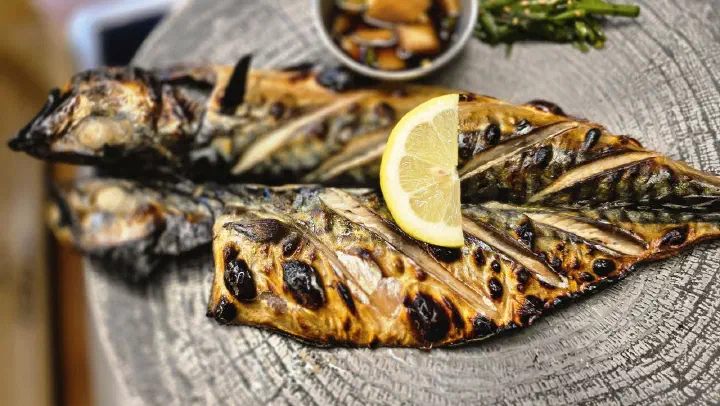
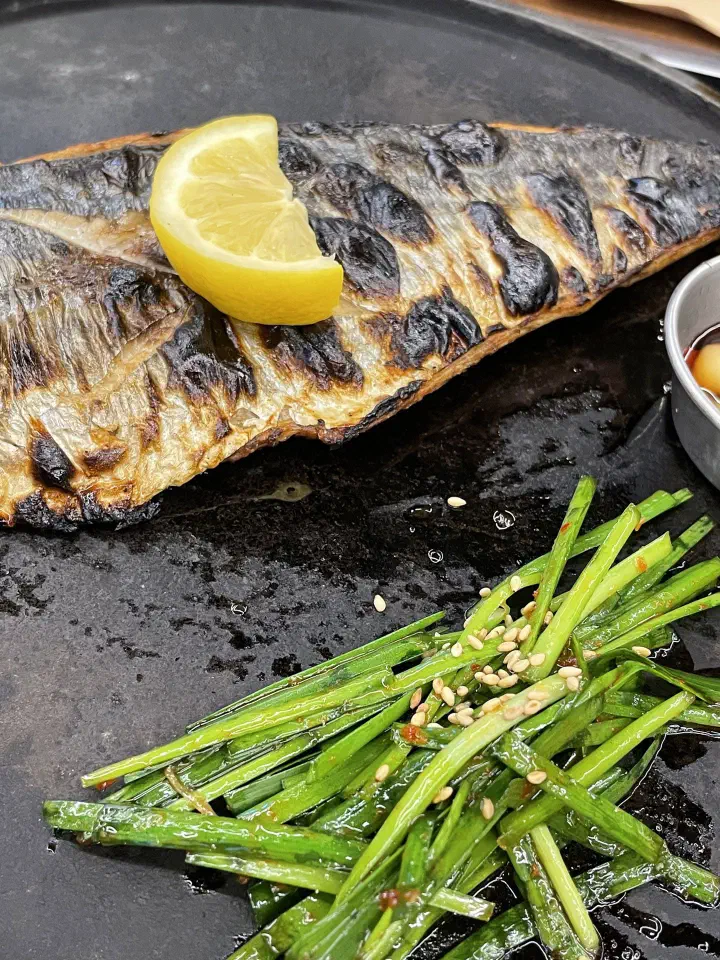
The other signature is fish grilled in a 500°C charcoal oven, served as a set with sotbap: mackerel, mackerel pike (samchi), or hairtail (galchi).

Charcoal-grilled fish at Handasot

The fat renders off, so it’s clean-tasting with almost no fishy smell.
I’m someone who usually avoids fishy fish, and during a Busan trip when I was tired of heavy, punchy food, I came here specifically for this.

Charcoal-grilled hairtail with lemon at Handasot

That said, the grilled fish is lightly seasoned, so it’s a love-it-or-not thing.
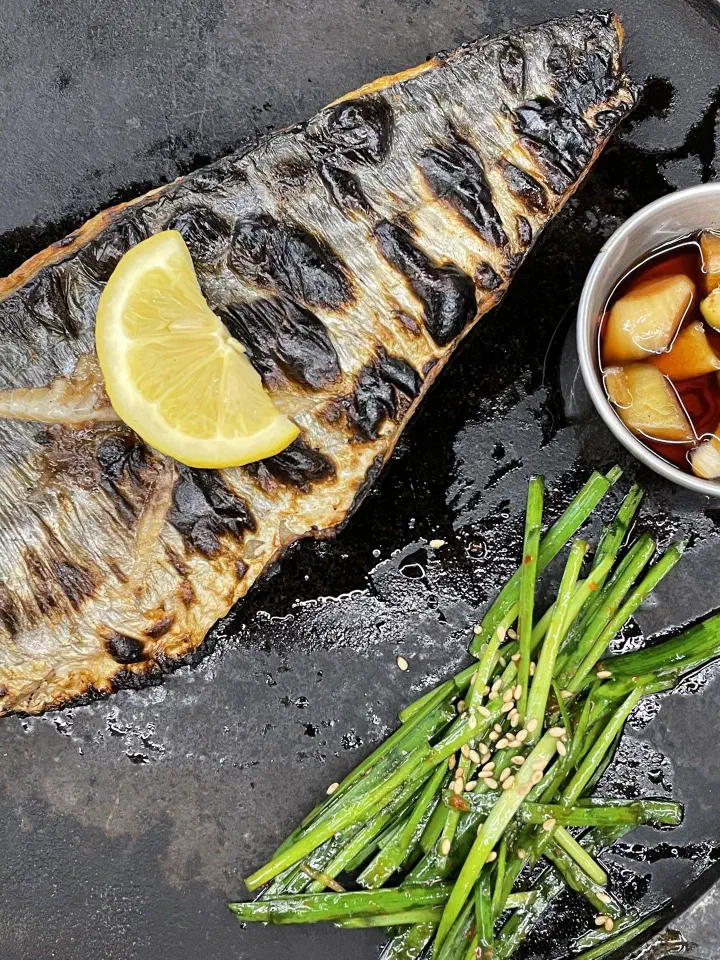
Only the skin side gets a little salt; the flesh is plain and meant to be dipped in the soy-based sauce they bring. If you like strongly seasoned grilled fish, this may read as bland, so go in knowing that.

Charcoal-grilled fish with seasoned greens at Handasot

The modum haemuljang (모둠해물장, assorted marinated seafood) has gotten popular lately.
It’s eight kinds of seafood, abalone, shrimp, salmon, scallop and more, marinated so the umami comes through without being too salty.
Ordered as a set with seasonal sotbap, it makes for a pretty generous-looking table.

For a side, I’d get the gochu twigim (고추튀김, fried stuffed peppers). They’re crisp and a little spicy, which balances things out when the sotbap and grilled fish have you wanting something with more punch.
A quick heads-up for visitors: Korean “a little spicy” can land as properly spicy for some, so ease in if you’re not used to it. Most of the menu here is mild, though.

Shrimp tempura at Handasot

Fried stuffed peppers at Handasot

Stir-fried squid and pork at Handasot

There’s also an ojingeo jeyuk (오징어 제육볶음, stir-fried squid and pork) set, but I wouldn’t push that one.
The squid has been a bit chewy and the smoky flavor felt slightly artificial to me. I’d stick with the sotbap or the charcoal-grilled fish, which is where the kitchen is strongest.

The honest downsides

If I only said nice things this would read like an ad, so here’s what’s nagged me over multiple visits.

First, service varies day to day.
Plenty of visits were warm and attentive, but on a couple of days the tone during the wait or the serving felt curt enough to dent the mood. It comes up in other reviews too, so I can only hope you catch a good day.

Second, portions aren’t huge.
With the one-main-per-person rule and only plastic-wrap takeout for leftovers, a big eater might leave wanting a little more.

Third, the parking fee I mentioned. “One hour free” lulls you into lingering, and then there’s a charge, so glance at the clock now and then.

Would I go back?

Sotbap runs in the mid-to-high 10,000-won range and the seafood-platter set climbs into the high 20,000s, so it isn’t cheap.
But between the side dishes, the charcoal-grilled fish and the calm room, it feels fair for a proper sit-down meal in Gwangalli.

It works for a meal with parents, a date, or a family outing, and I’ll keep dropping in whenever I’m in the area.
There are more people and slightly higher prices than on that first visit years ago, but when I think “a solid Korean spread in Gwangalli,” this is still the first place that comes to mind.

A couple of practical notes for travelers: at the counter you can usually get by with a few simple English words, and while cards are accepted almost everywhere in Korea, it’s handy to keep a little cash for street stalls and markets where overseas cards occasionally get declined.

Getting there

  • 101 Namcheonbada-ro 33beon-gil, Suyeong-gu, Busan (Gwangalli Beach / Namcheon-dong)
  • Walkable from Geumnyeonsan Station; close to Gwangalli Beach
  • Parking: Gwangan Tower lot across the street (first hour covered, paid after that)

📍 View Handasot (한다솥) on Google Maps →