If you talk about milmyeon in Busan long enough,
this name always comes up eventually.
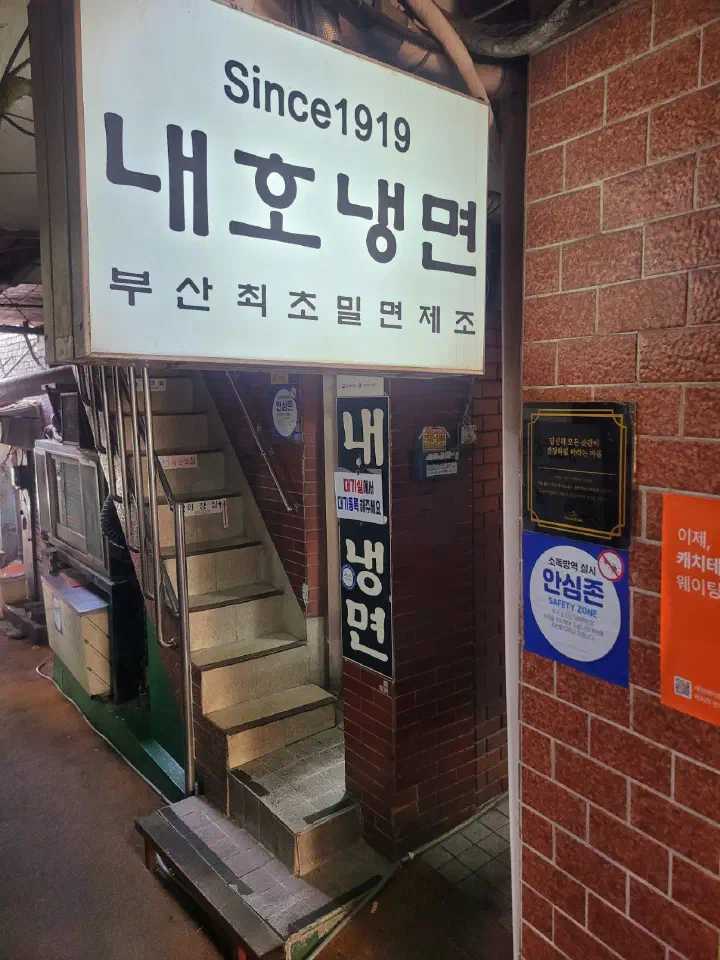
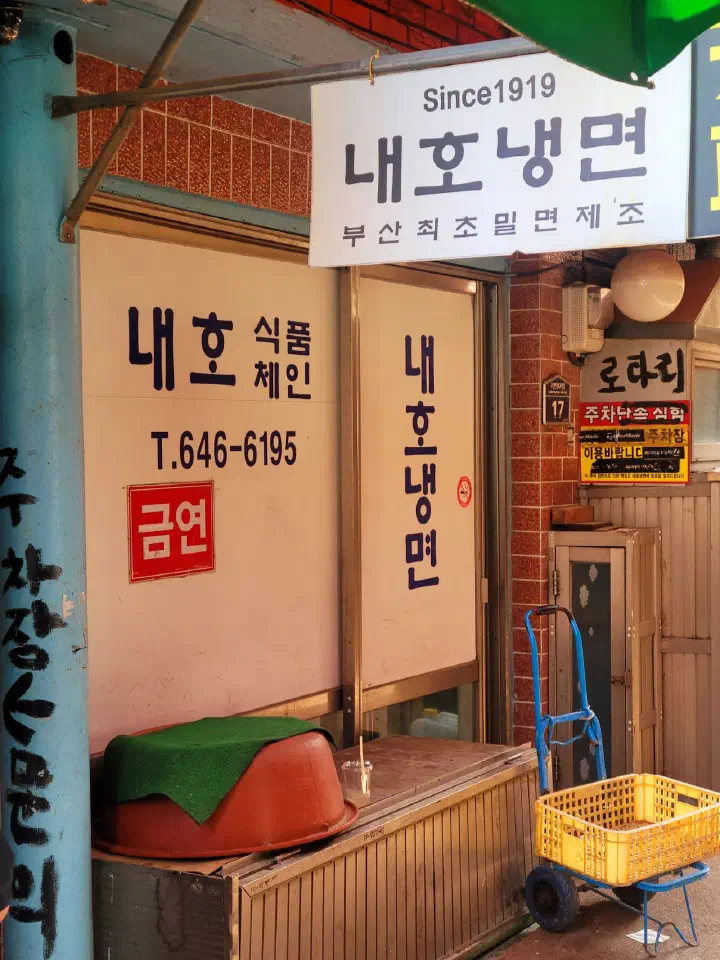
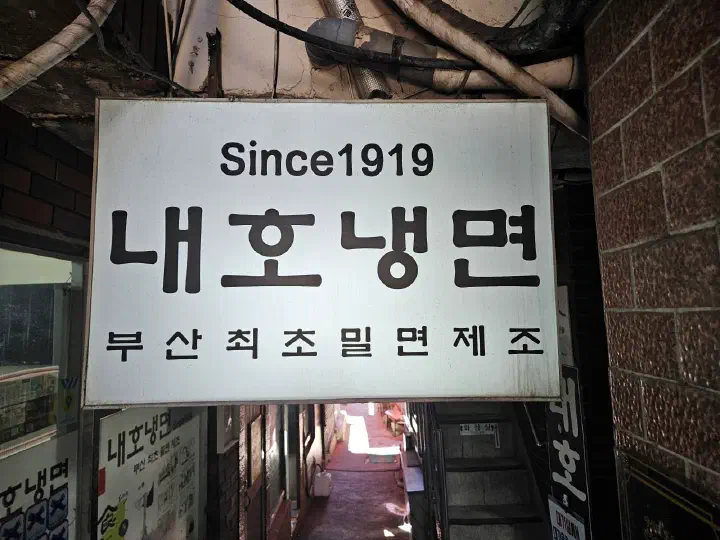
Naeho Naengmyeon (내호냉면) sits at the dead end
of a narrow alley in Uam-dong.
It calls itself Busan’s first milmyeon house, dating back to 1919,
so the history tends to arrive before the food does.
That also brings a fair question.
Is a place this famous still about the noodles, or just the name?
This is my attempt to land somewhere honest in between.

The basics first
- Address: 17 Uam-beonyeong-ro 26beon-gil, Nam-gu, Busan
- Phone: 051-646-6195
- Hours: 10:30-19:00 daily (last order 18:30)
- Closed: open year-round
- Good to know: takeout available, tablet ordering with prepayment at the table
- There’s also a meal-kit version sold online for cooking at home
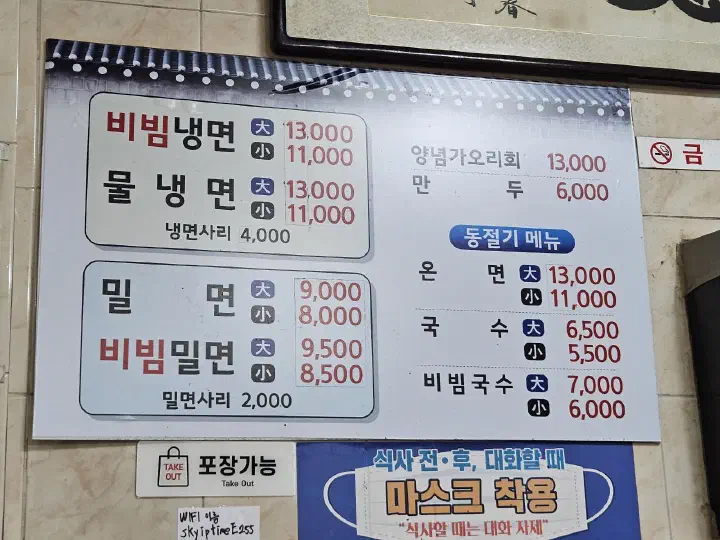
Milmyeon runs about 9,000 won (small) to 10,000 won (large),
bibim-milmyeon a little more,
and the naengmyeon (buckwheat-style) bowls sit a step higher at 12,000-14,000 won.
Prices ticked up by around a thousand won in 2026,
but it’s still in the normal range for Busan milmyeon.
A quick note for travelers: almost every restaurant in Korea takes
internationally issued credit cards, so you don’t need much cash here.
There’s no tipping culture either; staff may be genuinely confused
if you try to leave one.
📍 View Naeho Naengmyeon (내호냉면) on Google Maps →
You really do walk to the end of the alley
The location is part of the experience.
From the main road you turn into the Uam market alley
and climb the slope until the sign finally appears.

It’s the kind of spot where you think,
“there’s a restaurant up here?”
The story goes that the original owner told her children
never to move the shop, no matter how busy it got,
and that stubbornness is why it’s still tucked into this same alley.
This neighborhood used to be called Somak (“cow shed”) village.
Under Japanese rule it held sheds for cattle bound for export,
and during the Korean War refugees moved into those same sheds.
Milmyeon itself was born from that refugee period,
so the dish and the neighborhood share one story.

The restaurant is split into a main room and an annex.
The main room, next to the kitchen, is small and suits two or three people,
while the annex with floor seating is a bit roomier.
Larger groups usually get sent to the annex.
There’s only one Naeho here, no branches.
There’s a similarly named Naeho in Goejeong (Saha-gu) across town,
run by another of the founder’s children, like a sister shop.
Same roots, slightly different noodles and seasoning,
but a different place from this Uam-dong original.
The warm broth that comes first
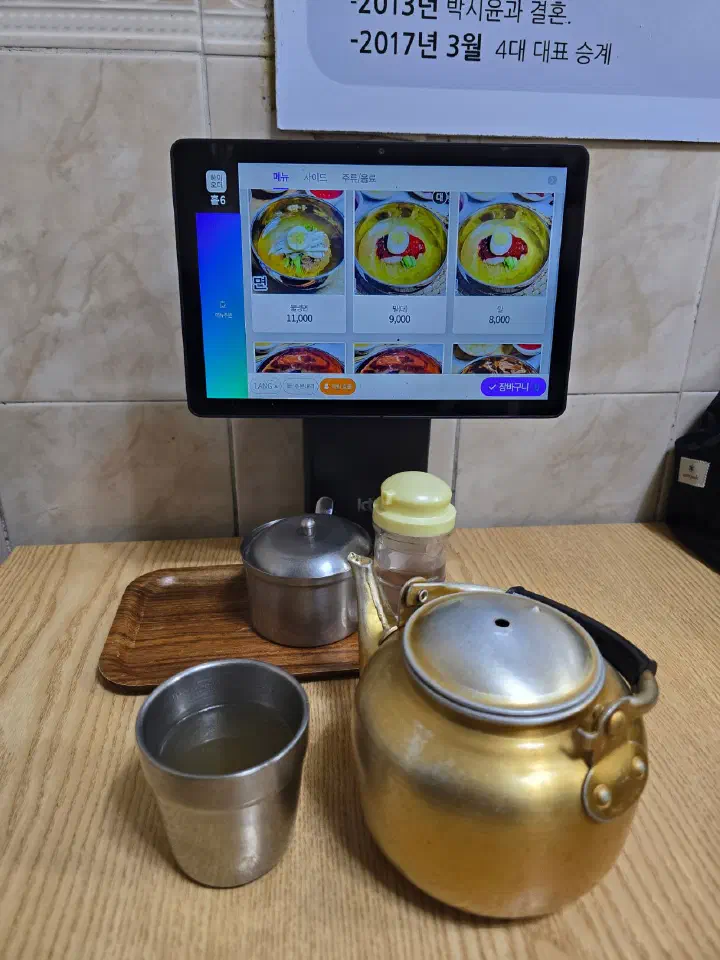
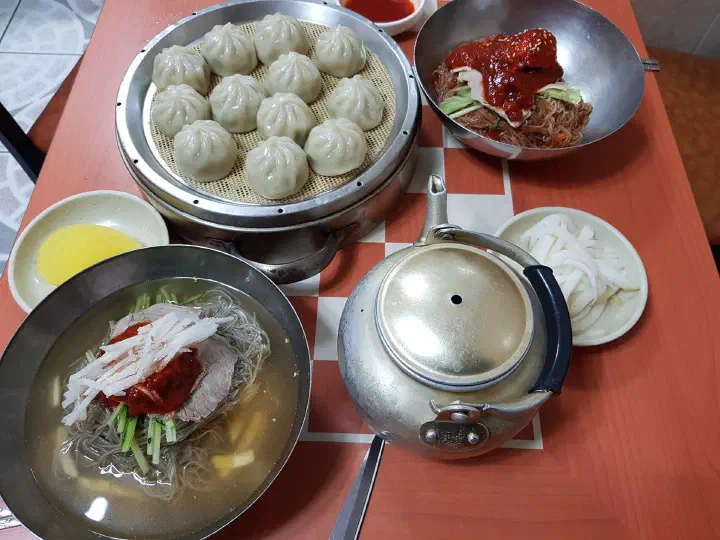
Before your food, a kettle of warm beef broth arrives at the table.

This is the first impression of the whole meal.
It’s simmered for hours from premium Korean beef bones and sinew,
and one sip leaves a long, savory beefiness in your mouth.
Fair warning: that first cup can taste quite salty.
The seasoning is dialed up, so a few people find it strong.
Treat it as a warm-up for your stomach and it makes sense.
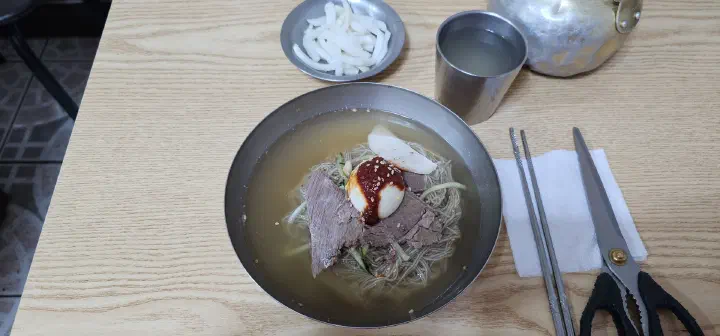
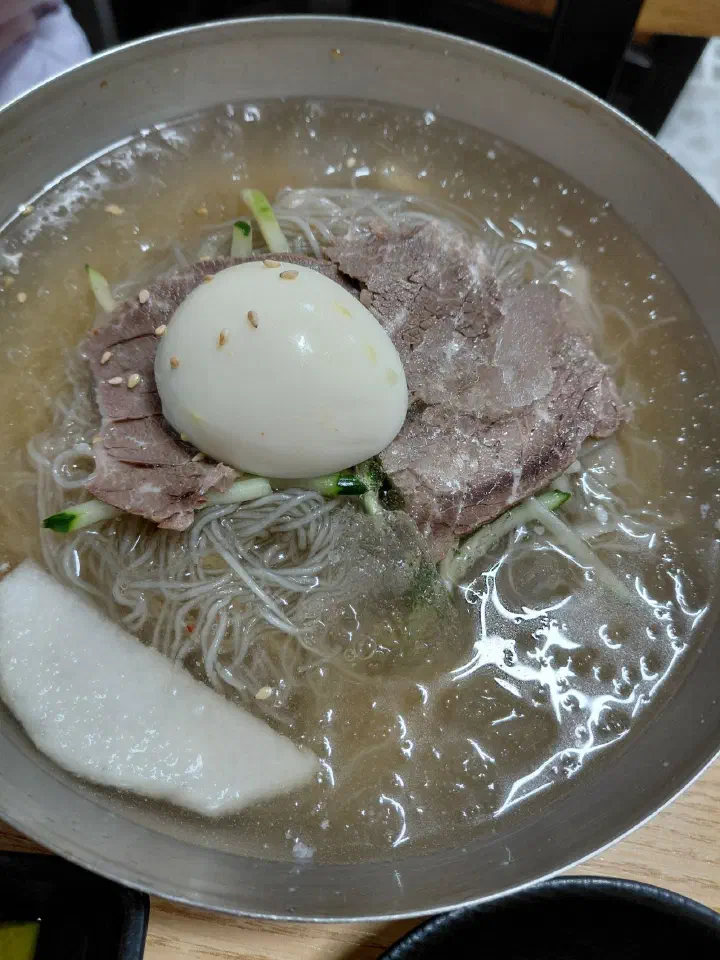
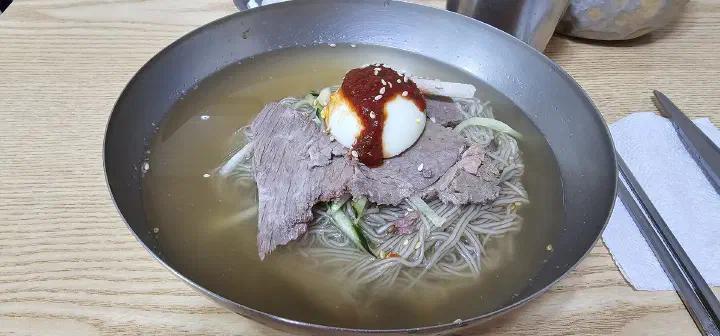
Mul-milmyeon - the charm (and the catch) is how plain it is
Milmyeon is the headline dish.
The noodles are pulled from roughly a 7-to-3 mix of wheat flour
and sweet potato starch, so they’re thicker and chewier than usual,
closer to jjolmyeon in bite.

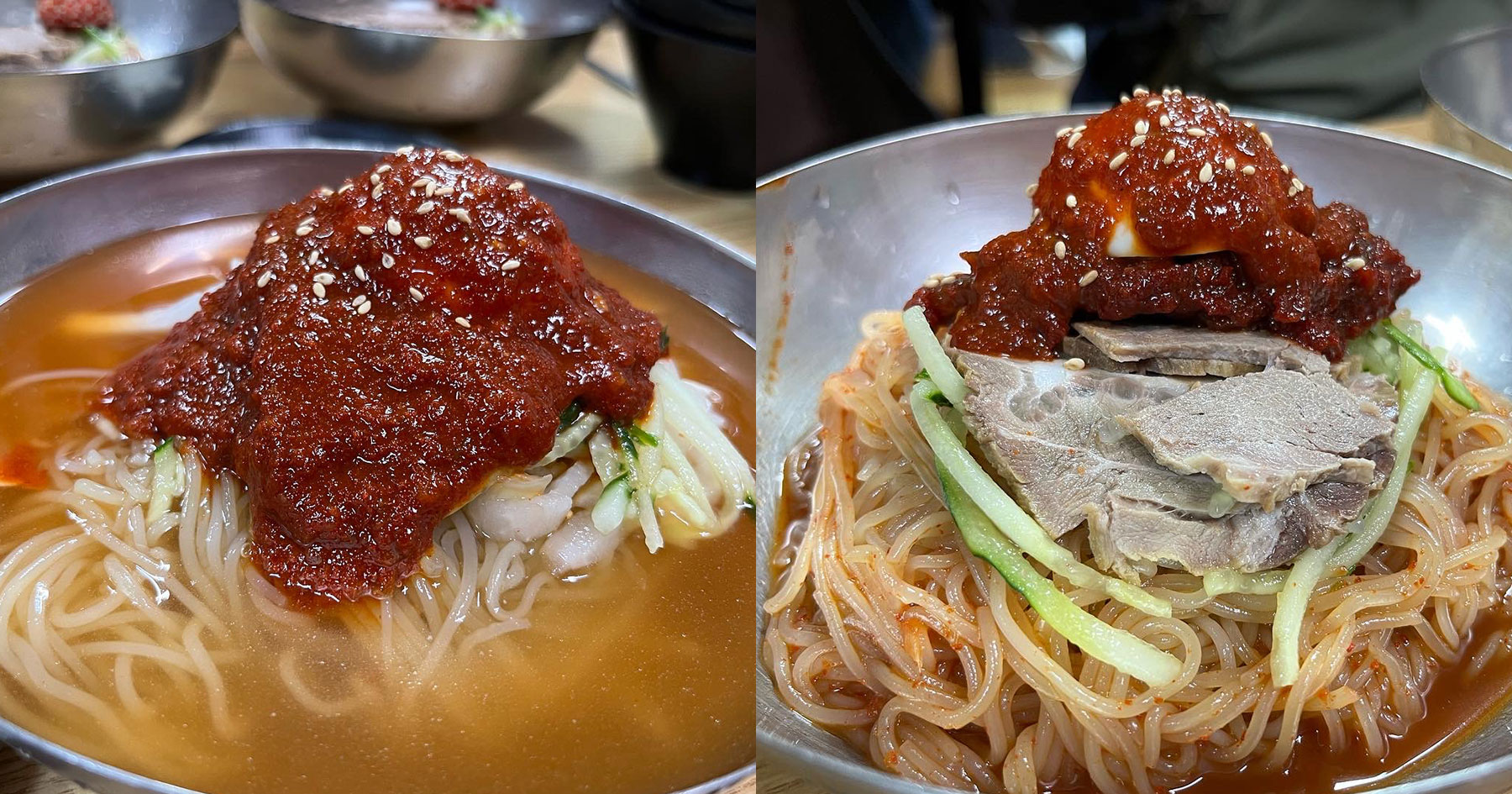
The broth for the cold mul-milmyeon (물밀면) is clear beef broth,
almost no medicinal herbs or pepper.
If you arrive expecting the sweet-and-tangy supermarket version,
your first thought may honestly be “wait, this is kind of bland.”
That’s by design. You season it yourself with vinegar and mustard.
People who enjoy that ritual read it as depth;
people who wanted a bold, ready-made flavor find it flat.
If you already love Pyongyang-style cold noodles,
you’ll likely be on board.

It isn’t the icy, slushy kind of cold-noodle broth.
Think of it as a milmyeon you eat for the broth, not the chill.
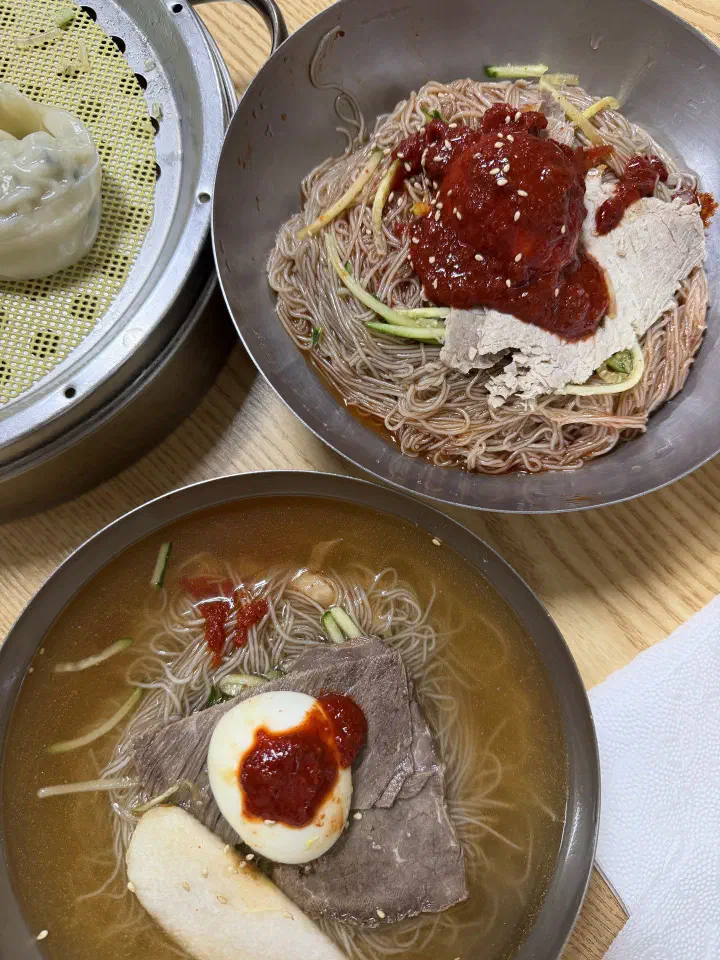
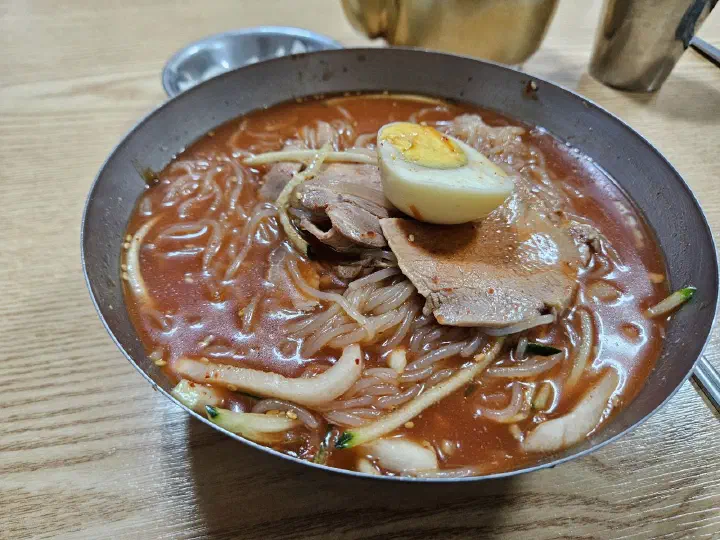
Bibim-milmyeon - more people pick the spicy one
Here’s the interesting part.
At this shop, more regulars seem to favor the spicy bibim version
over the cold-broth one.

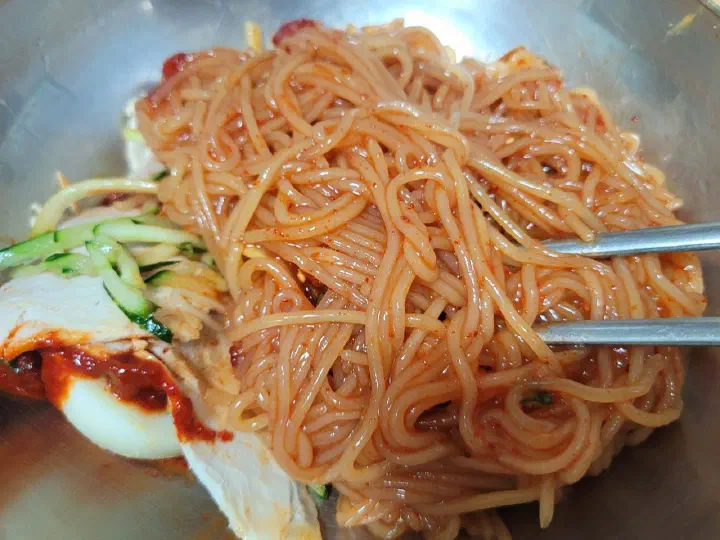
The red sauce looks like it’ll be hot and salty,
but it lands surprisingly balanced, more sweet-and-tangy than fiery,
with a quiet hum of sesame oil.
That sauce is the reason people keep calling it the highlight.

The thick, springy noodles hold the sauce well,
and you slurp them straight without scissors.
Even people who found the cold broth too plain
often come around on the spicy one.
If you can’t decide between cold and spicy, order both and share.
This is a place you’ll regret leaving with only half the picture.
A heads-up on spice: Korean “mild” can still surprise visitors,
but the bibim here isn’t aggressively hot, so most people are fine.
Naengmyeon, seasoned skate, and dumplings
There’s naengmyeon too.
The milmyeon and naengmyeon differ mainly in the noodle blend;
the broth and seasoning share the same character.
The naengmyeon noodles get described as oddly konjac-like in texture.

Don’t skip the seasoned skate (양념 가오리회).
It’s skate tossed Hamhung-style in a sweet-spicy-tangy dressing,
and laid over the plain mul-milmyeon or the bibim,
it wakes the whole bowl up. “You have to add it” is a common refrain.
At 14,000 won it isn’t cheap,
but it shows off this kitchen’s character better than anything.

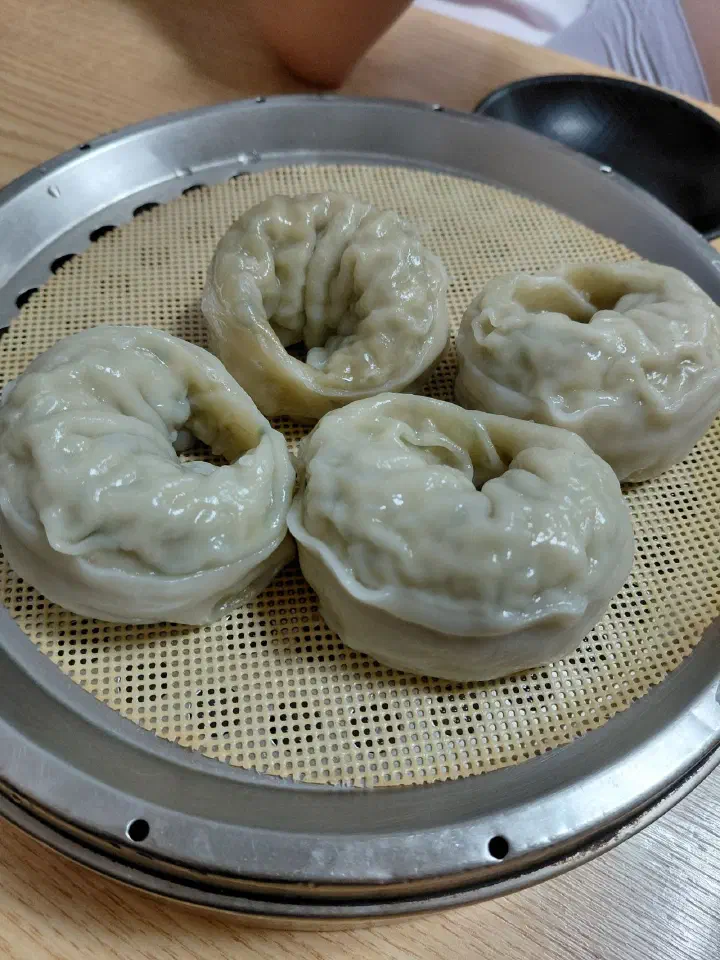
The dumplings are popular too:
steamed, well-stuffed, with a soft thin skin.
A bowl of milmyeon plus an order of mandu makes a full meal.

That said, opinions on the dumplings split a little.
Some find the filling under-seasoned or the skin thick,
so they seem to vary a bit day to day.
Ordering, by the way, is easy even without Korean.
There’s a tablet at each table, and you can also just point
at the menu and hold up fingers for how many. Payment is upfront.
Waiting and parking - worth knowing in advance
Lunch peak, roughly 11:00 to 13:00, usually means a wait.
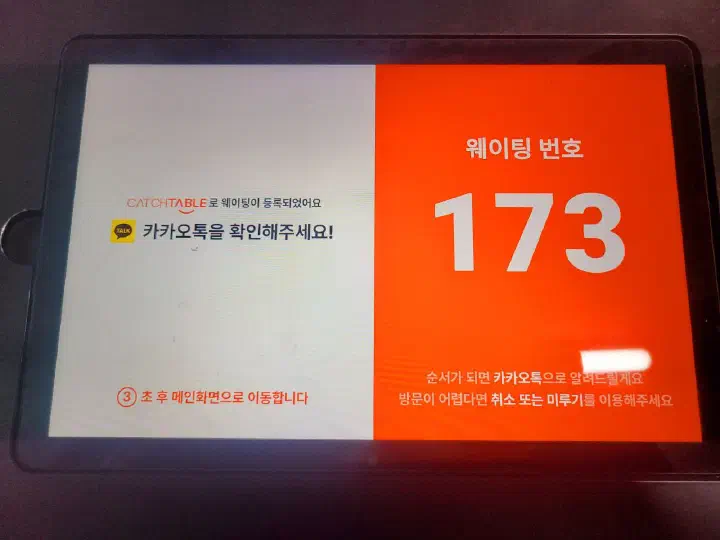
They run on-site waitlists through an app,
so if one person in your group arrives first and signs in,
you save time.

For a calmer visit, aim for right at the 10:30 opening
or after 2-3 in the afternoon.
Winters and weekdays are noticeably quieter.

Parking is the honest weak point.
There are only three or four spots, the alley is tight,
and at peak times it’s basically full.
Weekdays even bring parking enforcement nearby,
so a nearby public lot or public transit is the easier call.
One travel tip: Google Maps walking and transit directions
are often off in Korea. Naver Map or KakaoMap work far better,
and the Kakao T app is handy for taxis.

A regular on Korean TV
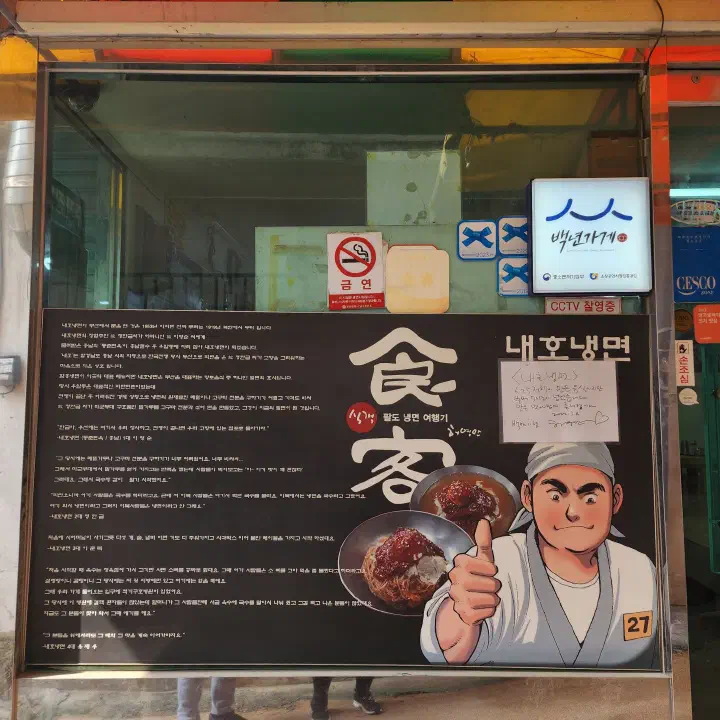
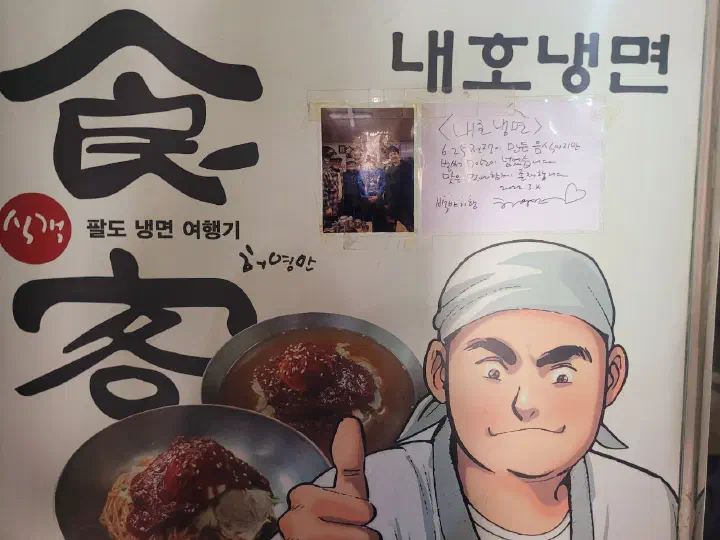
This place shows up on television a lot:
Heo Young-man’s food travel show, Baek Jong-won’s program,
a couple of variety food shows,
and most recently KBS’s “Korean Cuisine, the Table” (episode 732).

That last one framed milmyeon as a refugee’s dish,
tying it to the longing in the old song “Come Back to Busan Port.”
It also introduced the third-generation owner and his son,
who now run the kitchen together.

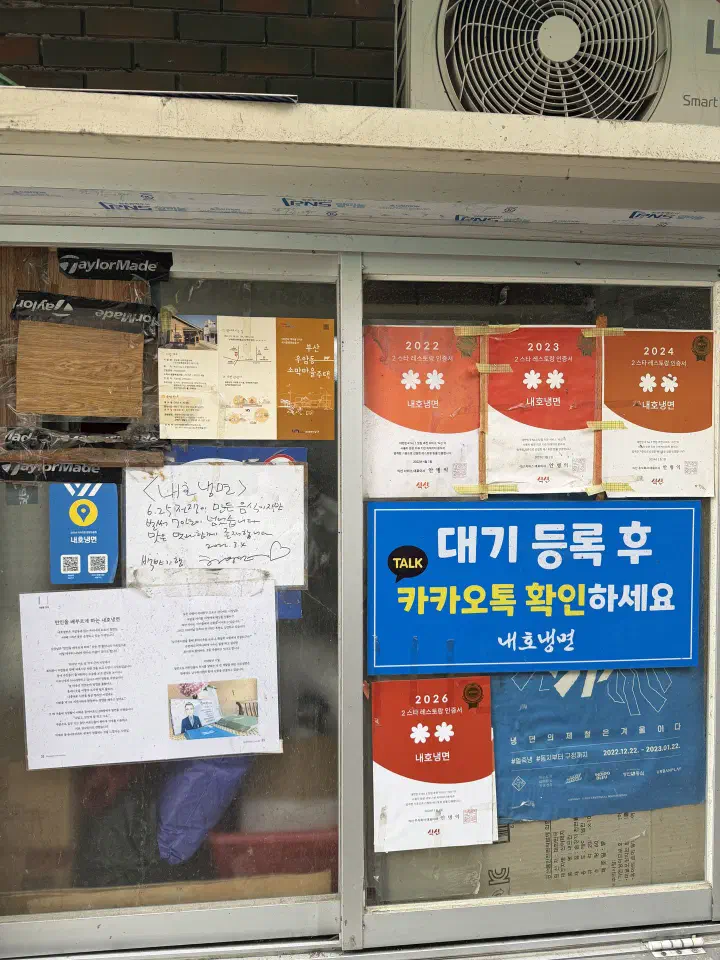
The blue ribbons and broadcast badges covering the alley wall
make it pretty clear this isn’t a line that formed by accident.
The parts that aren’t perfect
A few honest caveats, because all praise reads like an ad.
One, hygiene.
There are recurring notes about water spots on the dishes
or a smell near the alley entrance. If you’re sensitive, keep it in mind.
Two, pace.
At peak hours dishes come out one at a time, almost like a course,
and a cold bowl can take close to half an hour.
Come when you have time to spare.
Three, portions.
The small size really is small,
so a big eater should go for the large or add a noodle portion.
So, is it worth it?
People split sharply here.
Some call it the milmyeon of their life;
others shrug and say it’s not far from their neighborhood spot.

Here’s the short version.
If you want bold, icy, instantly punchy noodles, you might tilt your head.
If you want the depth of a plain beef broth
and a hundred years of backstory in one bowl,
it earns the trip.
It clicks especially well for fans of Pyongyang-style cold noodles
and for anyone who loves the worn-in feel of an old Korean restaurant.

Busan has no shortage of milmyeon shops.
But if the question is where Busan’s milmyeon actually began,
the answer keeps leading back to this one alley.