If you ask around Busan for a bowl of pork rice soup, this little place tucked inside Yeongdo’s Namhang Market (남항시장) keeps coming up.

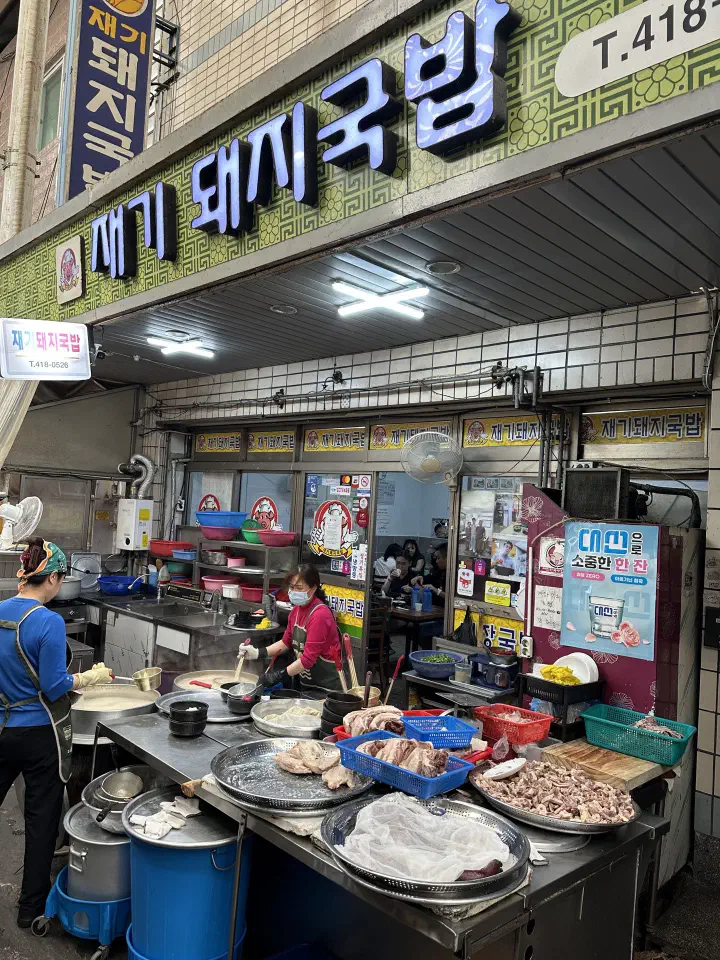
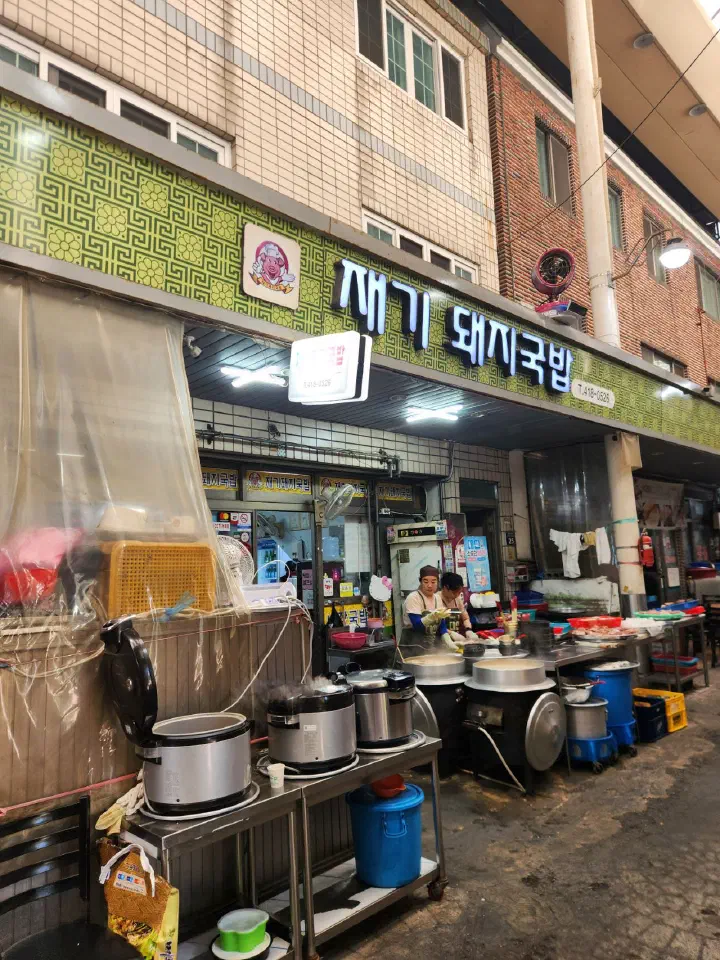
It isn’t a flashy restaurant. It’s an old market shop that has held its corner for a long time. A pot of broth simmers by the entrance all day, with thinly sliced pork stacked beside it. That single scene tells you most of what this place is about.

Who it suits

The kitchen opens at 8 a.m., which makes it a solid first meal of the day or a morning recovery bowl after a long night.

You’ll see solo diners, families, tourists, and longtime locals all mixed together. The suyuk baekban (수육백반, boiled pork set) is even available as a single portion, so eating alone here feels completely normal.

One thing to know: big groups may not all fit at one table. Seating is mostly four-tops, so a larger party can end up split up.

The basics

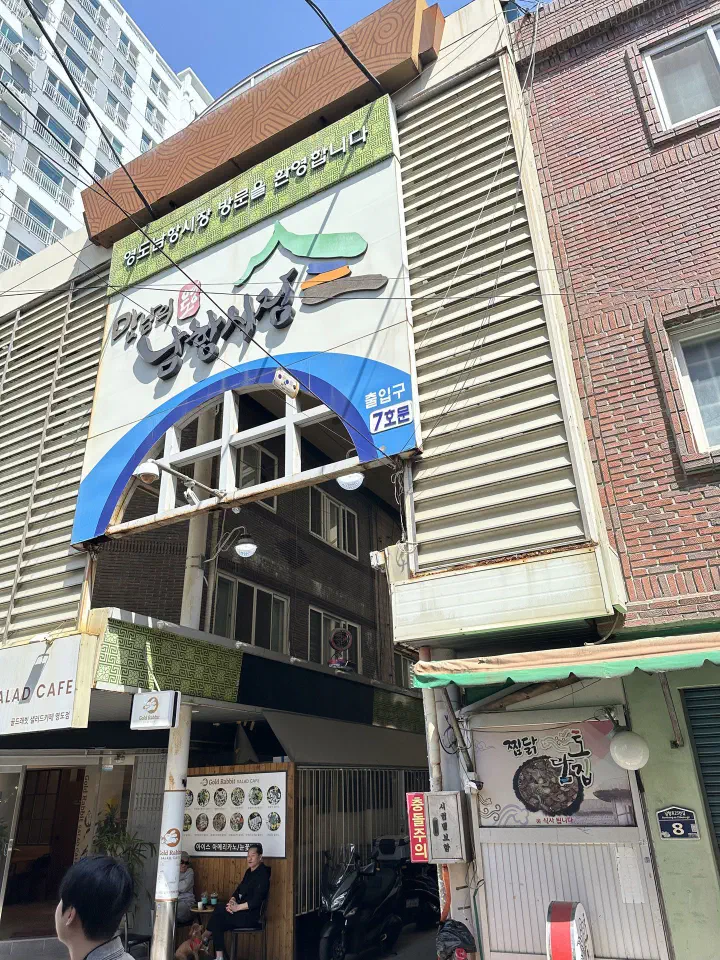
The address is 25 Jeollyeong-ro 49beon-gil, Yeongdo-gu, Busan (절영로49번길 25). It sits inside Namhang Market but close to the entrance, so the green sign is easy to spot.

Hours are 08:00-20:00 Tuesday to Saturday, 08:00-19:00 on Sunday, closed every Monday. Hours can change, so [[FIXME: double-check the latest hours and closing day before visiting]]. The phone number is 051-418-0526.

📍 View Jaegi Pork Rice Soup (재기돼지국밥) on Google Maps →

The green Jaegi sign inside Namhang Market

Getting there and waiting

There’s no private parking. If you drive, the Namhang Market public lot, a 3-5 minute walk away, is the easy option. Punching the restaurant straight into your navigation can leave you wandering the market alleys. Since the area is fairly busy, public transit works well too.

A quick note for travelers: Google Maps walking and transit directions can be unreliable in Korea. Naver Map or KakaoMap will get you there more accurately, and the KakaoT app is handy for taxis.

Waiting depends heavily on timing. Early morning, you’ll usually sit right down. From around 11:30 onward, especially at lunch and on weekends, a line forms. Turnover is quick, though, so even a line clears fast. If you’d rather skip it, aim for before 11 a.m.

The market alley near the shop in Yeongdo

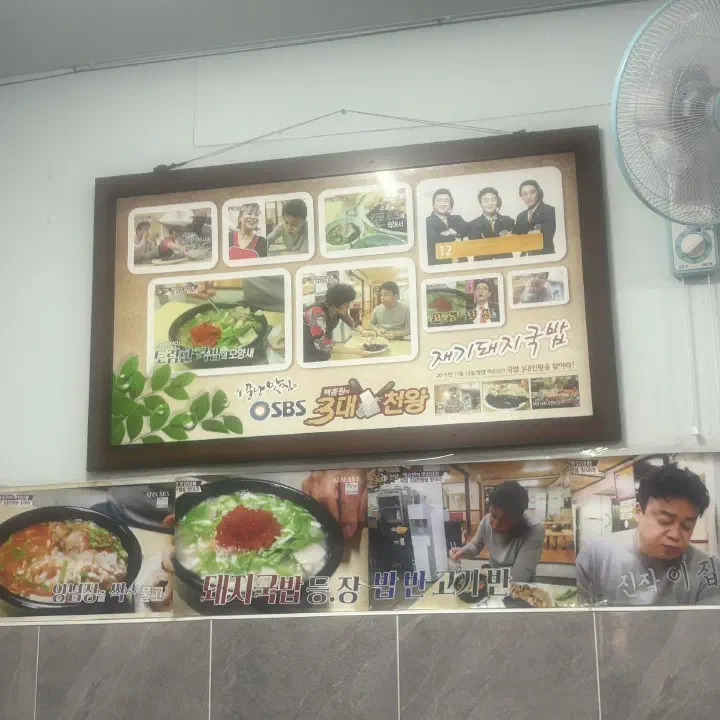
This spot is known for being on TV - it appeared on SBS’s Baek Jong-won’s Top 3 Chef King, and a framed screenshot from the show hangs on the wall. For a while the hype brought brutal lines; these days it has calmed down and locals fill the seats again.

A framed photo from the TV show on the wall

What “toryeom” means

The soup here is made toryeom-style (토렴). Rice and pork go into the stone bowl, and hot broth is ladled over and poured off again, over and over, until the rice itself is warmed through.

Because of that, it doesn’t arrive violently boiling - it comes at a comfortable eating temperature, with the broth already soaked into the rice, so you just dig in.

A ladle pouring broth over the bowl, the toryeom process

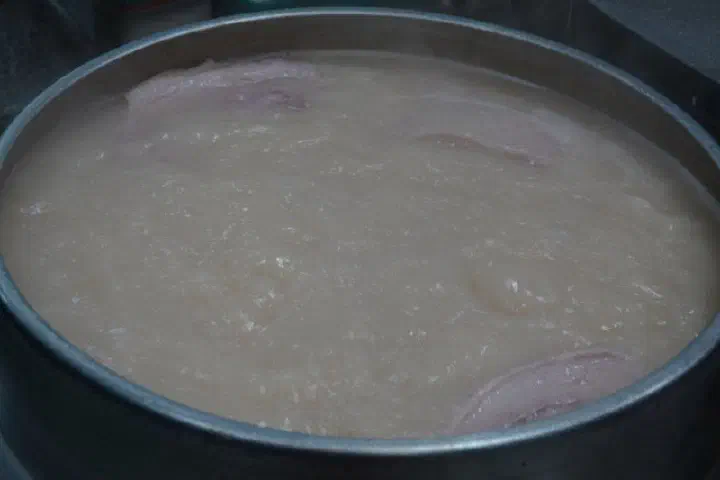
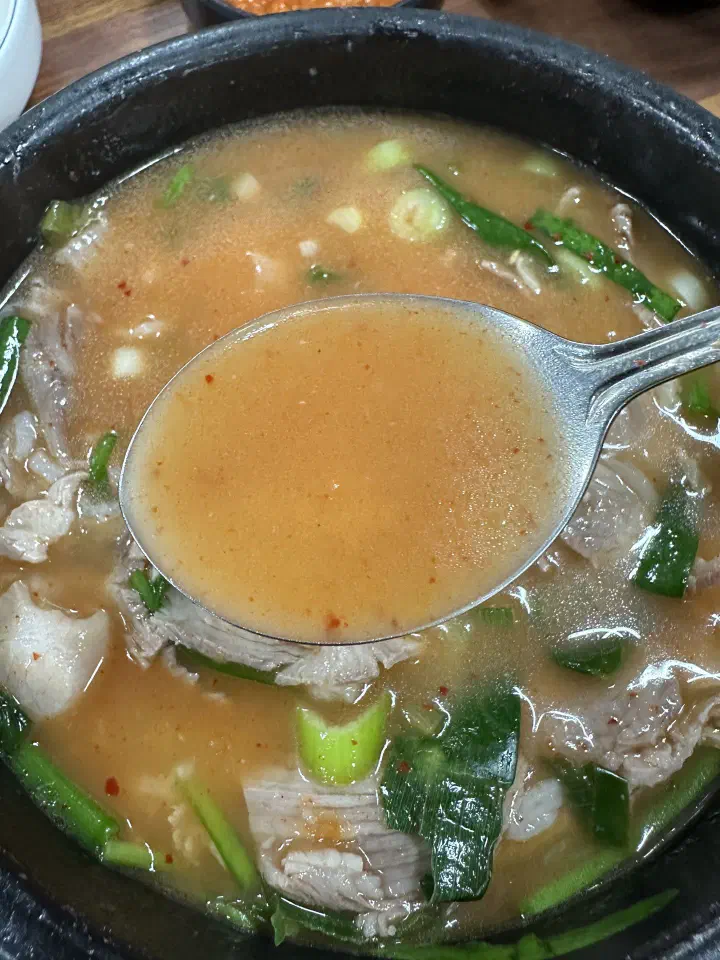
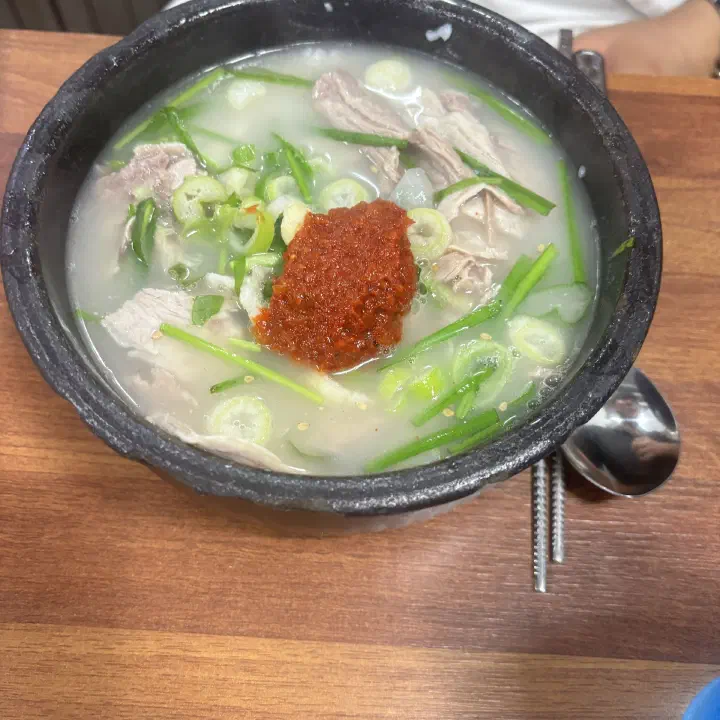
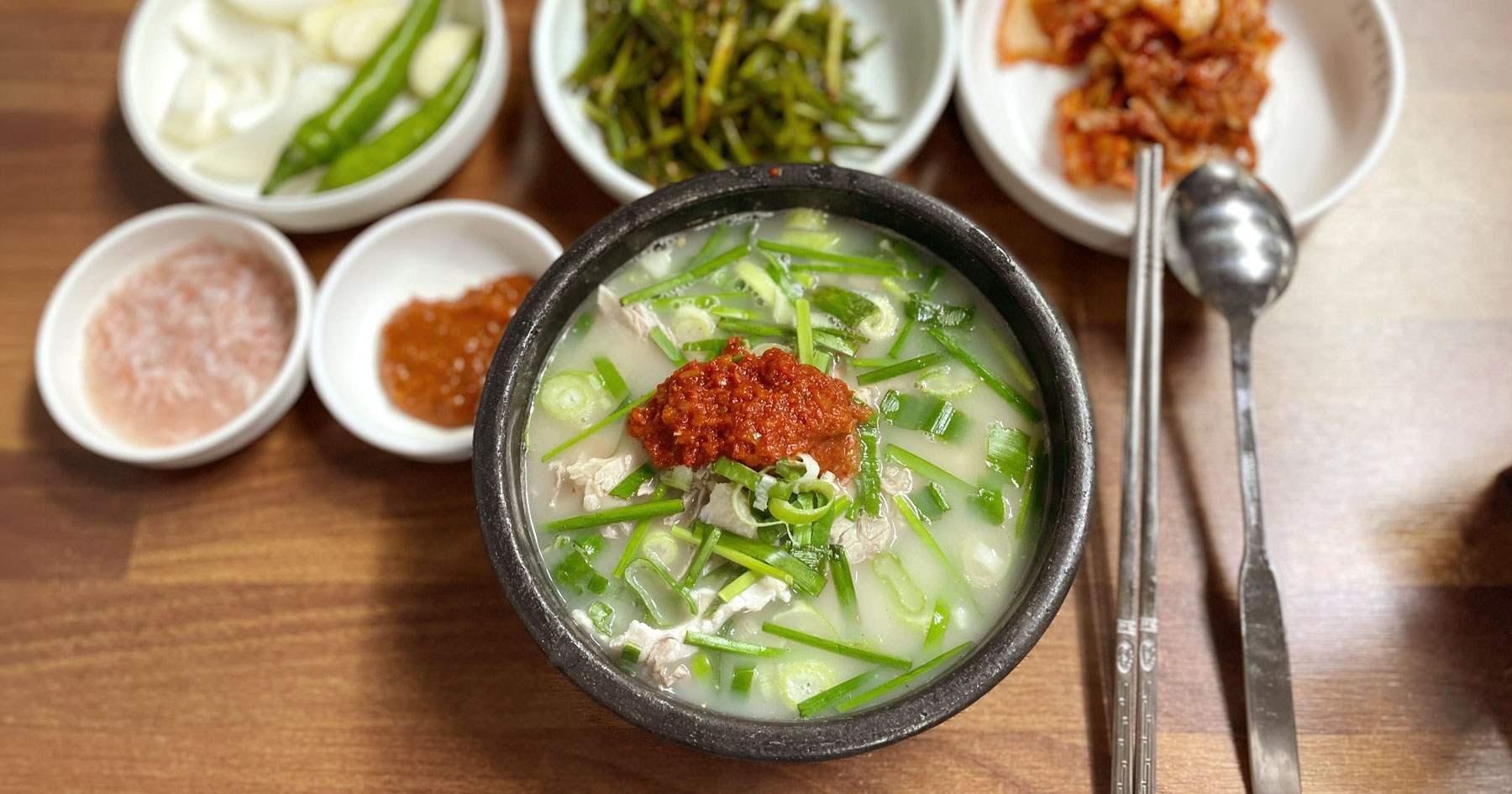
The broth leans clear and clean rather than thick and milky. There’s very little of the porky funk some people worry about, so it’s approachable even if pork soup is new to you.

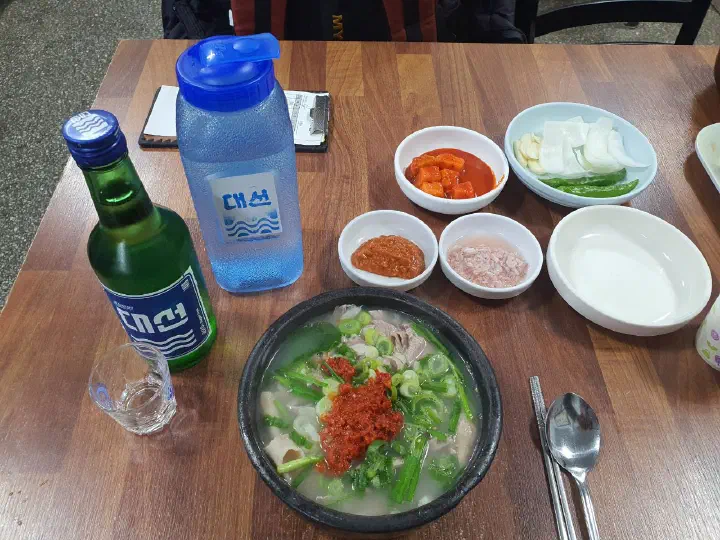
Try the first few spoons plain, before stirring in the dadaegi (다대기, the red seasoning paste). Once it starts to feel rich, stir the paste in and the whole bowl turns spicier and deeper. Locals season to taste with saeujeot (새우젓, salted shrimp).

A heads-up on spice: even when Koreans call something mild, it can read as spicy to many visitors. The dadaegi here is gentle, but if you’re sensitive, go slow when you stir it in.

A close-up of the clear pork broth

Dish by dish

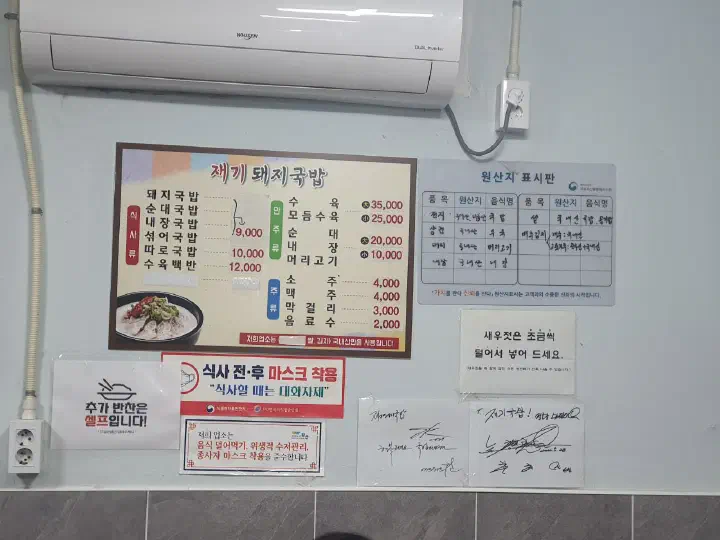
The soups - dwaeji gukbap (돼지국밥, pork), sundae gukbap (순대국밥, blood sausage), seokkeo gukbap (섞어국밥, mixed), and naejang gukbap (내장국밥, tripe) - are all 10,000 won. If you want the rice served separately, order ttaro gukbap (따로국밥) for 11,000 won; the staff say that version actually comes with a bit more. Suyuk baekban is 13,000 won, and suyuk, sundae, tripe and head meat can be ordered as side platters in small or large.

The menu board with prices

The basic side dishes are kimchi, kkakdugi (radish kimchi), onion, chili, garlic, ssamjang and salted shrimp. The kimchi is the cool, savory Gyeongsang-style, which props the soup up nicely. You serve yourself from a jar near the table or the self-serve corner.

Kimchi, kkakdugi and other side dishes

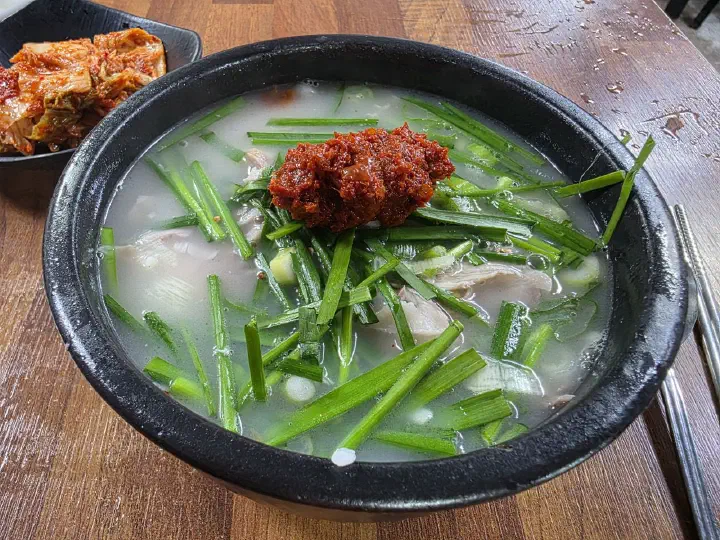
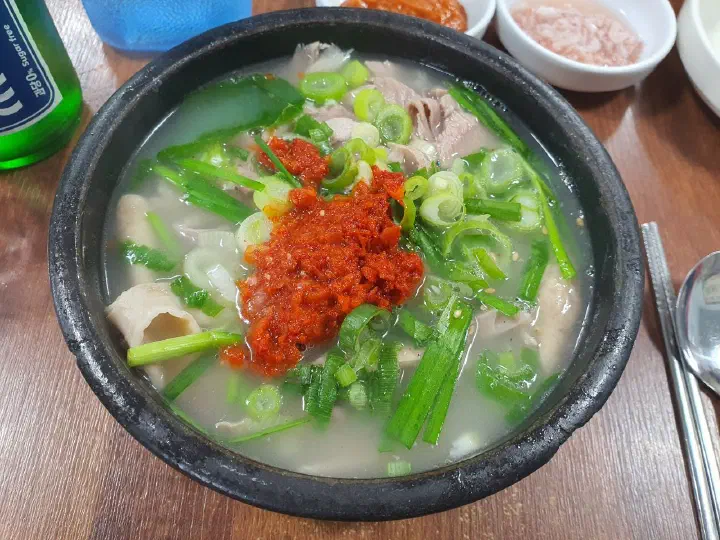
The pork bowl is loaded with thin slices of lean meat. It looks modest at first, but the pork keeps turning up as you eat. If you like thin, tender slices, it’s a good match; if you’re after thick, chewy chunks, it may feel a touch light.

Thinly sliced pork in the soup

A clear pork bowl topped with chives

The tripe bowl comes generously filled. Most people find it clean and tender, though the makchang (막창) cut can be stronger in aroma, so keep that in mind if you’re picky about offal.

A tripe-filled naejang gukbap

The mixed bowl gives you both pork and tripe in one, handy when you can’t decide.

A mixed bowl with pork and tripe

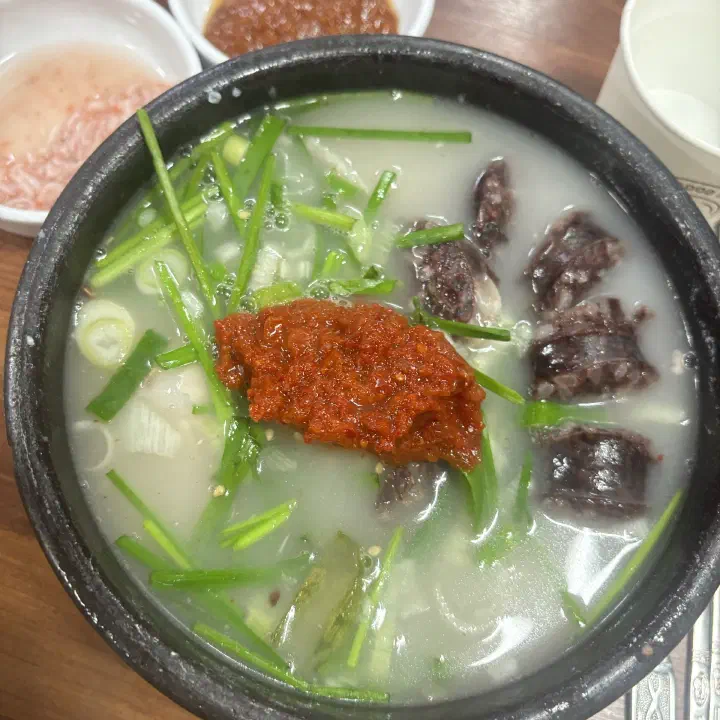
The quiet star here is the sundae. It’s not the cheap glass-noodle kind - it’s a glutinous-rice blood sausage, chewy and deeply savory. Many people order a plate on the side or take it to go.

Sundae gukbap with glutinous-rice blood sausage

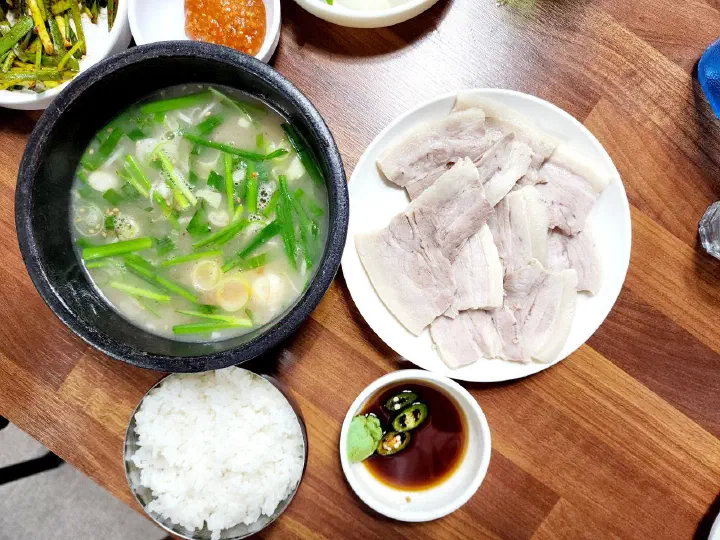
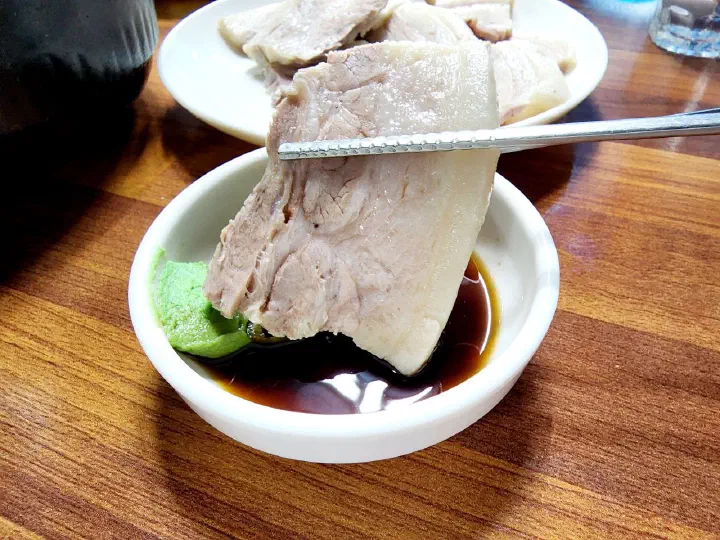
The suyuk baekban is a treat partly because you can order it solo. A plate of thinly sliced boiled pork comes piled up, with broth, rice and sides alongside. The pork is clean and mild, lovely with salted shrimp or ssamjang.

The suyuk baekban set

A close-up of the sliced boiled pork

The honest downsides

A few things to balance the picture.

One, it’s a little pricey for a market soup shop. Bowls in the 10,000-won range can feel higher than the “market price” you might expect.

Two, the pork texture divides people. Fans of thin, mild slices are happy; others find it dry.

Three, service can be hit or miss. Plenty of reviews call it warm and kind, but during the rush it can feel brusque. There’s no extra-large size, and they generally ask each person to order their own bowl.

Ordering and paying, for visitors

Ordering is simpler than it looks. English isn’t always spoken, but you can point at the menu and hold up fingers for how many, and that’s enough. Card payment works fine here - most restaurants in Korea take internationally accepted cards without trouble. And there’s no tipping culture in Korea, so you don’t need to leave a tip; doing so can even confuse the staff.

The verdict

This isn’t a bowl that knocks you over with one big flavor. It’s the kind you come back to for the clean broth and the care of the toryeom.

If you’re traveling around Yeongdo, it fits neatly as a morning meal or a stop between Huinnyeoul Culture Village, Taejongdae and the Maritime Museum. Whether pork soup is new to you or you’re already a sundae lover, it’s an easy place to recommend.

📍 View Jaegi Pork Rice Soup (재기돼지국밥) on Google Maps →