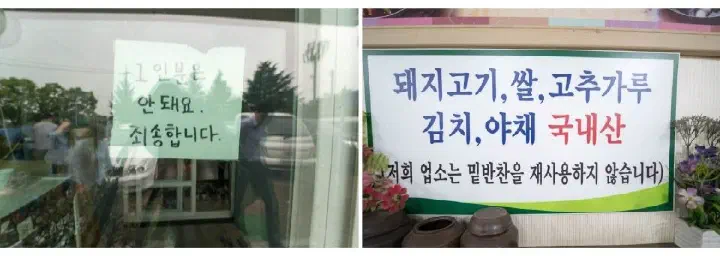
Right across from Gwanchoksa Temple in Nonsan, there’s a place that looks more like a warehouse than a restaurant. A big banner out front is the only real sign you’re in the right spot.

Don’t let the outside fool you. At lunch it fills up with locals.

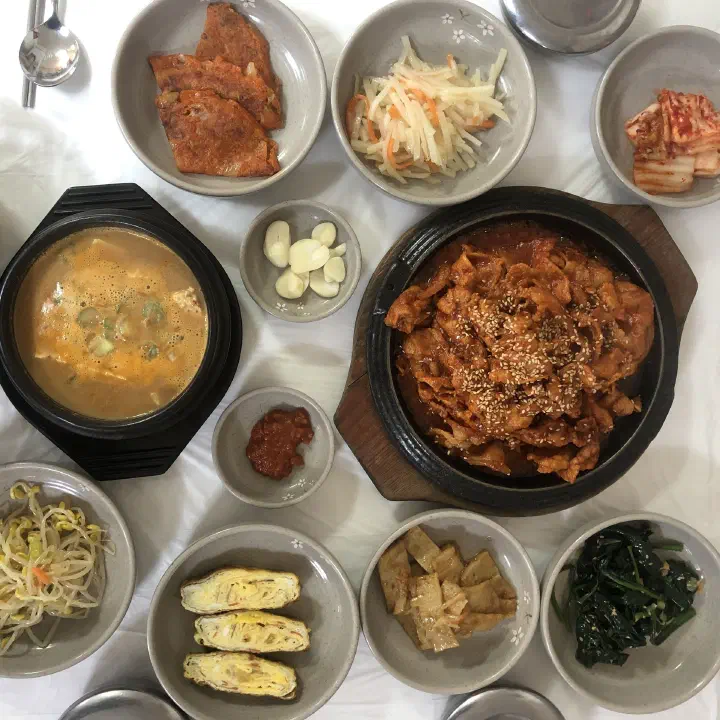
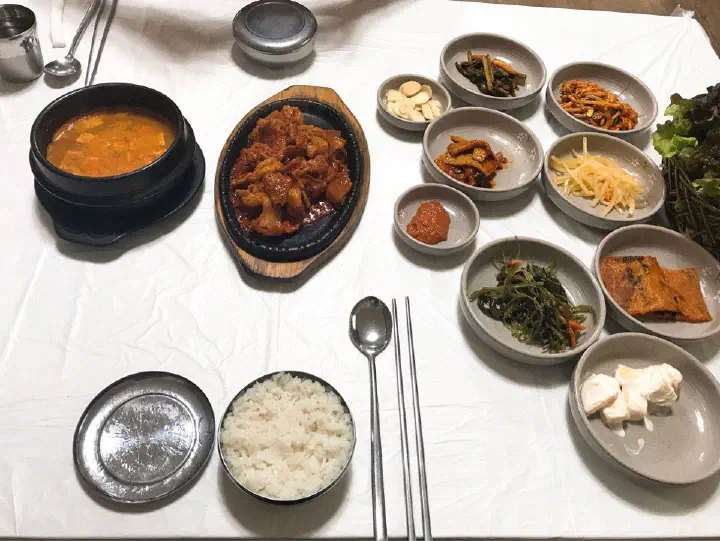
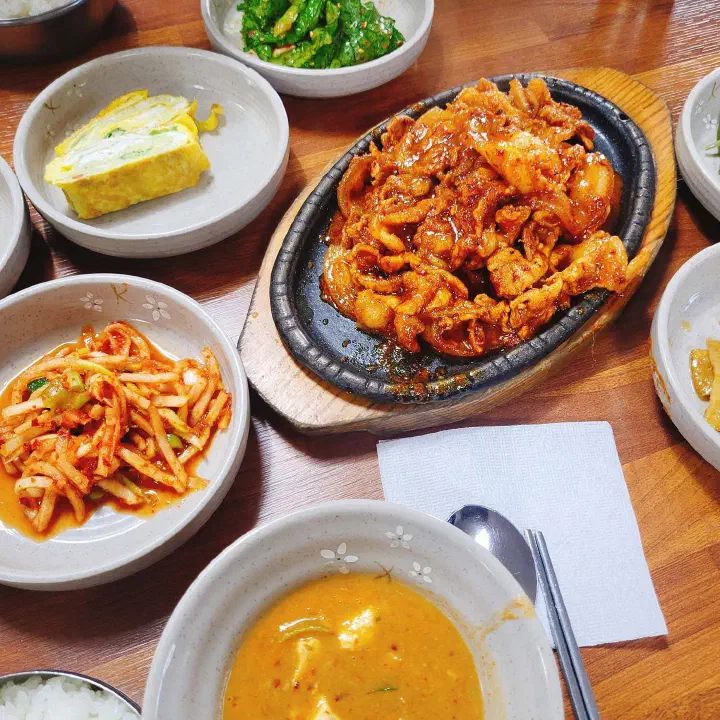
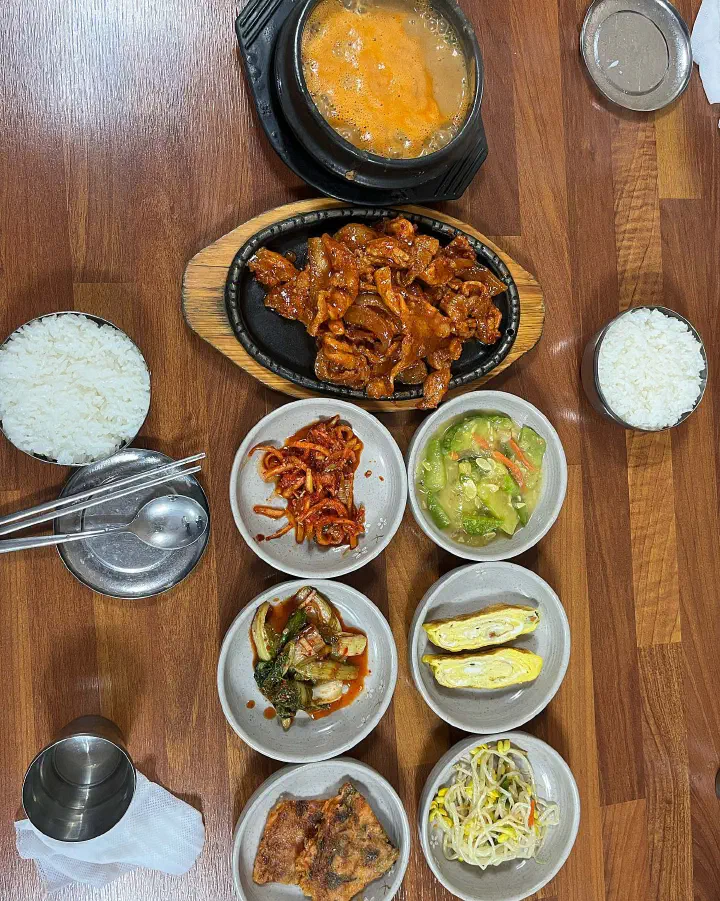
The cheonggukjang set runs 9,500 won. That gets you stir-fried pork, a stew, six side dishes, and rice. The first thing most people think when the table is set is, “how is this only 9,500 won?”

It recently won first place in the Nonsan episode of a popular Korean food YouTube show (Pungja’s Ttoganjip), which has pulled a few more visitors into what used to be a quiet neighborhood place.

Exterior and banner of Darak Garden

Who it suits

This isn’t a trendy spot. It’s a no-frills home-style restaurant, the kind where you come for a proper Korean meal and leave full.

Because the set is built for sharing, it works best for two or more. Think family lunches, coworkers on a weekday, or bringing your parents. Daytime regulars are mostly office workers and older locals, with a few students from nearby Konyang University.

It pairs nicely with a temple visit. Gwanchoksa is a one-minute drive, walkable too, so it slots easily into a day of sightseeing.

The menu is just two choices

The menu is refreshingly short: the cheonggukjang set or the doenjang-jjigae set. Either way, you get stir-fried pork, side dishes, and rice along with it.

The set starts at two people. The number of stews depends on your group: two people get one stew of your choice, while three or four get both. If you want to try both the cheonggukjang and the doenjang, two people ordering three portions is the usual trick. Portions are generous enough that two can handle three without much trouble.

Most menu items are in Korean only, but ordering is simple here. There are basically two things to point at, so even without much Korean you’ll be fine.

📍 View Darak Garden (다락가든) on Google Maps →

Darak Garden menu board

When the table is laid out, that 9,500-won price gets even harder to believe.

A full Korean set spread at Darak Garden

The stir-fried pork, quietly the star

The set is named after the stew, but a lot of people end up talking about the pork first.

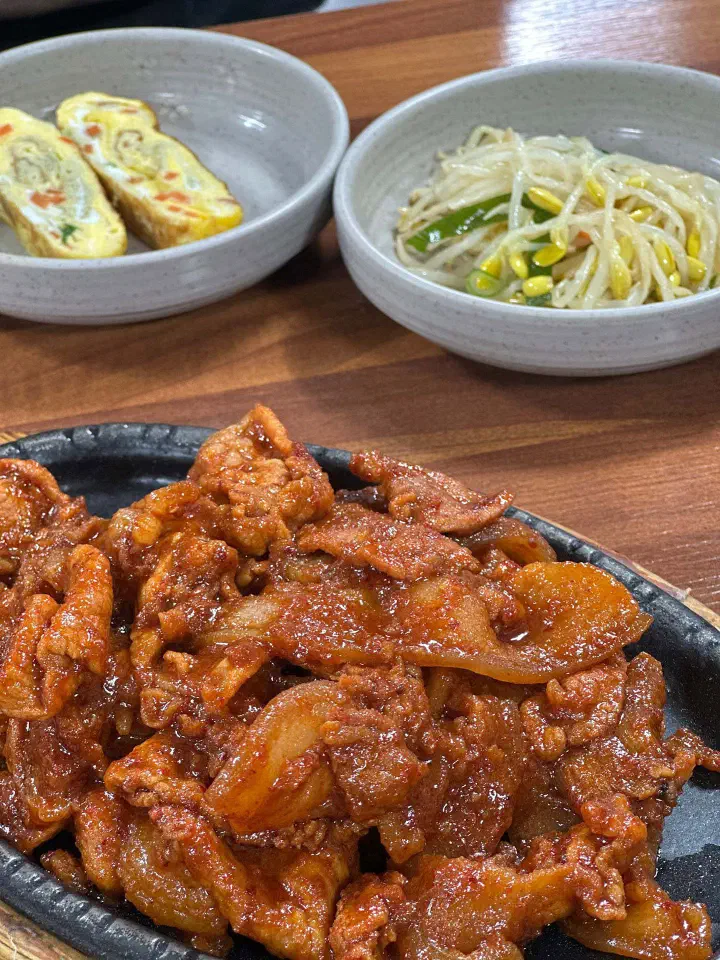
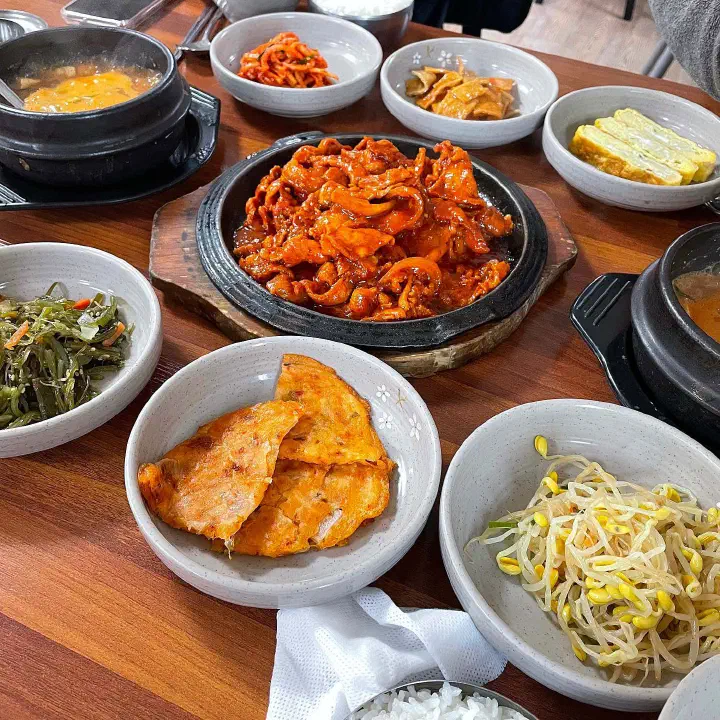
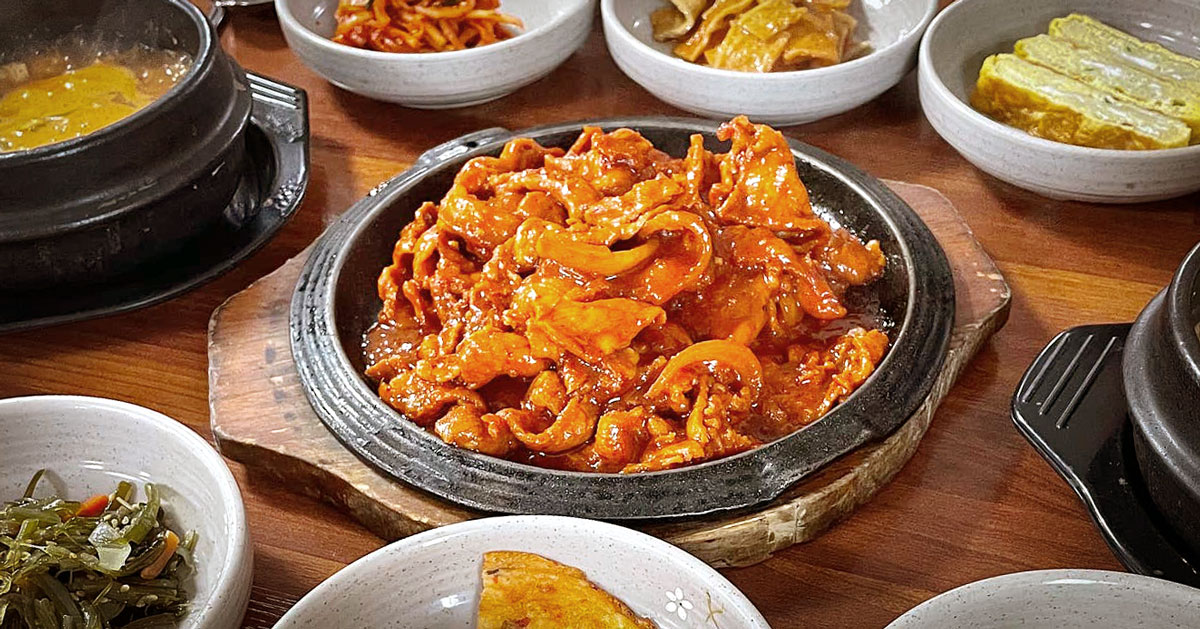
It’s domestic pork, served sizzling on a hot iron plate, so it stays warm right to the end of the meal.

Jeyuk-bokkeum at Darak Garden

The sauce is sweet and spicy, leaning closer to a sweet gochujang bulgogi than a fiery dish. By Korean standards it’s mild, but a quick heads-up for international visitors: even “mild” Korean spicy can catch you off guard, so go in ready. There’s no porky funk to it, so the meat tastes clean on its own.

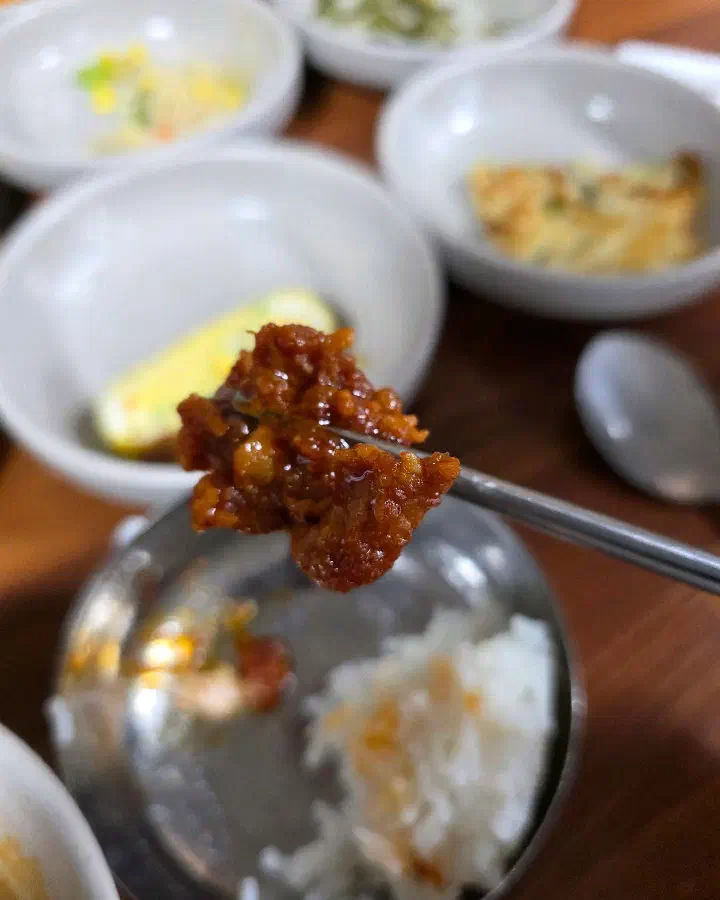
The cuts mix lean and fat, so nothing’s chewy. Honestly, just mixing the sauce into plain rice is enough to clear a bowl.

Stir-fried pork with rolled egg

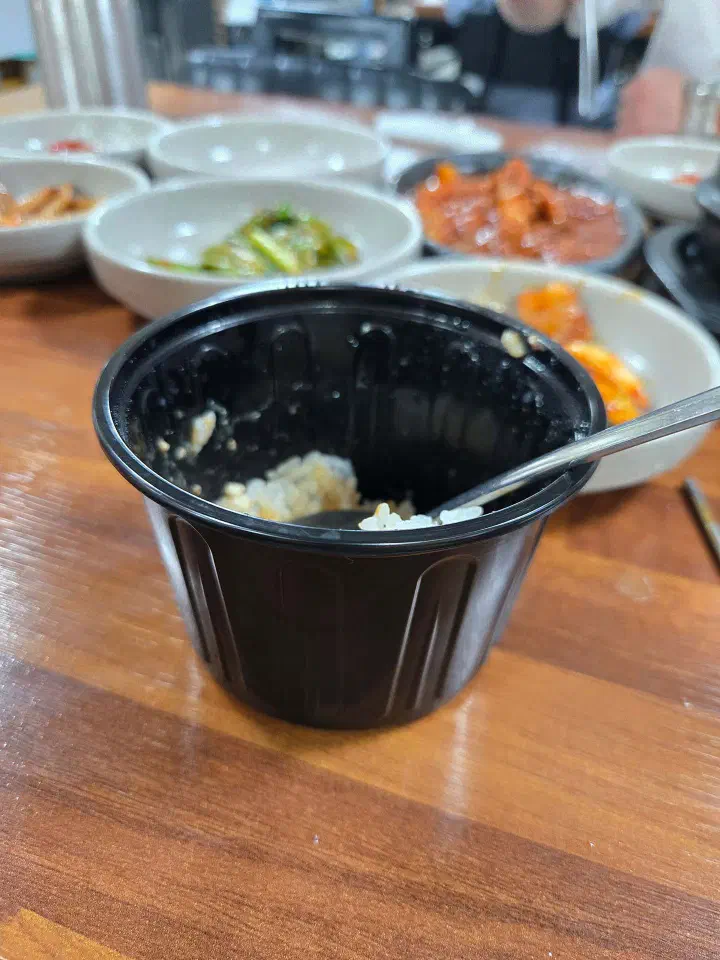
Portions are big. Order three and three adults will eat well with leftovers. People aren’t kidding when they say it’s the kind of place that makes you order extra rice.

Stir-fried pork with the full table

The real reason people keep coming: the cheonggukjang

What’s kept this place going for years is the fermented soybean stew. It’s made with 100% Korean soybeans, fermented at the owner’s own home.

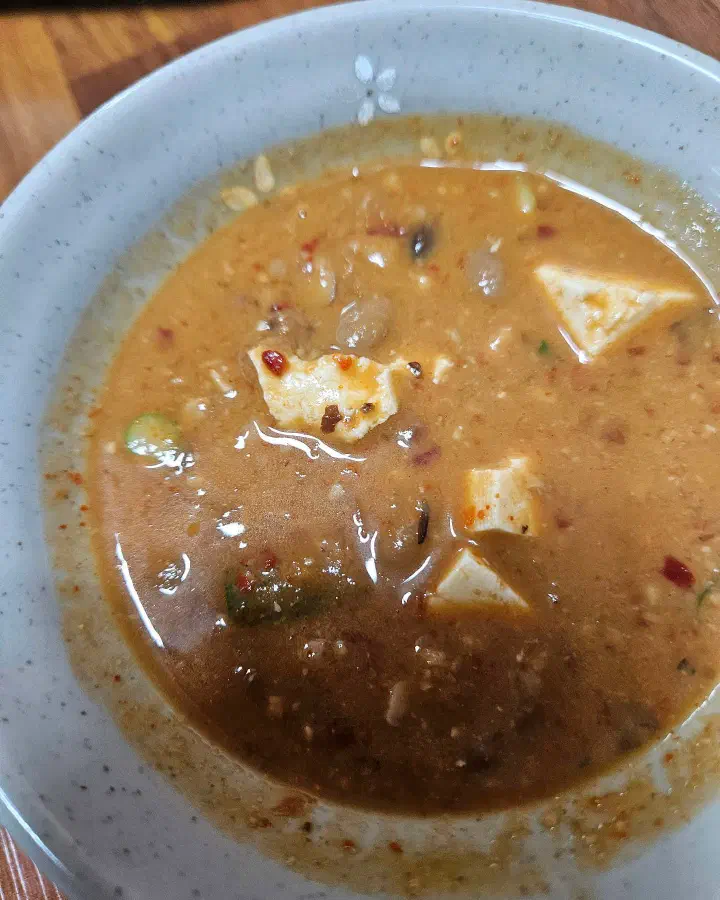
Cheonggukjang stew at Darak Garden

It’s clearly different from the store-bought kind. The strong funk that scares people off is dialed way down here, so even folks who usually avoid cheonggukjang tend to finish it.

It’s thick with tofu, no kimchi in it, just soybeans and tofu, which gives it an almost soy-milk richness. It’s nutty and savory rather than salty, and it keeps pulling you back to the rice.

Some people come specifically to eat it as a hangover cure. Others buy the stew to take home and cook later, and the restaurant does sell it by weight (in 500g and 1kg packs).
(Prices change over time, so it’s best to check in person.

The doenjang-jjigae goes a different direction. It’s saltier and sharper, the kind you’d find at a barbecue place, loaded with tofu and zucchini. Mellow cheonggukjang versus punchy doenjang is a real fork in the road, which is half the fun of getting one of each.

Doenjang-jjigae at Darak Garden

The side dishes pull their weight too

You get around six side dishes, and they shift a bit day to day. Rolled egg, kimchi pancake, seasoned seaweed stems, stir-fried fish cake, bean sprouts, fresh-cut radish salad, pickled cucumber, the usual home-kitchen lineup, rotating.

They’re not over-seasoned, so they sit well next to the mains, and each one tastes made by hand. The place has a bit of a reputation for its banchan alone.

Side dishes at Darak Garden

A favorite move is mixing a spoonful of cheonggukjang into rice with bean sprouts and radish salad on top, or laying a piece of pork over the kimchi pancake.

A few honest downsides. The rolled egg and kimchi pancake don’t get refills. For two people that’s two pieces each, and then they’re gone.

Also, some people remember this as a “ssambap” (lettuce-wrap) place, but there are no wrap vegetables anymore. Rising produce costs pushed the lettuce off the table, so if you show up planning to wrap your pork, you’ll be a little let down.

In summer the room gets warm, and with the semi-open kitchen there’s the occasional fly, per a few reviews. Come for old-school charm rather than polished comfort.

Stir-fried pork with kimchi and side dishes

Parking, waits, and paying

Parking is a non-issue. The whole lot in front is the parking area, and it’s huge. Groups and nervous drivers alike can pull in easily. There are a couple of friendly dogs in the yard, so there’s something to watch while you wait.

Waits happen at the lunch peak. You pull a numbered spoon tag and wait your turn. Skip the noon-to-1 window and you’ll usually be seated right away; late afternoon before closing is calm.

A few practical notes for visitors from abroad. Cards are fine here, and as in most Korean restaurants an internationally issued card works without trouble. There’s no tipping culture in Korea, so you don’t need to leave one, and trying to may just confuse the staff. English isn’t really spoken, but with only two dishes to choose from, ordering is genuinely easy.

Hours are 11:00 to 20:00 daily, last order 19:30. It used to close on Sundays and run a mid-afternoon break, but since the TV feature it’s been open without rest days for now. The schedule is in flux, so check Naver Map or call ahead (041-735-6888) before you go. For directions on foot or by transit, Naver Map or KakaoMap will serve you far better than Google Maps in Korea.

Final thoughts

Nothing here is flashy. It’s good ingredients, a carefully simmered stew, clean stir-fried pork, and handmade side dishes for 9,500 won.

Given today’s prices, that combination at that price is the surprising part. If you know the show only hands out a first place when a place truly earns it, the win makes sense: this spot got there on fundamentals, not flash.

The missing wraps and the summer heat are real drawbacks. But if you like cheonggukjang, this is worth a stop when you’re passing through Nonsan. It’s the kind of home-style place you find yourself coming back to.

Location / Getting there

  • Address: 1382 Wonang-ro, Nonsan-si, Chungcheongnam-do (across from Gwanchoksa)
  • Phone: 041-735-6888
  • Hours: Daily 11:00 - 20:00 (last order 19:30; rest days may change)
  • Parking: Large private lot in front of the restaurant

📍 View Darak Garden (다락가든) on Google Maps →