If you talk about pork gukbap in Daegu, this place comes up almost every time.

Shinsongja Sinmasan Sikdang (신송자 신마산식당) sits in Daemyeong-dong, Nam-gu, close to the front gate of Yeungnam College. It’s the kind of spot that gets called one of Daegu’s “top three” gukbap houses, and most first-timers just order the gogi-bap (고기밥) without thinking twice.

The broth here is clear and mild rather than rich and cloudy, and the amount of pork is genuinely surprising. That’s the whole character of the place.

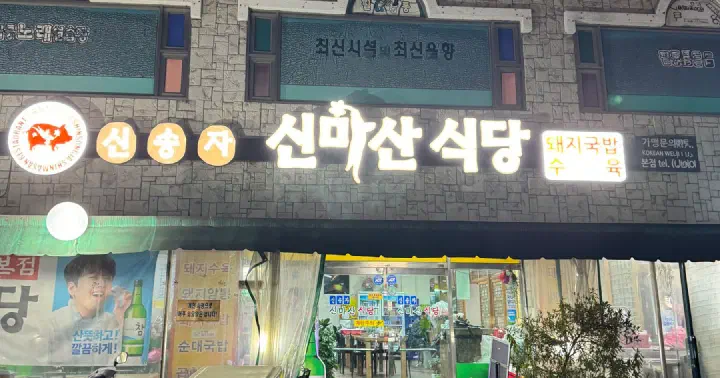
Neon sign and entrance of Shinsongja Sinmasan Sikdang with its ginseng-pig logo

Who it suits

This is an easy place to eat alone, and an easy place to bring older family members. There’s a dedicated single-seat counter, so solo diners never feel awkward, and it’s normal to see locals having a bowl with a bottle of soju in the early afternoon.

The hall is large with group tables, so it works for family meals too. One thing to note: the partitioned area to the right of the entrance has seats packed a bit close together, so a bigger group may want to pick a different table.

Walk in and you’ll see autographs from Korean mukbang YouTubers Heebab (히밥) and King Kihoon (킹기훈) on the wall. It’s been a quiet favorite among Daegu pork-soup fans for years. (One mix-up worth clearing: the gogi-bap featured on Sung Si-kyung’s “Meokeultende” was a different shop, Gunwi Sikdang, not this one.)

Getting there and hours

It’s about a 10-minute walk from Namsan Station (Exit 2), and close to Yeungnam College and the Daemyeong campus of Keimyung University.

Open 09:00 to 21:00, last order 20:30, closed every Monday. Because it opens at 9 in the morning, plenty of people drop by early for a hangover cure.

A quick tip for getting around Korea: Google Maps walking and transit directions are often unreliable here, so use Naver Map or KakaoMap instead. For taxis, the Kakao T app works well.

📍 View Shinsongja Sinmasan Sikdang (신송자 신마산식당) on Google Maps →

The signature: gogi-bap

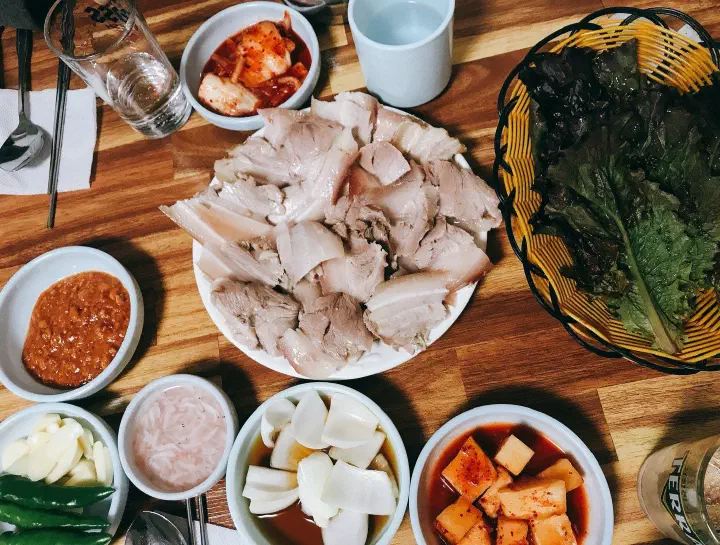
The most-ordered dish is gogi-bap (고기밥, 13,000 won). It’s similar to the suyuk-baekban style from the Busan area: the clear broth, a bowl of rice, and a plate of sliced boiled pork all come separately.

It’s perfect if you don’t love meat that’s been sitting in soup. The pork is domestic chilled belly and front-leg cuts, with almost no funky smell, and even the lean parts stay tender. Lay a slice on a lettuce leaf with a bit of garlic and it eats beautifully.

The broth that comes alongside has a few dangmyeon sundae (glass-noodle blood sausage) pieces in it, so you basically get gukbap and sundae in one go. The rice is on the softer, stickier side.

A plate of boiled pork suyuk with lettuce, kimchi and side dishes

One honest heads-up: temperature. This isn’t served bubbling in a stone pot. The pork and broth arrive at a comfortable, lukewarm temperature, so if you like your gukbap scalding hot, that part may disappoint you.

For broth lovers: the “ttaro” bowls

The default style is toryeom, where the rice is already mixed into the broth. Dwaeji-gukbap (돼지국밥) and seokeo-gukbap come with the rice in. If you want to taste the broth on its own, order ttaro-gukbap (따로국밥, 10,000 won) or teukttaro-gukbap (특따로국밥, 10,500 won), which keep the rice separate.

The deluxe teukttaro is only about 500 won more, but the pork is piled so high the rice can barely fit. One taste and you understand why people order it.

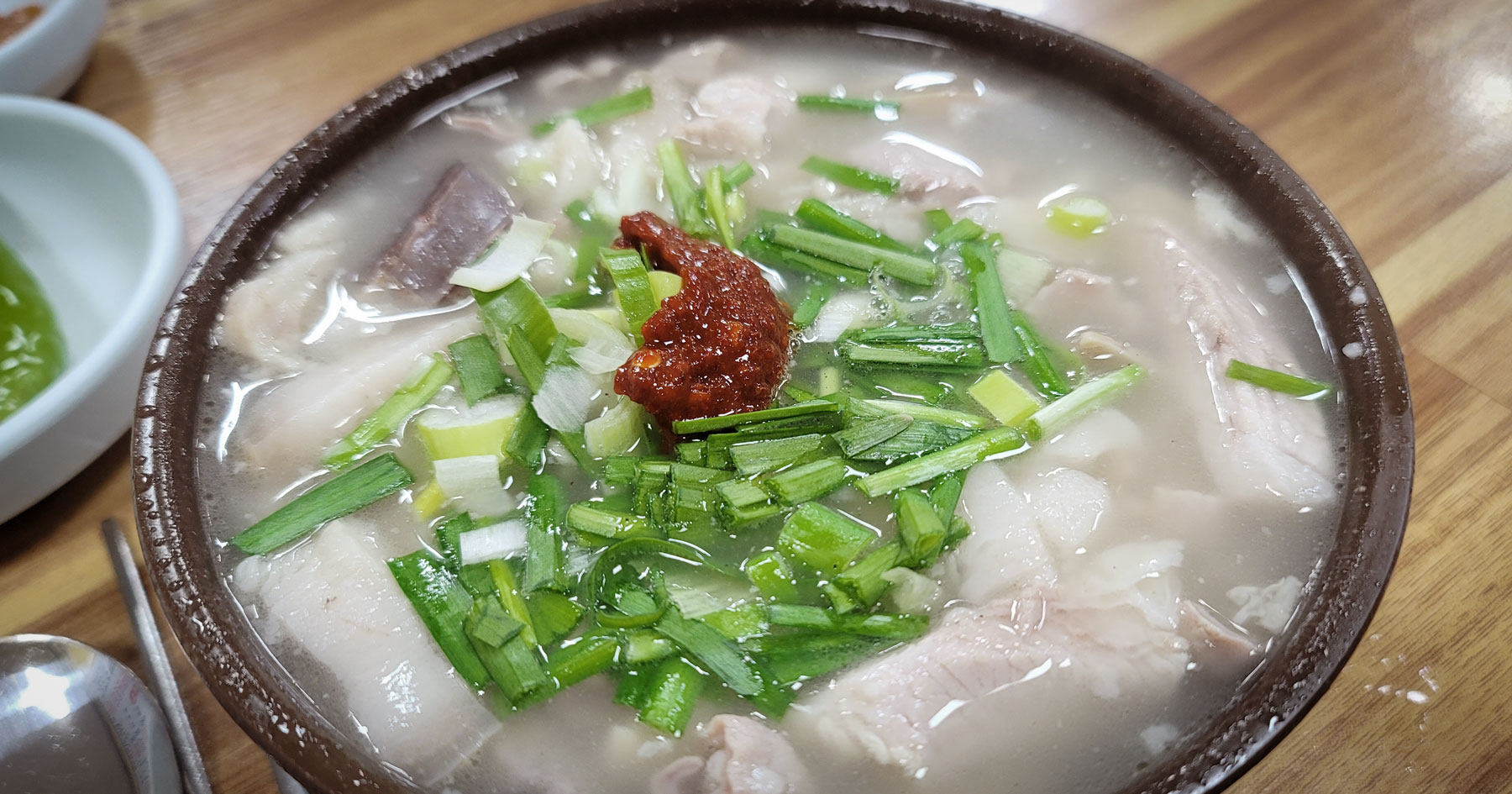
The broth is clean and clear. If you expect a thick, milky soup it might read as plain, but it’s savory without any gaminess, so it rarely divides people. Salted shrimp, the chili paste, and chives bring up the seasoning.

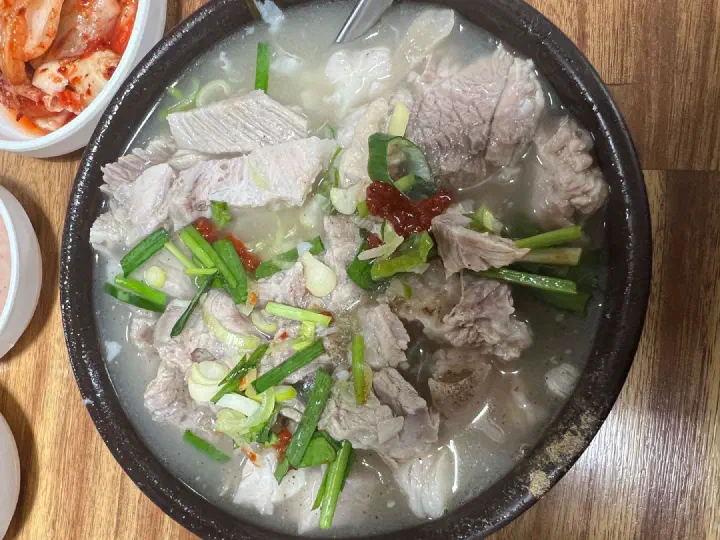
An earthenware bowl of pork gukbap loaded with meat

Lean option and a local specialty

The regular dwaeji-gukbap uses belly cuts, so there’s a fair bit of fat. If that’s not your thing, go for salgogi-gukbap (살코기국밥, lean pork, 9,500 won), which stays tender rather than dry.

The surprise pick here is ampong-gukbap (암뽕국밥, 9,500 won), made with sow womb. People worry about it being an acquired taste, but it has almost no off-smell and a soft texture, and some regulars come just for it.

There’s a ginseng-pig painted on the sign, and the insam-gukbap (인삼국밥, ginseng soup, 10,500 won) carries a gentle ginseng aroma, a little like samgyetang (chicken ginseng soup).

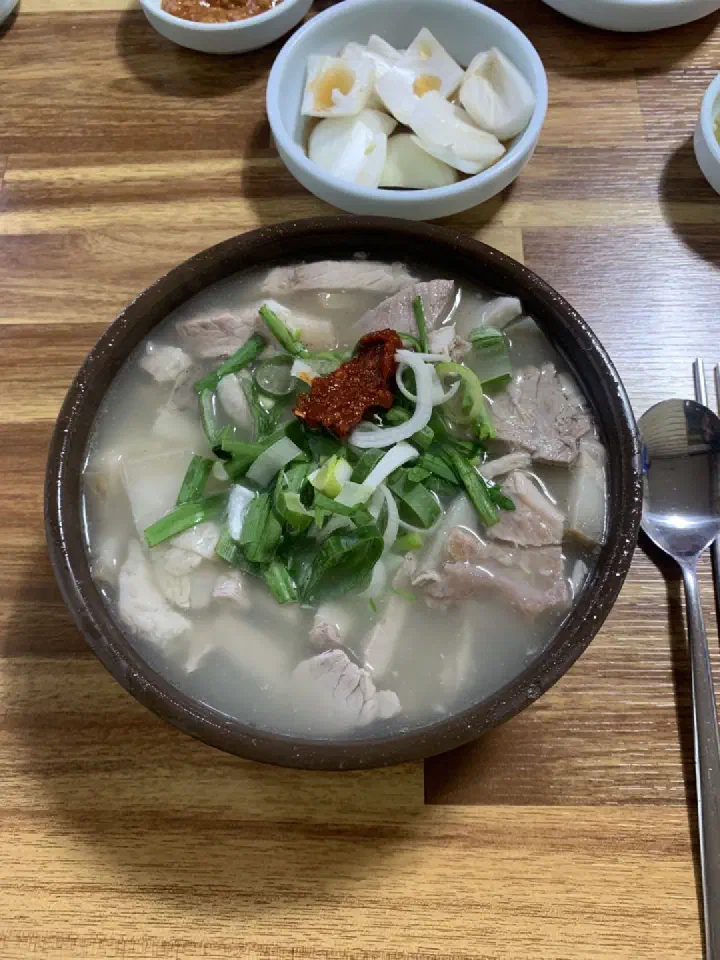
A clear-broth pork gukbap in a stone bowl with pickled onion

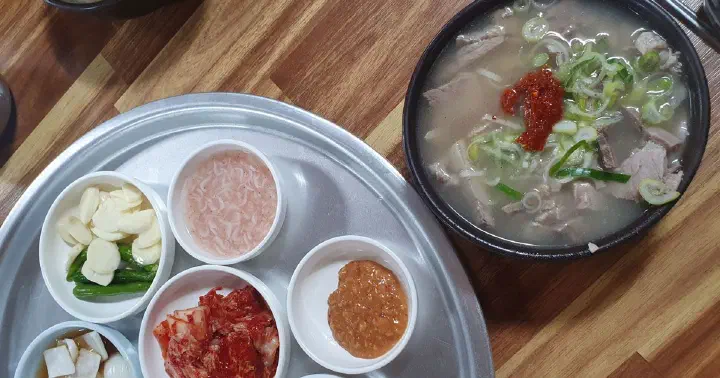
A tray of banchan - garlic, salted shrimp, kimchi - with a bowl of gukbap

Basic sides are kimchi, kkakdugi (radish kimchi), pickled onion, salted shrimp, garlic, green chili, and lettuce. The radish kimchi and pickled onion cut through the richness of the pork nicely, and you can refill at the self-serve bar in the middle of the hall. The kimchi is imported (Chinese), which some regulars note as a small letdown.

Parking, waiting, and ordering

There’s a lot in front for roughly 8 to 10 cars, around 12 with double parking, but it fills fast at peak hours. If you’re driving at lunchtime, plan to use the side streets nearby.

Expect a short wait from noon to 1 pm on weekdays and during weekends. The hall is big and turnover is quick, though, so the wait rarely drags. Come a little before or after the lunch rush for a calmer meal.

You can watch the staff prep and slice the pork and sundae right by the entrance, which many people find reassuring. The restrooms, on the other hand, get the occasional complaint, so just keep your expectations modest there.

A few practical notes for visitors from abroad: like most restaurants in Korea, this place takes cards, so any internationally usable card is fine. There’s no tipping culture here, and leaving a tip may actually confuse the staff. English isn’t really spoken, but ordering is easy; you can simply point at the menu and hold up fingers for how many you’d like. The broth itself isn’t spicy, but if you stir in the chili paste and garlic it gets a kick, and Korean “mild” can still feel hot to many visitors, so add it gradually. Both the soup and the suyuk can be packed to go.

A place with history

This restaurant started as Sinmasan Sikdang near Bisan intersection in Seo-gu. About a decade ago it moved to Daemyeong-dong, and the owner put her own name, Shinsongja, in front of the sign. Some customers have followed it since the Bisan days, going back 20 years, so it’s a genuine old-timer in the Daegu food scene. A branch has reportedly opened recently as well.

Prices have crept up over the years. Bowls that used to run 5,000 to 6,000 won are now 9,500, and gogi-bap went from 12,000 to 13,000 won. Given today’s prices and the sheer amount of pork it’s not unreasonable, but it’s no longer the bargain it once was.

Daegu has plenty of gogi-bap (suyuk-baekban) style shops. Gunwi Sikdang, Masan Sikdang, 8-beon Sikdang, and Imo Sikdang all come up in the same breath, and among them Shinsongja Sinmasan Sikdang keeps its fans with generous pork and that clean broth.

Bottom line

Clear, mild broth and a very generous hand with the pork. It’s gentle enough to bring your parents, and it works as a hangover meal too.

The lukewarm temperature and the day-to-day swing in how much fat ends up on your plate are real, and they may or may not bother you. Still, once you see the portion and taste the gogi-bap or teukttaro-gukbap, it’s clear why this name keeps showing up on Daegu gukbap lists.

For a first visit, get the gogi-bap. To judge the broth, get the teukttaro-gukbap. If you’d rather skip the fat, get the salgogi-gukbap.

📍 View Shinsongja Sinmasan Sikdang (신송자 신마산식당) on Google Maps →