If you ask anyone in Daejeon where to get dak-bokkeumtang (닭볶음탕), the spicy braised chicken stew, this place comes up almost every time.

Hanyeong Sikdang (한영식당) sits right at the mouth of the Oryu-dong food alley in Jung-gu. It’s a red-brick, two-story building, and you’ll spot it by the wall of Blue Ribbon awards near the door. There is exactly one thing on the menu, and yet the tables never seem to empty out. Here’s why.

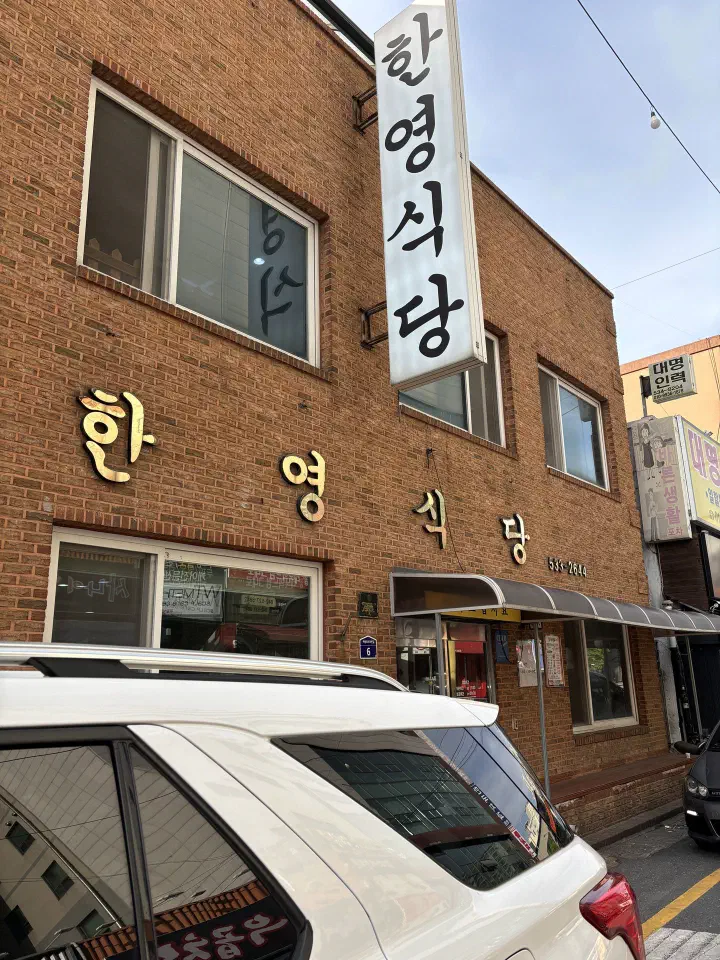
Red-brick exterior and signboard of Hanyeong Sikdang in Oryu-dong, Daejeon

Who it’s for

This isn’t really a solo-diner spot. It works best when two or more people sit around one pot and let it bubble away slowly.

A lot of people bring their parents here, and it makes sense. The seasoning is mild rather than aggressive, so older diners and kids handle it easily (there are baby chairs, too). What it isn’t good for is a quick meal. You cook the stew yourself at the table for 15 to 20 minutes, so if you’re on a tight schedule it can feel stressful rather than relaxing.

The basics

  • Address: 6 Gyeryong-ro 874beon-gil, Jung-gu, Daejeon (오류동)
  • Phone: 042-533-2644
  • Hours: 11:00 - 21:20 (last order 20:20)
  • Closed Mondays
  • Menu: one dish only, dak-bokkeumtang. Small 34,000 won / Large 51,000 won. Fried rice 2,000 won, extra rice charged separately.
  • Parking: no private lot (use nearby public parking)

Prices have crept up over the years - the small used to be in the low 20,000s - but given the portion size, few people walk away feeling cheated.

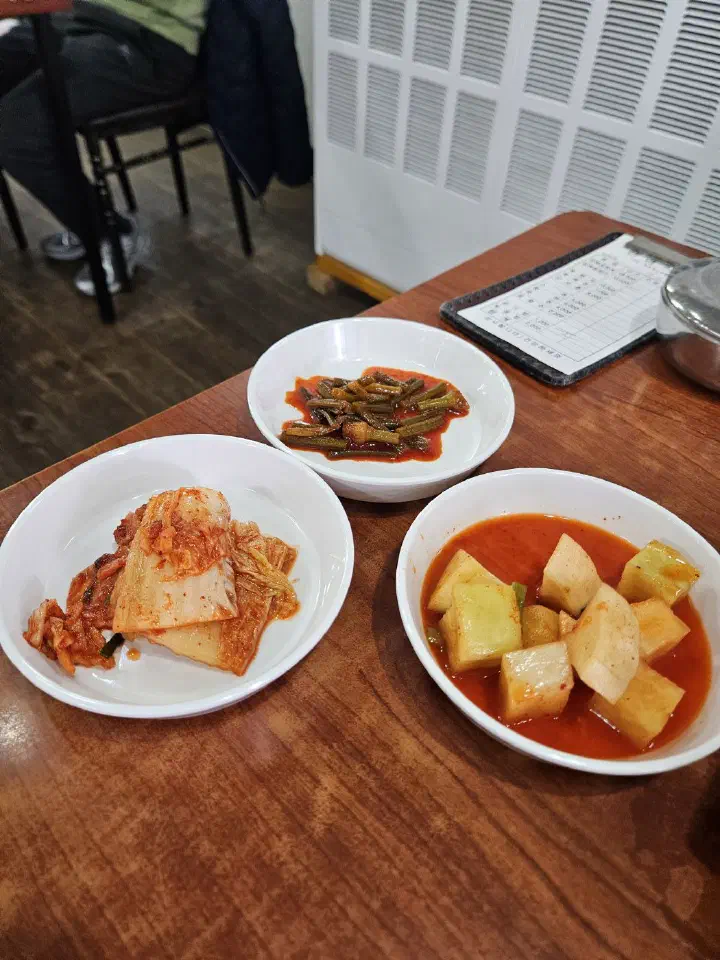
Banchan side dishes at Hanyeong Sikdang: kimchi, stir-fried sweet potato stems and radish water kimchi

📍 View Hanyeong Sikdang (한영식당) on Google Maps →

Getting here is easy: it’s a 1-2 minute walk from exit 4 of Seodaejeon-negeori Station (서대전네거리역), and about 10 minutes on foot from Seodaejeon train station, so it’s an easy stop if you arrive in Daejeon by rail.

The 15-minute lid rule is the whole point

The stew doesn’t arrive cooked. You get a pot of raw chicken, vegetables and seasoning, and you cook it at your table.

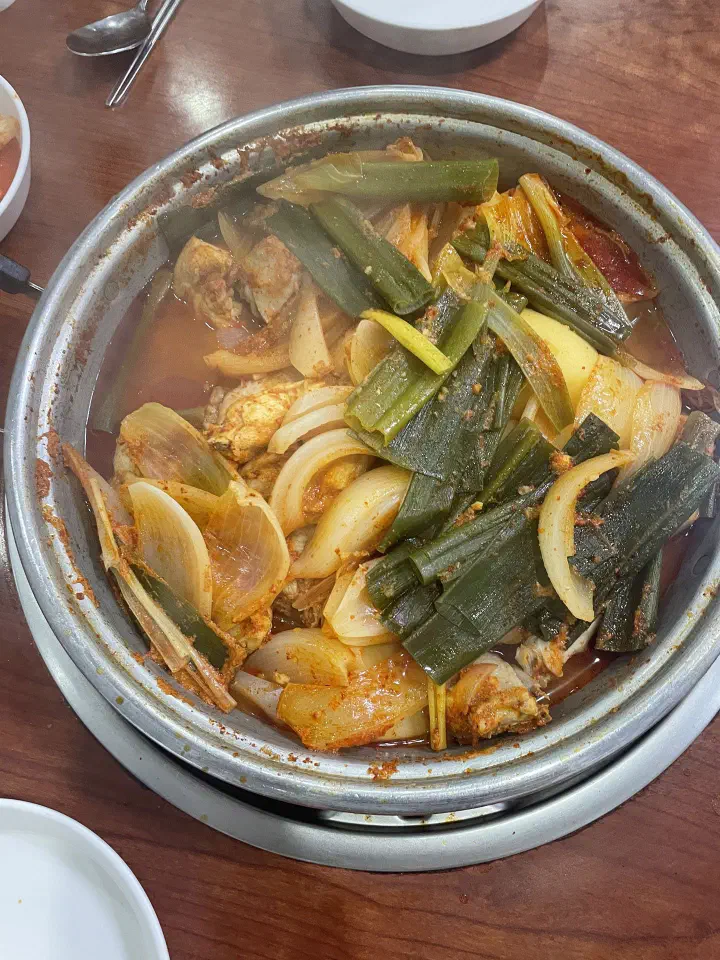
Uncooked dak-bokkeumtang pot piled with raw chicken, scallions and onions at Hanyeong Sikdang

Start on high heat, and once it bubbles around the edges, turn it down to medium and leave the lid closed for about 15 minutes (20 for the large). And here’s the one rule that matters: do not lift the lid. It’s such a firm house policy that older reviews are full of people getting gently scolded by the staff for peeking.

These days the servers just tell you the timing and let you know when it’s ready, so there’s nothing to be nervous about. But you really do have to wait it out for the flavor to come together. On an empty stomach those 15 minutes feel long, so it helps to know that going in.

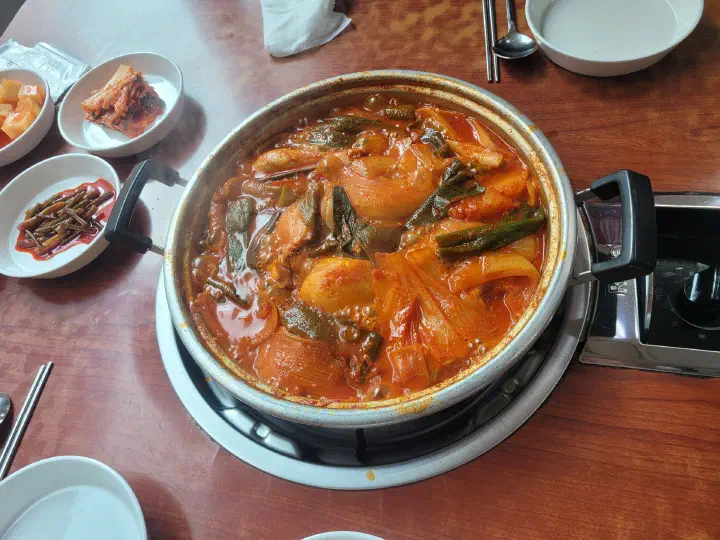
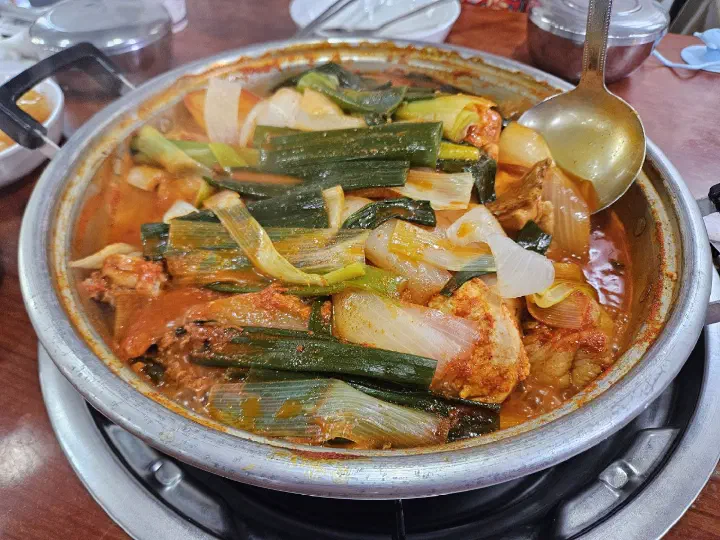
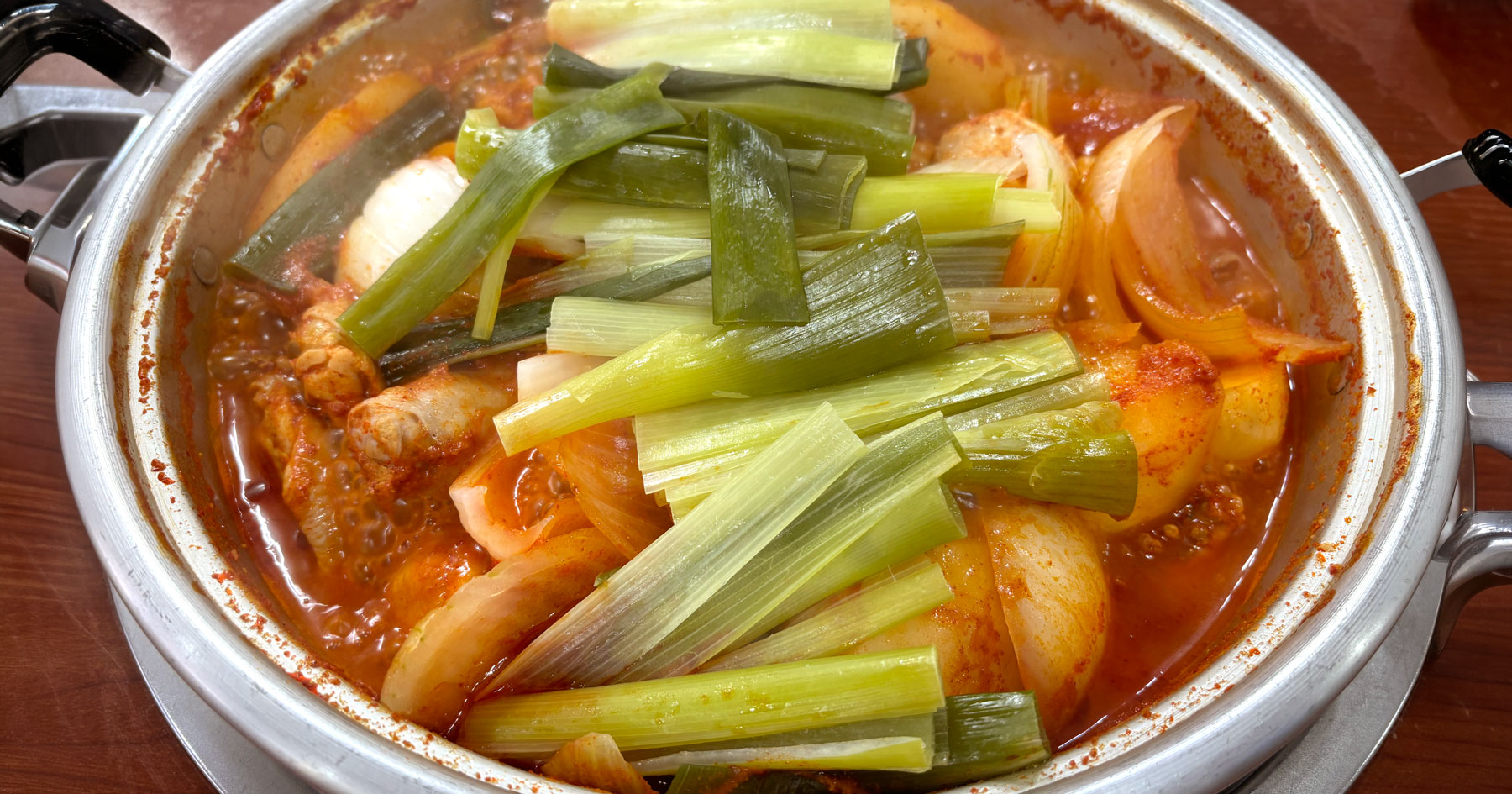
Dak-bokkeumtang bubbling in its red broth on a tabletop burner at Hanyeong Sikdang

Scallions are the star of the broth

Lift the lid and the first thing you see is a mountain of scallions, onions and big chunks of potato. They are genuinely generous with the vegetables.

Scallion-heavy broth of the fully cooked dak-bokkeumtang at Hanyeong Sikdang

That’s where the flavor lives. The sweetness isn’t from sugar - it comes from the scallions and onions melting down into the broth. It’s got a gentle kick but nothing that punches you, so even people who don’t do spicy food can manage it.

There’s a rhythm to eating it. Fish out the soft, floury potatoes first, then keep reducing the broth as you get to the chicken. The chicken isn’t seasoned all the way through, so dip it in the broth or spoon some over it. The first taste can seem a little bland, but the longer you simmer, the deeper the savory flavor gets. This is a dish to take slowly, not to rush.

The chicken is domestic, clean-tasting with no gamey smell, and tender. There are also gizzards (똥집) in there if you like a chewy bite.

The fried rice is basically mandatory

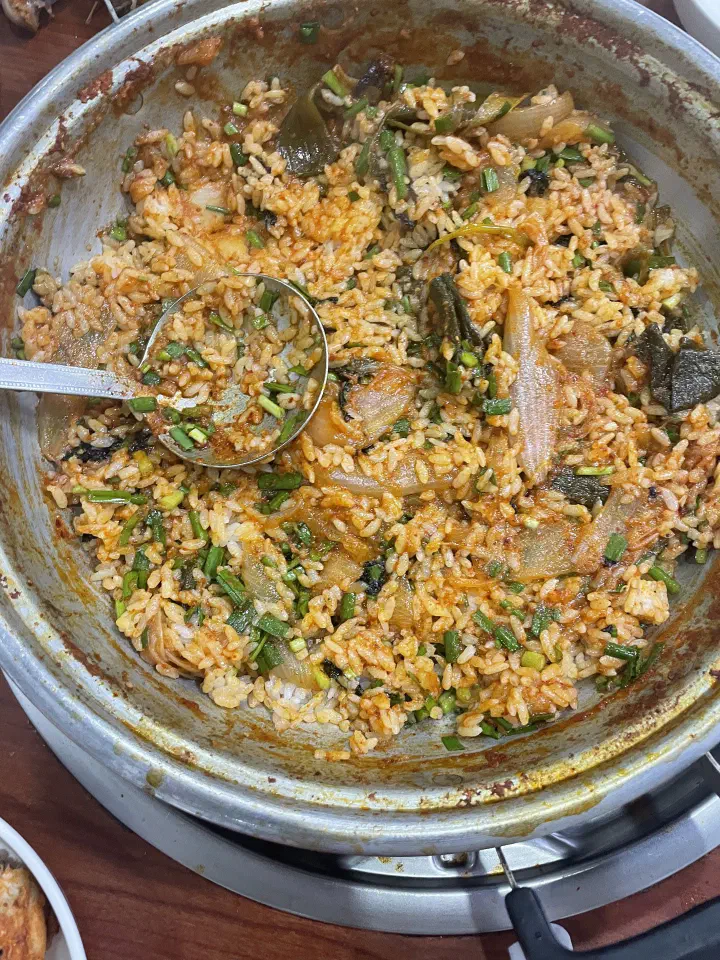
Near the end, order the bokkeumbap (볶음밥, fried rice) and a server takes the pot away, fries rice in the leftover sauce, and brings it back with seaweed flakes, chives and sesame oil.

Bokkeumbap fried rice with chives and seaweed flakes made in the leftover sauce at Hanyeong Sikdang

One tip: leave a good amount of broth in your side dish while you eat the stew. When the fried rice comes, moisten it with that broth - it’s much better that way. On its own the fried rice is fairly plain, and some days people find it a touch salty, so adjusting with that saved broth helps. Somehow there’s always room for it, even when you’re full.

Sizes and how much to order

There are only two sizes, small and large. You might read older mentions of a “medium,” but there isn’t one now - just small and large.

  • Small: one chicken. Comfortable for two, doable for three light eaters.
  • Large: about one and a half chickens. Good for three to five.

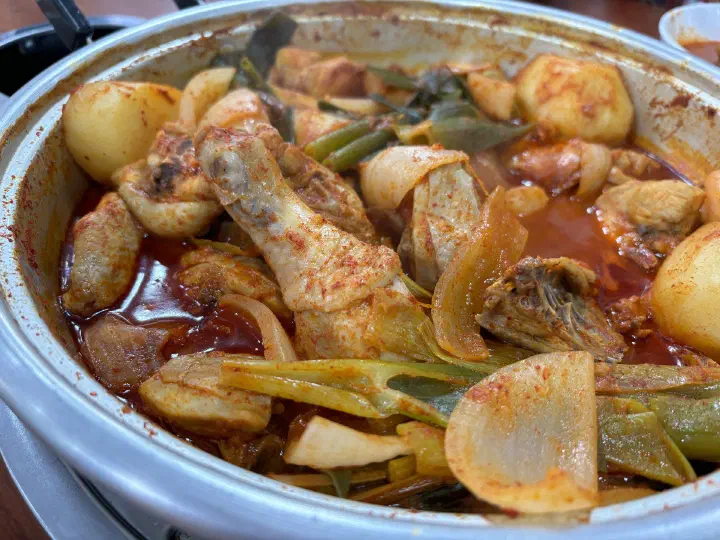
Chicken drumstick and big chunks of potato in the spicy stew at Hanyeong Sikdang

If three of you want fried rice too, a small plus an extra bowl of rice is easier to manage than jumping to the large. The large is genuinely huge - even four people sometimes can’t finish it.

Parking and waiting - the honest downsides

The honest weak point is parking. There’s no dedicated lot. A couple of cars can squeeze in front, but at mealtimes that fills up fast. There’s a public lot (Oryu-dong No. 2) a one-minute walk away that’s cheap, and a few others nearby, but the alley is narrow, so if you’re not a confident driver, public transit is the easier call.

Waiting depends heavily on timing. Weekday and weekend evenings often mean taking a number, while right at opening or the lull around 3-4 p.m. tends to be calm. With seating over two floors and a quick turnover, even a wait usually isn’t endless.

To save time, reserve. On weekdays you can call ahead, and if you phone in your order 20-30 minutes before arriving, it’ll already be simmering when you sit down. (Weekend reservations are harder.)

So, worth going back?

It’s not a flashy dish. If you show up expecting something bold, it might read as plain - a few reviews do call it ordinary. But the restraint is the point here: a broth built from vegetables, clean chicken, and a flavor that only deepens the longer it cooks. It’s the kind of meal that doesn’t wow you and then quietly comes to mind again later.

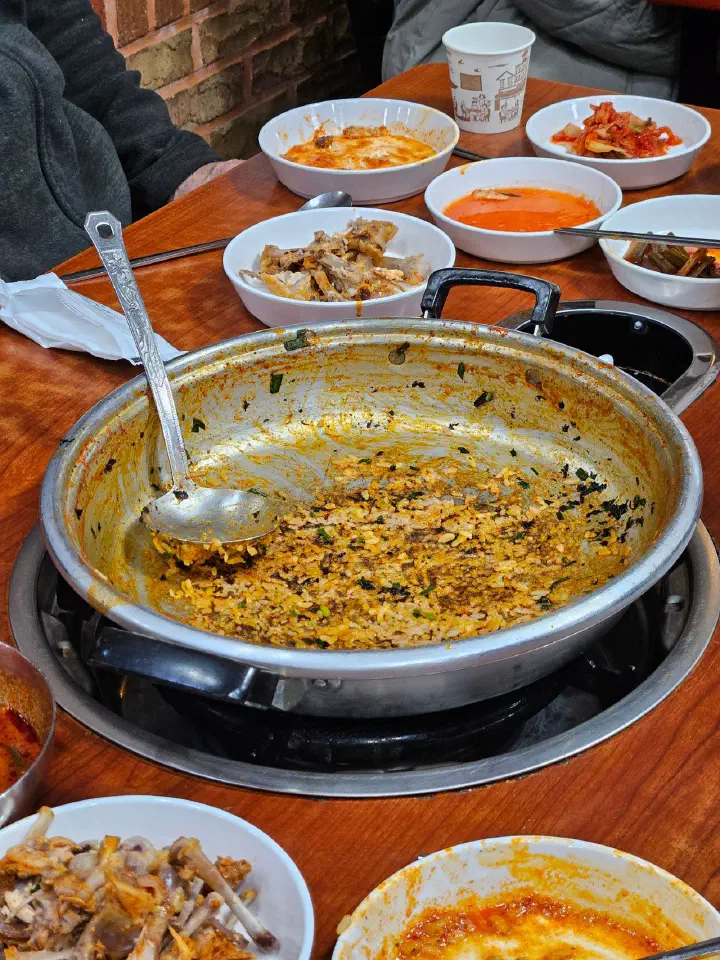
Nearly empty pot after finishing the fried rice at Hanyeong Sikdang

Daejeon has a few well-known dak-bokkeumtang places, so people love to compare. If you prefer a spicier, bolder version, the spots near the Jung-gu district office lean that way; if you like a clean, mellow broth, this is your place. It also slots nicely into a Daejeon food day - a soothing stop after the famous Sungsimdang (성심당) bakery, dubu-duruchigi or kalguksu.

Notes for foreign visitors

  • Payment: Cards are fine here, as at almost every restaurant in Korea, so an internationally accepted card will work without trouble.
  • No tipping: Korea has no tipping culture. You don’t need to tip, and trying to can actually confuse the staff.
  • Ordering: English isn’t really spoken, but ordering couldn’t be simpler - there’s only one dish. Just hold up fingers for how many of you there are, and the staff will bring the right size. They’ll also show you the cooking timing.
  • Spice level: It’s mild by Korean standards, but Korean “mild” can still register as spicy if you’re not used to it - it should be very manageable here, though.
  • Maps: Google Maps walking and transit directions are unreliable in Korea. Use Naver Map or KakaoMap instead, and the Kakao T app is handy for taxis.
  • Timing: Because you cook the stew yourself, budget at least 30-40 minutes for the meal. If you’re catching a train from Seodaejeon, plan around that.

Location / getting there

  • 6 Gyeryong-ro 874beon-gil, Jung-gu, Daejeon
  • Subway: 1-2 min walk from Seodaejeon-negeori Station (서대전네거리역), exit 4
  • Train: about 10 min on foot from Seodaejeon Station
  • At the entrance of the Oryu-dong food alley, near Seodaejeon Park

📍 View Hanyeong Sikdang (한영식당) on Google Maps →