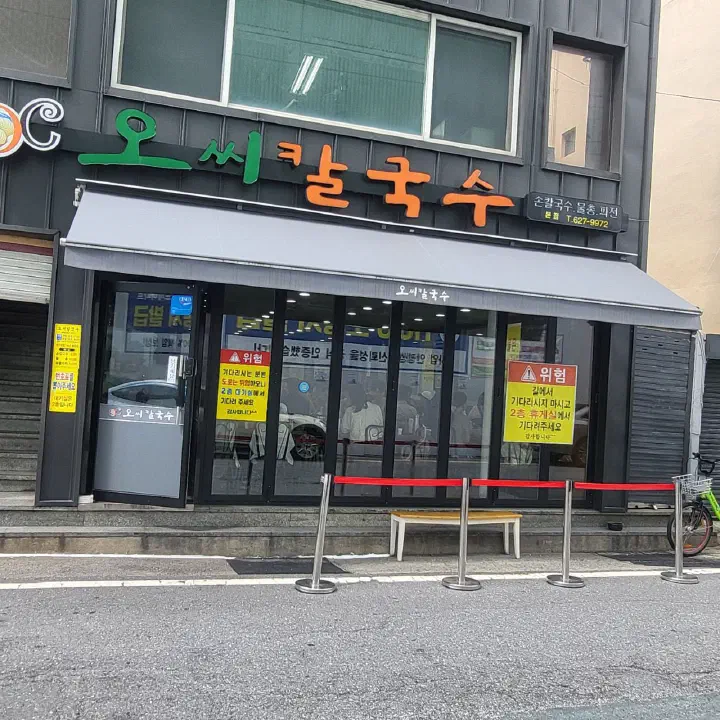
Daejeon calls itself the noodle city of Korea, and it earned the title honestly. After the Korean War, flour poured into this railway hub where two main train lines cross, and the west coast nearby kept clams cheap and fresh. Out of that history came kalguksu - hand-cut wheat noodles in broth - and out of Daejeon’s many kalguksu houses, one name comes up before all others: OC Kalguksu (오씨칼국수) in Samseong-dong.
This is a place with a bank-style numbered ticket machine and a whole second floor used as a waiting room. For a noodle shop, that tells you most of what you need to know.
The basics
- Address: 13 Yetsintanjin-ro, Dong-gu, Daejeon (Samseong-dong)
- Hours: Tuesday to Sunday, 11:00-21:00. Closed every Monday.
- Break time: 15:00-15:30 on weekdays only. Last order is roughly 40 minutes before closing.
- Phone: 042-627-9972
- Parking: free lot beside and behind the building
📍 View OC Kalguksu (오씨칼국수) on Google Maps →
One warning before anything else. Several restaurants in Daejeon use the same name. Only two are the real thing: this Samseong-dong main branch and the Doryong branch near the convention center. The similarly named shop in Jungang Market is a different business entirely, so navigate by the map link, not by the name.
The menu is three lines long
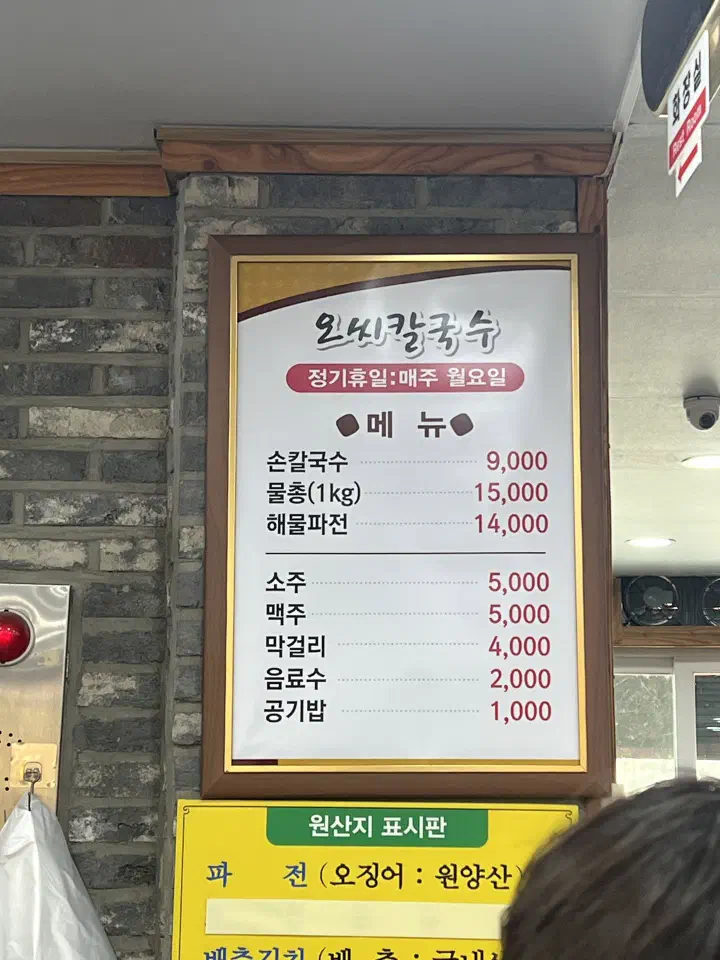
Son-kalguksu (손칼국수) at 9,000 won, mulchong (물총) at 15,000 won for a full kilogram of clams, and haemul-pajeon (해물파전) at 14,000 won. That’s it. A bowl of rice is 1,000 won, and soju or beer runs 5,000 won.
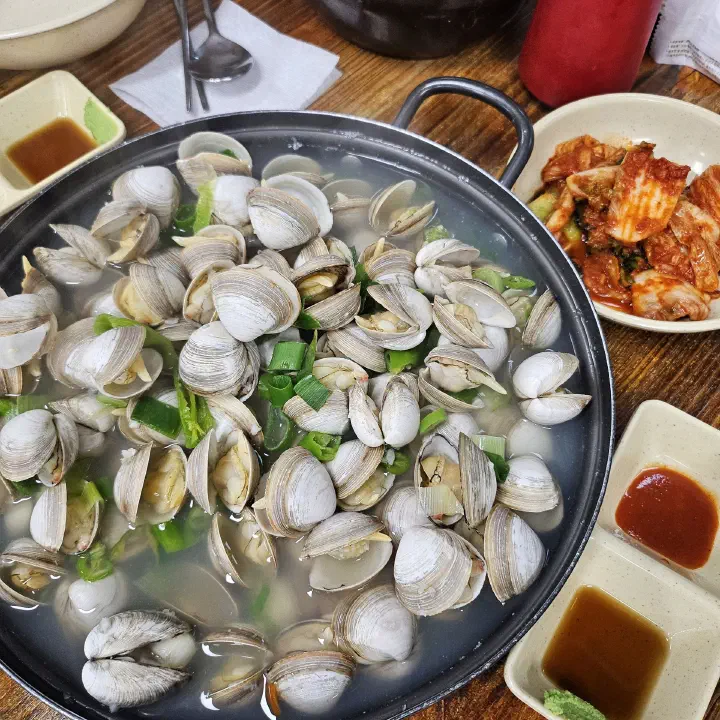
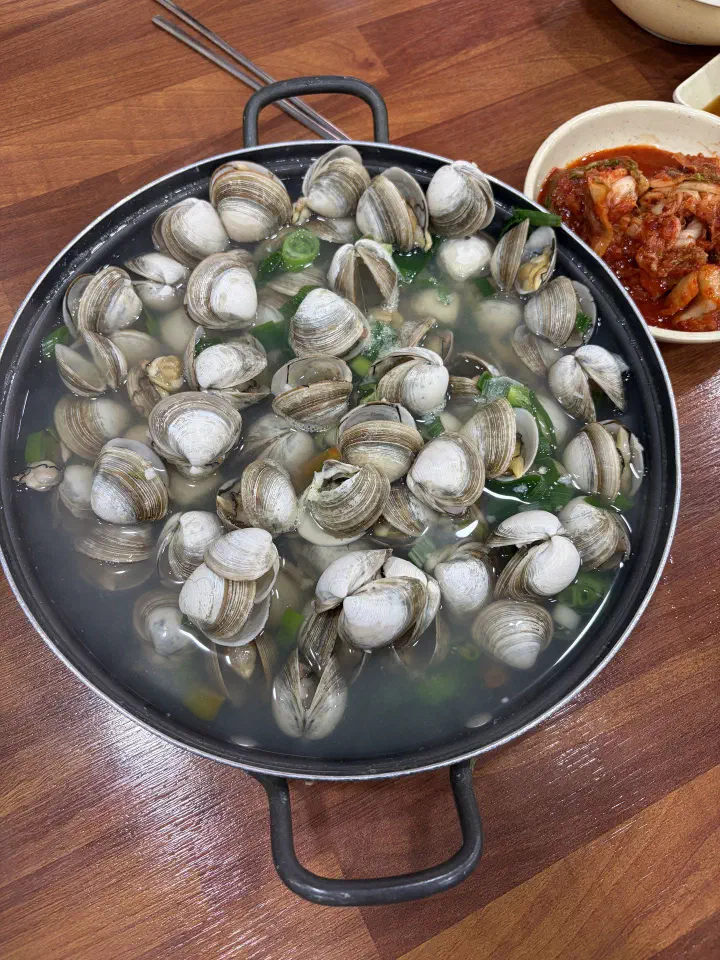
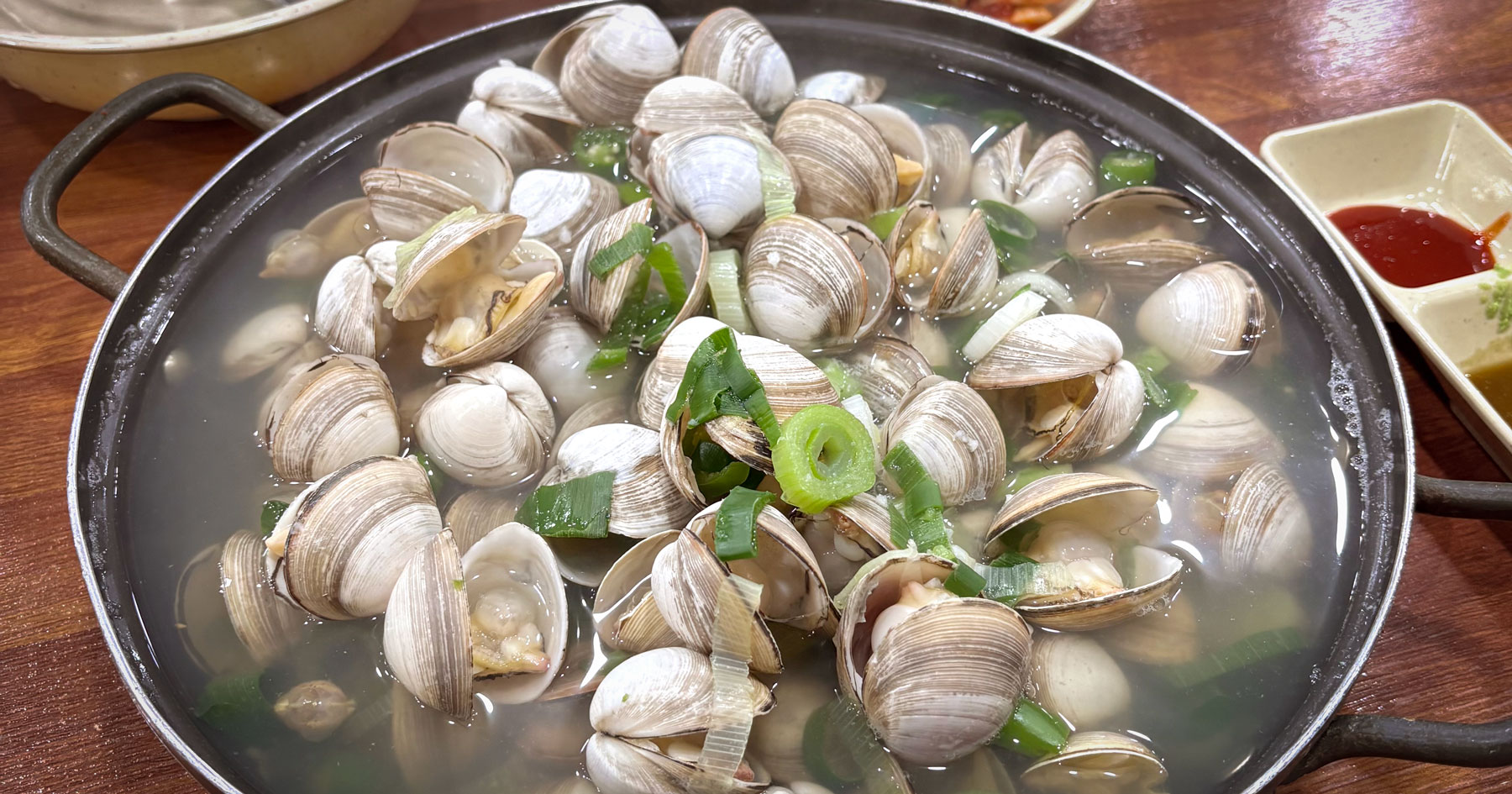
Mulchong is the dish that made this place famous. The name means “water gun” - dongjuk clams squirt little jets of water as they cook, and someone long ago found that funny enough to put on the menu. What arrives is a pot packed with nothing but clams, scallions, garlic and green chili. The broth is clear but intensely savory, with a sharp, clean heat at the end. Koreans swear by it as a hangover cure, and honestly, you don’t need the hangover to appreciate it.

The clams are small, plump and impressively grit-free. Little dishes of vinegared gochujang and wasabi-soy come to the table for dipping. Locals say the clams get fatter in winter, which makes the cold season the best time for this pot.
Two soups, two personalities
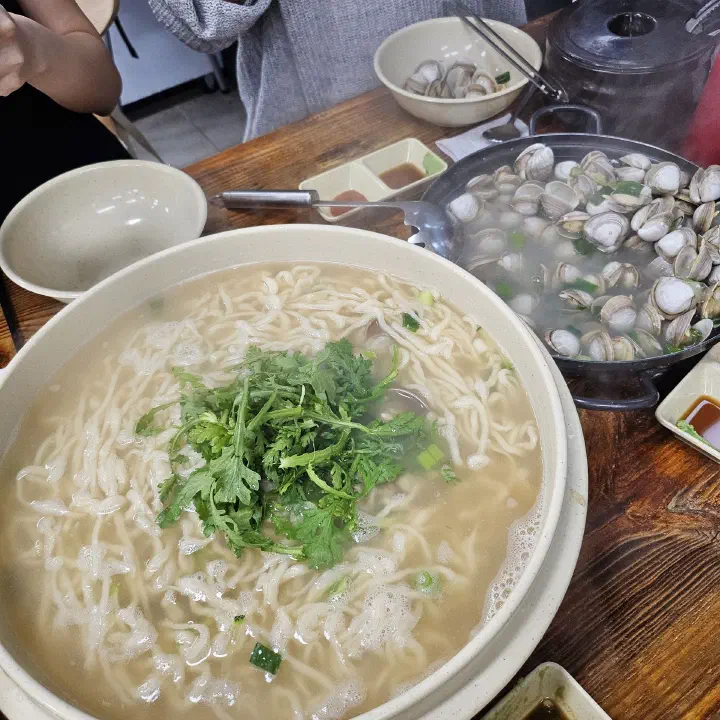
Order both and you’ll notice the broths are completely different. The mulchong broth is clear and bracing; the kalguksu broth is thicker, almost silky from the noodle starch, with a deep, rounded savoriness. You can watch the noodles being rolled and cut by hand behind a glass panel inside the shop - they come out slightly thick, a bit uneven, and pleasantly chewy.

Fair warning: the noodles are served on the firm side. If you like your noodles soft and fully yielding, the texture may read as undercooked. Regulars consider that bite the whole point.
The local move is to ferry noodles from your kalguksu bowl into the mulchong broth. Another insider trick: order rice, shell a pile of clams into the clam broth, and eat it like a rich clam rice soup. If you want more heat, ask for dadaegi (다대기), a red pepper paste they’ll happily bring.
About that kimchi
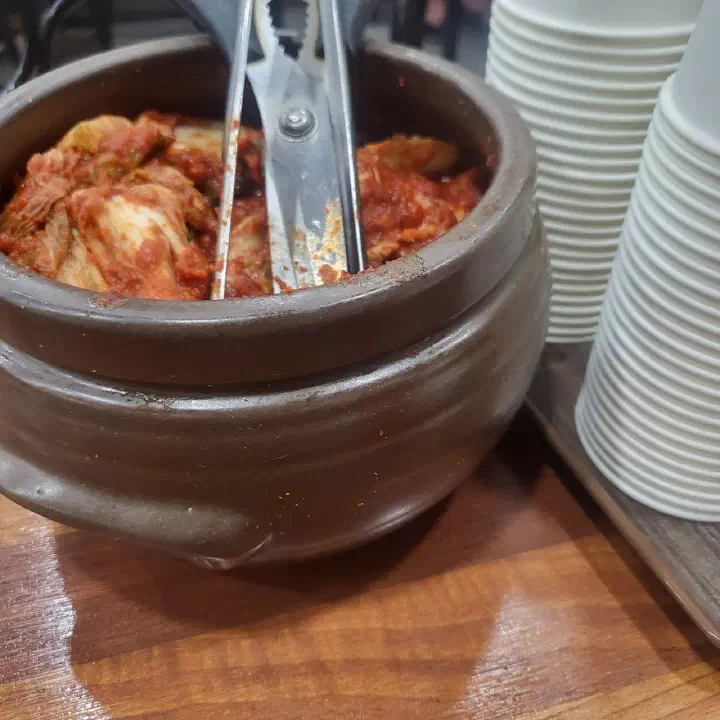
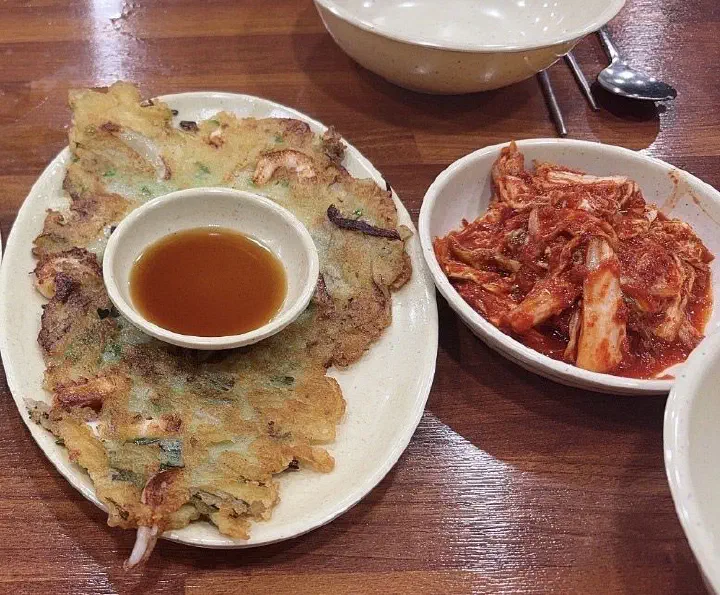
Every table gets a small crock of house kimchi, self-serve. It is ferociously spicy - spicy enough that the walls carry printed warnings telling you to take small portions. This is not “foreigner spicy,” this is “Koreans sweat and keep eating anyway” spicy, in the style of Daejeon’s famous silbi kimchi.
Heavy on garlic, aggressive on pepper, weirdly addictive draped over a bite of noodles.
If you have any doubt about your spice tolerance, cut a small piece, pair it with broth, and see how it goes. Skipping it entirely is a perfectly respectable choice, and no, they don’t sell it to take home. People have asked.
The pancake, and how to order
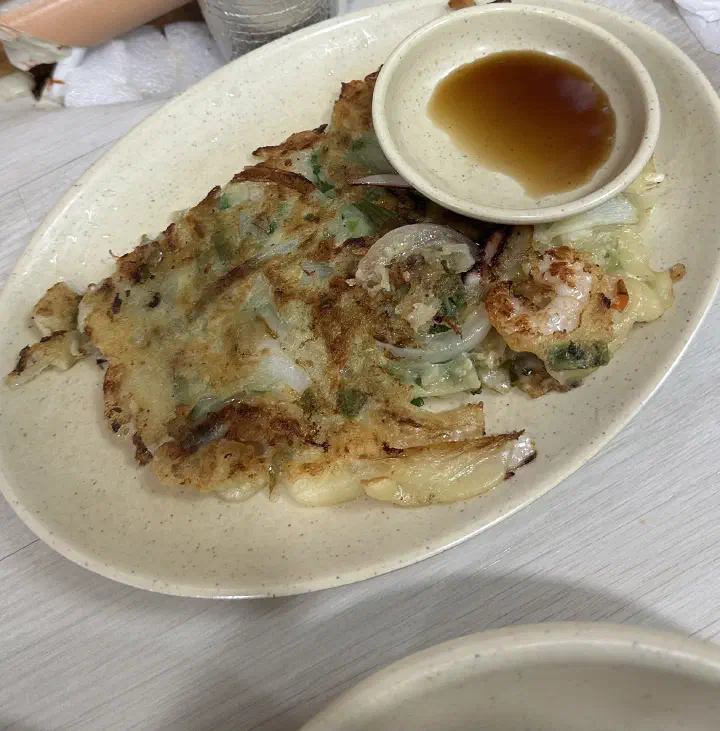
The seafood pancake comes cut in half on two plates, which is thoughtful for sharing. The edges fry up crisp and there’s squid and shrimp inside, but the batter is on the thick side. If your ideal pajeon is thin and shattering-crisp, this one may underwhelm. As a companion to makgeolli, it does its job.


Portions here are enormous, so order less than you think. For two people, one or two kalguksu plus one mulchong is plenty. For groups, the local formula is: kalguksu for one fewer than your headcount, then add mulchong or pajeon. Two people eating a kalguksu and a mulchong spend 24,000 won total, which for a kilo of clams and a giant bowl of noodles is very fair.
What the wait actually looks like
Weekend lunch queues regularly pass 100 groups, and holiday waits have hit two to three hours. The saving grace is turnover: figure roughly one minute per number on your ticket, so 20-30 groups moves faster than you’d fear.

There is no reservation app and no phone-ahead. You pull a paper ticket from the machine inside, then wait in the heated and air-conditioned second-floor waiting room with a number display. No phone notification exists, so stay close when your number approaches.
Three tips that genuinely work:
One - arrive 30 to 60 minutes before the 11:00 opening. Staff usually let early birds sit inside and even take orders in advance, so the first wave eats at 11:00 sharp.
Two - solo diners and pairs should ask at the counter. There’s a window-side counter row, and small parties often get seated immediately, skipping the entire line.
Three - weekday 2-3 pm is the calm window. On weekends even that window can be busy, so set expectations accordingly.
Practical notes for international visitors
Credit cards are accepted without fuss - any internationally issued card is fine, as in nearly every Korean restaurant. There is no tipping in Korea; leaving extra money would only confuse the staff.
Don’t expect much English, but ordering is genuinely easy: the menu has three items, so pointing at the menu and holding up fingers gets the job done. Some staff know a few words of English, and the pace is brisk but friendly in that no-nonsense old-shop way.
For directions, skip Google Maps for walking routes - it’s unreliable in Korea. Use Naver Map or Kakao Map instead. The shop is a 5-minute taxi ride from Daejeon Station (the Kakao T app makes taxis painless), or about a 30-minute walk. Most travelers pair it with Sungsimdang, the famous bakery downtown - noodles first, bread after is the sensible order.
One more time for the spice: the kimchi here is very hot even by Korean standards. Approach with respect.
How it has changed
Long-timers remember a fourth menu item - a clam and octopus tang - and extra noodle portions you could add to the pot. Both quietly disappeared around 2021, leaving the tight three-item lineup. The shop also used to close only three Mondays a month; now it’s every Monday.
Prices have climbed with the times: kalguksu went from 6,000 won in 2021 to 9,000 won today, mulchong from 12,000 to 15,000.

Some regulars grumble that portions have slimmed a little over the years. Parking, on the other hand, improved - a second lot appeared behind the building, fitting 20-plus cars, though it still fills at peak hours.
The place is a fixture on Korean TV, with appearances stretching back to 2011, including the popular food show Delicious Guys in 2019. In spring 2026 it popped up again on comedian Park Myung-soo’s YouTube channel, where he gave it a perfect score as hangover food, which promptly made the lines longer.
Verdict
The kalguksu alone is solid rather than life-changing - even some fans admit a good Seoul noodle shop gets close. What you can’t replicate elsewhere is the full table: the clear, fiery clam pot, the starchy-deep noodle broth, and that unhinged kimchi, all together for about 12,000 won a head.
If that combination appeals, the wait is part of the story you’ll tell. If you just want noodles without the queue, the Doryong branch or nearby Haengun Kalguksu (행운칼국수) will feed you sooner.
Getting there
📍 View OC Kalguksu (오씨칼국수) on Google Maps →
From Daejeon Station: 5 minutes by taxi, about 30 minutes on foot. Buses run nearby too - Naver Map will route you. If you’re doing the classic Daejeon day trip by KTX, this and a bakery run make a very good afternoon.