Damyang is bamboo country, and the one dish I really wanted to try here was daetongbap (대통밥) — rice steamed inside a length of fresh bamboo.
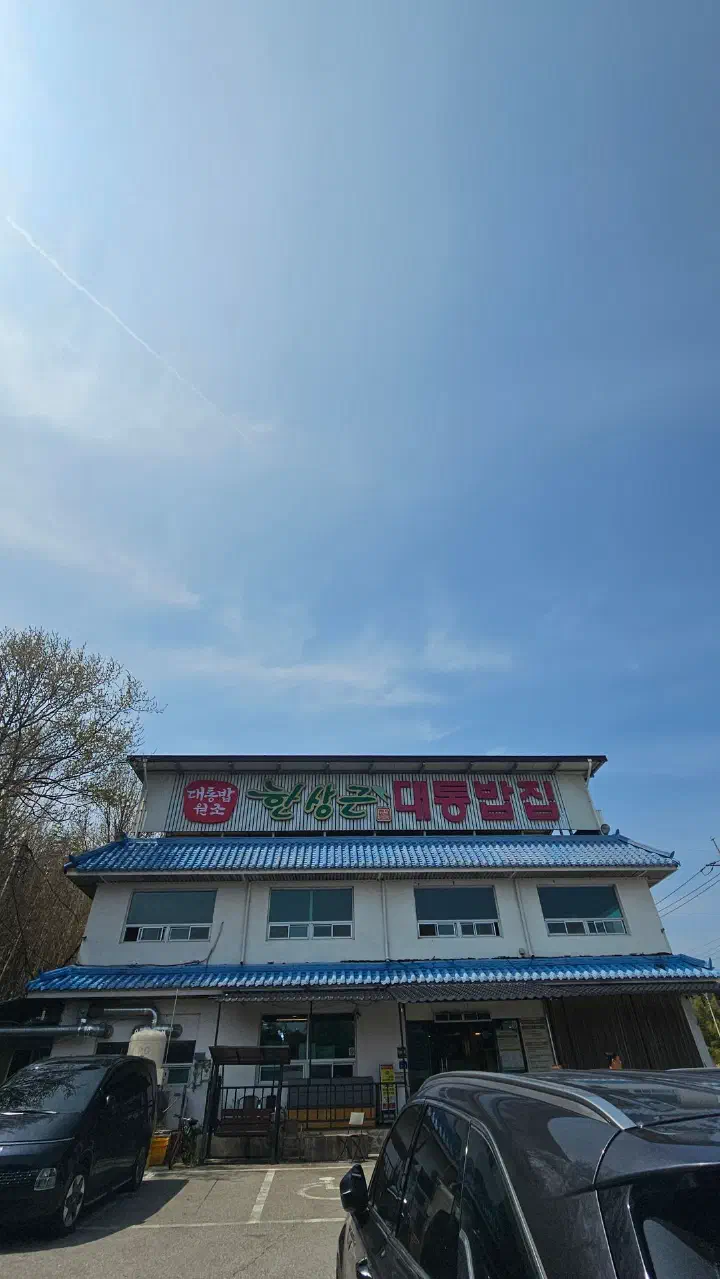
There are a few places that serve it, but only one claims to have invented it. So on this trip I drove straight out to Wolsan-myeon to find Hansangeun Daetongbapjip (한상근대통밥집).

The basics
A few things worth knowing before you go:
- Address: 113 Damjang-ro, Wolsan-myeon, Damyang-gun, Jeollanam-do
- Phone: 0502-5550-4866
- Hours: Mon–Thu 10:30–15:00 / Fri–Sun 10:30–20:30
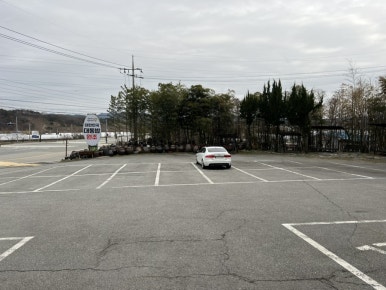
- Parking: Large lot right in front, plenty of space even on weekends
- Facilities: Indoor restrooms, accessible facilities
On weekdays they close at 3 p.m., so plan around that. The owner manages his own bamboo grove and spends weekday afternoons working it, so weekday dinner isn’t served. If you want a relaxed dinner, go Friday through Sunday.
A quick note for visitors from abroad: almost every restaurant in Korea takes credit cards, and this one is no exception, so any international card works fine. There’s also no tipping culture here — you don’t need to leave anything extra, and staff may actually be confused if you try. No English menu, but it’s a short menu and you can just point at what you want.
📍 View Hansangeun Daetongbapjip (한상근대통밥집) on Google Maps →
Easy parking
The lot out front is huge. Even at weekend lunch you won’t be circling for a spot, which is a small thing that makes a big difference when you’ve got family in the car. You park right by the door and walk in.

The sign is big enough to spot from the road, so you won’t miss it even on a first visit.
Bamboo everywhere inside
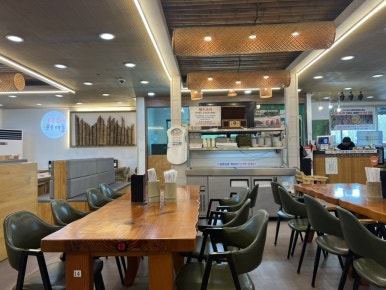
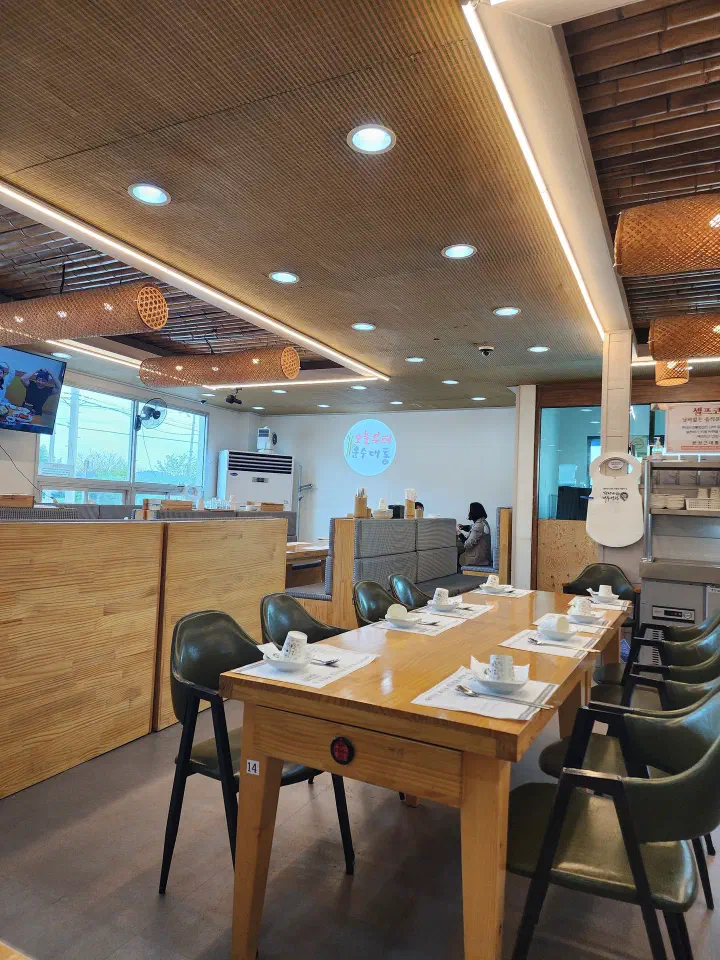
The hall is wide and the tables are spaced out, so you’re not bumping elbows with the next group.

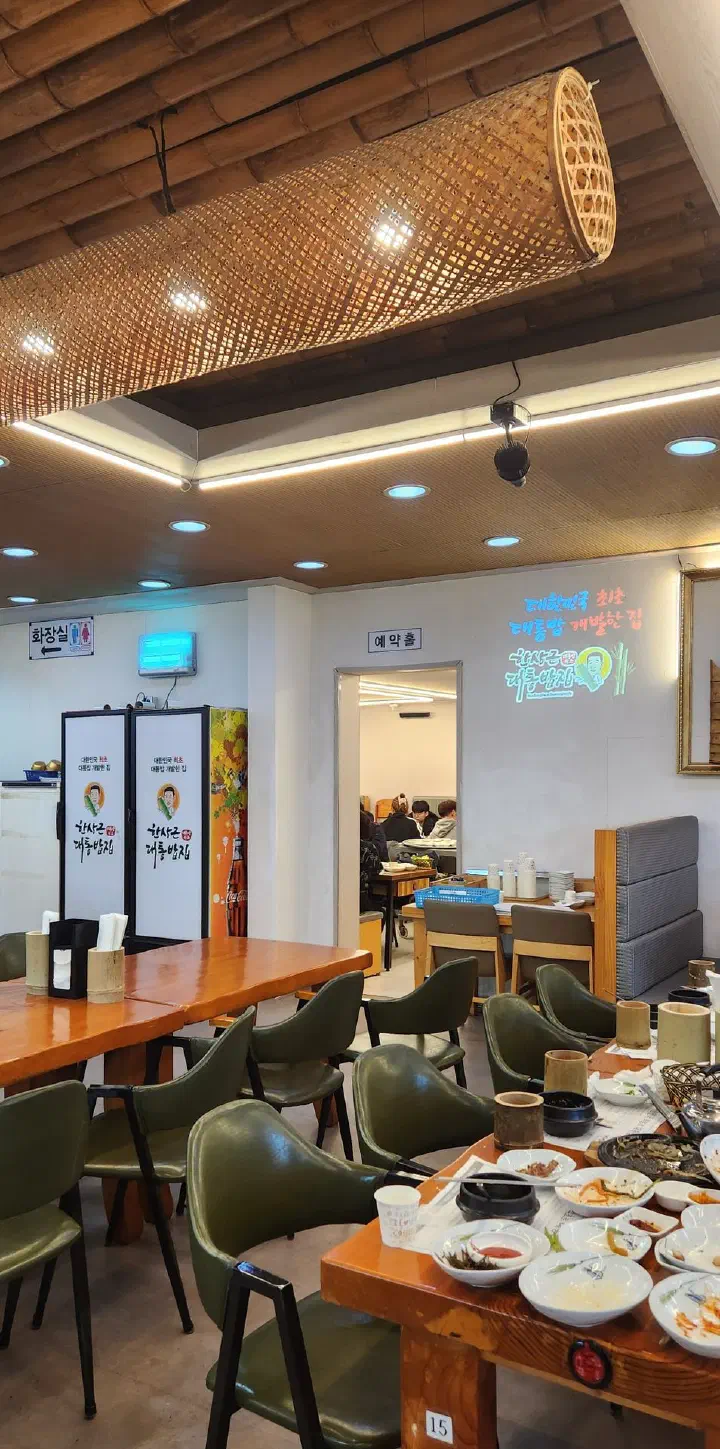
The ceiling and lighting are all done up in bamboo, and just sitting there you really feel like you’re in Damyang. There’s a separate private room in the back too, which would suit a bigger gathering.

Why it’s the original
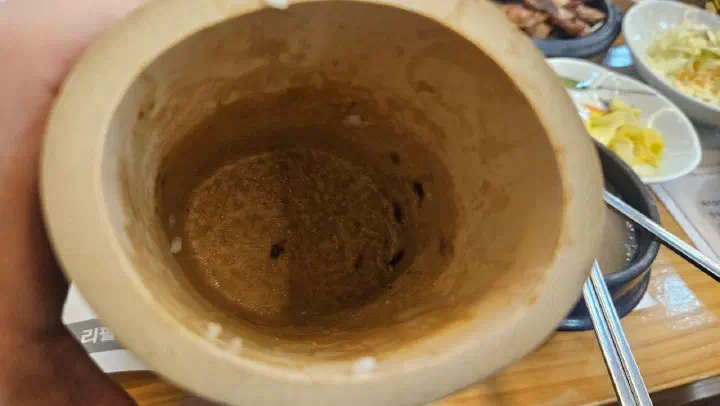
What sets this place apart is that it was the first in the country to develop daetongbap. The bamboo comes from the owner’s own grove — said to be around 16 hectares — and each tube is used only once. After your meal you can actually rinse out your bamboo cup and take it home; there’s even a little washing station out by the parking lot for exactly that.
Most places reheat pre-cooked rice inside the bamboo, but here they pack in soaked raw rice and steam it for over an hour. That’s why the rice never turns gluey — it comes out glossy, like it was just made.
A generous self-bar
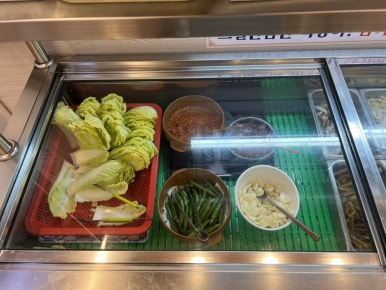
There’s a self-serve bar in the middle of the room, so you can help yourself to side dishes and ssam (wrap) vegetables without flagging anyone down. The lettuce and peppers looked crisp and fresh, and the ssamjang and house-made toha-jeot (fermented freshwater shrimp) are right there to refill.

The hansangeun jeongsik
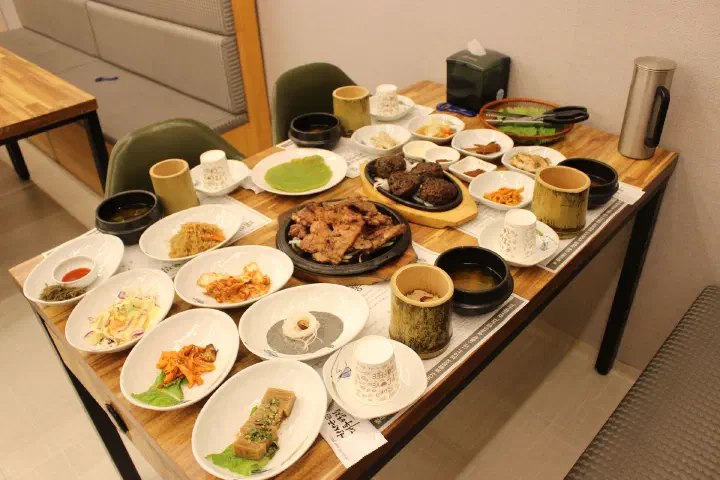
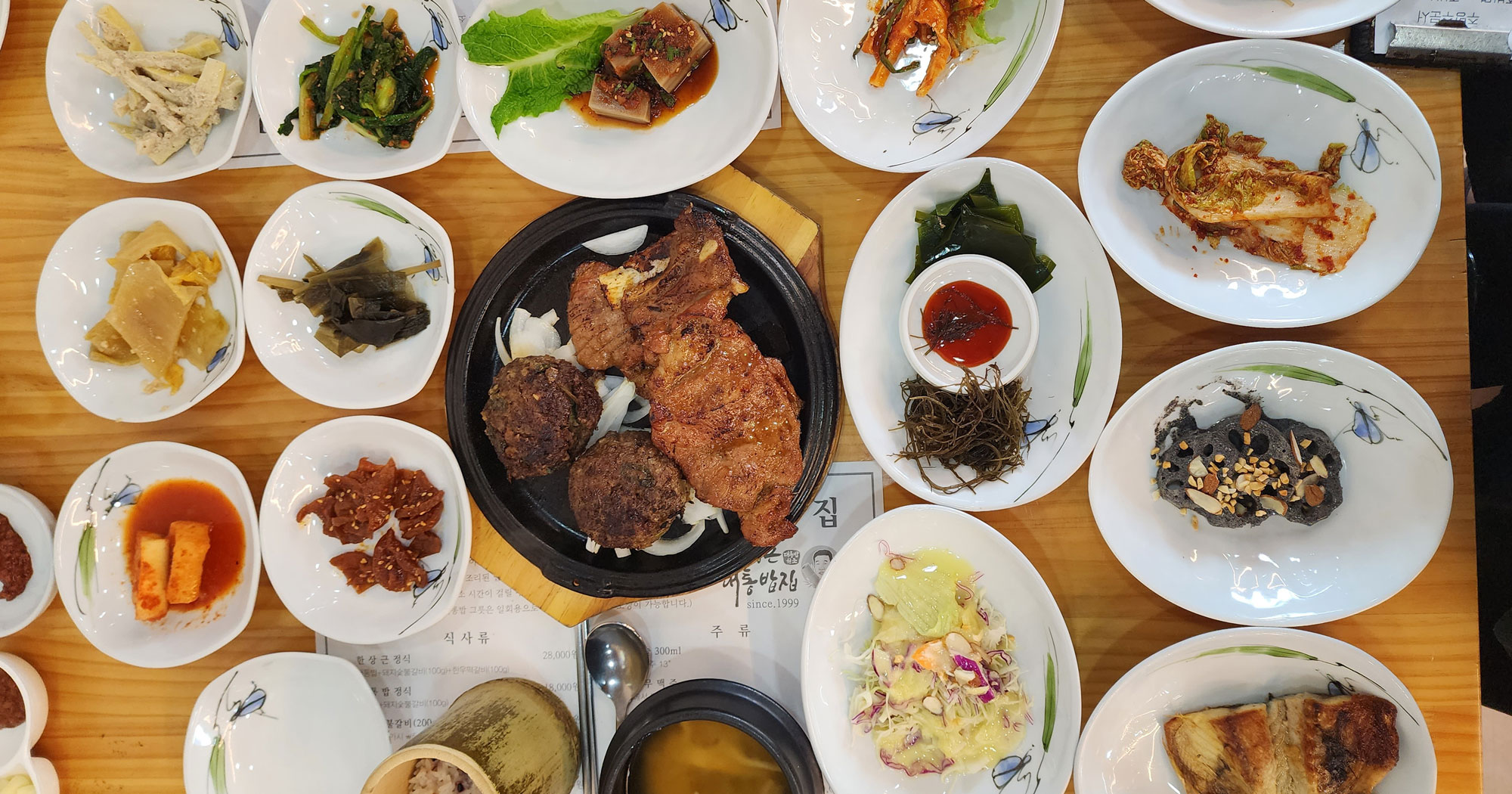
I ordered the hansangeun jeongsik (한상근정식), the set that comes with bamboo rice, charcoal-grilled pork ribs, and hanu (Korean beef) tteokgalbi. It’s 28,000 won per person, and about ten minutes after ordering the table started filling up.

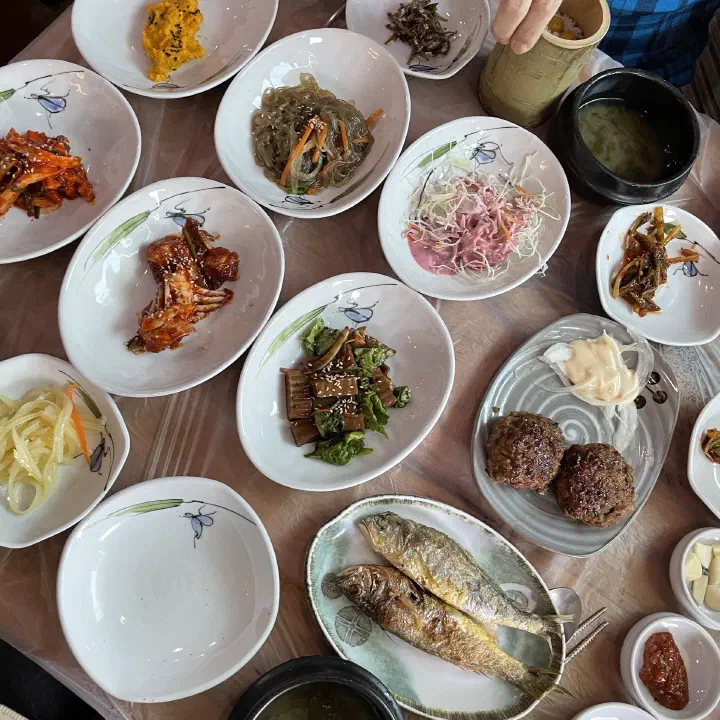
Before the mains even arrived I was surprised by the sheer number of side dishes. Seasoned bamboo shoots, japchae, buchujeon (chive pancake), acorn jelly, salad, kimchi, pickles — the table filled up completely. None of it was heavily salted, so it was all easy to keep picking at.

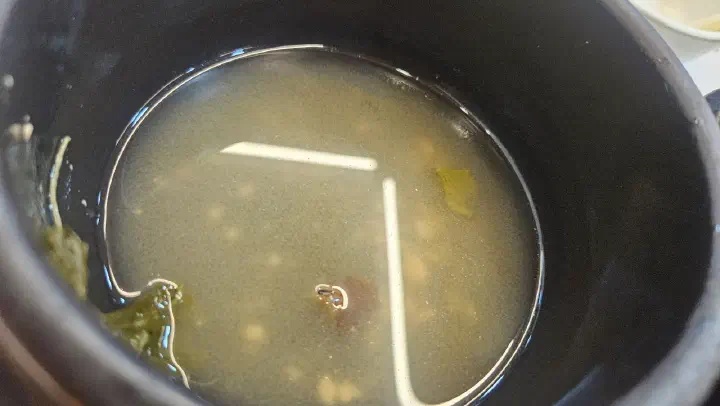
Each person gets their own little pot of doenjang (soybean paste) soup. The broth has good depth, and it’s perfect for spooning over rice.

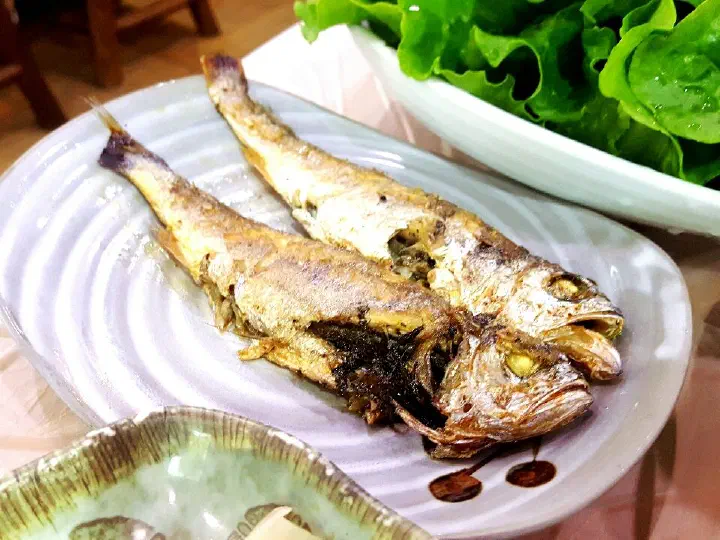
There’s a bit of grilled fish on the side too — clean-tasting, not fishy at all.

Toha-jeot is the quiet star
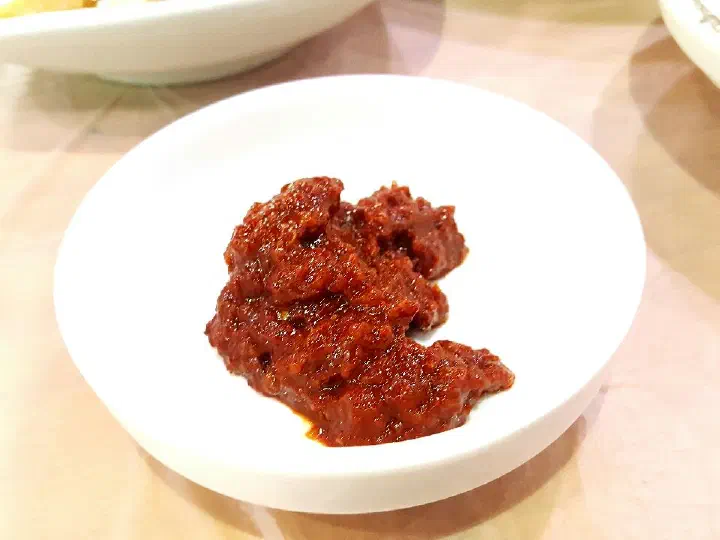
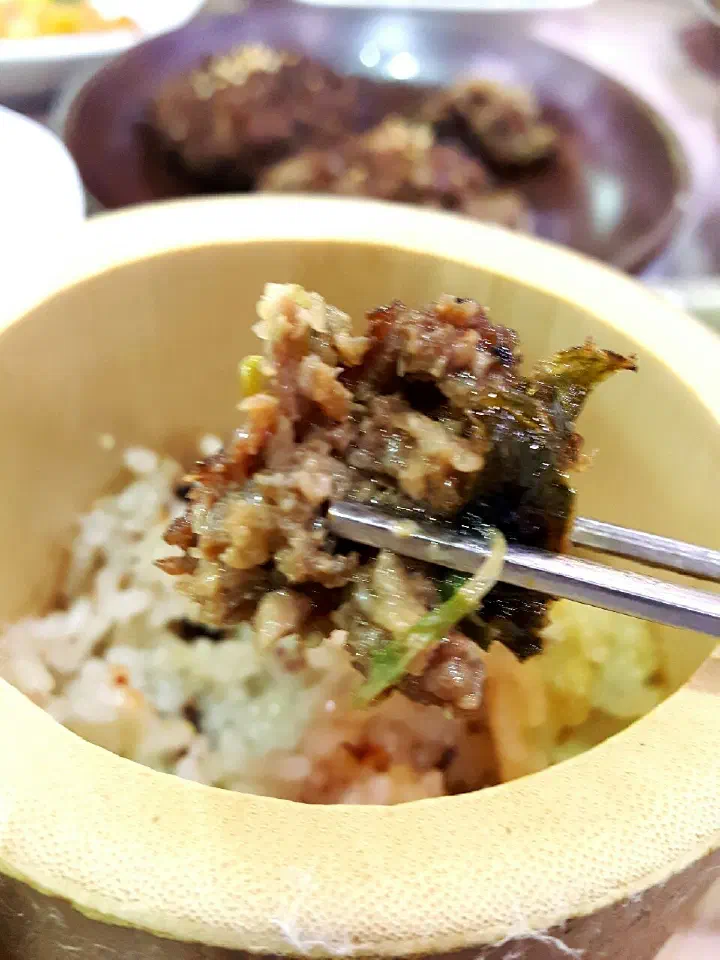
The one thing you shouldn’t skip is the toha-jeot (토하젓), a fermented relish made from tiny freshwater shrimp. It’s sweet, a little spicy, and reminds me of yangnyeom gejang. Smear it into the bamboo rice and you honestly don’t need anything else.

Apparently it’s hard to find even at other Jeolla-style restaurants, and they make their own here. If you like it, you can buy a jar to take home.
The bamboo rice, with the scent still in it
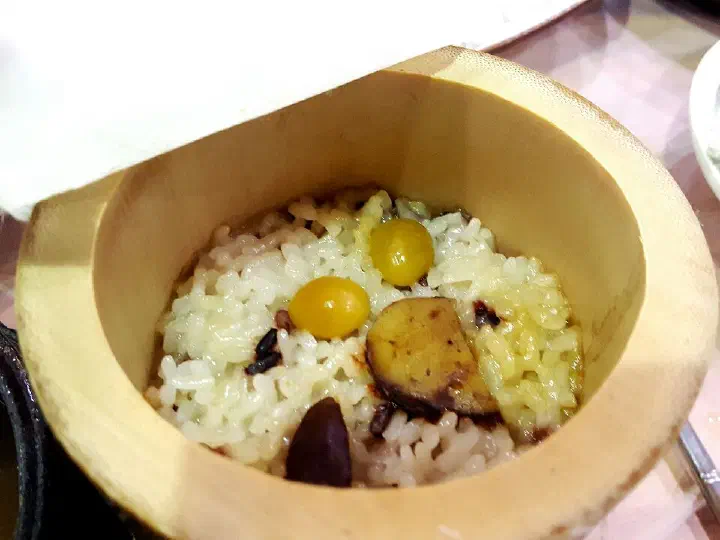
Then the daetongbap arrived. The moment I lifted the lid, the smell of bamboo rose up and put me in a good mood.

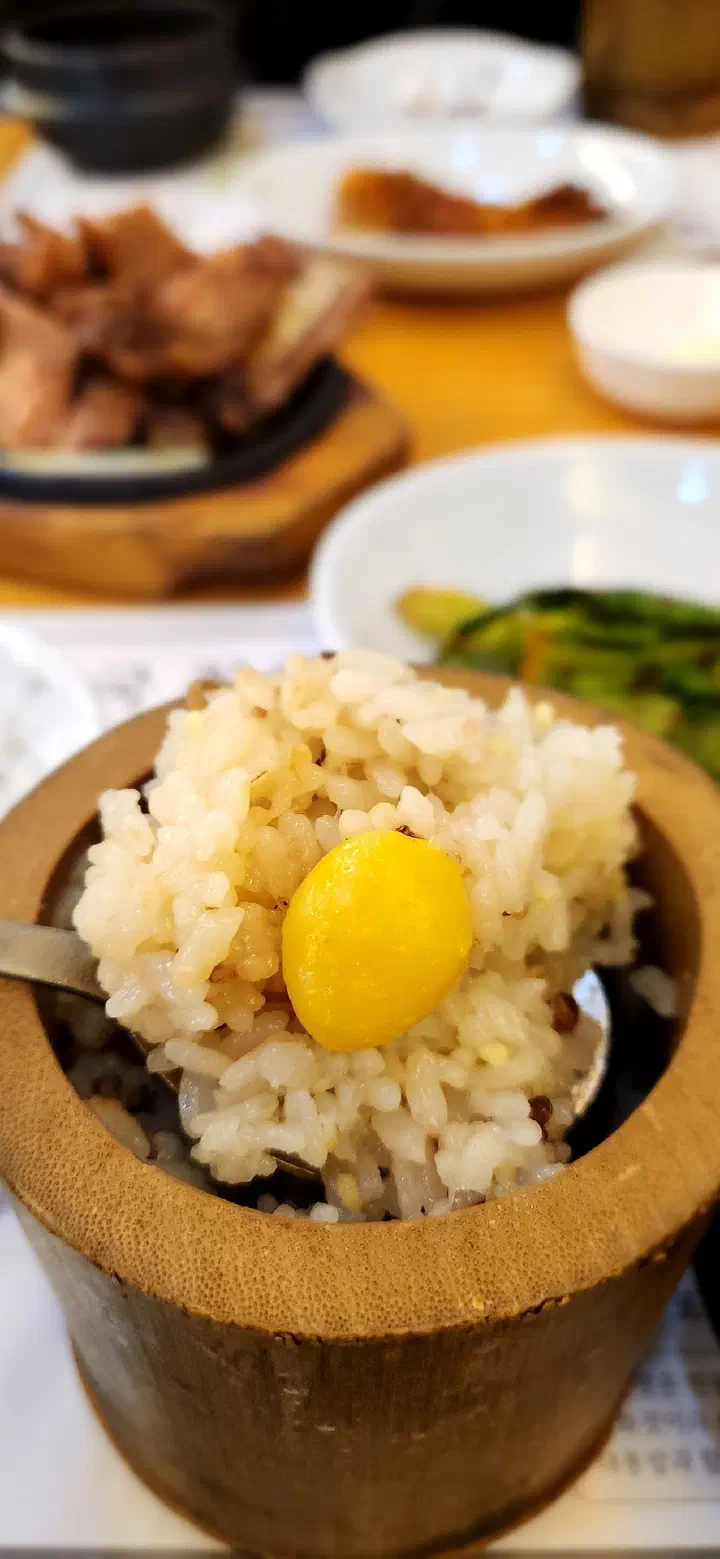
A single ginkgo nut sat on top, which looked lovely. The grains were springy, and the longer you chew the more a gentle sweetness comes through.

When I scooped it into a bowl, the rice was glossy all the way through. It gets a touch wetter toward the bottom — that’s the bamboo sap, they say — but it never clumps. It really does taste freshly steamed.

I rinsed out my empty bamboo cup and brought it home. Once it dries I’m going to use it as a pencil holder. Little touches like that are part of why the visit stuck with me.

Charcoal pork ribs and hanu tteokgalbi
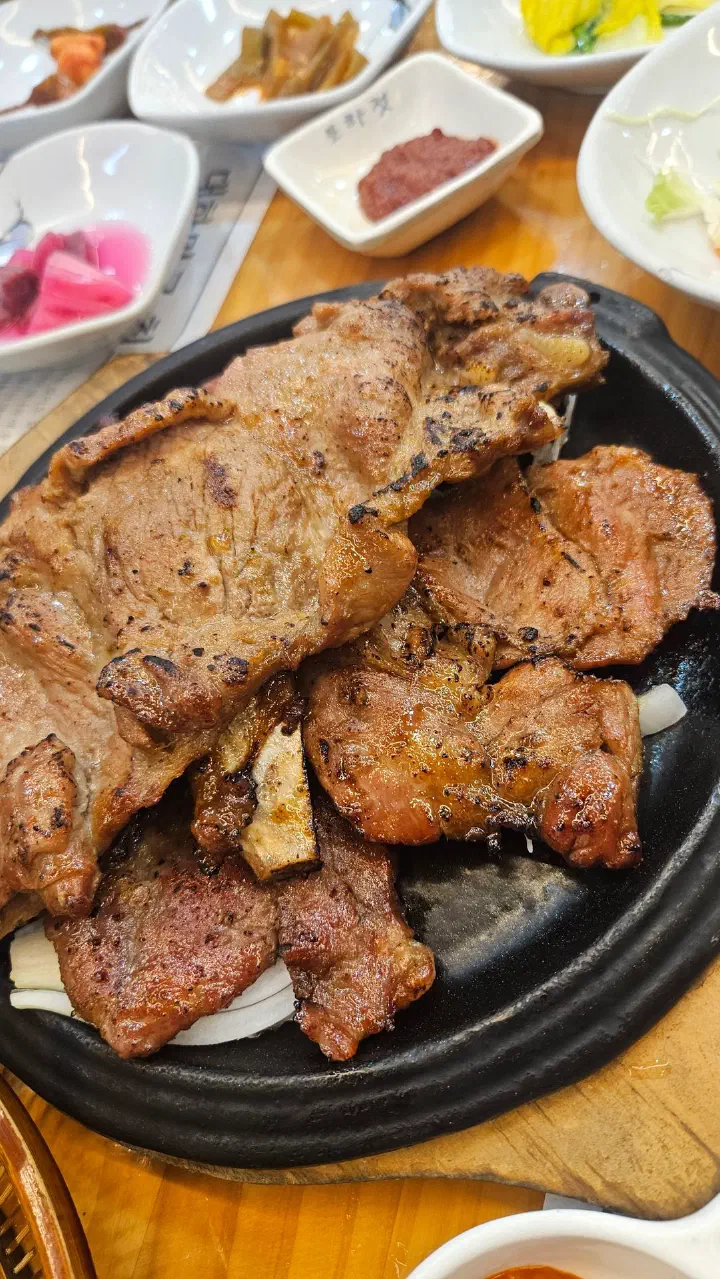
Alongside the rice, the ribs come out sizzling on a hot plate. The dwaeji sutbul galbi (돼지숯불갈비) carries a faint smokiness and chews tender. The marinade is on the sweeter side, good enough to eat plain.

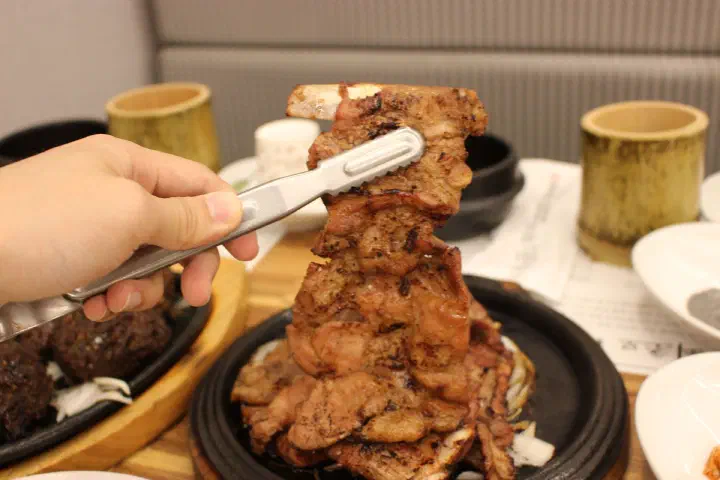
The meat comes cleanly off the bone, so it’s easy to eat. Lift a piece with the tongs and you can see the glossy sheen on it.

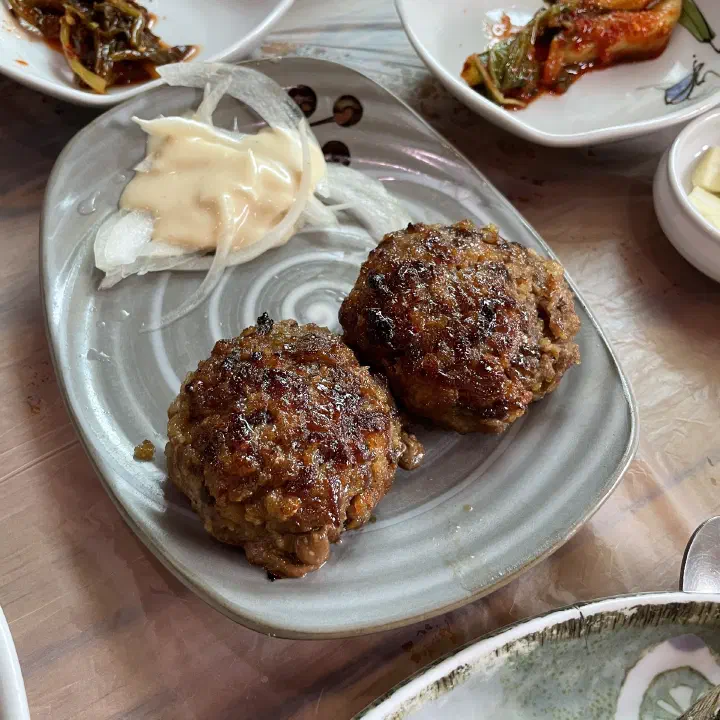
The hanu tteokgalbi (한우떡갈비) is made by hand — the beef chopped and worked over a hundred times, they say. It’s soft but still has some bite, and the seasoning is mild and clean rather than salty.

A wrap with a dab of toha-jeot
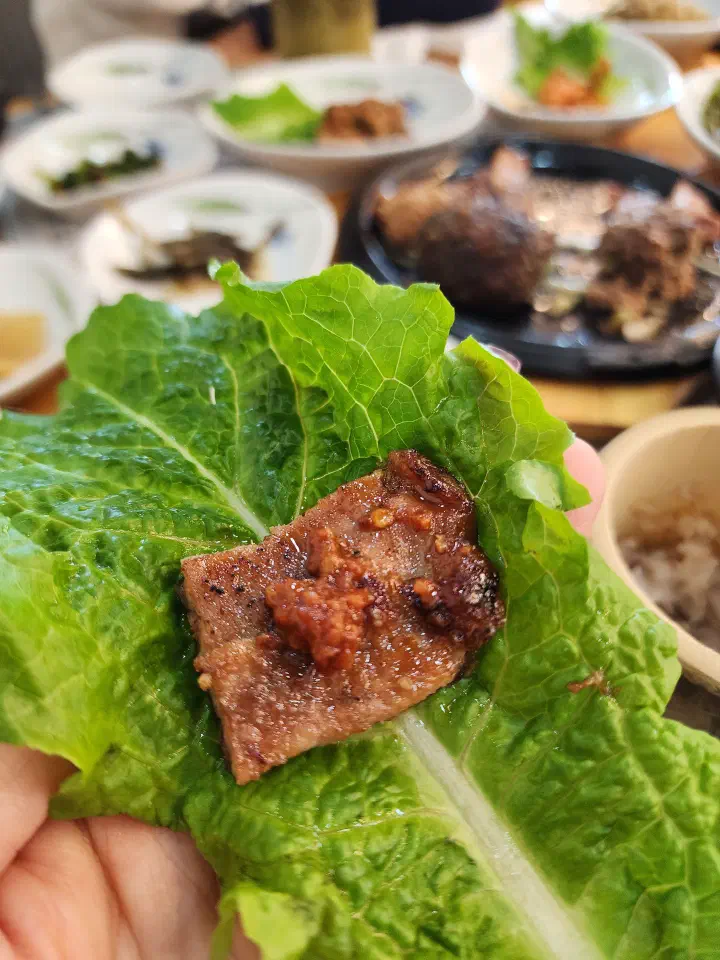
Put a piece of rib on a lettuce leaf, add a little toha-jeot, and wrap it up — that combination is something else. It’s savory without being too salty, and I kept reaching for one more.

One thing to mention: by Korean standards this meal isn’t spicy, but a few of the side dishes (the kimchi, some of the pickled relishes) carry the kind of chili heat that locals shrug off and visitors don’t always expect. If you’re not used to Korean spice, ease into those. The mains themselves are sweet and mild, so you’re safe there.
Getting there
It’s not far from Juknokwon (the bamboo forest), so it slots neatly into a Damyang day trip. With all that space, it works whether you’re bringing kids or older relatives.

📍 View Hansangeun Daetongbapjip (한상근대통밥집) on Google Maps →
Final thoughts
The “original daetongbap” label turned out to be more than marketing. Rice steamed straight in their own bamboo really does keep its scent, and the toha-jeot and side dishes were all carefully done. The pork ribs and tteokgalbi are crowd-pleasers nobody will turn down, so I’d happily send a family here. If you want to eat proper bamboo rice in Damyang, this is the one I’d point you to.