Monkfish is not the fish most visitors come to Korea for.
Ugly fish, more cartilage than most, and almost every restaurant that cooks it advertises the spicy braised version, agujjim.
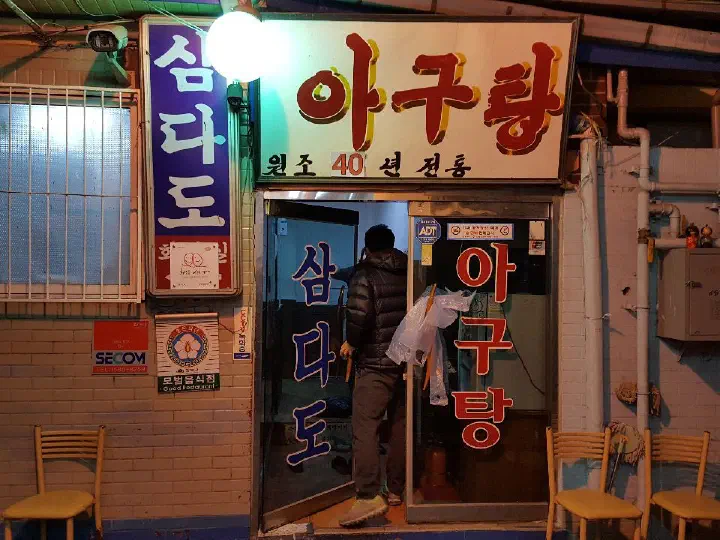
Samdado (삼다도), in the Samyang-dong area of northern Seoul, puts the soup on its sign instead.
That tells you what the kitchen is proudest of.

The place opened in 1979 and is now in its third generation of the same family.
It sells two things: agutang, a monkfish stew, and agujjim, the spicy braised version.
No seafood hot pot, no side dishes to build a meal around, nothing else.
There used to be several monkfish restaurants in this alley and this is essentially the only one left.

Exterior and illuminated agutang sign of Samdado monkfish restaurant in a Gangbuk-gu alley, Seoul

The basics

The address is 10-16 Samyang-ro 29-gil, Gangbuk-gu, Seoul, first floor.
The phone number is 02-988-7709, and they take reservations.
Hours are 11:00 to 22:00 with last orders at 21:00, closed every Monday.
There is no afternoon break, which makes this one of the few places in the neighborhood where you can eat a full meal at 3pm.

Cards are fine here, as they are in nearly every Korean restaurant, so an international credit card will work without complications.
There is no tipping in Korea, and leaving money on the table will mostly just confuse the staff.

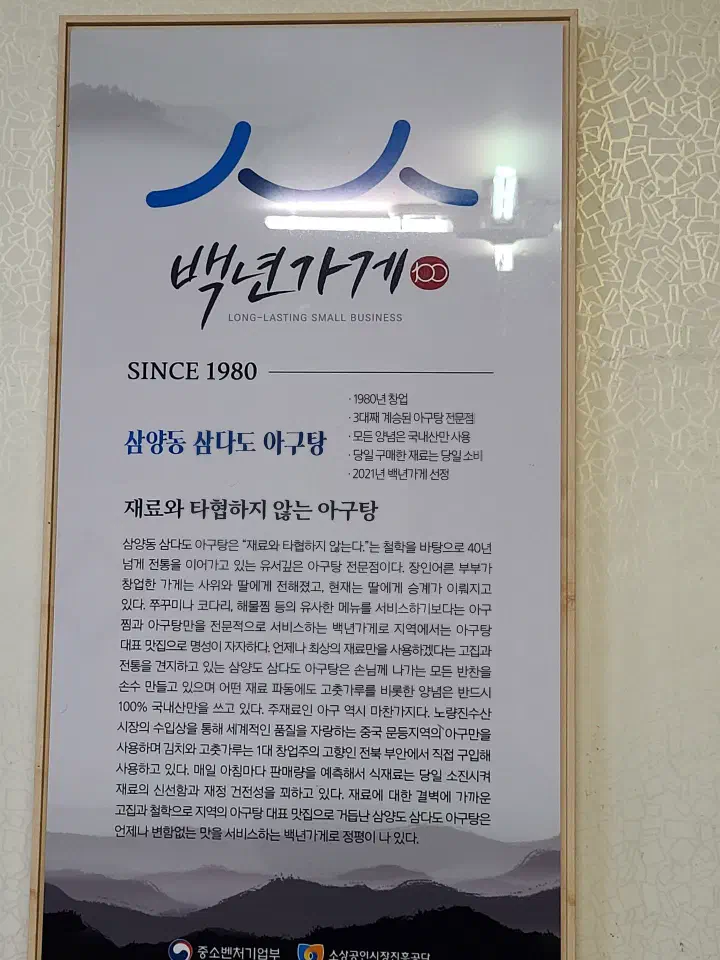
Baengnyeon Gage 100-year business certificate for Samdado Agutang hanging on the restaurant wall

📍 View Samdado Agutang (삼다도아구탕) on Google Maps →

Prices and sizing

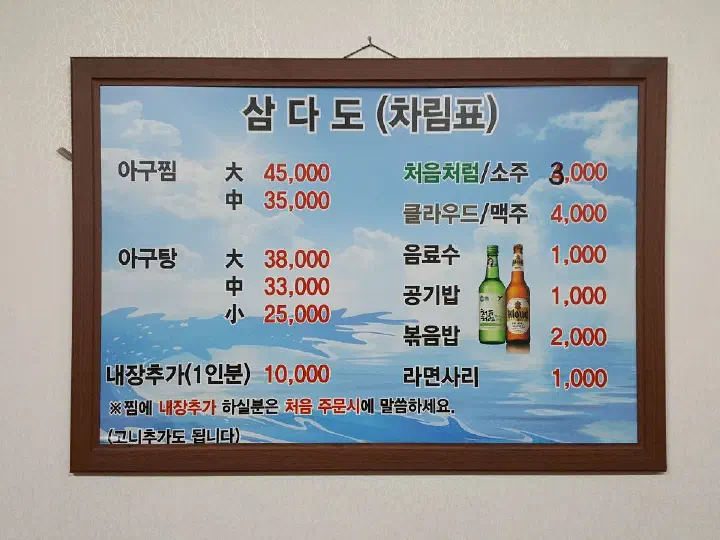
Both dishes come in large (59,000 won) and medium (49,000 won).
The stew also has a small size at 36,000 won.
On top of that: added offal at 15,000 won per portion, fried rice at 3,000 won, a bowl of rice at 1,500 won, and chewy jjolmyeon noodles at 2,000 won.

Korean menu board at Samdado listing agujjim and agutang prices by size

Those numbers look steep for a shabby alley restaurant until the pot arrives.
A medium comfortably feeds three people including the fried rice at the end.
Two people can do the small stew plus fried rice.
Worth knowing though: the small size gives you only a couple of pieces of clean fillet, and the rest is meat clinging to bone.
If you actually want to eat monkfish rather than pick at it, step up to the medium.

Prices have climbed steadily.
A medium agujjim ran 35,000 won around 2017, 38,000 in 2020, 43,000 in 2023, and 49,000 now.
The offal supplement went from 10,000 to 15,000 won in the same stretch.

Ask for the clear broth

The default agutang comes red, built on Korean chili powder.
Say “jiri” (지리) when you order and it arrives clear instead, and this is the version regulars and older customers tend to get.
If you say nothing, you get the red one.

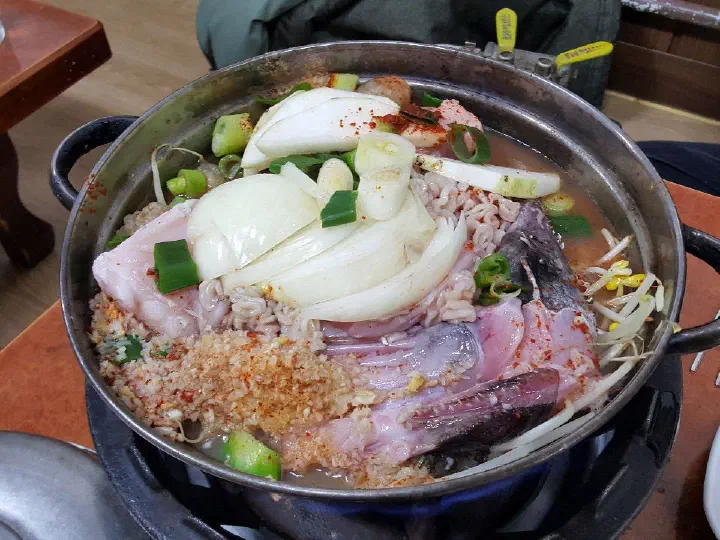
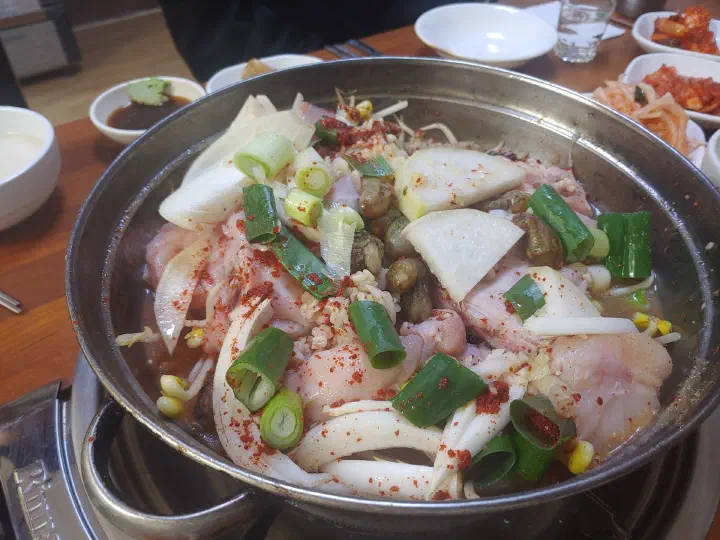
Raw monkfish, bean sprouts and minced garlic in a Samdado agutang pot before boiling at the table

The broth is not aggressive either way.
There is no MSG punch at the front, just radish, bean sprouts and fish coming through slowly.
Some people find it plain on the first spoonful.
It gets deeper as the pot keeps boiling, so the middle of the meal tastes better than the beginning.

You do not eat right away.
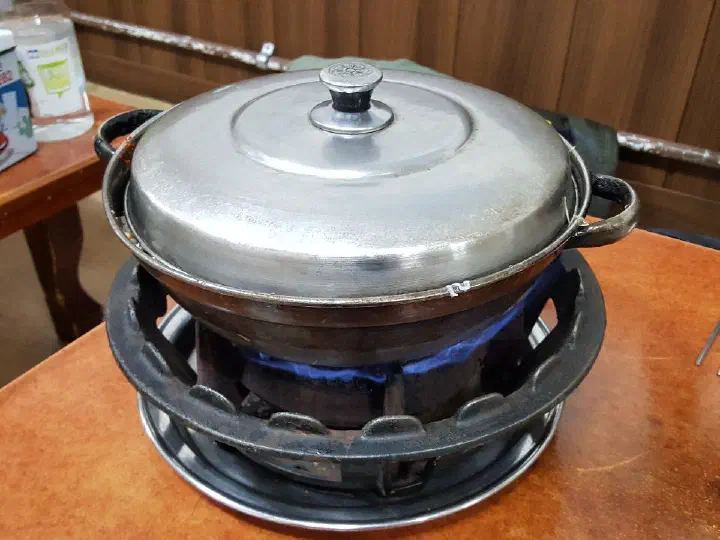
The pot arrives raw and has to boil at the table.

Covered monkfish stew pot simmering over a gas burner at Samdado

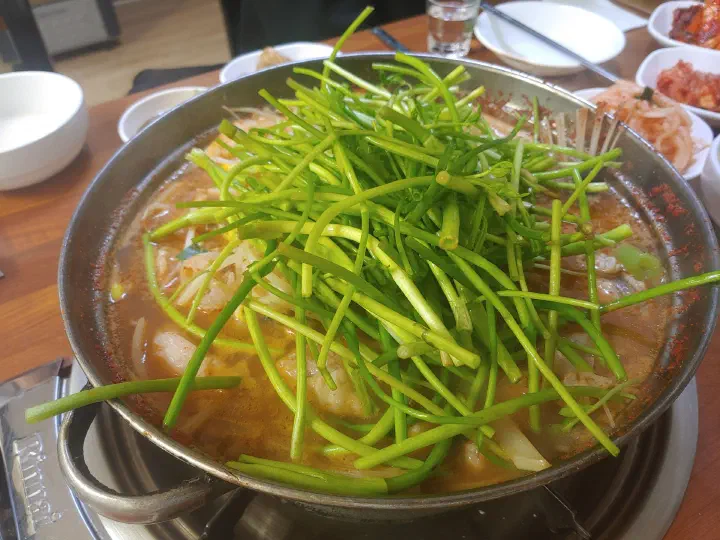
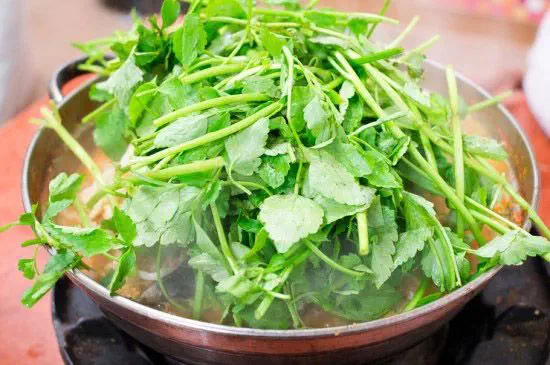
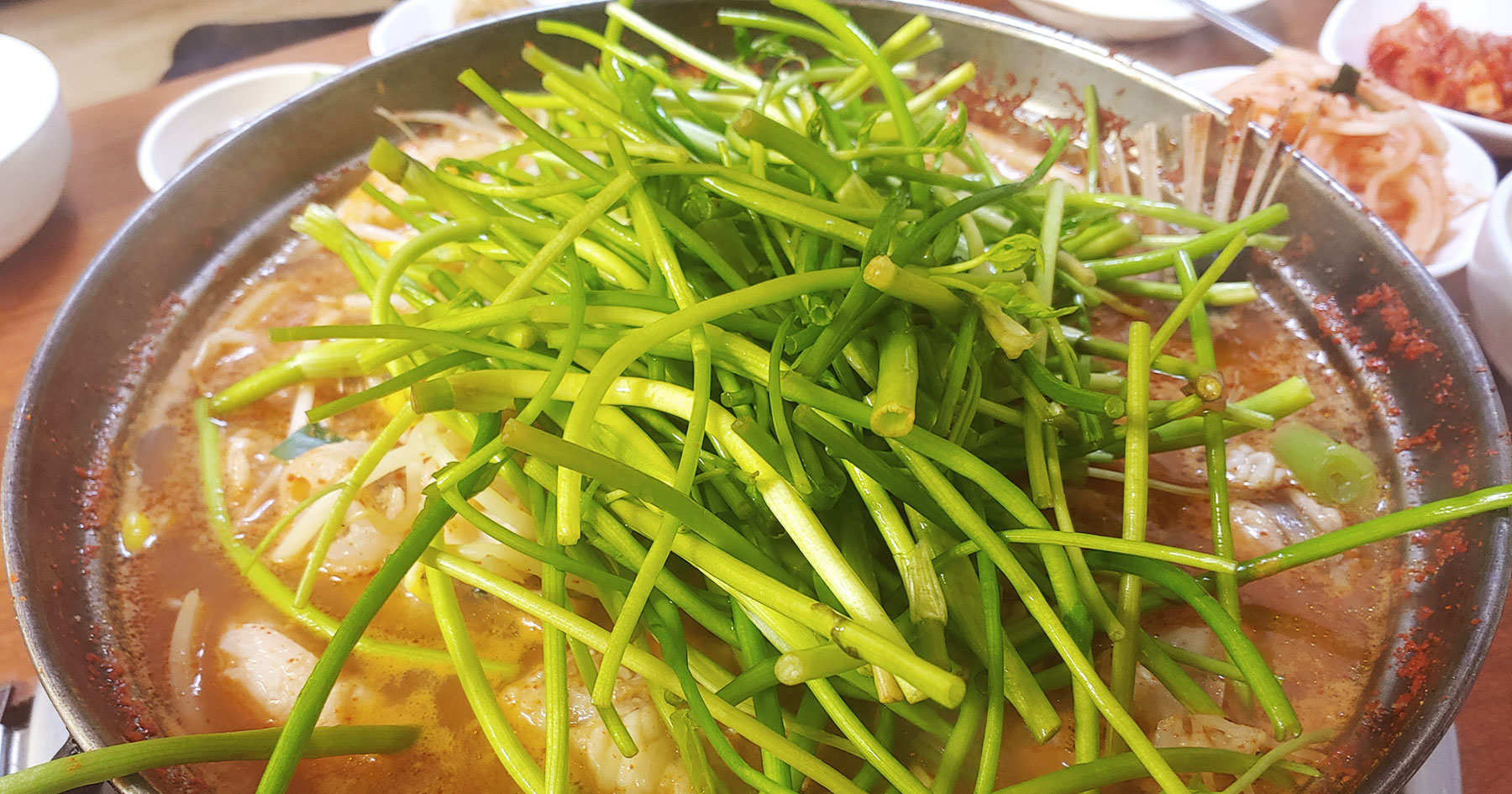
Once it is going, a staff member comes over, cuts the fish and offal into manageable pieces, and piles fresh water dropwort (minari, 미나리) on top.
When the greens wilt, you start.
The minari is free and they will bring more as many times as you ask, which is unusual and well worth taking advantage of.

Fresh water dropwort (minari) piled over boiling monkfish stew at Samdado

The braised version

Agujjim here does not chase heat.
The sauce is loose rather than thickened with starch, so it never turns pasty, and the umami comes through just behind the chili.
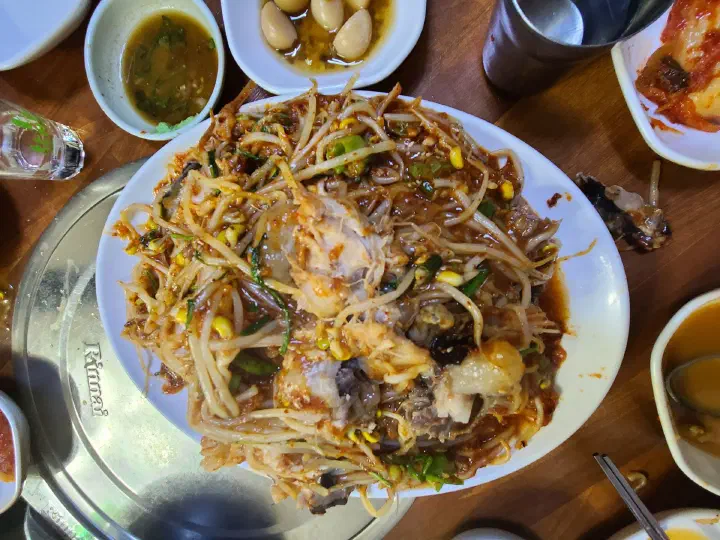
The bean sprouts are thick and stay crunchy, and a plate of just the sprouts and greens would still be worth eating.

The usual disappointment with agujjim is a mountain of bean sprouts hiding three pieces of fish.
That is not the case here.

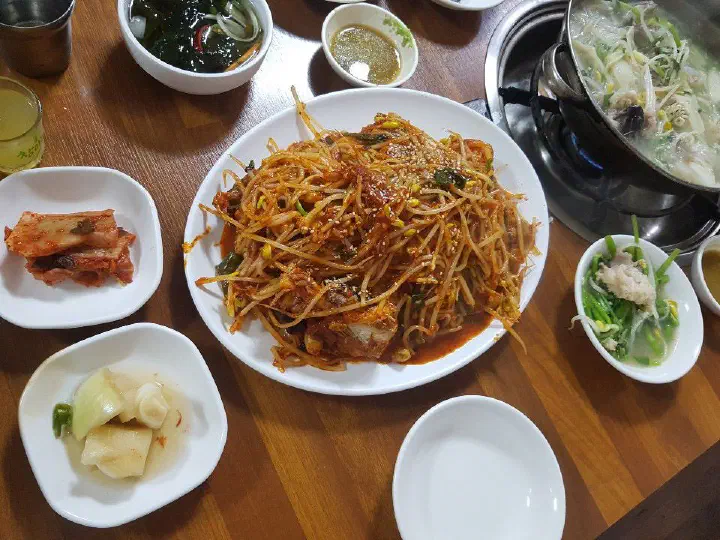
Plate of Samdado agujjim, spicy braised monkfish piled with thick bean sprouts

Roughly half the plate is monkfish, the flesh soft, the skin and the gelatinous parts springy.
Small dishes of soy sauce with wasabi come out one per person, and dipping the spicy fish in that shifts the flavor completely.

The kitchen adjusts the spice level up or down on request.
A word of caution for visitors: Korean “medium spicy” is already hot by most standards, and people who ask for the maximum here regularly regret it.
Start with the default.
If the default tastes flat to you, ask for it hotter when you order rather than halfway through.

Is the offal worth adding?

The 15,000 won supplement brings milt, roe and monkfish stomach, and the portion is generous.
The stomach is springy in the way that pork skin is; the milt is soft and rich.
If you like offal at all, add it, and say so when you first order rather than later.

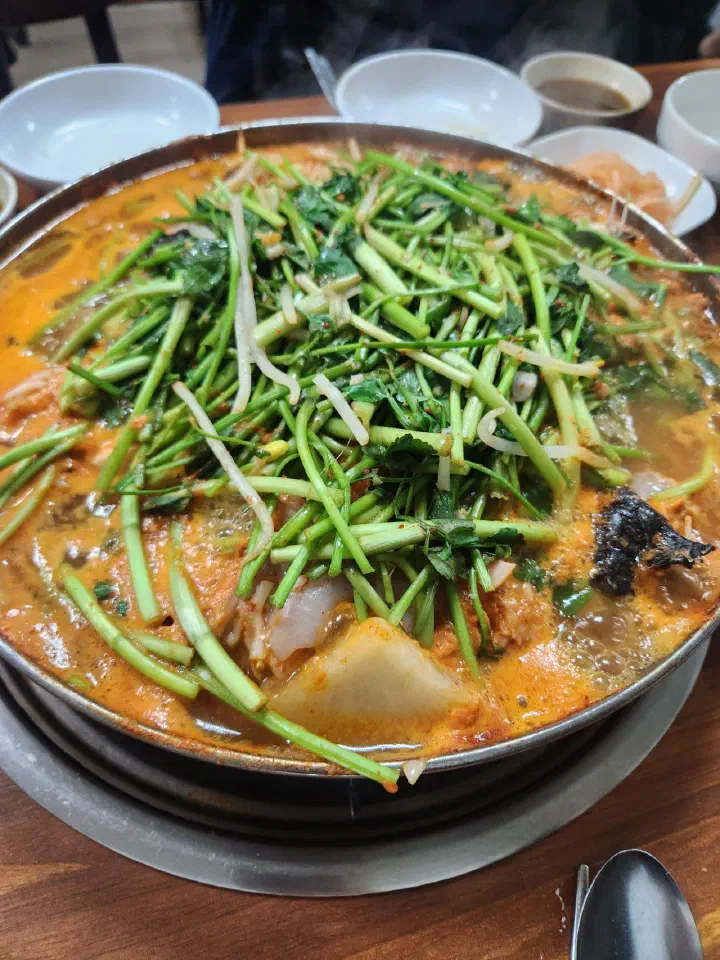
Red spicy monkfish stew with added offal bubbling under a layer of minari

The mix changes.
Depending on the season you may get mostly stomach with little milt.
If you ordered the small stew, adding offal is close to essential to make the portion work.

Banchan and the fried rice at the end

Side dishes are dongchimi (a cold radish water kimchi), seasoned radish, scallion kimchi, seasoned greens and pickled chili.
They shift a little with the season.
The dongchimi comes in an individual bowl per person and a mouthful of that cold liquid after the spicy sauce is the part plenty of regulars remember best.
The cabbage kimchi is properly fermented, deep and sour.
The chili powder and kimchi ingredients come from Buan in North Jeolla province, where the founder was from.

Full Samdado table with agujjim, clear monkfish stew, kimchi and assorted banchan

Then the fried rice, and it is not optional in spirit.
For 3,000 won they take the pot to the kitchen and fry rice in it.
You choose red (in the leftover sauce) or white, and the white one is the signature here.
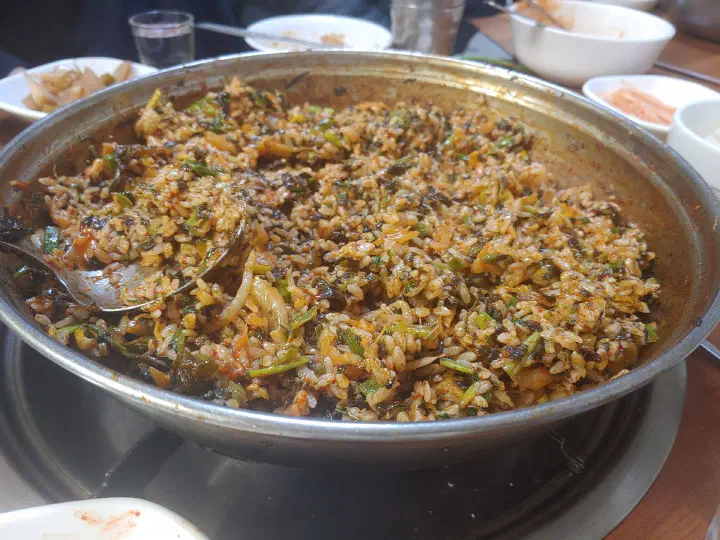
White means rice tossed with chopped minari, seaweed flakes and sesame oil, with nothing stirred in during frying.
You spoon the leftover chili sauce onto it yourself, as much or as little as you want.
Salt is not the point here, which is why it still goes down after a large meal.

Do not over-order rice.
The portions are already large and leftover fried rice is a sad thing.

Fried rice cooked in the leftover monkfish sauce with minari and seaweed at Samdado

The jjolmyeon noodle add-on divides opinion, since the noodles swell and cloud the broth, and most people here do not need the extra volume.

Where the fish comes from

The monkfish is sourced through Noryangjin fish market and comes from the Wendeng area of China.
The kitchen buys winter fish, when the flesh is at its firmest, flash-freezes it in bulk and draws on that stock throughout the year.
Thick winter monkfish with radish and bean sprouts in an unboiled agutang pot

It thaws well enough that the texture stays firm rather than mushy, and once it is thawed it gets used the same day.
The chili and vegetables are Korean, but the main ingredient is imported, and that is worth knowing before you go if origin matters to you.

Three buildings in an alley

The main street does not lead you there.
You turn into an alley, pass an annex building, then turn again into a narrower alley to reach the main house.
The place has been extended several times over the decades, so there are multiple entrances and doors, and it can be confusing on a first visit.
Between the buildings there are far more seats than the exterior suggests.

Most rooms are floor seating where you take your shoes off, though some areas have regular tables.
It feels like a house that was gradually converted, with tables split across separate rooms, which makes it good for family meals and groups.
Nobody has renovated for the sake of appearances.
The walls carry the Baengnyeon Gage (100-year business) certificate from the Ministry of SMEs and Startups, a hygiene-model restaurant designation, television stills and signed celebrity photos.

Service is brisk rather than warm.
On a quiet afternoon the staff will explain things; when the room is full they say almost nothing.
Nobody speaks much English, but ordering is easy — point at the menu, hold up fingers for the number of people, and say “jiri” if you want the clear broth.

A long television history

This restaurant has been on Korean TV repeatedly, which matters here because broadcast appearances drive crowds for weeks.
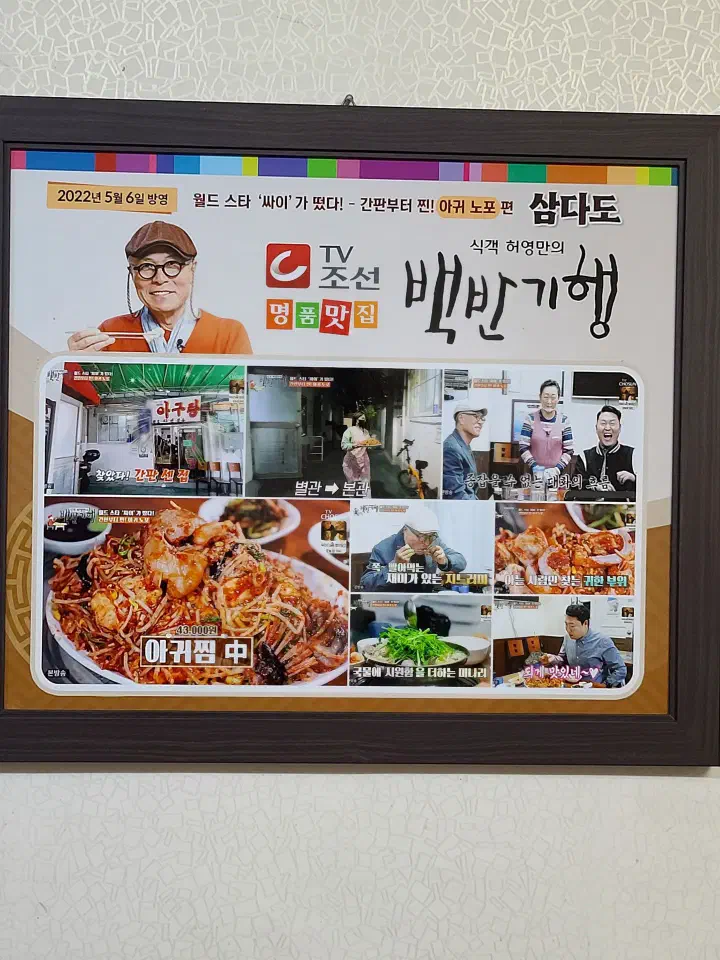
It appeared on KBS2’s Saengsaeng Jeongbotong back in 2012, then on TV Chosun’s Huh Young-man’s Food Travel in May 2022, in the episode featuring the singer Psy.
Psy described the broth as having the thickness of a medicinal duck stew, and that line stuck.
The table where they filmed has a photo on the wall.

Framed TV Chosun Huh Young-man’s Food Travel broadcast panel on the Samdado wall

After that came Comedy TV’s The Tasty Guys in November 2024, tvN’s Amazing Saturday in April 2026, and KBS2’s Saengsaeng Jeongbo on July 31, 2026, in a segment pitting a 50-year-old stir-fried octopus place against this 47-year-old monkfish house.
In the weeks after a broadcast, expect it to be busier than described below.

Waiting and timing

On a normal day there is no real line, because the seat count is high.
Get there before noon for lunch and you walk in.
After 12:30 the rooms fill up, and on weekend evenings around 7pm there is often a short line outside.

Food takes a while.
Everything is cooked to order, and at dinner peak the pot can take twenty minutes to arrive, then more time to boil.
Budget about ninety minutes for a full meal with the fried rice.
For weekends or groups, call ahead — the separate rooms mean they can usually seat a large party if they know you are coming.

Getting there and parking

The Ui-Sinseol light rail line is the useful one: Samyangsageori Station, about a five-minute walk.
The Line 4 stops at Mia and Miasageori are both awkwardly far, so transfer if you are coming by subway.
Google Maps walking directions are unreliable in Korea, so use Naver Map or KakaoMap, and KakaoT works as a taxi app.
The alley location sounds hard to find but the signage is large.

Parking is the weak point.
There is a small free shared lot for four or five cars in the alley beside the Gwangmyeong Jokbal restaurant, and you leave your phone number on the dashboard when you use it.
It fills quickly.
When it does, there are paid options nearby including the Kakao parking lot at 252 Solsaem-ro, and on weekends and holidays people use the side roads by the apartment complex across the way.

Who it suits

This is a good place to bring parents or older relatives, and plenty of customers here first came as children and now bring their own families.
The mild broth and the floor-seated rooms suit that.
This is also a drinking restaurant — soju and cheongha go well with the stew, and daytime drinking is normal here.
The clear broth version doubles as a hangover cure.

Generous heap of free water dropwort greens added to a monkfish stew pot

A poor fit if you want a modern room, a quick turnaround, or a fish dish that arrives ready to eat.

Wrapping up

On the two things that matter, the amount of fish and the quality of the broth, this place holds up.
You are not hunting for monkfish under a pile of sprouts, and the soup is not carried by seasoning.
The counterarguments are real too: long-time customers say it was better before, the broth reads as bland to people who want intensity, and the buildings are old.

If it is your first time, the small or medium clear stew plus fried rice is the safest order, adding the braised version if there are enough of you.
Forty-seven years in the same alley shows up on the table rather than in the decor.

📍 View Samdado Agutang (삼다도아구탕) on Google Maps →