The name says it plainly.
A sanghoe (상회) is an old-style general store, and this one leans on the oil-pressing side of that idea.
They press Korean sesame and perilla seed on site and cut the buckwheat noodles in the same room, and you smell the oil before you’re through the door.
The place opened in early 2026 and filled up fast.

It sits in a back alley off Apgujeong Rodeo, a part of Gangnam that stays quieter than the streets around Gangnam Station.
Plenty of visitors walk past it the first time, so keep a map open.

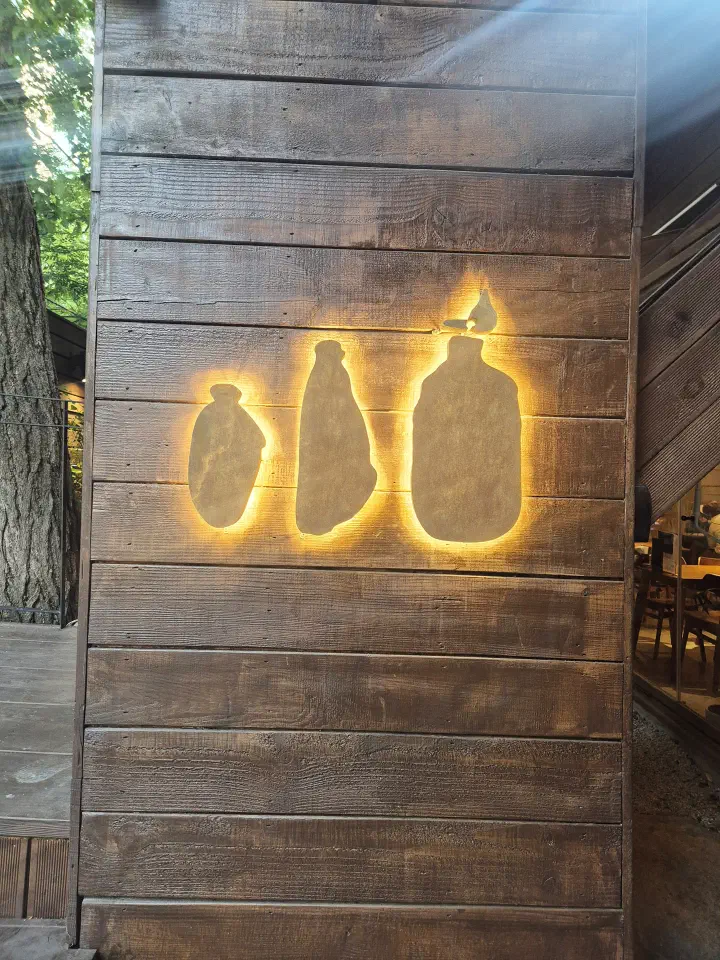
Backlit oil bottle silhouettes mounted on the dark timber exterior wall of Apgujeong Sanghoe in Seoul

Getting there

The address is 13-2 Seolleung-ro 155-gil, Gangnam-gu.
From Exit 5 of Apgujeong Rodeo Station on the Suin-Bundang Line it’s a 3 to 5 minute walk, but the last stretch turns off the main road into an alley.
You won’t miss the sign once you’re in the right alley.

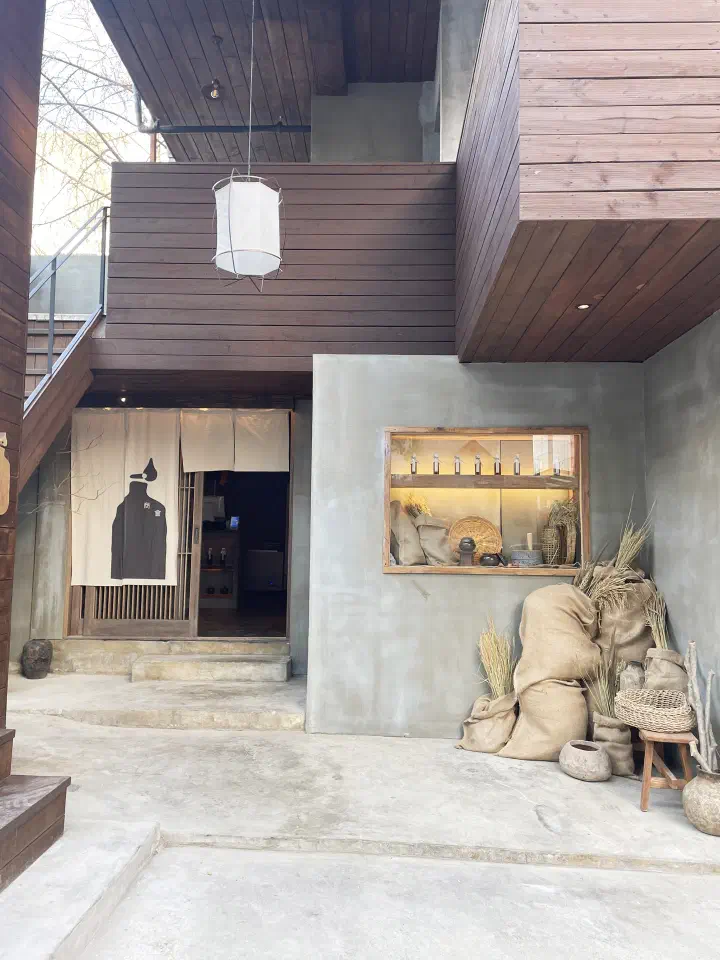
Daytime exterior of Apgujeong Sanghoe with its noren curtain entrance in a Gangnam back alley

One note for anyone planning routes in Korea: Google Maps walking and transit directions are unreliable here.
Naver Map or KakaoMap will get you there properly, and both have English interfaces.
Taxis are easy through the Kakao T app, and a ride from Gangnam Station runs about 10 minutes outside rush hour.

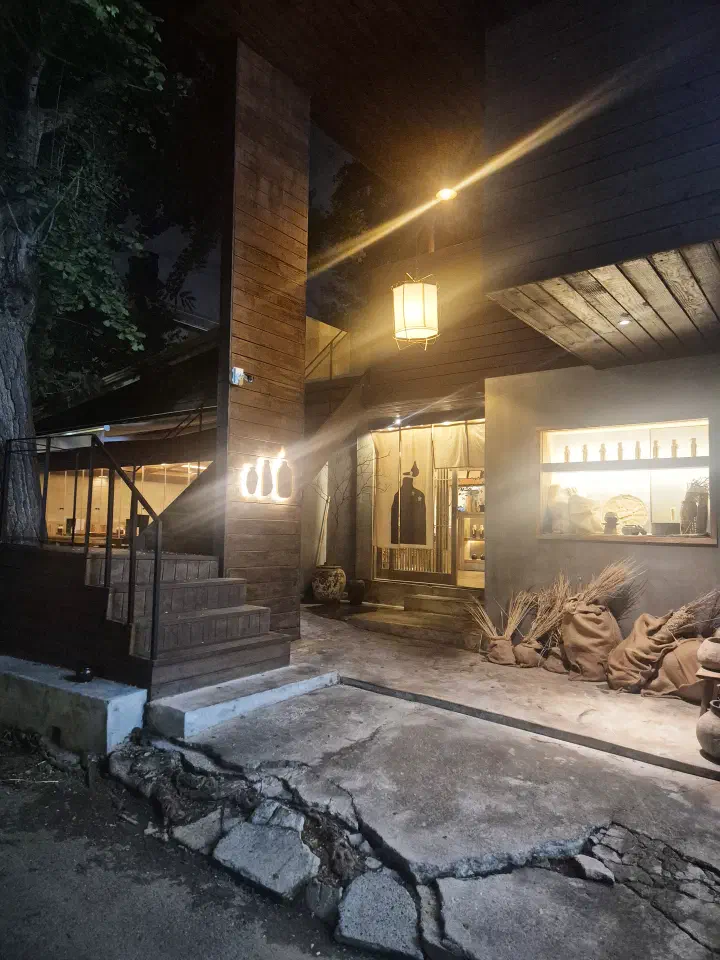
Apgujeong Sanghoe at night, its wooden entrance courtyard lit by a hanging paper lantern

📍 View Apgujeong Sanghoe (압구정상회) on Google Maps →

Hours and booking

Monday through Thursday and Sunday: 11:00 - 21:30.
Friday and Saturday: 11:00 - 22:30.
The kitchen shuts for a break from 16:00 to 17:00.
Last order is an hour before closing, so 20:30 on weekdays, 21:30 Friday and Saturday.
They don’t close on any set day of the week.

Reservations go through Naver, which is awkward without a Korean phone number, so most foreign visitors just walk in.
That’s manageable if you time it.
There’s no remote waitlist app here.
A staff member hands you a paper number and calls it out loud when your turn comes.
Miss the call by five minutes and the number’s gone.
So you can’t duck into a cafe while you wait, and that’s the complaint you hear most often about this place.

Show up right at 11:00 on a weekday, or in the first hour after the 17:00 reopening, and you’ll walk straight in.
A weekday evening around 18:30 tends to mean eight or so groups ahead and roughly 30 minutes.
Weekend noon can stretch to 40 or 50 minutes.
SBS ran a segment on the place on July 30, 2026, so peak hours will be worse than usual for a while.

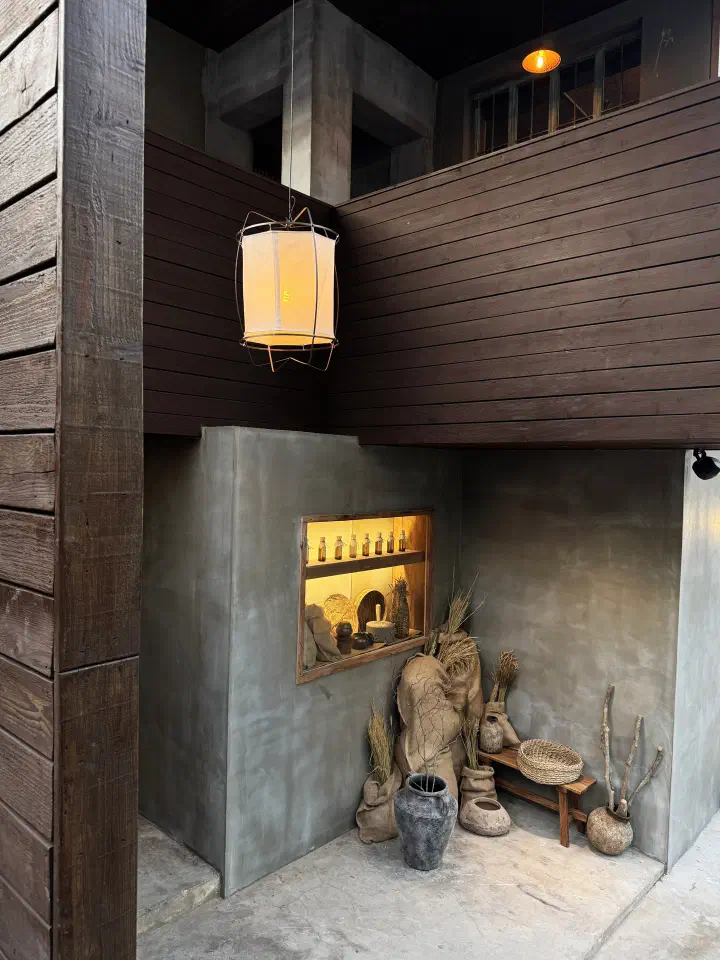
Entrance courtyard of Apgujeong Sanghoe with a lantern, a lit display of pressed oil bottles, burlap sacks and clay jars

The signature bowl

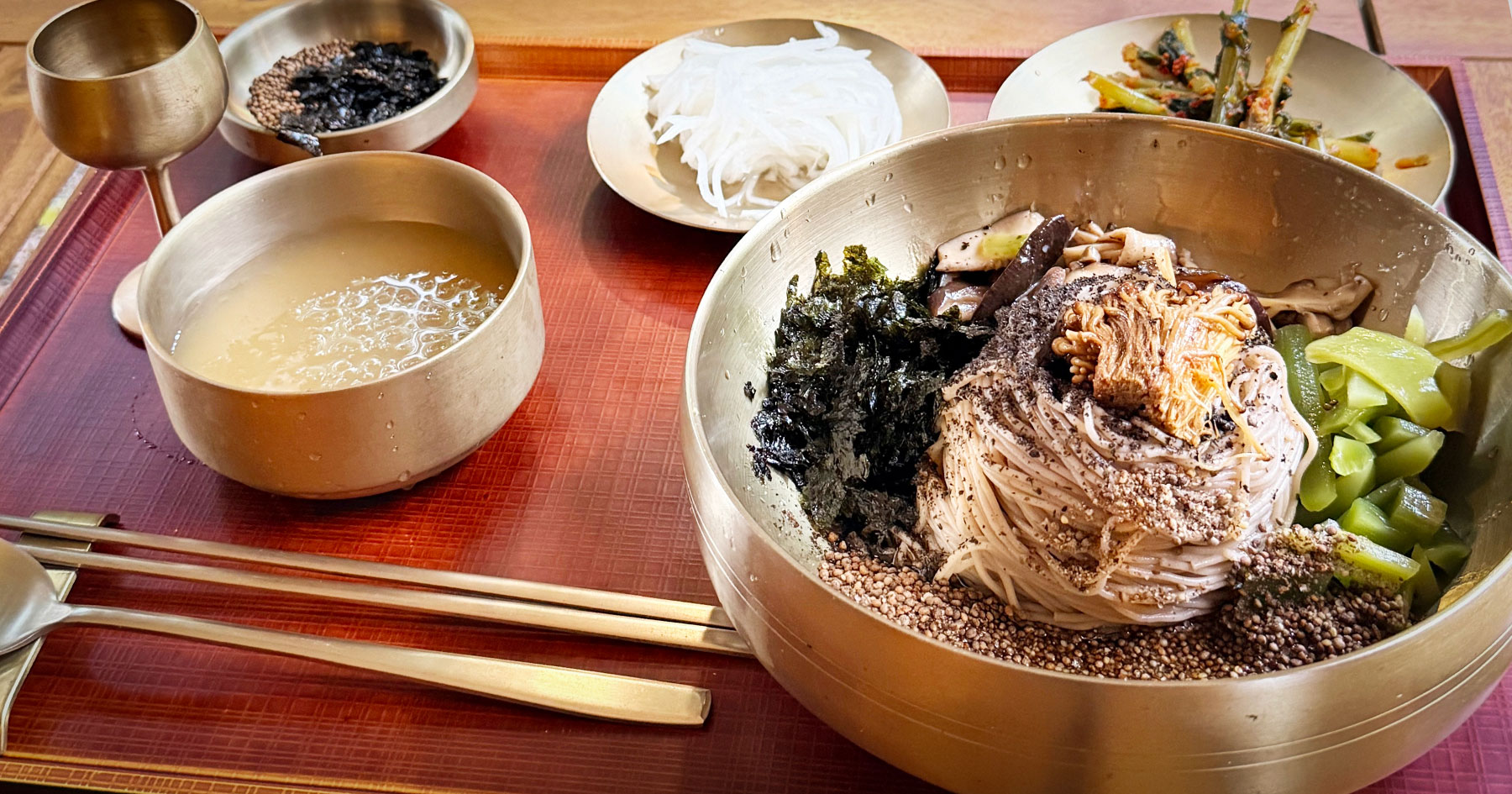
Deulgireum makguksu (들기름막국수), buckwheat noodles with perilla oil, costs 15,000 won.
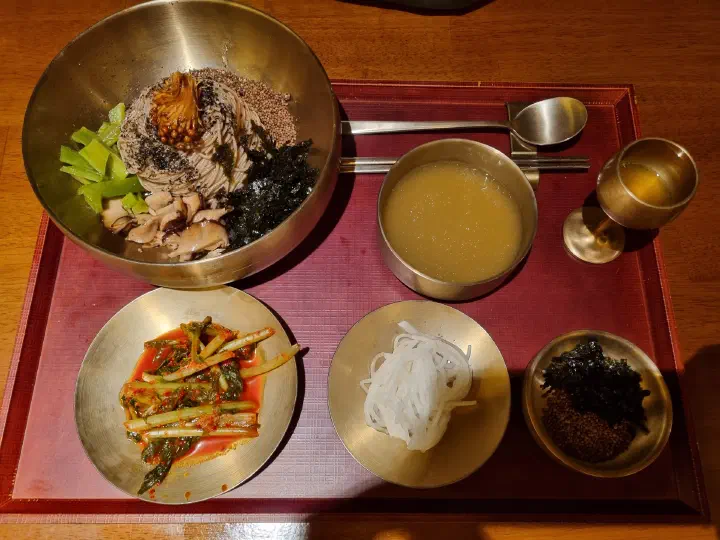
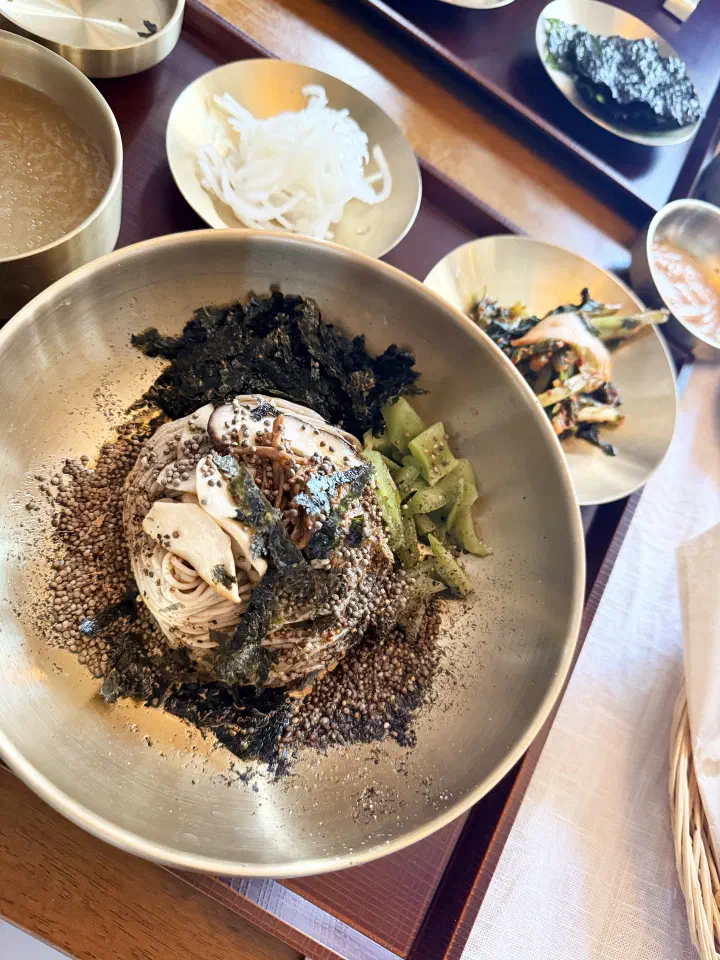
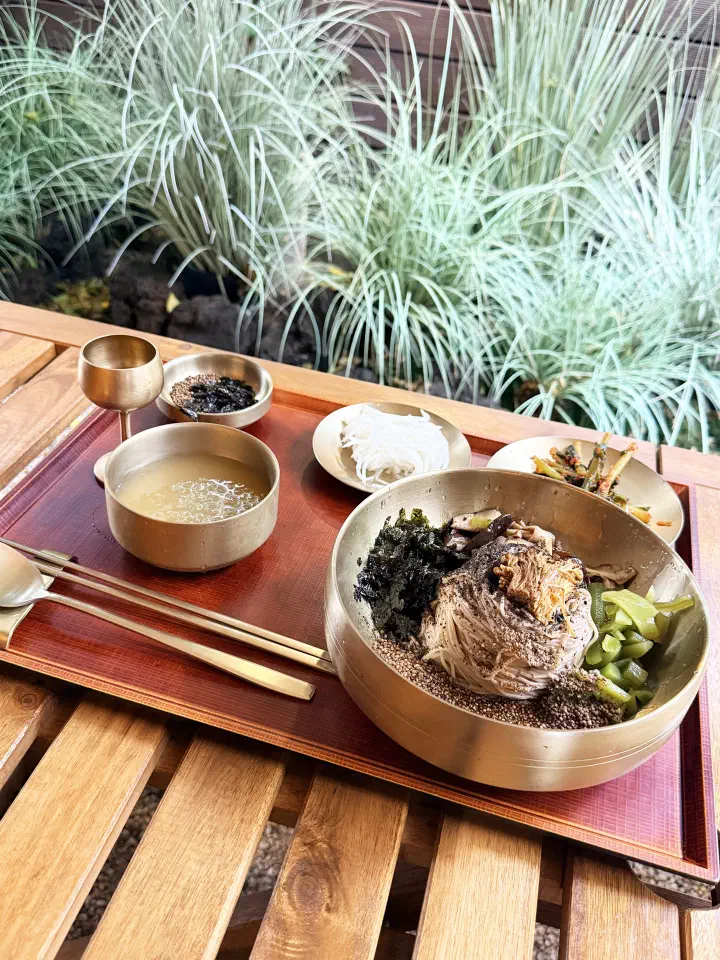
It comes in a heavy brass bowl under mushrooms, gungchae (dried lettuce stem), seaweed flakes and crushed perilla seed, with a spread of side dishes ringed around it.
The perilla oil arrives in its own small stemmed cup, and alongside it come yeolmu kimchi (young radish greens), shredded radish, radish vinegar, mustard, and a jug of chilled broth with ice crystals in it.

Deulgireum makguksu at Apgujeong Sanghoe served in a brass bowl with chilled broth, yeolmu kimchi, shredded radish and seaweed on a red tray

A laminated card on the table explains the order of operations, and staff walk you through it too.
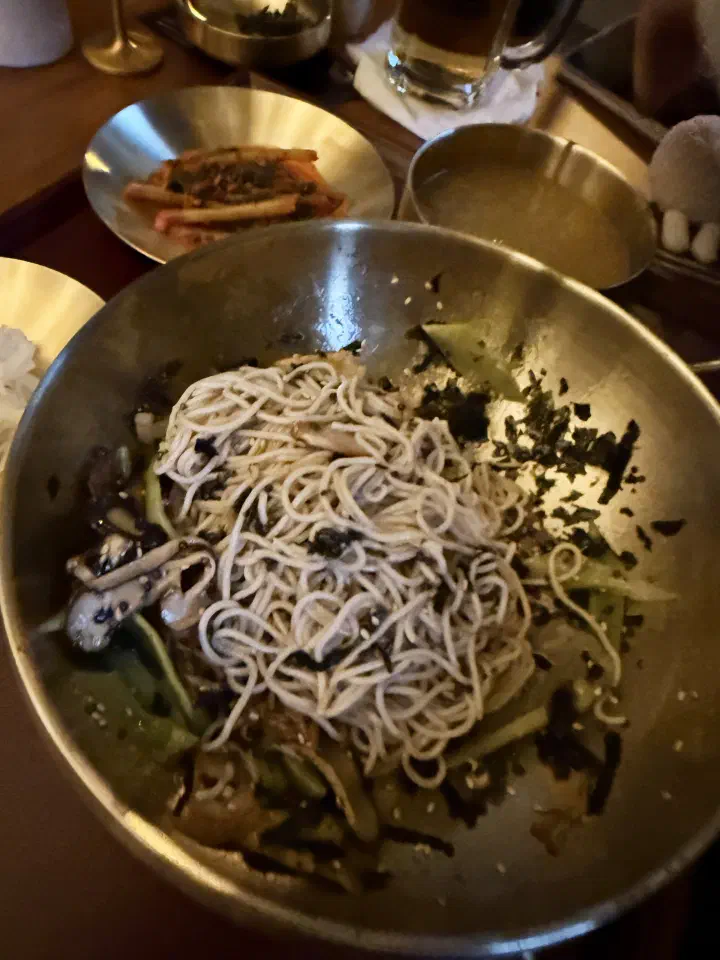
First round: oil, perilla seed and seaweed only.
Mix it and eat it dry, so the oil comes through clean.
Around the halfway point you add the radish, the vinegar and the mustard, then pour the cold broth over everything.
The same bowl becomes a cold noodle soup, and it’s not a variation — it’s a different dish.

Worth clearing up before you order: perilla oil and perilla leaf are two different things.
If you’ve tried kkaennip — the big flat green leaf that turns up in Korean side dishes — and found it medicinal or too strong, that reaction doesn’t carry over.
The pressed oil is clean and nutty with none of that edge, and people who won’t touch the leaf usually like this bowl fine.

The flavor is restrained.
The noodles are thin and slip down easily, they snap rather than stretch, and the grain comes through.
Even with that much oil they don’t coat your throat.
The gungchae gives a small crunch and the perilla seeds pop between your teeth.
Seasoning is light on purpose, so the yeolmu kimchi is doing real work here.
It’s crisp, with a faint fish-sauce edge, and asking for a refill is normal.

Buckwheat noodles tossed with perilla oil, crushed perilla seed and seaweed flakes for the first eating step

The other noodles

Naeng lime makguksu (냉라임막국수) is 16,000 won and shows up in summer.
Slices of lime sit on a chilled beef broth with ice forming on the surface.
Vinegar-based cold broth usually comes off sharp and one-note.
This one doesn’t.
The sourness is rounder, and it clears your palate between bites of fried chicken.
Same drill here — when the bowl’s about a third gone, staff tell you to add the perilla oil, which swings it from bright to nutty.
The broth step isn’t for everyone, though.
It comes out cold and sour, and some people prefer the noodles with nothing but the oil on them.
Try it both ways and finish it however you prefer.

Chamgireum bibim makguksu (참기름 비빔막국수) is 15,000 won, mixed with a mildly spicy sauce along with pickled yeolmu, onion, sesame, mushroom and seaweed.
On the Korean spice scale it’s gentle, so visitors who struggle with heat should be fine.
The sauce does push forward, though, and the sesame oil gets buried under it.
If the pressed oil is what you came for, order the perilla version instead.
Broth comes on the side for this one as well.

Close-up of house-cut buckwheat noodles topped with mushrooms, gungchae, seaweed and crushed perilla seed

Buckwheat chicken

Memil chicken (메밀치킨) runs 24,000 won whole, 14,000 for a half — the half was 13,000 back when they opened.
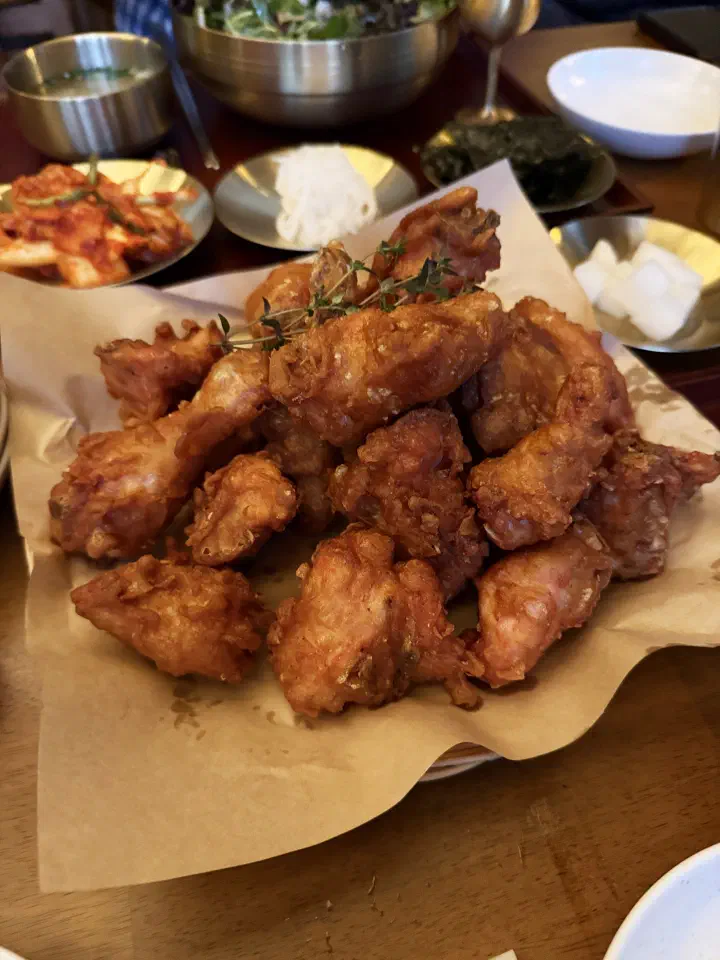
Buckwheat flour goes into the batter and it’s fried the old market way, so it comes out looking like street tongdak (whole fried chicken) rather than the glossy modern kind.
The crust is thin and shatters, and even the breast — usually the letdown — stays soft.
A lot of people walk out rating the chicken over the noodles.
The seasoning is the weak point: the bird itself isn’t marinated, so the salt sits on the outside instead of running through the meat, and it can taste flat without the sauce that comes with it.

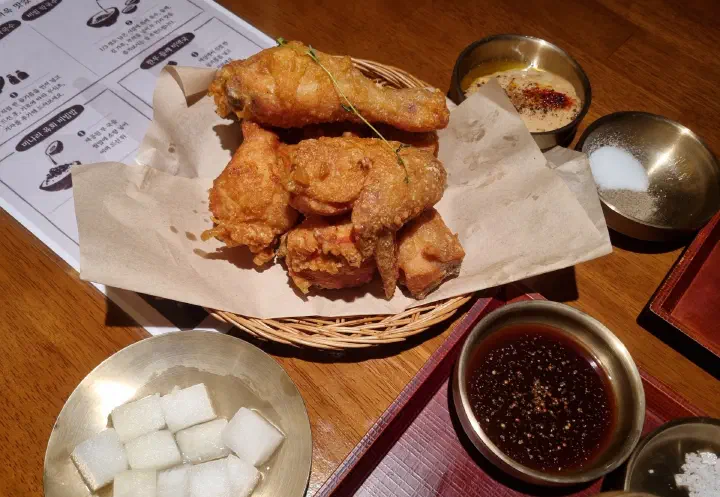
Close-up of memil chicken at Apgujeong Sanghoe, buckwheat-battered fried chicken pieces with a thin crisp crust

The dipping sauce gets a lot of attention.
It tastes like mayonnaise with red pepper flakes and black pepper, finished with a drizzle of the house perilla oil.
It cuts the richness instead of piling on more.
Salt and pickles come alongside if you’d rather keep it plain.

Basket of memil chicken with the house perilla oil mayonnaise dip, salt and pickled radish

Beyond the noodles

Minari yukhoe bibimbap (미나리 육회 비빔밥) is 19,500 won, with Korean beef tartare and water dropwort over rice, dressed with the house sesame oil.
Staff suggest spooning in a little of the radish soup before you mix.
Then there’s seaweed soup with brisket and perilla seed (들깨 양지 미역국) at 16,000 won, chilled boiled pork with water dropwort (감나리 냉제육) at 16,500 won, radish mung bean pancake (나복빈대떡) at 12,000 won, and shredded potato pancake (감자채전) at 12,000 won.
Skip the potato pancake.
It’s shredded fine and fried thin, which looks unusual, and that’s about all it has going for it.
The half chicken is the better use of the same 12,000 won.
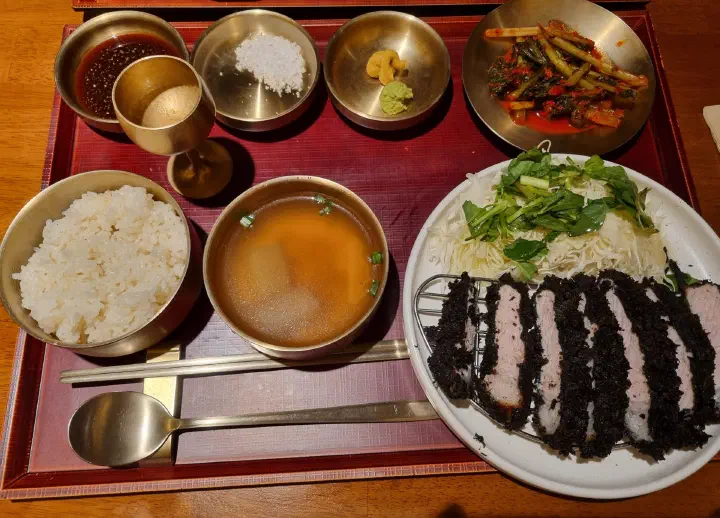
Pork cutlets run 18,000 won for loin or tenderloin and 19,000 won for premium loin.
Gamnari (감나리) is the restaurant’s own word for pork raised on feed blended with persimmon skin and water dropwort.

In the evening it works as a drinking spot too, with Korean beef tartare at 32,000 won, whelk with buckwheat noodles at 29,000 won, dried pollack at 28,000 won and garlic braised chicken at 35,000 won.
Soju, beer, draft, makgeolli and whisky are all on the list.
Corkage is charged if you bring your own bottle.

Pork cutlet set at Apgujeong Sanghoe served with rice, radish soup and shredded cabbage salad

What to order and what it costs

Two bowls and a half chicken comes to about 44,000 won for two.
That’s what most tables order.
Ordering one perilla oil bowl and one lime bowl lets you taste both, which is worth doing.

Fair warning — a single noodle bowl isn’t a large portion.
People finish it and still want something else, so if noodles are all you plan to order, add a side.
Just as many people say it’s more than enough, though.
It comes down to how much you normally eat.

A makguksu set laid out on a wooden terrace table at Apgujeong Sanghoe beside ornamental grasses

Cards work everywhere here, foreign-issued ones included, and mobile payment is fine.
Korea has no tipping culture. Leave extra cash on the table and you’ll confuse the staff rather than please them.
Language barely comes up here, which you can’t say about most restaurants in Seoul.
Ordering runs through a tablet at each table and the screen switches between several languages, so you never have to flag anyone down or work out how to pronounce a dish.
Foreign guests praise the service more than anything else, and enough of the staff handle English that you won’t get stuck.
Japanese speakers have it easiest of all.
The card explaining how to eat the noodles is printed in Japanese as well as Korean, and staff take Japanese guests through the steps in Japanese, some of them fluently.
Word of the place spread through Instagram rather than guidebooks, which is why so many of the foreign tables are Japanese.

The room

The building is a big part of why people come.
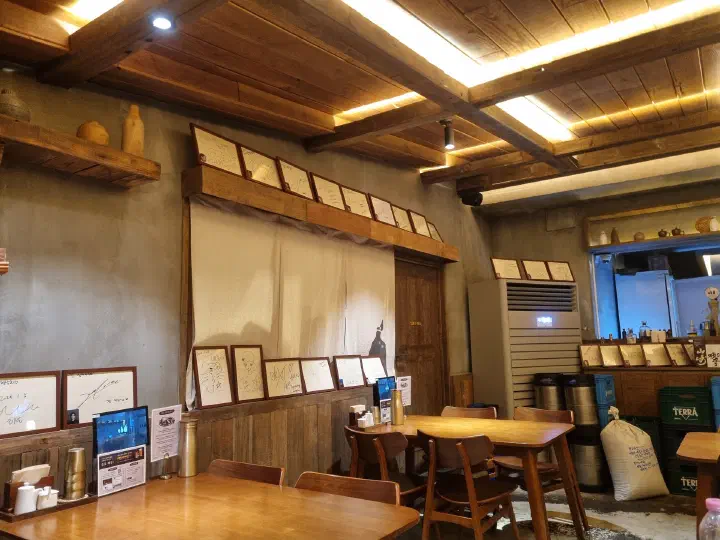
Dark timber is set in a lattice across concrete, with warm light running through the gaps, so it comes across as part hanok eaves and part old oil mill.
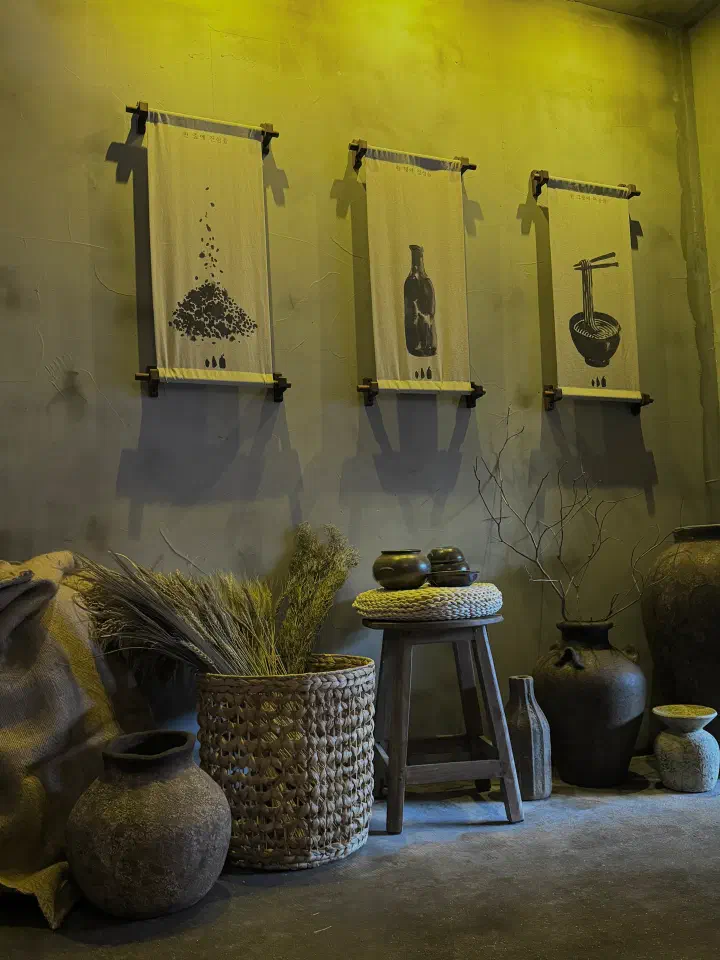
Straw bundles, a millstone and ceramic jars sit near the entrance, and the shelves are spaced out like a small gallery rather than crowded with props.

Fabric scrolls at Apgujeong Sanghoe illustrating perilla seed, an oil bottle and a bowl of noodles, above clay jars and dried grasses

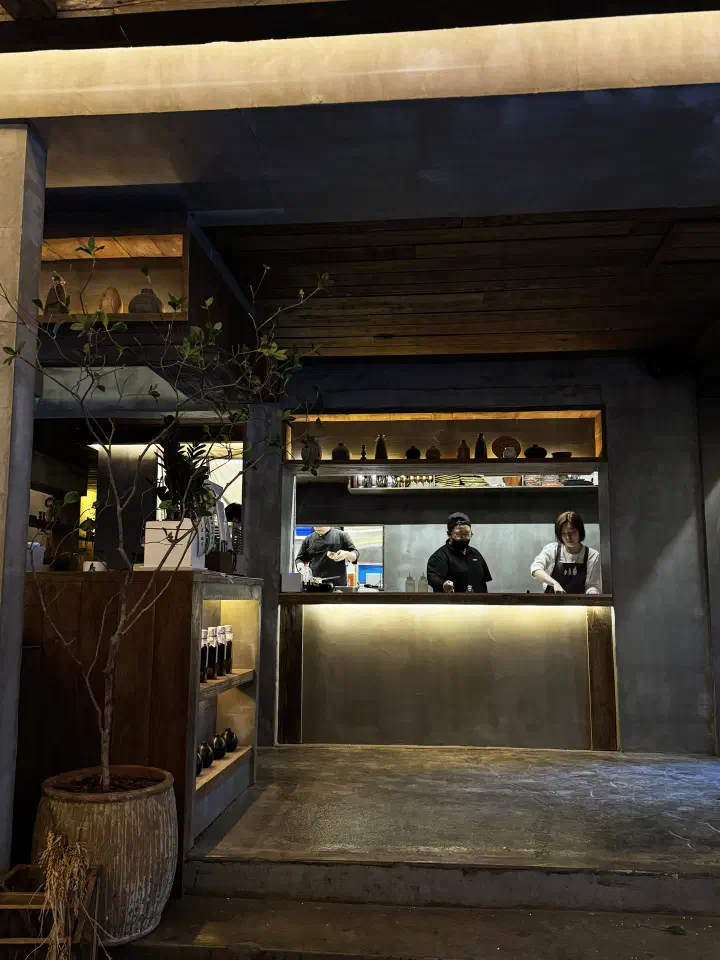
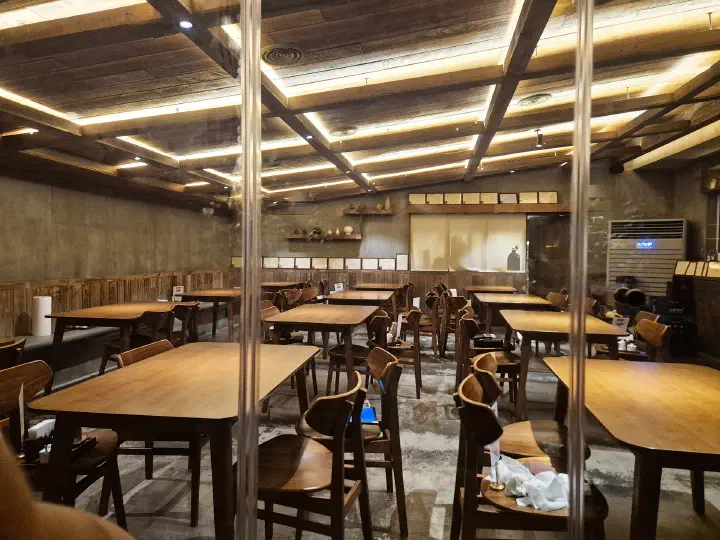
The ground floor splits into two halls, one facing the open kitchen and one behind the counter with larger tables.
There’s a private room further in for groups.

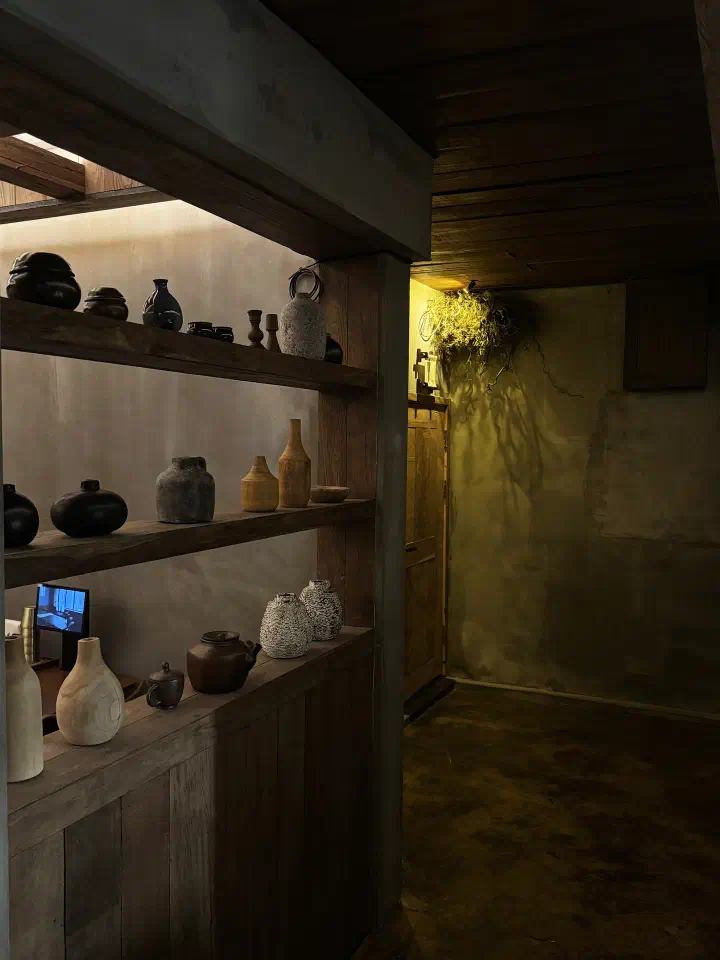
Timber display shelf of ceramic and wooden vessels along an inner passage at Apgujeong Sanghoe

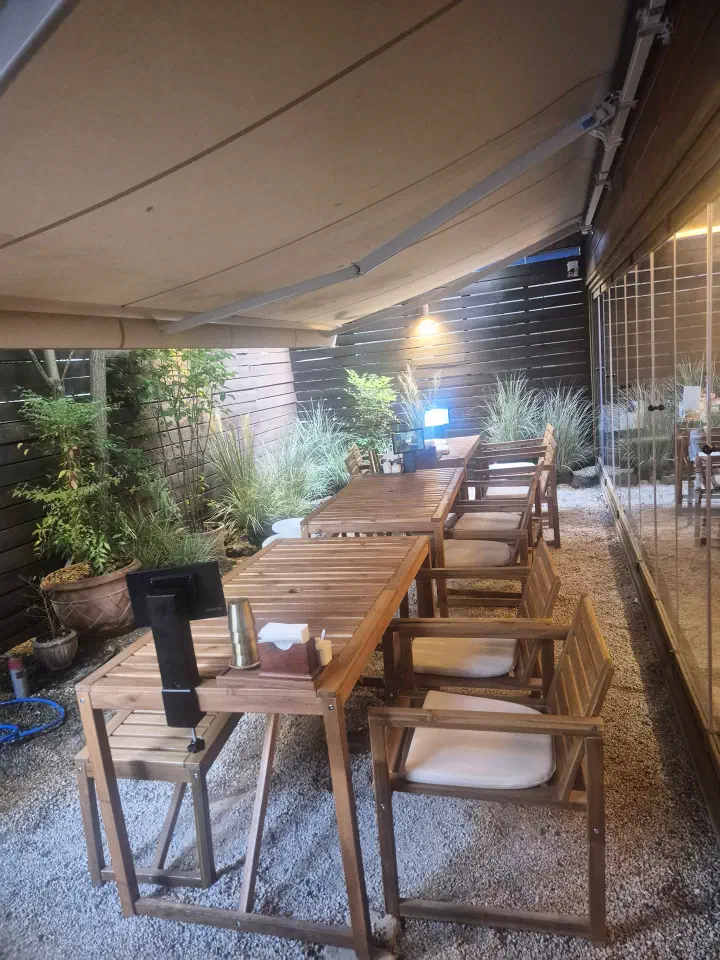
Out through the glass doors there’s a terrace with a big tree and an awning over it — shade in the afternoon, a breeze at night.
Best seats they have, weather permitting.

Outdoor terrace seating at Apgujeong Sanghoe under a retractable awning, framed by planted grasses

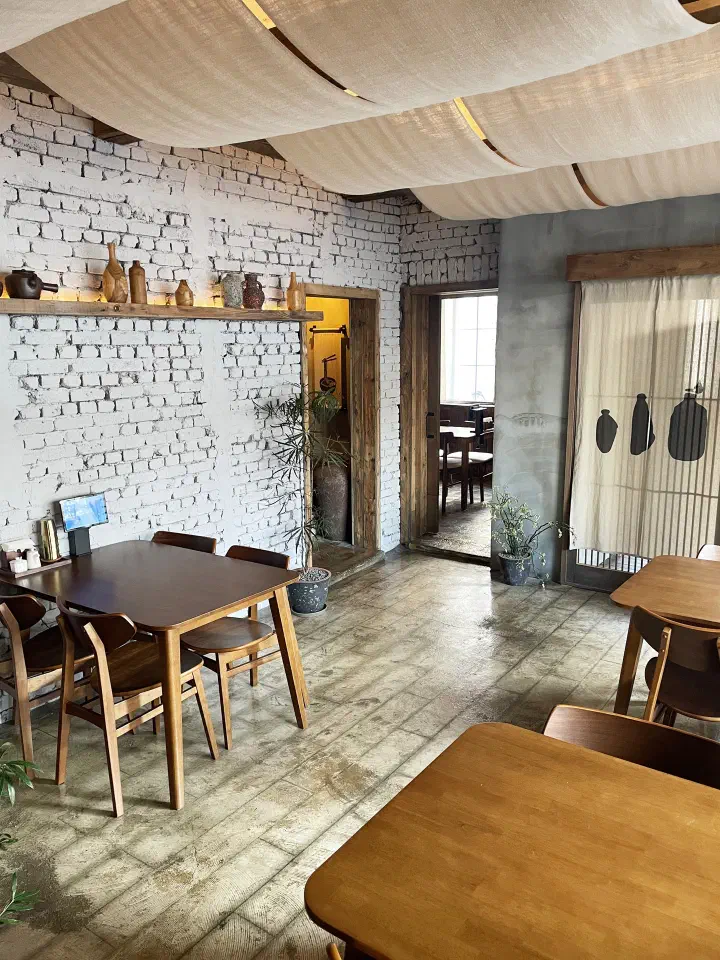
You reach the second floor by either an outdoor or an indoor staircase, and fabric draped across the ceiling softens it compared to downstairs.

Second floor dining room at Apgujeong Sanghoe with whitewashed brick walls and fabric draped across the ceiling

Tables sit far enough apart that conversation stays private.
The room is large but doesn’t get loud even when it fills.
They’ve got high chairs, dogs are welcome, separate men’s and women’s restrooms, free wifi.
The restrooms get singled out for praise often enough to be worth mentioning.

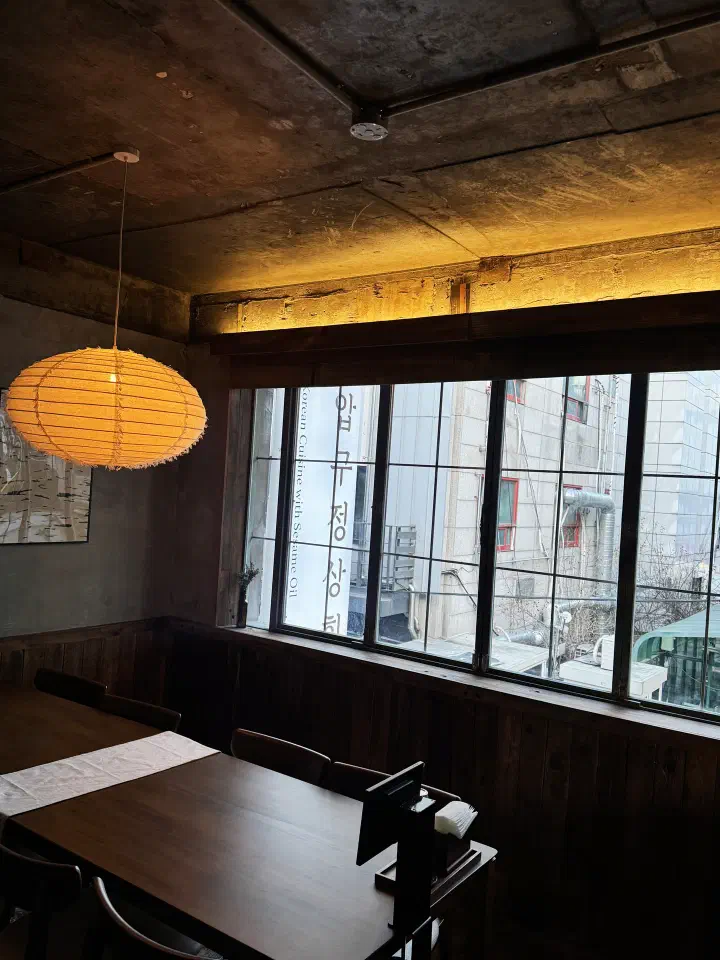
Window seat at Apgujeong Sanghoe with the restaurant’s name and “Korean Cuisine with Sesame Oil” printed on the glass

Signatures from Korean celebrities and athletes hang on one wall, placed casually along the timber rather than displayed in rows.
At some hours foreign guests are close to half the room.

Framed celebrity signatures along the timber wall of the ground floor hall at Apgujeong Sanghoe

Parking

There’s no dedicated lot.
Nearby paid parking costs 5,000 won for the first 120 minutes and 1,000 won per additional 10 minutes.
Valet is available for 5,000 won.
They used to do it differently — a discounted hourly rate at the Thebans lot down the street if you mentioned the restaurant — but that’s gone.
None of it’s free, so honestly, just walk from the station.

The restaurant also sells bottles of its cold-pressed perilla and sesame oil at the counter, which travel well as gifts.

Staff working behind the open kitchen counter at Apgujeong Sanghoe, next to a shelf of bottled house-pressed oil

Where it falls short

The portion size and the waiting system are the two real complaints.
Standing outside with a paper number and no way to know when you’ll be called is rough in July heat, and it happens even when tables inside look open.

Wooden tables still empty in the large ground floor hall at Apgujeong Sanghoe

Among the side items, the sweet pickled radish is very sweet, and reactions to it are mixed.
The gungchae divides people too — some like the crunch, others pick it out.
A whole bowl of the perilla oil version can feel a little heavy toward the end. Alternating with the yeolmu kimchi fixes that.
A few people wish the chicken sauce were spicier.
The alley leading in sometimes has commercial trash bagged up along it, which is not the entrance you’d want.
The ratings are worth a grain of salt too — the restaurant hands out free drinks for a Naver or Google review, so the map scores run a little high.
Go in expecting a very good bowl of noodles rather than the best meal of the trip.
At busy hours food can take close to 30 minutes to arrive, so this isn’t a place to squeeze into a tight schedule.

Last thoughts

Pressed oil and buckwheat.
That’s the whole restaurant, and they don’t hedge on either.
The line about pressing and cutting in-house shows up in the smell and the texture, not just on the wall.
If you want bold seasoning it’ll taste plain, but on a day when something clean sounds right, not many places in Gangnam do it at this level.
The room’s good enough that it also works for taking parents out or bringing visitors from abroad.
For Gangnam, the prices aren’t bad.
That counts for something.

📍 View Apgujeong Sanghoe (압구정상회) on Google Maps →