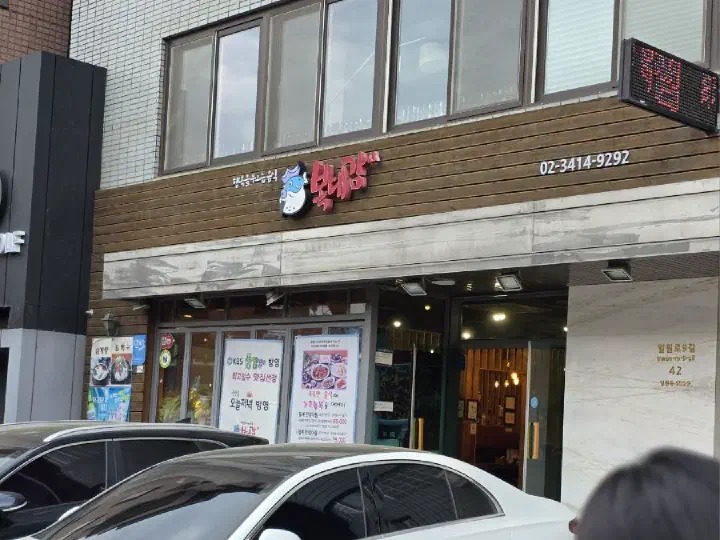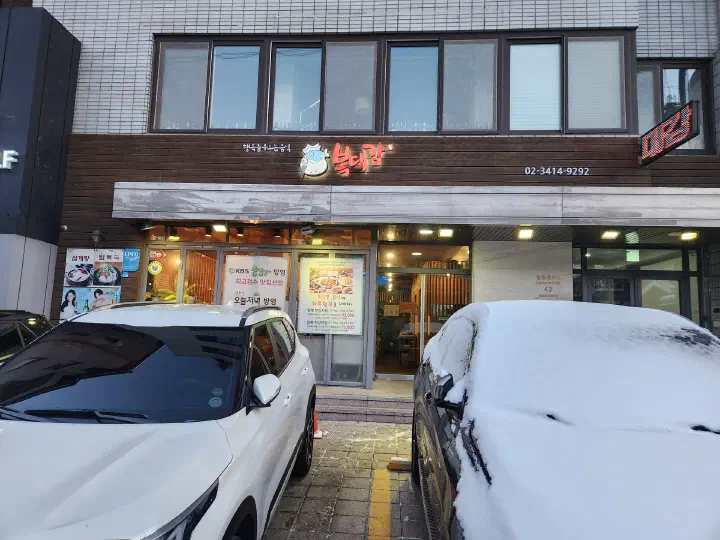
I keep finding myself in Ilwon-dong because of errands near Samsung Medical Center, and over time I’ve been working my way through the little restaurants in the Ilwon food alley one by one. This time it was Bokdaegam (복대감), a place that only does pufferfish — what Koreans call bok or, more formally, fugu.
Pufferfish isn’t something I eat often, so I came in a little curious and a little excited.

The basics first
If you’re thinking of going, here’s the practical stuff up front.
- Address: 42 Ilwon-ro 9-gil, Gangnam-gu, Seoul (in the alley across from Samsung Medical Center)
- Phone: 02-3414-9292
- Hours: 11:00 – 22:00, daily
- Parking: free, 4–5 cars in front of the restaurant
- Subway: Daecheong Station (Line 3), Exit 4; also walkable from Ilwon Station
📍 View Bokdaegam (복대감) on Google Maps →
It sits directly across from the main gate of Samsung Medical Center, so it’s an easy stop if you’re already in the area. There’s free parking for about four or five cars right out front, but it does fill up, so the public lot in the Ilwon food alley is a good backup.

A neighborhood spot that’s been here 20 years
Bokdaegam has been in the same location for close to twenty years. The sign and the interior aren’t flashy, and honestly that made me trust it more. A lot of fugu places lean into fancy decor, but here it feels like somewhere locals come for a quiet, restorative meal.

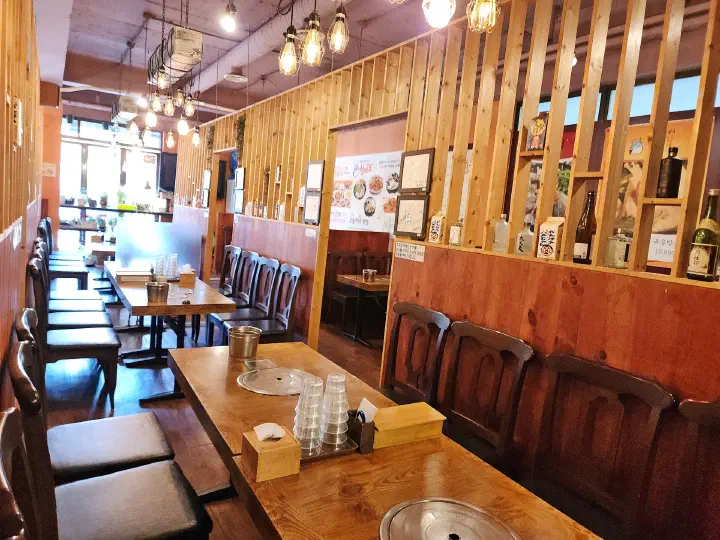
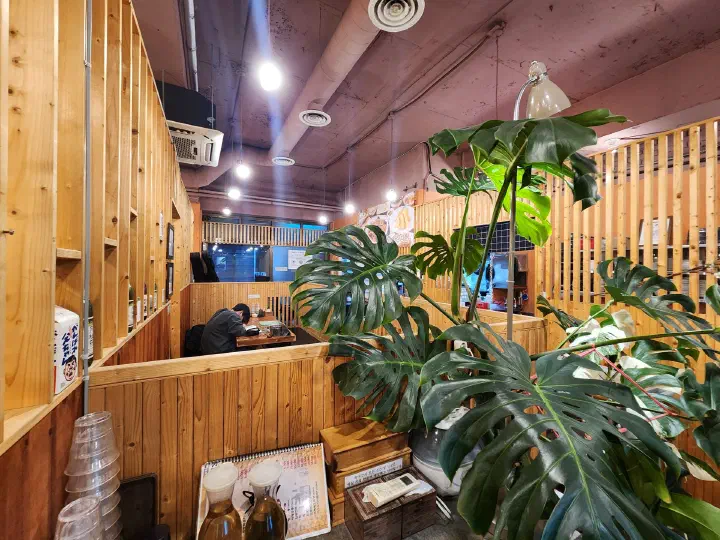
Inside, it’s a calm wood-toned space. Each table has a partition so you’re not bumping elbows with the next group, and there are private rooms too. I could see it working well for a family gathering or a small work dinner.

The full menu is posted on the wall, and it’s all pufferfish. They use two kinds: chambok (참복, tiger pufferfish) and milbok (밀복, smooth-back pufferfish), with chambok being the slightly higher grade. The set meals are a good deal, so if you’re with a group I’d go for a set rather than ordering à la carte.

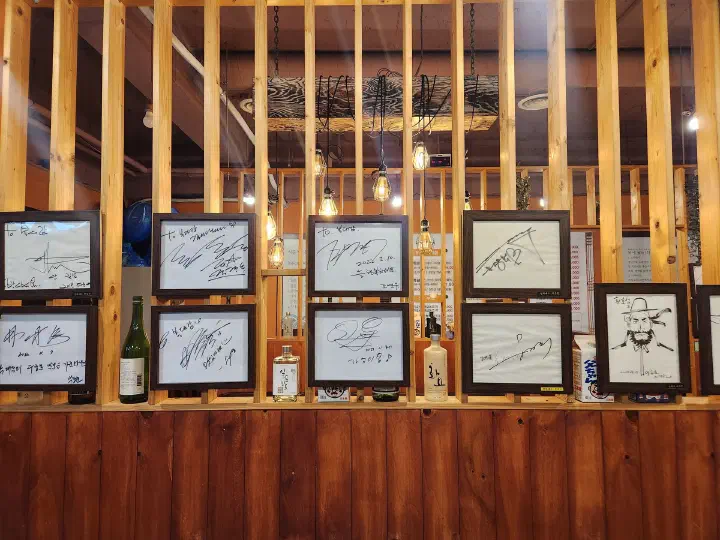
For what it’s worth, the place has been on Korean TV a couple of times and there are signed photos from celebrities on the walls. Make of that what you will — I just liked the food.
The side dishes set the tone
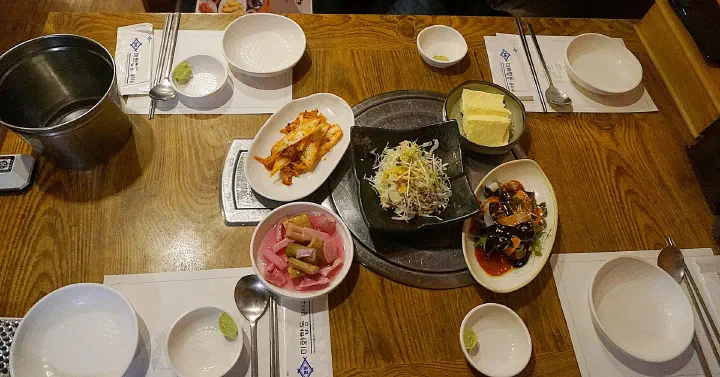
Once we sat down, they laid out placemats and small plates, and the banchan (side dishes) came out quickly: cabbage salad, steamed egg, fresh kimchi, and a dried side. Simple, but everything was done well.

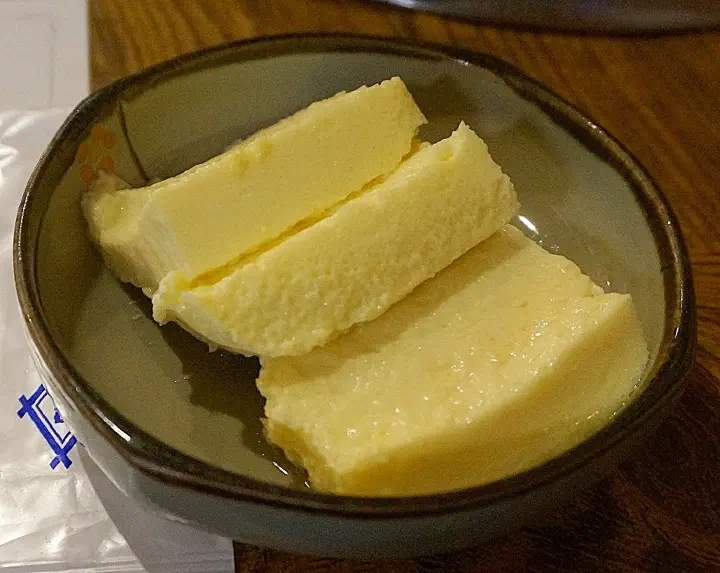
The steamed egg comes cut into bite-size pieces, almost like a rolled omelette, so I assumed it was gyeran-mari at first. It was soft, a little savory, and basically melted in my mouth.

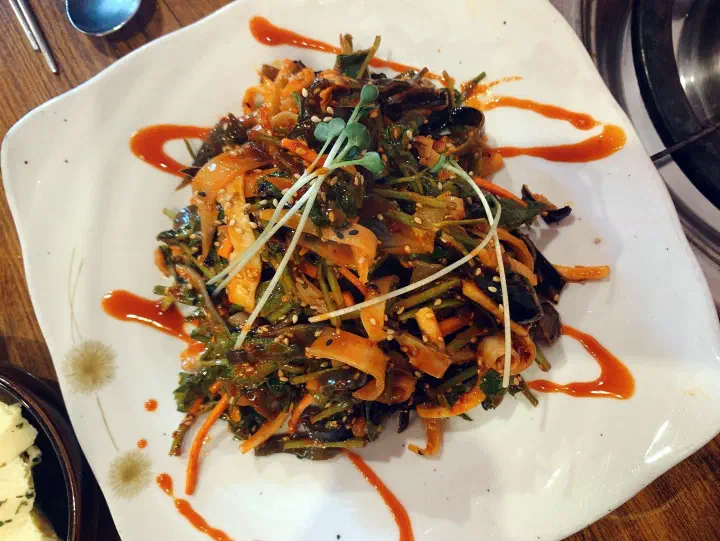
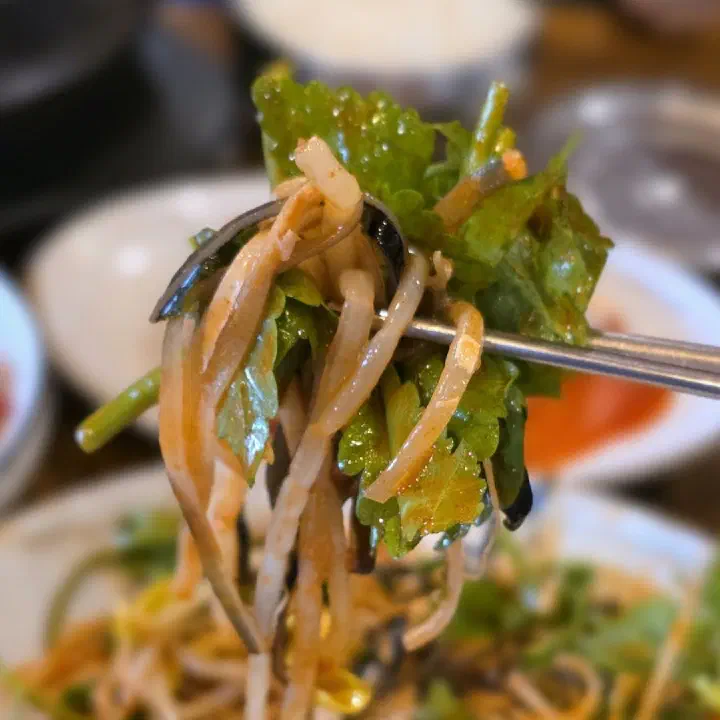
You also get a small starter of bok-kkeopjil-muchim (복껍질무침), the spicy pufferfish skin salad you’ll find at any fugu place. The sauce is sweet, tangy, and a little spicy, and the skin has this chewy, slightly crunchy texture I really like. With the crisp dropwort and vegetables mixed in, I kept reaching for more. If you want extra you can order a full plate (22,000 won), but the complimentary portion isn’t refilled.

What I actually ate
Bok-twigim (pufferfish tempura)
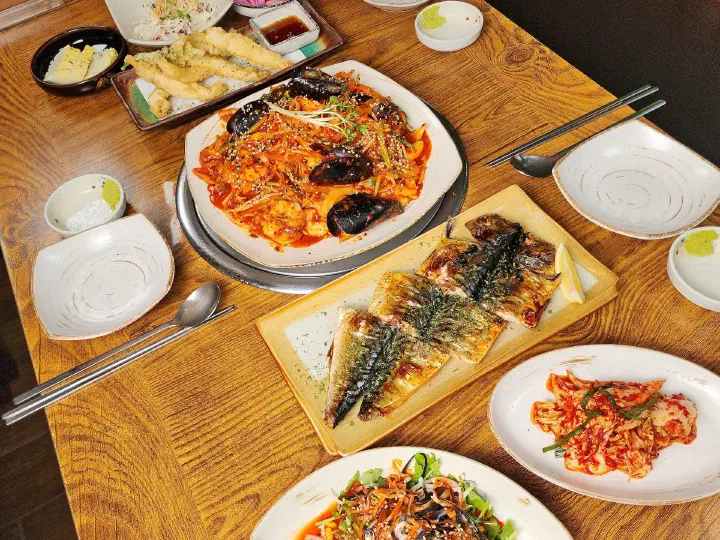
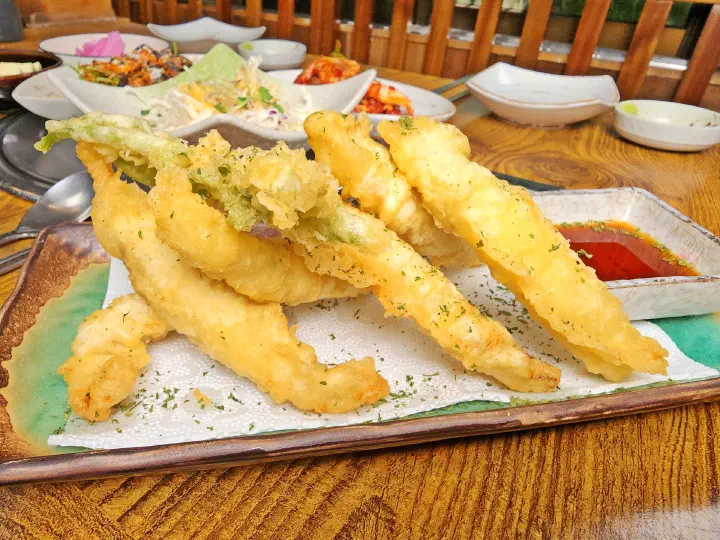
Do not skip the bok-twigim (복튀김). Thin, crisp batter on the outside, moist and tender pufferfish inside. There’s no fishy smell and none of that dry, chalky texture you sometimes get with fried fish. Six pieces wasn’t enough and we ended up ordering more.

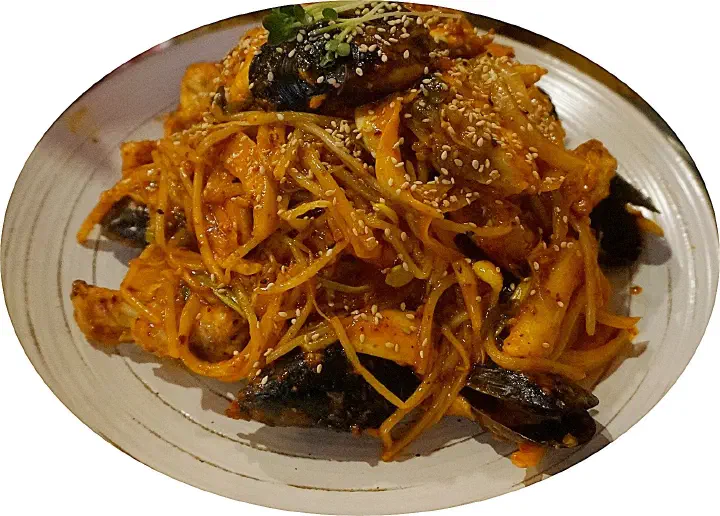
Milbok-jjim (spicy braised pufferfish)
This is milbok (밀복) braised in a spicy sauce with chewy fish and crunchy bean sprouts. Most spicy braised seafood dishes are either too hot or too aggressive, but the milbok-jjim (밀복찜) stays bold while finishing clean. The sauce soaks into the bean sprouts, and eating them together with the fish gives you that crunchy-chewy contrast. There’s tteok (rice cake) tucked in too.

Piled over a generous bed of bean sprouts, it looks hearty before you even start. You can tell the owner knows how to use vegetables.

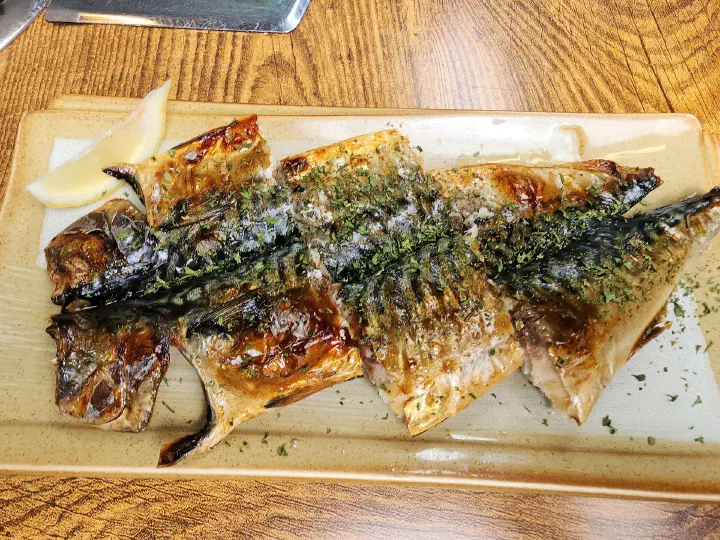
Grilled mackerel
The grilled mackerel that came with the set was a surprise highlight. I didn’t expect a fugu restaurant to turn out mackerel this good — crisp on the outside, thick and juicy inside. It’d be a safe bet for kids or older family members.

Bok-guk-ttukbaegi (pufferfish soup)
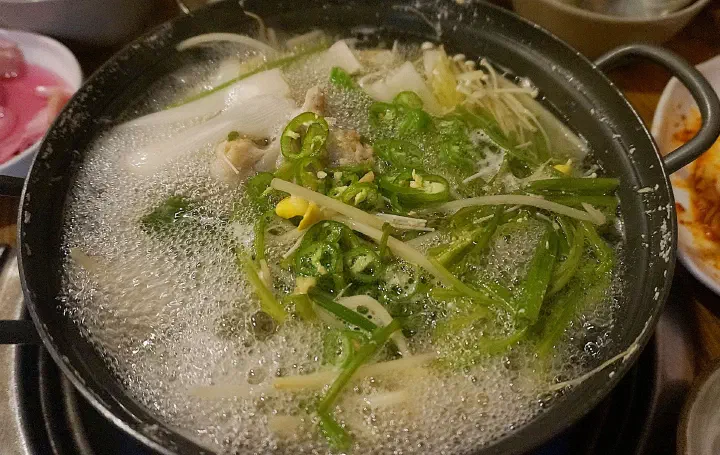
The bok-guk-ttukbaegi (복국뚝배기) is a clear, milky-white broth that’s incredibly clean and refreshing. It’s barely seasoned, but there’s nothing heavy or fishy about it. Big chunks of pufferfish go in, thick and springy, and it’s satisfying to pick the meat off the bone.

There’s a milbok and a chambok version; both are similar, but the chambok is a touch meatier. The broth was so good I kept spooning it up even when I was full.
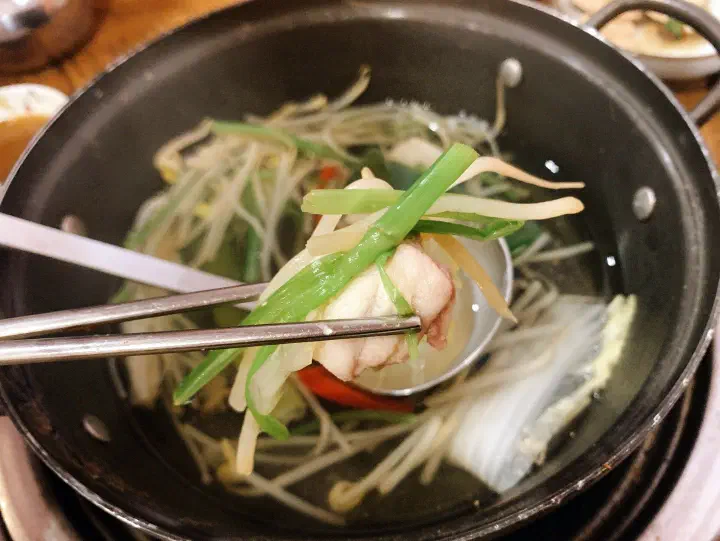
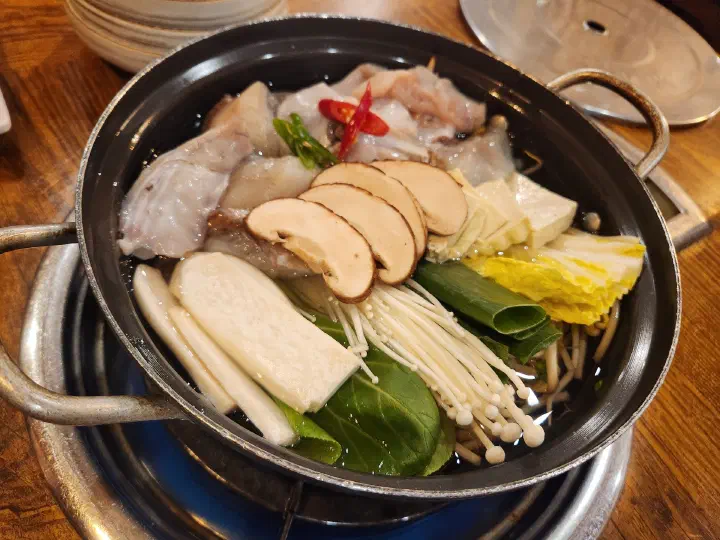
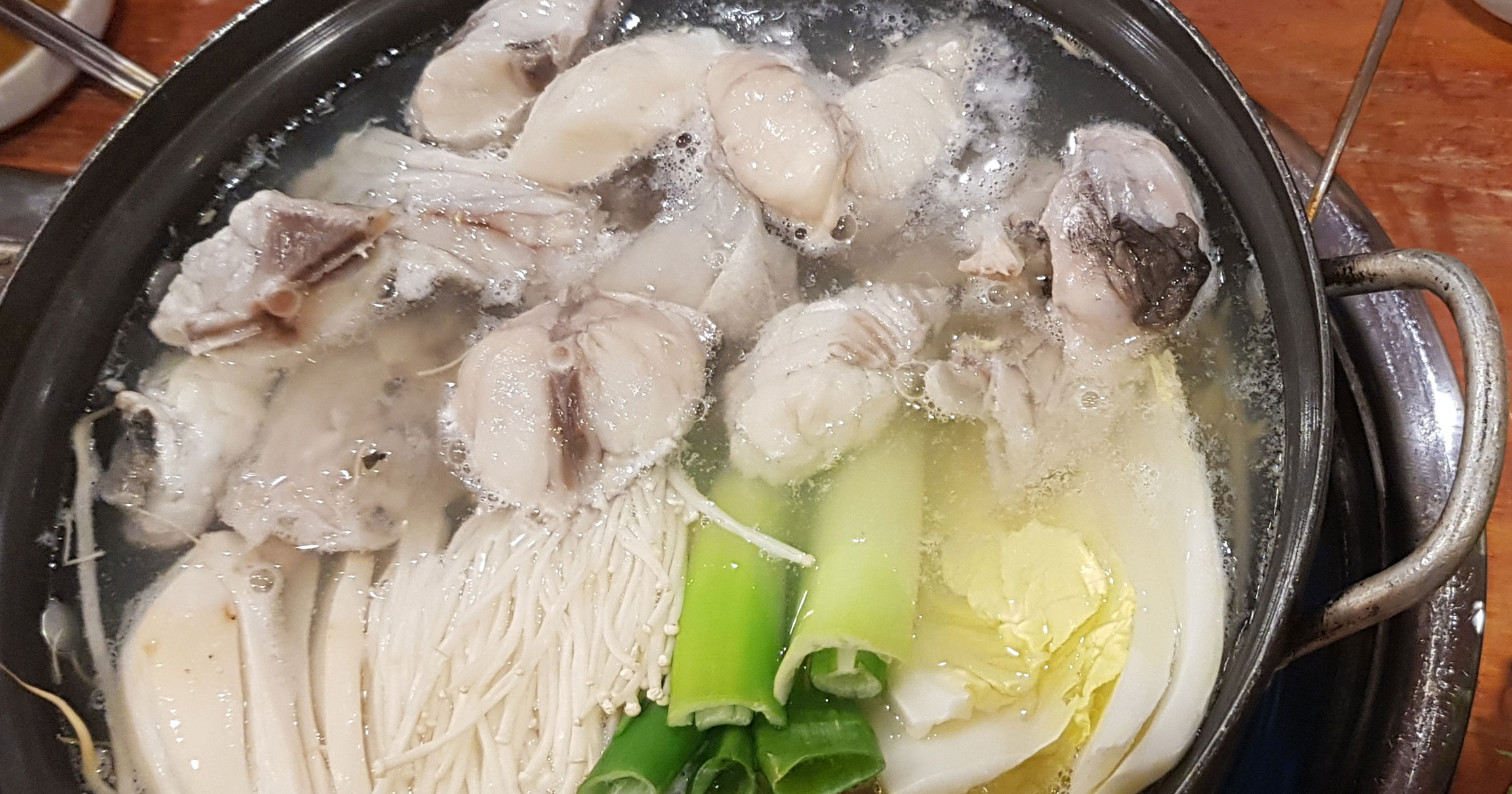
Chambok-jiri (clear pufferfish hotpot)
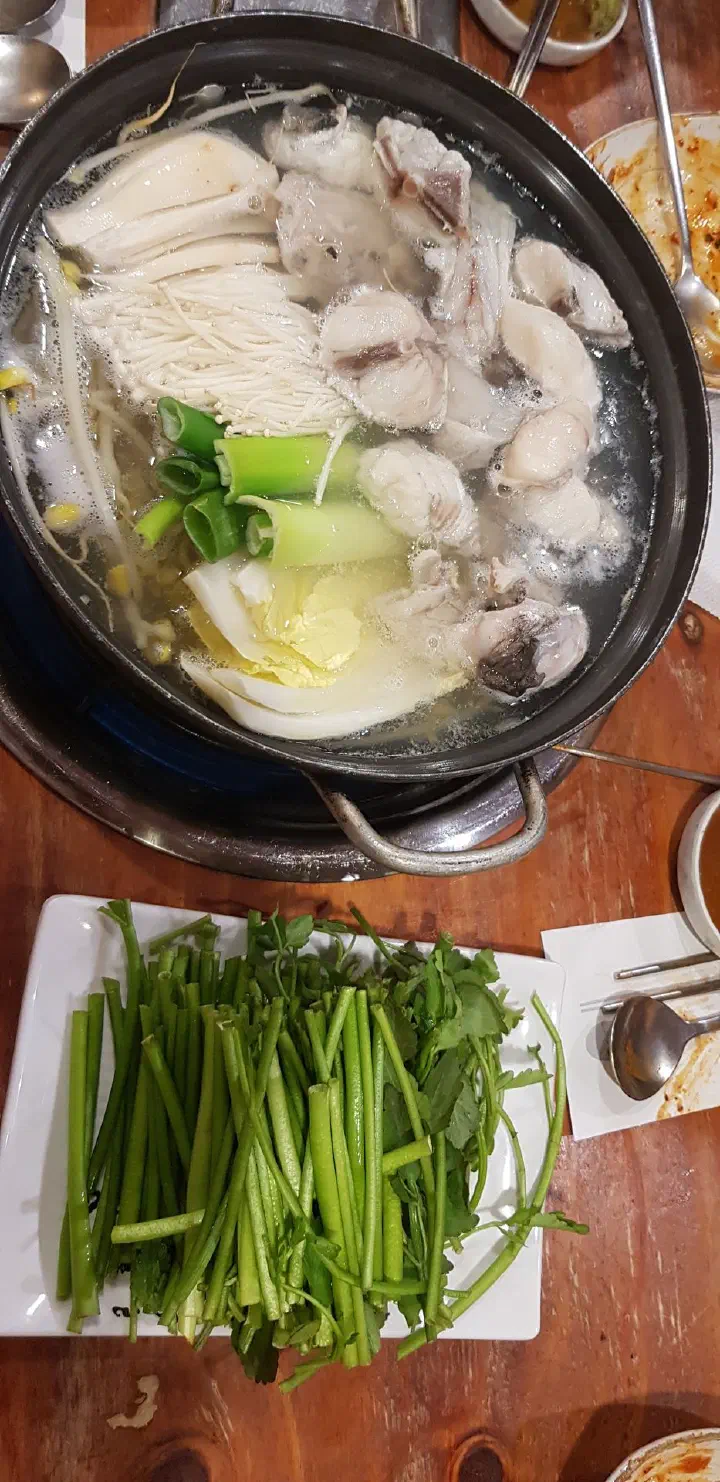
The chambok-jiri (참복지리) is cooked right at the table. It’s loaded with chambok plus bean sprouts, enoki mushrooms, dropwort, and cabbage. The dropwort comes on the side — add it as it boils and the aroma really opens up.

One spoonful of that broth and your eyes go wide. I’ve tried fugu places around Seoul, and a chambok broth this clear and clean is genuinely rare. The jiri comes with a half-bowl of rice, and dipping the rice in the broth with a bit of fresh kimchi is dangerously good.

There’s a milbok-jiri too, and people often say milbok suits the clear hotpot best. Loaded with vegetables, simmered until bubbling, then the fish dipped in sauce — really lovely.

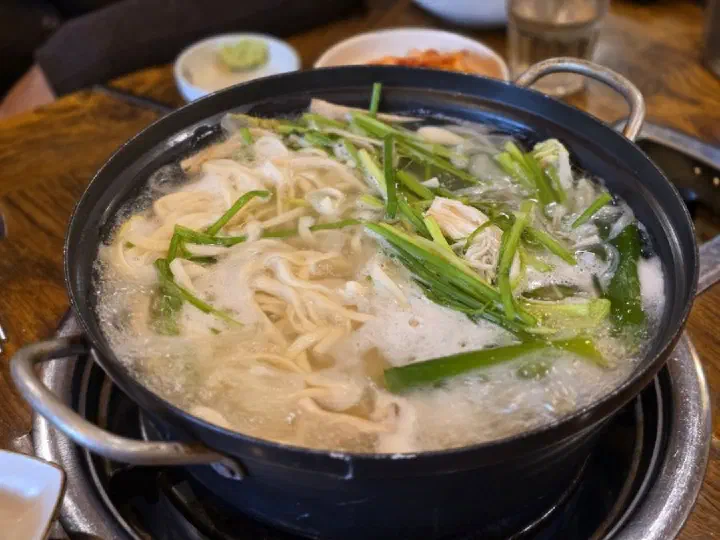
Finishing with kalguksu
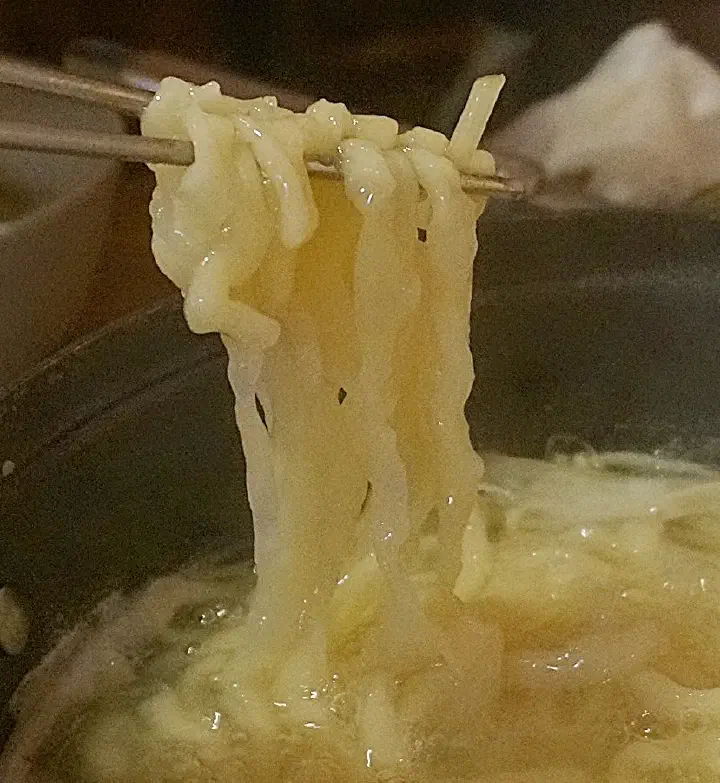
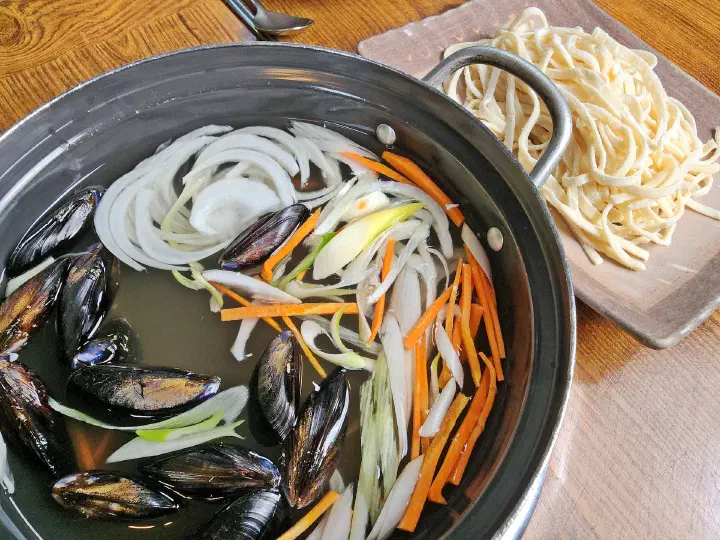
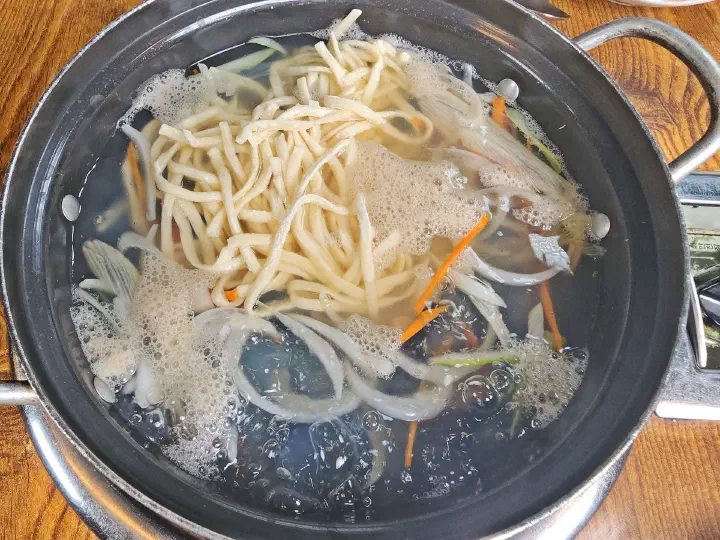
The meal wraps up with kalguksu (knife-cut noodles). You can finish with milbok kalguksu or honghap (mussel) kalguksu, and the noodles are pleasantly chewy and a little salty — more of a crowd-pleaser than I expected.

Cooking the noodles in the pufferfish broth deepens the flavor even more. Even stuffed, I ended up filling whatever space was left with that broth.

The mussel version is packed with honghap and has its own kind of brightness. It cuts the heat of the braised dishes nicely.

There’s also a bean-sprout-heavy hotpot if you want something lighter and clean.

Prices, paying, and a few visitor notes
For a specialist fugu restaurant, Bokdaegam is reasonable. The 3-person course meals run in the 50,000–70,000 won range, and the 2-person sets are in the 50,000s, which works out fairly per head. À la carte, the bok-guk-ttukbaegi is 17,000 won for milbok and 22,000 won for chambok, and six pieces of bok-twigim are 12,000 won. Being able to eat an ingredient as premium as pufferfish at this level was the real draw.

A few things if you’re visiting from abroad:
- Paying: Like almost every restaurant in Korea, Bokdaegam takes credit cards, so an internationally accepted card is fine. No need to carry much cash.
- Tipping: There’s no tipping culture in Korea. You don’t tip, and trying to leave one may actually confuse the staff. The price you see is the price you pay.
- Language: English isn’t really spoken here, but it’s not a problem — the wall menu has photos, so you can point at what you want and hold up fingers for how many. That’s all it takes.
- Spice level: The flavors here are mostly clean and mild rather than fiery. The milbok-jjim is the spiciest dish, and while it’s manageable, Korean “a little spicy” can still surprise visitors who aren’t used to it — so go in prepared. The soups and the clear jiri are gentle and not spicy at all.
The overall style is restrained and clean rather than punchy. If you love bold, heavy flavors you might find it a bit plain, but to me that clarity is exactly what made it feel like a proper restorative meal.
Getting there
Bokdaegam Ilwon-dong is in the alley right across from the main gate of Samsung Medical Center. You can walk from Exit 4 of Daecheong Station (Line 3), and it’s not far from Ilwon Station either. If you drive, there’s free parking for four or five cars out front, with the Ilwon food alley public lot as a backup.
📍 View Bokdaegam (복대감) on Google Maps →

On a tiring day with hospital errands, a warm, clean bowl of pufferfish is a good way to reset. It’s an easy place to bring parents or have a quiet family meal, and if you’re near Ilwon-dong and curious about Korean pufferfish, it’s well worth a stop.