Gangneung is a seafood town, and most visitors end up eating raw fish or soft tofu stew.
The third option, and the one that gets skipped, is saengseon-jjim (생선찜), fish braised in a shallow chili sauce.
Two places in the city are known for it, and this is the one that doesn’t require a phone reservation.

The name confuses people.
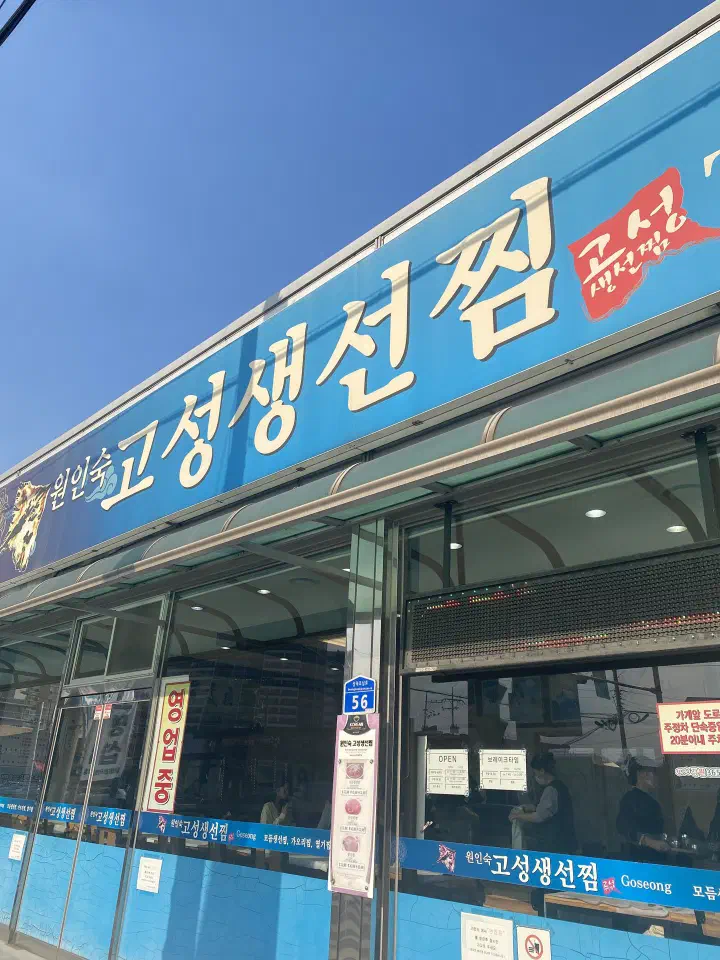
Goseong is a county about an hour north, but this restaurant sits in a residential part of Gangneung itself.

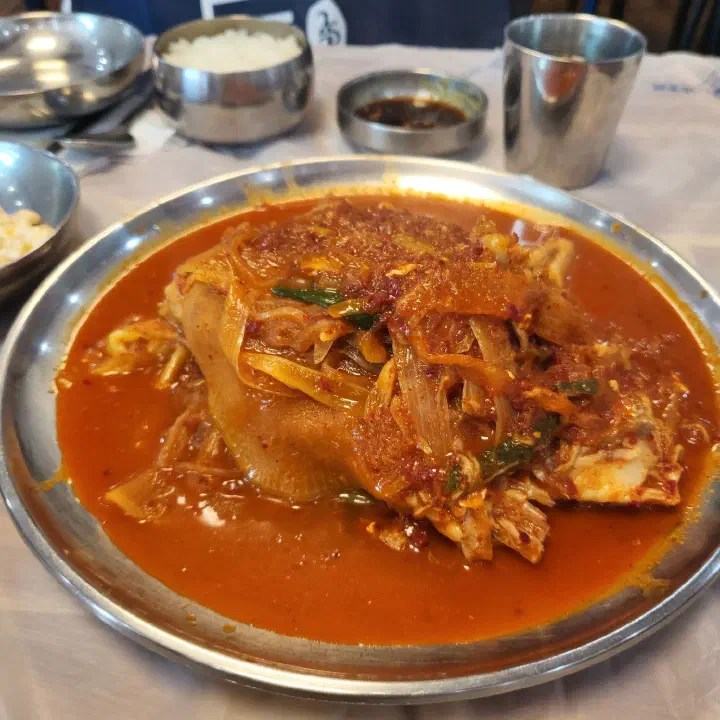
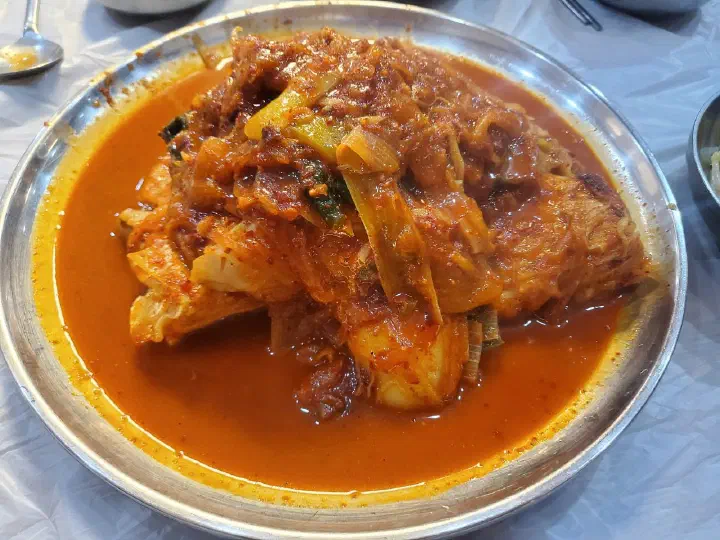
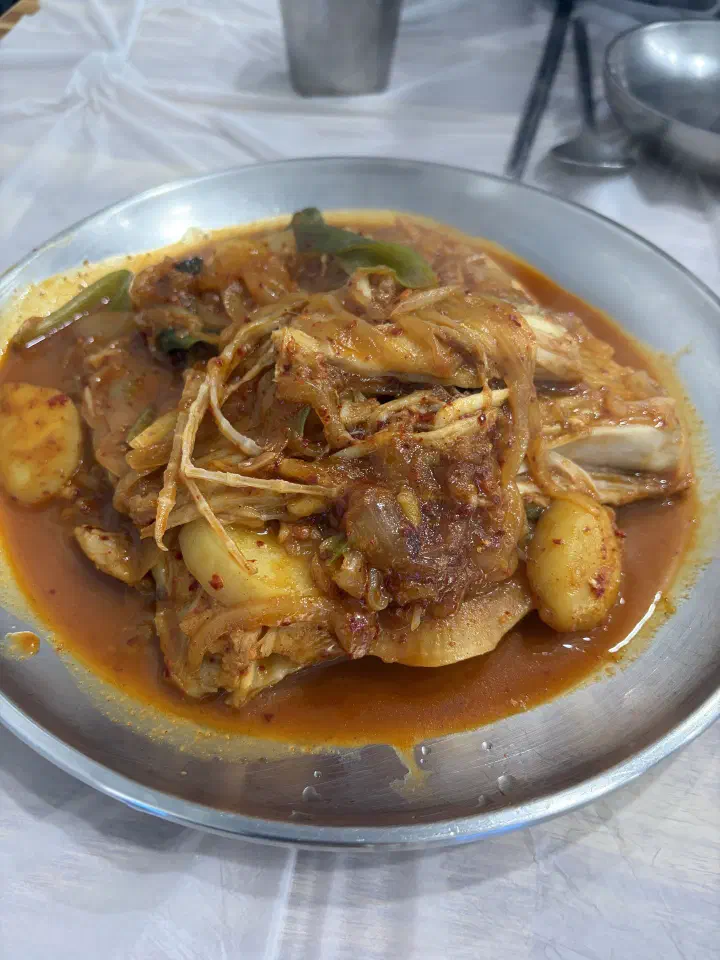
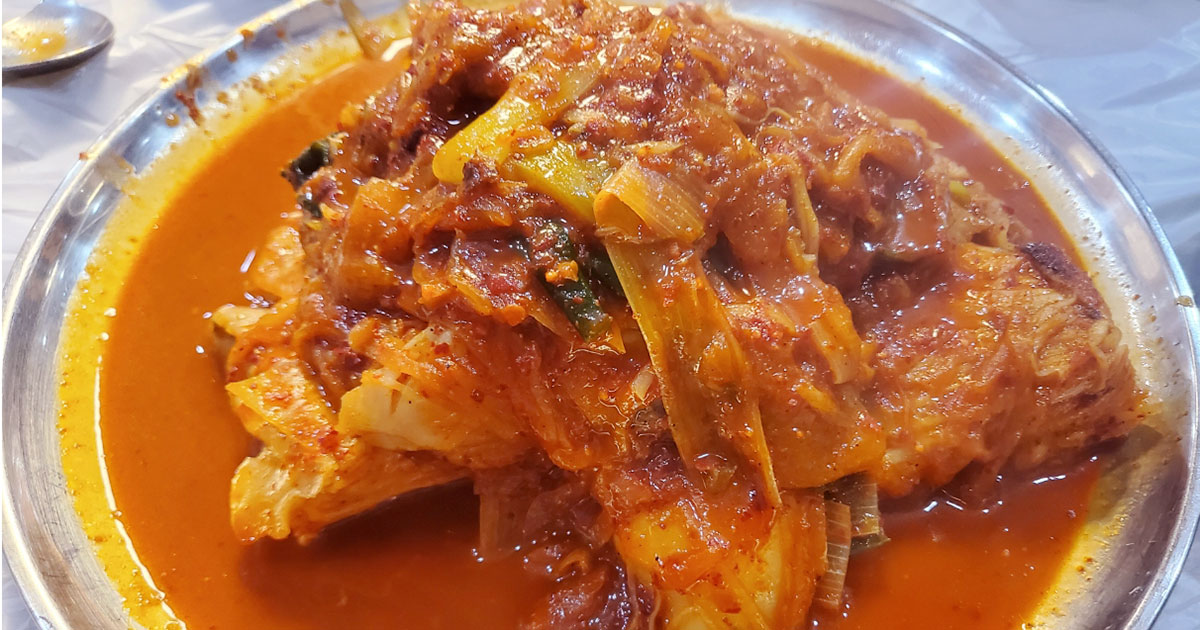
A small-size plate of gaori-jjim, Korean braised skate in red chili sauce, at Goseong Saengseonjjim in Gangneung

The basics

Address: 56 Seongdeokponam-ro, Gangneung-si (강원특별자치도 강릉시 성덕포남로 56)
Phone: 033-651-6959
Hours: Mon, Wed-Fri 11:00-20:00 (last order 19:20) / Sat-Sun 10:30-19:00 (last order 18:20)
Break: 13:40-15:00 on weekends only
Closed: Tuesdays
Parking: lot behind the building, a second lot behind the Shabuhyang restaurant, public lot next to Won Mart across the street
Reservations: not accepted, walk-in only

📍 View Goseong Saengseonjjim (고성생선찜) on Google Maps →

One practical note before anything else: Google Maps is unreliable for walking and transit directions in Korea.
Naver Map or KakaoMap will get you there properly, and the KakaoT app works the same way Uber does if you’d rather take a taxi.
From Gangneung Station or the express bus terminal it’s under ten minutes by car, and a taxi across town rarely runs over 10,000 won.
Local drivers know the place by name.

The blue exterior sign of Goseong Saengseonjjim on Seongdeokponam-ro in Gangneung, South Korea

What skate tastes like

Skate has a reputation problem among people who’ve encountered it in Korea before.
The famous version, hongeo, is fermented and smells like ammonia, and once you’ve met that, you tend to avoid the whole fish.

This is not that.
The skate here is fresh, never fermented, and there’s no fishy smell at all in the dining room.
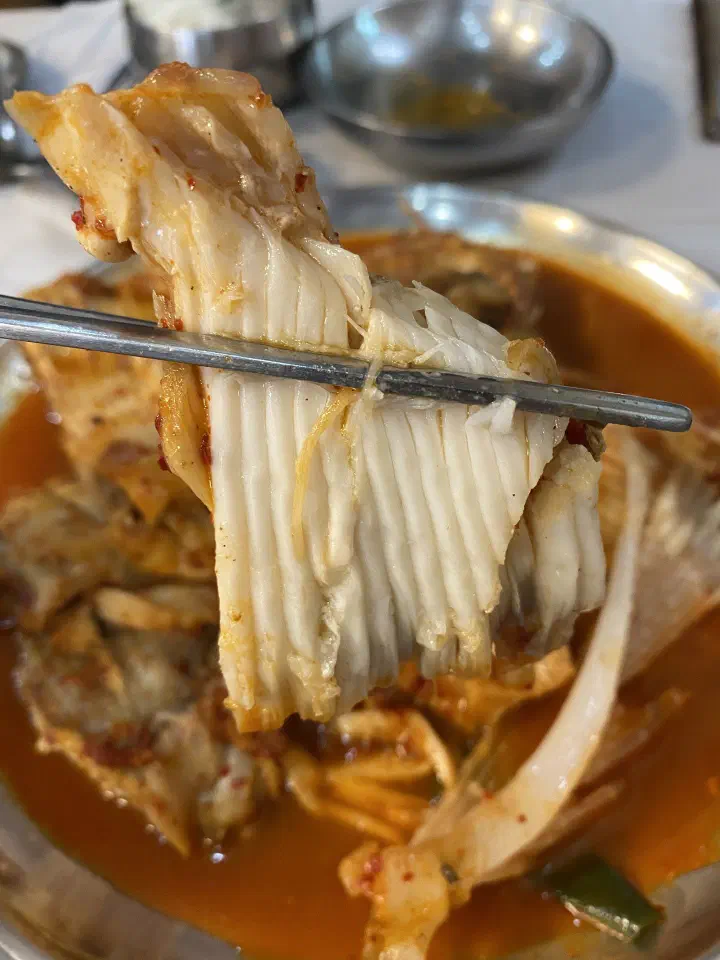
The flesh separates into long strands when you pull at it with chopsticks, soft enough that it comes away in whole chunks.
The texture is closer to crab than to fish, and that comparison comes up constantly among Korean diners.
You’ll hear the word for crab at the next table sooner or later.

Chopsticks lifting a piece of braised skate that separates into long crab-like strands

Eating it is easy, which matters more than it sounds.
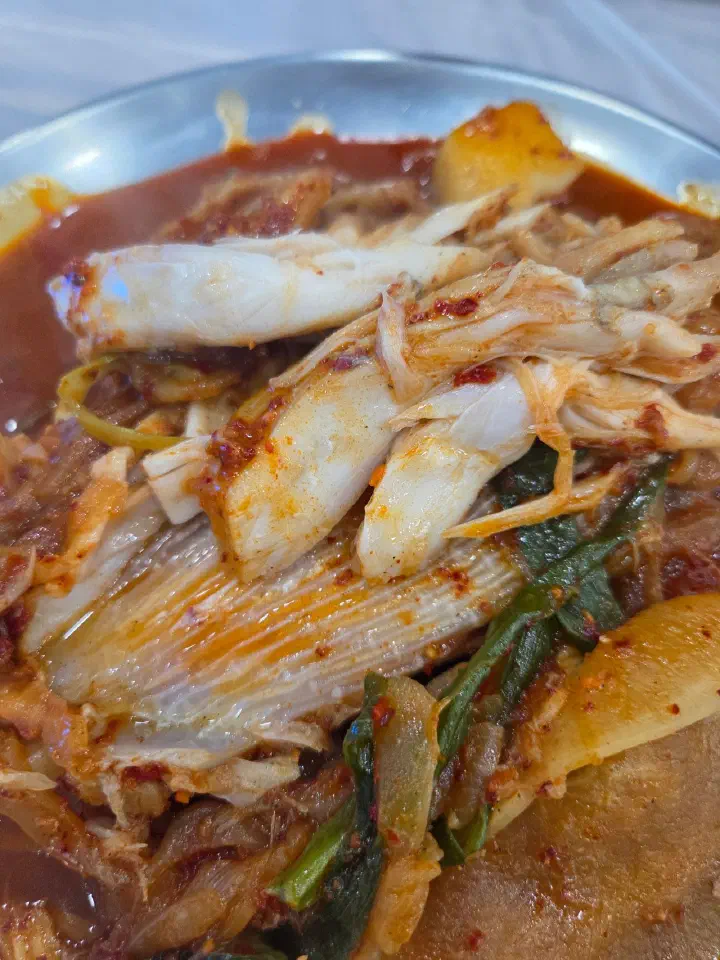
Skate cartilage is soft rather than bony, so you chew straight through it instead of picking small bones out of your mouth.
There’s none of the tedious work that comes with braised mackerel or hairtail.

Close-up of thick white skate flesh with soft cartilage running through it

The sauce, and how hot it is

The sauce isn’t thick.
There’s no starch in it, so it stays loose and pools at the bottom of the dish rather than clinging to everything.
It looks aggressively red and tastes far gentler than that suggests, with sweetness and a savory depth under the chili.

The loose, starch-free red chili sauce pooling around the braised skate

For heat, the local reference point is Shin Ramyun, and that’s a fair comparison.
Korean spicy and foreign spicy are not the same scale, though, so brace yourself a little if you don’t eat chili often.
The good news is that they’ll adjust it.
Say “덜 맵게” (deol maepge, less spicy) when you order and the kitchen will tone it down, which is worth doing if you’re bringing children or older relatives.

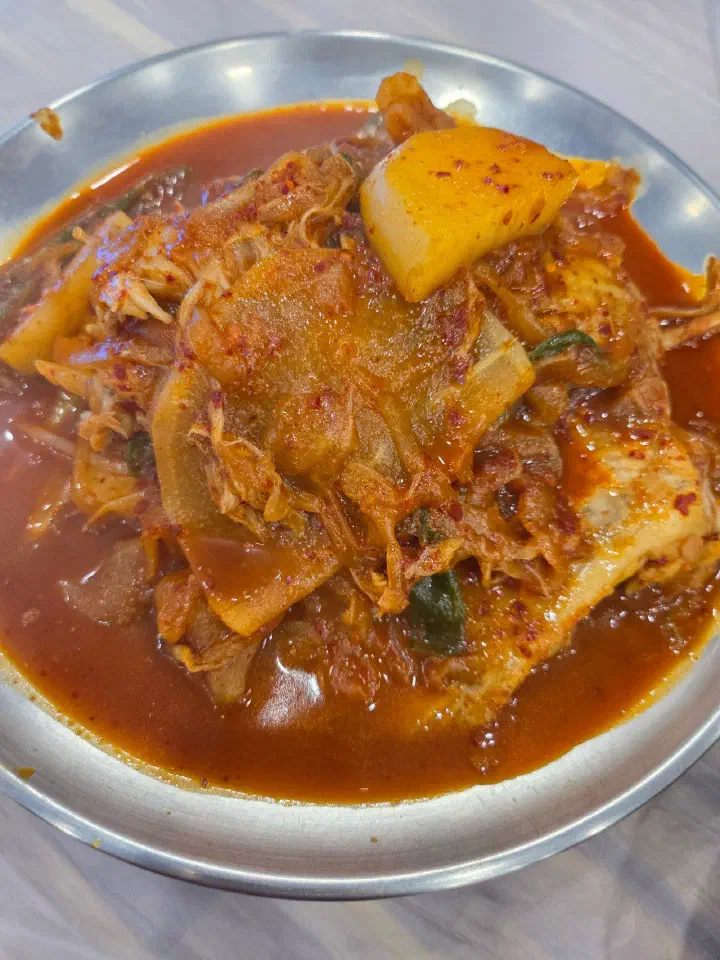
Overhead view of braised skate with chunks of potato submerged in red broth

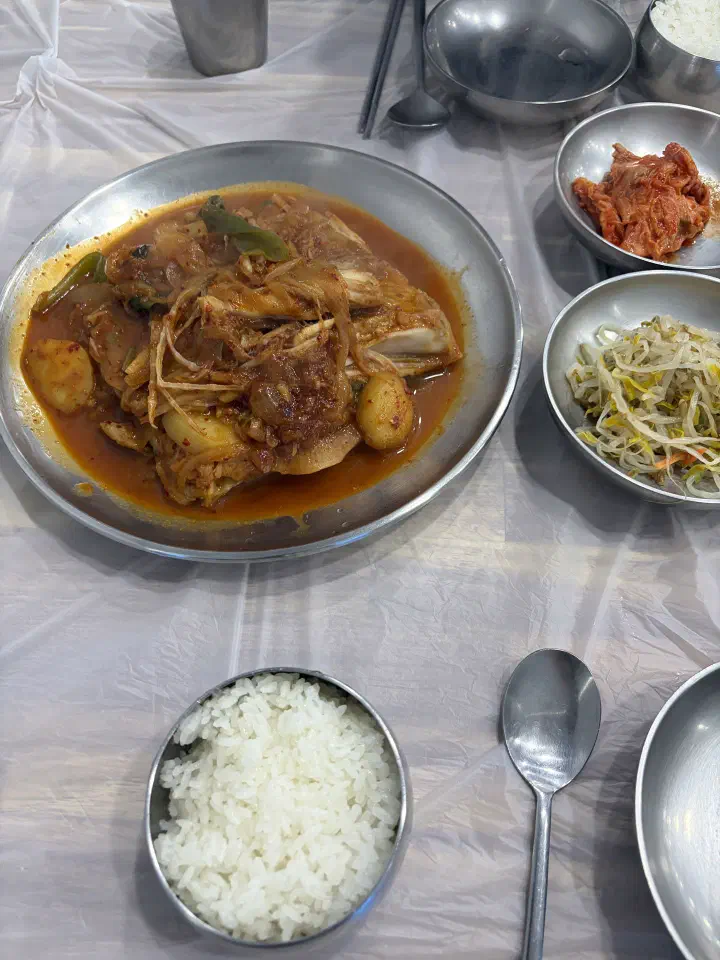
Under the fish you’ll find thin-sliced radish, chunks of potato, onion and scallion.

Two thin slices of braised radish sitting on top of the skate at Goseong Saengseonjjim

The radish is the sleeper here, thin enough to fold over a spoonful of rice and soaked through with sauce.
The onion breaks down as it cooks and rounds off the sharp edge of the chili.

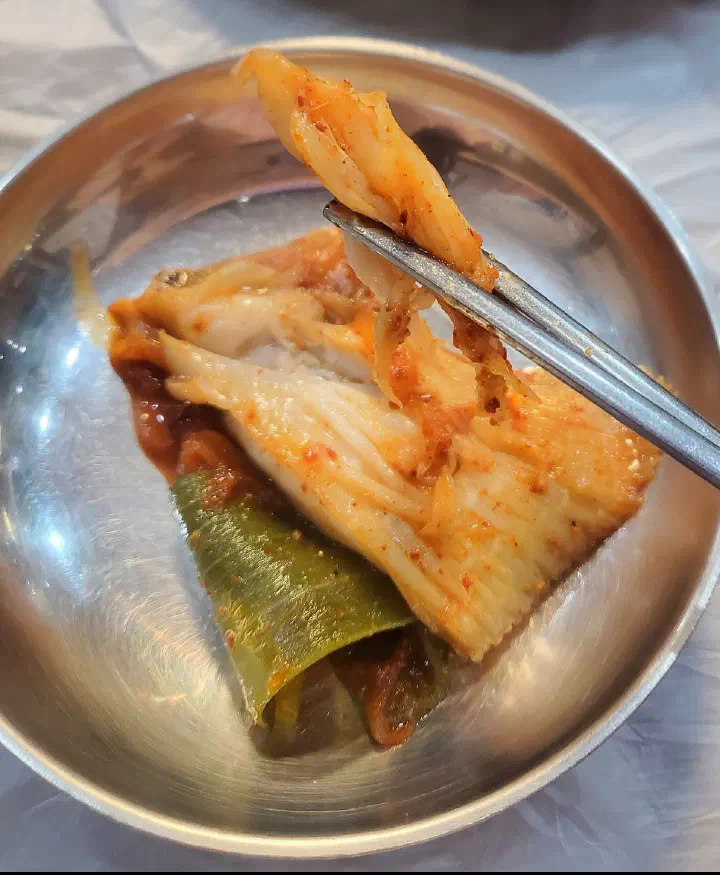
Braised radish and skate served on a small side plate with chopsticks

Rice is not optional

Rice comes separately and costs 1,000 won a bowl.
Order it with the main dish rather than as an afterthought, because the whole meal is built around it.
Korean regulars go further and tip the rice straight into the serving pot, mixing it with the sauce and the fish before eating.

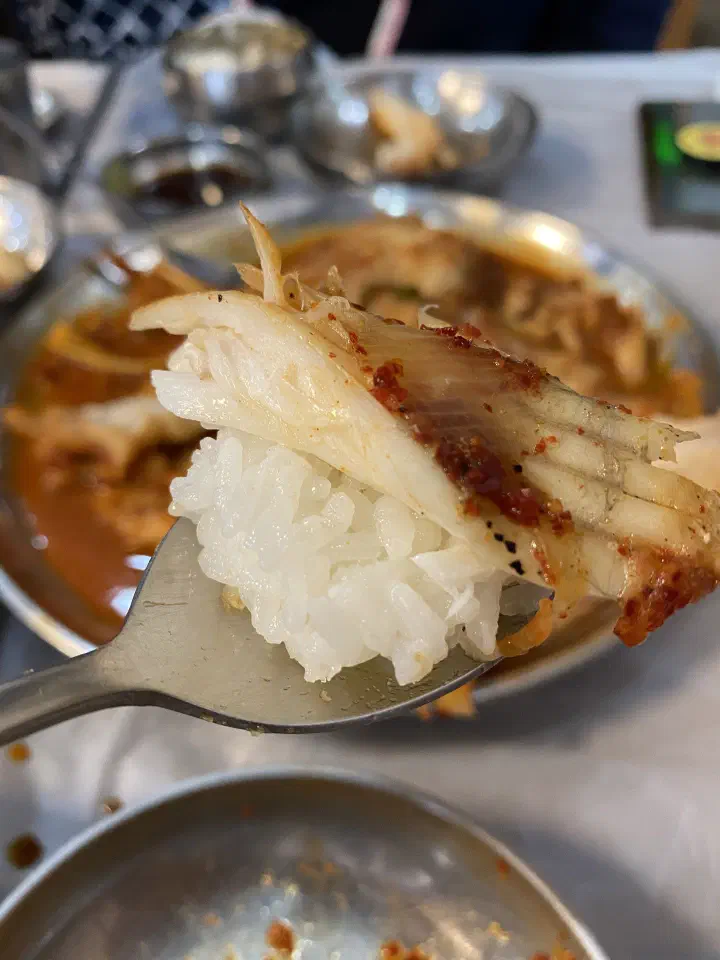
A spoonful of white rice topped with a chunk of braised skate

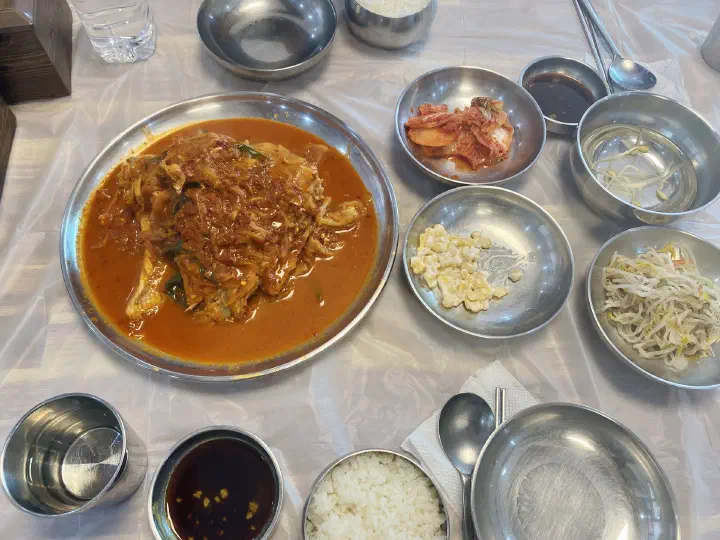
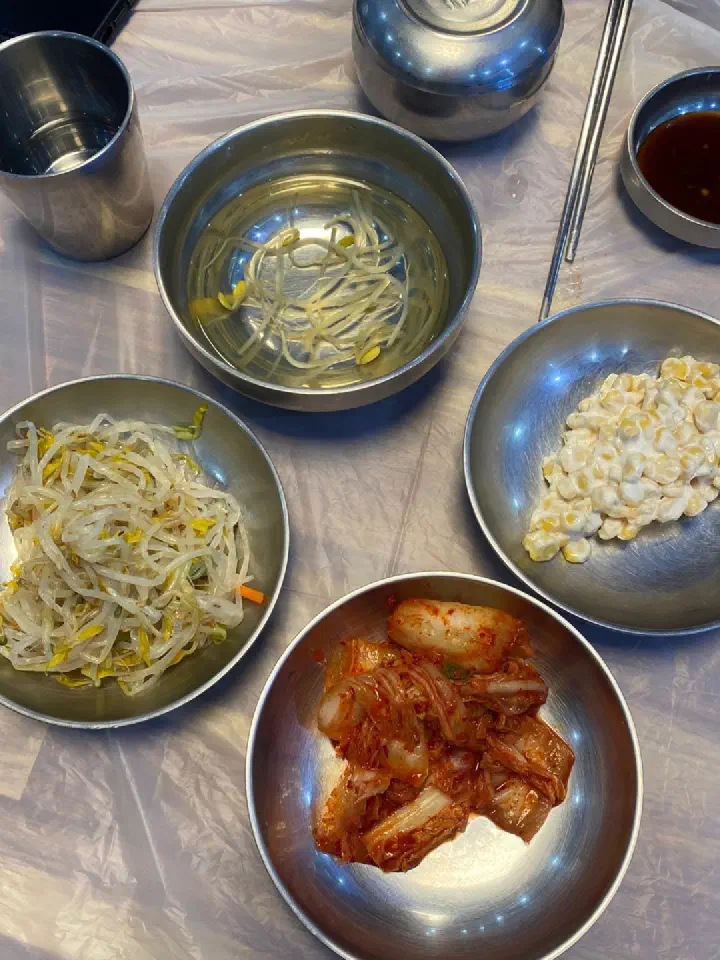
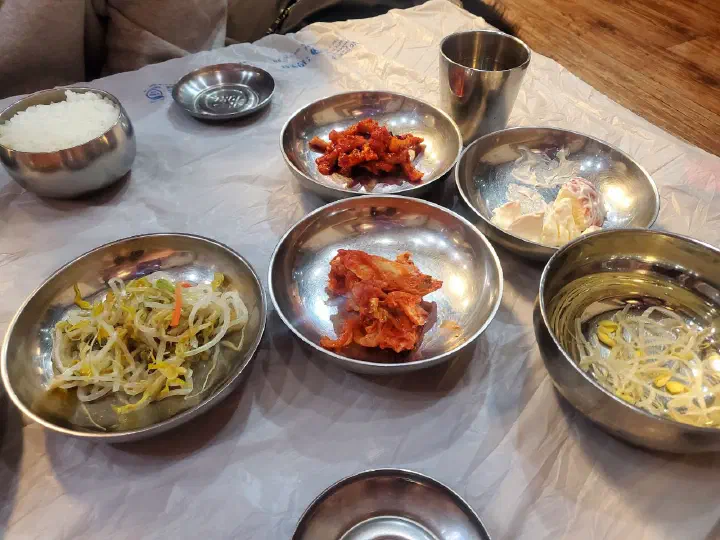
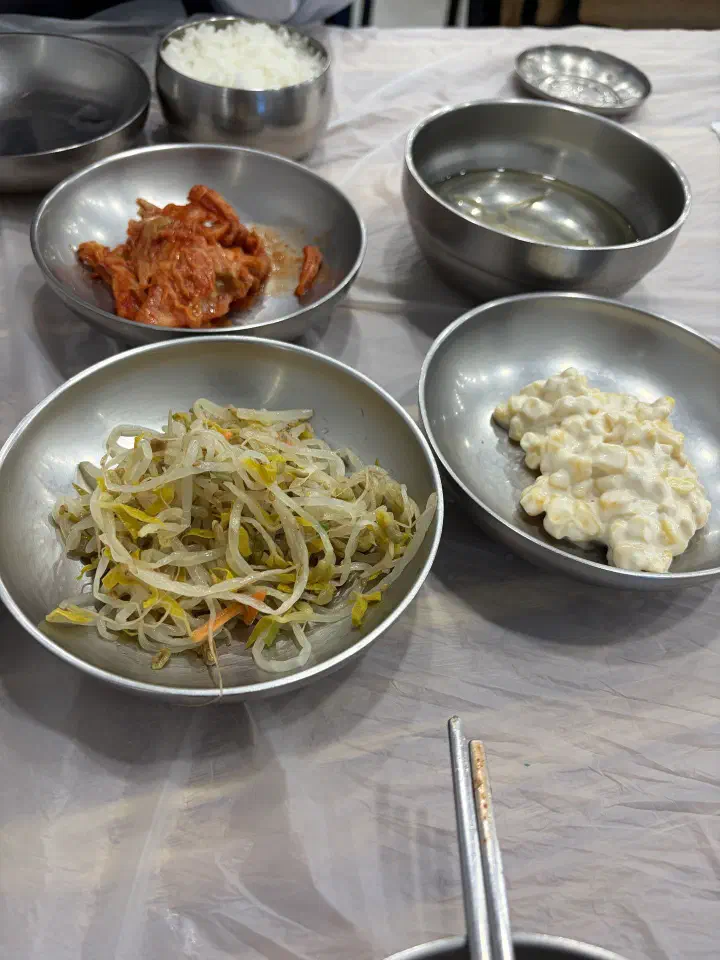
Side dishes arrive with the main course rather than beforehand: bean sprouts, kimchi, a cold corn salad, and a bowl of cool bean sprout soup.
The corn salad and the soup exist to cool your mouth down, and they do the job.
Four sides is a modest spread by Korean standards, so don’t expect the table to fill up.

The four side dishes at Goseong Saengseonjjim: bean sprouts, kimchi, corn salad and bean sprout soup

Sizes and what to order

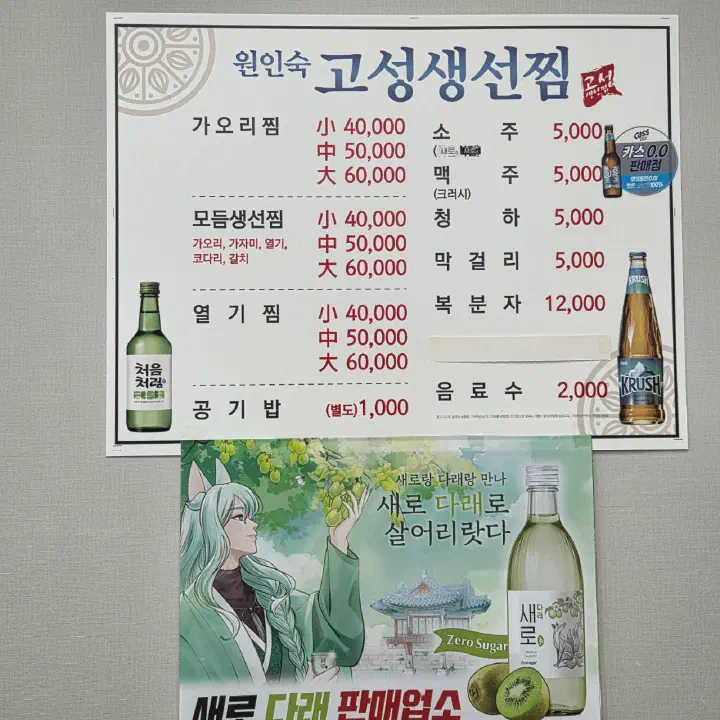
Menu board at Goseong Saengseonjjim listing braised skate, mixed fish and rockfish from 40,000 won

The menu has three dishes only: skate, mixed fish, and rockfish.
All three cost the same, 40,000 won for small, 50,000 for medium, 60,000 for large.
The mixed version brings skate, flounder, hairtail, semi-dried pollock and rockfish together, which is the better choice if you want variety.
If you came for the texture, order the skate on its own.

A small portion of braised skate served with a bowl of rice and side dishes for one person

Two people do fine with a small and two bowls of rice, which lands in the low 40,000-won range for the table.
Three people should take the medium, four the large, and four hungry adults may still want more than the large provides.
Cards work here, as they do in nearly every restaurant in Korea, so an international card is fine.
There’s no tipping in Korea at all, and leaving money on the table will only confuse the staff.

The waiting system

They don’t take reservations, and there’s no app.
When there’s a line, go inside and get a number from the counter rather than standing outside the door, because standing by the door does not put you in line.
They write the number on a sticky note.
If you’ve driven, send one person in for the number while the other parks.

Weekends are the hard days.
Doors open at 10:30 on Saturday and Sunday and people are already waiting before that, and by 11:00 the line has grown considerably.
Weekdays are much easier, and the first half hour after opening usually gets you straight in.
The worst windows are lunch between noon and 1pm, and the moment the weekend break ends at 15:00.

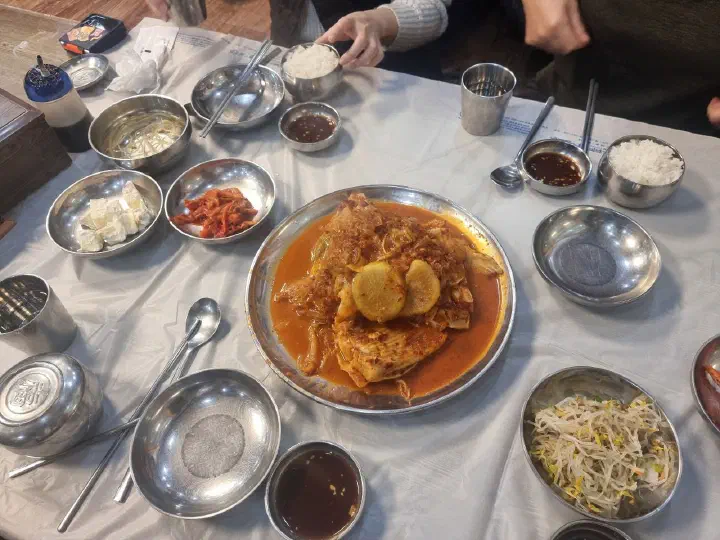
A full table of braised skate, rice and side dishes set for a group at Goseong Saengseonjjim

Then there’s the second wait, which catches people off guard.
Everything is cooked to order, so the food takes another 20 to 30 minutes to reach the table after you’ve sat down.
Budget an hour in total on a busy day.
One small sign that your food is close: the side dishes only come out when your dish is about to be served.

Ordering itself isn’t difficult.
English isn’t really spoken, but the menu is short and pointing at what you want plus holding up fingers for the size works perfectly well.
Takeout is an option too, worth remembering on a day when the line looks impossible.

Inside

The dining room is bigger than the exterior suggests, with tables for two through six and space for larger groups.
Windows run along the front so it’s bright, and everything is kept clean.
Each table gets a layer of disposable plastic sheeting, which makes sense given how much sauce ends up outside the pot.

Side dishes and a bowl of rice on a table covered with disposable plastic sheeting

The restroom is inside the building, unisex, and small.
There’s Wi-Fi and high chairs for children.
Staff move fast when the room is full, and service turns brisk rather than warm.
Better to expect that than to be annoyed by it.

Parking

The lot behind the building fills first.
The overflow lot sits behind the Shabuhyang restaurant nearby, and if you park there, mention it when you pay so they can note your plate number.
Beyond that, the public lot beside Won Mart across the road is the fallback.
On weekends and holidays, arrive at opening time or right at the end of the break and park before the rush.

The downsides

Portions relative to price are the recurring complaint, and it’s a fair one.
40,000 won for the small size is not cheap, and a table of big eaters should size up rather than hope for the best.
The short list of side dishes stands out at that price point too.

Close-up of kimchi, bean sprout soup, seasoned bean sprouts and creamy corn salad

Summer is uncomfortable inside.
It’s a room full of steaming pots, and after standing outside in the heat you’ll feel it.
Winter has the opposite problem, since there’s nowhere sheltered to wait.
A café sits nearby, so one person can hold the number while everyone else waits somewhere with a door.

Worth it or not

If you’ve never eaten skate, this is a good place to start.
Nothing about it is challenging: no fermented smell, no bones to navigate, a sauce that leans sweet and savory more than fiery.
It’s the kind of dish that converts people who thought they didn’t like fish.

A small size of gaori-jjim topped with potato, radish and scallion at Goseong Saengseonjjim in Gangneung

If you want intense, punchy flavor or a table groaning with banchan, this isn’t that restaurant.
And if your day is scheduled tightly, the combined wait will hurt.
Go on a weekday, or get there before the doors open, and it earns its place in a Gangneung itinerary.

Getting there

It’s a ten-minute drive from Gangneung Station, and about the same from Gyeongpo or Anmok Beach.
Gangneung Jungang Market is eight minutes away by car and Gangmun Beach around twelve, so either one makes an easy stop afterward.
Summer here is humid and the coast can be windy year-round, so plan the beach half of the day accordingly.

📍 View Goseong Saengseonjjim (고성생선찜) on Google Maps →