Chodang, the tofu village on the edge of Gangneung, has more soft tofu restaurants than you can count.
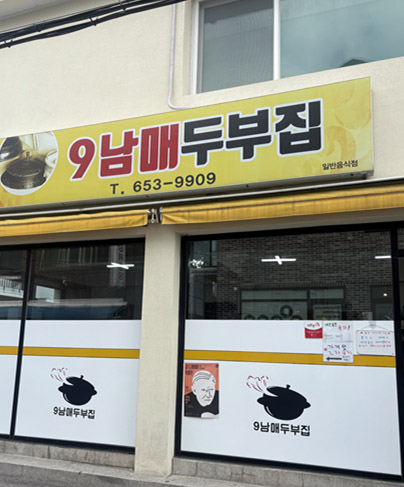
The one that usually has a line out front is Gunammae Dubujip (9남매두부집).
It isn’t the fiery, punchy kind of sundubu.
The draw here is the opposite: clean, mild, bean-forward tofu that goes down gently.
The place has also shown up on Korean TV (E Channel’s “Saturday is a Good Day to Eat”), which keeps the crowd steady.
Here are the basics before anything else.
Name: Gunammae Dubujip (9남매두부집)
Address: 63-2 Chodangwon-gil, Gangneung-si, Gangwon-do
Hours: 8:00 AM - 8:00 PM (last order 7:30 PM)
Break time: 3:00 PM - 4:00 PM
Closed: every Thursday
Phone: 033-653-9909
Parking: no private lot (free public lot nearby, or street parking)
📍 View Gunammae Dubujip (9남매두부집) on Google Maps →

Open early, good for breakfast
The best thing about this place might be the hours.
Doors open at 8 in the morning, so you can eat a full meal before the day’s plans even start.
The hot pot isn’t spicy in a way that fights you, so it works well as a gentle, warming first meal.
That’s why a fair number of people show up for tofu at breakfast, which isn’t something you see at most restaurants back home.
The flip side of long hours is a mid-afternoon break from 3 to 4 PM, and the kitchen is closed every Thursday.
Both are worth checking before you go.

When to skip the wait
The line depends heavily on timing.
Lunch, roughly noon to 1 PM, is the worst stretch, and you can end up waiting anywhere from 30 minutes to an hour.
Come right at opening, or after the lunch peak past 1 PM, and you’re usually inside within 10 to 20 minutes.
Weekends stay busy most of the day.
Even by 10:30 on a Saturday morning there’s already a line, while a weekday evening can be quiet enough to walk straight in.
Tables do turn over fast.
The hot pot arrives already cooked, so nobody lingers, and a line that looks long tends to move quicker than you’d expect.

One thing to know: it’s first-come, in-person only.
There’s no remote waitlist app and no ticket system, so you line up at the door yourself.
They also don’t do takeout.
Sundubu jeongol, red but gentle
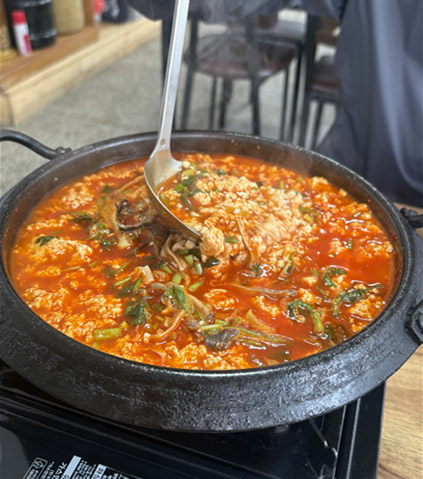
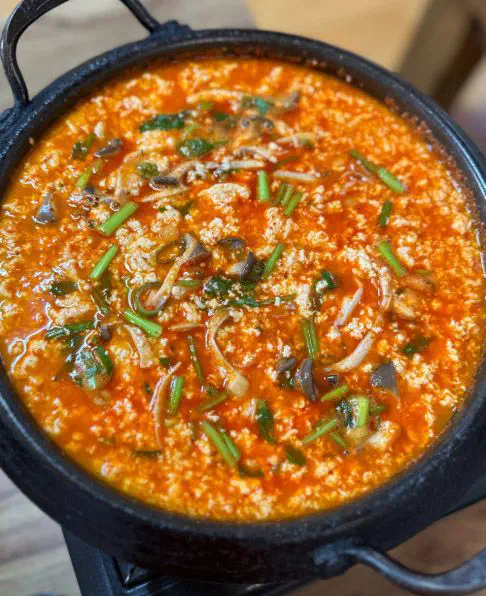
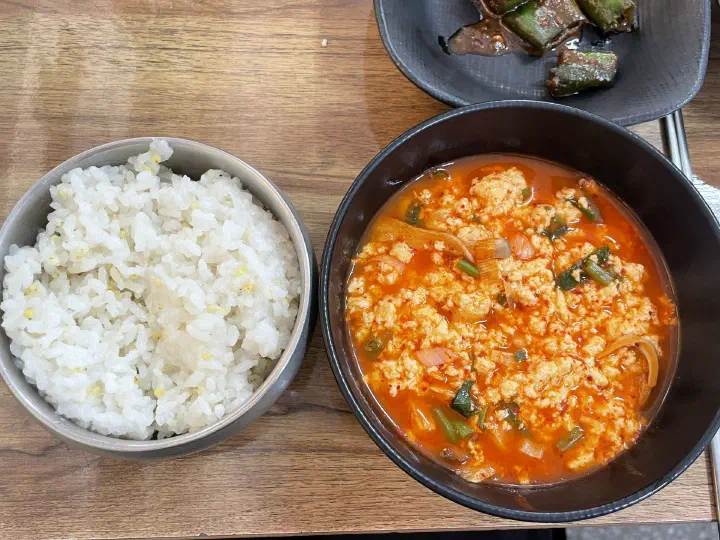
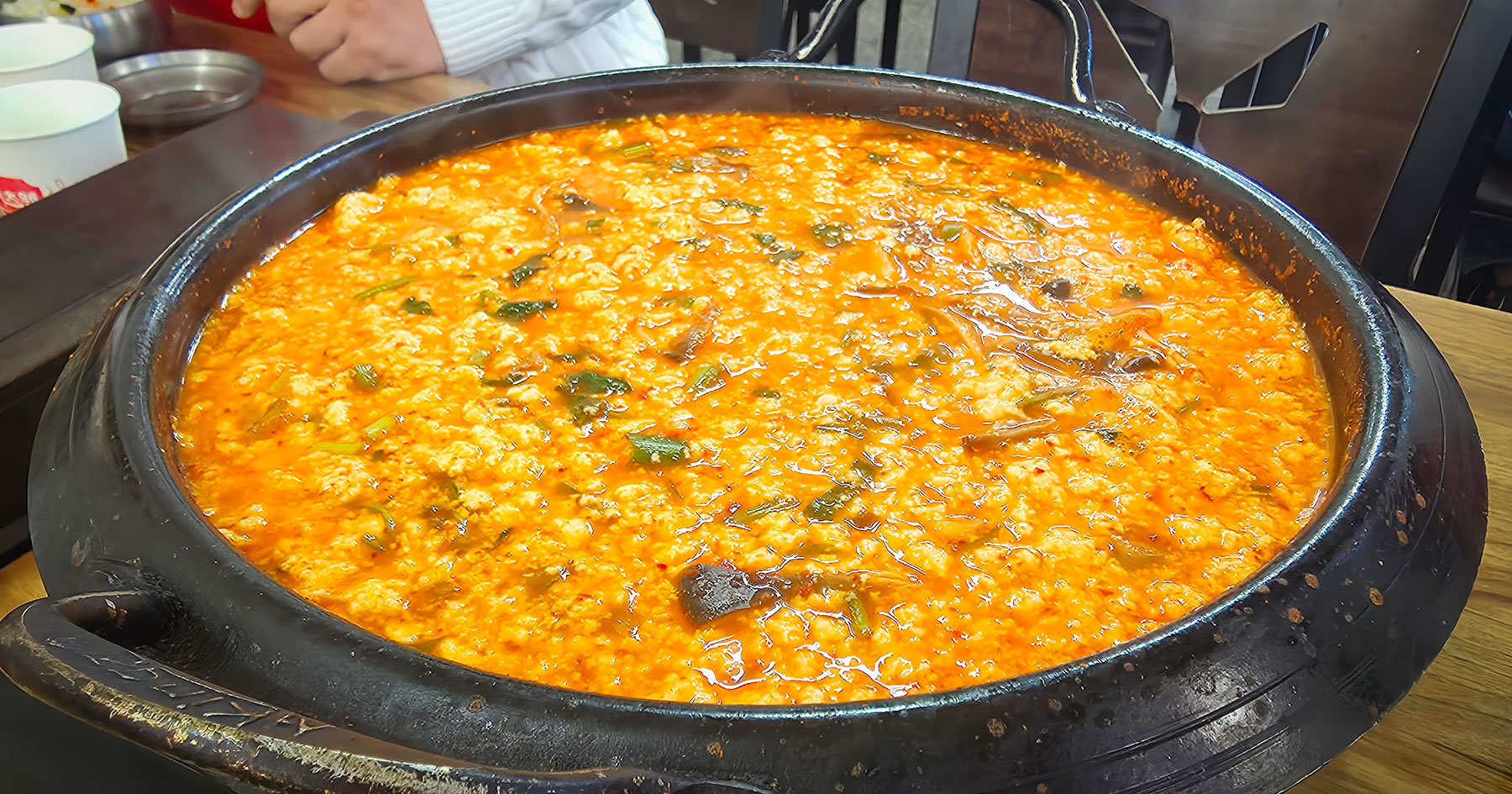
The signature is sundubu jeongol (순두부전골), the soft tofu hot pot.
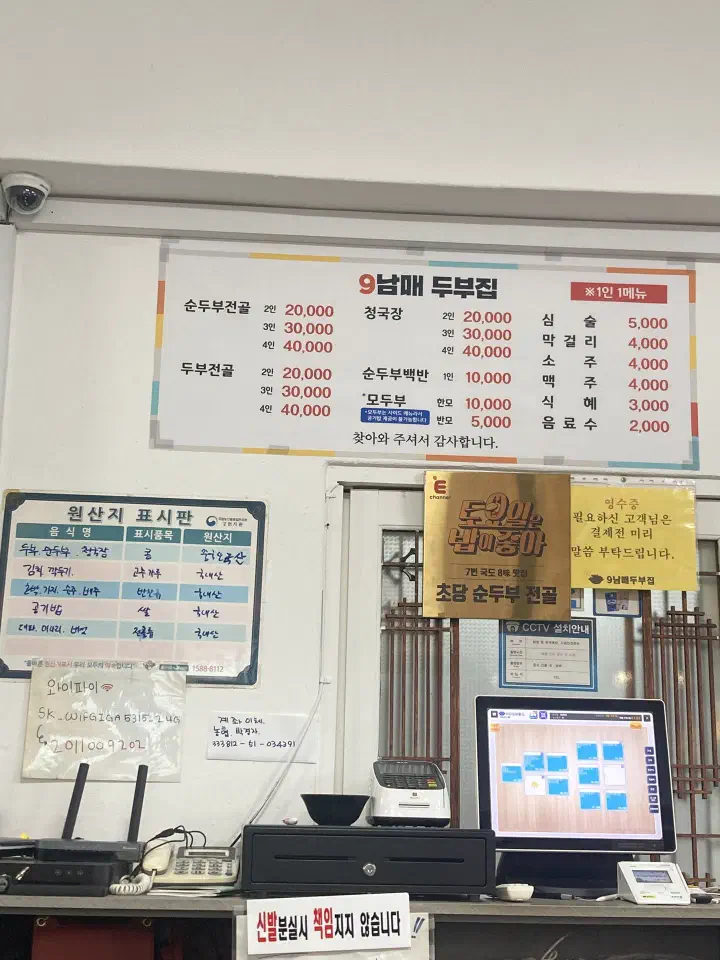
It’s priced by group size: 20,000 won for two, 30,000 for three, 40,000 for four.
Every diner over preschool age orders their own main; modubu (the block tofu) doesn’t count toward that.
The pot comes out mostly cooked.
Let it bubble a moment, then dig in.
The broth looks alarmingly red but lands milder than a bowl of Shin Ramyun, so it’s fine even if you don’t handle spice well.
That said, it is still Korean-spicy, hotter than most visitors expect.
Inside there are soft, pillowy curds that break apart before you even chew.
Water dropwort and mushrooms give the broth a light, clean edge instead of a heavy one.

Try it two ways: spoon the plain tofu first for the bean flavor, then stir rice in and eat it like gukbap near the end.
The one real caveat is the base.
It’s built on gochujang, and some people find it tastes like ramen soup.
If you came expecting a clear, delicate broth, this is where opinions split.
Block tofu and nine side dishes
The thing to add is modubu (모두부), the fresh block tofu.
A half block is 5,000 won and a whole is 10,000, but even the half arrives as two plates and feels like plenty.
The slabs come out steaming.
They’re nutty enough to eat plain, a little better with a dip of soy sauce, and honestly best with a dab of the salted seafood from the banchan.
The side dishes are half the reason to remember this place.
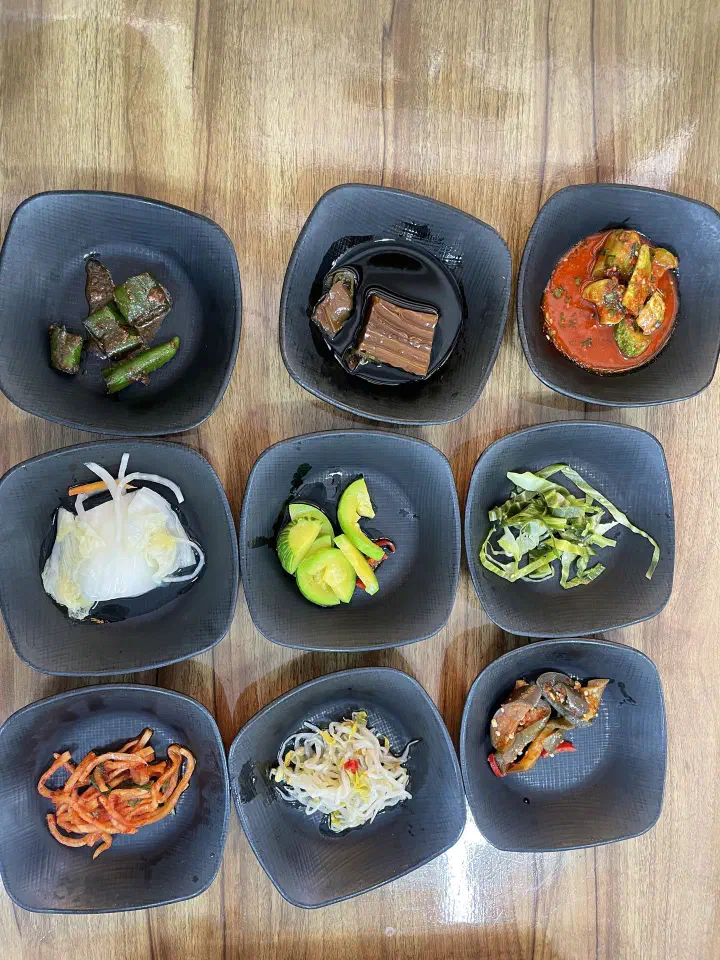
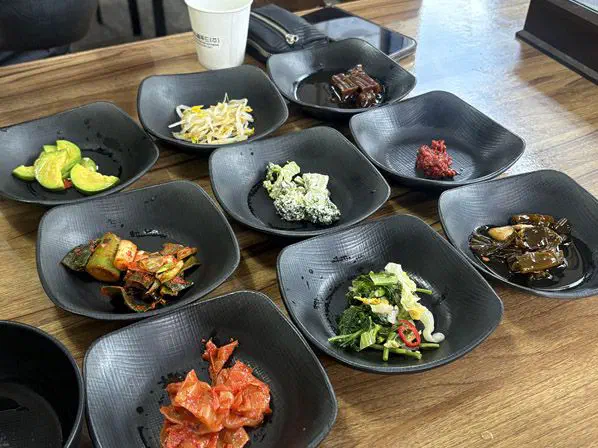
Before the main lands, nine small plates fill the table: broccoli in perilla dressing, stir-fried zucchini, green onion kimchi, braised acorn jelly, and more.
They’re on the mild side rather than salty, which makes it easy to keep reaching for them, and refills are free.

In spring you might catch seasonal ones like wild chive kimchi with shepherd’s purse.
Eating solo, and the seating
If you’re on your own, there’s sundubu baekban (순두부백반), a set meal at 10,000 won.
It comes as plain white tofu with no seasoning, which is the way to taste the pure Chodang bean flavor.

Baekban is a bit more of an acquired taste, though.
The tofu is served loose without much water pressed out, so it can come across as bland or watery.
Go for the hot pot if you want something with a kick, and the baekban if you want the bean itself.
The room is a converted house.
There are standing tables up front and a floor-seating room in the back where you take your shoes off, which is part of why you see so many families here.
One side is a half-open kitchen, and you can watch them curdle and strain the tofu — which tells you a lot about the flavor.
Parking, paying, and getting there
There’s no dedicated lot.
You can’t park right at the door, but there’s a free public parking lot at Chodang-dong 233, and plenty of people just use the side street behind the building.
Getting here without a car is a little awkward; buses aren’t very direct, so a taxi (the Kakao T app works well for this) is the simple option.
For walking and transit directions in Korea, use Naver Map or KakaoMap rather than Google Maps, which tends to be unreliable here.
Paying is simple.
Cards are fine almost everywhere in Korea, international ones included.
There’s no tipping culture either, so don’t add one; it just confuses the staff.
Nobody here really speaks much English, but ordering is simple enough by pointing at the menu and holding up fingers for how many.
Once you’re seated, the food comes fast, so budget about 30 minutes for the meal itself.
The bottom line
For 20,000 won you get the hot pot, rice, and nine side dishes for two, and that value is the whole point.
At a little over 10,000 won a head for that spread, it’s a fair deal by current prices.

If you were hoping for a bold, fiery sundubu, this will feel plain.
But if you want the clean, bean-forward kind and a meal that settles well, it’s the sort of tofu place you end up coming back to.
For an early breakfast in Chodang or an easy meal with family, it’s worth a stop.