Gangneung is a seafood town, so most visitors arrive with sashimi and soft tofu stew on their list.
This place is neither.
It’s a plain neighborhood restaurant with a faded sign, four dishes on the menu, and a line outside on an ordinary Tuesday.

The interesting part is the gap between what the map says and what people actually order.
Search listings put braised hairtail (갈치조림) front and center as the signature dish.
Look around the room, though, and more than half the tables have the squid stir-fry.
People who come back a second time tend to switch to the squid.

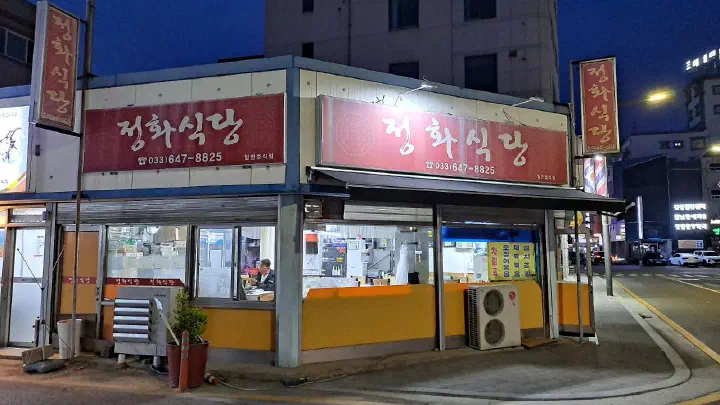
Exterior of Jeonghwa Sikdang in Okcheon-dong, Gangneung, with its red sign lit at night

The basics

Address: 193 Toseong-ro, Gangneung-si, Gangwon-do (Okcheon-dong)
Phone: 033-647-8825
Hours: 10:30 - 21:00
Closed 15:00 - 17:00 (afternoon break)
Last order: 14:30 for lunch, 20:00 for dinner
Closed: Sundays
Parking: no lot of its own

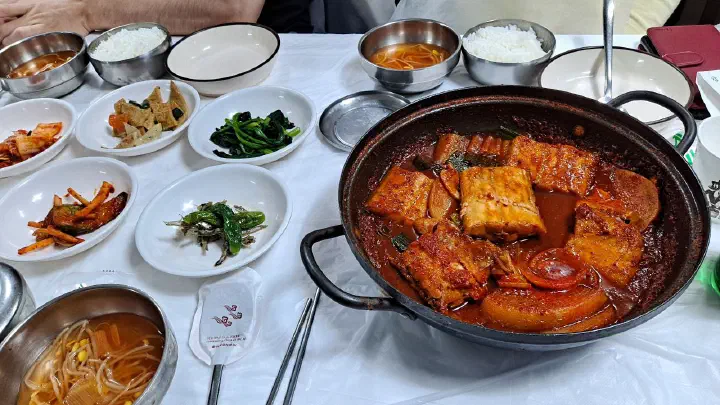
Two-person galchi jorim set at Jeonghwa Sikdang with side dishes, bean sprout soup and rice

📍 View Jeonghwa Sikdang (정화식당) on Google Maps →

That two-hour shutdown in the middle of the afternoon trips up more visitors than anything else here.
Some map apps don’t show it, so keep 15:00 to 17:00 in your head.
Lunch orders stop at 14:30, which means a late lunch really needs to start before 14:00.

Getting there without a car

It sits in the alley behind Wolhwa Street (월화거리), roughly midway between Gangneung Station and Gangneung Jungang Market.
From the station it’s about a 15-minute walk, or 1.2 km.
From the market, five minutes.

A taxi from Gangneung Station costs the base fare and takes under five minutes.
Kakao T is the app most people use to call one, and it works with an international phone number in most cases.
One practical note: Google Maps is unreliable for walking and transit directions in Korea.
Naver Map or KakaoMap will route you properly, and both have English interfaces.

Because it’s this close to the station, a lot of people make it their first meal after getting off the KTX.

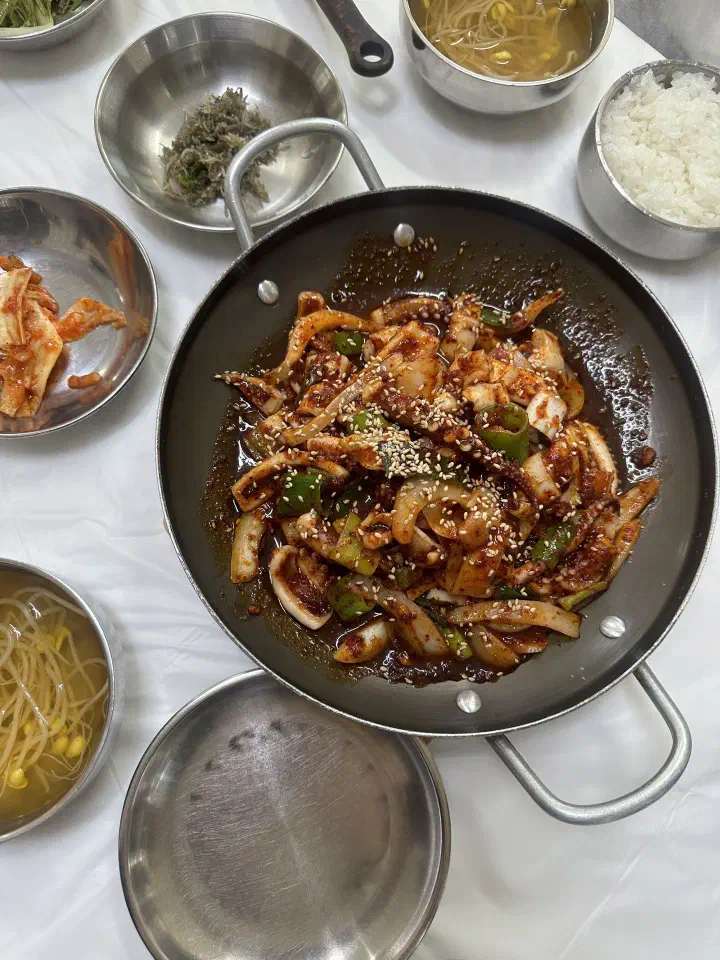
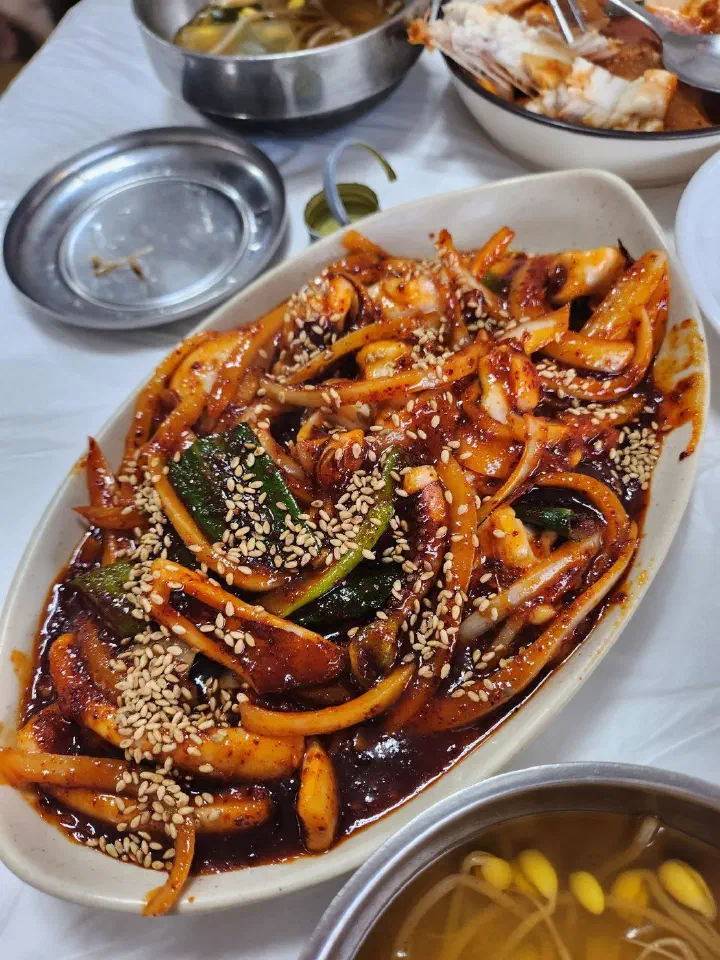
Single serving of ojingeo bokkeum stir-fried squid with bean sprout soup and steamed rice

A spoon instead of a pager

The waiting system here is unusual and worth understanding before you show up.
There’s no reservation app, no phone pager, no QR code.
You walk inside, tell the staff how many of you there are, and they hand you a spoon with a number on it.
That spoon is your ticket.

Visitors regularly join the line outside without going in first, then find out they were never on the list.
Go in, get the spoon, then wait.

Staff call the numbers out loud.
No message will reach your phone, so wandering off means losing your turn.
There’s seating right outside the door and an awning over it, so waiting is not unpleasant even in the sun.

The system isn’t airtight.
Numbers occasionally get out of order, and the entrance fills up with delivery drivers, people waiting, and people just arriving.
If you sit down and nobody has taken your order for a while, say your number again.

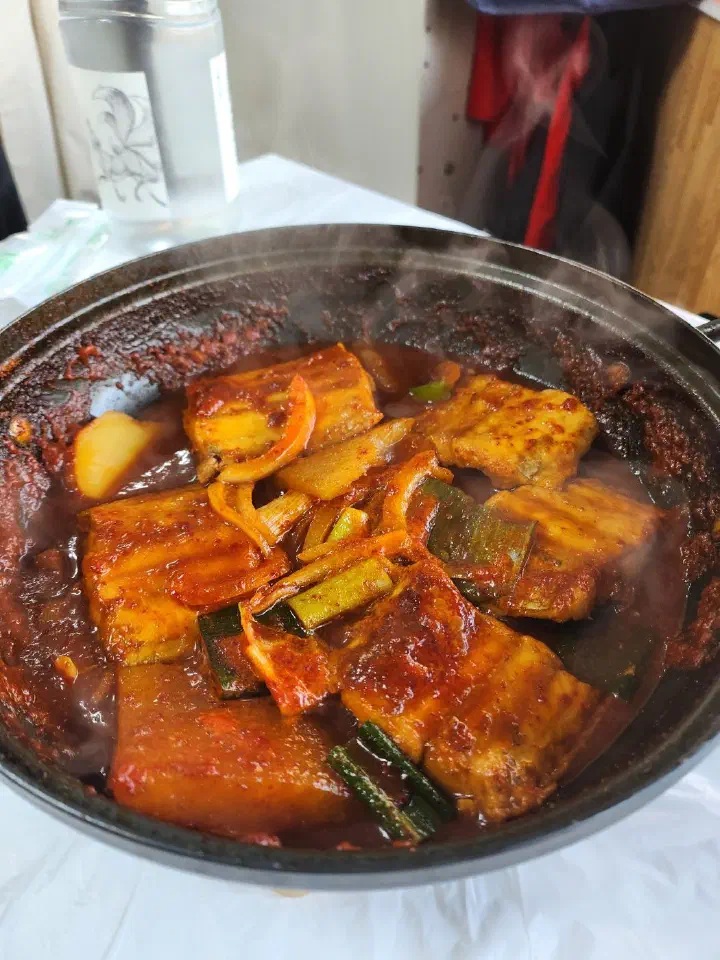
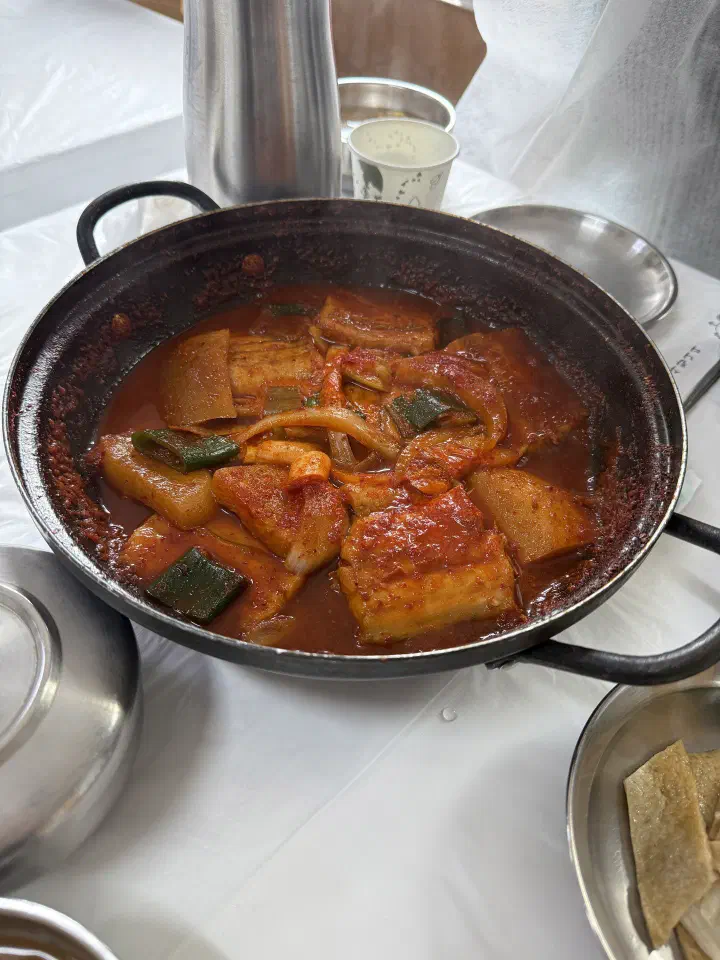
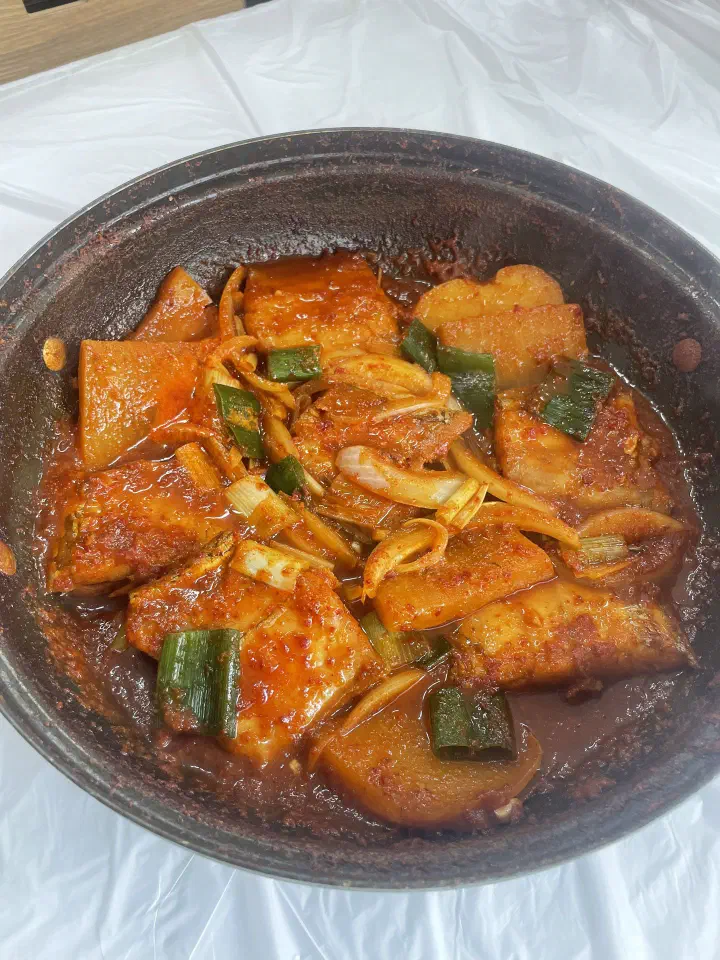
Steaming pot of braised hairtail served fresh at the table

When the line is short

On a weekday around noon there are usually three or four groups ahead of you — call it 15 to 30 minutes.
Food arrives fast and nobody lingers, so the line moves better than its length suggests.

Weekends are a different story.
Arrive for the 10:30 opening on a Saturday and you can still pull number 20-something, which puts you at a table after 11:00.

Two windows are reliably quiet.
One is right at opening, around 10:30.
The other is the end of the afternoon break: show up at about 16:40, and you’ll walk straight in when the doors reopen at 17:00.
Weekday evenings are much calmer than lunch in general.

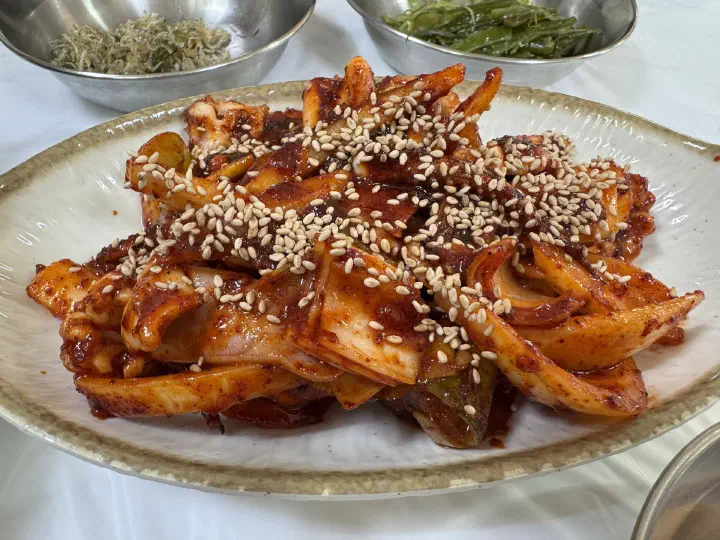
Korean stir-fried squid loaded with sliced onion and green scallion

Parking, if you drove

There’s no parking lot.
Two cars fit behind the building, and those spots are gone by mealtime.
Street parking in the alley gets ticketed here, so it isn’t worth the gamble.

Most people use the old KEPCO paid lot at 105-3 Imdang-dong, behind the Woori Bank branch, a three-minute walk away.
It’s 1,000 won for the first 30 minutes and 1,000 won for each 30 minutes after that.
The Ogeori lot (at the five-way intersection) is two minutes away.
Jungang Market’s public lot works well if you plan to browse the market afterward, about a 15-minute walk.

If there are two of you, drop one person off to collect the spoon while the driver parks.
Park first and you eat however much the line grew while you were circling.

Braised hairtail pot with Korean radish and potato simmered in the sauce

Shoes off at the door

You take your shoes off to step up into the dining room.
Floor tables with cushions sit toward the back, standard tables with chairs up front.
Staff seat you either way — you don’t pick.
The floor runs warm, so sit on a cushion if you end up on the floor side.

The place got busy enough that they expanded into the unit next door, and that’s why the room holds more tables than the storefront suggests.
Aisles are still narrow.
The restroom is not inside. It’s in the small building across the open lot to the right of the entrance, so go before you sit down.

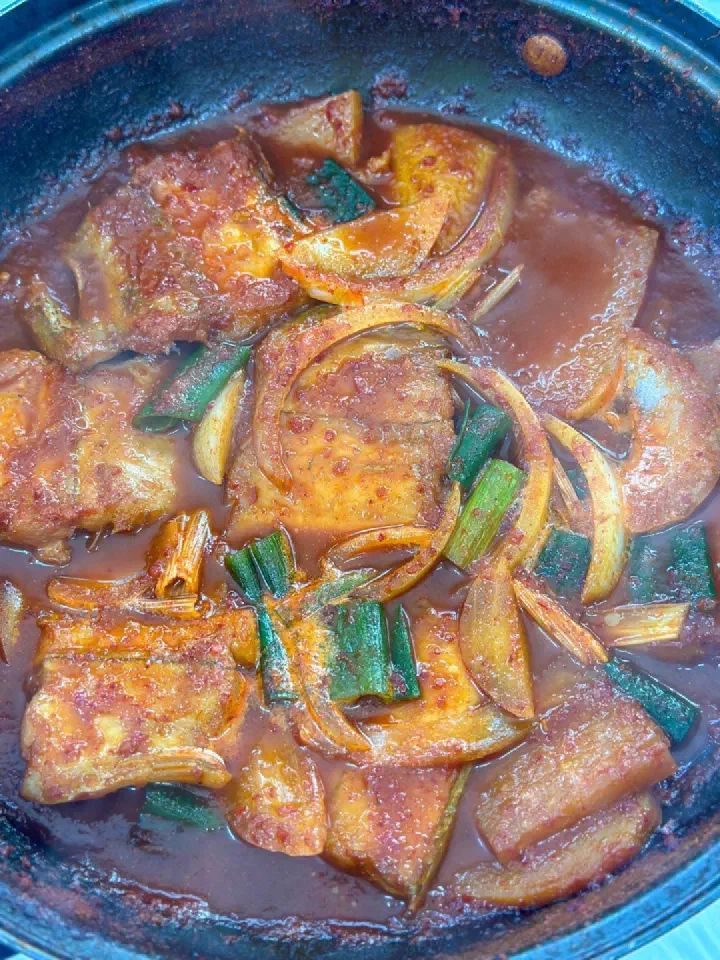
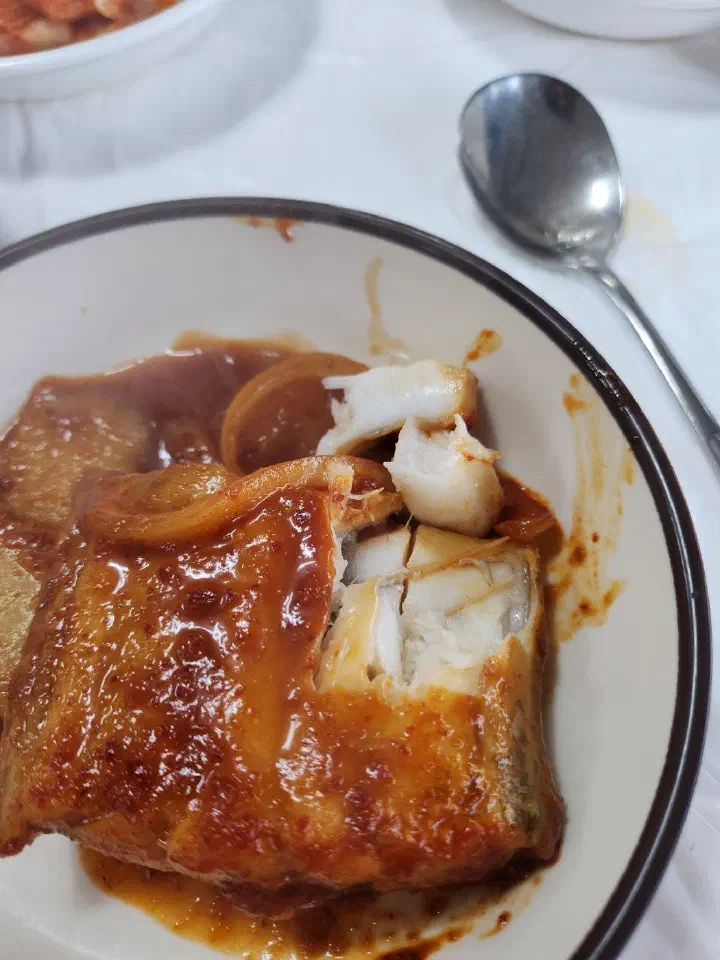
Close-up of thick cross-cut hairtail pieces braised in a shallow red sauce

Four dishes, and how to order them

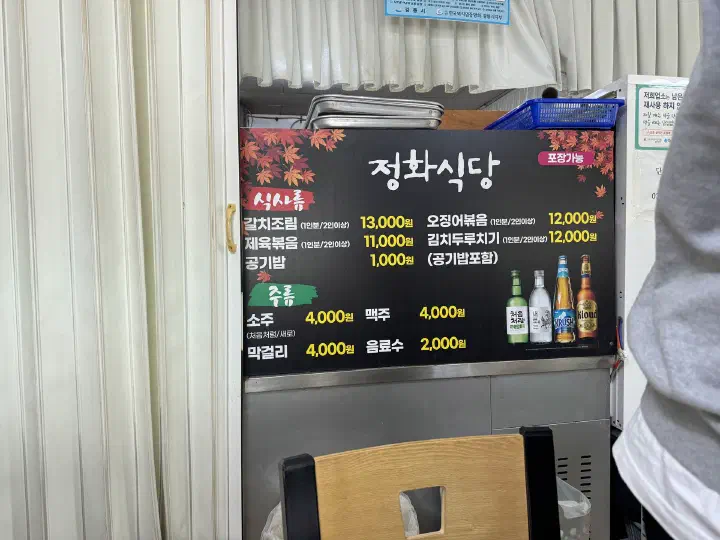
Galchi jorim (갈치조림), braised hairtail - 13,000 won
Ojingeo bokkeum (오징어볶음), stir-fried squid - 12,000 won
Kimchi duruchigi (김치두루치기), pork and kimchi - 12,000 won
Jeyuk bokkeum (제육볶음), stir-fried pork - 11,000 won

Rice is included in the price, so there’s nothing extra to add.
Soju and soft drinks are on the menu too.

Jeonghwa Sikdang menu board showing hairtail 13,000 won and squid 12,000 won

The list used to be longer. Doenjang jjigae, kimchi jjigae, and soft tofu stew were all on the board a few years back, and they’ve since been dropped in favor of the four stir-fries and braises.
Prices have moved too: hairtail was 11,000 won per portion in 2024 and is 13,000 now, a 2,000 won increase over roughly two years.

Here’s the rule that catches solo travelers off guard: the first order has to be for two people minimum.
Hairtail in particular is never served as a single portion.
Single portions of the stir-fries can be added on top of that first order, and that’s how most tables get around it.

For two people, the common move is two portions of hairtail plus one of squid.
That’s three portions for two people, which sounds like too much food, but the plates usually go back empty.
For four, two hairtail and two squid covers both signature dishes.
If you’re on your own, ask inside — single portions of the squid do happen on quieter days.

Ordering doesn’t require Korean.
Staff generally don’t speak English, but the menu is on the wall with photos, and pointing plus holding up fingers for the number of portions is completely normal here.
Cards work, including foreign-issued ones, and there’s no tipping in Korea — leaving money on the table will just confuse everyone.
Carrying a little cash is still smart for the market stalls nearby, since a lot of them are cash only.

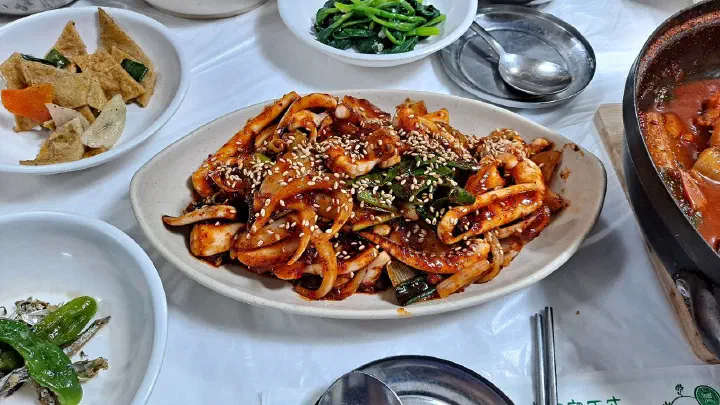
The squid is the reason to come

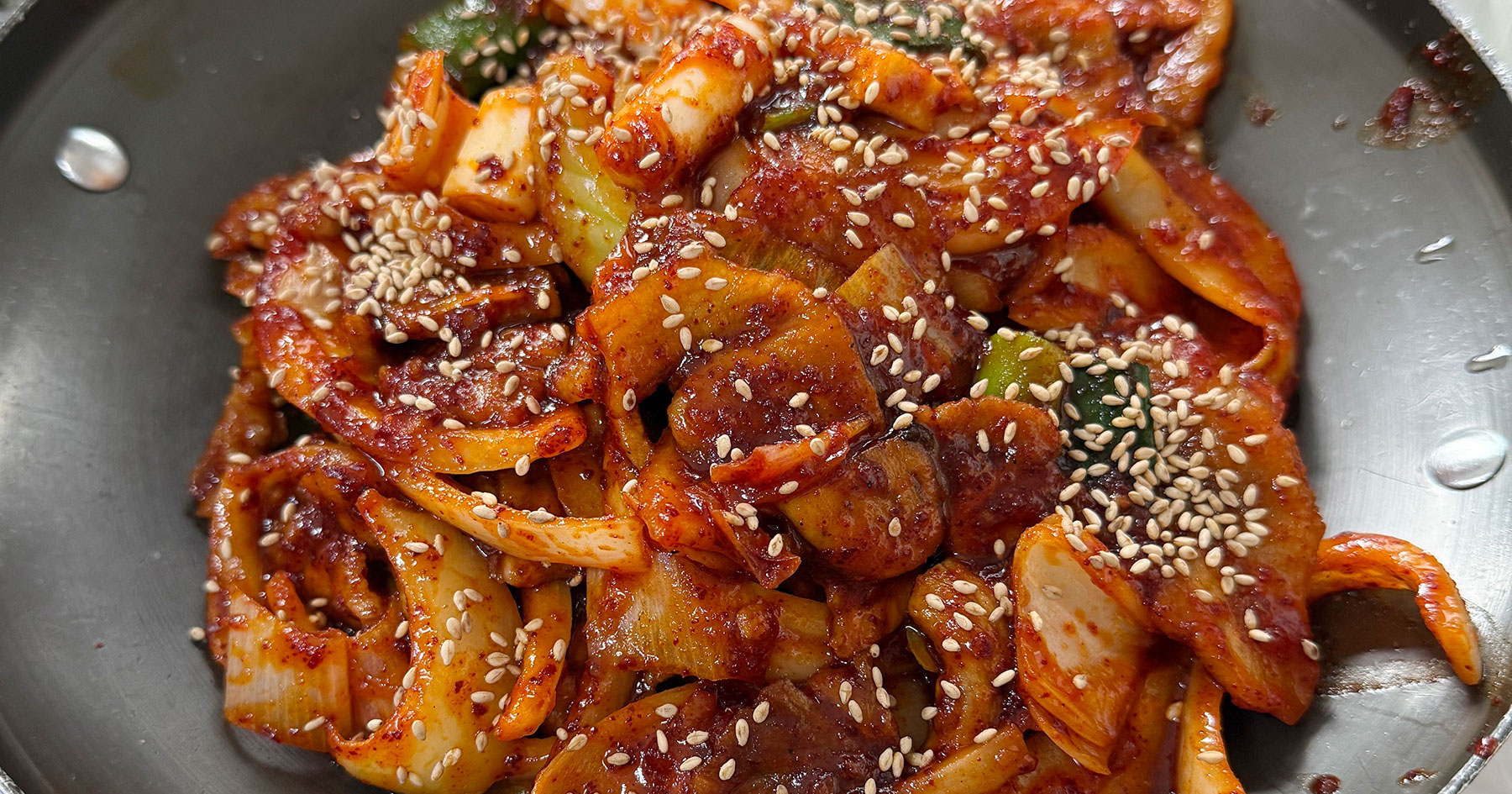
The squid pieces are thick, cut from good-sized bodies, and they aren’t chewy.
A quick turn over high heat leaves them springy instead of rubbery.
The kitchen uses only domestic squid, and you can tell.

Close-up of thick squid pieces in chili sauce topped with toasted sesame seeds

The sauce looks alarming and isn’t.
Sweet and savory come through before the heat does, with a faint smokiness from the wok.
That said, Korean “mild” isn’t mild everywhere else — with no chili tolerance at all, expect a slow burn.

There’s a lot of onion in it, and it stays slightly crisp instead of going to mush.
Sauce is left in the pan when the squid is gone, and that’s the part regulars care about: you mix rice into it.
A second bowl of rice is the standard ending to this meal.
Portions run large, two servings can feel closer to three, so hold off on extra rice until you’ve seen the plate.

The hairtail, and its supporting cast

The fish comes in thick cross-cut pieces, braised in a shallow, dark sauce until the flesh flakes easily.
Bones are large enough to work around without much effort.
It’s imported rather than domestic — the origin board says so plainly — and the trade-off is that the pieces come out noticeably bigger than domestic hairtail would.

Overhead view of the hairtail pot with large slices of sauce-soaked Korean radish

The sauce is soy-based, salty and savory, a different direction from the squid’s sweet chili.
Korean radish and potato braise alongside the fish and soak up everything, and honestly they’re the part people remember.
The radish goes sweet and falls apart. The potato turns soft and starchy, and it collapses under a spoon.

Is the hairtail worth crossing the country for? Not really.
It’s solidly good in a way nobody objects to, while the squid is the dish with an opinion.
For kids or older relatives, though, the hairtail is the easier plate.

White flakes of hairtail lifted onto a small plate with braised radish

Pork, side dishes, and the soup

The pork stir-fry is the cheapest dish at 11,000 won and somehow comes out in the biggest portion.
The meat is tender, there’s plenty of onion, and it’s a touch sweeter than the squid with noticeable black pepper.
One caution: ordering both stir-fries at once gets repetitive, since they share a sauce base.
Pair a stir-fry with the hairtail instead and the table has more going on.

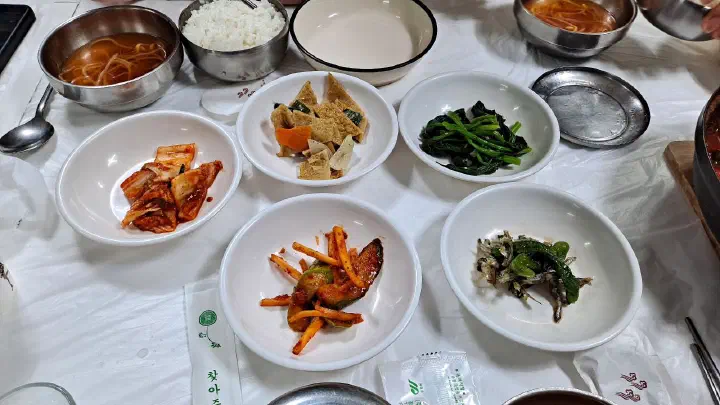
Banchan is simple — kimchi, stir-fried fish cake, seasoned seaweed stems, and stir-fried anchovies.
Plus a bowl of bean sprout soup that’s better than it has any right to be.
It’s clean and lightly peppery, and a spoonful resets your mouth between bites of the stir-fry.
Refills are free and people ask for them.

Banchan side dishes at Jeonghwa Sikdang: kimchi, fish cake, spinach, radish salad and anchovies with peppers

The banchan portions have shrunk over the years, and there’s less vegetable in the hairtail pot than there used to be.
There’s no lettuce, garlic, or ssamjang here, so don’t come expecting to wrap anything.

Where it falls short

The seasoning is strong.
Salt and sugar are both forward, and the aftertaste can be heavy if you normally eat lightly seasoned food.
Some people find the squid closer to dessert-sweet than savory.

Service gets brusque when the room fills up.
Come during a quiet stretch and the same staff are warm and chatty, so timing changes the experience quite a bit.

They cook a lot of onion over high heat, and the air inside can sting your eyes on a busy day.
Ask for a table farther from the kitchen if that bothers you.

And the line is the real variable.
Under 30 minutes, this is an easy yes.
An hour standing outside for home-style Korean food is a harder sell, and plenty of people walk away feeling the wait outweighed the meal.

Takeout and meal kits

Takeout works well here, and they pack the side dishes too.
It takes about 15 minutes, a reasonable alternative when the line is long and you have a hotel room to eat in.
Local delivery apps carry it as well.

The restaurant also sells retail meal kits of the squid and hairtail through its Naver store, if you want to cook it at home later.

My take

After a few days of raw fish, soft tofu, and fried chicken in Gangneung, a plain Korean rice-and-side-dish meal starts to sound very good.
That’s the slot this restaurant fills.
Nothing on the table is fancy, but you’ll still finish your rice.

Order the squid before the hairtail, whatever the search results say.
At 12,000 won with rice included, the price is easy for the amount of food that comes out.

Platter of stir-fried squid surrounded by banchan and the hairtail pot on the same table

It suits a first meal off the train, or a family lunch with parents in tow.
Accept the wait and the parking problem, and it’s the kind of place you end up back at.

Finding it

Fifteen minutes on foot from Gangneung Station, five from Jungang Market.
Follow Wolhwa Street and turn into the Toseong-ro alley.
Korea is safe to walk at night, and this stretch stays busy well past dinner.

📍 View Jeonghwa Sikdang (정화식당) on Google Maps →