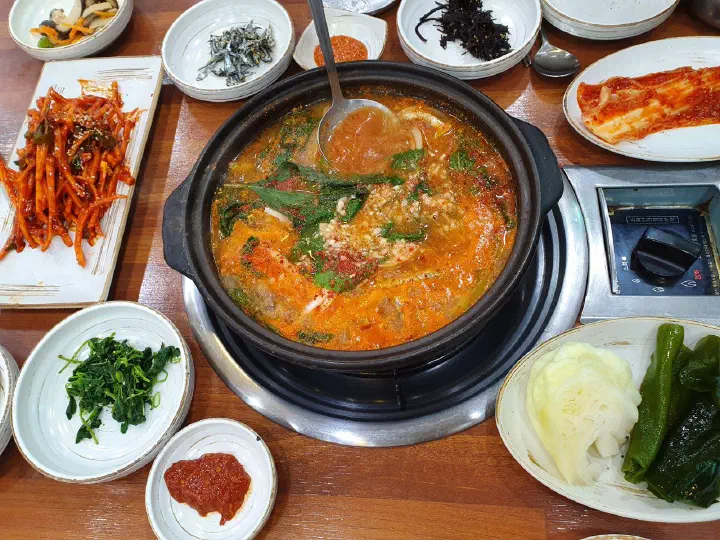
Most people arrive here thinking of anchovies as the dried little things that go into stock.
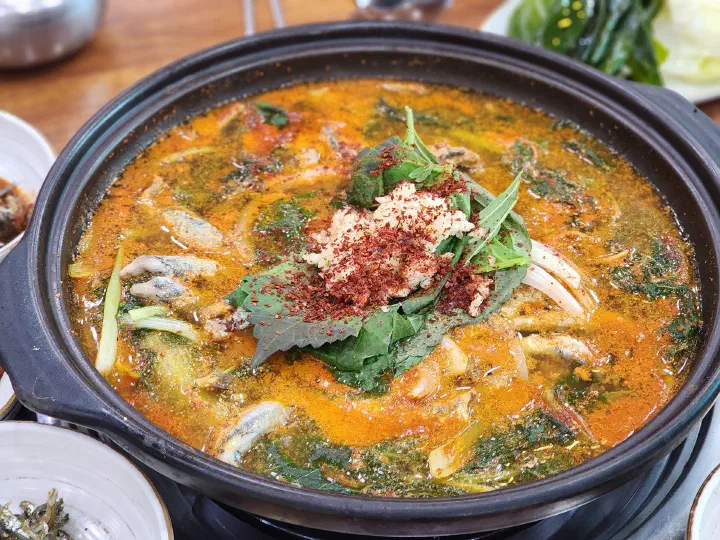
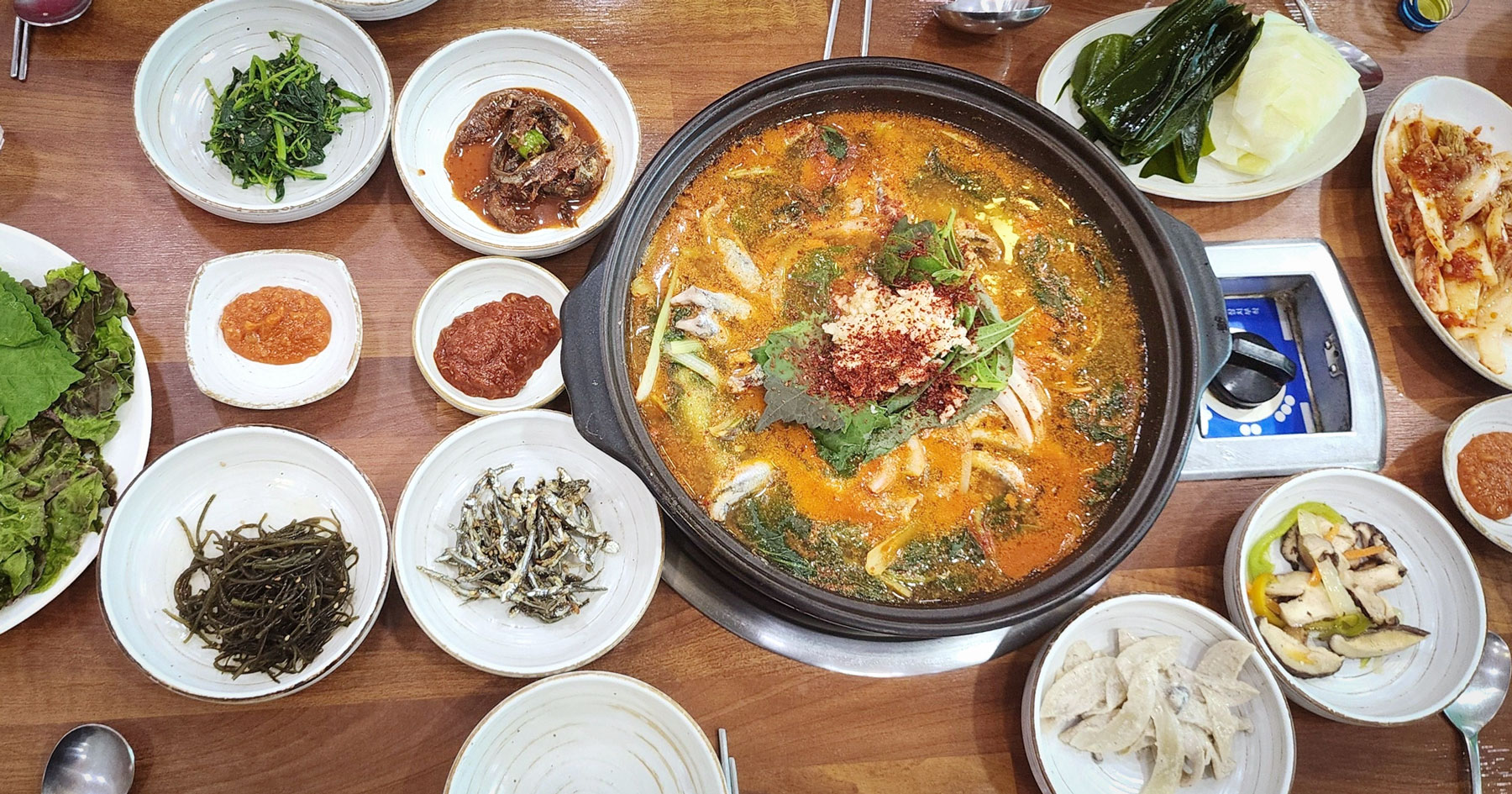
What lands on the table is a stew full of anchovies roughly the length of your finger, heads and tails intact.
That first look at the pot is basically the whole story of this place.

The practical stuff first

The address is 12 Jisepo-haean-ro, Irun-myeon, Geoje-si, and the phone number is 055-682-0317.
Hours run 10:30 to 20:30 with last orders at 20:00, and there is a long afternoon break from 15:00 to 17:30 that catches a lot of people off guard.
The restaurant also closes on the second and fourth Wednesday of every month.

The menu is short.
The A course is 17,000 won and includes the anchovy stew set plus a plate of raw anchovy salad.
The B course is 14,000 won and is the stew set alone.
There is also a children’s ttukbulgogi (어린이 뚝불고기) at 10,000 won.
Adults have to order one main each, so two people cannot share a single course.

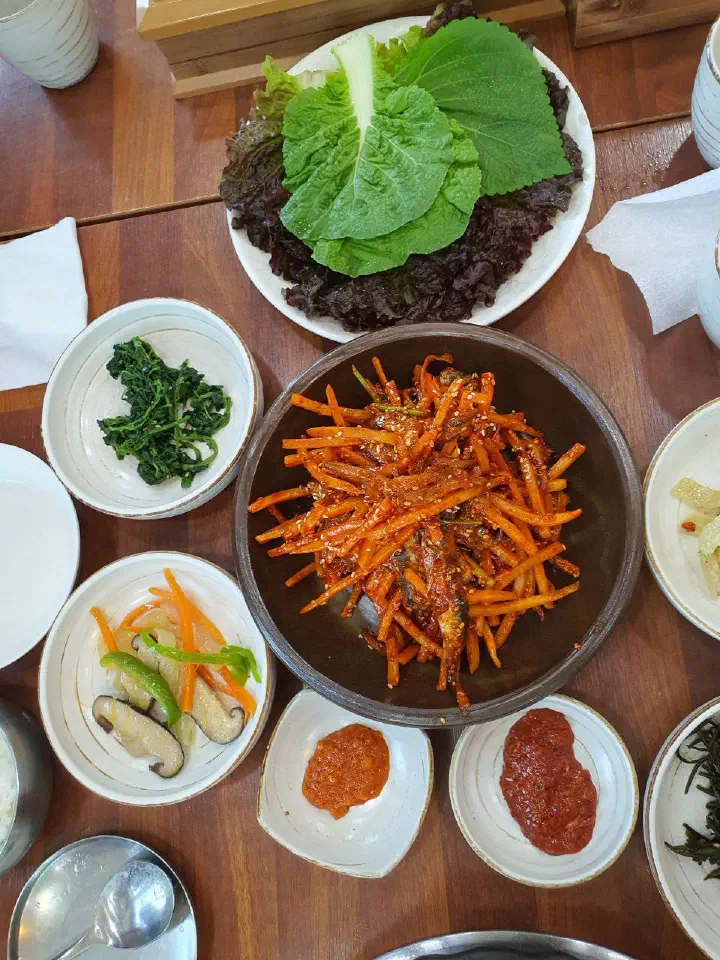
Full Geoje Myeolchi Ssambap set table with anchovy stew, side dishes, wrap vegetables, and raw anchovy salad

📍 View Geoje Myeolchi Ssambap (거제멸치쌈밥) on Google Maps →

The place has been on Korean television several times, including KBS 2TV’s Saengsaeng Jeongbo and MBC’s Saengbangsong Oneul Achim.
That brings in a steady tourist crowd, though locals still turn up regularly, which is usually a decent sign.

Three ways to waste a trip out here

Timing matters more than anything else at this restaurant.
The afternoon break does not always show up in map apps, so a late lunch plan can run straight into a closed kitchen between 15:00 and 17:30.

The twice-monthly Wednesday closure is also missing from most listings.
It works out to roughly every other week, so if you are going on a Wednesday, check whether it is the second or fourth one of the month.

The third is the one that really stings.
The raw anchovy salad is made from fresh anchovies brought in that morning, so it runs out.
On weekends a sold-out notice can go up as early as half past one in the afternoon.
Once that happens, the A course is off the menu and only the B course is left.
If the salad is what you came for, go early in the lunch service.

Waiting

Weekdays are usually easy.
Skip the lunch peak and you will walk straight in.
Weekends are a different matter: six or seven groups can already be in line shortly after eleven, and midday waits run over an hour.

There is no app for the wait.
Korean restaurants often use remote waitlist apps like Catch Table or Tabling, but this one does not.
You write your name in a paper book by the entrance and wait nearby until someone calls it, so wandering off is not an option.

The reliable move is the 10:30 opening.
Turn up twenty minutes early and you are in the first seating.
For dinner, right after the break ends at 17:30 is the quietest window.

The stew

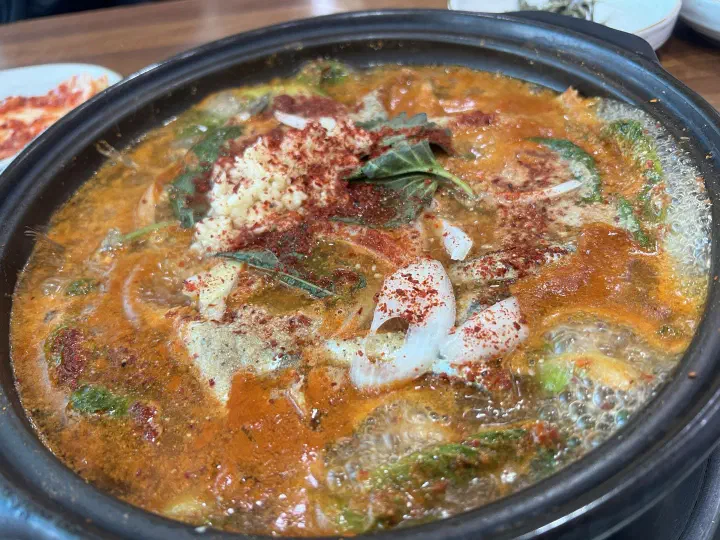
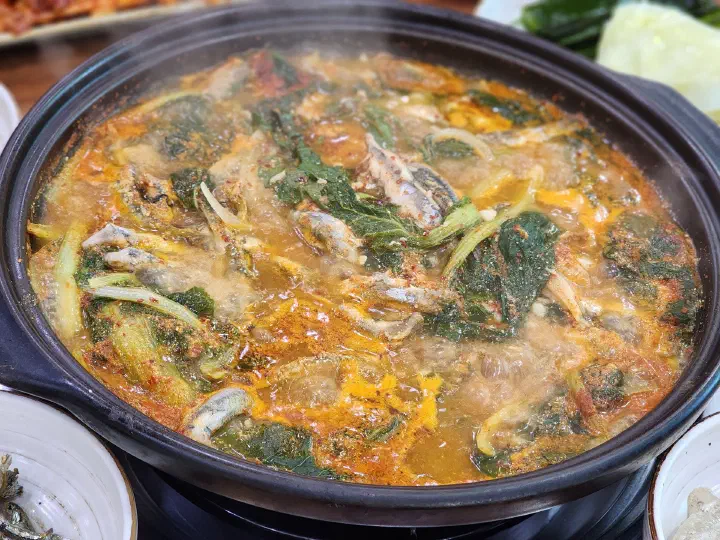
The stew arrives already bubbling, packed with young napa cabbage, cabbage greens, onion, and perilla leaves, with chili powder and minced garlic piled on top.
It is closer to a hearty fish stew than anything you would guess from the name.

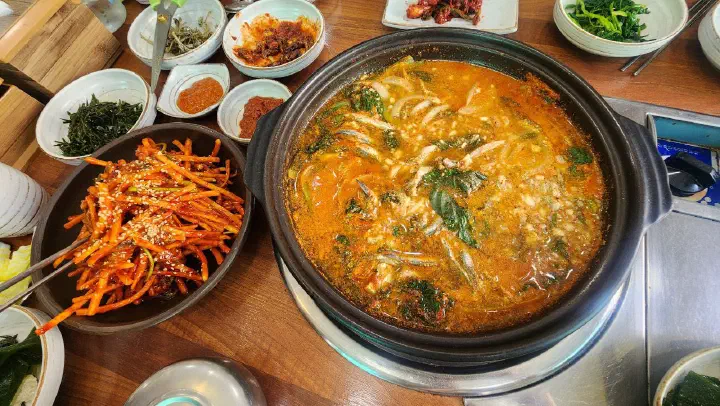
Geoje anchovy stew as freshly served, topped with chili powder, minced garlic, and perilla leaves in a generous broth

The broth is spicy up front and nutty underneath, thick in a way that reminds a lot of Korean diners of chueotang, the ground loach soup.
The fishy edge you might brace for is mostly absent.

It also changes as you eat.
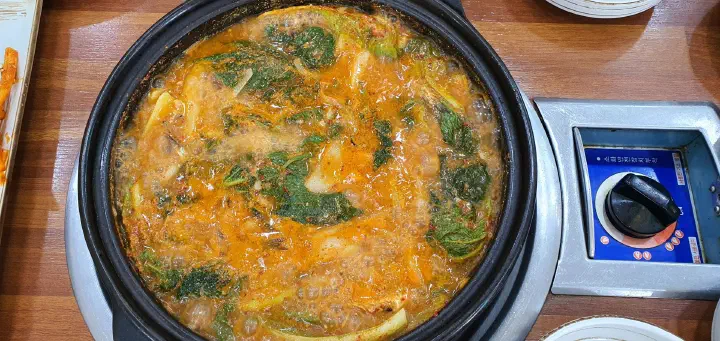
Early on it is loose and soupy, and as it reduces on the burner it turns into something you want to spoon over rice.
Letting it cook down is the right call.
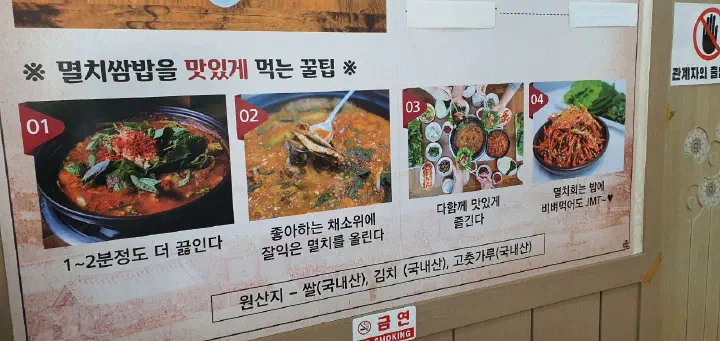
The menu board suggests simmering another minute or two at the table, then fishing out the anchovies once they are done.

Geoje anchovy stew after the broth has reduced down to a thick, spoonable consistency

The bones

This is where opinions split.
The anchovies go in whole, and at that size the bones have real presence.

Close-up of whole anchovies in the Geoje stew, each one head-to-tail and finger-length

They are soft enough to chew, and plenty of people eat them straight through and find them nutty.
Honestly, though, chewing whole fish for an entire meal gets tiring around the halfway point.

The easy fix is to flake the flesh off.
The fish are big enough that a pair of chopsticks does the job and leaves plenty behind.
Flaked off like that, it tastes a lot like grilled mackerel pike.
Eat a few whole, then switch.
If picking bones out of fish is not something you grew up doing, this is the part that may wear you down.

The raw anchovy salad

The myeolchi hoe muchim (멸치회무침) that comes with the A course is a completely different dish from the stew.
Fresh anchovies - lightly blanched, despite the “hoe” (raw fish) in the name - get tossed with shredded radish in a sweet, sour, mildly spicy sauce.

Geoje Myeolchi Ssambap A course raw anchovy salad with wrap vegetables and side dishes

The texture is the point.
The anchovy is soft and yielding, the radish snaps.
People often assume the crunchy bits are kohlrabi because of the sweetness, but it is just plain radish.

The sauce is strong enough to cover most of the fishiness, though not all of it.
Wrapping a bite in a perilla leaf helps if you are sensitive to that.
You can also tip the whole plate into the stew and let it cook, which some regulars do.

Geoje anchovy stew and raw anchovy salad served side by side as the A course

If you only take one, take the salad.
Anchovy stew has cousins elsewhere in Korea, but this salad is hard to find outside Geoje.
The 3,000 won gap is worth it.

Side dishes, and one warning

Six or seven banchan come out: seasoned greens, bracken, mushrooms, salted hairtail-innards sauce (galchi-sok-jeot), stir-fried anchovies, and usually some seaweed, which fits the coastal setting.
They are mild rather than punchy, so they sit well alongside the stew.
Wrap vegetables come in quantity, and you can ask for more at no charge.

One warning.
A whole anchovy sitting in fermented sauce comes out as a side, and it is intensely salty.
Putting one in your mouth whole is a mistake.
Staff hand over scissors and mime cutting it into small pieces for your wraps - follow that advice.

The quiet favorite is the stir-fried anchovies, done without any red sauce.
Tables ask for refills of that one constantly.

In-store guide board at Geoje Myeolchi Ssambap showing how to eat the anchovy stew

Kids

Neither the stew nor the salad is an easy sell for young children, which is why the children’s ttukbulgogi exists.
It is 10,000 won, generous with beef and glass noodles, and mild.
Note that adults cannot order it as a substitute.
The kids’ menu often does not appear on map apps, so people assume it is not there.
It is, and high chairs are available too.

Room, parking, paying

The building looks like a large house rather than a restaurant, with a lot of potted plants around the entrance.
The dining room is wide with generous space between tables, so conversation is comfortable.
There are a few private rooms at the back that suit family gatherings, but group bookings fill them even on weekdays, so call ahead if you want one.

There are separate men’s and women’s restrooms inside, and there is Wi-Fi.

The parking lot out front holds about thirteen cars.
At peak times they start double-parking cars sideways, which makes getting out awkward, and parking on the road is often the easier choice.
Paying is simple: tap any major international card and you are done.
Korea has no tipping culture, so there is no need to leave anything - it only confuses the staff.

What it used to cost

Prices stayed put here for a long stretch.
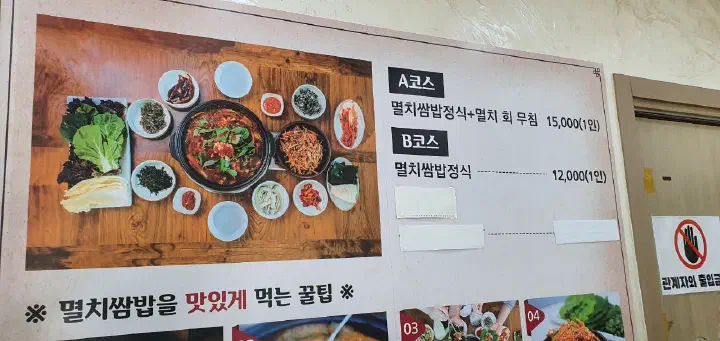
From around 2018 through 2022 the A course was 15,000 won and the B course was 12,000 won.

In-store price board at Geoje Myeolchi Ssambap showing the A course and B course prices

They are now 17,000 and 14,000, so a 2,000 won rise after more than four years of holding steady.

For a tourist area, that is still reasonable.
Seventeen thousand won gets you the stew, the salad, six or seven side dishes, and unlimited wrap vegetables.
Some anchovy specialists elsewhere run all-you-can-eat formats at higher prices, but this is not really a dish you end up eating mountains of, so the fixed single portion here feels like the saner deal.

Getting there

The restaurant sits directly across from Geoje Sea World and the Geoje Shipbuilding and Marine Culture Center, about a minute’s walk from Sea World.
Sono Calm Geoje is under a kilometer away - about fifteen minutes on foot - and the resorts nearby are a two- to three-minute drive.

Geoje is an island you really want a car for, and this stretch of the east coast is no exception.
If you come without a car, the Jisepo bus terminal is a short walk away, and the Kakao T app makes grabbing a taxi easy - install it before you arrive.
A heads-up on navigation: Google Maps handles walking and transit routes poorly in Korea, so use Naver Map or KakaoMap here.

The ferry terminal at Wahyeon for Oedo Botania is a six-minute drive away, and the Geoje Panorama Cable Car is about thirty minutes out.
If you are doing the eastern side of the island in a day, this fits neatly as the lunch stop.

Ordering is not difficult even without Korean.
Staff are unlikely to speak much English, but the menu is two courses plus a kids’ dish, and pointing at the board while holding up fingers gets the job done.
The stew is mildly spicy by Korean standards, which for most visitors means noticeable but manageable.

📍 View Geoje Myeolchi Ssambap (거제멸치쌈밥) on Google Maps →

Is it for you?

Geoje Myeolchi Ssambap whole anchovy stew bubbling away on the burner

This one lands well under the right conditions.
If you like hearty fish stews, this one delivers, and it works for older relatives and for families with the kids’ option on hand.
Two people ordering one A and one B will pay around 34,000 won, and the meal takes forty minutes to an hour.

The drawbacks are real too.
The bones wear on some people, the salad may not be for you if fishiness bothers you, and at peak times even getting the side dishes laid out takes a while, so this is not a fast turnaround place.
If someone in your group cannot eat fish at all, there is no good fallback for them.

Otherwise, when you want one meal on Geoje that you could not have anywhere else, this is the least demanding way to get it.
The salad in particular is the reason people keep coming back to this place whenever they are on the island.
Just plan around the afternoon break and those second and fourth Wednesdays.