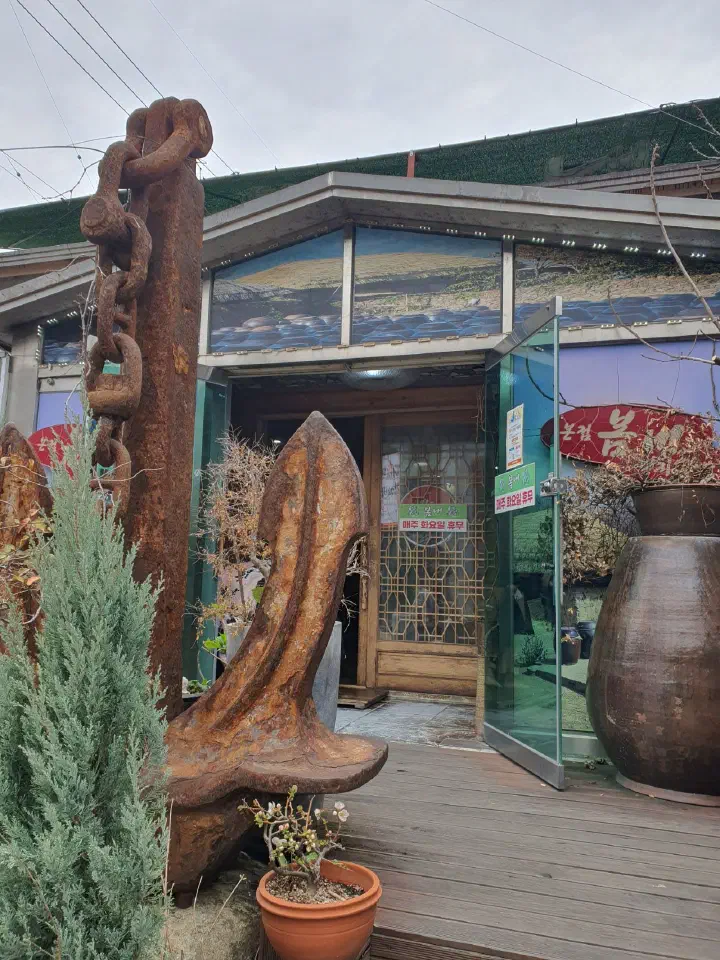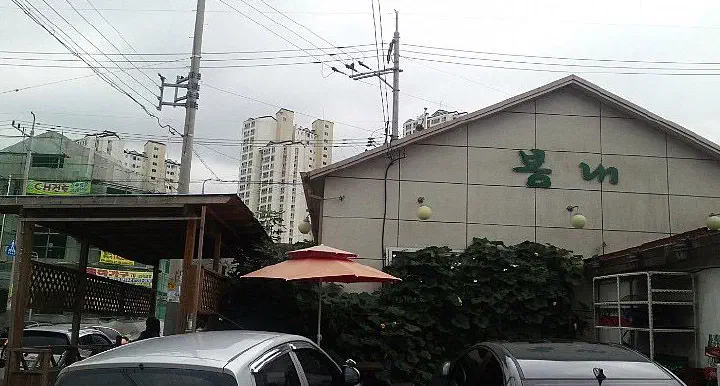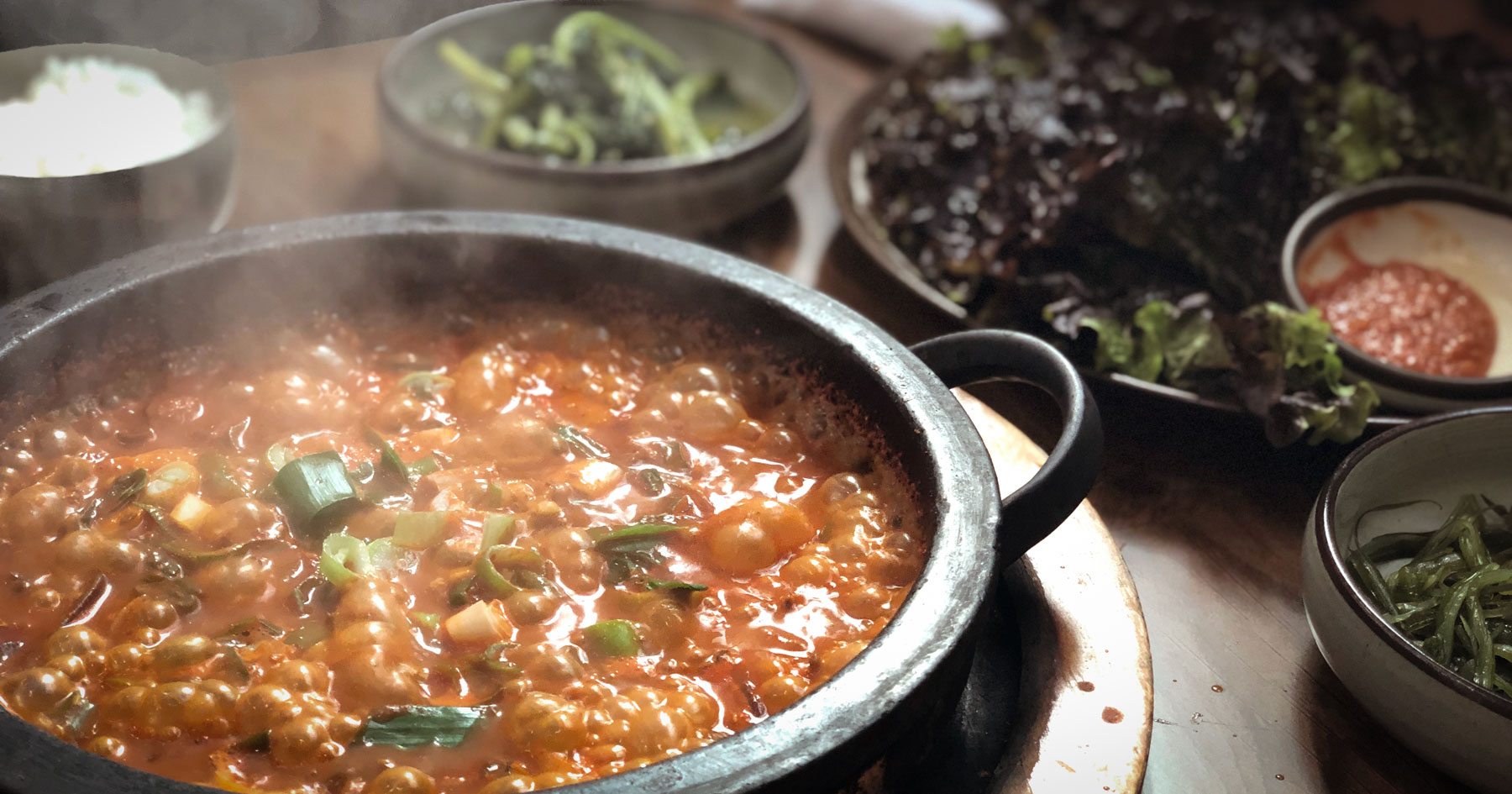
If you say “anchovy ssambap” anywhere around the Yulha cafe street in Jangyu, Gimhae, this is the place people mean: Bomnae Jangyu (봄내 장유본점).
At lunchtime it draws a mix of locals and out-of-towners, and there is almost always a line. Come ready to wait a bit.
Once a tray lands in front of you, though, the line starts to make sense.

Who it suits
This is hearty, slightly punchy home-style Korean food, the kind that clears a bowl of rice fast.
It fits a family meal really well, and a lot of the crowd is older, which around here usually means a spot has been quietly trusted for years.
There are still some floor (low-table) seats, so it works with kids too.
One honest note: it is not a quiet, lingering kind of meal.
The room is busy and a little loud, with people coming and going, so keep that in mind if you want a calm dinner.

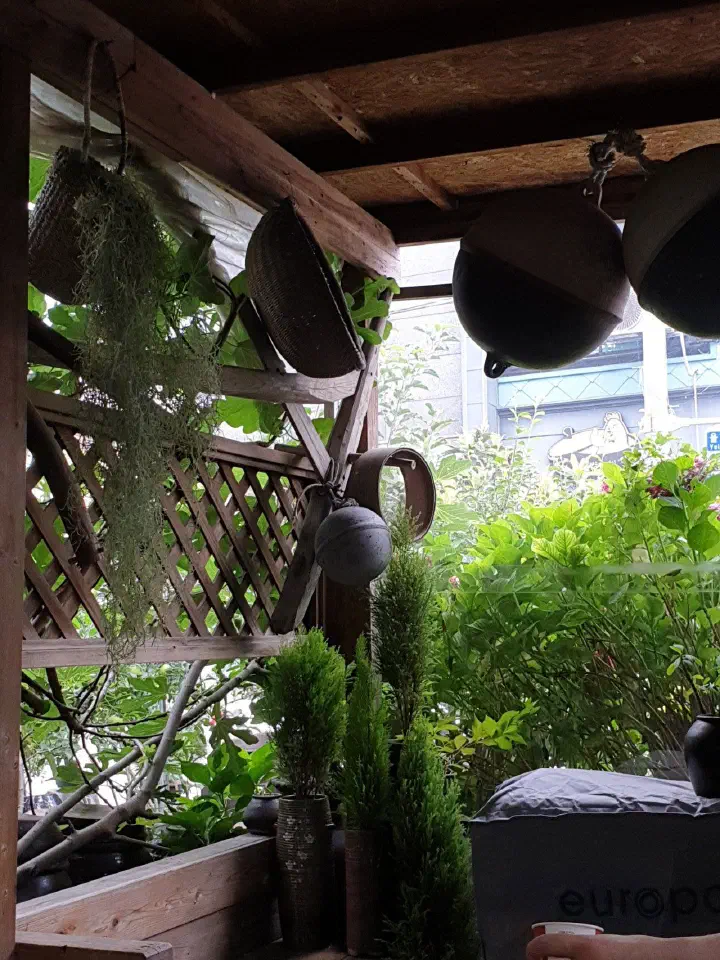
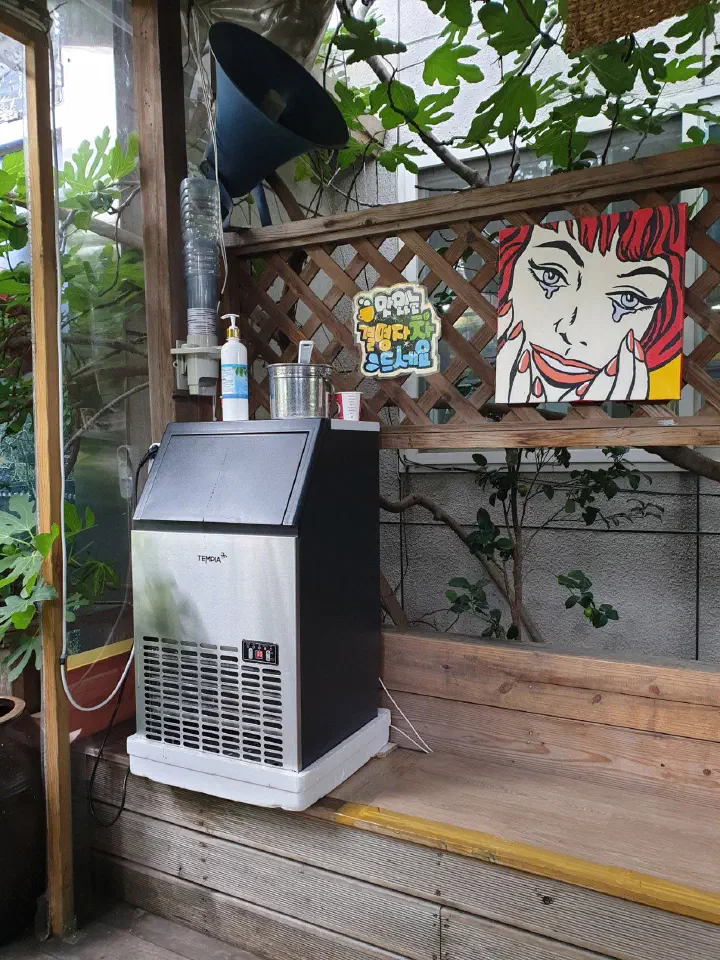
The owner clearly loves plants - pots are everywhere, inside and out.
In spring and summer the yard greens up, and there is even a fig tree that fruits in the warm months.

Getting there and the wait
It is under ten minutes by car from Lotte Outlets Gimhae and close to Jangyu Spaland, so it slots in nicely after a day out.
Yulha Stream runs right alongside, so the wait is easy to pass with a short walk - cherry blossoms in spring, foliage in autumn.
During meal hours, expect a line.
Lunch peaks and weekends usually mean 30-40 minutes, and on the busiest days it can stretch past an hour.
Even arriving for the 11:00 opening, seats fill quickly on many days.
The waiting system is a little unusual.
They do not take your phone number. Instead, the owner calls out your group over a microphone.
So if you wander too far you might miss it - stay near the entrance as your turn gets close.
There is a sheltered waiting area, and tables turn over fast.
If you want to dodge the crush, a known trick is to grab a waiting number near the end of the Saturday/Sunday break time (16:00-17:00) and go straight in when it reopens.

Myeolchi-ssambap, the signature
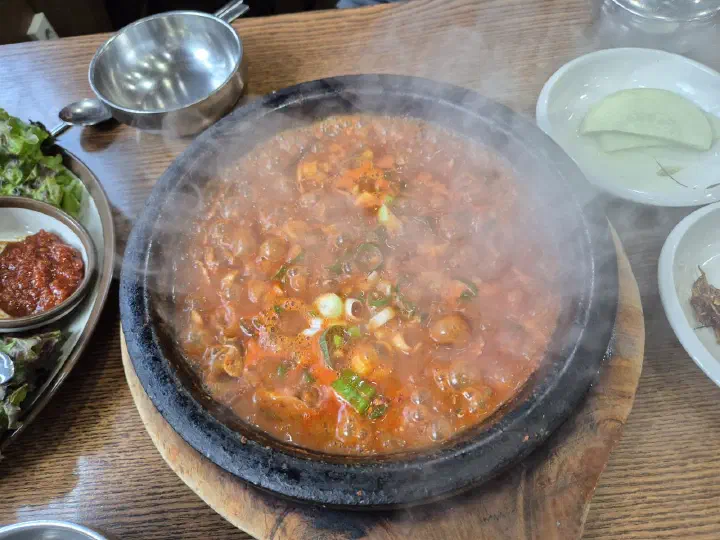
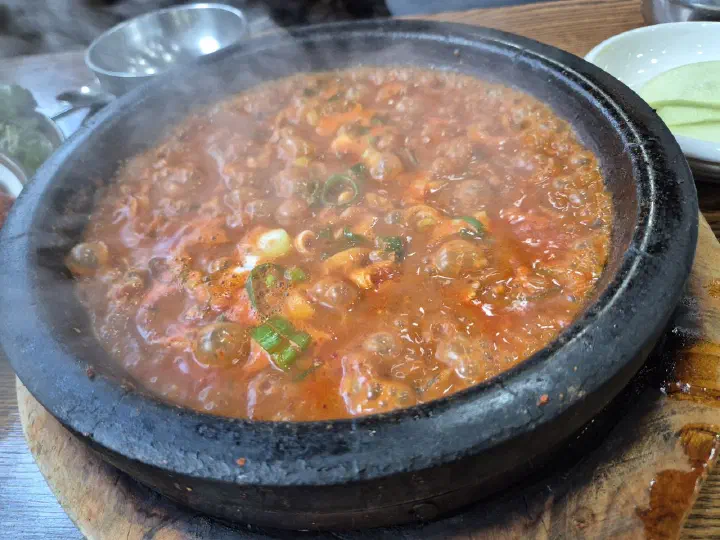
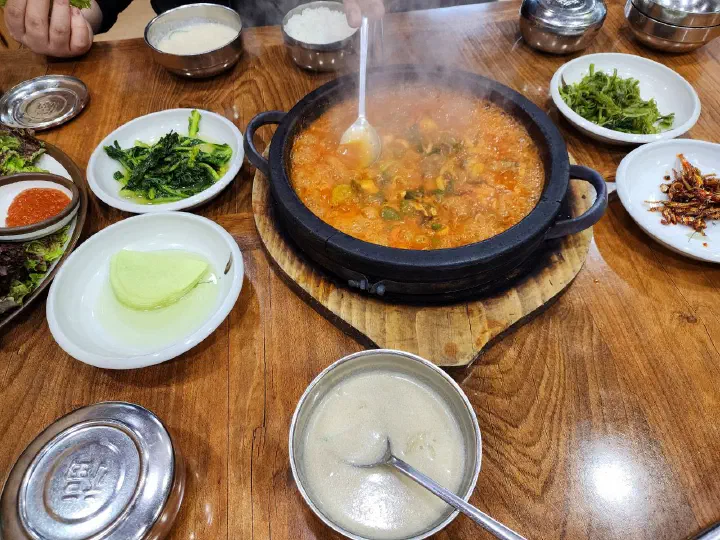
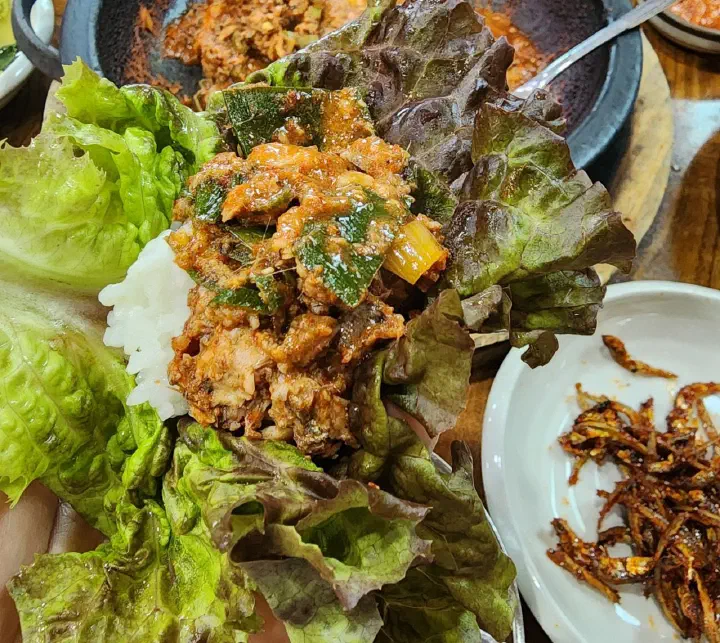
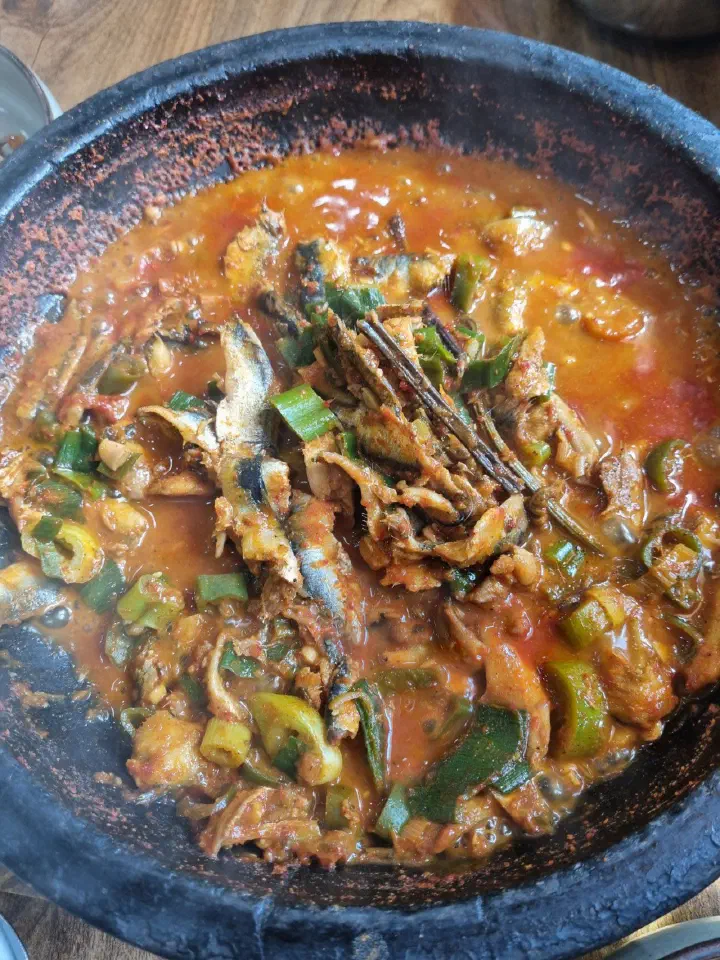
The anchovy ssambap (멸치쌈밥) arrives bubbling on a wide hot stone plate, steam rising the moment it hits the table.
That alone gets you hungry.

The anchovies are plump and soaked in seasoning, and the key thing is there is almost no fishiness.
Anchovy dishes can be divisive for exactly that reason, but people who are usually sensitive to it tend to be fine here.
The tiny bones are handled well too, so they do not get in the way.

The flavor leans salty and spicy.
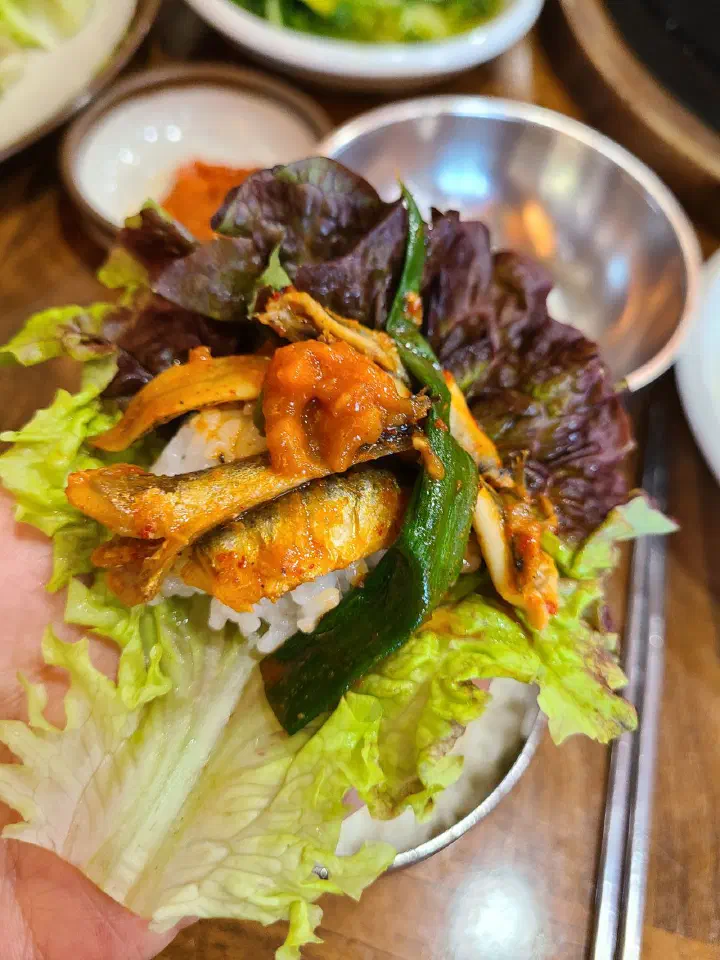
By Korean standards it is on the punchy side, so it really wants rice and a lettuce wrap to balance it out.
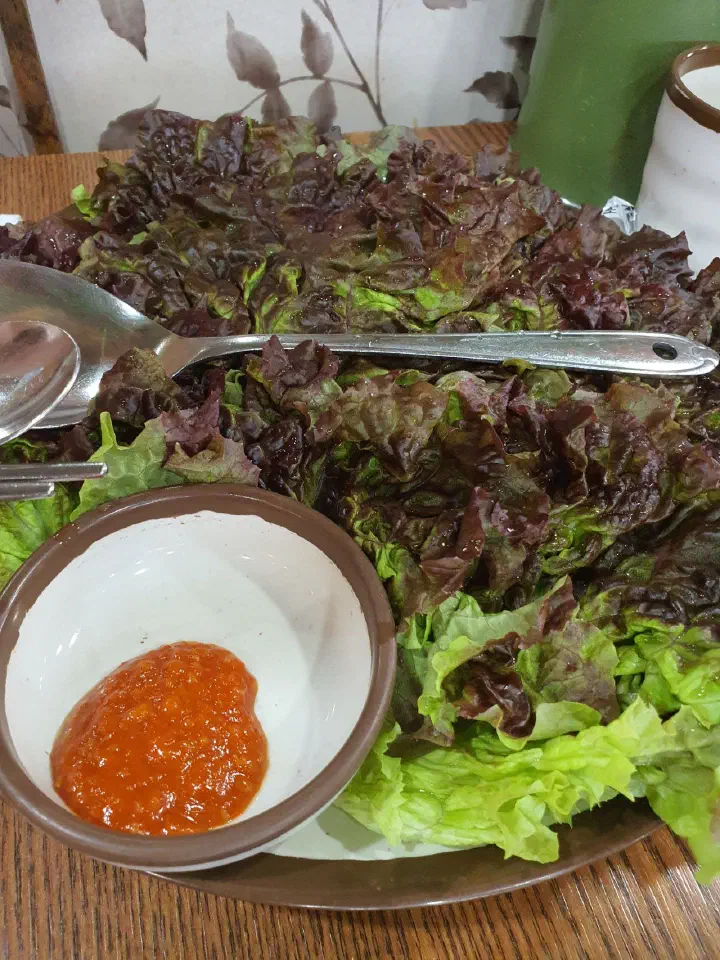
Lay a spoon of rice on a lettuce leaf, top it with the anchovy braise, add pickled radish and a little soybean paste, and the rice disappears.
A quick heads-up on the spice: what reads as “a little spicy” to Koreans can hit harder if you are not used to Korean heat, so pace yourself.

Because the stone plate stays so hot, the broth keeps reducing and gets saltier over time.
The easy fix is to spoon out what you want onto a small dish early, so it stays balanced to the last bite.
And if you have a small child along, the plate itself is genuinely hot - watch for burns.


Worth knowing before you order: a single portion of ssambap comes in an earthen pot, while two portions or more come on the stone plate.
So even for two people, many order two ssambap plus one soup to get the full stone-plate version.
Ureong-deulkkae-tang, the partner dish
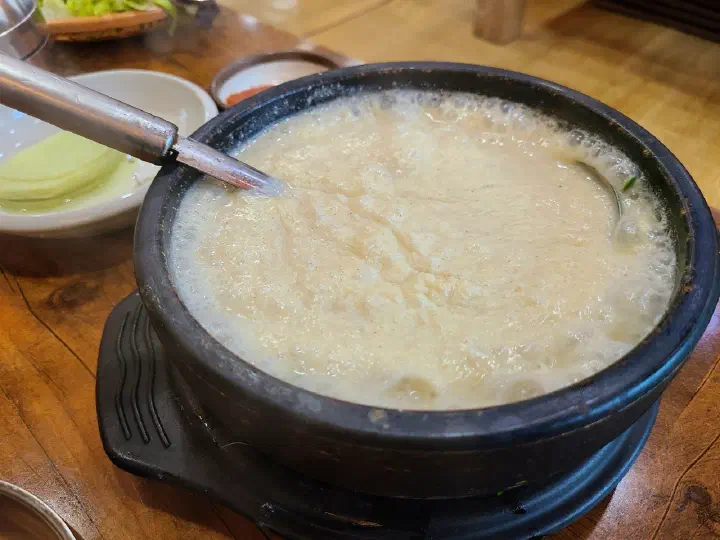
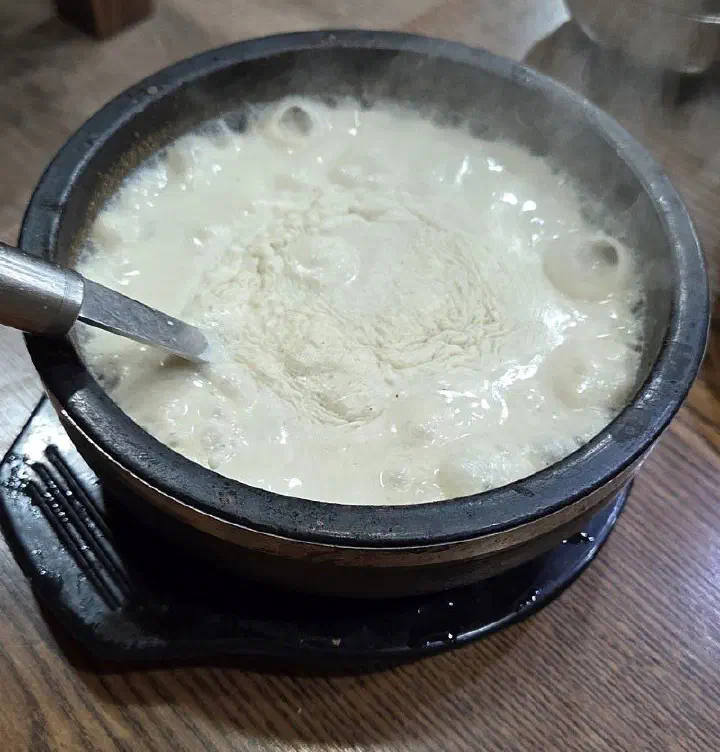
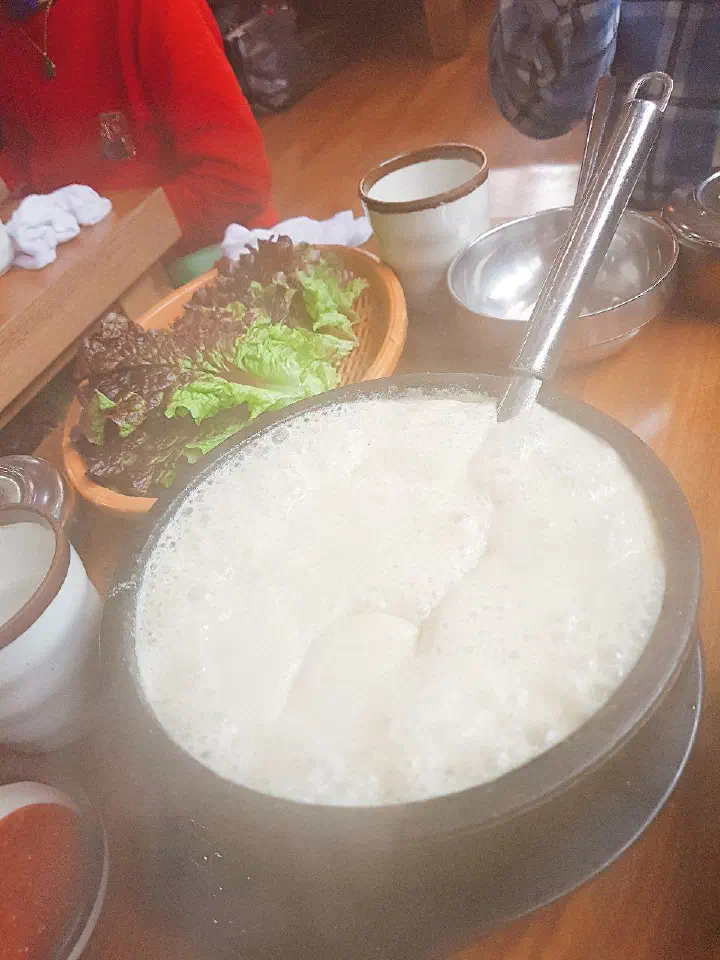
The dish almost everyone orders alongside is ureong-deulkkae-tang (우렁이들깨탕), a snail and perilla soup.
One spoonful and you understand why it is the default pairing.

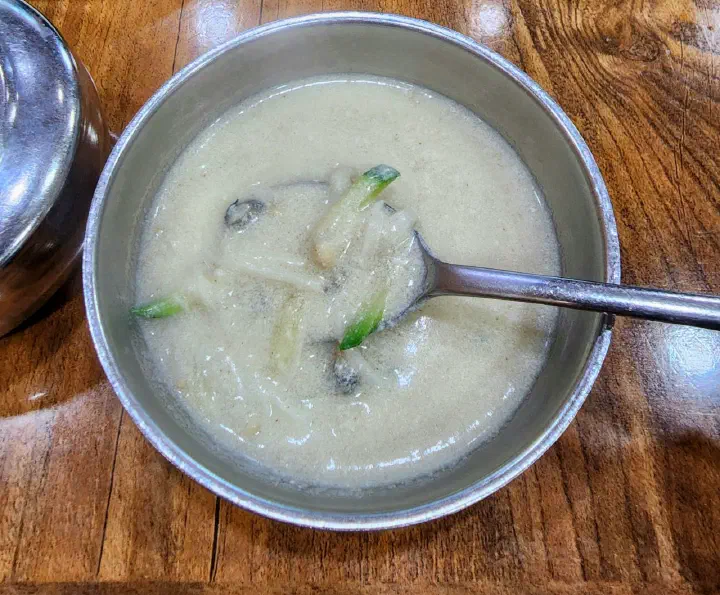
The broth is thick and nutty, almost like a smooth potage, with a strong toasted-perilla aroma.
When the spicy ssambap starts to build up, a spoon of this soup resets your palate so you do not get tired of the meal.

It is gentle on the stomach, which makes it a good pick for kids, older diners, or anyone who finds the anchovy a bit much.
A small change over the years: the vegetable in the soup shifted from zucchini to seaweed, but the taste stayed the same. Some seasons they also offer a freshwater-snail (daseulgi) version.


Side dishes and service
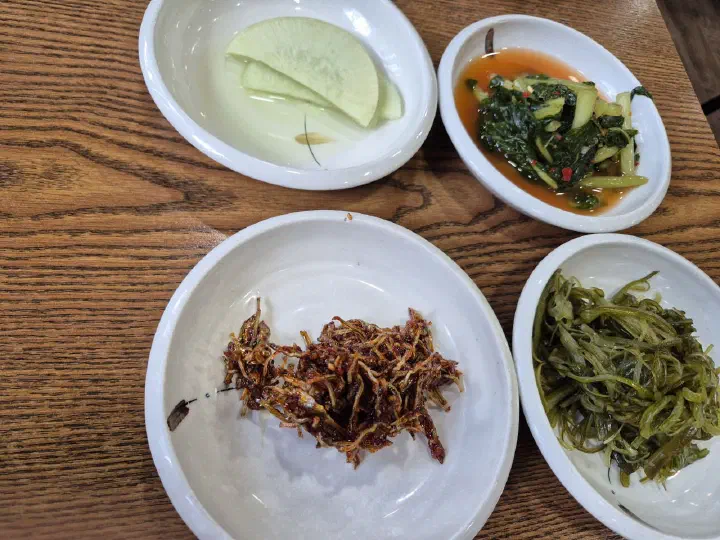
There are not many banchan, but the lineup pulls its weight.
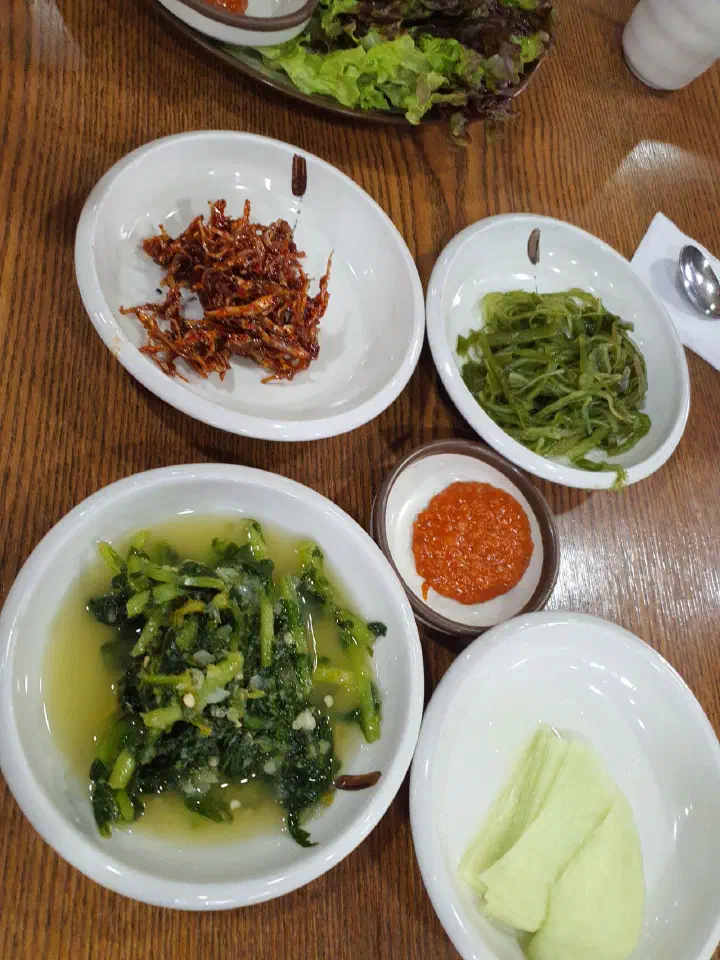
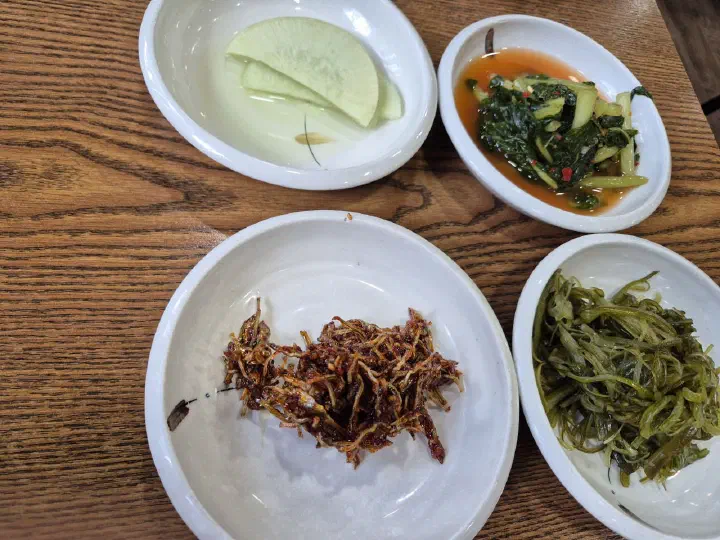
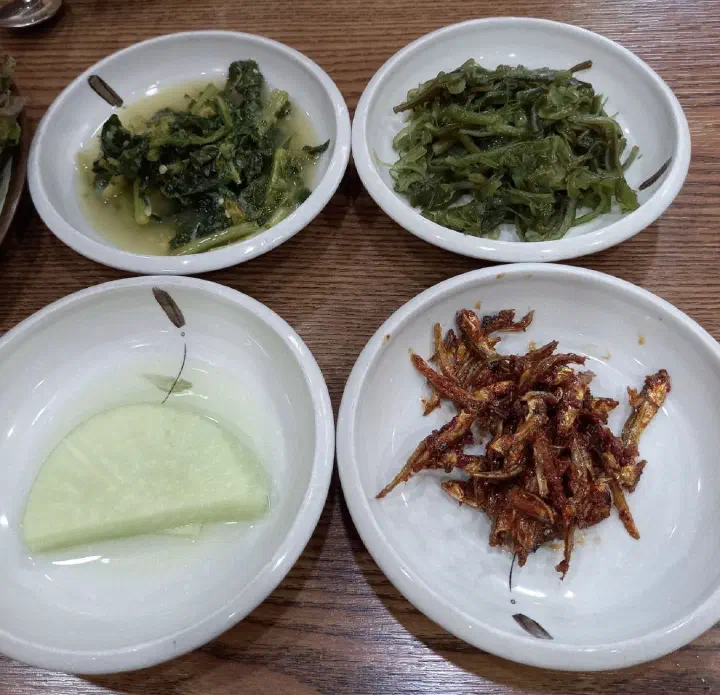
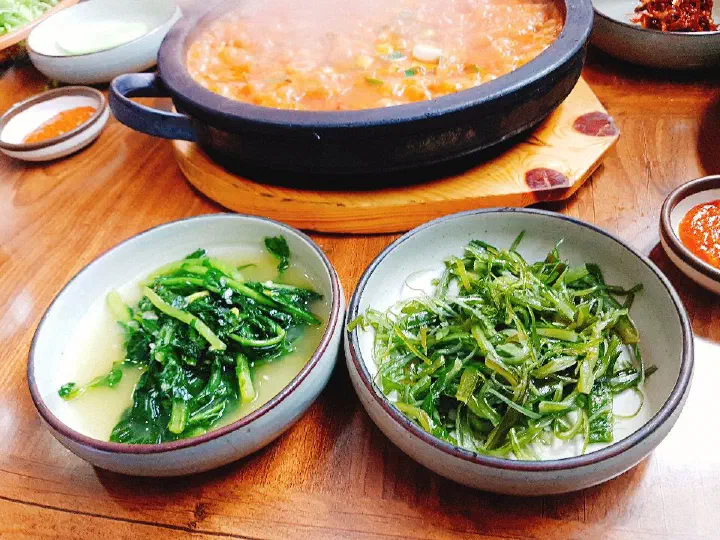
You get spicy anchovy stir-fry, young-radish water kimchi, seasoned sea mustard stems, pickled radish, and a generous pile of lettuce.

The lettuce in particular comes heaped, no refill needed.
Staff top up the banchan as they pass, often before you think to ask.
Chili peppers and garlic are not set out by default but come if you ask, so it is worth requesting.

Of the sides, the water kimchi and the anchovy stir-fry get the most love.
That said, a few diners find the wrap greens a touch one-note (mostly lettuce), and the pickled radish skews sweet, which is hit or miss.

Service is quick and friendly.
Food comes out almost immediately after you order, so the wait melts away once you sit.
Even when produce prices spike, they keep the lettuce and banchan generous - one of the reasons regulars keep coming back.

Practical info
Quick reference:
The address is 1 Yulha-cafe-gil, Gimhae, and the phone is 055-314-3553.
Hours are 11:00-21:00, with last order at 20:30.
There is a break only on Saturday and Sunday, 16:00-17:00.
It is closed every Tuesday.

For parking, take the small lane between Bomnae and the Hasamdong shop next door; there is a free private lot behind the building.
It fills up often, so when it is full, many people park along the Yulha cafe-street roadside.
Enforcement tends to be relaxed on weekends, but weekdays can differ - leave a little buffer if you drive.
A couple of notes for travelers: cards are fine here, and almost every restaurant in Korea takes internationally issued cards, so you rarely need cash.
There is no tipping culture in Korea - you do not need to tip, and trying to can actually leave staff a bit flustered.
English is limited, but ordering is easy; the menu is short, and pointing at what you want works perfectly well.
One more practical tip: Google Maps walking and transit directions are unreliable in Korea, so use Naver Map or KakaoMap to find your way, and the KakaoT app if you need a taxi.

Prices are 10,000 won for the anchovy ssambap, 10,000 won for the snail perilla soup, and 9,000 won for the snail soup.
For under 10,000 won a head in today’s prices, it is an easy value pick.
For context, a portion ran around 6,000 won back in 2013, so the climb over the years has been gentle by comparison.
📍 View Bomnae Jangyu (봄내 장유본점) on Google Maps →
Final thoughts
Bomnae Jangyu is not flashy, but the fundamentals are solid.
Anchovy ssambap without the fishiness, a nutty soup to balance it, heaps of lettuce, and a generous hand - that is what keeps the line going.
The shoes-off seating is a small hassle, the room is loud, and parking can be tight on a bad day - all real trade-offs.
But it nails the dish it is known for, so if you are in Jangyu, Gimhae, it is worth standing in line once.
It is the kind of neighborhood mainstay you find yourself coming back to whenever anchovy ssambap crosses your mind.

Bomnae Jangyu
1 Yulha-cafe-gil, Gimhae-si, Gyeongsangnam-do