Dwaeji gukbap (돼지국밥) is the dish this corner of Korea is known for, and in Gimhae this is the name that comes up first.
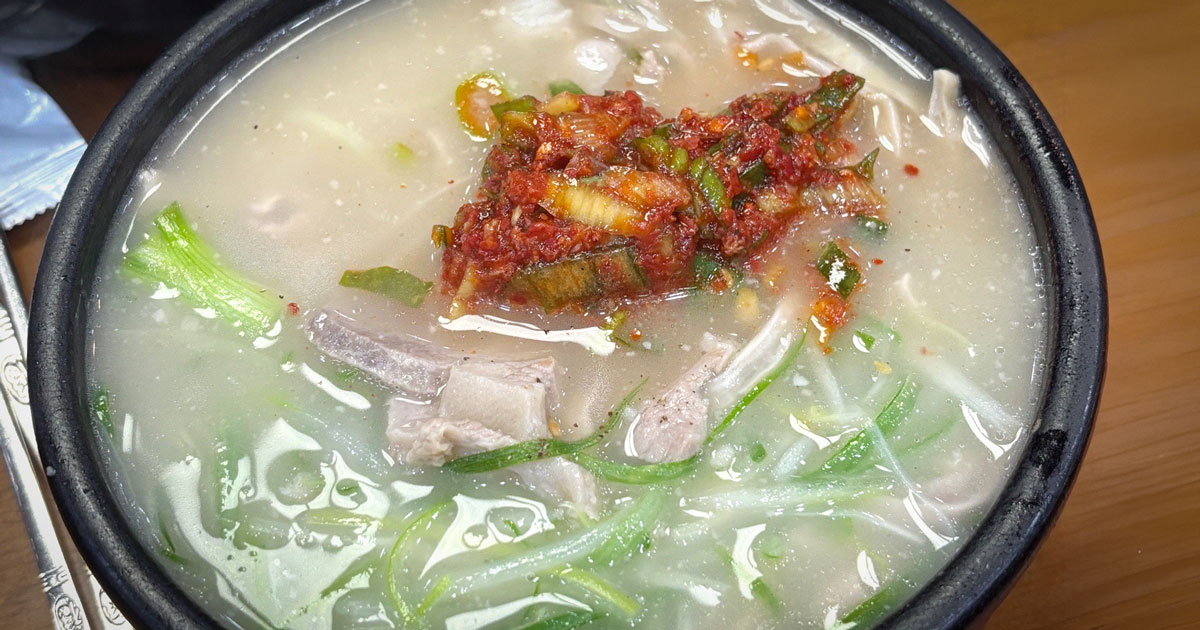
One warning up front, though. If you are picturing a thick, milky, heavy pork broth, this is not that. The broth here is pale but light, closer to a clean beef-bone soup than to a rich tonkotsu. Some people love it for exactly that. Others wait an hour and walk out mildly disappointed. It is worth knowing which camp you are in before you queue.

The basics
The address is 91 Inje-ro, Gimhae-si, Gyeongsangnam-do, in the Eobang-dong neighborhood. The phone number is 055-337-1790.
Hours are 9:00 to 21:30. Closed every Sunday, which catches people out. On Saturdays and public holidays there is a short break from 15:00 to 15:30. Weekdays run straight through with no break.
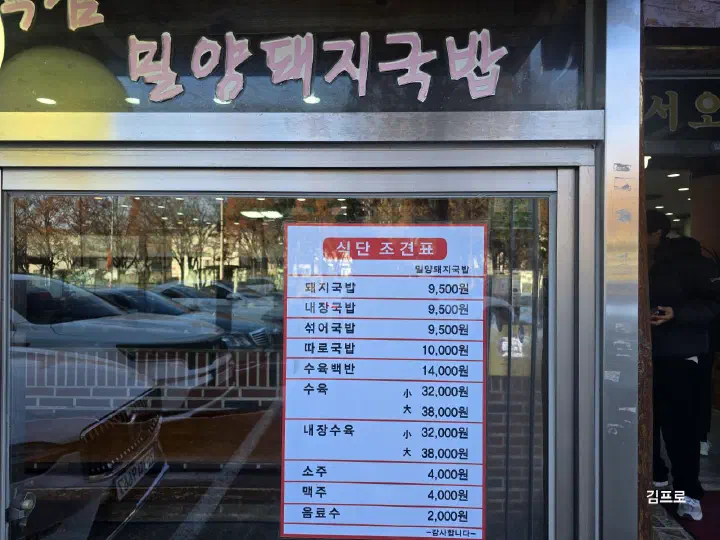
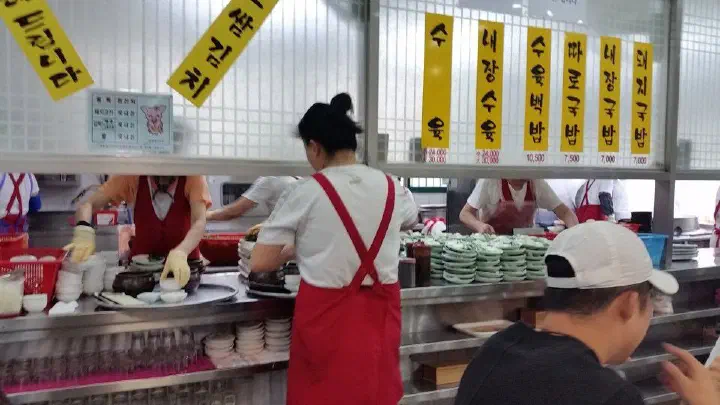
Prices are simple. Dwaeji gukbap, naejang gukbap (offal), and seokkeo gukbap (mixed) are 10,000 won each. Ttaro gukbap, where the rice comes in a separate bowl, is 10,500 won. Suyuk baekban is 15,000 won. Whole plates of suyuk run 34,000 won for the small and 40,000 won for the large.

📍 View Miryang Dwaeji Gukbap (밀양돼지국밥) on Google Maps →
How the queue actually works
There are no reservations. You walk in, and just inside the entrance there is a machine that prints a number ticket. Take one immediately. If you arrive by car, it is smarter to have someone jump out and grab the ticket while the driver deals with parking, because the queue moves while you circle the block.
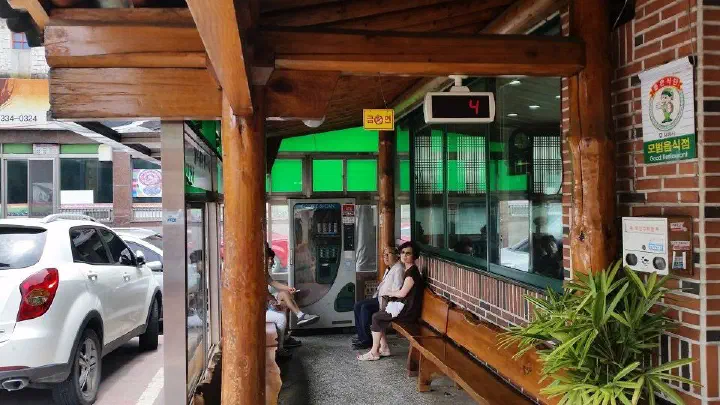
Your number appears on a display by the door. If you are not there when it comes up, it passes and you start over, so stay close. There is a covered waiting area outside with heating in winter and air conditioning in summer, so you are not standing in the weather.

The ticket number can look alarming. Ignore it. Turnover here is genuinely fast, roughly thirty groups clearing in thirty minutes.
Weekend mornings already have 20 to 30 groups ahead before 11:00, but that usually resolves in under 40 minutes. Peak lunch can push past an hour. Weekdays are easier, though never empty. Even at the dead hours after lunch you can expect around fifteen minutes. Evenings are surprisingly relaxed, sometimes only ten groups or so around 18:40. If you want no wait at all, be there right at the 9:00 opening.
Holidays are a different animal entirely. It can go from around 20 groups at 10:20 to more than 60 by 11:50. On those days, get there before 10:00.
One quirk: when the queue is long enough, they sometimes skip the Saturday break and just keep serving. Nice when it happens, but not something to plan around.
The soup itself
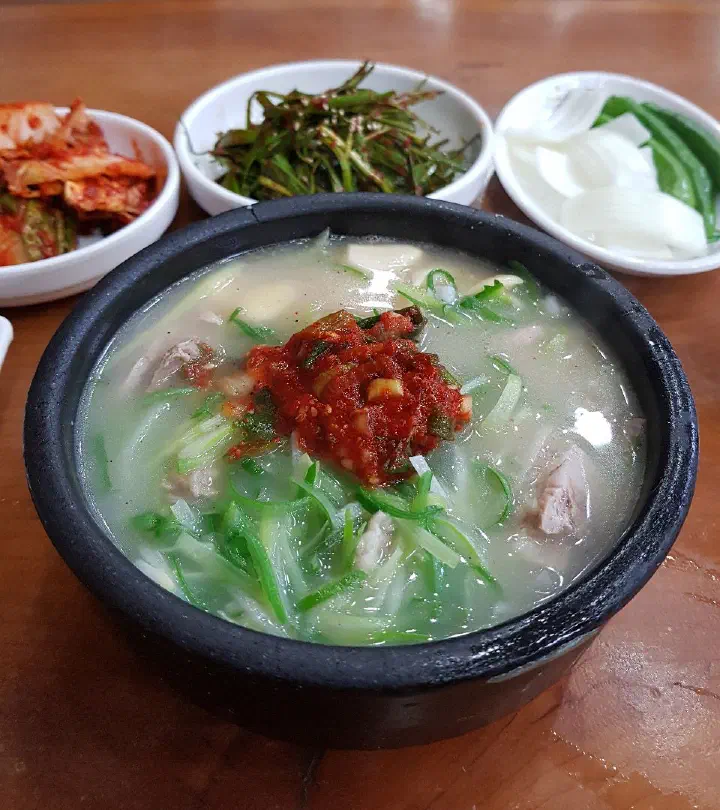
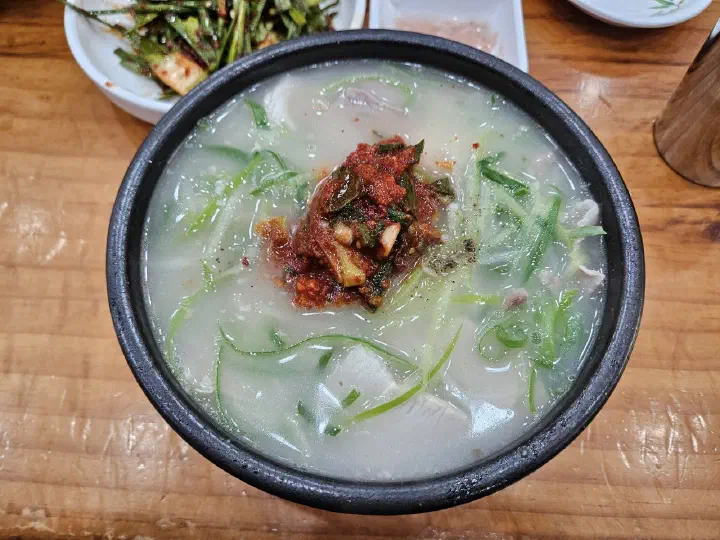
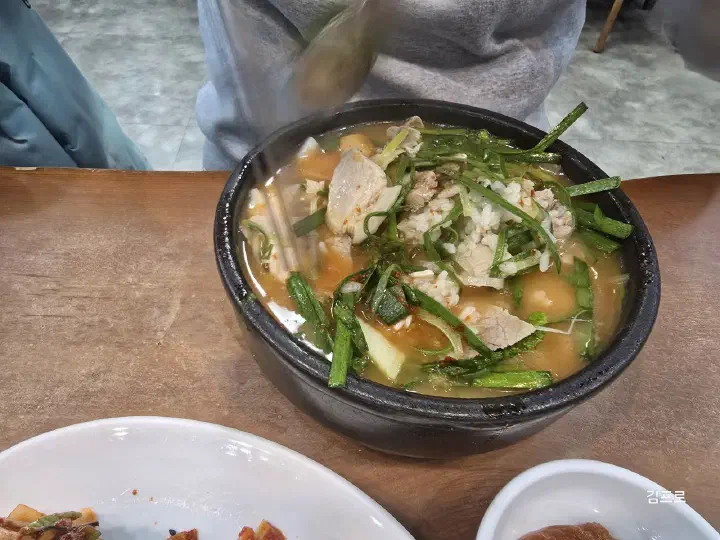
The signature detail is the scallion. It is not chopped into little rings and sprinkled on top. It is cut into long shreds and piled on generously, and the dadaegi (the red seasoning paste) is also built on seasoned scallion. So the allium hits twice, and the first thing that comes up with the spoon is a green, slightly sweet note rather than pork fat.

By default the rice comes already in the soup, along with the dadaegi. If you want them separate, order ttaro gukbap or the suyuk baekban. Asking for the dadaegi on the side is a normal request and they will do it.
There is essentially no pork funk, which is the thing most people fear about this dish. Even if you are sensitive to that gamey smell, this version is clean. The broth is deliberately underseasoned, so salt, pepper, and saeujeot (salted shrimp) are on the table for you to adjust yourself.
The meat is where this place clearly wins. It hides under the broth until you dig, and then it keeps coming, a full spoonful at a time, tender and not stringy. For 10,000 won, nobody leaves complaining about portion size.
The buchu is not optional
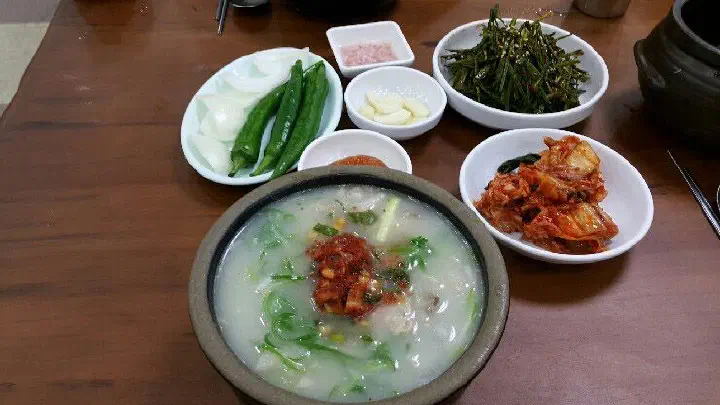
Every bowl comes with its own small dish of buchu muchim, seasoned garlic chives. Locals call it jeongguji (정구지). It is not raw chives, it is dressed and slightly tangy, and it is the thing that makes the bowl work.

Order matters more than you would think. Taste the broth plain first. Then add the chives. Then adjust the salt with saeujeot last. Pile in a lot of chives and the aroma jumps, but the seasoning climbs with it, so going heavy on shrimp paste from the start is how you end up with something too salty.
If you run low on broth, you can ask for more, and they refill it generously.
Suyuk, and the kimchi situation
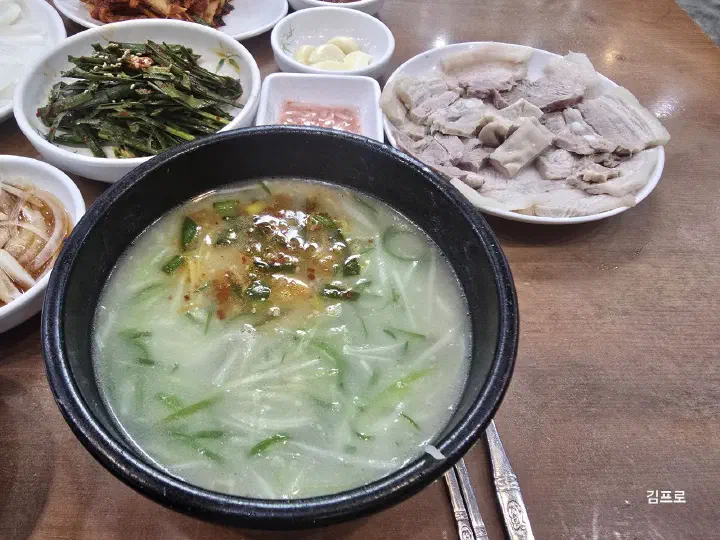
For two people, one gukbap plus one suyuk baekban is the right call, since the baekban comes with its own bowl of soup anyway. The suyuk is mostly pork belly with a little offal mixed in, boiled soft and moist rather than dry, and it goes down easily even with kids or with anyone wary of the smell.

The bossam kimchi that comes with the suyuk baekban is the reason to order it. Wrapping a piece of pork in that kimchi is basically the point of the table.
The standard kimchi arrives in an earthenware pot that you serve yourself from. It is a fresh-style geotjeori, crunchy, with a strong fermented-seafood depth to it. Calling it a side dish undersells it. Plenty of regulars talk about the kimchi before they talk about the soup. Before any of it lands you get a cup of warm sungnyung (scorched-rice tea), then pickled onion, garlic, chili, the chives, and the shrimp paste.
What has changed over the years
The price line tells the story honestly. The gukbap was 8,000 won not that many years ago, sat at 9,500 won for a long stretch, and only recently moved to 10,000 won. As late as the first half of this year the menu still read 9,500. The suyuk baekban climbed from around 12,000 to 15,000 in the same period.
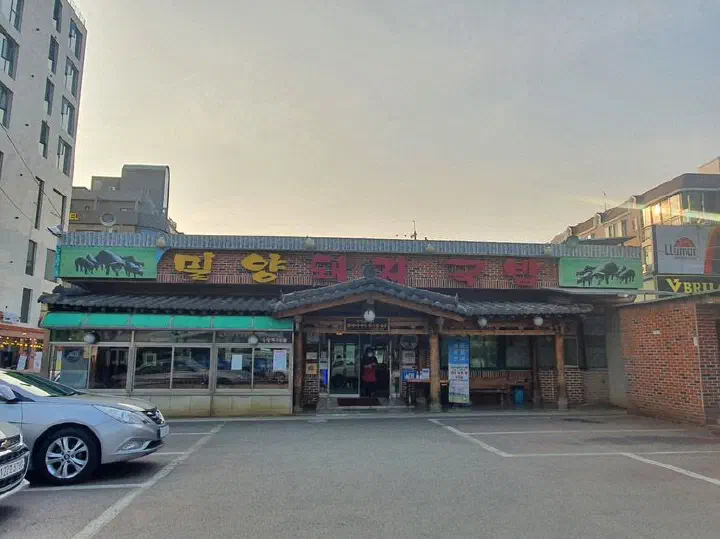
The restaurant has been in this spot for more than twenty years, but it does not have the worn-out look that usually comes with that. It is clean and well kept, with a Model Restaurant (모범음식점) plaque by the door. It also used to carry the reputation that busy Korean restaurants often earn, that the staff were brusque. That is not the case now. There are a lot of hands working, and food comes out fast even when every table is full.

Parking, and the rest of the practical stuff
Parking is the weak point, and locals will tell you the same. There are lots in front of and behind the building, but not nearly enough for the volume. The saving grace is that this is a soup restaurant, so cars cycle out quickly. If it looks full, wait a few minutes and someone will leave. Beyond that, people park along the road beside the building. Most of the cars on the surrounding side streets belong to this restaurant.
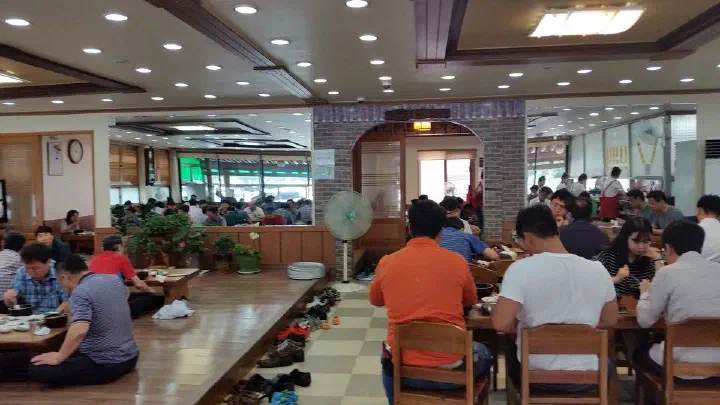
The dining room is large with generous spacing between tables, so it does not feel cramped even when packed. There is a raised floor-seating room in the back where you take your shoes off, which suits families and larger groups, and there are baby chairs. Eating alone here is completely unremarkable.

Cards are fine here, as they are at nearly every restaurant in Korea, so any internationally issued card should work without drama. Zero Pay is also accepted, though that is a domestic system you will not need. There is no tipping culture in Korea. Do not leave a tip. Staff will be confused rather than pleased.
English is not really spoken, but ordering is not a problem. The menu is short, and pointing at what you want and holding up fingers for how many is completely normal and gets you fed. Nothing here is spicy by default. The dadaegi adds a mild warmth at most, and if you are worried, ask for it on the side.
The honest downsides
The scallion divides people. It is a lot of scallion, and some find the aroma overwhelms everything else, or dislike the stringy texture catching in the mouth. If you do not like alliums, this is not your bowl.
The lightness of the broth divides people too. If you came for something rich and heavy, this will read as thin. That is where the one-hour-wait regret comes from. Even longtime customers say the broth has drifted milder over the years.

And the kimchi is assertively seasoned, with a strong fermented-seafood aroma. If that is not your thing, it will just taste salty.
So, is it worth it
The meal itself takes about twenty minutes. Food arrives quickly and the room turns over, so it is not a place to linger.
Two people eating one gukbap and one suyuk baekban land at 25,000 won total, and for the amount of meat and the quality of the kimchi, that is fair.
Here is the honest rule. Under 30 minutes of waiting, join the queue. Over an hour, come back another day at 9:00 or in the evening. If you want a thick, heavy pork broth, go elsewhere entirely, because this place will never be that. If you want clean broth with no funk, a lot of meat, and kimchi you will think about later, this holds up.
Getting there
It sits on Inje-ro, on the stretch running down from Inje University toward the Donggimhae interchange. The building is large and hard to miss from the road.
Gimhae is reachable from Busan on the Busan-Gimhae Light Rail Transit, and the city is compact enough that a taxi from a station is short and cheap. The Kakao T app is the standard way to call one and works fine with a foreign phone number in most cases. For walking and transit directions, use Naver Map or KakaoMap rather than Google Maps, which is unreliable for navigation inside Korea.
It falls naturally on the route if you are visiting the Gimhae National Museum or Gayaland, so it slots into a day in the city without a detour.