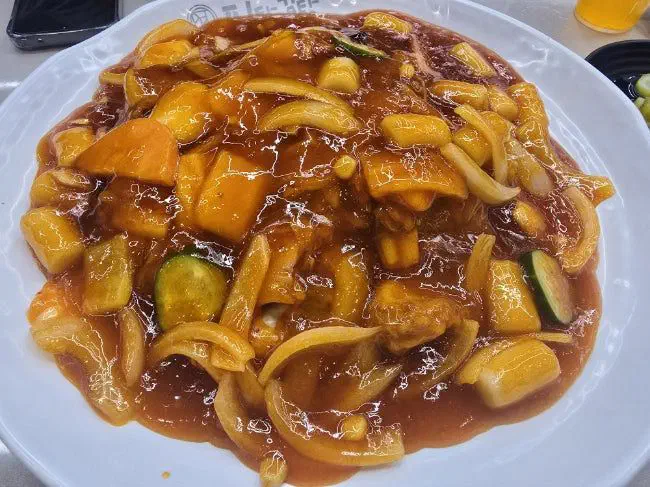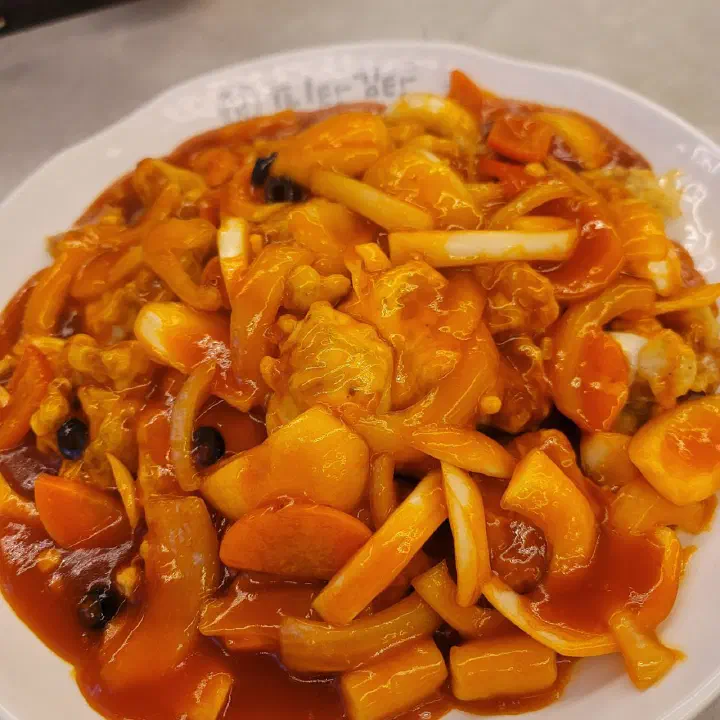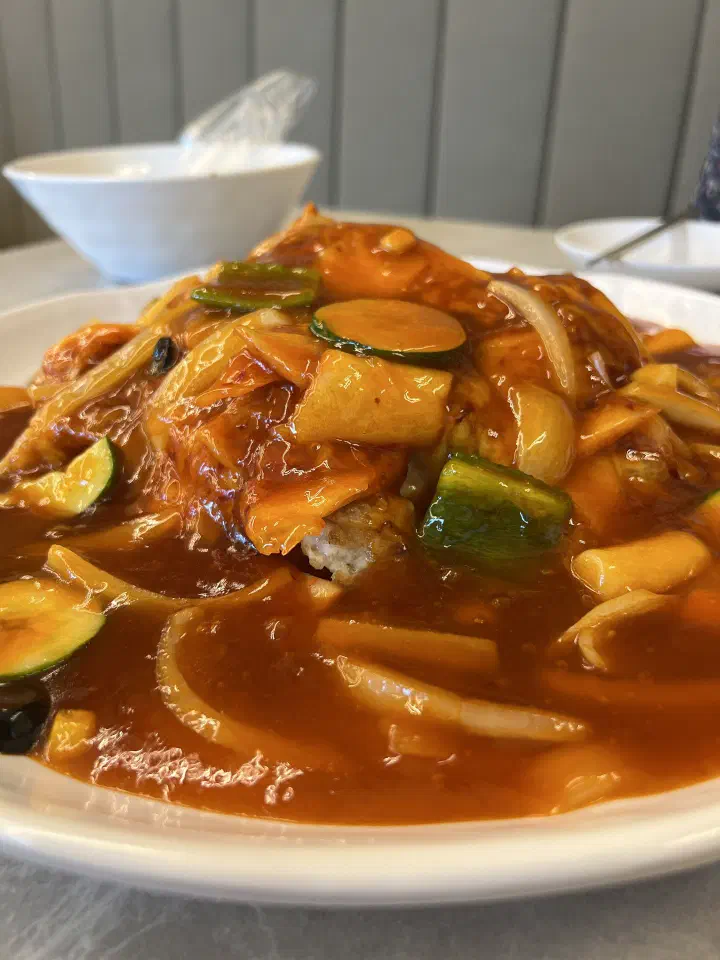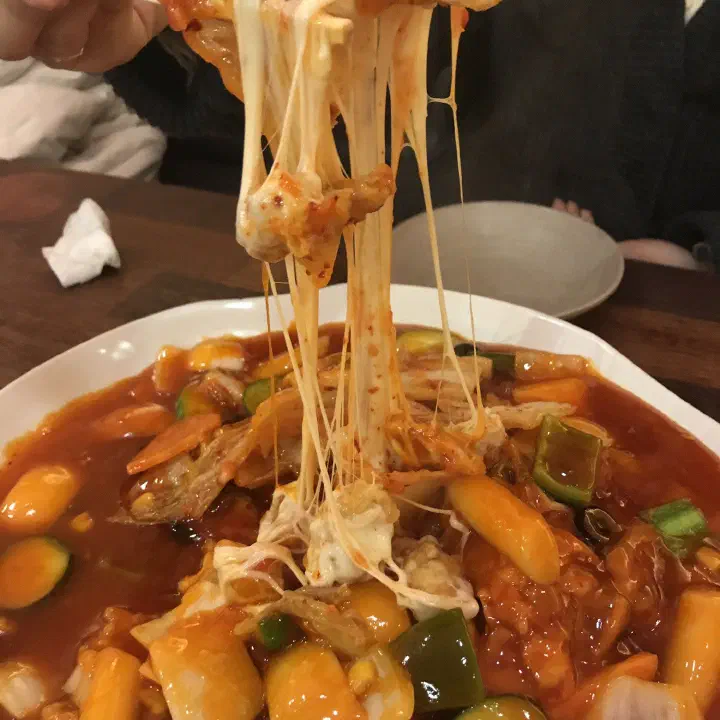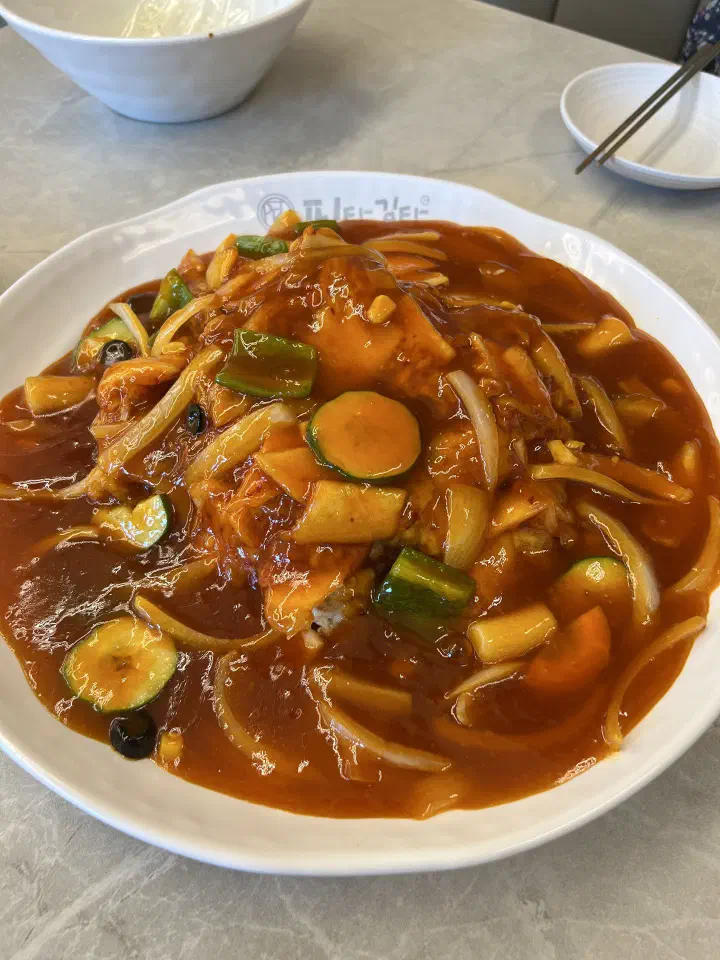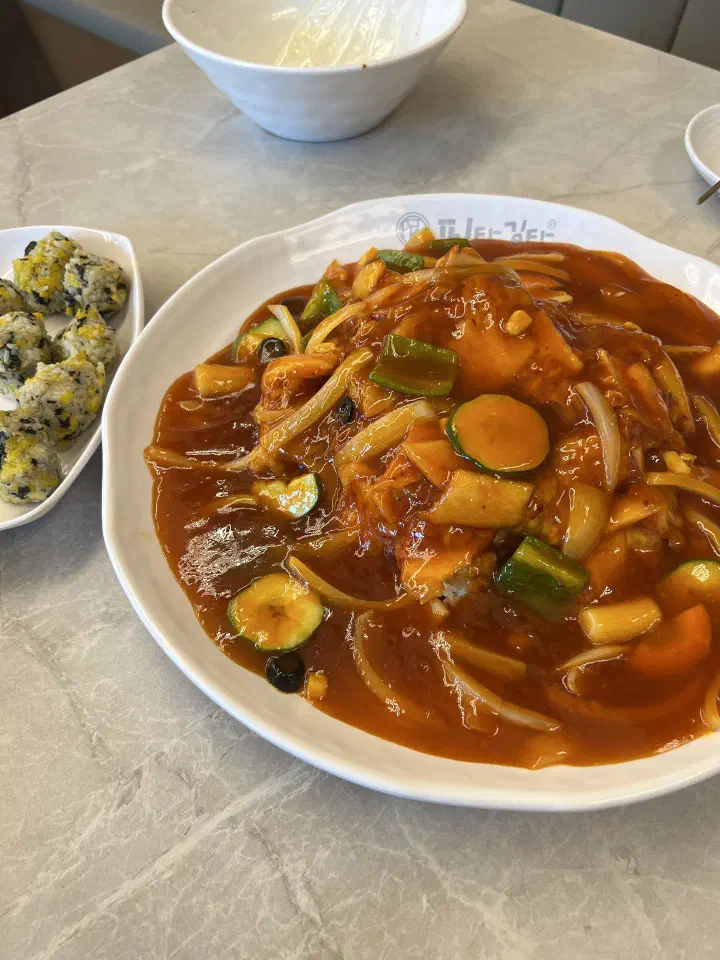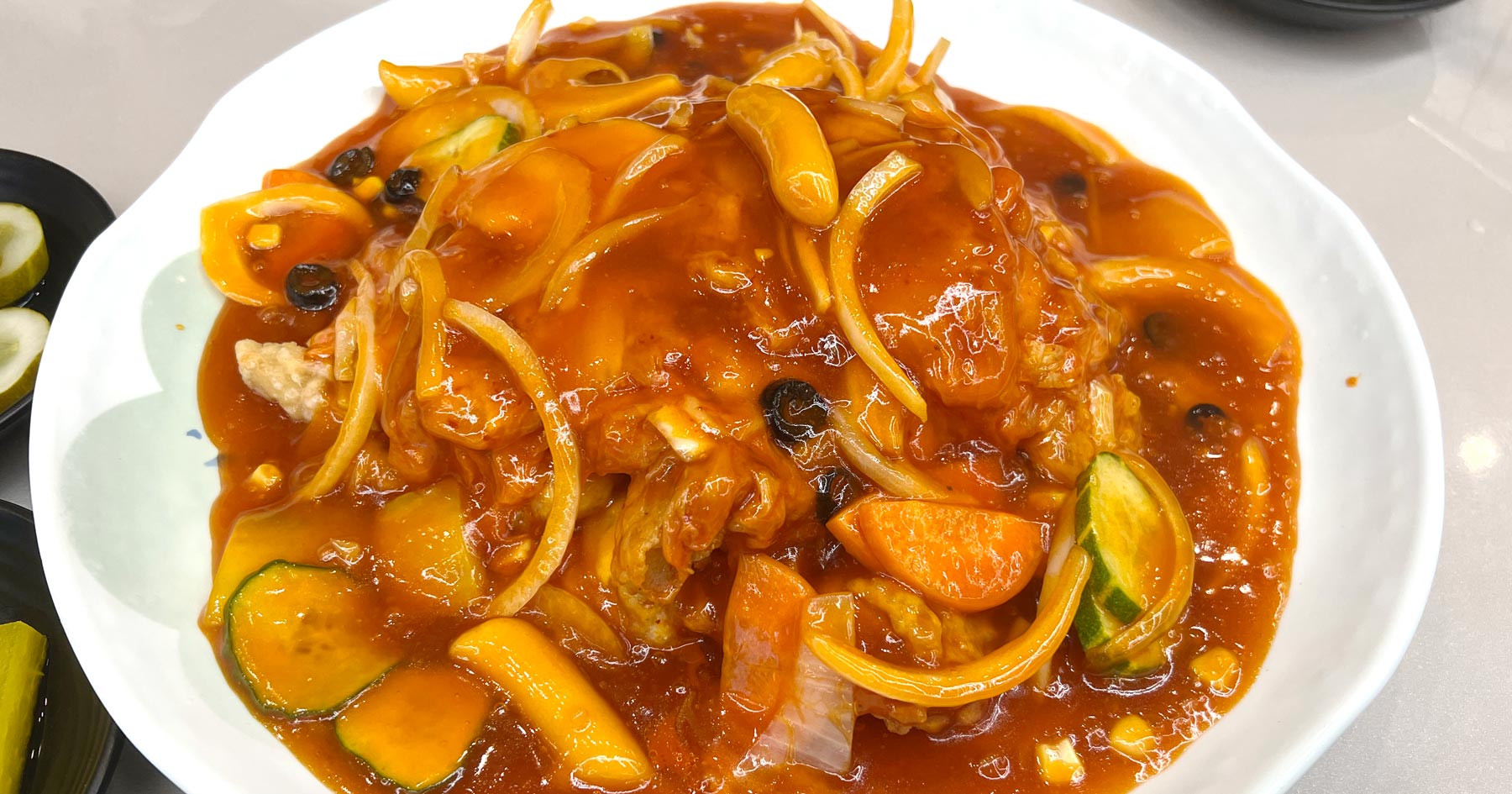
If you ever find yourself in Gongju, a quiet historic town about 90 minutes south of Seoul, there is one dish locals will insist you try before anything else.
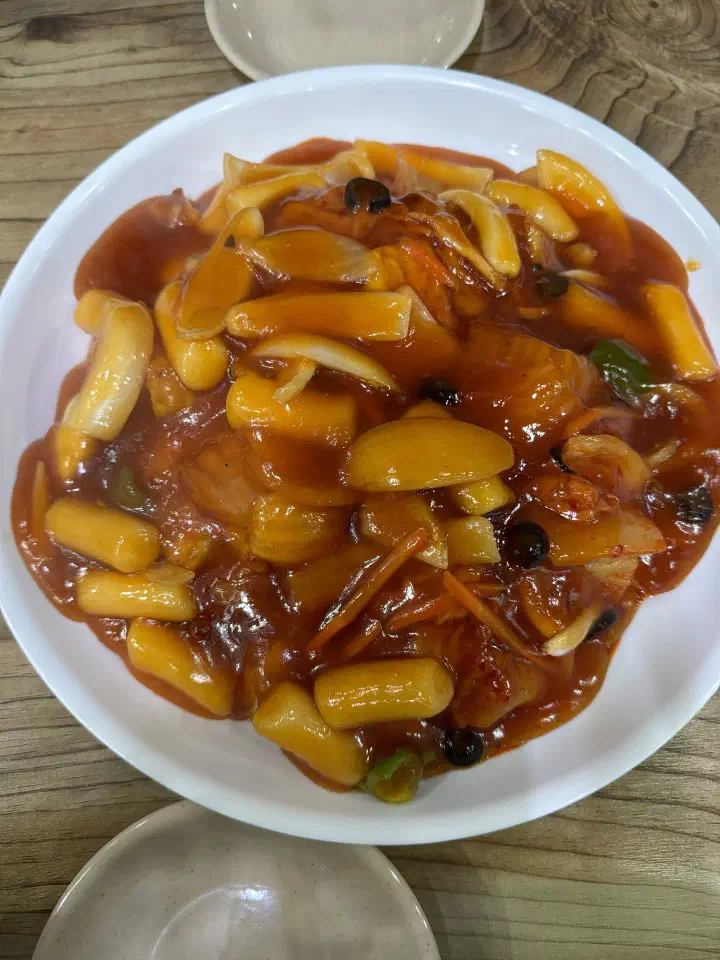
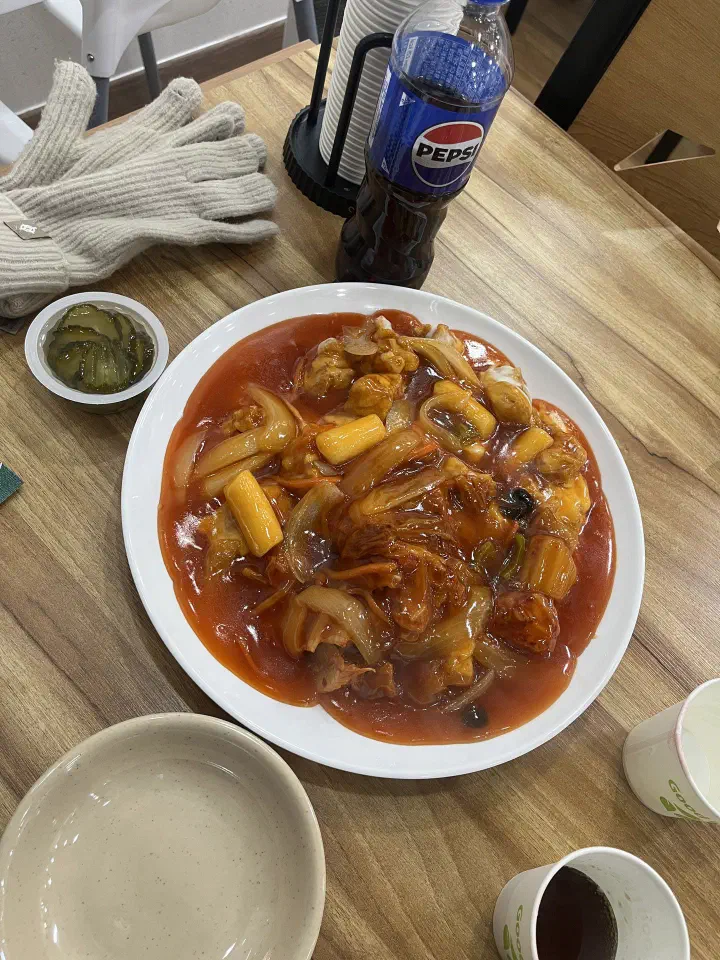
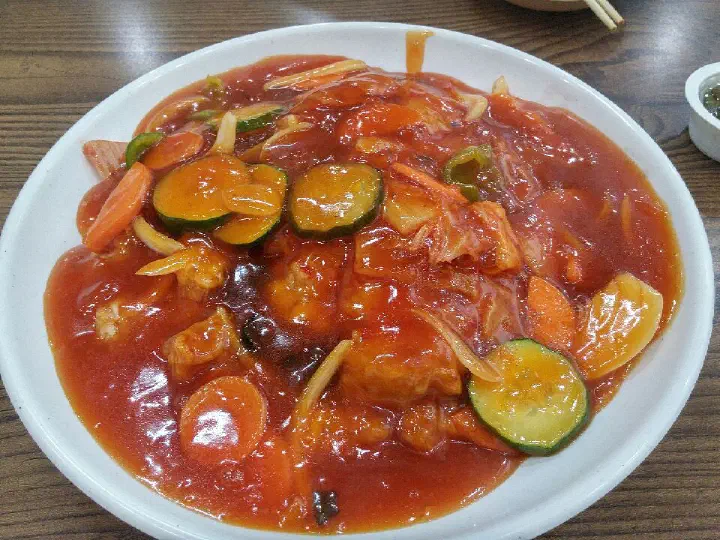
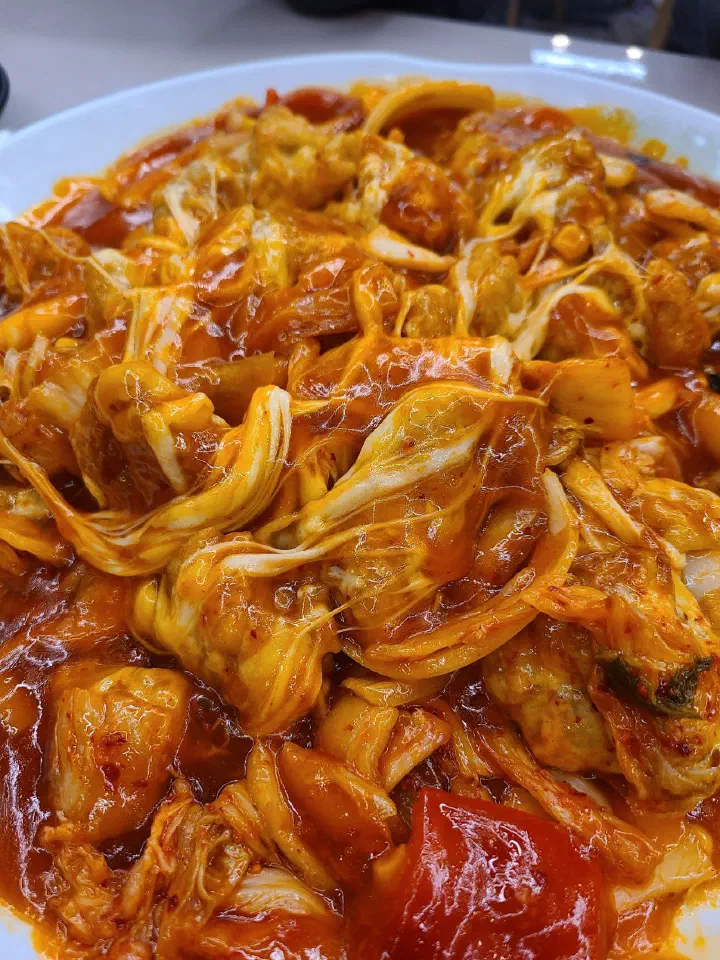
It is called gimpitang (김피탕), short for kimchi pizza tangsuyuk.
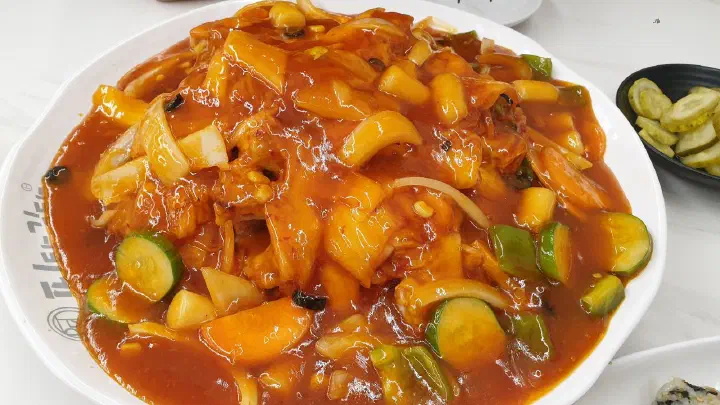
Yes, that is kimchi, pizza cheese, and Korean sweet-and-sour fried meat, all on one plate.
I know how it sounds.
I was skeptical too, about ten years ago, when a friend dragged me to a tiny shop in Gongju for my first plate.
One bite in, the tangy sauce, the sour kick of aged kimchi, and the stretchy cheese somehow made complete sense together.
I have been coming back ever since.
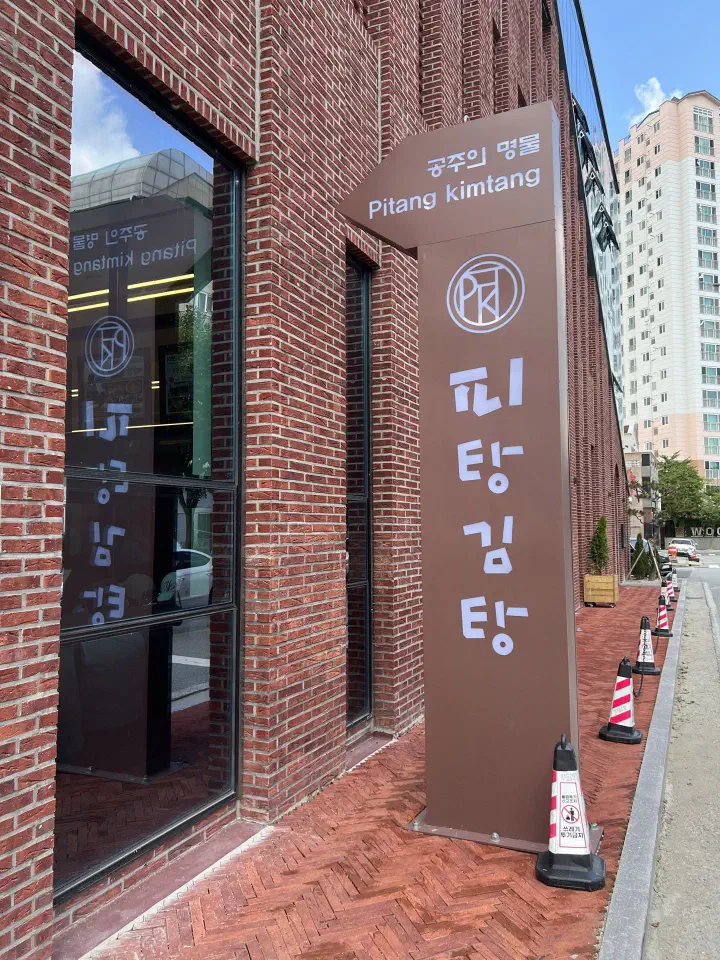
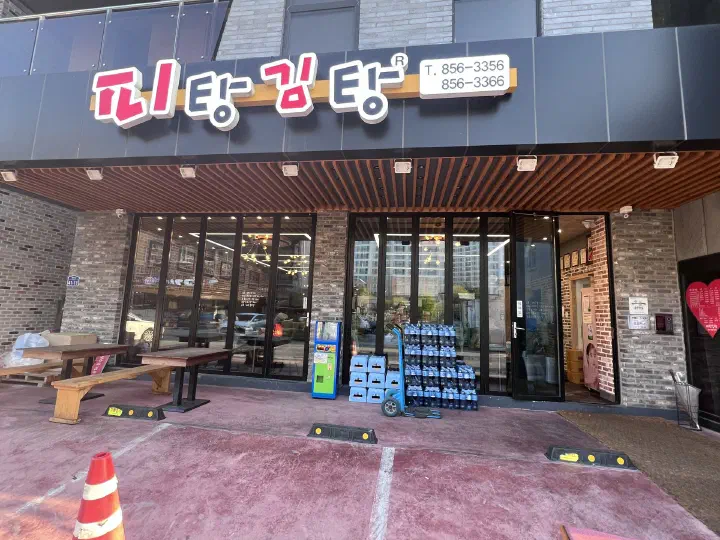
Gongju is widely considered the birthplace of this dish, and two restaurants claim the crown: Bukgyeong Tangsuyuk (북경탕수육) in the old downtown, and Pitang Gimtang (피탕김탕) across the river.
Local lore, and Korean wiki pages, say the two families are actually relatives - the story goes that a nephew of the Bukgyeong owner opened Pitang Gimtang.
I could not verify that officially, so take it as neighborhood gossip.
What I can verify is that both are very good.
One more thing before we dive in: a hugely popular Korean YouTube food show recently featured Gongju’s gimpitang, and both places have been slammed with crowds since.
Plan for a wait, especially on weekends.
1. Bukgyeong Tangsuyuk - the original in the alley

- Address: 5-18 Jungdong 1-gil, Gongju-si, Chungcheongnam-do
- Hours: 9:00 am - 2:00 pm (closes early when sold out, which happens often)
- Parking: 2-3 spots in front; a public lot is a 3-minute walk away
- Phone: 041-858-9991
📍 View Bukgyeong Tangsuyuk (북경탕수육) on Google Maps →
Bukgyeong Tangsuyuk is a small, decades-old family-run shop tucked into a narrow alley near Sanseong Market.
The same family has run it for about thirty years, which is why most Koreans point here when asked where gimpitang was born.
A quick menu decoder, because the word gimpitang does not actually appear on their menu.
What you want is the kimchi cheese tangsuyuk (김치치즈탕수육), or the upgraded version with chunks of fried sweet potato, the sweet potato kimchi cheese tangsuyuk (고구마김치치즈탕수육).
The smallest “single” size runs in the mid 10,000-won range and is honestly enough for two lighter eaters.
Portions here are no joke - my first visit, two of us ordered a “small” and had to wave the white flag halfway through.
The meat is fried chicken rather than pork, glazed in a sweet-and-sour sauce with deeply fermented kimchi folded in.
The cheese hides at the bottom of the plate, so flip and mix everything as soon as it lands on your table, while it is still hot.
Add the fried rice cakes (tteok sari, 떡사리) if you can - they taste like Korean street-food skewers.
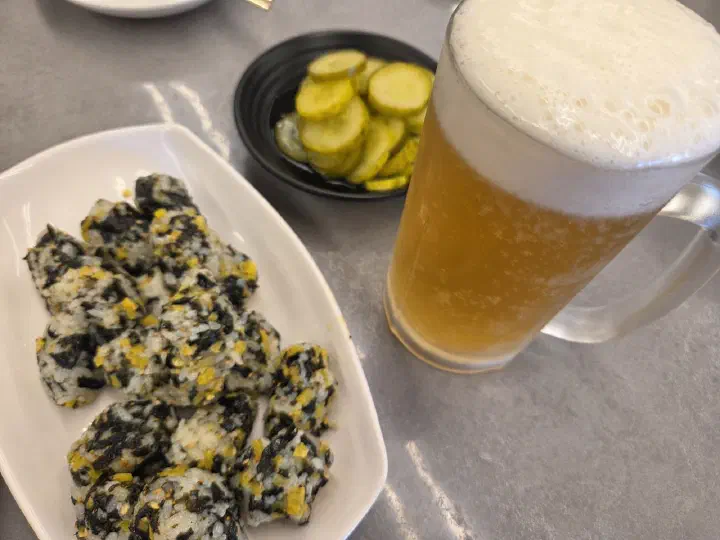
Every order comes with a free bottle of cola and pickles, and water is self-serve from the dispenser.

A few honest caveats.
The dining room is cramped, with low tables packed close together, so it is not the most comfortable spot for long legs or older knees.
The kitchen is open, and on busy days you can hear the cooks getting loud with each other, which several visitors (myself included) have found a bit awkward.
And the big one: they regularly sell out by 12:30 pm on weekends.
Grab a numbered ticket at the counter as soon as you arrive - before 1:00 pm at the latest - and feel free to wander the nearby market while you wait.
Don’t drive into the alley; it is barely wide enough for the delivery scooters.
Park at the public lot nearby (free on weekends) and walk in.
2. Pitang Gimtang - the dish that built a building

- Address: 47-5 Hanjeok 2-gil, Gongju-si, Chungcheongnam-do
- Hours: 11:00 am - 11:00 pm (afternoon break and biweekly Monday closures reported - check before visiting)
- Parking: dedicated lot on the 2nd floor of their building, first 90 minutes free with registration at the counter
- Phone: 041-856-3366
📍 View Pitang Gimtang (피탕김탕) on Google Maps →
Pitang Gimtang is the glow-up story of the two.
When I first visited years ago, it was a humble neighborhood joint that lived mostly off delivery orders.
Back in 2017 two of us ate our fill for 15,000 won total.


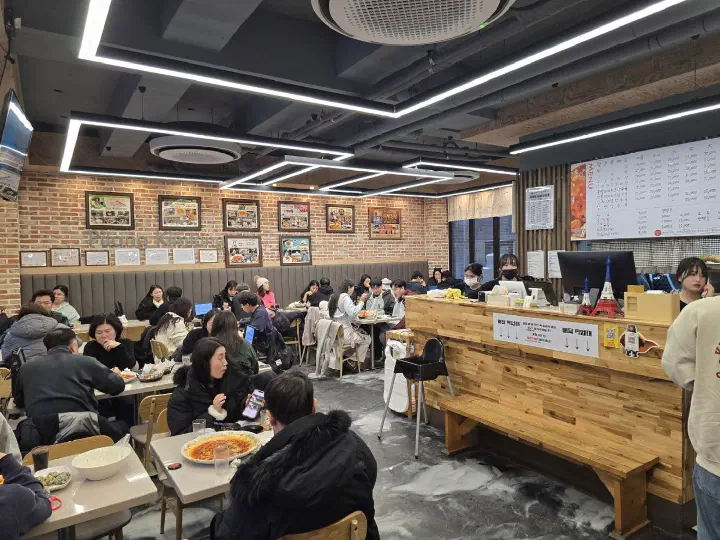
Then in the summer of 2025 they moved into a brand-new three-story building they built nearby - restaurant on the first floor, parking on the second, and a cafe on the third that doubles as overflow seating when the main hall fills up.
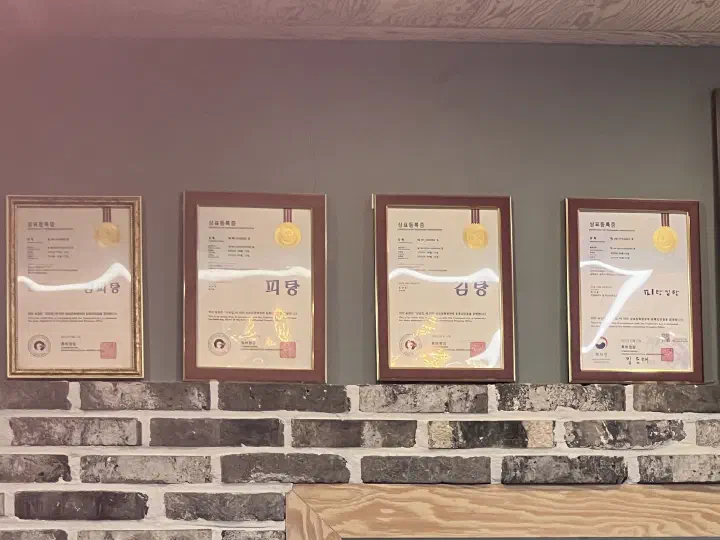
Locals joke that gimpitang literally built that building, and the four trademark certificates framed on the wall (they registered the names pitang, gimtang, and more) show how seriously they take being the namesake of the dish.

The menu covers pitang (cheese only), gimpitang (with kimchi), and sweet potato versions, plus a striking black-battered “black cheese tangsuyuk.”
Here is the trap for first-timers: the size names undersell wildly.
“Couple” feeds two, “mini” feeds three, “small” feeds four.
Order one size smaller than your instinct says, and another size down if you add side dishes.


The default meat is chicken tenderloin - so tender that most people cannot tell it is not pork - and you can switch to pork loin for a small extra charge.
The cheese-add option (5,000 won) turns it into something gloriously over the top.


Here too the cheese hides at the bottom of the plate, and the menu tells you to mix everything the moment it arrives, before the cheese sets.
Do as it says - every piece ends up coated.


Do not skip the sides here.
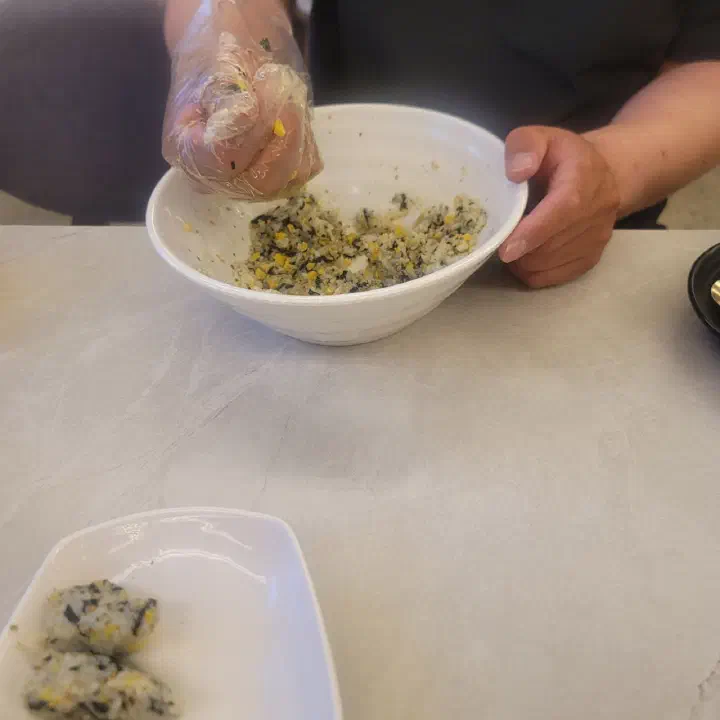
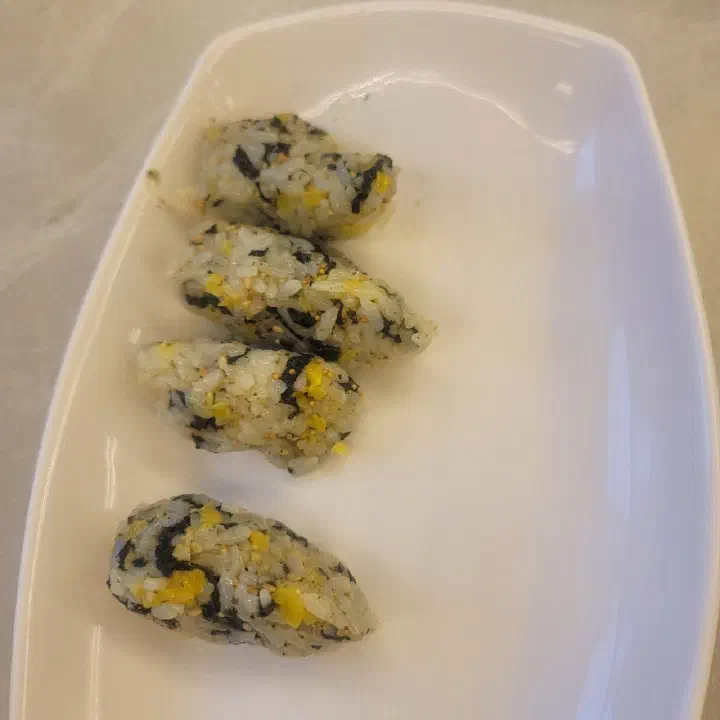
The jumeokbap (주먹밥) is a DIY seaweed rice ball kit - you mix and roll the rice yourself, then dip it in the leftover sauce, which is half the fun.
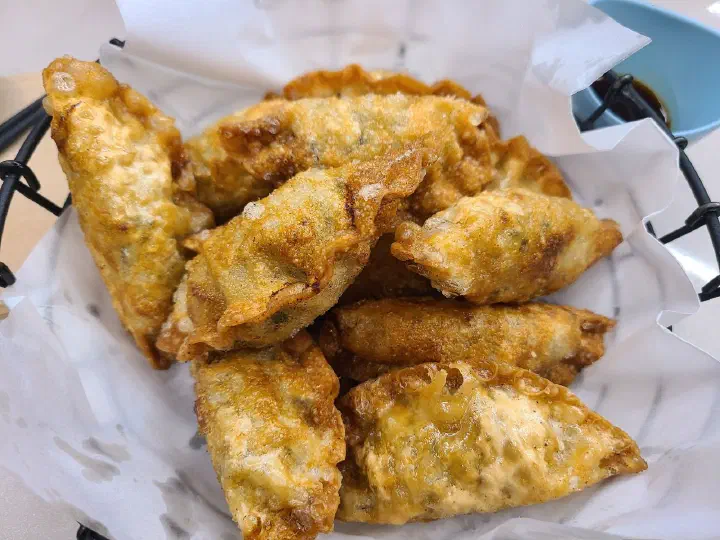
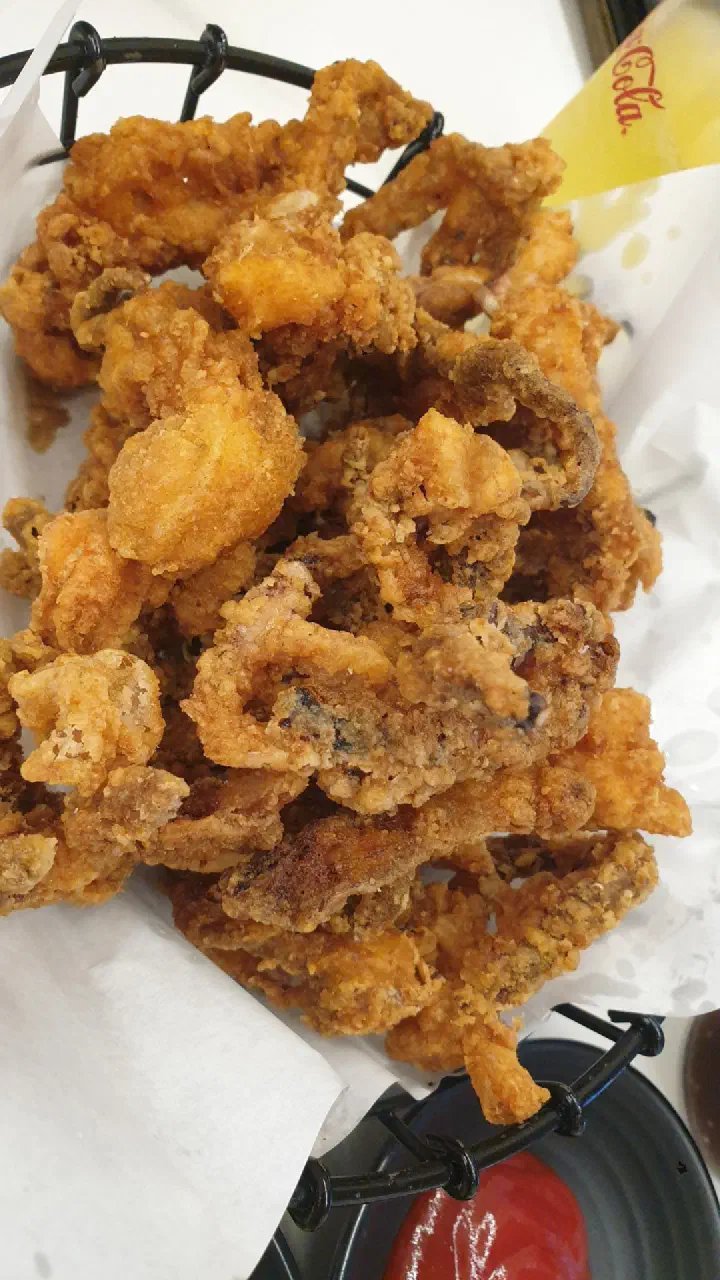
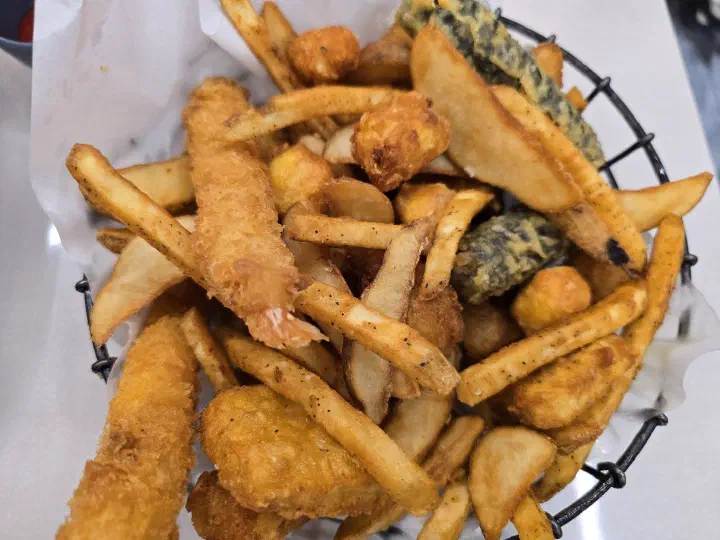
The mandu (만두) are big fried dumplings, eleven pieces for 5,000 won, and the squid or assorted tempura is a kids’ favorite.


Soft drinks are free with unlimited refills, which still amazes me every visit.
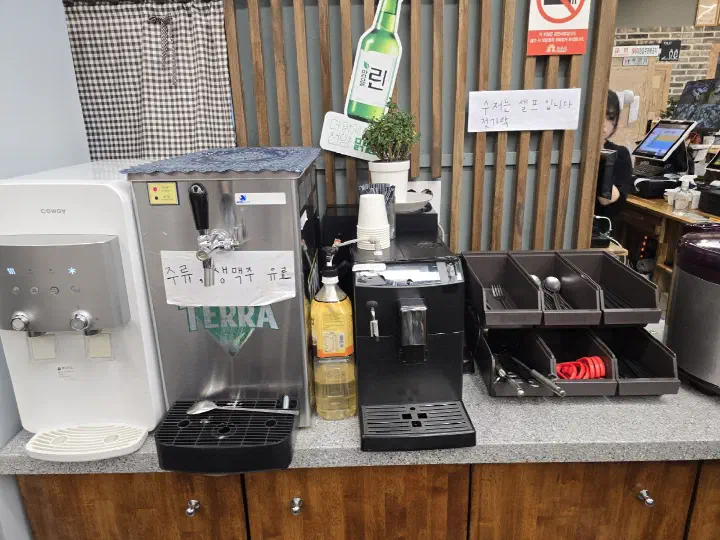
The self-serve corner has the drink machine, pickles, cutlery, and even hair ties and phone chargers.
You order and pay through a tablet at your table, so the language barrier is basically zero - the menu has photos, and you just tap what you want.

Now the honest part.
Weekend waits have gotten serious - after the YouTube episode aired, the queue passed 200 groups one afternoon.
Koreans use a waiting app called CatchTable to join the line remotely; if you cannot use the app, go right at opening or on a weekday.
On packed days, orders occasionally get lost in the shuffle - if your food has not appeared in 30 minutes, politely flag a server.
The parking lot holds only about ten cars, so register your plate at the counter for the free 90 minutes and be ready to street-park nearby if it is full.
Leftovers are normal here - there is a self-service vacuum-packing station, and reheating the tangsuyuk in an air fryer (180°C, 5 minutes) the next day brings the crunch right back.


Which one should you pick?
Both serve chicken-based tangsuyuk smothered in kimchi and cheese, both are generous to a fault, and both deliver the real Gongju flavor you cannot find elsewhere - I have tried gimpitang in other cities and it is simply not the same.
The differences come down to vibe and logistics.
Bukgyeong Tangsuyuk is the nostalgic original: bolder kimchi flavor, a tiny bustling room, lunch only.
Pitang Gimtang is the modern operation: spacious, open until 11:00 pm, free refills, table-side tablets, easy with kids or grandparents.
If you stay overnight in Gongju, do what I do - Bukgyeong for lunch, Pitang Gimtang for dinner, and judge the family rivalry yourself.
Practical notes for international visitors
A few things that make this trip easier if you are coming from abroad.
Both restaurants take credit cards, and any internationally issued Visa or Mastercard worked fine for me - Korea is thoroughly card-friendly, even at small family shops like Bukgyeong.
There is no tipping culture in Korea, so do not leave anything extra; the staff may chase you down thinking you forgot your money.
Neither place has English-speaking staff, but ordering is genuinely easy.
At Bukgyeong, point at the menu and show the size with your fingers - that is exactly what I watched other tables do.
At Pitang Gimtang, the tablet ordering means you barely need to speak at all.
The dish itself is only mildly spicy by Korean standards, so most visitors handle it well, though if you are sensitive to heat, start with the plain pitang (no kimchi) version.
For navigation, skip Google Maps for walking directions - it is famously unreliable in Korea.
Download Naver Map or Kakao Map instead; both have English interfaces.
Gongju has no train station, so the easiest route without a car is an express bus from Seoul or a bus/taxi from Gongju Bus Terminal - both restaurants are a 5-10 minute taxi ride from the terminal, and the Kakao T app makes grabbing a taxi painless.
Gongju is a compact, safe town, and pairing either restaurant with a walk along the Gongsanseong Fortress walls makes a perfect half-day.
Where to find them
One last time, so you do not have to scroll back up - here are both locations.
Bukgyeong Tangsuyuk hides in an alley near Sanseong Market, best reached on foot, while Pitang Gimtang is a new standalone building you can drive straight to.