If you say “ox-head soup” anywhere near Gonjiam,
this is the name people bring up first.
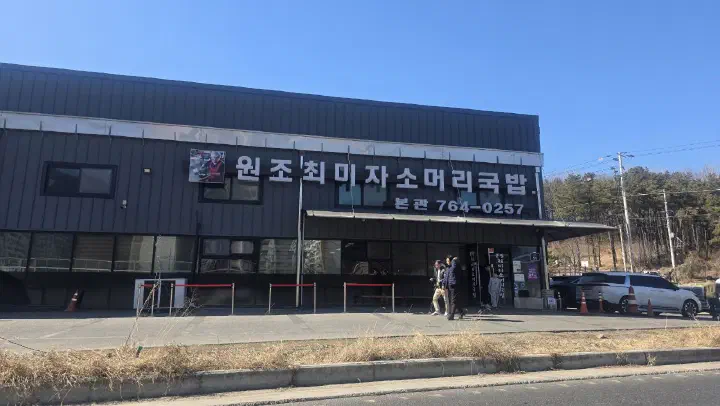
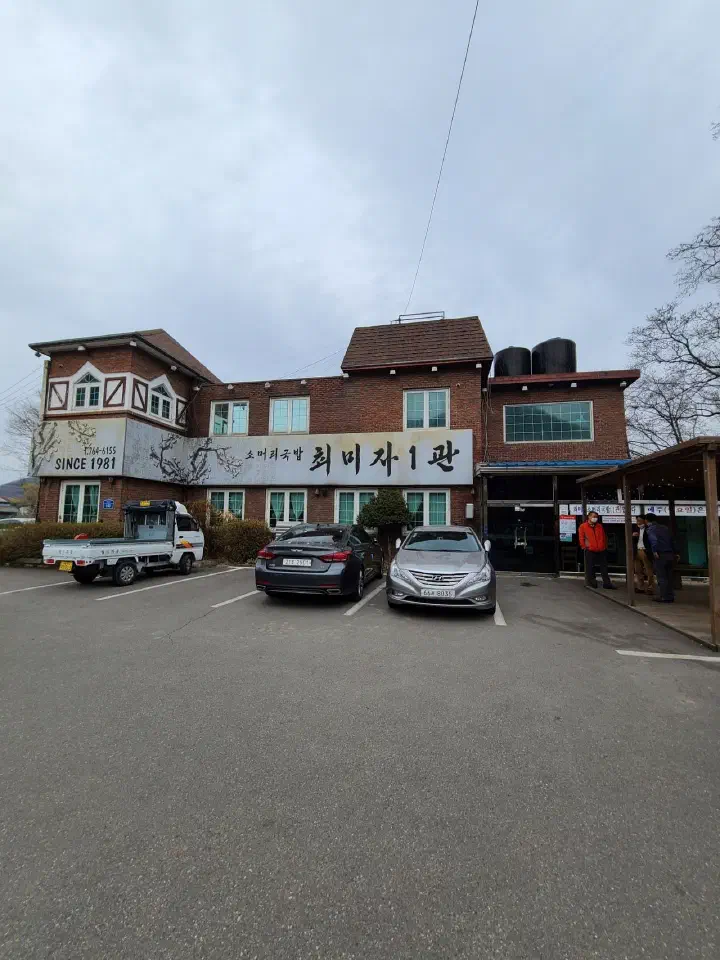
The sign is huge, so you’ll probably notice it
on the way to or from Hwadam Forest or Gonjiam Resort.
This isn’t a tidy promo piece. It’s the stuff you actually
want to know: what to order, when to skip the line,
and whether the price makes sense.
The basics first
Address: 58 Docheok-ro, Gonjiam-eup, Gwangju-si, Gyeonggi-do.
Phone: 031-764-0257.
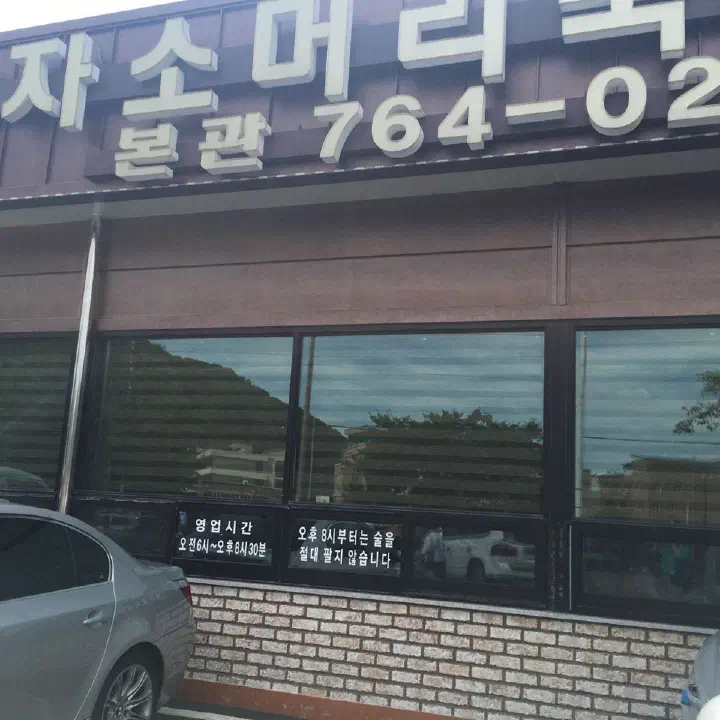
Hours run Tuesday to Sunday, 06:00 - 16:00,
with last order at 15:45. Closed Mondays.
One thing worth knowing. This place used to stay open
until around 8 p.m., but the main hall now wraps up at 4 p.m.
And if the broth runs out, it closes even earlier.
So if you’re aiming for a late lunch, it’s smart to call ahead.
📍 View Choimija Someori Gukbap (최미자소머리국밥) on Google Maps →


Main hall vs. branch 1
There are two buildings facing each other across the road:
the main hall (본관) and branch 1 (1관).
They started as one shop, and now a son runs the main hall
while a daughter runs branch 1. Same family, same roots,
same soup.
The difference is the schedule. The main hall closes at 4 p.m.,
while branch 1 stays open until 8 p.m. and even has a “special”
larger bowl on its menu.
For an early meal, the main hall is easier. For dinner,
go to branch 1. Locals say the main hall line is usually
a touch shorter, too.
Open since 1981
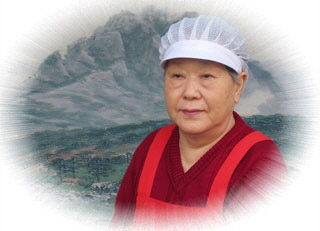
The shop opened in 1981. Choi Mi-ja started it in a small
spot in the old market alley.
Ox-head meat can smell gamey, and that was the early struggle.
Adding ginseng to the pot is what tamed it. The broth is built
from beef bones first, then ox-head meat, and simmered for
roughly seven to eight hours.
That little market shop grew into the big main hall and branch 1
you see today, which is why people call it the original of
Gonjiam’s ox-head soup street.
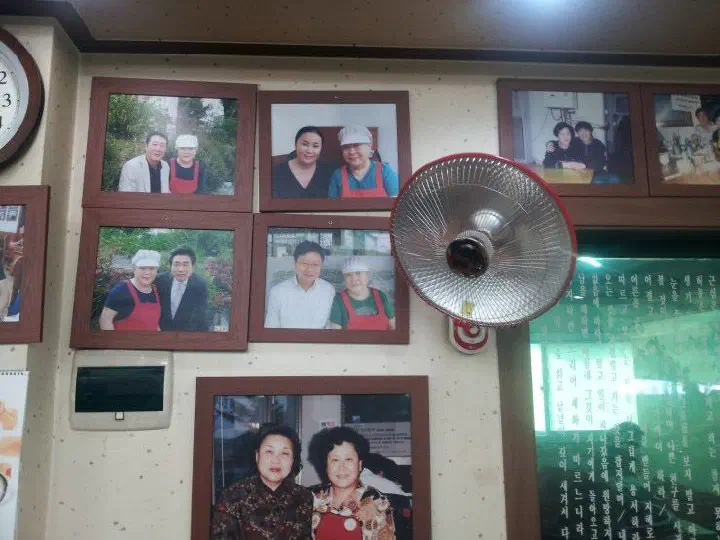
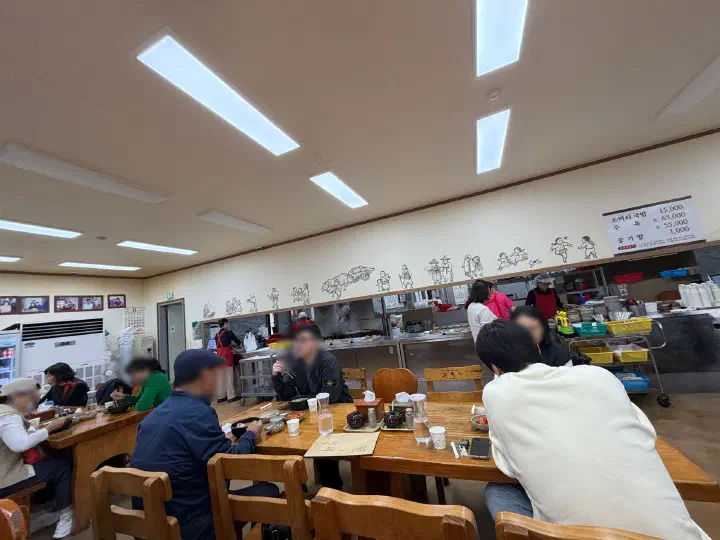
You feel that history on the walls. Old TV-appearance photos
and celebrity snapshots wrap all the way around the hall.

It shows up on TV a lot, too. Over the years it has appeared on
shows like Heo Young-man’s Baekban Travels (TV Chosun),
Bob Bless You (Olive), and several KBS food programs.

Getting a seat: parking and the wait
Most people drive here, so the lot is big, and there’s even
a staff member helping with parking. There’s room beside and
behind the building, so parking is rarely a headache.
Heads up, though: the road out front is sometimes under
construction, so take it slow pulling in and out.

The wait depends heavily on timing. Before 11 a.m. you can often
walk right in, but after 11 the crowd builds fast. On weekend
lunches you might wait 30 minutes to an hour.
The upside: with a single main dish, tables turn over quickly,
so even a long-looking line clears faster than you’d expect.

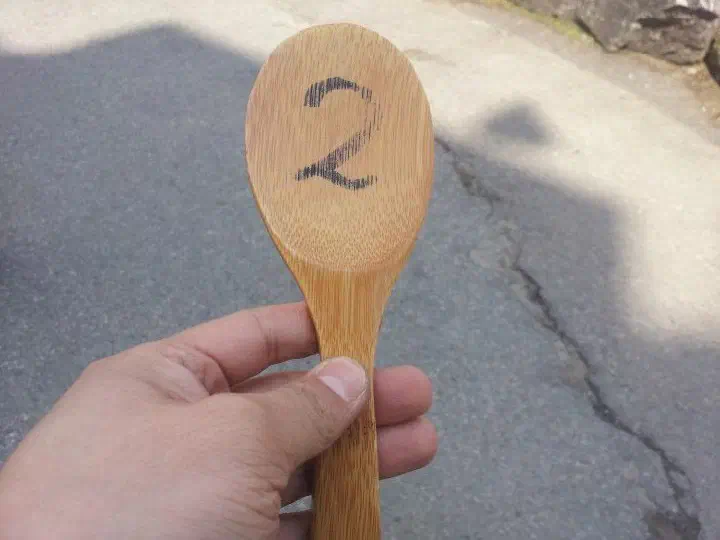
The waiting system is charmingly analog. There’s no app.
You go in, say how many people, and they hand you a wooden rice
paddle with a number on it. They call the number out loud,
so stay close rather than wandering off.

Menu and price
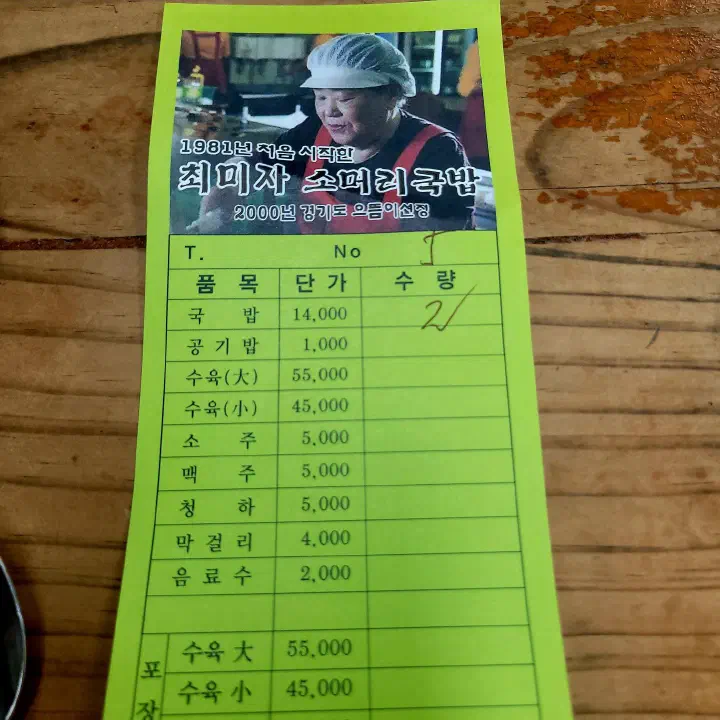
The menu is short: ox-head rice soup and suyuk (sliced boiled beef).
That’s basically it.
A regular someori gukbap (소머리국밥) is 15,000 won.
Suyuk is 55,000 won (small) or 65,000 won (large),
and extra rice is 1,000 won. (Branch 1 also has an 18,000-won
“special” bowl.)
It isn’t cheap for a rice soup, I’ll be honest. But the price
history puts it in context: around 9,000 won in 2012, then
11,000, then 14,000, and now 15,000 won.
Given the amount of meat and the slow-cooked broth, most people
land on “pricey, but fair.”

Side dishes and the magic dipping sauce
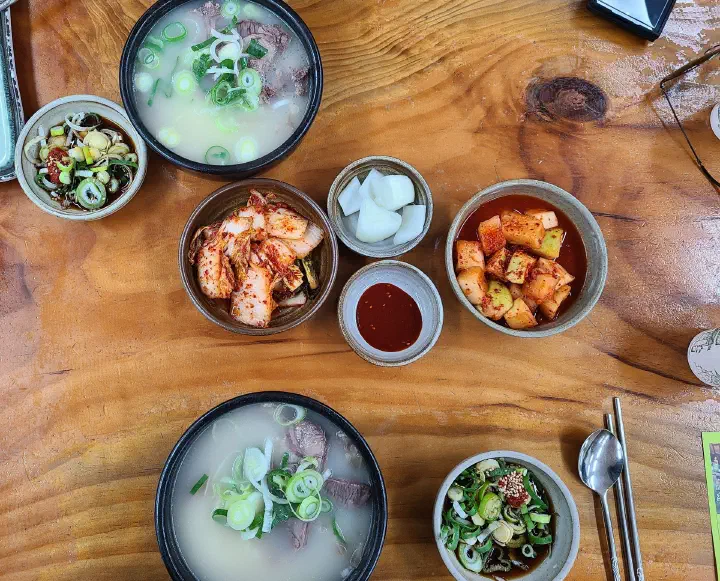
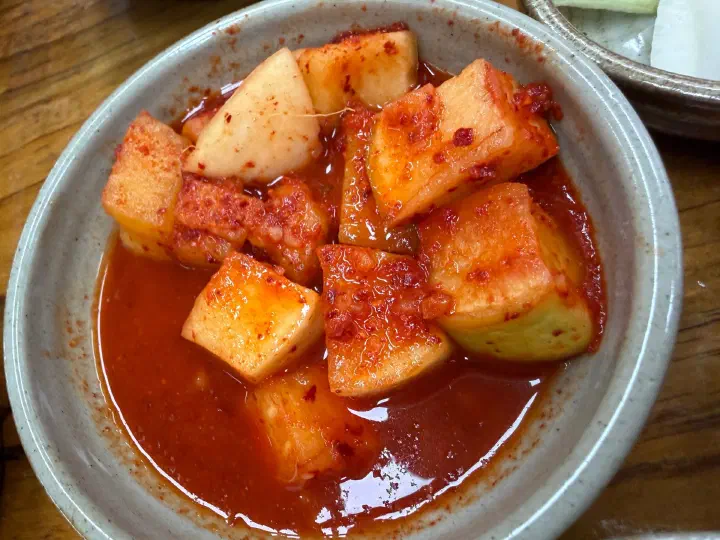
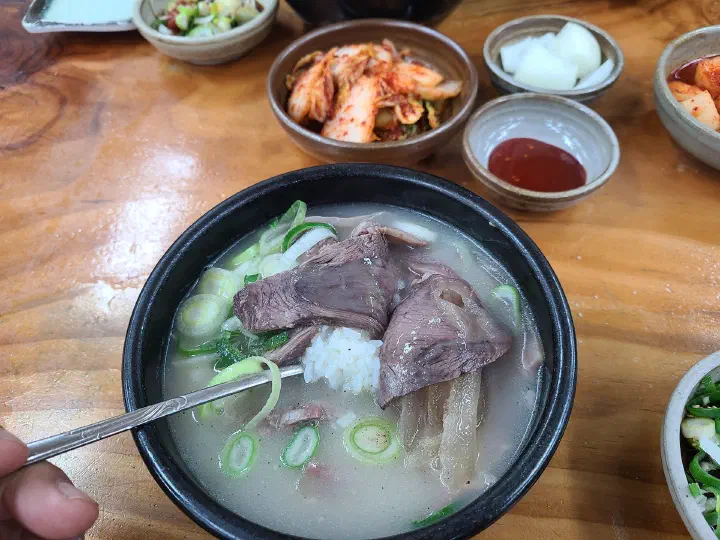
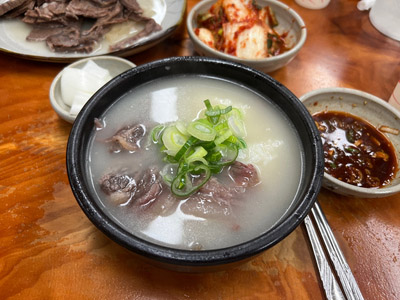
Sides come out the moment you sit: kkakdugi (깍두기, cubed radish
kimchi), fresh baechu-geotjeori (배추겉절이, lightly seasoned cabbage
kimchi), raw onion, and gochujang.

The geotjeori is crisp and fresh, which works well with the soup.
The kkakdugi varies day to day in how ripe it is; catch a
well-fermented batch and it’s great over the rice.
Honestly, the kimchi isn’t a destination on its own. Set your
expectations a notch lower there and you’ll be fine.

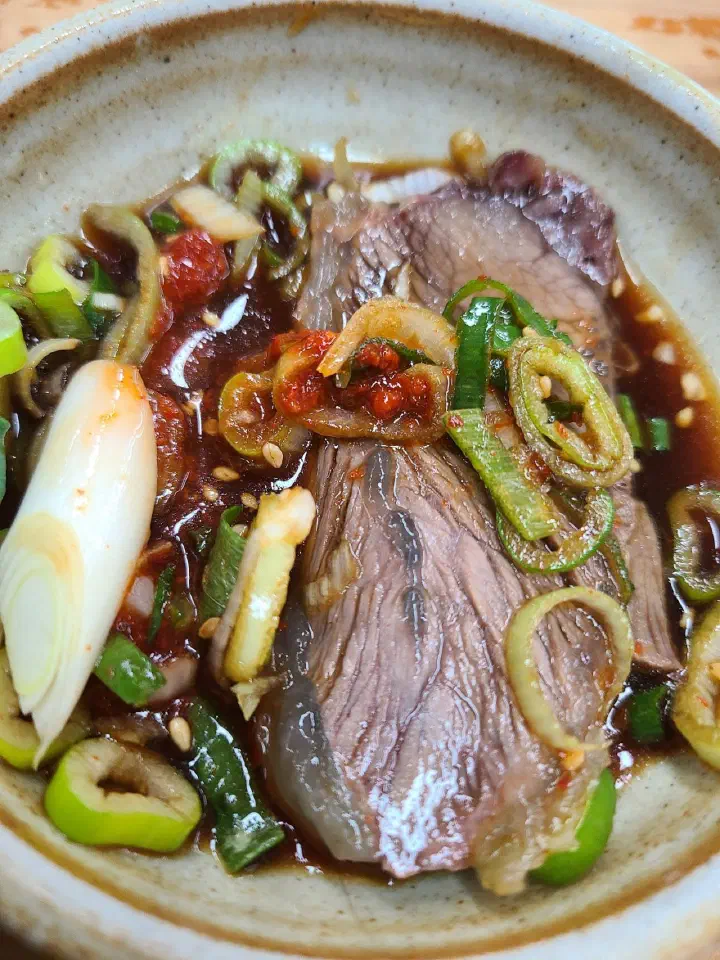
The real star is the soy-based dipping sauce for the meat.
It’s just soy sauce with vinegar, chili flakes and scallion,
but that little tang is a perfect match for the ox-head beef.
Some people come back mostly for this sauce.
The soup: toryeom-style
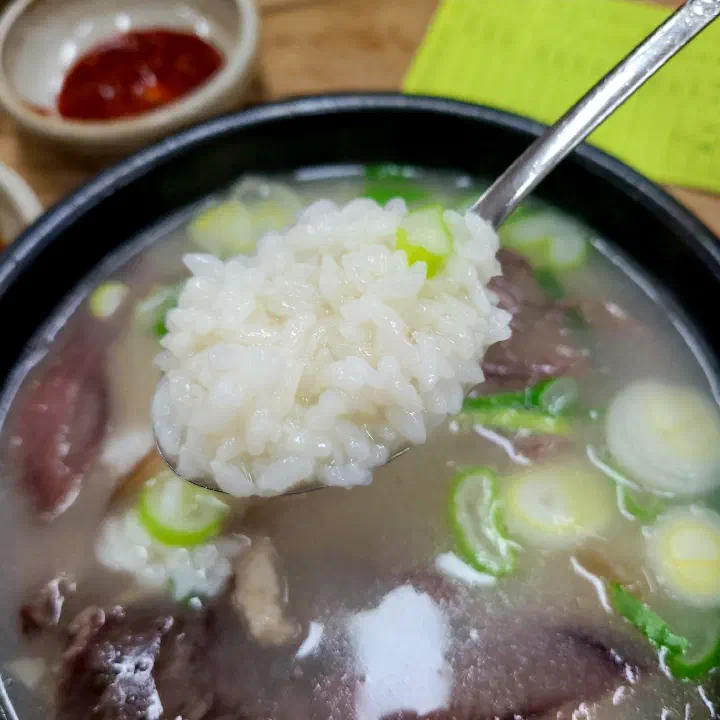
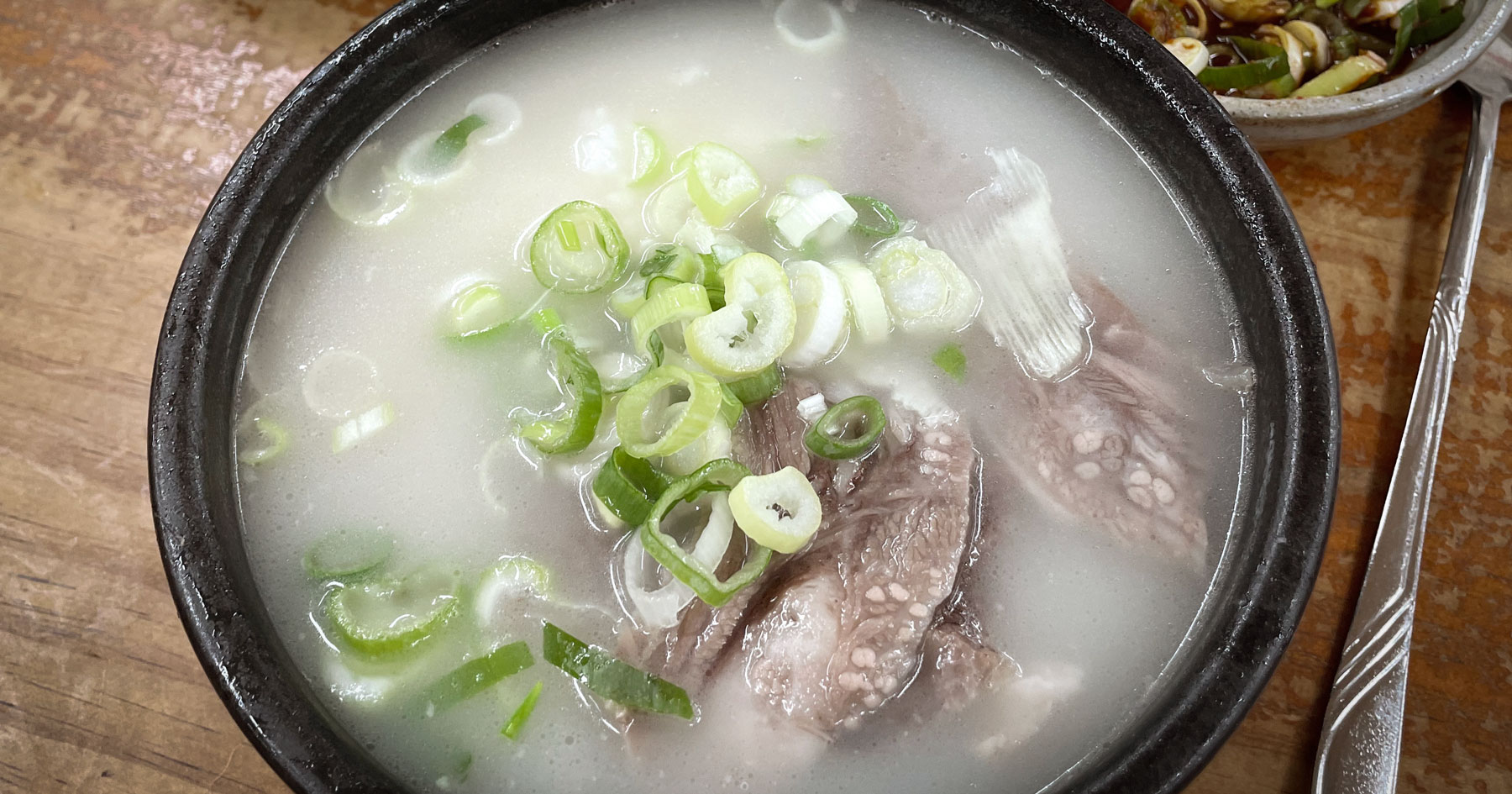
The rice soup is served toryeom-style. The rice is already in the
bowl, and hot broth is poured in and drained several times to warm
it to the right temperature.
So it doesn’t arrive bubbling hot, but at an easy, ready-to-eat
warmth. Good if you’re not into scalding soups, and it’s part of
why tables turn so fast.

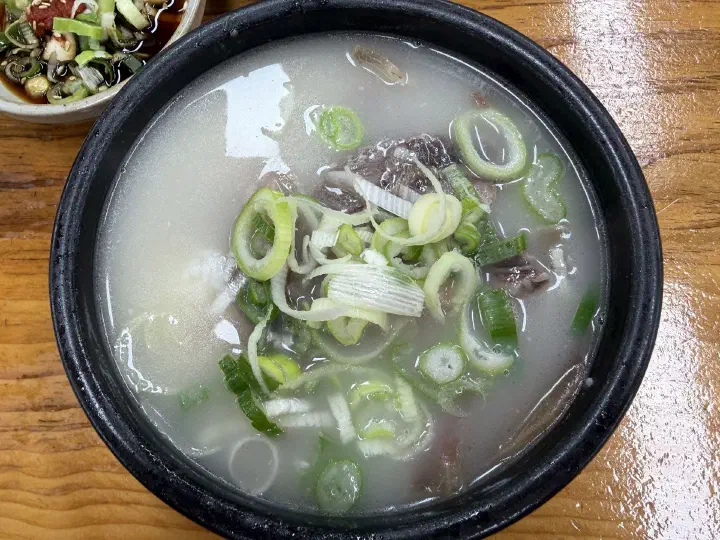
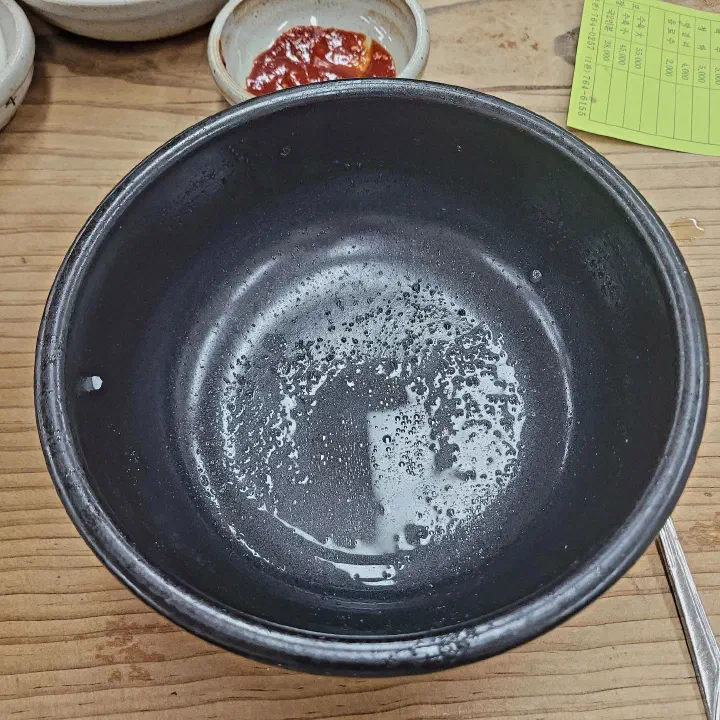
The broth is milky and clean, with very little gaminess,
rich but not heavy.
Important: the broth comes barely seasoned. You adjust it
yourself with the salt and pepper on the table.
This is the make-or-break point for many people. Plenty love how
clean and deep it is, but the first unseasoned spoonful can feel
“plain, almost like seolleongtang” to some. A pinch of salt brings
out a lot more savory depth.

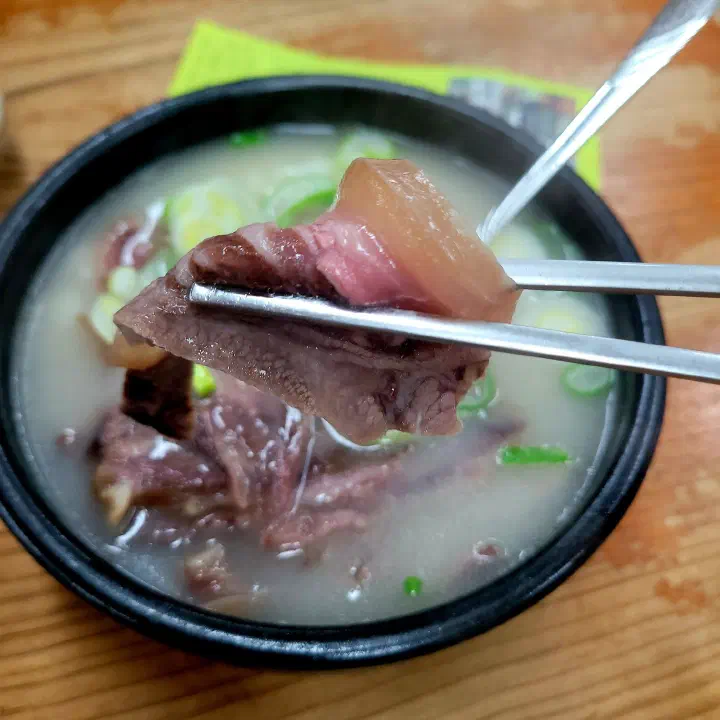
The meat is generous. It’s cut thick and chunky, not in thin
shreds, with both lean slices and chewy, gelatinous fattier bits.
It pulls apart softly but still has bite, and the beef keeps
turning up bite after bite.


And a plate of suyuk
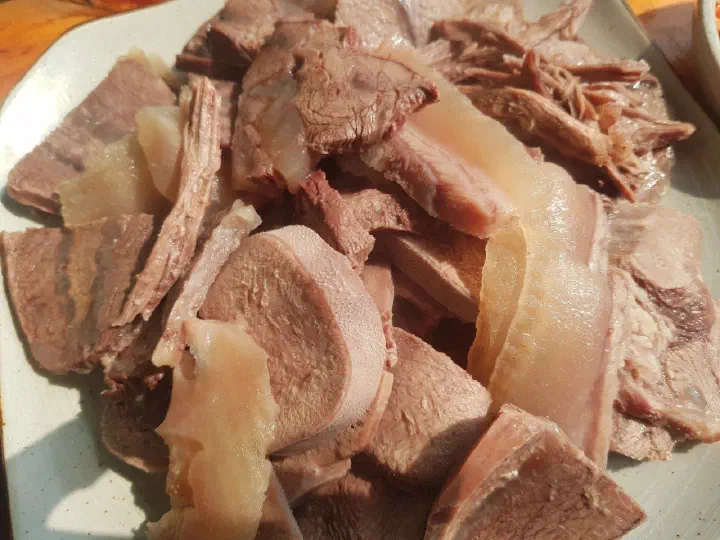
If you love beef, the suyuk is worth adding. It mixes lean and
fatty cuts, with soft lean meat and chewy fat.

The portion is hefty, and they include a separate bowl of
meat-free broth. Note that it can sell out before lunch, so if
suyuk is your goal, go early.
A group favorite is one bowl of soup each plus a shared plate
of suyuk.

The honest downsides
To keep it balanced, a few real negatives.
One, the unseasoned broth can read as bland at first.
Plan on adjusting it with salt and pepper.
Two, there are a handful of reviews mentioning a stray hair
in the food. Not the norm, but worth noting.
Three, the place is slammed, so don’t expect warm, chatty service.
It’s more brisk than rude.
Good to know for travelers
- It opens at 6 a.m., so an early visit means a calmer room and
better meat. - The cafe next door gives a 1,000-won discount on drinks before
or after your meal. - There are baby chairs, so it’s fine with kids.
- Takeout is available, but not for a single serving; it starts
at two portions (30,000 won), with broth, meat and kimchi
packed separately. - You pay after the meal, not before.
A few practical notes for visitors from abroad. Like almost every
restaurant in Korea, this place takes credit cards, so an
internationally accepted card is fine; you pay on the way out.
There’s no tipping culture here, and leaving a tip may actually
confuse the staff. English isn’t really spoken, but the menu is
tiny, so just pointing and holding up fingers for how many bowls
works perfectly. The soup itself isn’t spicy, and the spicy
seasoning is served on the side, so you control the heat. For
walking and transit directions in Korea, Naver Map or KakaoMap is
far more accurate than Google Maps.
Gonjiam is famous for this dish, and there’s a whole little street
of ox-head soup houses. Right across the road is Baeyeonjeong
(배연정), named after the comedian Bae Yeon-jeong, so people often
debate between the two, and some locals actually prefer Guil Garden
(구일가든). Each place differs a bit in broth richness and price,
so it’s fun to compare a couple of spots.

Final thoughts
It isn’t a flashy, dramatic flavor. But the broth is clean and
free of off-smells, the meat is generous, and there’s a steadiness
you’d expect from a place that has held its corner for over
40 years.
It may not be worth a special trip on its own, but if you’re
moving between Hwadam Forest and Gonjiam Resort, it’s a solid,
filling stop.
It’s the kind of bowl you think of on a cold, hungry day.

Location / getting there
58 Docheok-ro, Gonjiam-eup, Gwangju-si, Gyeonggi-do.
About 10-15 minutes by car from Hwadam Forest and Gonjiam Resort,
and about 5 minutes from Gonjiam Ceramic Park.
A car is much easier than public transit for this one.