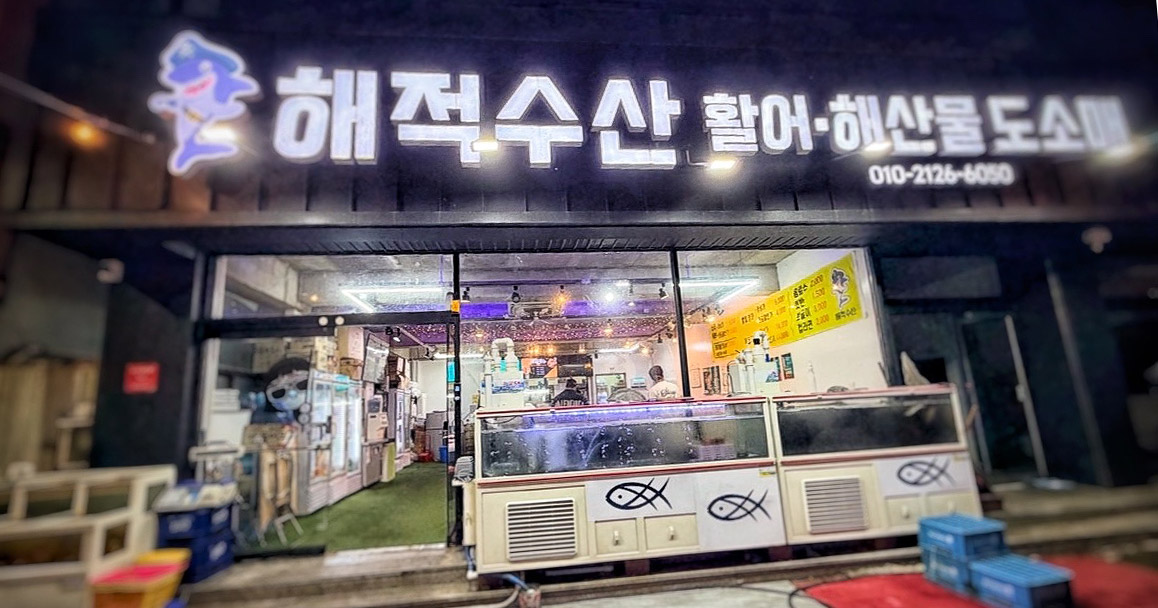
I didn’t plan to write about this place. I just kept going back.

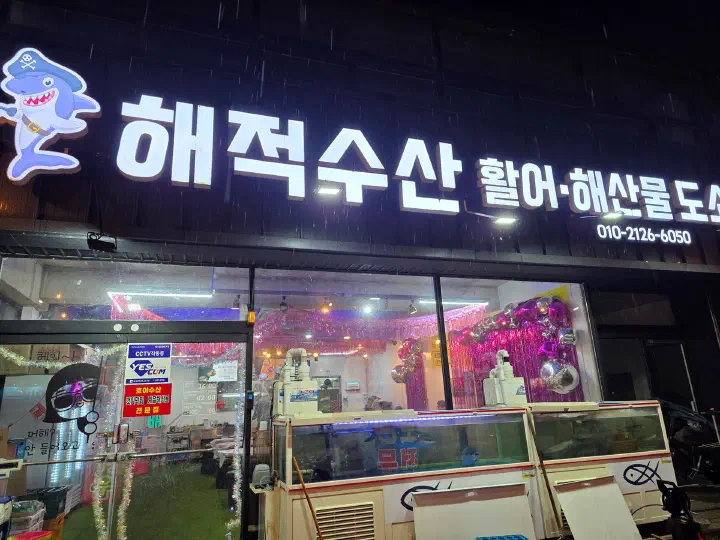
Haejeoksusan (해적수산) sits on a wide, slightly awkward road in Imdong (임동), up in Buk-gu, Gwangju. It’s not the kind of spot you stumble onto. There’s basically nothing around it — and then this one bright sign, lit up at night like it’s daring you to find it.

Haejeoksusan (해적수산)
1F, 14 Geumnam-ro, Buk-gu, Gwangju (광주광역시 북구 금남로 14 1층)

📍 View Haejeoksusan (해적수산) on Google Maps →

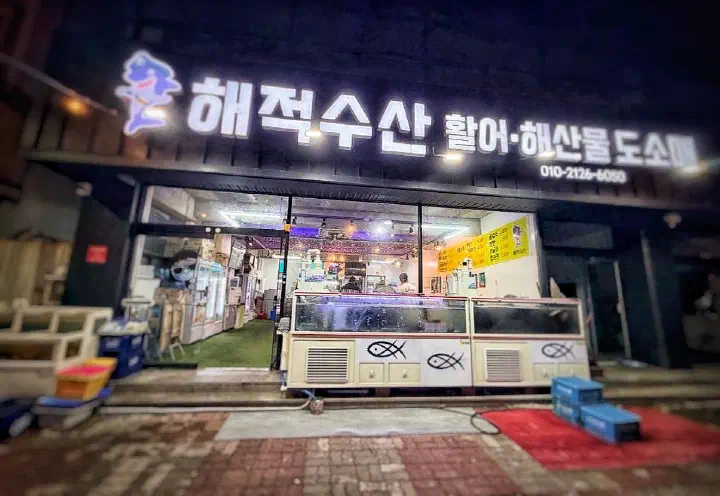
Haejeoksusan sashimi restaurant exterior and sign during the day in Imdong, Gwangju

The name means “Pirate Fisheries,” more or less. The owner doesn’t look like a pirate, in case you were wondering. He’s actually one of the friendlier restaurant owners I’ve run into in a while, the type who remembers your face on the second visit.

Haejeoksusan lit-up sign at night on a quiet road in Buk-gu

Go for the fish, not the fuss

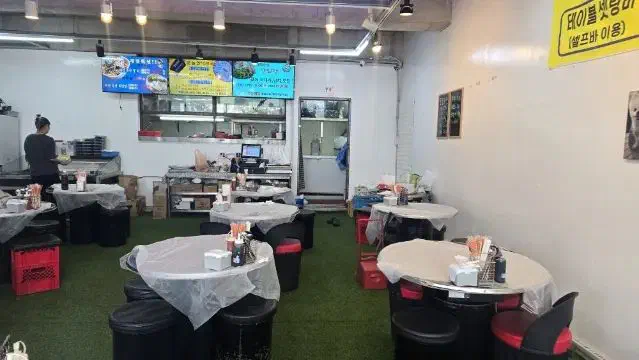
First thing to know: this is a fish-first place. It feels almost like a seafood market that decided to let you sit down. There are maybe six tables inside, a couple of big tanks by the entrance, and not much in the way of decoration.

Inside Haejeoksusan with simple tables and a market-style layout

If you walk in expecting a parade of free side dishes (the banchan-heavy style some Korean sashimi houses do), you’ll be a little surprised. The owner keeps the starters minimal on purpose. The whole point is the fish, and the fish is the part they don’t cut corners on.

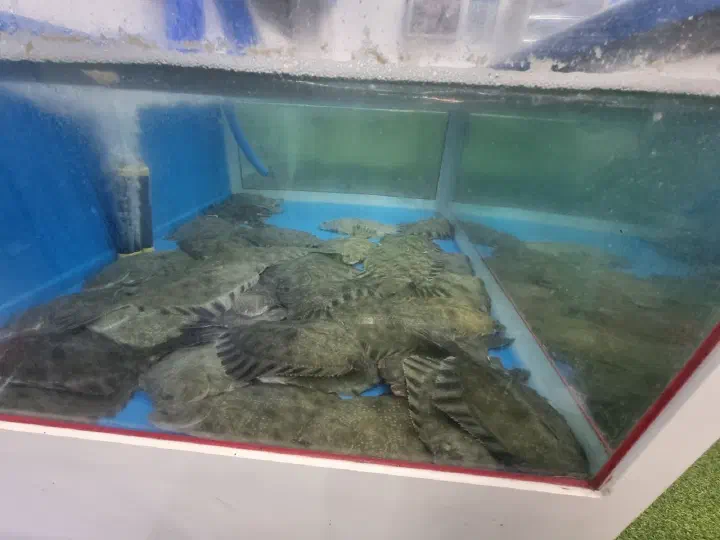
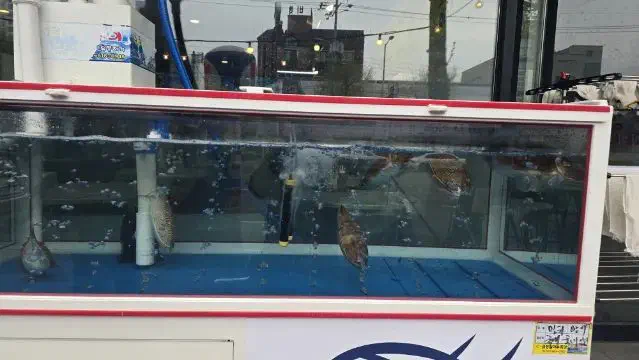
The tanks tell you everything. There’s a fat amberjack swimming around, sometimes a cuttlefish working its tentacles against the glass. Whatever you eat was very recently in there.

Live giant amberjack swimming in the tank at Haejeoksusan

Live cuttlefish in the seawater tank at the entrance

A note on prices and paying

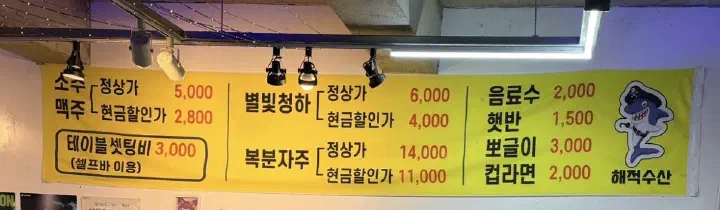
The menu board is up on the wall, and a lot of it runs on day’s-catch pricing, especially the live squid. When I called ahead once to check if they had live squid, the answer was “yes, come now” — and that’s the right move here, because they can sell out. One evening I showed up around 6:30 and they were already down to their last few. Heavy rain had muddied the water, the squid hadn’t been biting, and only forty came in that day. So: call first if your heart is set on something specific.

Haejeoksusan menu board on the wall with day’s-catch pricing

Here’s the practical bit. Card works fine — almost every restaurant in Korea takes cards, and any international card will be fine too. But this place gives a cash (or bank transfer) discount, and the gap is real. Soju and beer were 2,800 won when paying cash. Live squid ran around 14,000 won a piece on the day I went. If you’re paying cash, you save a little on basically everything.

Cash-discount notice posted at Haejeoksusan showing lower prices for cash payment

One small heads-up from experience: a friend once got a receipt that didn’t match the menu price on the seabream, and it turned out the portion had come in heavier than a kilo. The food was great and plenty, but ask about weight-based pricing when you order, just so there are no surprises.

What we ate

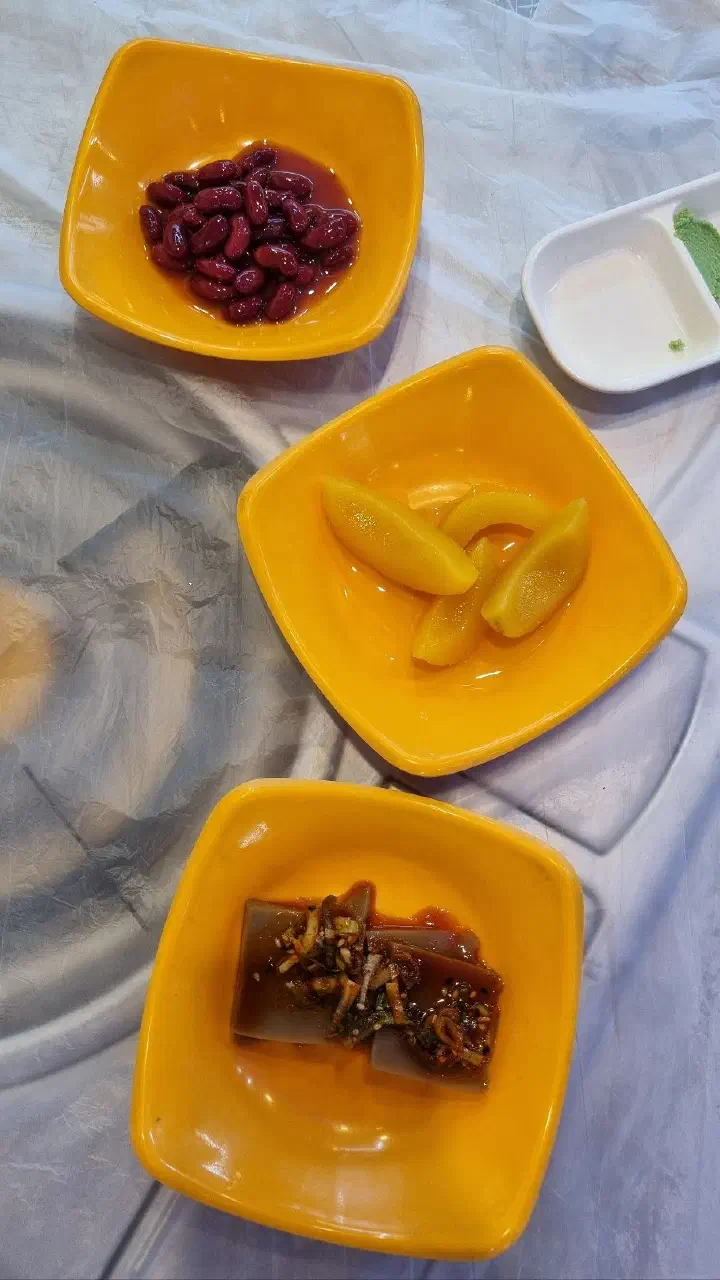
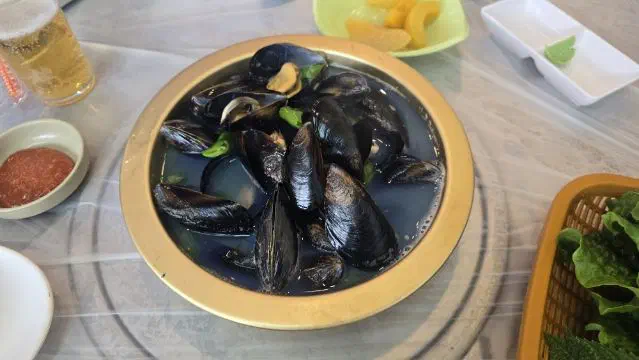
The free starters are simple — a few small dishes and a mussel soup (honghaptang, 홍합탕) that I genuinely look forward to now. Clean, hot, a little briny. It’s the kind of thing that disappears before the fish even arrives.

Small Korean side dishes served at Haejeoksusan

Mussel soup honghaptang served as a starter

Live squid (산오징어회)

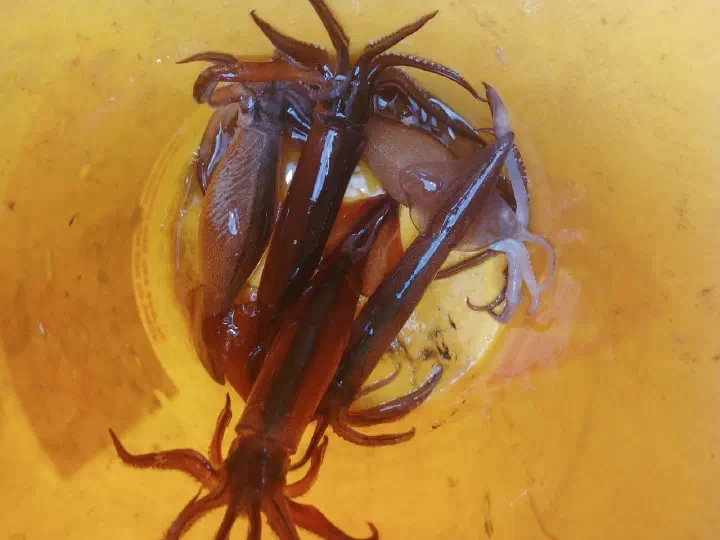
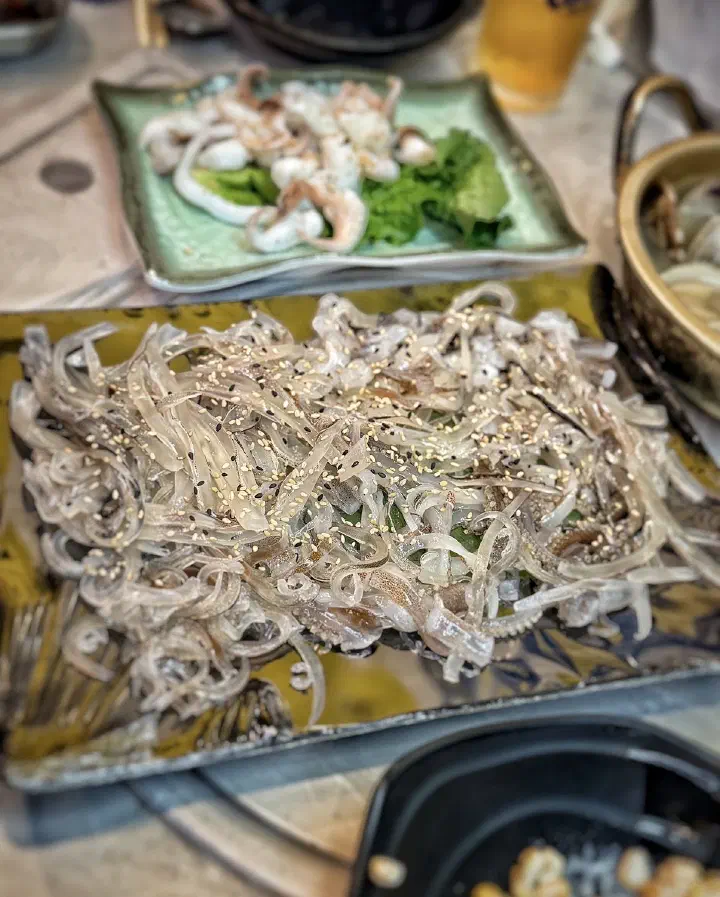
This is the one people drive out here for. They bring it out so fresh it’s still got that glassy shine, sliced lengthwise in long ribbons. It’s chewy in the best way — springy, a little sweet the longer you chew.

Whole live squid before slicing at Haejeoksusan

Live squid sashimi sliced into long ribbons on a plate

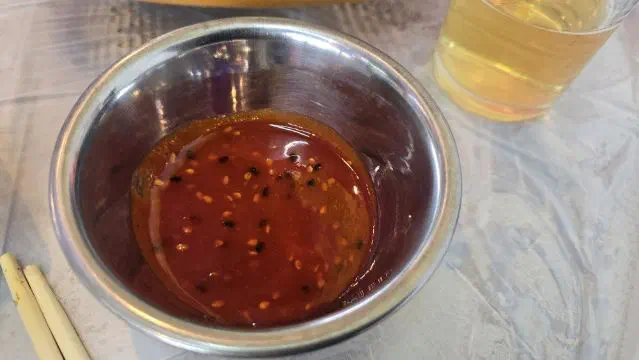
There’s a house dipping sauce that, honestly, beats the usual chili-vinegar paste. A bit spicy, a lot of savory depth. Squid plus that sauce plus a perilla leaf is the combination I keep coming back to.

Spicy house dipping sauce served with the sashimi

Kkaennip makhoe (깻잎막회)

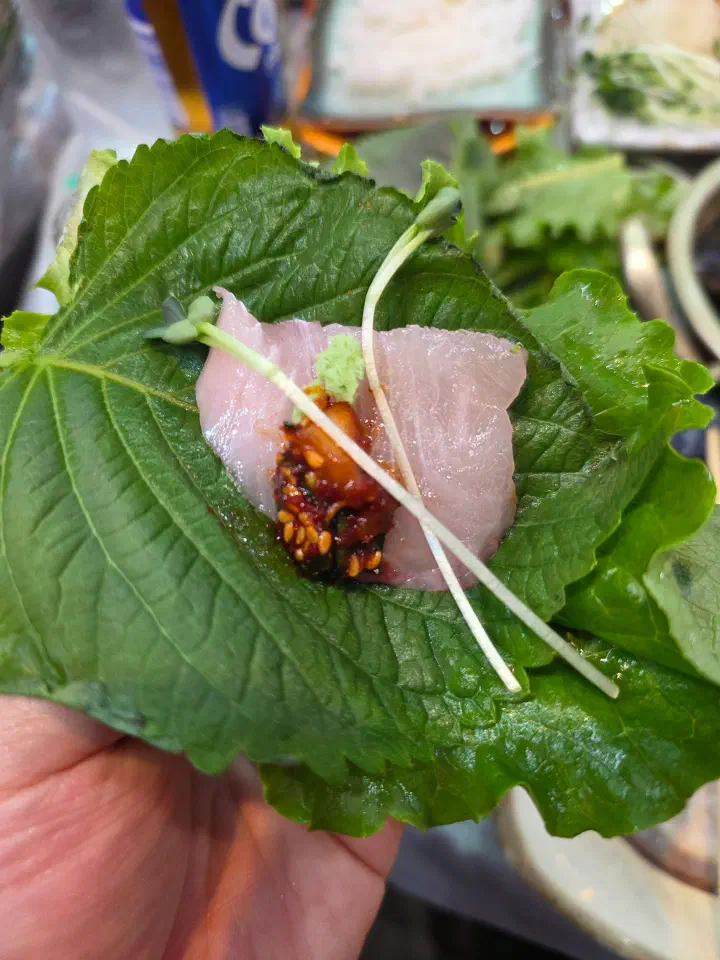
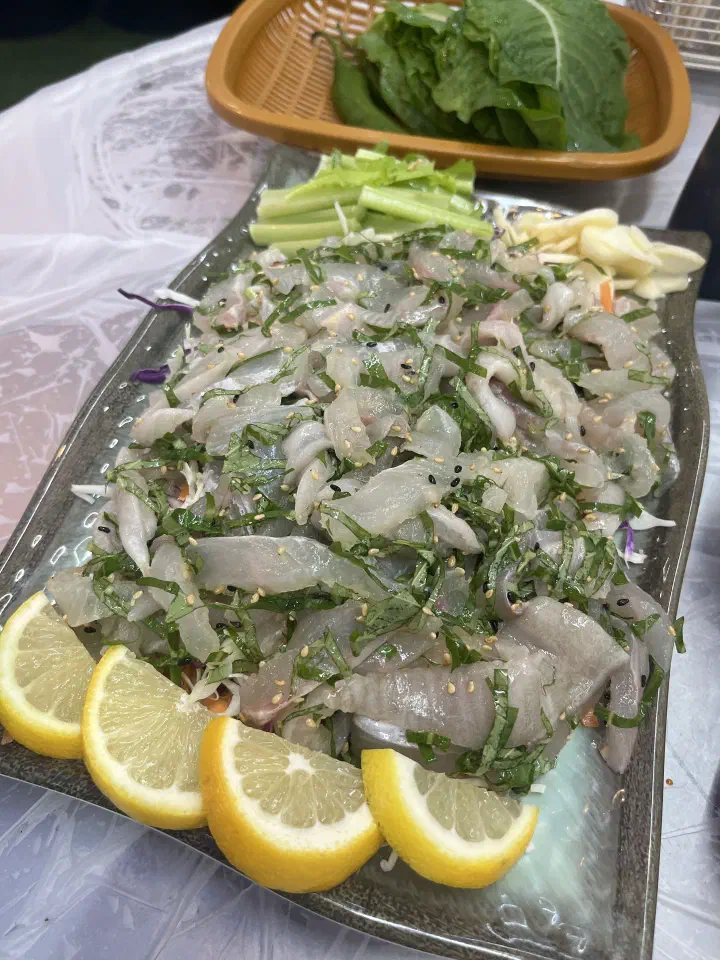
If the squid is the headliner, kkaennip makhoe is the reason locals talk about this place. “Makhoe” is a rough-chopped mixed sashimi — thick-cut fish tossed with shredded perilla leaves, lettuce, and soybean powder. The bean powder is nutty, the greens keep it crunchy, and somehow it all just works. You wrap a bite in perilla, dunk it, and that’s the move.

Kkaennip makhoe, mixed sashimi with perilla leaves and soybean powder

A bite of sashimi wrapped in a perilla leaf

Everything else, depending on the season

I’ve had a lot of the menu by now, across a few visits.

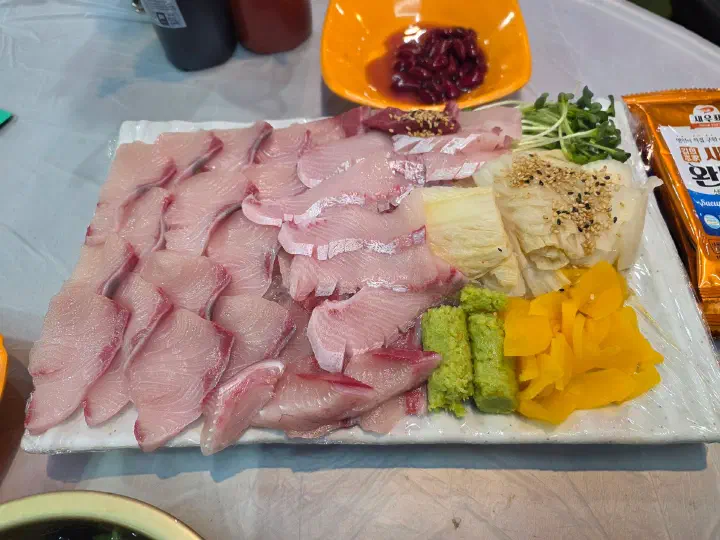
The winter giant amberjack — they call the really big ones “pig amberjack” (돼지방어) because of the belly girth — was rich and glossy, more marbled and nutty than a regular amberjack. People sometimes avoid amberjack for that fishy edge, but cut-to-order like this, I didn’t get any of that.

Giant amberjack sashimi, thick glossy slices

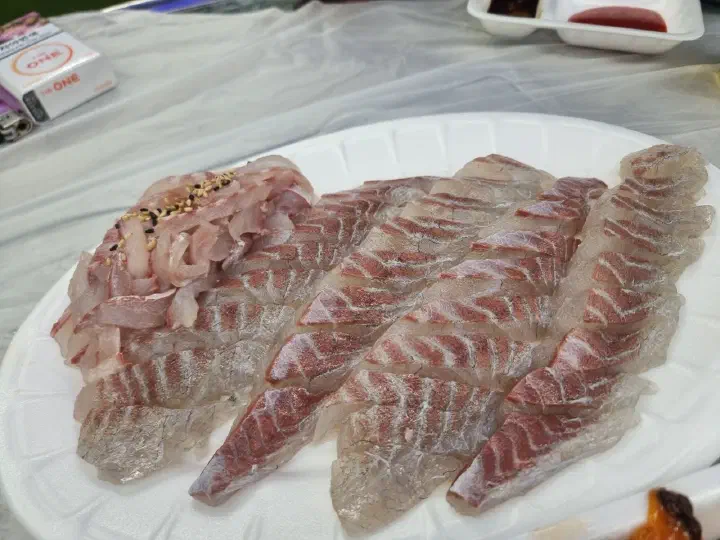
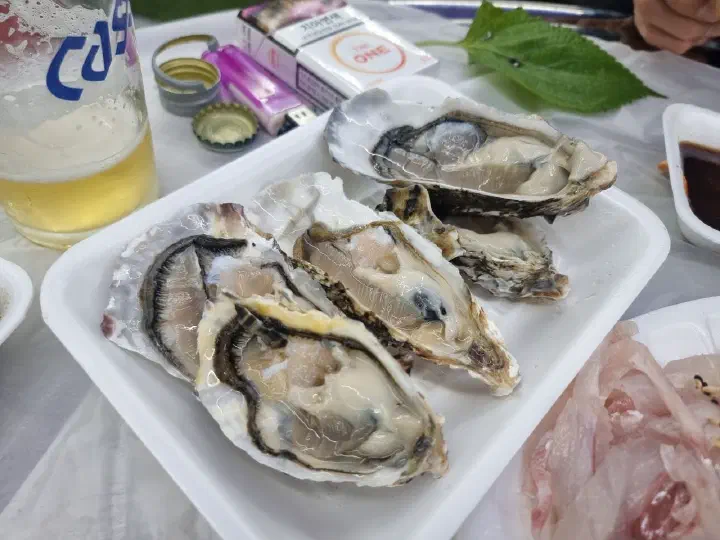
The black seabream (감성돔) was a cleaner, leaner counterpoint, and the sea pineapple (멍게, sea squirt) came with a few shucked oysters thrown in on the house.

Black seabream sashimi plated at Haejeoksusan

Sea pineapple and oysters served on a plate

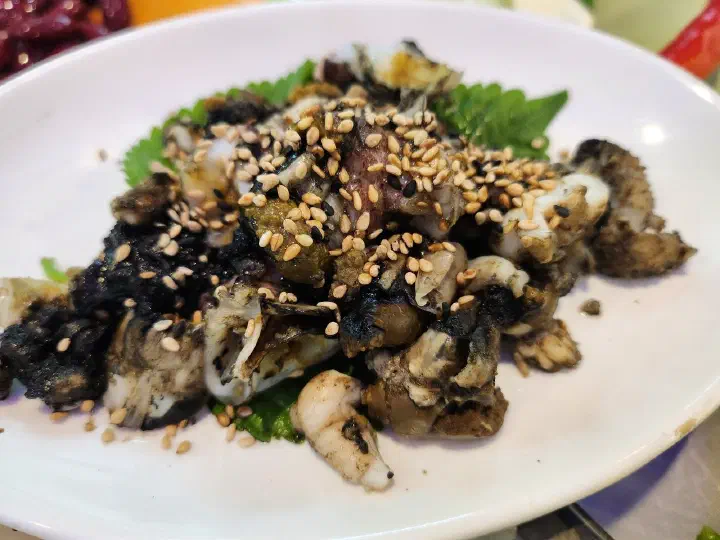
Cuttlefish (갑오징어) shows up with its ink and trimmings, which sounds intense but tastes clean and a touch sweet. In spring, flounder (도다리) is the one to get. And the flatfish makhoe (광어막회) is generous and nutty — an easy order if you just want a big pile of fish and greens.

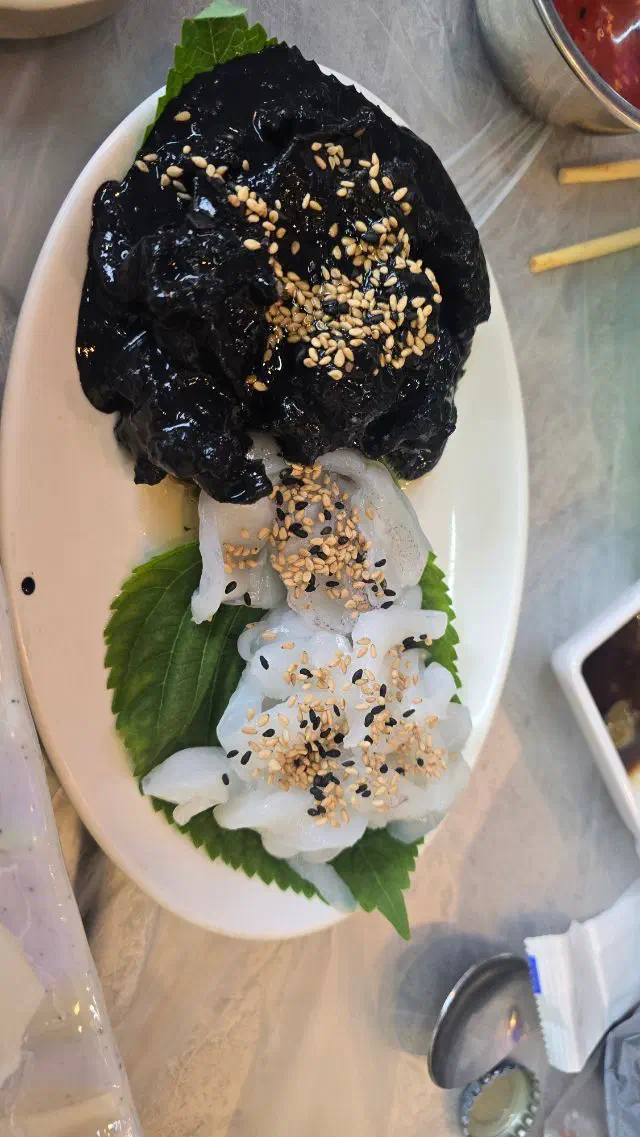
Cuttlefish sashimi served with its ink

Flounder sashimi plate, a spring specialty

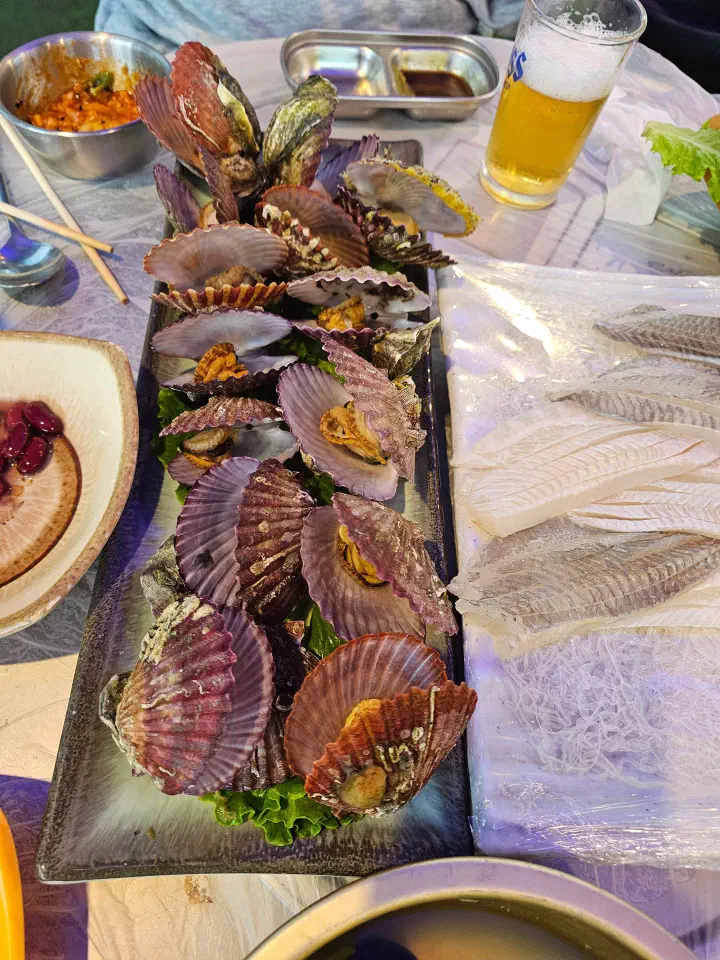
Flatfish makhoe, generous flatfish sashimi with greens

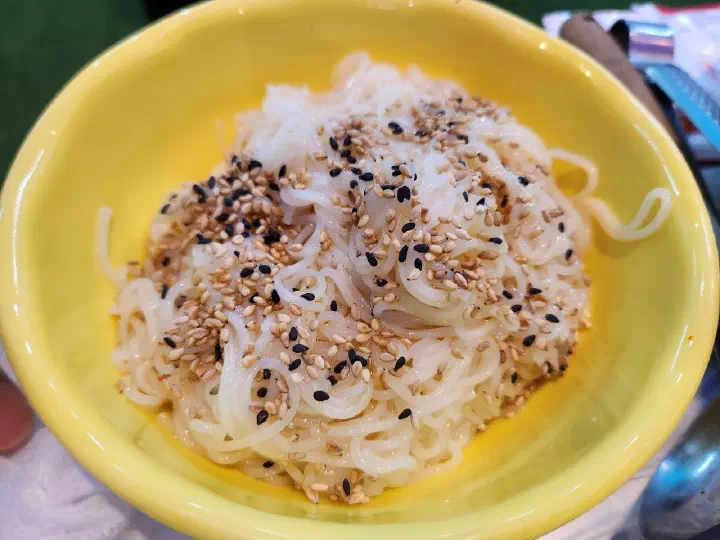
When live squid is in, get the mulhoe (물회) too — a cold, sweet-and-tangy raw fish soup. They serve thin somyeon noodles alongside, brushed with sesame oil so they don’t go soft, and the noodles in that cold broth are a perfect match.

Squid mulhoe, cold sweet-and-tangy raw fish soup

Somyeon noodles served alongside the mulhoe

How it ends

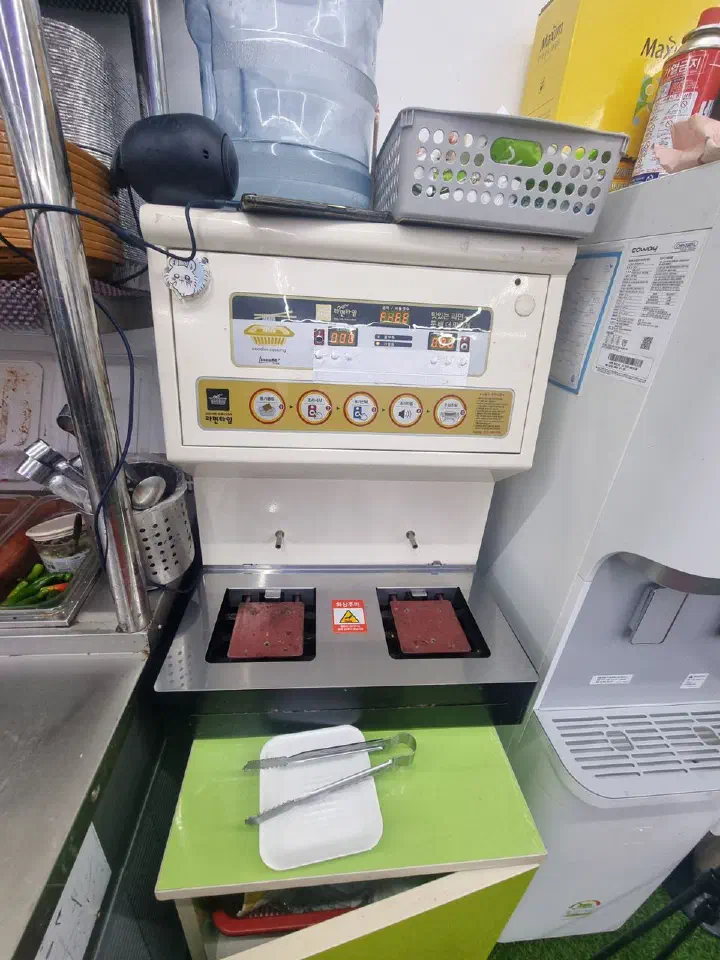
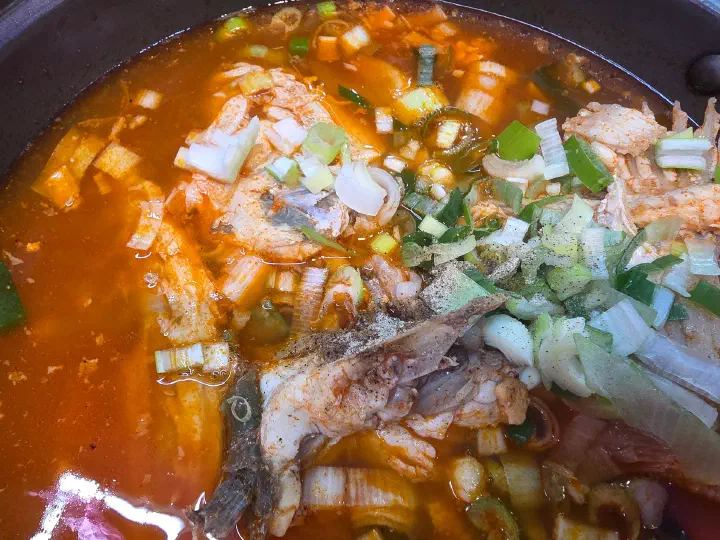
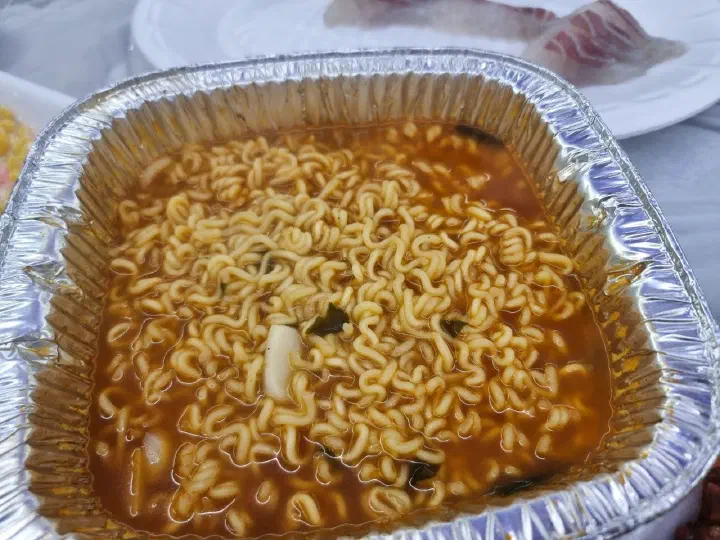
Two ways to finish, usually. There’s a spicy fish stew (maeuntang, 매운탕) — not a punch-you-in-the-face kind of spicy, more of a warm, MSG-light, clean heat. And there’s a little instant-ramen station for the bbogeuli (뽀글이) ramen, which is exactly the kind of carb you want after a few drinks.

Spicy fish stew maeuntang to finish the meal

Instant ramen, the bbogeuli style, to round things off

By then someone’s usually pouring another round of soju-and-beer, and the table’s a mess in the good way.

Soju and beer cheers at the table

A few notes if you’re coming from abroad

A handful of things I wish someone had told a first-time foreign visitor:

  • Paying: Cards are accepted, and international cards work at pretty much any restaurant in Korea, so don’t stress about that. Just know that cash gets you the discount here.
  • Tipping: There’s no tipping culture in Korea. You don’t leave a tip, and if you try, the staff will probably be confused rather than pleased. The price you see is the price you pay.
  • Spice: That fish stew is “Korean spicy.” It’s not extreme by local standards, but if you’re not used to Korean heat, brace yourself a little — it can read as quite hot to people who didn’t grow up with it.
  • Language: English isn’t really spoken here, but it doesn’t matter much. Point at the menu board or the tank, hold up a couple of fingers, and you’ll be fine. Ordering by pointing is completely normal.

The location is a bit of a hassle to get to. I’d still make the trip. There aren’t many places where the fish is this fresh and the owner this easy to talk to, and I already know I’ll be back the next time someone starts singing the live-squid song in my ear.

Location & How to Get There

Haejeoksusan is on Geumnam-ro in Imdong, Buk-gu, Gwangju.
There isn’t much around it, so look for the brightly lit sign by the road.

📍 View Haejeoksusan (해적수산) on Google Maps →