If you ask around in Gyeongju about jjolmyeon, this place comes up almost every time.

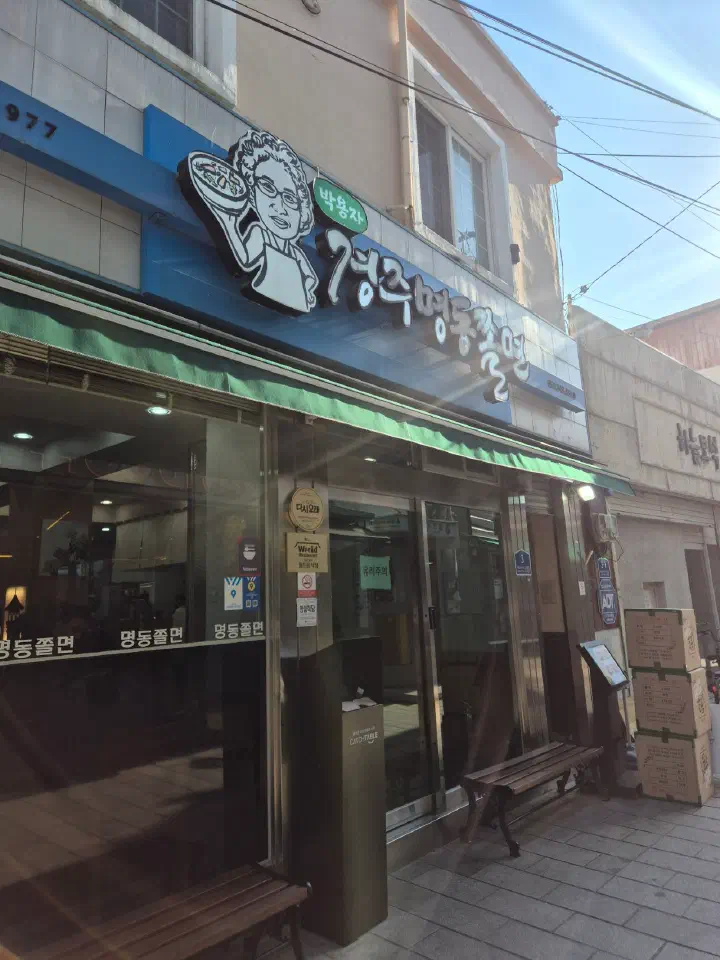
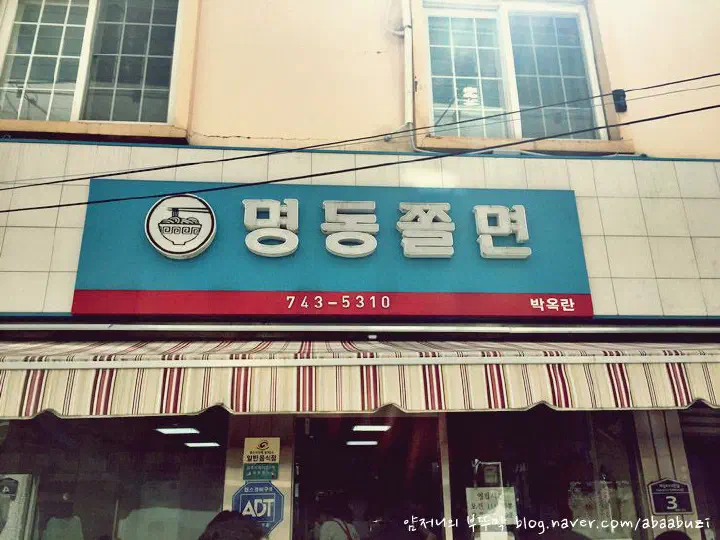
The full name is Parkyongja Gyeongju Myeongdong Jjolmyeon (박용자경주명동쫄면), though a lot of people still call it by its old name, Myeongdong Jjolmyeon (명동쫄면).

The main branch sits in a small alley in the Geumridangil area of downtown Gyeongju. There’s also a separate branch near Bulguksa Temple, but most travelers end up at the downtown one since it’s close to Daereungwon, Cheomseongdae, and Hwangnidangil.

Exterior of Parkyongja Gyeongju Myeongdong Jjolmyeon

The short version

This isn’t a flashy, knock-your-socks-off kind of meal. It’s more the quiet kind that stays in your head a few days later.

If you’re expecting punchy, sweet-and-spicy jjolmyeon, you might wonder what the line is all about. But if you like clean, mild noodle dishes, it’s worth a stop while you’re in town.

The basics

Address: 3 Gyerim-ro 93beon-gil, Gyeongju-si.
Phone: 054-743-5310.

Open 11:20 to 19:30, last order at 19:00. Closed Tuesdays and Wednesdays.

On weekdays there’s a break from 15:00 to 16:30. On weekends and public holidays they run straight through with no break.

One thing to know: they sometimes close early when ingredients run out. If you’re planning a late dinner, call ahead to be safe.

📍 View Parkyongja Gyeongju Myeongdong Jjolmyeon (박용자경주명동쫄면) on Google Maps →

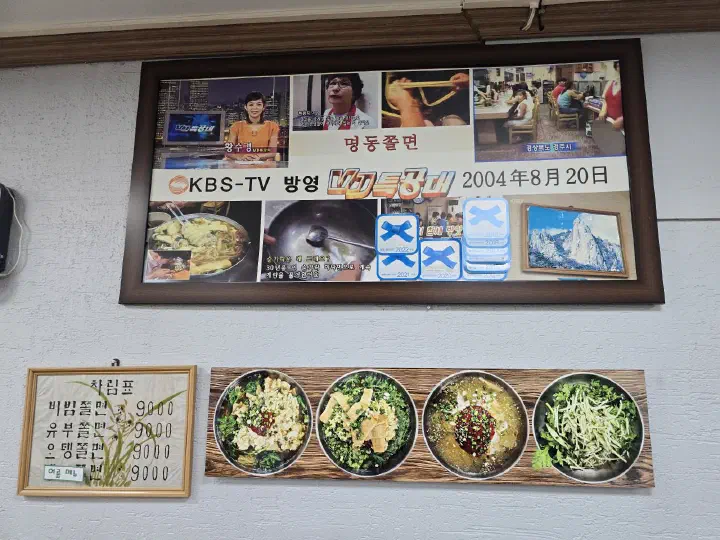
Menu board at the restaurant

Just four things on the menu

Yubu jjolmyeon (유부쫄면), bibim jjolmyeon (비빔쫄면), odeng jjolmyeon (오뎅쫄면), and a summer-only naeng jjolmyeon (냉쫄면). Everything is 9,000 won.

The cold naeng jjolmyeon usually runs from May through September only, so timing matters.

The short menu makes ordering easy. The flip side is there are no side dishes, and the only banchan is a bit of pickled radish (danmuji). No kimchi or anything extra.

The real draw here is the noodles. They make them in-house every morning, ferment their own sauce, and simmer the broth fresh daily.

The signature is the warm one

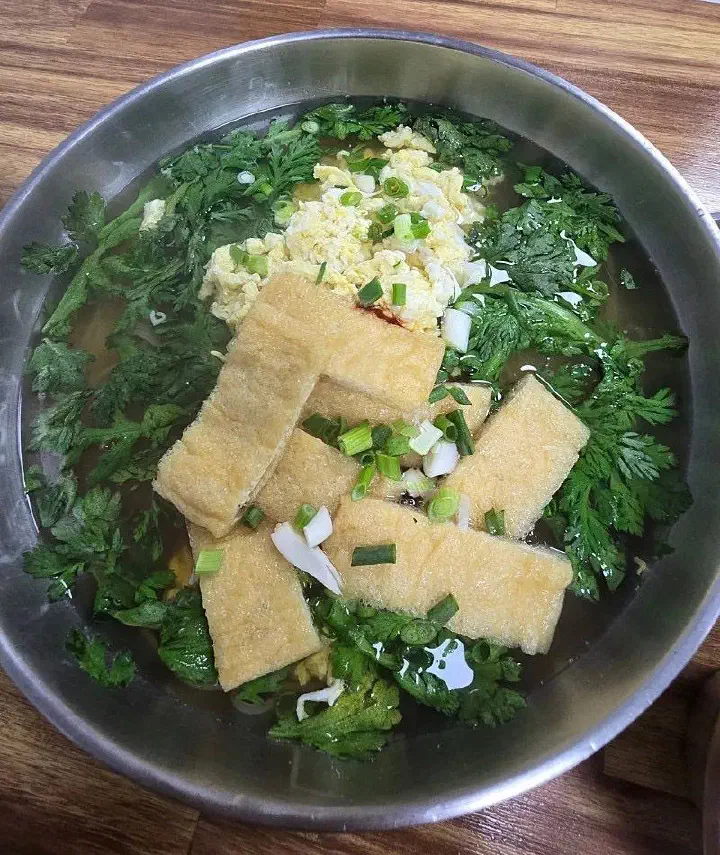
Most people picture cold, red, spicy noodles when they hear jjolmyeon. Here, the signature is actually the warm broth version, yubu jjolmyeon (유부쫄면).

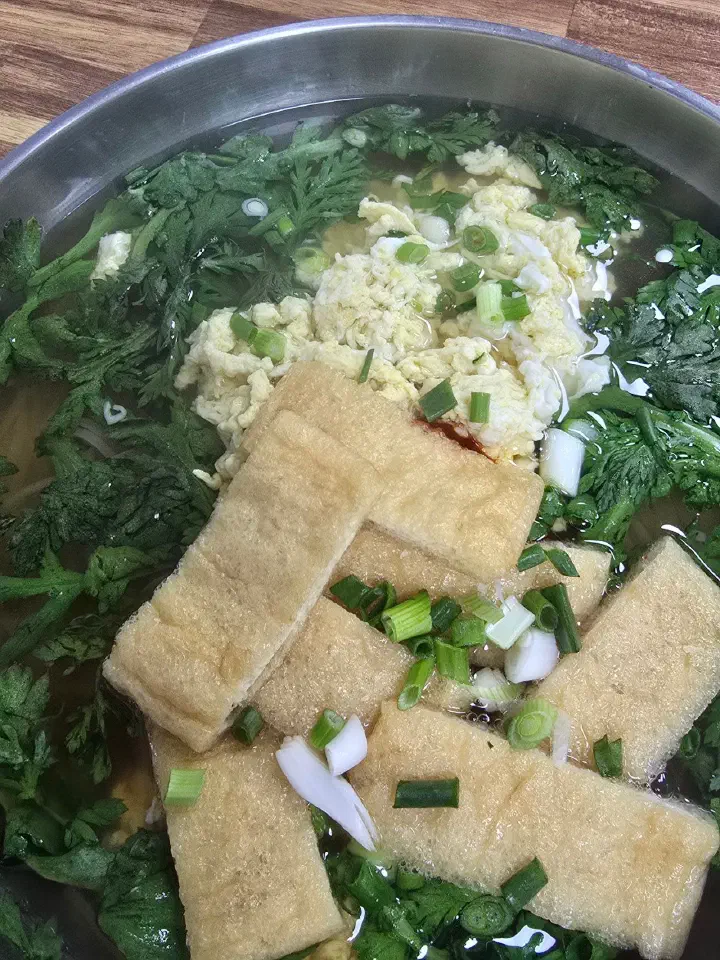
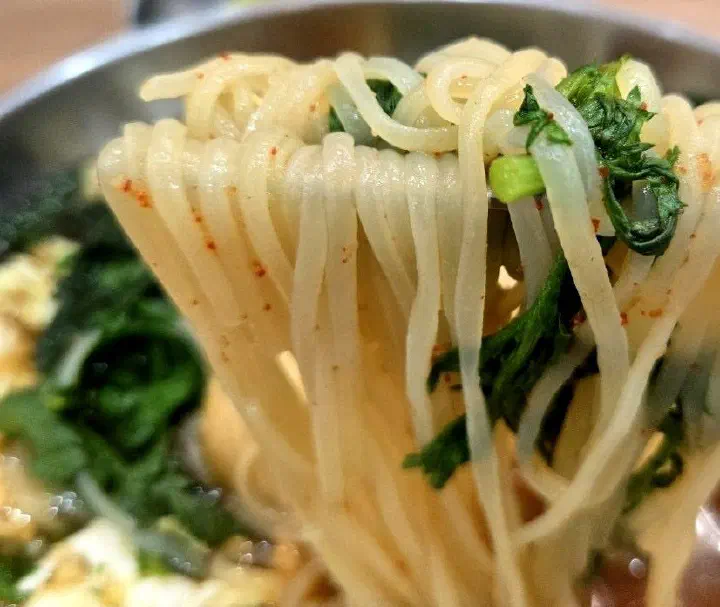
It comes in a deep anchovy broth with soft ribbons of egg, plump fried tofu pockets, and freshly blanched crown daisy greens on top.

Yubu jjolmyeon in anchovy broth with egg

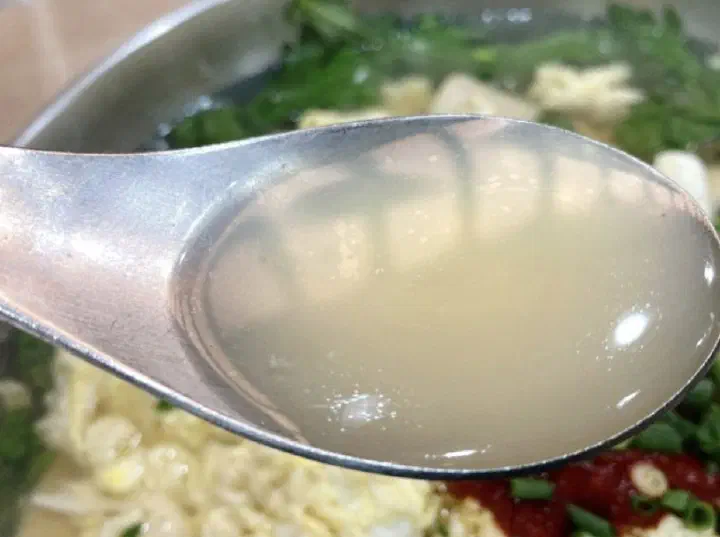
The broth isn’t salty; it leaves a savory aftertaste. A small tip: try a spoonful of the clear broth before mixing in the seasoning paste. A lot of locals come here specifically as a hangover cure, and the broth does feel like it settles the stomach.

Even sitting in hot broth, the noodles hold their bounce and stay chewy to the end.

Close-up of yubu jjolmyeon with egg

That said, it’s a bit polarizing. Some people find it lands in a fuzzy middle ground, not quite udon, not quite the jjolmyeon they expected. If you wanted the classic tangy-spicy style, the warm version can feel unfamiliar at first.

A spoonful of the anchovy broth

Bibim jjolmyeon is all about the greens

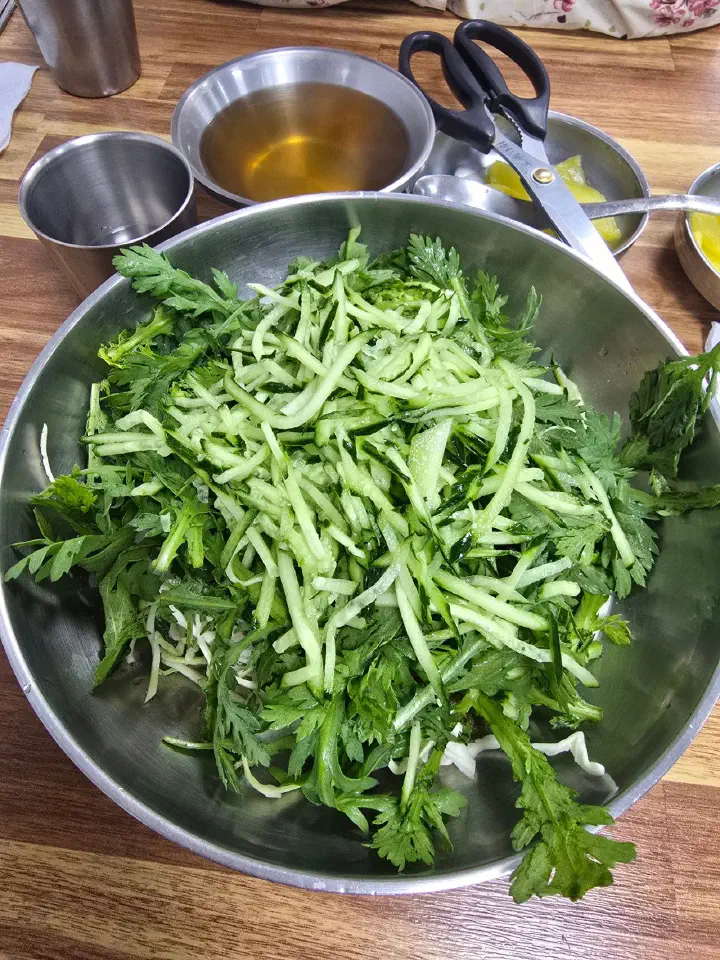
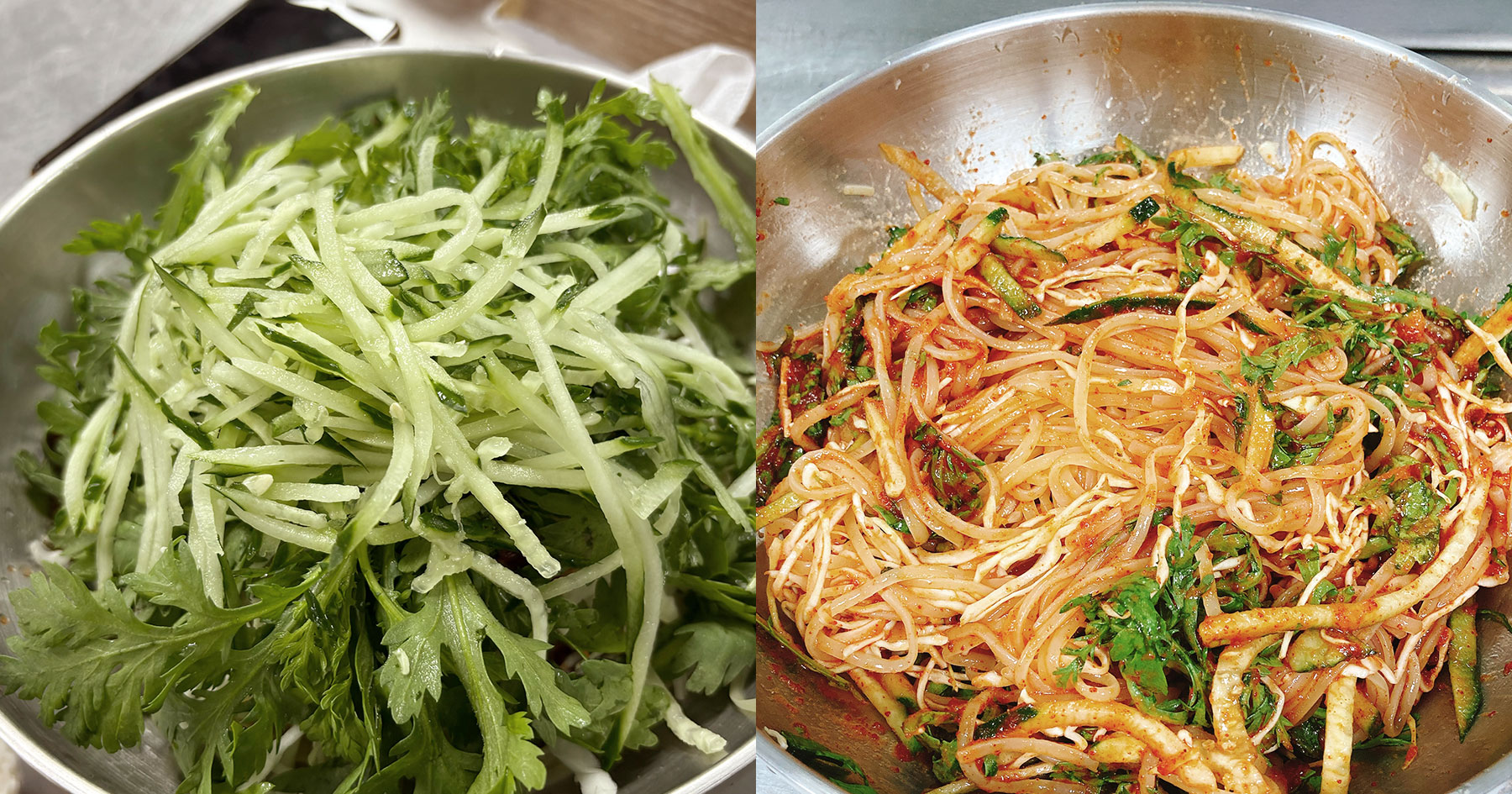
The spicy mixed bibim jjolmyeon looks unusual right away. Crown daisy, cucumber, and vegetables are piled up like a small mountain.

If crown daisy (ssukgat) isn’t your thing, this one might be a hard sell. The herb has a strong, distinct aroma.

Bibim jjolmyeon piled with crown daisy

The sauce isn’t aggressively spicy. It leans more toward a deep, fermented flavor, and it’s not very sweet either. The kitchen used to rim the bowl with sugar years ago; these days they skip it, so it tastes cleaner and less sweet.

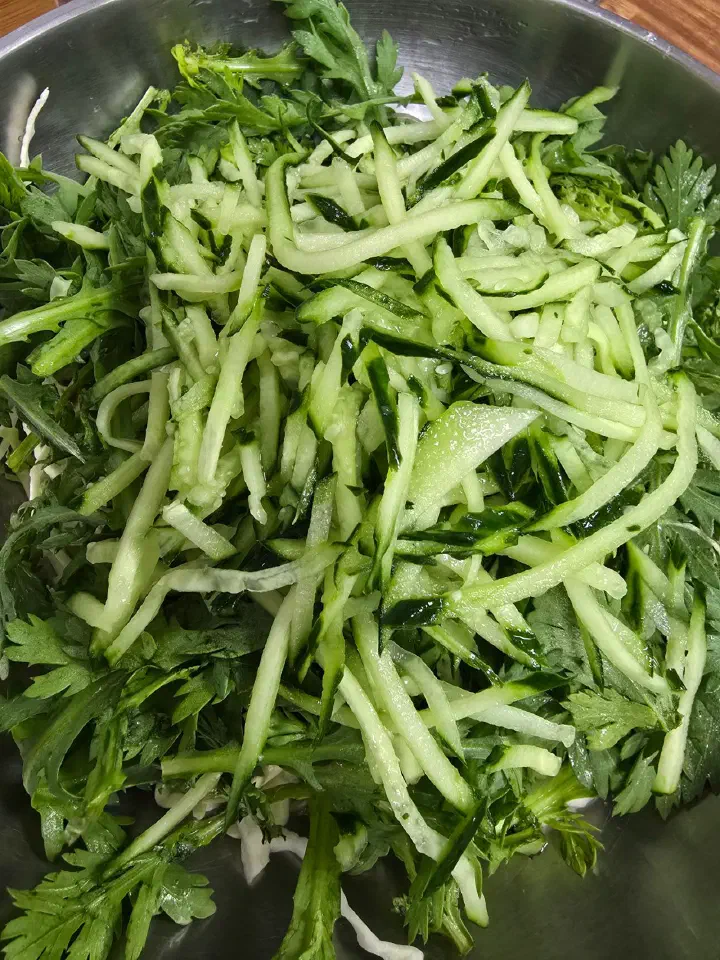
Bibim jjolmyeon before mixing

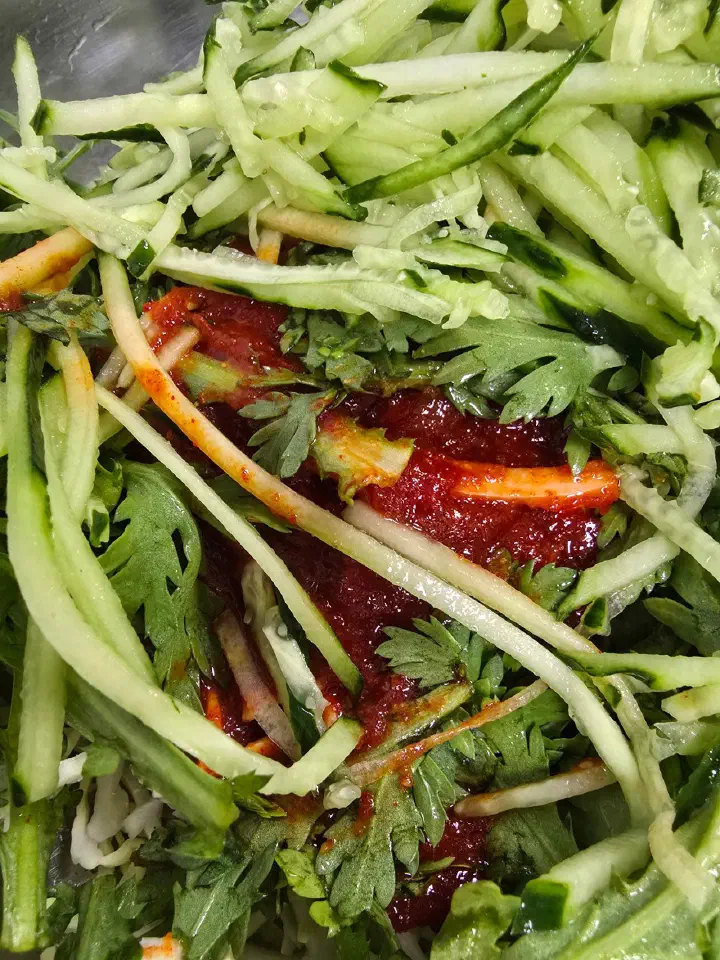
The noodles are on the thin side, so the sauce clings well. Mix everything together with the cucumber, cabbage, and greens for that crunch. The bibim also comes with a side of warm anchovy broth, which balances things out nicely between bites.

Bibim jjolmyeon after mixing

A quick heads-up: because the noodles are hand-pulled fresh, the texture can vary a touch from day to day. A few people have noted noodles that felt slightly underdone.

Odeng jjolmyeon and the cold one

Odeng jjolmyeon comes in the same anchovy broth with fish cake, egg, and greens. It’s mild and pairs well alternating with the spicy bibim.

The cold naeng jjolmyeon is the most divisive. Some find it refreshing and clean; others say it’s a bit bland, like a weaker version of milmyeon. Because the noodles are so chewy, eating them cold means a lot of chewing, and a few people found it tough on the teeth.

If it’s your first summer visit, I’d order a bibim or yubu alongside it rather than betting the whole meal on the cold one.

Freshly pulled jjolmyeon noodles

Portions and price

At 9,000 won a bowl, the portions are generous. Plenty of people show up thinking of it as a snack and end up full into the evening.

A popular move for three people is to split one bibim, one yubu, and one odeng. There’s no extra-large option, but most agree you won’t need one.

Some think 9,000 won is steep for what is essentially a snack-style noodle. Most, though, feel it’s fair once you factor in the portion size and the hand-made noodles.

Atmosphere and service

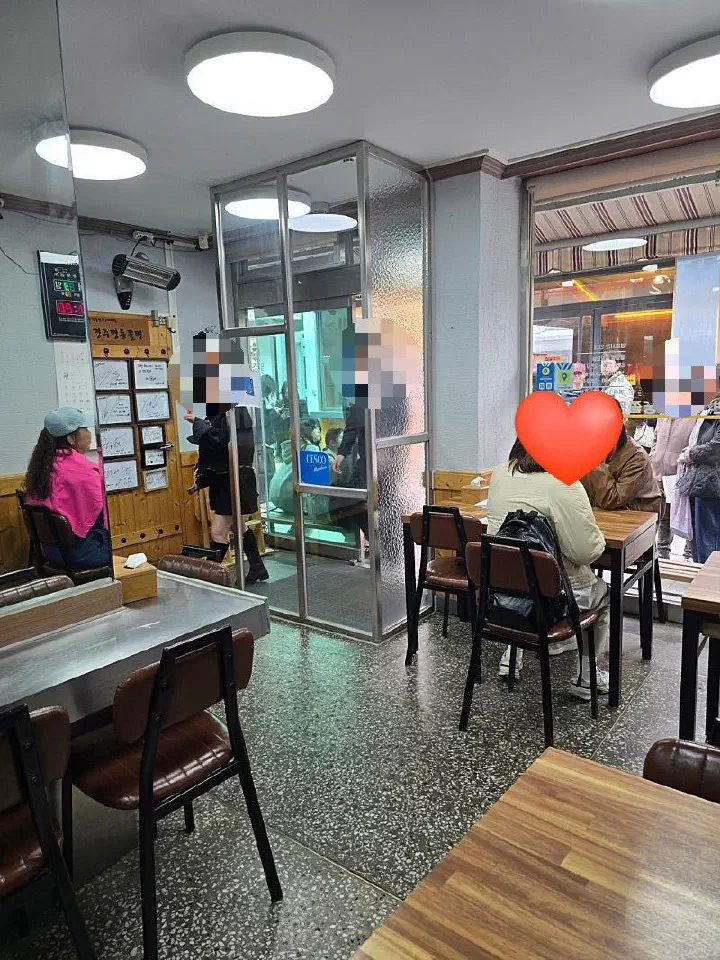
The interior was renovated and feels clean now, with a bright, wood-toned look.

The renovated, tidy interior

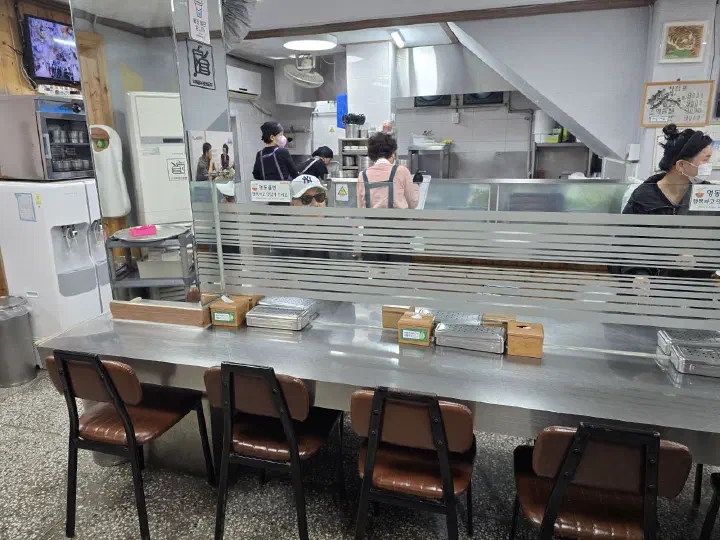
There’s a row of tables in the middle with mirrors where you may sit facing a stranger. Some people like the old-school feel; others find it a bit awkward. There’s also a counter bar for solo diners, so eating alone is totally fine here.

The in-house noodle kitchen

The turnover is fast; food often arrives within five minutes of ordering. Staff are generally friendly, though during the busiest hours it can get hectic and feel a little rushed. Go in thinking of it as a quick, well-run old-school spot rather than a place for attentive table service, and you’ll be happy. Water is self-serve.

Parking and waiting

There’s no dedicated parking lot. The nearest option is the Jungsimsangga public parking lot, and the Bonghwangdae public lot is about a 5-minute walk away as a backup. On weekends these lots fill up fast.

If you’re also touring Hwangnidangil and Daereungwon, parking a bit further at the Hwangnidangil public lot and walking over is a reasonable plan.

For waiting, they use the CatchTable app. You can register on-site or put your name in remotely before you arrive. Weekend lunch (noon to 2 pm) is the busiest, and during cherry blossom weekends some have waited over an hour.

The calmest time is right at weekday opening, 11:20 to noon. Weekday afternoons after 2 pm, and right when the break ends around 4:30 to 5 pm, also tend to be quiet.

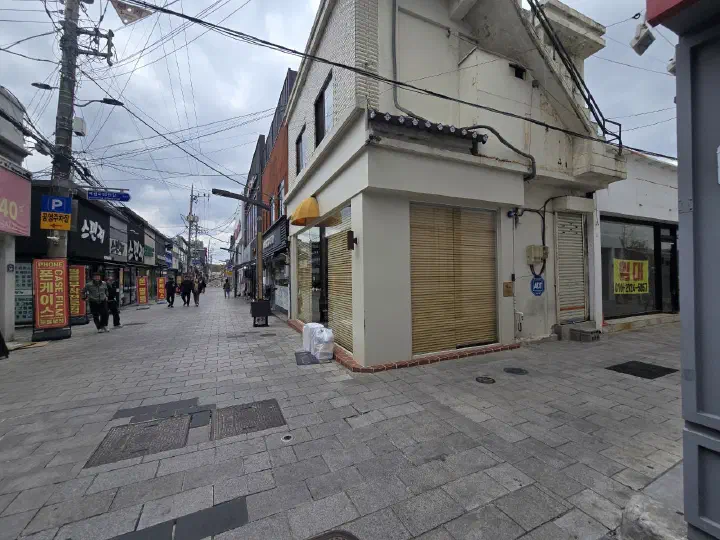
The Geumridangil alley

A place that’s changed over the years

The story here goes back to 1977, when the founder first learned the trade, and 1981, when jjolmyeon first appeared on the menu in Gyeongju. It’s been in the same spot for close to 50 years.

It’s earned a Blue Ribbon Survey listing every year since 2014, and the stickers cover the entrance. It’s also been on Korean TV, on SBS Life Master (Saenghwal-ui Dalin, 2014) and Baek Jong-won’s Top 3 Chef King (2016).

There was a time when a bowl cost 5,000 won; today it’s 9,000. The sugar disappeared from the sauce, the dining room was refreshed, and bit by bit the food and space have been tidied up while the recipe stayed the same.

The exterior from its TV-feature days

Practical notes for travelers

Card payment is no problem here, and across Korea almost every restaurant takes internationally accepted cards, so you don’t need much cash on hand. There’s no tipping culture in Korea; you don’t need to tip, and trying to may actually leave the staff a little flustered.

English may not be spoken much, but ordering is easy. The menu is short, and you can point at what you want and hold up fingers for how many. There’s also a QR menu posted for foreign visitors.

One thing worth flagging on spice: the bibim sauce here is mild by Korean standards, but Korean “mild” can still read as fairly spicy if you’re not used to it. The yubu and odeng versions are gentle, so go for those if you want to play it safe.

For getting around Gyeongju, Google Maps walking and transit directions are often unreliable here; use Naver Map or KakaoMap instead. For taxis, the Kakao T app works well. From Gyeongju Station you can take bus 50 or 70 and get off near the Shinhan Bank intersection, then walk about 4 minutes.

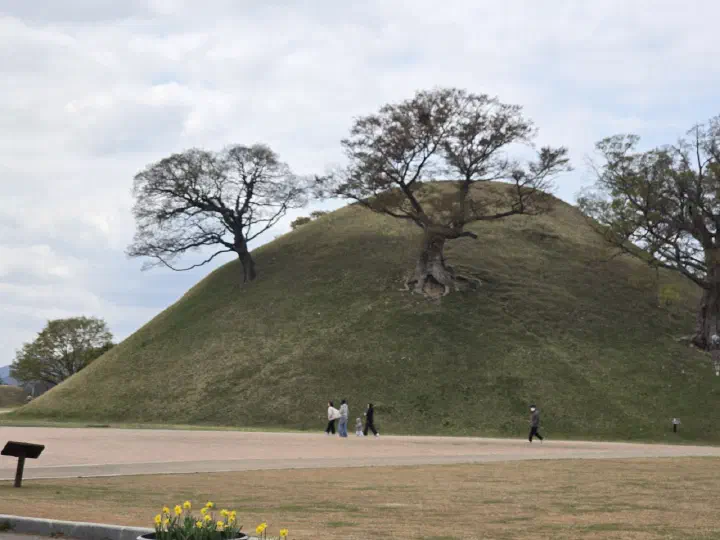
Downtown Gyeongju near Daereungwon

Final thoughts

If you want something a little different and easy on the wallet while in Gyeongju, this fits the bill. It’s a good way to get both value and a taste of local nostalgia in one bowl.

Don’t go expecting fireworks. But if you like clean noodle dishes and warm-broth jjolmyeon, it’s the kind of bowl that quietly pulls people back.

After your meal, Daereungwon is a 5 to 10-minute walk, and Hwangnidangil is about 10 minutes away. Follow the old stone walls and you’ve got an easy half-day Gyeongju loop.

📍 View Parkyongja Gyeongju Myeongdong Jjolmyeon (박용자경주명동쫄면) on Google Maps →