한 줄로 먼저 정리하면 이런 곳이에요.
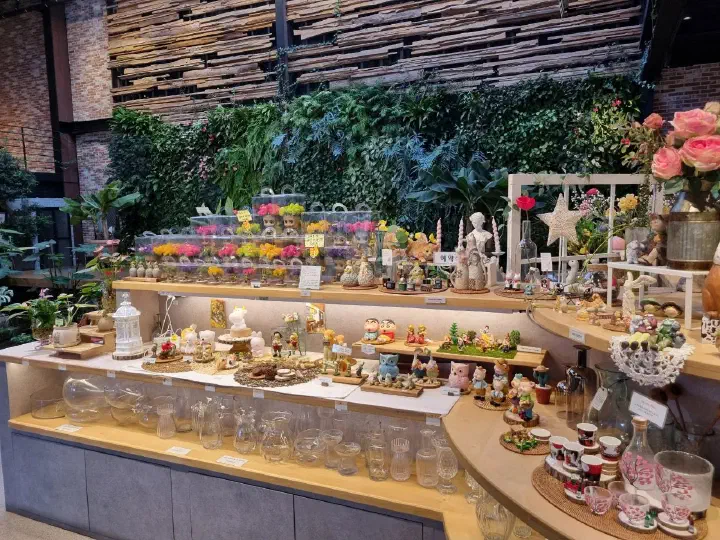
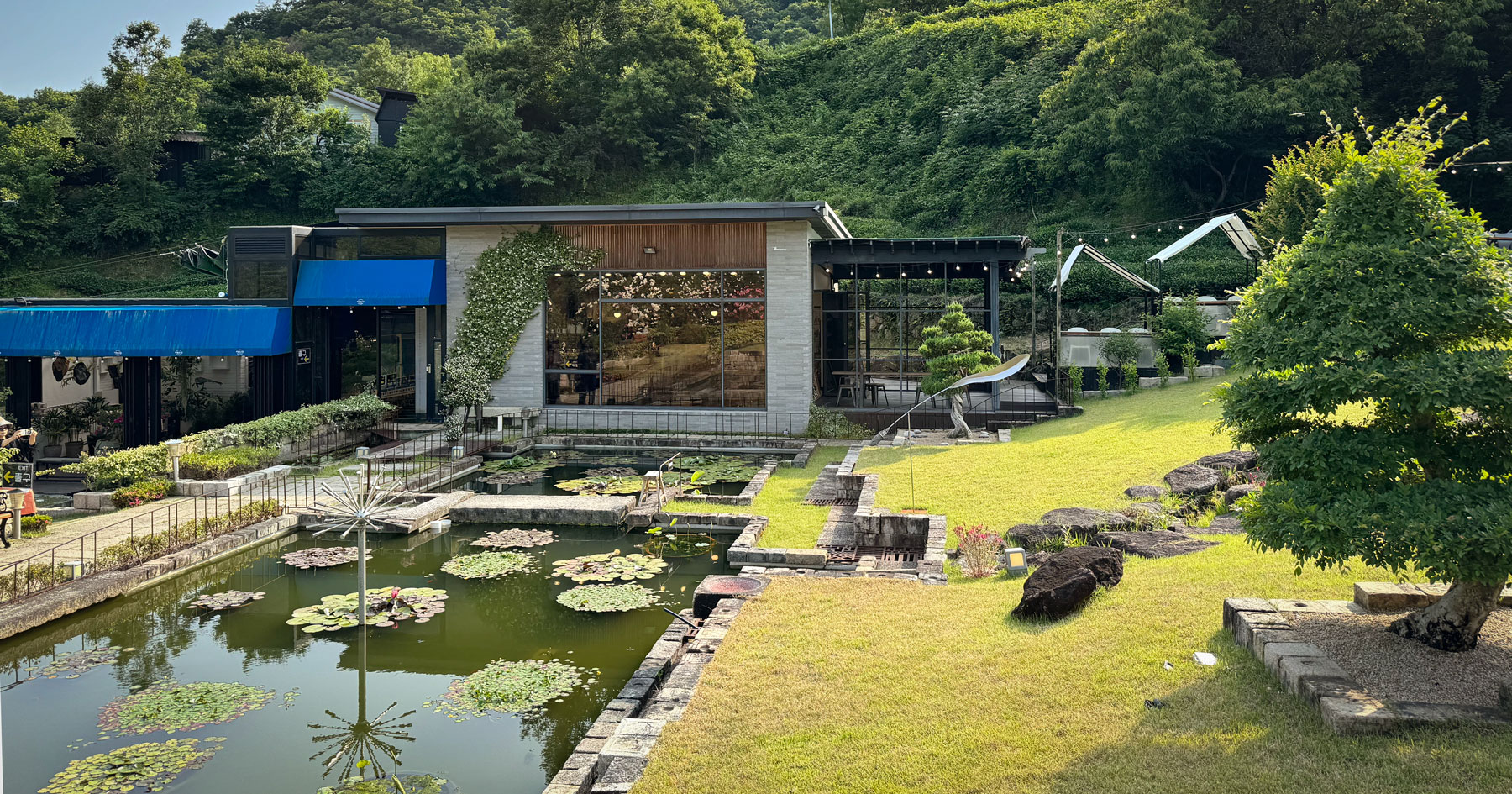
카페 하나가 정원, 연못, 기념품 매장까지 갖춰서
음료 한 잔 시켜 놓고 한두 시간이 훌쩍 가는,
하동 화개면의 초대형 베이커리 카페.
커피보다 하동 녹차가 주인공인 집입니다.
가게 정보
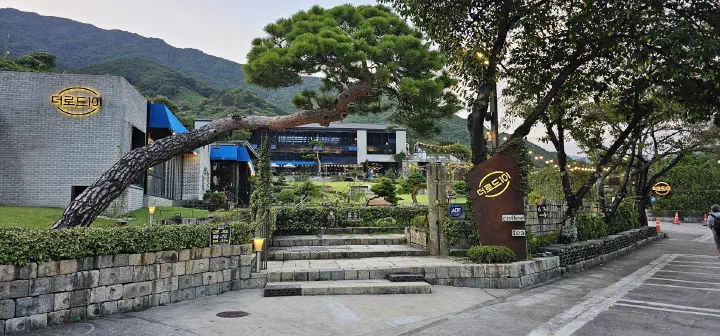
- 상호: 더로드101
- 주소: 경상남도 하동군 화개면 화개로 357
- 영업시간: 월-금 10:00-18:00 / 토 10:00-20:00 / 일 10:00-19:00
- 라스트오더: 마감 30분 전
- 휴무: 연중무휴
- 주차: 카페 맞은편 전용 주차장(무료)
- 이용 방침: 1인 1음료, 반려동물 동반 불가
영업시간이 몇 년 사이 조금씩 당겨졌어요.
한때 저녁 8-9시까지 열던 시기를 지나
지금은 평일 저녁 6시면 문을 닫습니다.
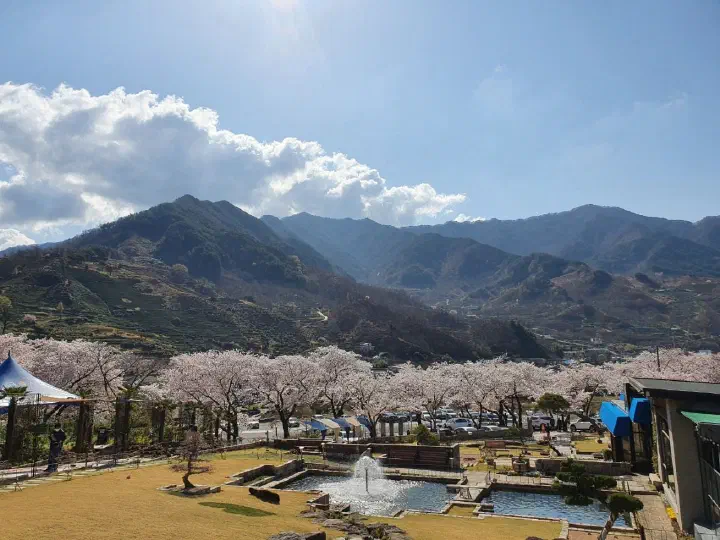
대신 벚꽃철에는 저녁 8시까지 연장 운영하기도 해요.
저녁 일정에 끼워 넣기는 어려운 카페라는 점, 미리 계산해 두세요.
위치와 어울리는 동선
자리부터 좋아요.
화개장터에서 쌍계사로 올라가는 길 중간,
십리벚꽃길 끝자락에 있습니다.
하동읍에서 차로 30분 정도,
화개터미널에서는 5분 거리예요.
버스로 온다면 침점 정류장에서 내려 3분쯤 걸으면 됩니다.
그래서 쌍계사 다녀오는 길,
화개장터 구경 전후로 끼워 넣기 딱 좋은 위치예요.
카페 건너편 산비탈이 야생 차밭이라
자리에 앉아만 있어도 하동 녹차밭 구경이 됩니다.
공간 - 정원부터 실내 연못까지
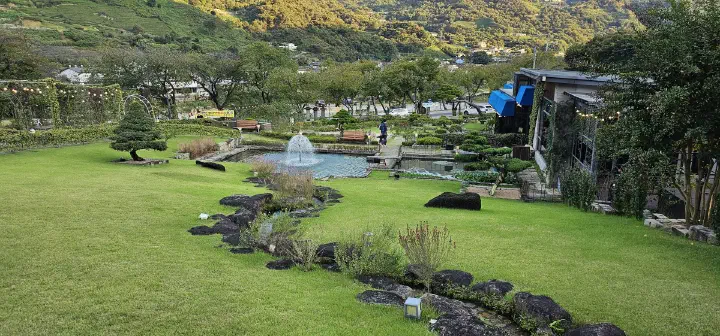
이 집의 정체성은 정원이에요.
입구에서 건물까지 완만한 언덕을 오르는 동안
잔디밭, 분수, 소나무 분재가 이어집니다.
계절 따라 장미 터널과 수국이 피고,
분재는 관리 인력이 상주하며 다듬는 수준이라
정원 산책만으로도 입장료 값을 한다는 기분이 들어요.
물론 입장료는 없고, 음료 값에 포함된 셈이지만요.
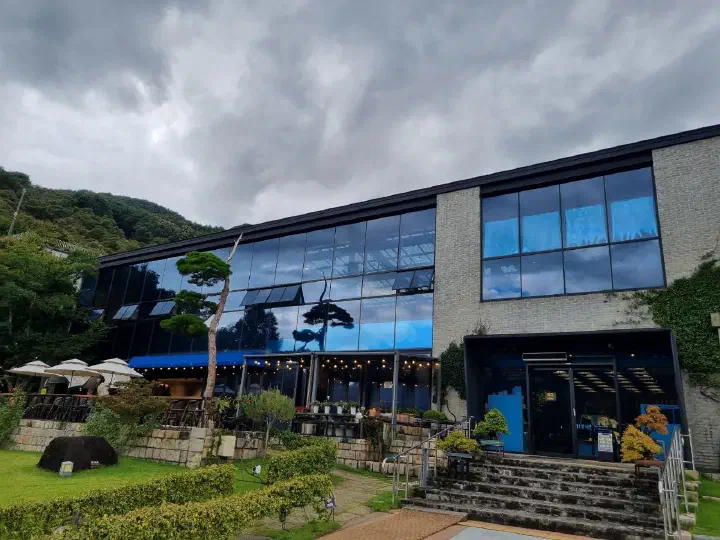
실내도 볼거리가 이어져요.
1층 한가운데 진짜 연못이 있고
비단잉어가 헤엄쳐 다닙니다.
벽면은 수직 정원으로 꾸며져 있고
층고가 높은 통창 구조라 개방감이 상당해요.
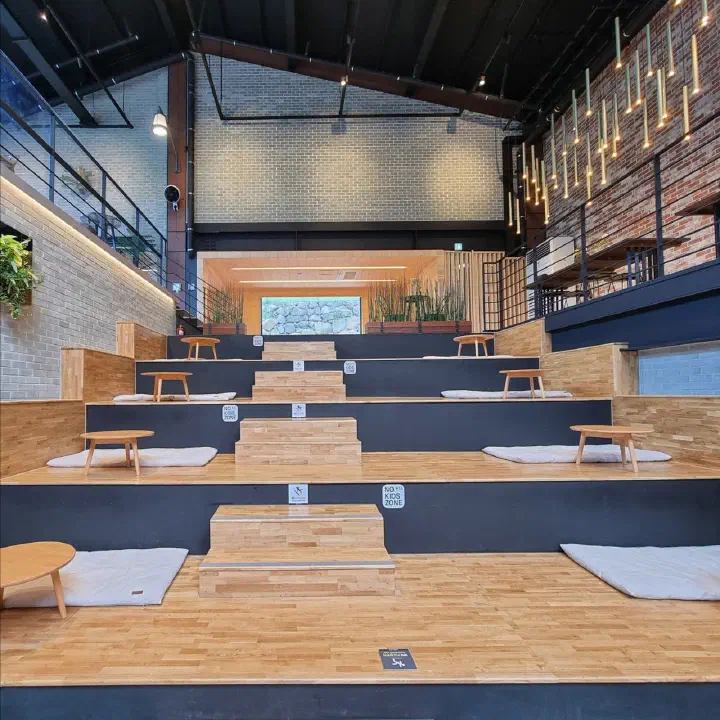
좌석은 취향대로 고르면 됩니다.
전망은 2층 창가가 제일이에요.
통창 너머로 화개천과 산비탈 차밭이 한눈에 들어옵니다.
1층 연못 옆 계단식 좌석은 분위기가 좋은 대신 노키즈존이에요.
아이와 함께라면 2층 테이블이나 야외 자리가 편합니다.
야외에는 아이들 모래놀이 공간이 따로 있고
유아의자도 준비되어 있어서
가족 단위 손님이 유난히 많은 카페예요.
예전에 손님 공간으로 쓰이던 별관은
지금은 직원 외 출입금지로 닫혀 있습니다.
그래도 본관과 정원만으로 구경거리는 충분해요.
메뉴 - 지리산 녹차 라인이 시그니처
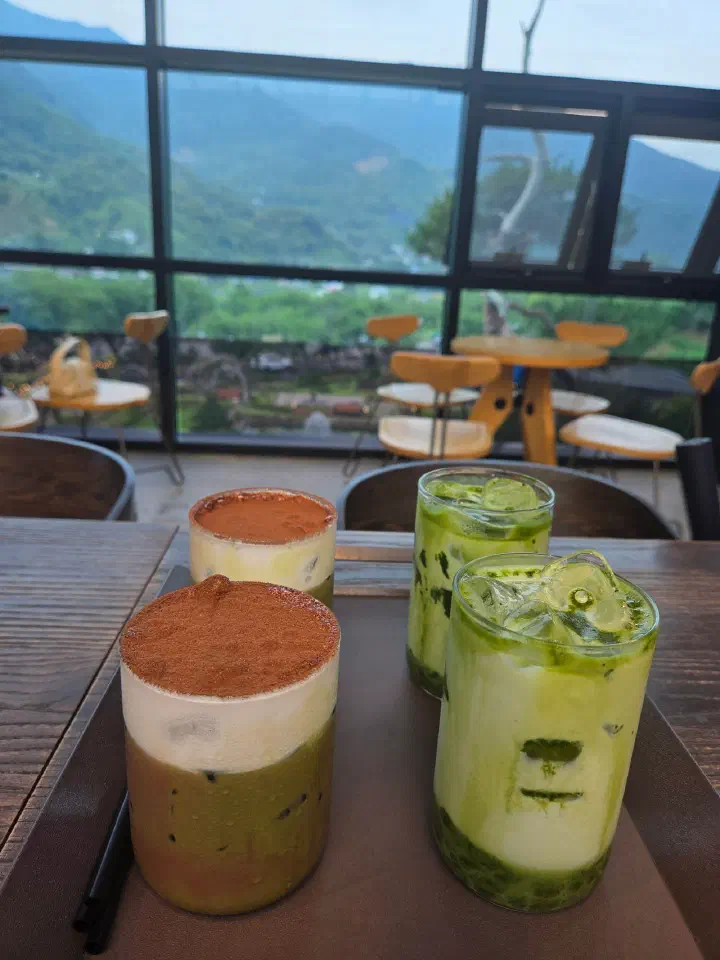
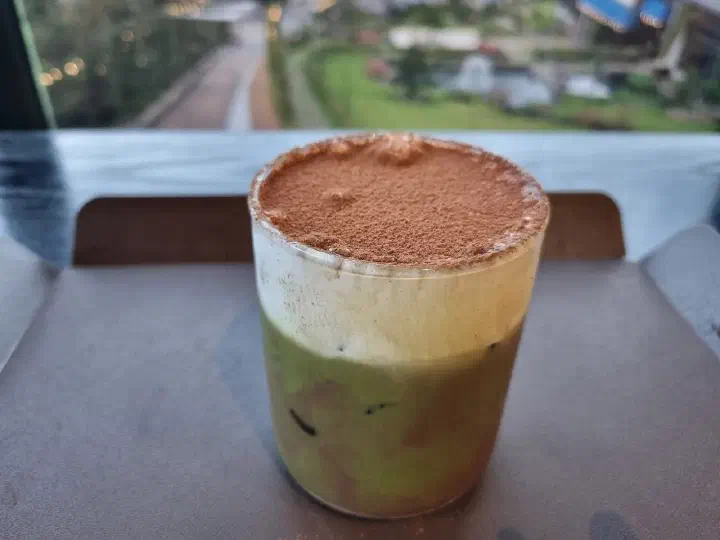
메뉴판에서 ‘지리산’이 붙은 음료가 이 집 시그니처예요.
하동 녹차로 만드는 라인입니다.
지리산 라떼 8,000원, 크림라떼 8,500원,
초코숲 8,500원, 녹차 아이스크림 7,500원, 아포가토 8,000원.
전부 아이스 전용이라 겨울에도 차갑게만 나옵니다.
기본인 지리산 라떼는 주문이 들어오면
녹차를 절구에 갈아서 만들어요.
단맛으로 덮지 않은 진한 녹차 맛이라
달콤한 녹차 라떼를 기대하면 쌉싸름하게 느껴질 수 있고,
그 지점이 오히려 이 메뉴의 매력입니다.
녹차 아이스크림은 쓴맛 없이 진한 쪽이에요.
부드럽게 녹는 타입이라 디저트로 무난하고,
산미 없는 에스프레소를 부어 먹는 아포가토로 시키면
어른 디저트로 손색이 없습니다.
커피는 아메리카노 6,000원.
고소하고 순한 계열이라 시럽 없이 마시기 좋아요.
베이커리 - 오전 10시, 당일 생산분만
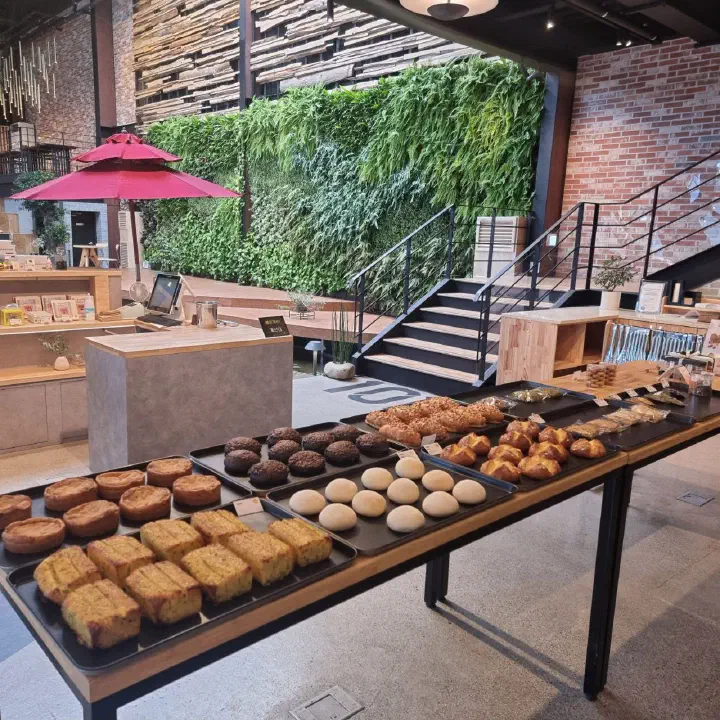
빵은 매일 오전 10시에 당일 생산분이 나와요.
당일 판매 원칙이라 오후 늦게 가면
인기 빵은 비어 있는 날이 많습니다.
간판 메뉴는 마늘빵 7,000원.
지리산 꿀과 마늘 소스를 바르고
사이사이 크림치즈를 채운 큼직한 빵이에요.
이름은 마늘빵인데 실제로는 달콤한 디저트 빵에 가까워서
알싸한 갈릭 브레드를 기대하면 어리둥절할 수 있습니다.
소금빵 4,000원은 대파 크림치즈, 에멘탈 치즈 같은 변형판도 있고,
하동 밤이 실하게 든 밤 마들렌과 밤식빵,
떡처럼 포슬한 영양떡빵 등 지역 재료 빵이 많아요.
선물용으로는 녹차와 벚꽃 라즈베리 두 가지 맛의
하동샌드도 판매합니다.
빵은 접시를 따로 주지 않고
트레이에 깔린 종이 위에서 잘라 먹는 방식이에요.
셀프 코너에 전자레인지와 포장 비닐이 있어서
남은 빵은 싸 갈 수 있습니다.
크림이 든 단 빵 비중이 높아서
두 명이면 빵 하나로도 충분한 편이에요.
가격, 할인, 시간대 팁
가격대는 분명 있는 편입니다.
음료 대부분이 7,000-8,500원 선이라
두 명이 음료에 빵 하나를 곁들이면 2만 원 안팎이 나와요.
정원과 뷰 관리비가 얹힌 가격이라고 보면 됩니다.
그래서 할인을 챙길 만해요.
대한민국 구석구석 앱에서
하동 디지털 관광주민증을 무료로 발급하면
음료 10% 할인이 됩니다.
카운터 앞 QR을 찍고 쿠폰 화면을 보여주는 방식이에요.
붐빔은 확실한 약점입니다.
주말과 벚꽃철에는 이 넓은 매장이 가득 차고
창가 자리는 회전이 느려요.
규모에 비해 화장실이 작아 줄이 생기기도 합니다.
여유롭게 즐기려면 평일 오전, 문 여는 10시 직후가 답이에요.
갓 나온 빵과 빈 창가 자리를 동시에 잡을 수 있는 시간대입니다.
주문과 픽업, 퇴식까지 셀프로 돌아가는 시스템이라
응대에서 살가운 정을 기대할 집은 아니에요.
빵 안내나 자리 정리도 손님 몫에 가깝습니다.
마무리
하동 여행에서 카페를 딱 한 곳만 고른다면
후보에서 빼기 어려운 집이에요.
녹차밭을 보며 그 녹차로 만든 라떼를 마시는 경험은
하동이 아니면 성립하지 않으니까요.
조용하고 아늑한 카페를 찾는 사람,
커피 맛 하나로 승부하는 로스터리를 기대하는 사람에게는
과한 선택일 수 있습니다.
반대로 가족 여행, 부모님 동반, 아이 동반이라면
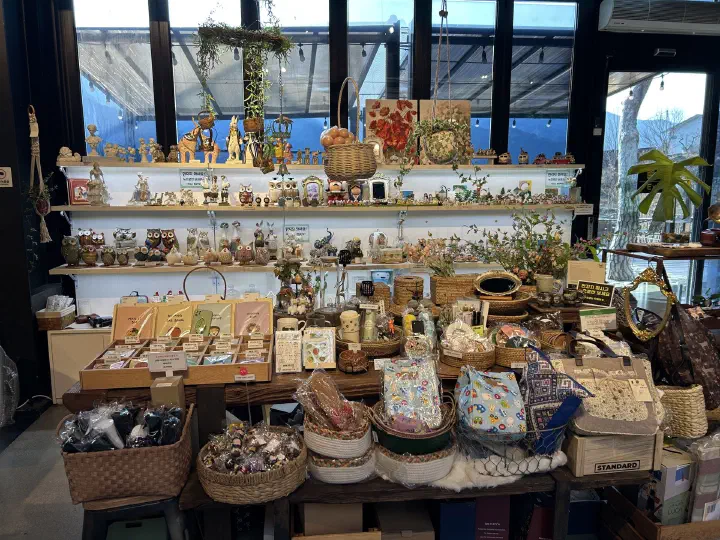
정원과 놀이 공간, 기념품 매장까지
한자리에서 해결되는 보기 드문 카페예요.
화개장터와 쌍계사 사이를 지날 일이 있다면
자연스럽게 다시 들르게 되는 곳입니다.