There’s a restaurant in Busan that has sold exactly one dish for decades and still draws lines out the door: Haeundae Giwajip Daegutang (해운대기와집대구탕).

The dish is daegu-tang (대구탕), a clear cod soup.
No spicy version, no side menu, no combos.
One soup, one price, and a dining room full of locals who have been coming here for twenty-plus years.

If you’re staying anywhere near Haeundae Beach, this is one of the easiest “real local breakfast” experiences you can have in Busan.

The basics

  • Address: 4 Dalmaji-gil 50beon-gil, Haeundae-gu, Busan (dining on the 2nd-3rd floor)
  • Phone: 051-731-5020
  • Hours: daily 08:00-20:40, last order 20:10
  • Menu: daegu-tang (대구탕) 16,000 won - one single dish, rice included
  • Parking: free lot with attendants, valet-style (you leave your key)
  • Good to know: elevator, high chairs for kids, takeout available

📍 View Haeundae Giwajip Daegutang (해운대기와집대구탕) on Google Maps →

One practical note first: in Korea, Google Maps is unreliable for walking and transit directions.
Download Naver Map or Kakao Map instead - both have English interfaces and work far better here.

From a hillside tile-roof house to a new building in Mipo

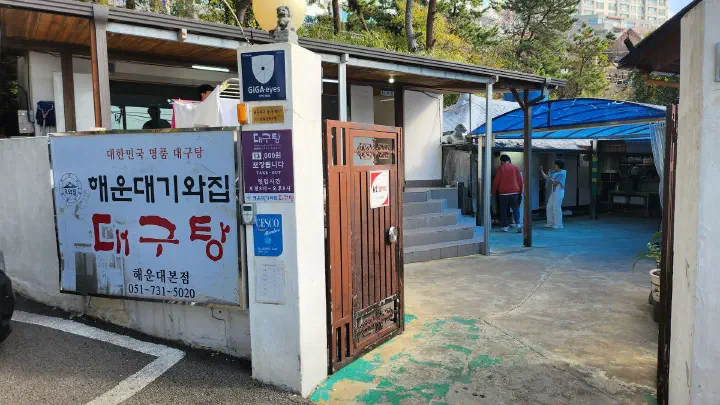
“Giwajip” literally means “tile-roofed house,” and that’s what this place was for most of its life - an old Korean house halfway up Dalmaji Hill, where you ate looking down at the ocean.

Entrance and cod soup sign of Haeundae Giwajip Daegutang’s old tile-roof house on Dalmaji Hill

The hillside area went into a redevelopment plan, so in spring 2025 the restaurant moved into a brand-new building near the Mipo intersection, right across from the LCT tower (the tallest building on the Haeundae skyline - you can’t miss it).

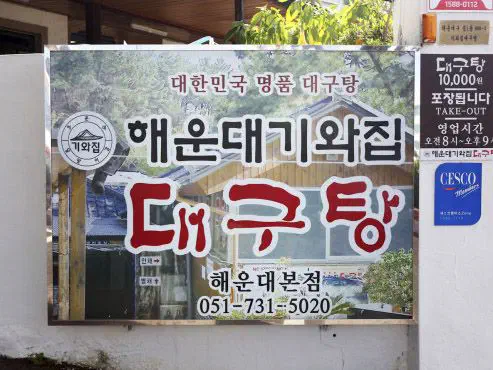
Signboard of Haeundae Giwajip Daegutang, a Busan cod soup specialist

The new place kept a strip of tile roofing over the entrance as a nod to the old name.
The first floor is entirely a waiting lounge, dining is on the second and third floors, and there’s an elevator.
On the staircase walls hang photos of the old tile-roof house, which long-time customers stop and look at with visible nostalgia.

Regulars miss the old atmosphere and the sea view - that’s the most common complaint you’ll hear.
But the verdict on the food is consistent: the soup tastes the same as it always did, and parking is far easier now.

The soup

Ordering takes ten seconds.
Sit down, tap the tablet on your table for however many people you have, done.
Since there’s only one dish, food arrives in five to ten minutes.

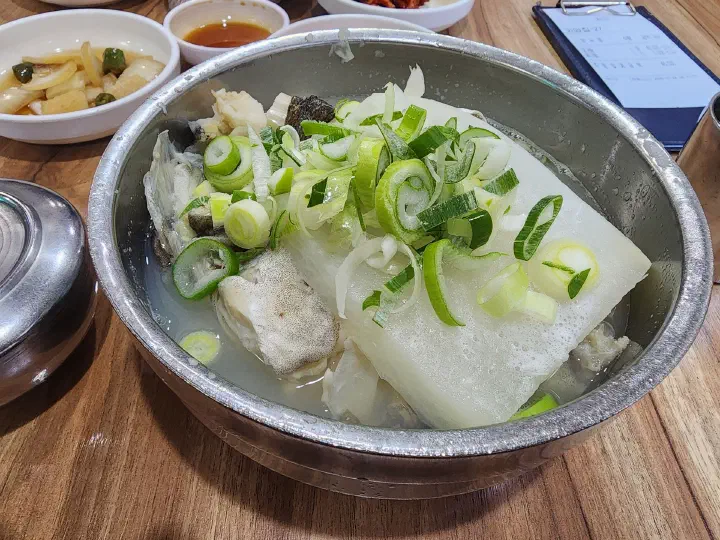
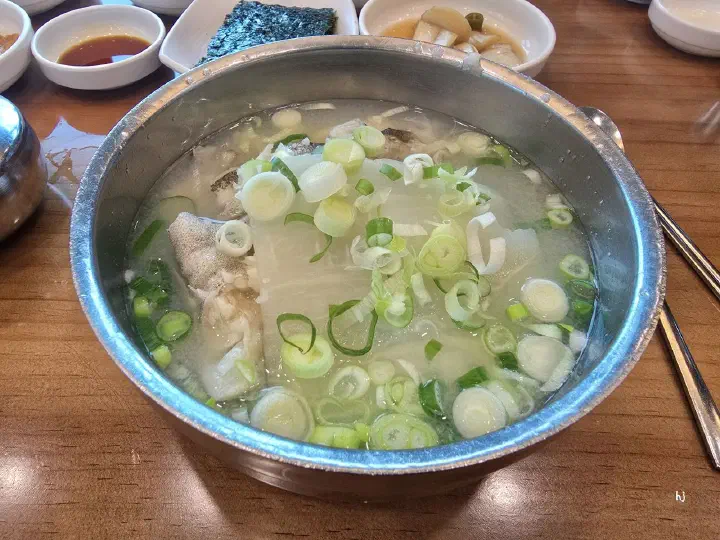
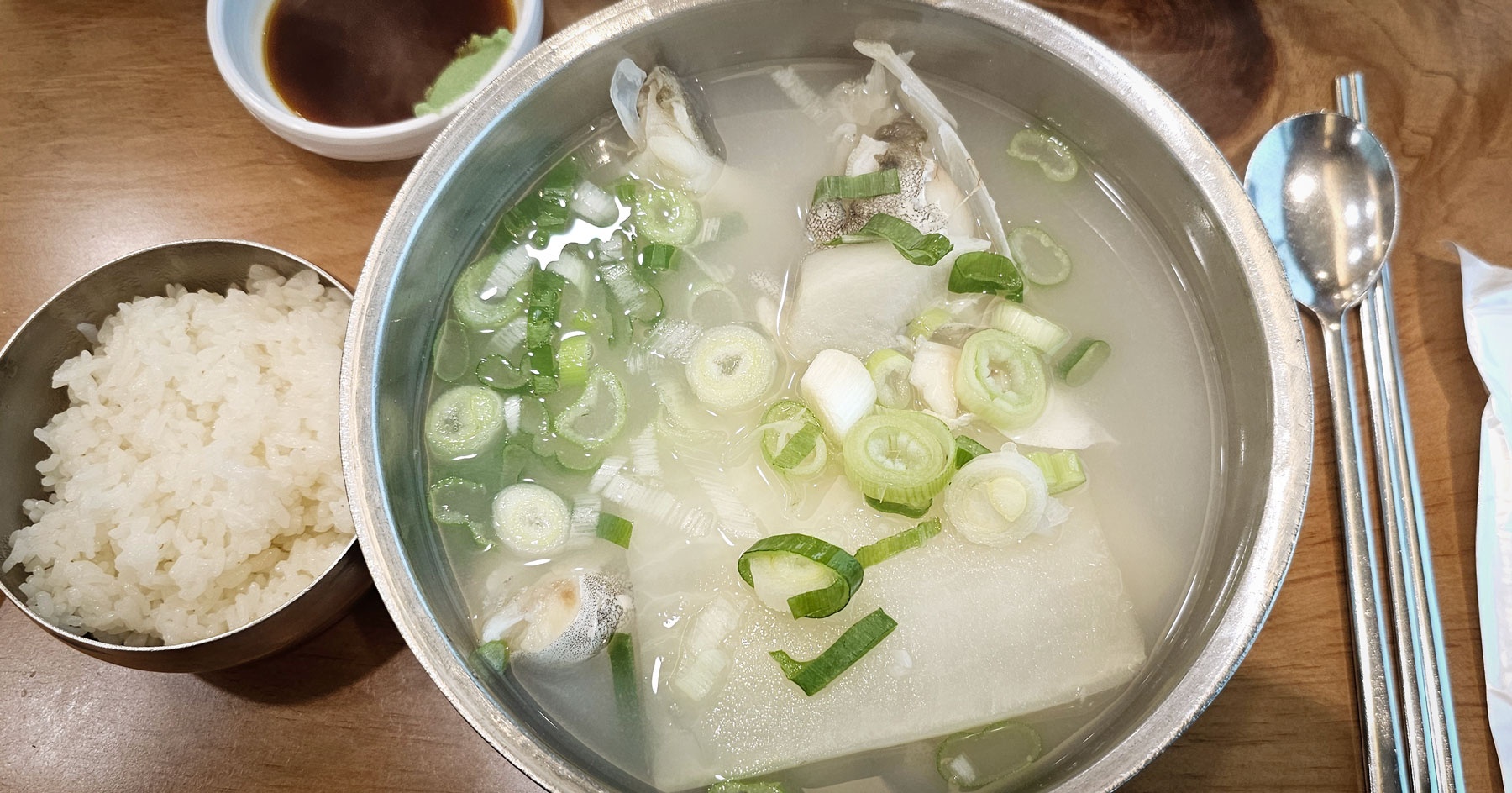
What lands on your table is a big stainless bowl of clear broth with a fist-sized chunk of radish, green onion, and a lot of cod.

A bowl of Haeundae Giwajip Daegutang clear cod soup with a big radish chunk and cod in clear broth

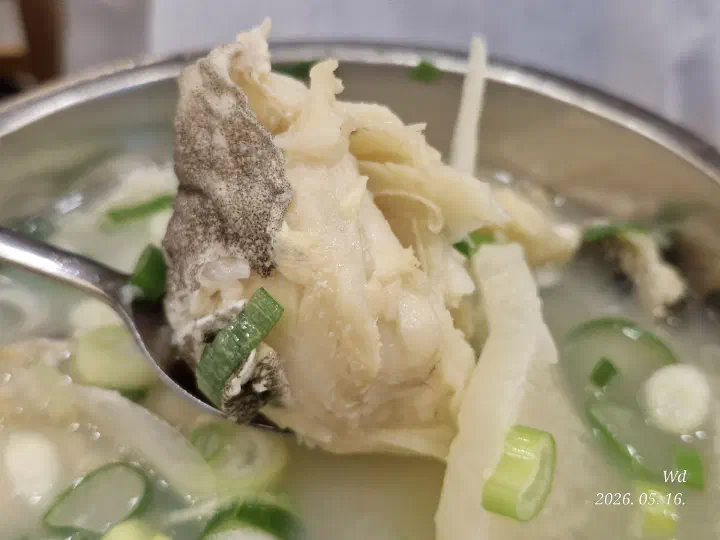
This house works mainly with the head and collar of the cod, which sounds intimidating but is actually where the best texture is - the cheek meat is bouncy and slightly chewy rather than mushy.
The fish seems to be lightly dried before cooking, which firms up the flesh nicely.
The broth gets its depth from just radish and fish, and it’s remarkably clean - no fishiness at all.

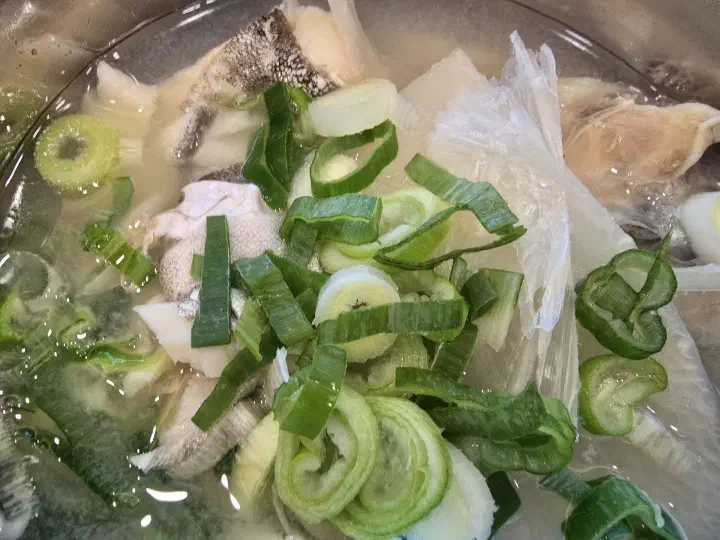
A spoonful of thick cod cheek meat from Haeundae Giwajip Daegutang cod soup

Top-down close-up of Haeundae Giwajip Daegutang cod soup with green onion and radish

Portions are big.
Many people can’t finish the fish, and the bowl plus rice is easily a full meal.

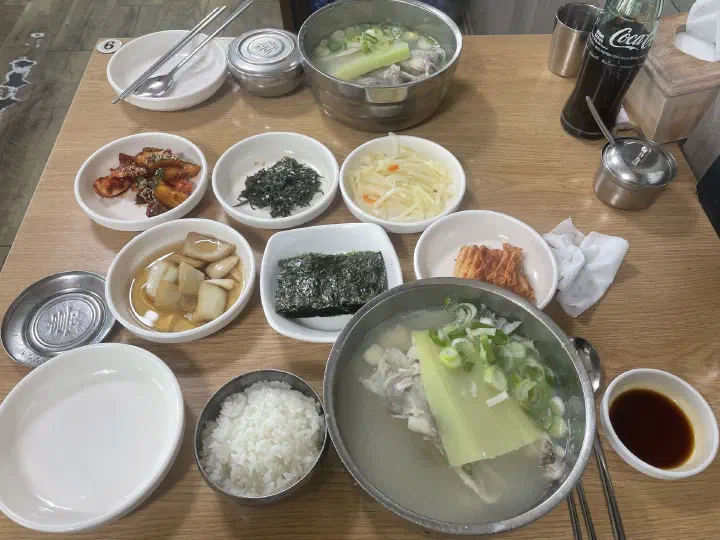
Full table setting at Haeundae Giwajip Daegutang with cod soup, rice, and side dishes

How to eat it like a local:

One - drink the broth plain first, at least half the bowl, to taste how clean it is.
Two - stir in a little of the chili paste (dadaegi, 다대기) sitting on your table. It turns the soup pleasantly fiery.
Three - a few drops of vinegar from the self-serve station makes the broth taste even brighter. Trust the locals on this one.

Clear cod soup at Haeundae Giwajip Daegutang topped with radish and green onion

A serious warning about that chili paste: it looks mild, but it’s made from very hot peppers.
Even Koreans cough on it when they overdo it - and Korean “spicy” already runs hotter than most visitors expect.
Start with a third of a spoon.

Also try the local combo: a sheet of dried seaweed, a bit of rice, a piece of cod on top, dipped in soy sauce.

Side dishes and the honest downsides

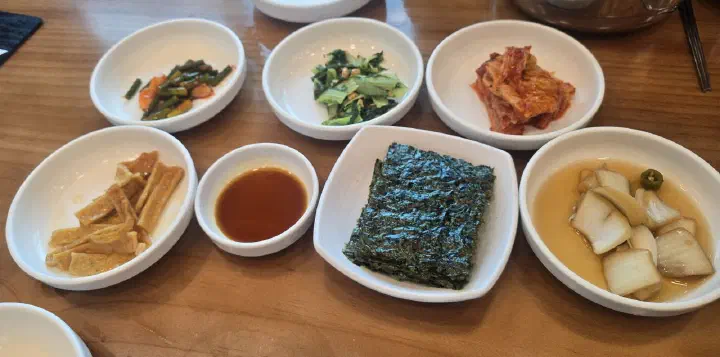
About six side dishes come with the meal - roasted seaweed, kimchi, pickled onion, stir-fried fish cake, seasoned greens.
The seaweed and pickled onion pair especially well with the soup, and you can ask for refills.

Korean side dishes at Haeundae Giwajip Daegutang including roasted seaweed, kimchi, and pickled onion

Now the honest part.
The side dishes are ordinary and rarely change - nobody comes here for the banchan.
The big radish chunk is a lottery: some days it’s perfectly soft, some days undercooked.
And because the soup uses head meat, the bone-to-flesh ratio varies bowl by bowl - some days you work for your fish.
Service is brisk rather than warm; this is a high-turnover institution, not a hospitality experience.
Set your expectations accordingly and you’ll leave happy.

Waiting, parking, and timing

The restaurant opens at 8 a.m., which makes it a favorite breakfast spot - especially for hangovers, which is practically a Busan tradition.

Weekend lunch peaks get genuinely busy - waits of 30 to 50 minutes happen.
The line moves fast, though, since everyone is eating the same quick dish.
Come before 11 a.m. or around 3 p.m. and you’ll usually walk right in.
If there’s a line, register at the machine in the first-floor lounge and wait for your number.

If you’re driving, just pull in - attendants will park the car for you (leave the key).
For everyone else: the walk from Haeundae Beach along the shore is pleasant, or a short taxi ride.
Taxis in Korea are affordable, and the Kakao T app works with foreign cards.

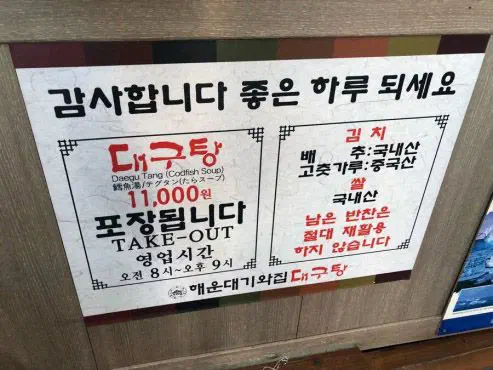
Notice board at Haeundae Giwajip Daegutang showing cod soup price, takeout, hours, and ingredient origins

Takeout exists but comes with quirks: no rice or side dishes included, a 1,000-won container fee, and they won’t pack up your leftovers (hygiene policy).
The old location didn’t serve alcohol, but the new building does - soju with cod soup at 9 a.m. is a sight you may well witness here.

Money and language, for visitors

Like almost everywhere in Korea, this restaurant takes credit cards without fuss - any internationally accepted card is fine, so there’s no need to carry much cash for this meal.

There’s no tipping culture in Korea.
Don’t leave anything extra; staff may actually chase you down to return it.

Don’t worry about the language barrier either.
The staff’s English is limited, but there is literally one dish - the tablet ordering means you barely need to speak at all.
Ordering here might be the easiest restaurant transaction of your whole Korea trip.

Location and what to pair it with

The restaurant sits right across from LCT, a few minutes’ walk from Mipo Station of the Haeundae Blueline Park - the sightseeing “sky capsule” and beach train that run along the old rail line.
A very good half-day plan: cod soup breakfast, then the beach train toward Cheongsapo, then a walk back along Dalmaji-gil.

📍 View Haeundae Giwajip Daegutang (해운대기와집대구탕) on Google Maps →

Haeundae has an unusual number of cod soup restaurants, and locals argue about their favorites - Soksiwonhan Daegutang (속시원한대구탕) is the other big name.
If you like your broth clear and gentle, Giwajip is the one most people point you to.

Verdict

This isn’t a “wow” restaurant - it’s better than that.
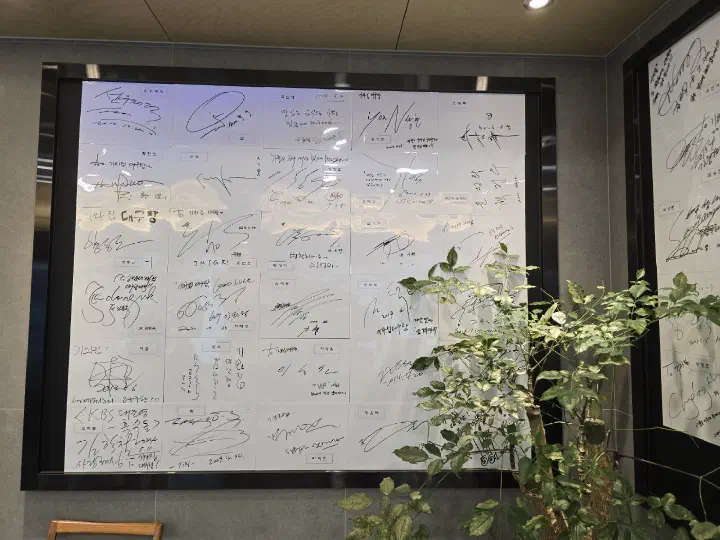
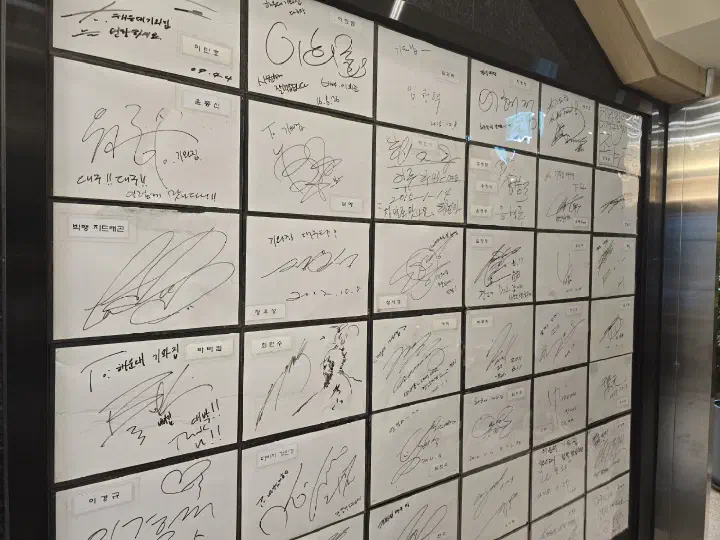
It’s the kind of place that does one modest thing so consistently that celebrities’ autographs cover the walls and three generations of the same families keep coming back.

Wall of framed celebrity autographs at Haeundae Giwajip Daegutang

Close-up of Korean celebrity signatures collected at Haeundae Giwajip Daegutang

At 16,000 won the price has crept up over the years, but the amount of fish in the bowl makes it feel fair.
For a warm, clean, deeply Korean breakfast by the sea, it’s hard to do better in Haeundae.