Ask around Haeundae for one meal that isn’t pork soup rice, and Haemok (해목) comes up almost every time.
It’s a Japanese restaurant built around hitsumabushi — the Nagoya-style grilled eel rice bowl — and it has held a spot in the Michelin Guide Busan every year from 2024 through 2026, plus several years of Korea’s Blue Ribbon award.
You can’t really miss the place.
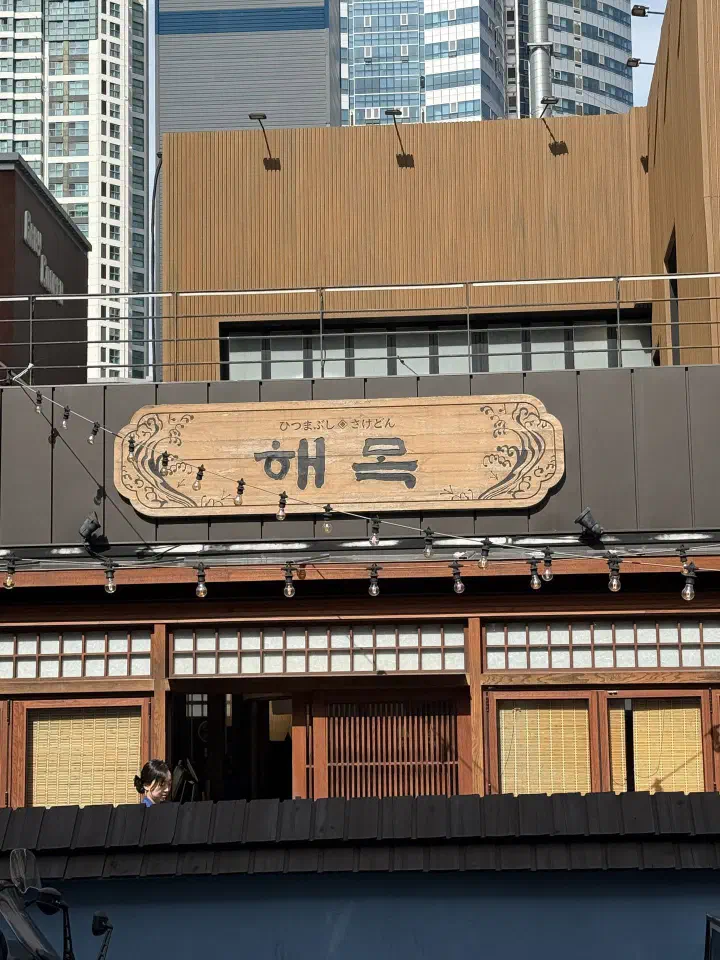
It sits in the middle of Gunam-ro, the main pedestrian street running down to Haeundae Beach, behind a blue-painted wall with a wooden facade that looks lifted straight out of an old Japanese alley.
After sunset the warm bulb lighting comes on and the entrance turns into a photo spot of its own.

The basics
- Address: 8 Gunam-ro 24beon-gil, Haeundae-gu, Busan
- Hours: 11:00 - 22:00 daily, no closing days
- Break time: 15:00 - 17:00 Monday through Thursday only (none on Fri-Sun)
- Last order: 14:50 and 20:50
- Parking: no dedicated lot — there’s a paid lot right next door, but the restaurant doesn’t validate
- Kid-friendly: high chairs and an 11,000 won children’s eel bowl
📍 View Haemok (해목) on Google Maps →
Getting there is easy without a car: it’s a 4-5 minute walk from Haeundae Station (metro line 2), exit 5, and the beach is just a few minutes further.
One tip for navigation — Google Maps walking directions are unreliable in Korea, so use Naver Map or Kakao Map instead.
For taxis, the Kakao T app works well and rides within Haeundae are short and cheap.
How the wait works
This is a queue restaurant, so plan for it.
On weekends and in peak season the list can run past 50 parties.
The good news: the dining room spans two floors and turns over fast, so the line moves quicker than the number suggests.
A few patterns worth knowing.
Walk-in registration opens at 10:00 each morning, and the 11:00 opening seats around 30 parties at once, so showing up before opening usually works.
There’s also a remote waitlist app (in Korean) that lets you register and wander the beach until your turn — locals set their spot and come back later.
On weekdays (Mon-Thu) you can book ahead through Naver reservations, which skips the line entirely; if the apps feel like too much, just go at an off-hour.
Around 2 pm before the weekday break, or after 8 pm, you can often walk straight in.
Hitsumabushi: one bowl, four ways
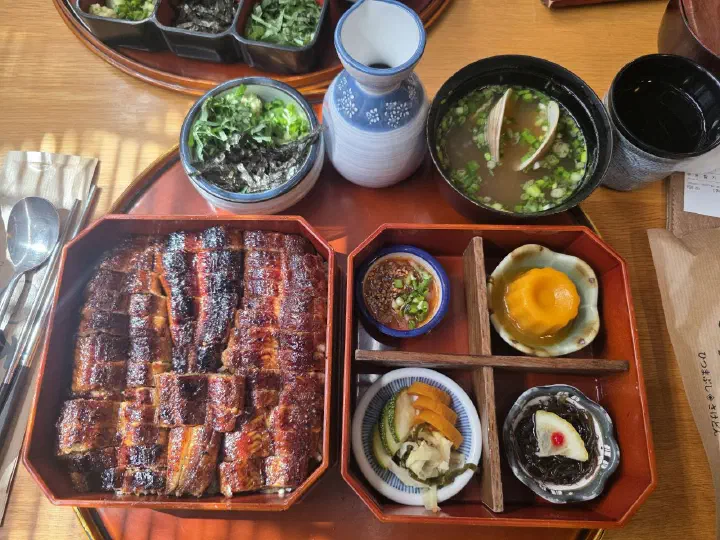
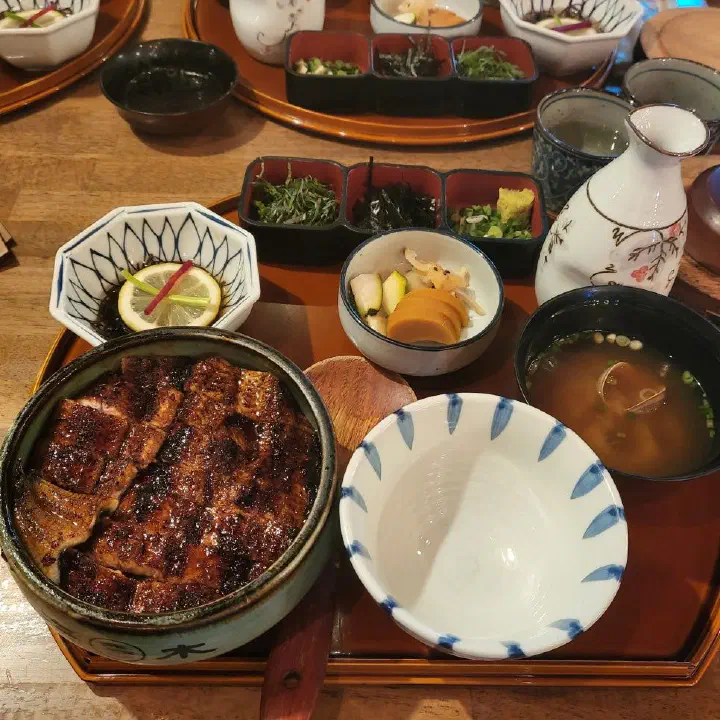
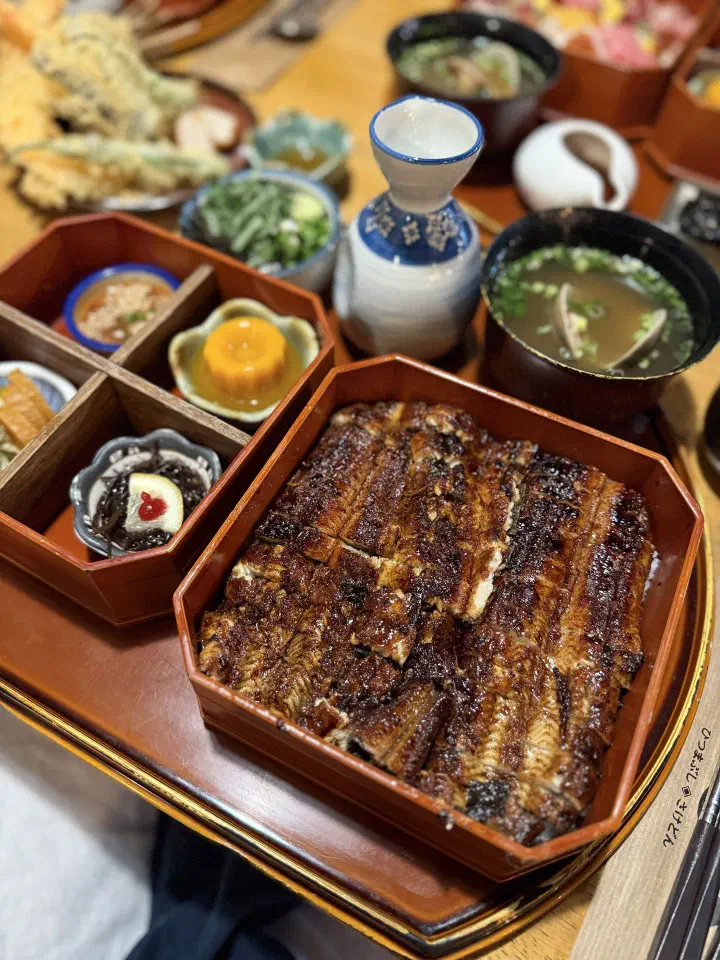
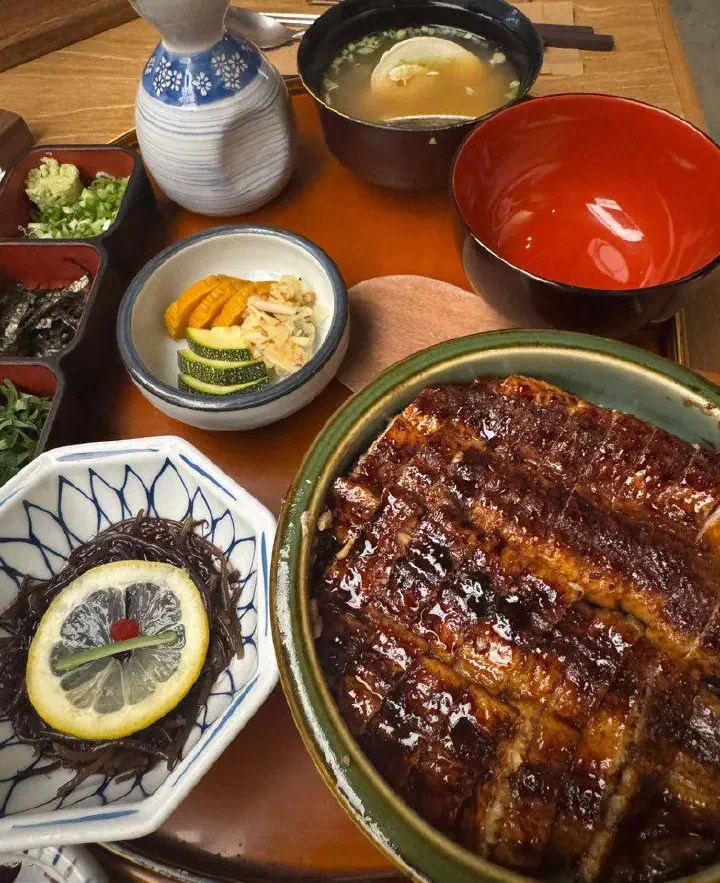
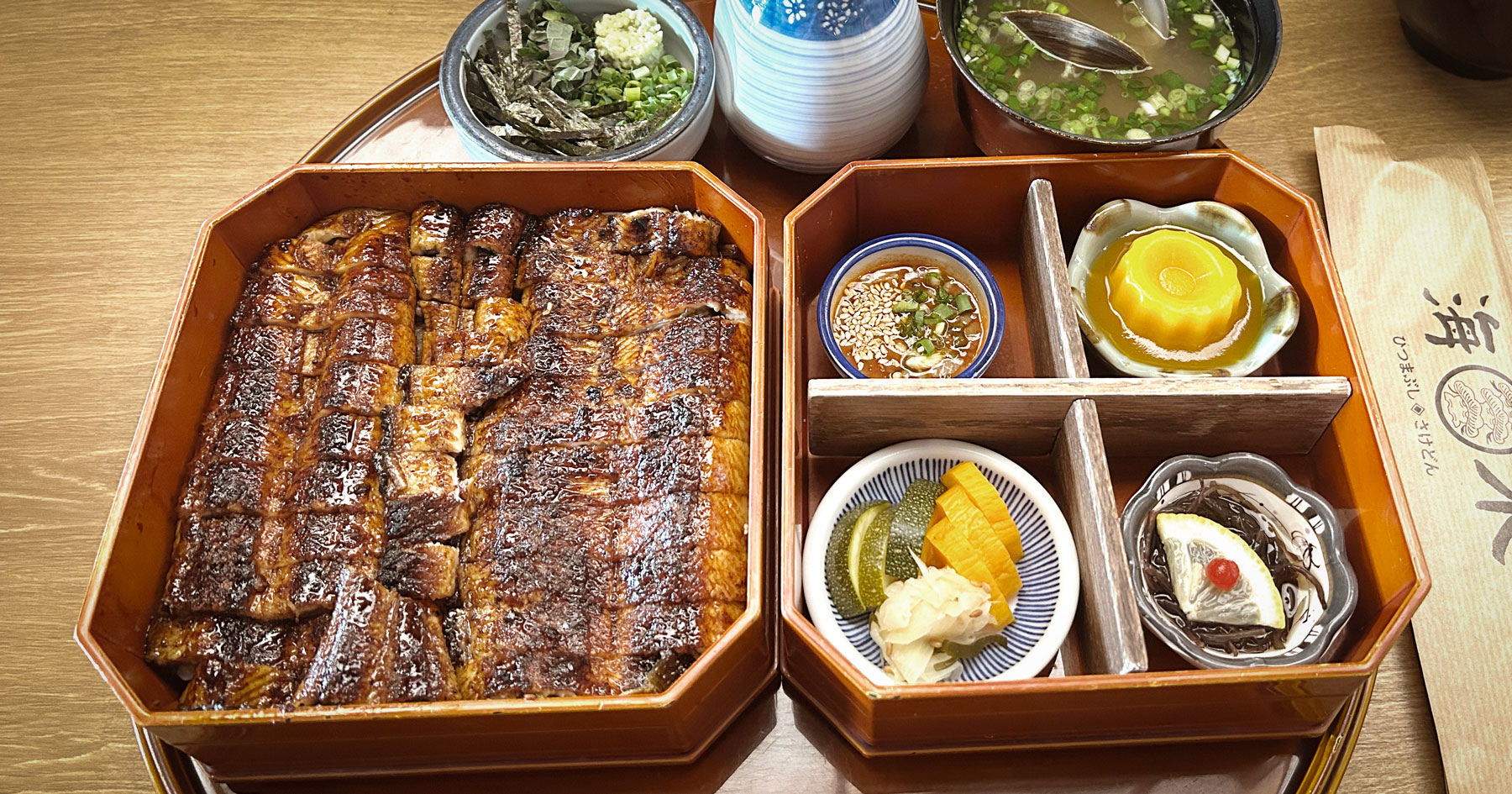
The signature is the hitsumabushi — 39,000 won with a whole eel, or 58,000 won for the “teuk” (특, special) with one and a half eels plus extra sides.
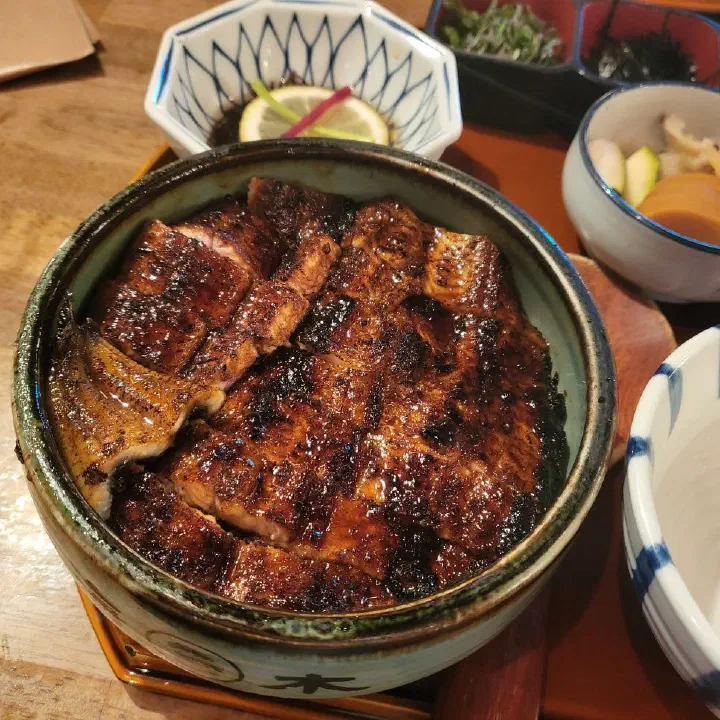
The freshwater eel is brushed with a house soy glaze and grilled three times over charcoal, and the smoky smell reaches the table before the lid comes off.

The fun is in the ritual.
You quarter the rice with a wooden paddle, then eat it four ways: first plain, to taste the eel and rice as they are; second with the yakumi tray of green onion, perilla leaf, seaweed flakes and wasabi; third with the yakumi plus a pour of warm broth, ochazuke-style; and fourth, an encore of whichever round you liked best.
There’s an instruction card on every table and the staff walk you through it, so first-timers manage fine.

The eel comes out lightly crisp on the outside and soft inside, and the glaze is already worked into the rice — no extra sauce needed.
The wasabi round is where it clicks for most people; it cuts the richness completely.
The miso soup with baby clams that comes on the tray is quietly excellent, and the side dishes and rice are refillable.

Two honest caveats.
The “green tea” broth for the ochazuke round tastes more like a light dashi than actual tea, so don’t expect a strong matcha note.
And the seasoning overall leans gentle — if you like your glazed eel dark and salty-sweet, this may read as subtle.
Kaisendon and the other bowls
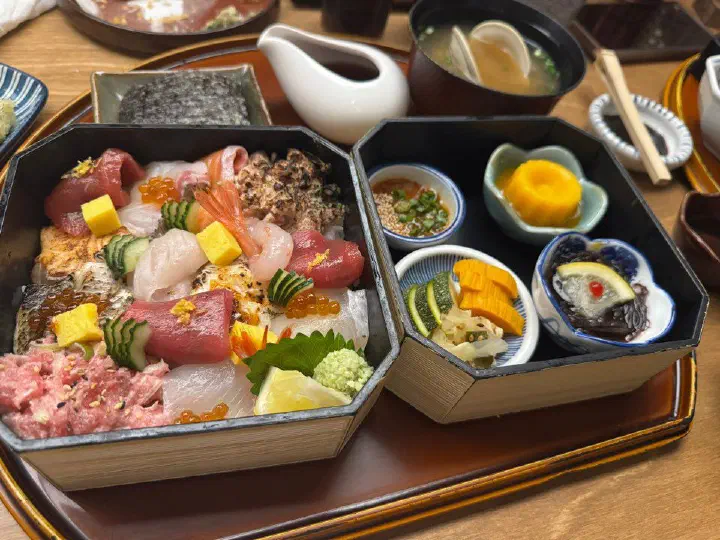
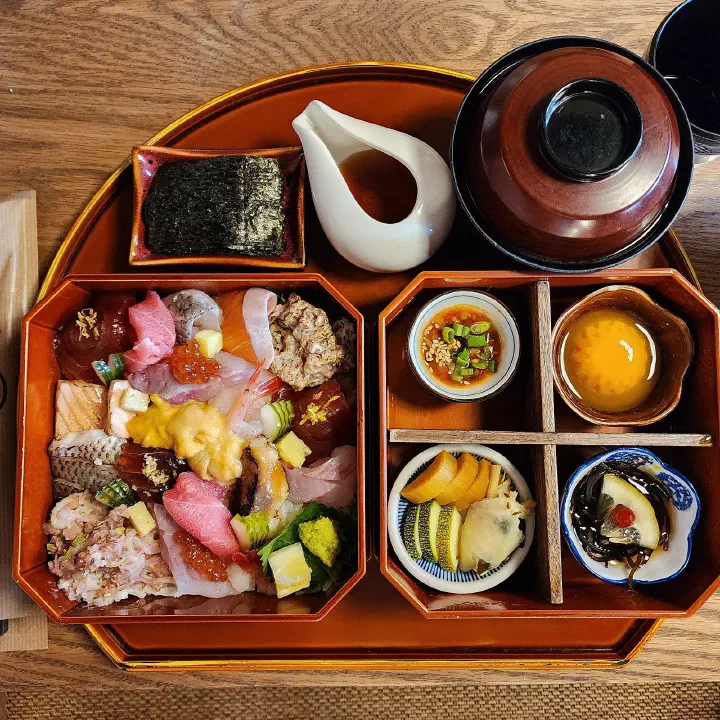
The second flagship is the kaisendon (카이센동), 37,000 won regular or 51,000 won special, topped with sea bream, raw shrimp, tuna, salmon, salmon roe and sea urchin depending on the day.
The special adds about five more kinds of fish, worth it if you want variety.

The house method: drizzle the sweet soy over everything, start with the lean white fish, move to the fattier red fish, and wrap the tuna and negitoro in the roasted seaweed with a dab of wasabi.
The fish is aged rather than straight-off-the-boat, so the texture is soft and buttery.
Plenty of regulars actually rate the kaisendon above the eel, so ordering one of each and sharing is the safe play for two people.
Note that the kaisendon does sell out some evenings.

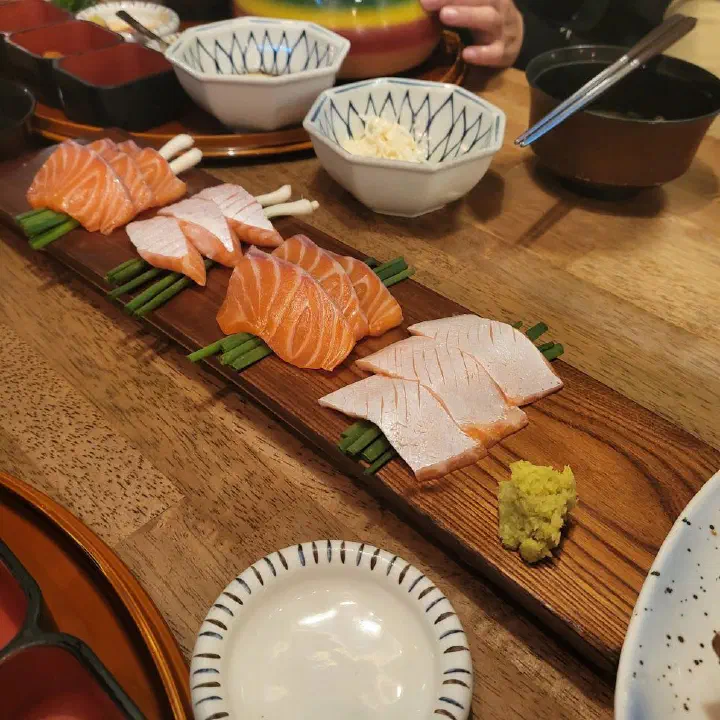
The salmon and tuna bowls (22,000 - 27,000 won) hold their own too, served with yam sauce or natto for the tuna — a good option for anyone in your group who doesn’t eat eel.

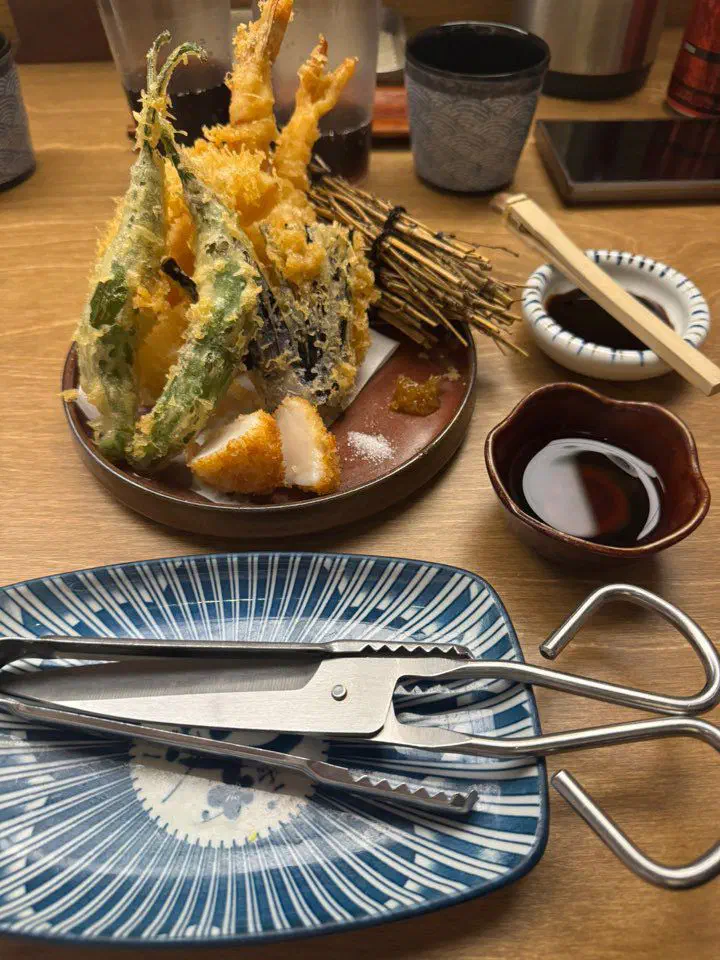
The assorted tempura (14,000 won) is a light, thin-battered side where you choose scallop or fish, and there are Japanese-style extras like matsu-zake (a ginseng sake aperitif), Suntory draft beer, and a tart pickled-plum ade.

Practical notes for visitors from abroad
Card payment is no problem — any internationally accepted credit card works here, as it does at almost every restaurant in Korea, so you don’t need to carry much cash.
There’s no tipping culture in Korea either; leaving a tip would only confuse the staff.
English at the table is limited, though some staff manage a little, and it honestly doesn’t matter: the menu has photos, and pointing at what you want with a finger count is a completely normal way to order.
The eating-instruction cards are the visual kind you can follow without reading Korean.
Haeundae draws a very international crowd, so the restaurant is used to foreign diners — you won’t feel out of place.
How it has changed
Haemok is one of those places that has grown into its fame.
It appeared on the Korean TV show “Master of Living” in 2020 and again in 2024, then entered the Michelin Guide Busan in 2024, and the tourist share of the crowd has clearly grown since.
Service has kept pace — the staff explanations and floor service draw consistent praise these days, more than in its earlier years.
Prices have crept up gently: the hitsumabushi went from 38,000 won a few years back to 39,000 won now, and the special from 57,000 to 58,000 won.

Busan has several eel-bowl specialists now — Gooook (고옥) and Cheongsong (청송) nearby, Donggyeongbapsang (동경밥상) over in Gwangalli — and the comparisons are a local sport.
Styles differ, but for space, atmosphere and access, Haemok tends to win the vote.
Verdict
It’s not a cheap lunch, but between the eel quality, the thoughtful sides and the setting, the price makes sense.
It suits dates, family meals and solo diners alike — there are counter seats, tatami-style rooms and regular tables.
If you’re giving yourself exactly one “nice meal” in Busan, this is a strong place to spend it.

Getting there
Middle of Gunam-ro, a 4-5 minute walk from Haeundae Station exit 5.
Skip driving if you can; if you must, use the paid lot next door or the public lot about ten minutes away on foot, and note the parking machines may not take foreign cards, so keep a few thousand won in cash just in case.