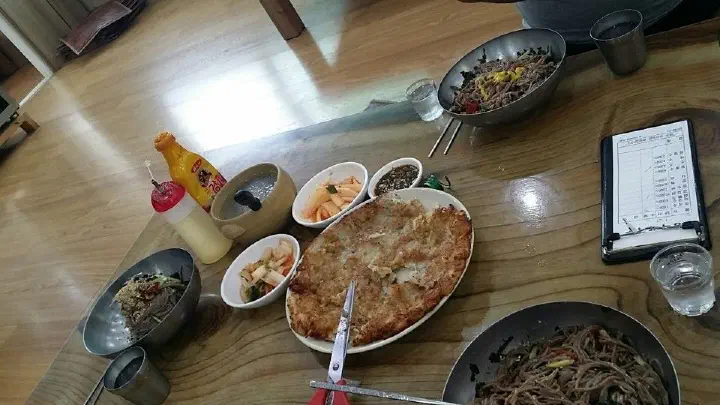
This is a buckwheat noodle house out in Seoseok-myeon, Hongcheon - but the dish everyone talks about first isn’t actually the noodles. It’s the potato pancake.
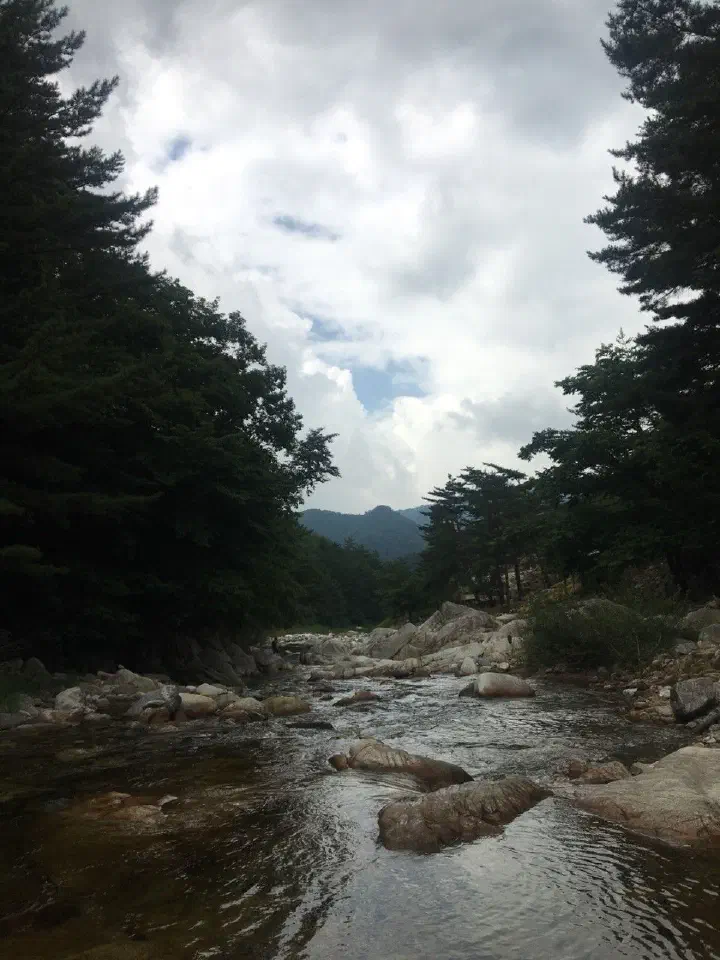
It sits right on the road up to Yongoreum Valley (용오름계곡), so it makes an easy stop after a hike or a day by the water.

Who it suits
Don’t come expecting a slick, trend-driven restaurant. This is more like eating at a country grandmother’s house, and that’s the whole charm of it.
It works well for families, for an outing with parents, or as a low-key meal on the way back from the valley. Tables are spaced out and there’s seating for larger groups, so it handles a crowd easily. Coming alone for a single bowl is fine here too.
One honest heads-up: the noodles lean plain and mild - very buckwheat-forward. If you’re picturing a sweet, punchy spicy-cold-noodle dish, the first bite might puzzle you. That’s not a flaw so much as the Gangwon style of makguksu.
Getting there and the wait
The place has been on Korean TV several times - EBS Geukhan Jikeop, MBC Oneul N, KBS2 Saengsaeng Jeongbo, and EBS Hanguk Gihaeng - so the crowds have grown.
Weekend lunches often mean a line. The busiest stretches run roughly noon to 1:30 for lunch and 6 to 7:30 for dinner. If you’d rather take your time, an early lunch around 11:30 or a later sitting after 1:30 is much calmer, and weekdays are easier than weekends.

Start with the gamjajeon
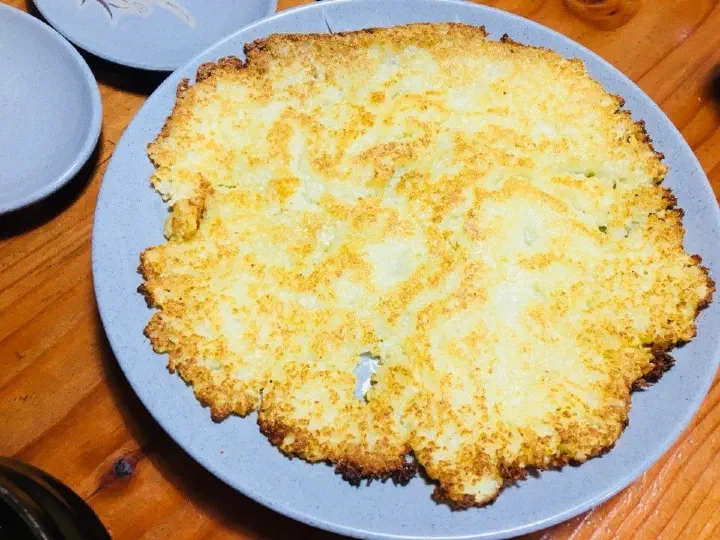
Nearly every diner brings up the potato pancake (감자전, gamjajeon) before anything else - which is funny for a noodle shop.
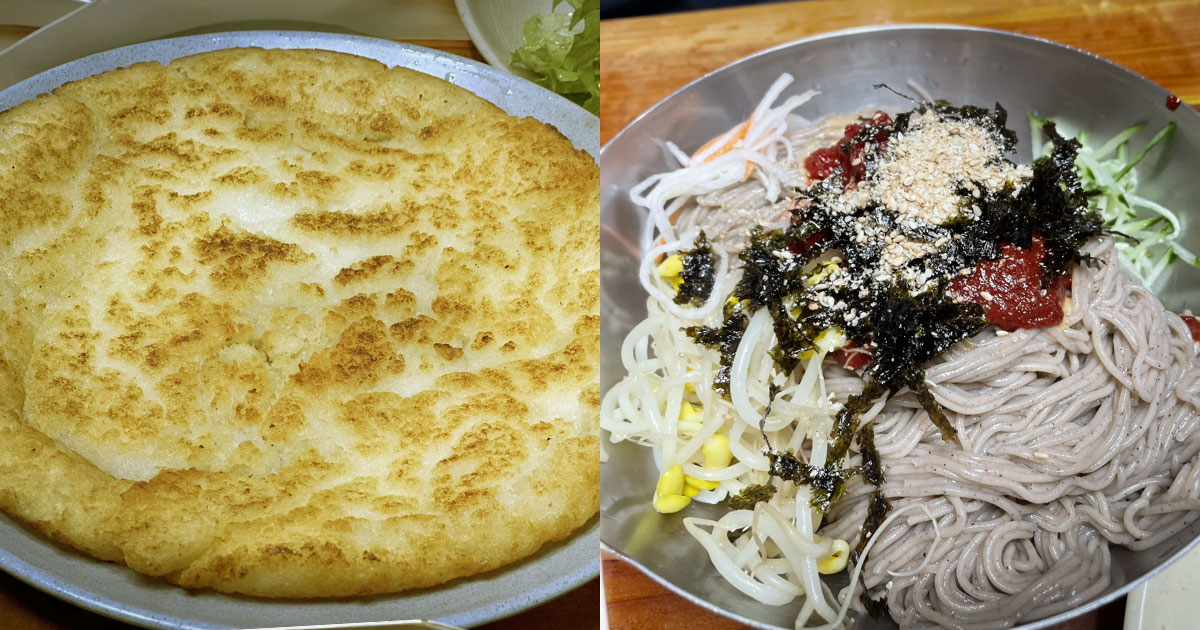
A single pancake is said to use a full kilogram of freshly grated potato, so it comes out genuinely thick, and the sheer size tends to get a reaction. The edges go crisp like browned rice, while the middle stays moist and chewy, almost like a steamed potato. There’s barely any flour, so the potato flavor really carries it.
It’s grated and fried to order, so it does take a while. If you’re not in a rush, put this order in first.

The buckwheat makguksu
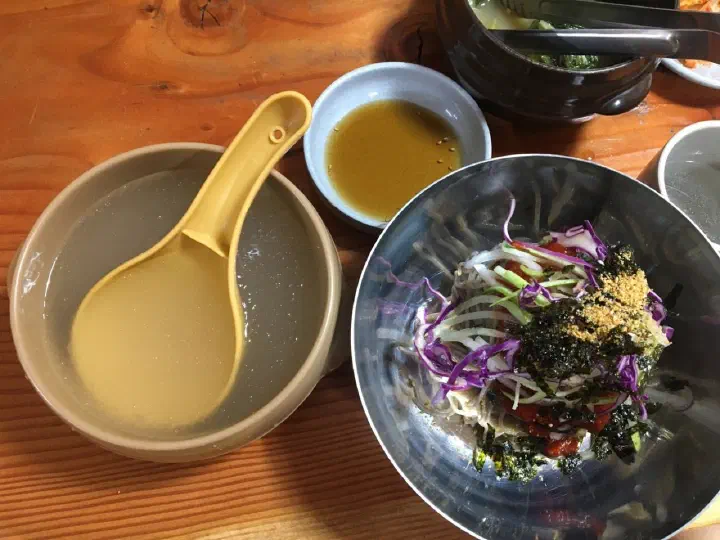
The buckwheat noodles (메밀막국수, memil makguksu) are mixed and pressed in-house. They’re topped with a generous tangle of seasoned pollack (명태회, myeongtae-hoe), which is this kitchen’s signature touch.
You pour over a chilled dongchimi (동치미) broth made from radish-water kimchi grown on their own plot, and it’s refreshing without being heavy. The seasoning stays gentle, so it’s easy to finish.
There’s no separate “broth” or “mixed” version on the menu. The trick is to taste the noodles plain first, then add vinegar, mustard, and a little sugar to your liking, mix, and finally pour in the dongchimi broth to turn it into a cold soup bowl at the end. That little ritual makes a real difference.
The noodles are thin and break easily as you eat - which can feel unfamiliar if you like a springy, chewy texture, but it’s exactly how buckwheat makguksu is meant to be. The large (gop-ppaegi) portion is huge; two people can share one bowl plus the pancake and dumplings and walk out full.

Pheasant dumplings and the rest
The other specialty here is the pheasant dumpling (꿩만두, kkwong-mandu). Pheasant is wrapped in a buckwheat skin, and it’s clean and mild - no gaminess - so even first-timers handle it easily.
To be fair, some people say they can’t really detect anything distinctly “pheasant” about it; it reads more like a solid, mild meat dumpling. Pleasant either way.
In the colder months, the warm pheasant dumpling soup and the kimchi-dumpling soup (메밀피 김치만둣국) are popular. The kimchi version is built on aged kimchi, pork belly, and beaten egg, so the broth runs deep.
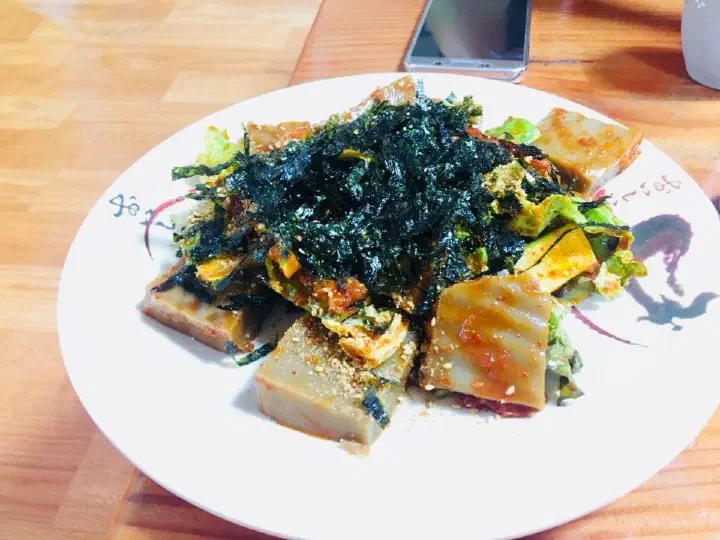
The acorn jelly salad (도토리묵무침, dotori-muk-muchim) pairs perilla oil with a mildly spicy dressing and goes nicely with makgeolli. The house-made young-radish kimchi is also worth tucking into a bite of potato pancake.

The room and the service
It’s an old country house left mostly as it was, so there’s a retro, lived-in feel. Inside you’ll find a mix of floor seating and regular tables, and on a nice day the outdoor platforms and tables are the place to be - there are more than ten of them, with fans set out, and it almost feels like a creekside spot in summer.
Everything is cooked by two grandmothers, by hand. That’s the appeal, but it also means dishes take time to come out - good to know going in.

Good to know
- Address: 12 Kveomsan-gil, Seoseok-myeon, Hongcheon-gun, Gangwon (on the way to Yongoreum Valley)
- Phone: 033-436-1514
- Hours: daily 10:00-20:00 (closes 19:00 in winter; may close early once ingredients run out)
- Parking: spaces in front and to the side, generally roomy
- Groups and reservations OK
📍 View Kveomsan Makguksu (검산막국수) on Google Maps →
A few practical notes for travelers. Like almost everywhere in Korea, a card works fine here, so any internationally accepted card should be no problem - though out in the countryside it never hurts to carry a little cash. There’s no tipping culture in Korea; you don’t need to leave anything, and trying to tip can actually leave the staff flustered. English isn’t really spoken, but ordering is easy enough - point at the menu and hold up fingers for how many, and you’re set.
For getting around, this is genuinely hard to reach without a car; if you’re relying on transit, the Kakao T taxi app is your friend for the last stretch. And for walking or transit directions in Korea, Naver Map or KakaoMap work far better than Google Maps.
The food here isn’t spicy overall, so most visitors are fine - the acorn jelly dressing has a mild kick at most.
There’s also a well-known spot, Saenggok Makguksu, right across the road (it was featured on a Baek Jong-won show). When the line there gets long, plenty of people cross over to Kveomsan instead, and locals often eat at both.
Final thoughts
It’s not a flashy restaurant. What keeps people coming back is the honesty of it - a meal put together each day from ingredients they grow themselves.
The potato pancake is close to a must-order, and the makguksu rewards you if you come ready to enjoy that mild Gangwon style. Give yourself some time, skip the peak rush, and it’s a genuinely pleasant stop.