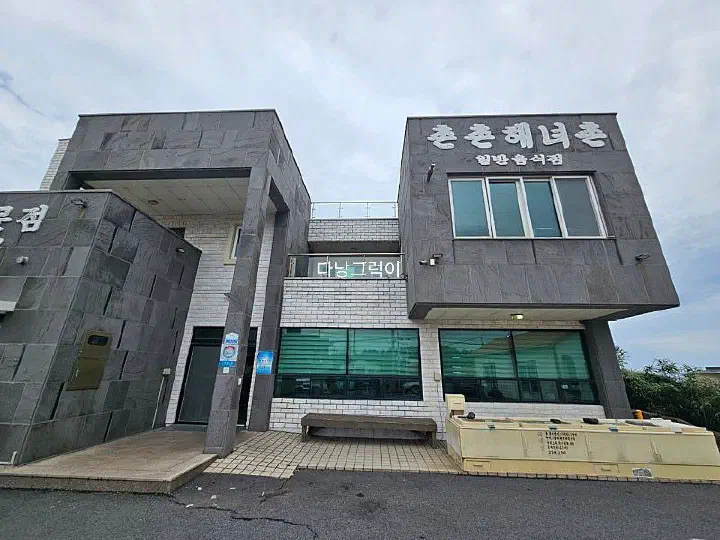
Drive along the eastern coast of Jeju and a red sign eventually catches your eye.

This is Chonchon Haenyeochon (촌촌해녀촌), the place credited with inventing hoe-guksu - noodles tossed with fresh raw fish.
The name has changed over the years. It used to be called Dongbok-ri Haenyeochon, and locals still slip between the two.
It’s run by the haenyeo (women divers) association of Dongbok village, so it has deep roots here.

If you’ve never had hoe-guksu, the first plate is a small surprise.
You half expect a soup, then you’re handed a plastic glove and told to mix the noodles by hand.

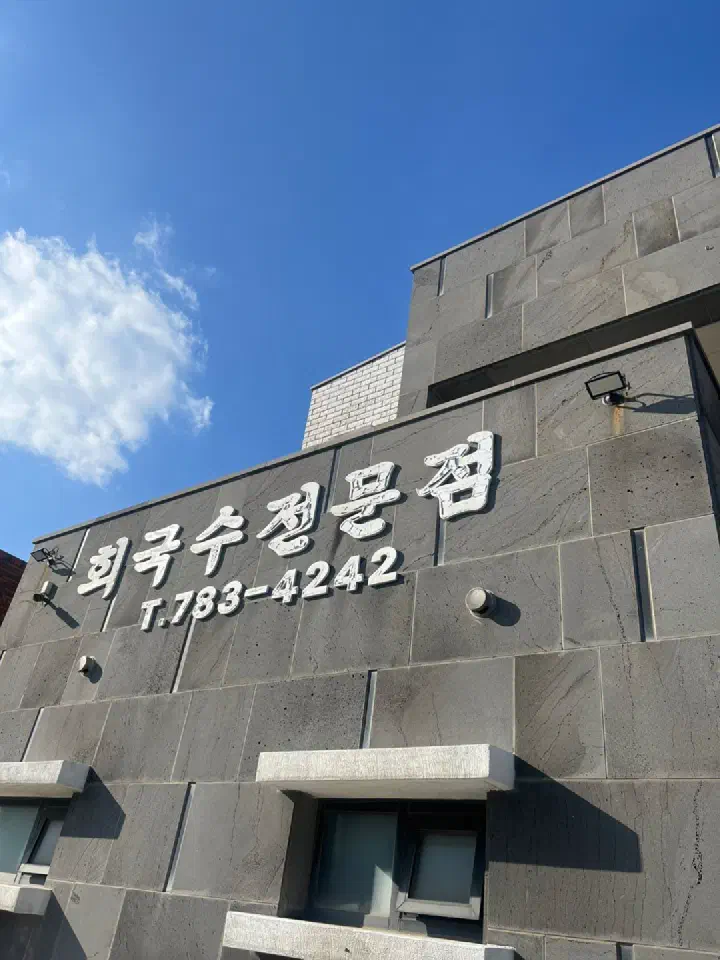
Exterior of Chonchon Haenyeochon on the Dongbok coastal road in Gujwa, Jeju

What kind of place this is

This isn’t a fancy course-menu restaurant.
It’s the kind of spot where you slurp a quick, satisfying bowl while looking at the sea.

It sits right on the coastal road between Hamdeok Beach and Gimnyeong Beach, so it’s an easy stop if you’re touring the east side.

One thing foreign travelers really appreciate: it opens early, at 9 a.m.
Most Jeju restaurants don’t open until 11, so this is a rare option for breakfast.
Starting the day with a bowl of noodles and an ocean view beats hotel toast.

It works for families too.
If the spicy hoe-guksu is too much, there’s warm sea urchin noodle soup or abalone porridge.
There are no baby chairs, though, so with a small child the staff usually seat you in the back room.

Getting there, parking, and waiting

With Chonchon Haenyeochon, parking is worth mentioning first.
Many Jeju restaurants are a headache to park at, but here there’s a big private lot right in front.
It fits well over a dozen cars, which is a relief when you’re driving a rental.

Hoe-guksu specialty sign on the wall of Chonchon Haenyeochon in Jeju

📍 View Chonchon Haenyeochon (촌촌해녀촌) on Google Maps →

A quick tip on directions: Google Maps is unreliable for walking and transit routes in Korea.
Use Naver Map or KakaoMap instead - they’re far more accurate here.
Without a car, the area is tricky to reach by bus, so a rental or the Kakao T taxi app is the practical choice.

Waiting depends entirely on timing.
Around noon a line can form outside.
But the turnover is fast - you’ll watch a single table change hands two or three times - so even a queue rarely means a long wait.
Come early in the morning or just off the lunch peak and you’ll usually walk right in. Since the place was featured on a popular Korean YouTube show, it’s busier than it used to be.

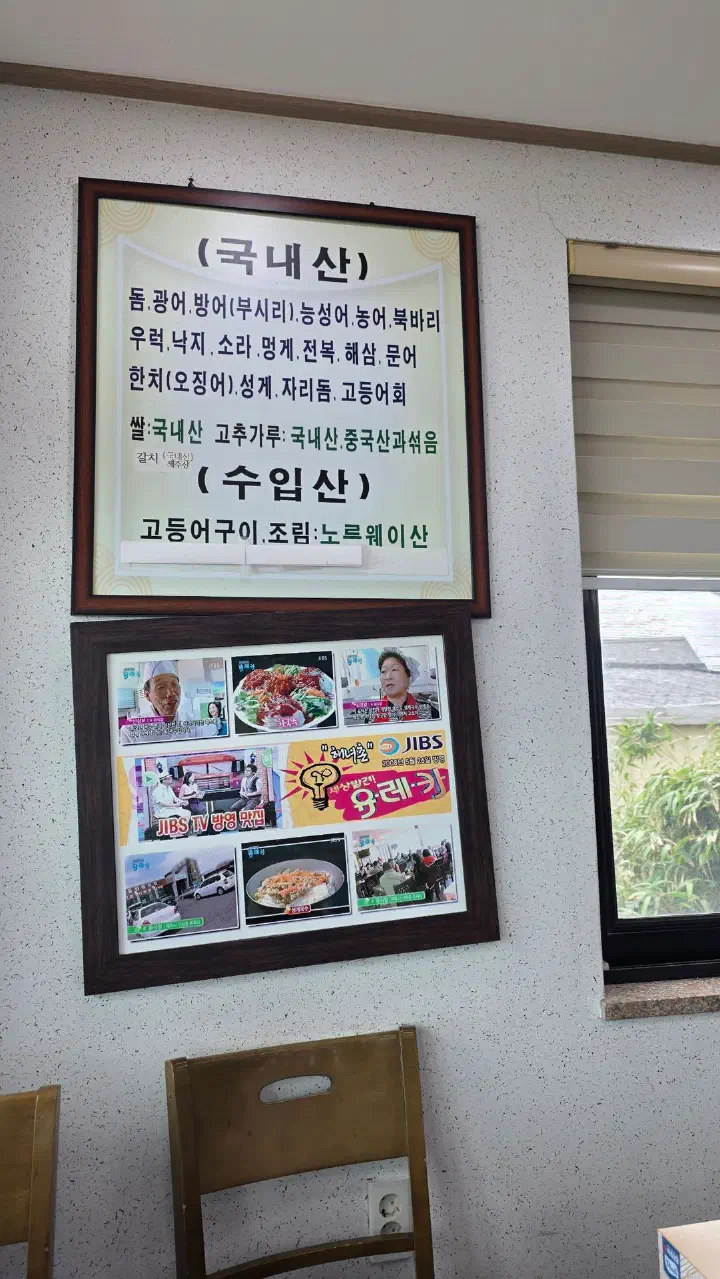
Origin-of-ingredients board and TV feature photos on the wall at Chonchon Haenyeochon

The signature: hoe-guksu

You start with a few side dishes - a mild seaweed soup, radish kimchi, seasoned bean sprouts.
The soup is on the plain side, which not everyone loves. You can refill the sides yourself.

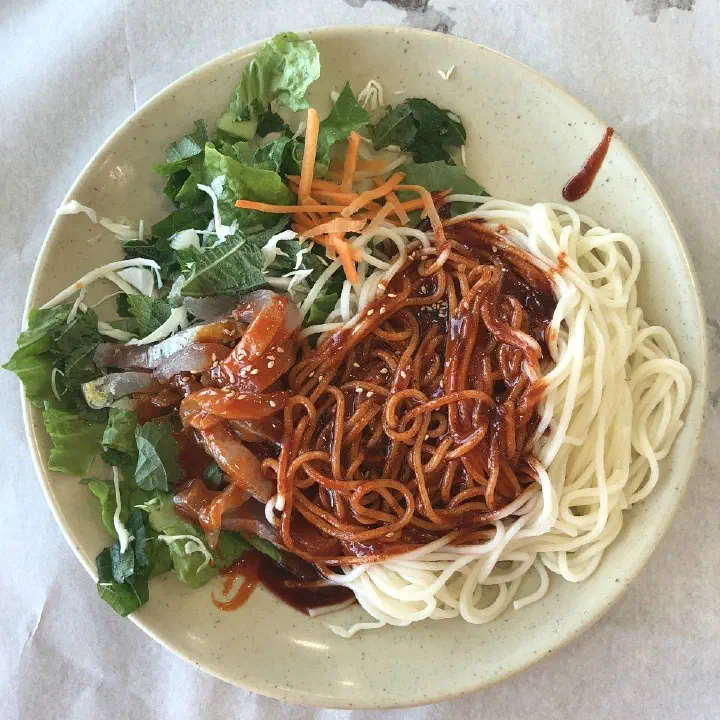
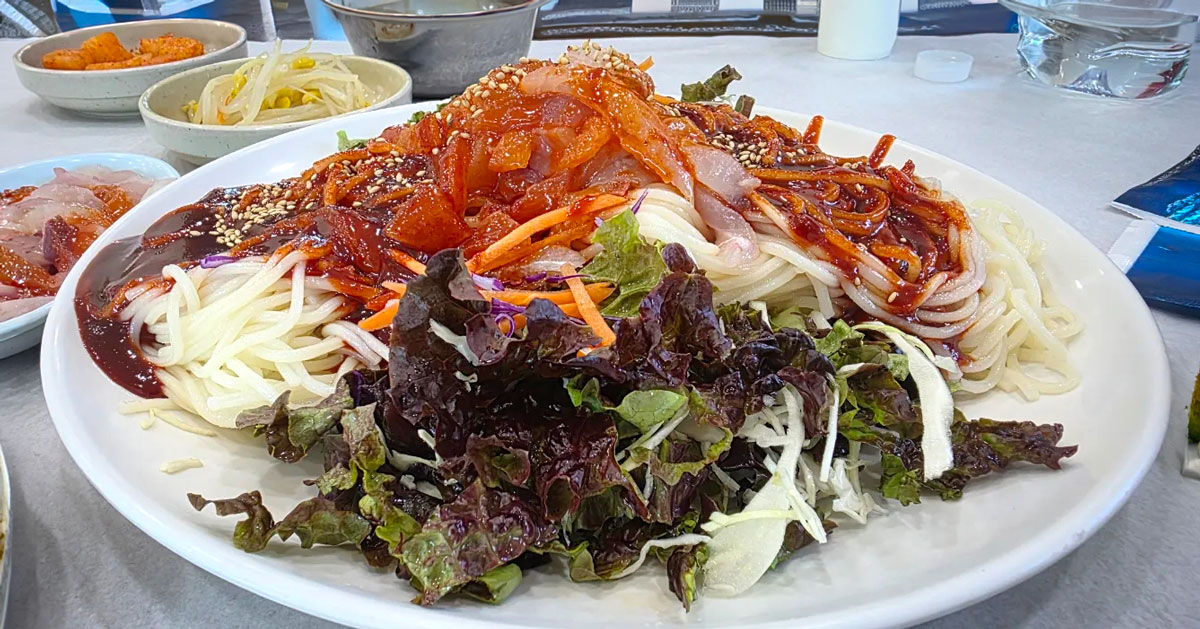
The hoe-guksu (회국수) isn’t made with thin noodles.
It uses a thicker, chewier wheat noodle, almost like jjolmyeon.
On top go generous slices of raw fish and a sweet-sour-spicy sauce.

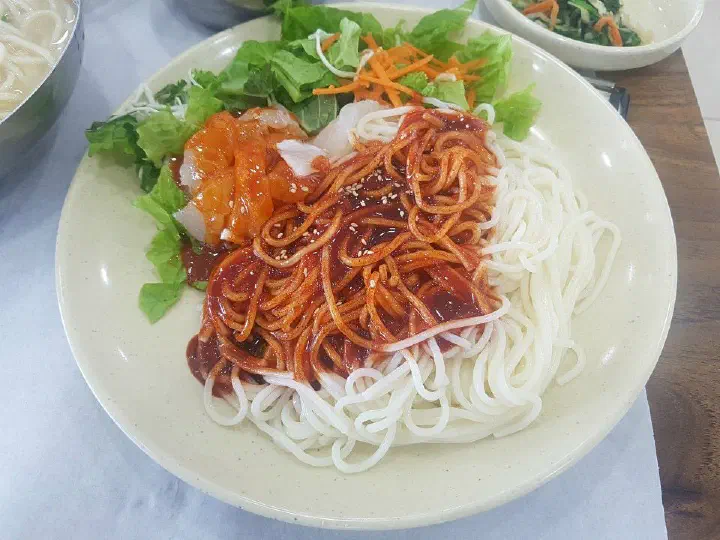
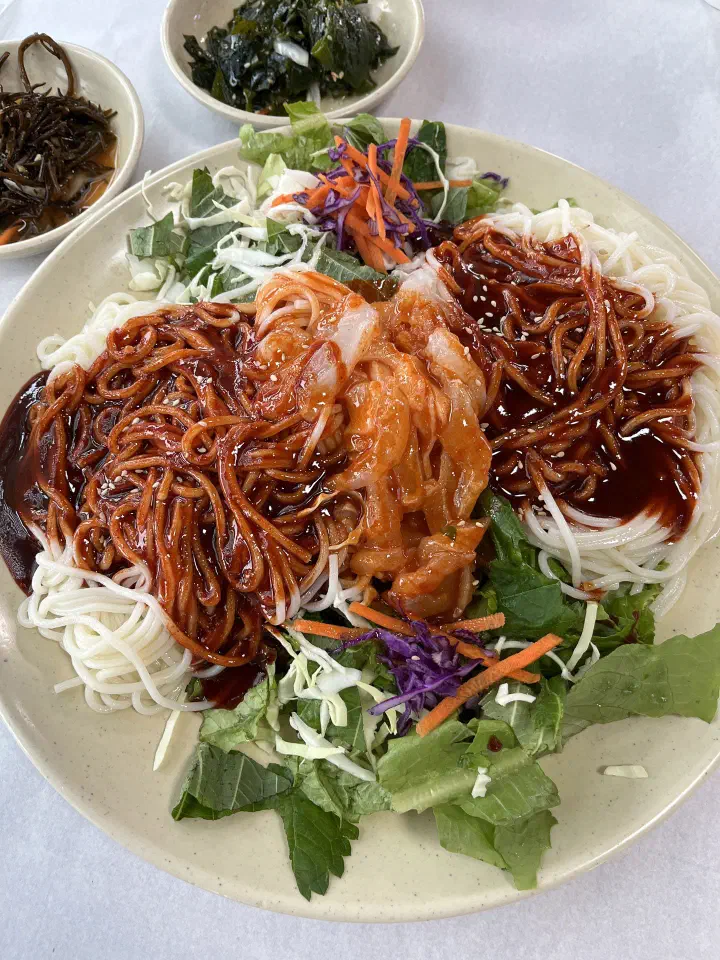
Chonchon Haenyeochon hoe-guksu with raw fish and spicy sauce over thick wheat noodles

The eating method is the fun part.
You put on the plastic glove they give you and mix everything by hand.
There’s sesame oil in there too, so it smells wonderful the moment you start tossing it.

Chonchon Haenyeochon hoe-guksu before mixing it by hand with the plastic glove

Be warned: the sauce is fairly spicy.
It’s already spicy by Korean standards, which usually means quite spicy for visitors who aren’t used to Korean heat.
It creeps up on you - mild at first, hotter as you go.

The tartness is gentle as served.
There’s vinegar on every table, so if you like it sour, drizzle a little and adjust to taste. Doing that is a small trick to making the dish your own.

Honestly, it’s a divisive dish.
Some people find the original genuinely special; others think it tastes like spicy noodles with fish on top.
If you feel there isn’t enough fish, you can add an extra portion (10,000 won) and the noodles all but disappear under it.
Extra vegetables are free, so ask if you want a fuller plate.

A plate of Chonchon Haenyeochon hoe-guksu tossed and fully mixed with the sauce

Sea urchin noodles and warmer options

If the spicy noodles aren’t for you, seonge-guksu (성게국수, sea urchin noodles) is the answer.
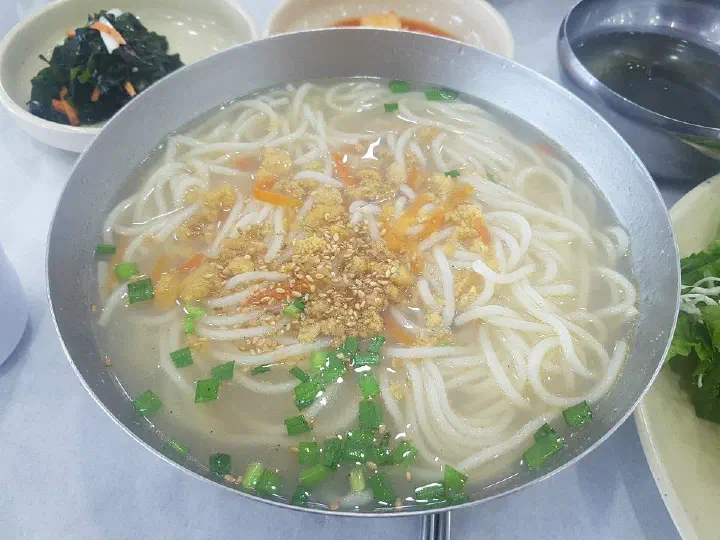
Warm noodles in a light anchovy broth with a touch of pepper, topped with sea urchin.
The flavor is mild rather than fishy, so even first-timers handle it well.

Chonchon Haenyeochon seonge-guksu: warm sea urchin noodle soup in anchovy broth with scallions

Opinions split here too.
Some find it comforting; others feel the sea urchin flavor is faint, more like a plain noodle soup.
Go in expecting a gentle, warm bowl to balance the spicy noodles, and you’ll likely enjoy it.

Abalone porridge (전복죽) is a quiet favorite as well.
It’s cooked with the abalone innards, which gives it a green tint, and it’s mild enough that kids eat it happily.

The sleeper hits: grilled and braised fish

It would be a shame to come only for the noodles.
The grilled mackerel (고등어구이) is excellent - crisp outside, moist inside, with almost no fishy smell.
A bowl of rice vanishes next to it.
It’s grilled to order, so expect about ten minutes - a bit slower than the noodles.

Longtime regulars also order the spicy fish stew as a hidden gem.
The menu lists it as “fish-head stew,” which can sound off-putting, but the fish is meaty and the broth is rich.
On a cool, rainy Jeju day, that hot broth hits the spot.
The braised cutlassfish and braised mackerel are pressure-cooked, spicy, and great with rice.

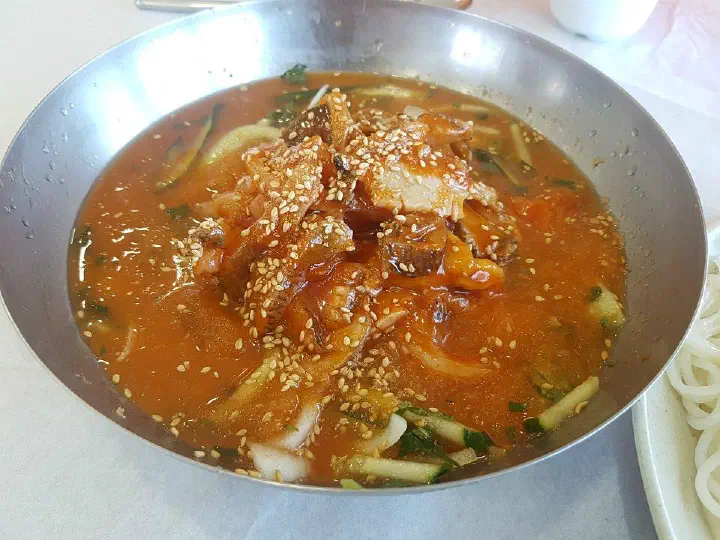
In summer, the cold raw-fish soup (mulhoe) is a good call.
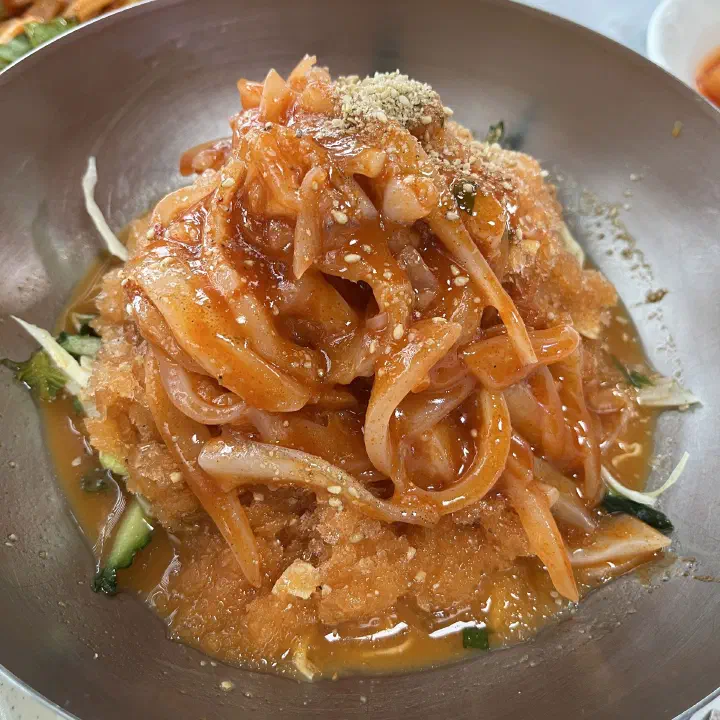
The mixed mulhoe comes loaded with squid, sea cucumber, sea squirt, and conch in an icy broth.

Chonchon Haenyeochon mixed mulhoe piled high with assorted fresh seafood

It supplies the tang the hoe-guksu lacks, so ordering both and sharing is a popular move.

Chonchon Haenyeochon mulhoe: raw fish in a cold, tangy icy broth

Note that squid and damselfish are served frozen when out of season - the staff will tell you.

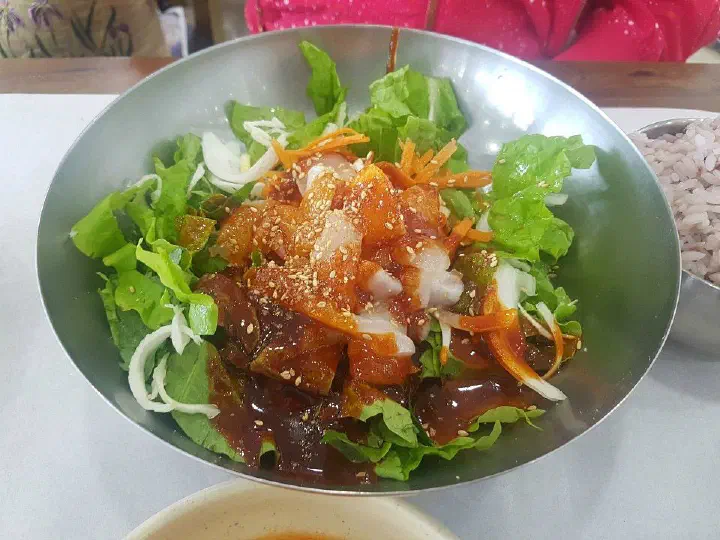
Chonchon Haenyeochon hoe-muchim: seasoned raw fish served over fresh vegetables

Atmosphere and the view

The dining room is large with plenty of tables.
There are two buildings - an older red-tiled one and a newer hall - and they alternate between them.
If one is full, they’ll point you to the other.

The window seats look straight out onto the Dongbok sea, and the view is wide open.
Everyone fills those seats first, so come early if you want one.
That said, it’s a calm neighborhood-sea view rather than a dramatic beach panorama.

Many of the staff are from overseas, and service is friendly.
One caveat: solo diners may be nudged toward a two-person minimum, so eating alone can feel a little awkward here.

Prices and paying

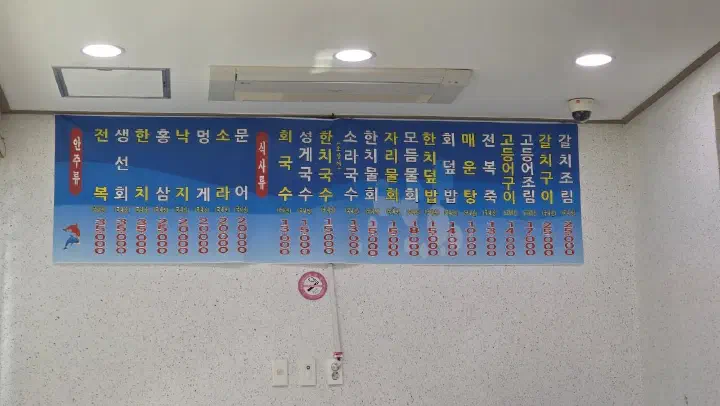
Roughly: hoe-guksu 13,000 won, sea urchin or squid noodles 15,000 won, grilled mackerel 14,000 won, abalone porridge 13,000 won.
The mixed mulhoe is 18,000 won.

Menu board with prices on the wall at Chonchon Haenyeochon in Jeju

The price history is interesting. Hoe-guksu sat at 8,000 won for a long stretch, rose to about 9,000 around 2017, reached 12,000 in 2024, and is 13,000 now.
For an original-recipe house, longtime regulars say it has aged its prices gently.

A few practical notes for visitors.
Almost every restaurant in Korea takes credit cards, and any internationally accepted card works fine here - no need to worry.
Korea has no tipping culture, so you don’t tip, and trying to may just confuse the staff.
English isn’t really spoken, but ordering is simple: point at the menu and hold up the number you want. It’s genuinely easy.
It’s still smart to carry a little cash on Jeju, as small local seafood spots occasionally only take cash and foreign cards are sometimes declined.

The bottom line

Chonchon Haenyeochon isn’t a place to drive across the island for as a bucket-list meal.
It’s a place to fold into an east-Jeju day when it’s on your route - and it earns that.

The hoe-guksu carries real history and a one-of-a-kind eating experience.
The flavor won’t win everyone over, though, so don’t lock in on the noodles alone - add the grilled mackerel, the porridge, or the mulhoe and the meal gets much better.

Big parking lot, fast turnover, early hours, a sea view.
Judge it on the food alone and it’s fine; judge it as a whole and you start to see why people keep coming back.

📍 View Chonchon Haenyeochon (촌촌해녀촌) on Google Maps →

When a bowl of hoe-guksu comes to mind on the east side of Jeju, it’s worth a stop.