Drive along Gujwahaean-ro on Jeju’s east coast and you pass a restaurant that sits facing the sea head-on.
That’s Gommak Sikdang (곰막식당).

It’s best known for its noodle dishes - sea urchin noodles and raw fish noodles - and plenty of people make it their very first meal after landing in Jeju.

Here’s the short version.
Almost everyone agrees on the view and the generous portions.
The taste is where opinions split: some say it’s still great, others feel it isn’t what it used to be.
I’ll get into that honestly below.

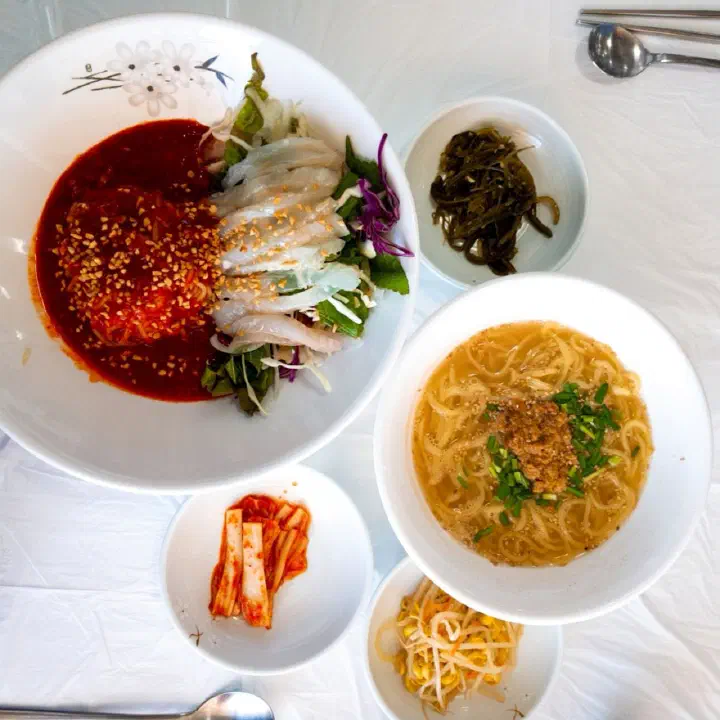
Gommak Sikdang’s signature dishes: a table set with hoe-guksu raw fish noodles and seongge-guksu sea urchin noodles

The basics first

  • Address: 64 Gujwahaean-ro, Gujwa-eup, Jeju-si, Jeju
  • Phone: 064-727-5111
  • Hours: 09:30 - 20:00, daily
  • Break time / last order: there’s an afternoon break, and last order lands earlier than closing. [[FIXME: confirm the exact break time (roughly mid-afternoon) and last order on Naver Map before going]]
  • Closing days: the regular day off changes from time to time, so it’s worth checking ahead. [[FIXME: closing days vary - check the latest on Naver Map]]
  • Parking: large private lot in front, free

Since it opens at 9:30 a.m., it fits neatly into a first-morning or lunch plan on the east side.

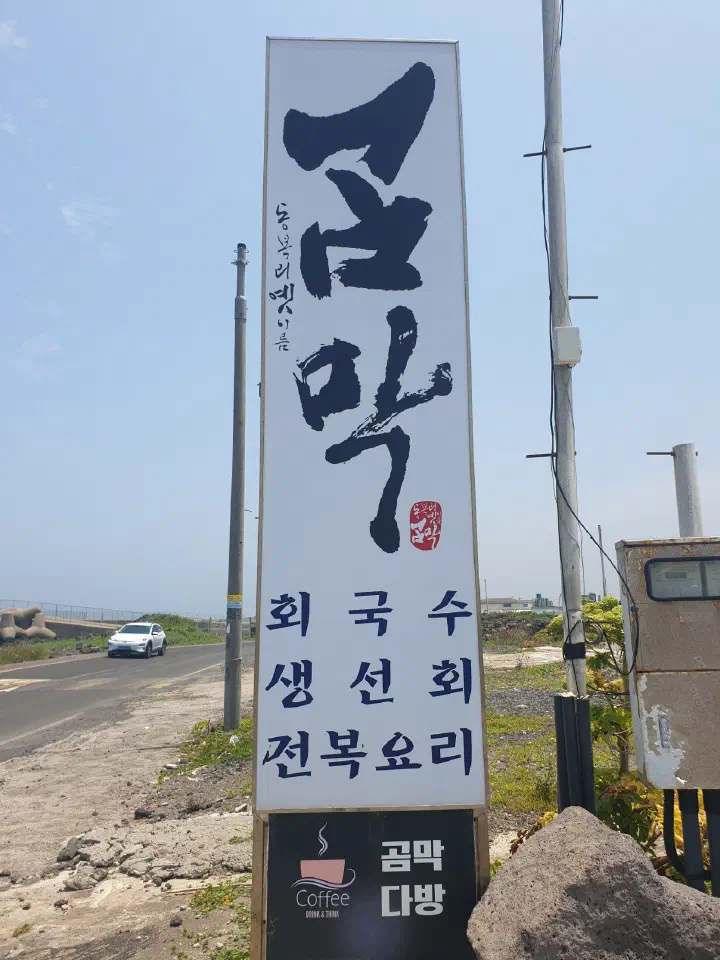
Roadside sign for Gommak Sikdang along Gujwahaean-ro, listing raw fish noodles, sashimi and abalone dishes

A quick travel note: Google Maps walking and transit directions are often unreliable in Korea, so use Naver Map or KakaoMap to actually find your way here.

📍 View Gommak Sikdang (곰막식당) on Google Maps →

Who it suits

The mood is casual enough for a solo bowl of noodles and roomy enough for a family meal.
The dining room is large, so groups fit easily - but at the lunch peak that also means it gets loud and busy.
For a calmer meal, right after opening or slightly off the lunch rush is the move.

On weekday mornings you can often walk straight in.
On weekend lunches you take a number at the entrance and wait.
Turnover is quick, though, so a long-looking line usually moves faster than you’d expect.

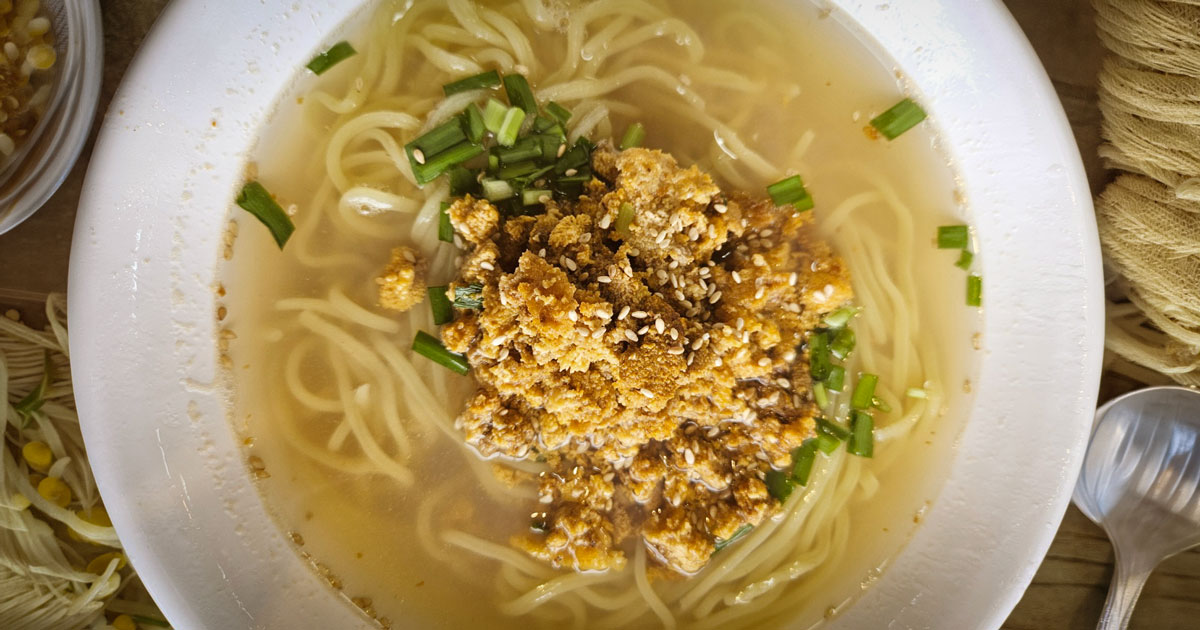
Seongge-guksu (sea urchin noodles) - the signature

This is the dish that made Gommak famous.
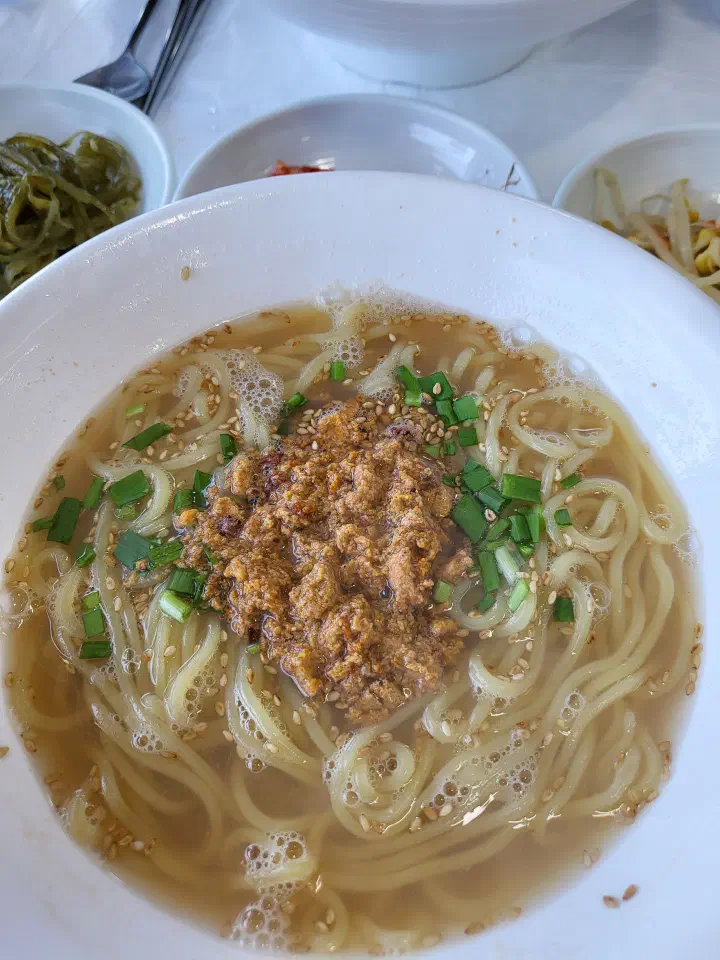
A clear, refreshing broth topped with golden sea urchin, with a clam-like cleanness underneath the urchin’s nutty richness.

You can spoon up the urchin on its own and it’s mildly sweet.
The noodles are medium - thicker than jjolmyeon, thinner than kalguksu.

Gommak Sikdang seongge-guksu, sea urchin noodle soup in a clear broth topped with sea urchin and chopped scallions

It’s also a dish people disagree on.
Some feel there’s so much noodle that the broth tastes mild, and that the urchin aroma can be faint depending on the day.
If you genuinely like sea urchin, it lands well.
If you’re after something bold and punchy, it may read as too gentle.

Hoe-guksu (raw fish noodle bowl) - the bright, tangy one

If the urchin bowl is about a cool broth, hoe-guksu (회국수) is a sweet-and-sour mixed bowl.
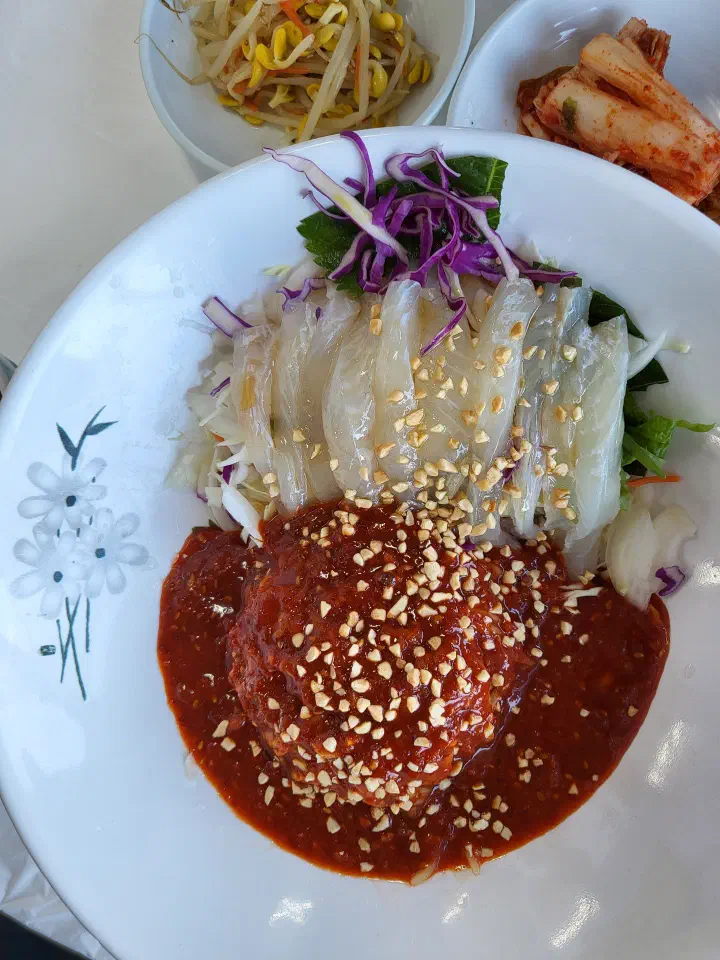
Thick slices of raw fish sit over the noodles - enough that the fish alone could be a meal.
Toss the noodles and vegetables through the sauce and it really wakes up your appetite.

Gommak Sikdang hoe-guksu, thick raw fish slices over noodles with a sweet-and-sour red sauce and chopped peanuts

The fish on top changes with the season - hairtail, mackerel, or milkfish depending on when you go.
A single bowl is so big that one dish per person can leave leftovers.

A couple of honest notes: because the slices are thick, some find the membrane a little chewy, and a few regulars feel the amount of fish has shrunk over time.

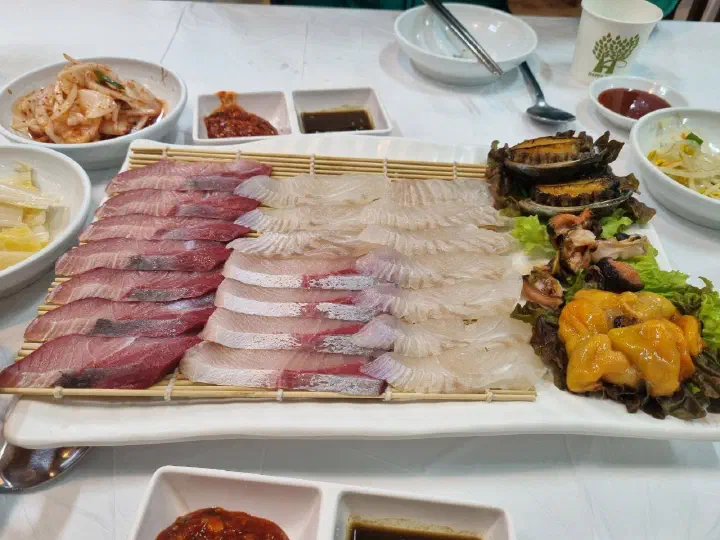
Godeungeo-hoe (raw mackerel sashimi) - clean, no fishy edge

This is hard to find outside Jeju, so people seek it out on purpose.
The fish is sliced fresh from live stock, so there’s almost no fishy smell, and the texture stays springy.

The trick is the combination it comes with: seasoned onion, sesame-oil rice, dried seaweed and white kimchi.

Assorted sashimi platter at Gommak Sikdang with amberjack and white-fish sashimi served alongside abalone, sea squirt and conch
Pile fish and onion onto the rice like a quick hand-roll and it works beautifully.

It does sit at a higher price point, and you’ll see comments that it can be salty or pricey.
Think of it as paying for the experience of eating it right here in Jeju.

Abalone porridge and bomal seaweed soup - the gentle picks

If you want something easy on the stomach or a breakfast, jeonbok-juk (전복죽, abalone porridge) is a safe, satisfying choice - nutty, deep, and generous with abalone.

The bomal (sea snail) seaweed soup comes with a stone-pot rice, the broth rich and full of snails.
You scoop hot water yourself to make scorched-rice tea at the bottom of the pot.
It runs slightly salty, so a little extra water helps.

There’s also a grilled fish-head dish marked as a recommendation - quiet value, lots of meat, served with stone-pot rice.
Stone-pot dishes take 20+ minutes, so leave some time.

The view and the big fish tank

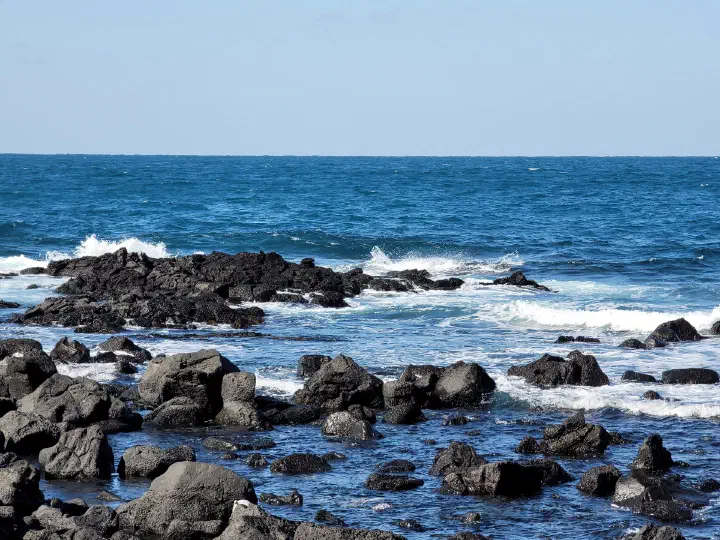
The real weapon here is the seat.
A window spot puts the Gujwa sea right in front of you, and the same bowl of noodles feels like a proper holiday because of it.

Black volcanic rocks and the blue Jeju sea along the Gujwa coast in front of Gommak Sikdang

Inside there’s a large aquarium with amberjack, cuttlefish and conch swimming around - a nice distraction for kids while you wait.
On a clear day, the outdoor tables in the breeze are lovely too.

What has changed - straight talk

This place has shifted quite a bit.
It used to be one counter for everything; now raw fish is ordered at the “Seogwang Susan” side and noodles and meals at the “Gommak” side, with vegetables and rice picked up separately.
First-timers can find the flow confusing and a bit chaotic.

Ordering is prepaid by kiosk or table QR code, and drinks and alcohol come from a vending machine you use yourself.
Some like that you rarely need to flag staff down; for older guests who aren’t used to machines, it can be awkward.

Prices have climbed over the years too.
Sea urchin noodles were once around 8,000 won and now run 18,000; the raw fish bowl went from 8,000 to 11,000 to 13,000.
That’s why return visitors often note it’s “not the same taste, not the same price” as before.

Raw fish used to come only in two-person portions, but single portions (around 20,000 won) have become possible.

Parking, payment, tips

  • The private lot is large, so parking is genuinely not a worry.
  • Side dishes, broth and the hot water for scorched rice are self-serve - help yourself.
  • Want a window seat? Arrive a little early to claim one.
  • The noodle bowls are big, so ordering slightly fewer than your headcount and adding more works well.

A few notes for visitors from abroad:
Like almost every restaurant in Korea, internationally issued cards are accepted here, so paying by card is no trouble.
There’s no tipping culture in Korea - you don’t need to tip, and offering one can actually fluster the staff.
English isn’t really spoken, but ordering is simple: the kiosk is visual, and pointing at the menu works fine.
One more thing - the seasoned, sweet-and-sour sauce on the raw fish noodles isn’t truly spicy, so even if you’re sensitive to heat this is an easy table.

One nearby alternative

For raw fish noodles specifically, some prefer the nearby haenyeo (sea-women) noodle spot in Dongbok-ri, especially when Gommak is packed with tourists.
Afterward, the usual route runs to London Bagel Museum Jeju or cafes like Gongbaek and Layered close by.

Final thoughts

Gommak Sikdang isn’t a single-dish destination so much as a mix of ocean view, generous portions and a wide seafood menu.
Television exposure (the sea urchin noodles featured on a popular family show) plus its spots on celebrity food routes drew the crowds - and raised expectations.

If you remember its deeper urchin aroma and old value, the changes may disappoint.
But for a first visit, a big, fresh seafood meal right in front of the sea is more than enough to satisfy.

Lower the expectations a notch, treat it as “seafood noodles with a Jeju sea view,” and it becomes a place you come back to.

📍 View Gommak Sikdang (곰막식당) on Google Maps →

It’s right beside Gujwahaean-ro, so it slips easily into a coastal drive - and you can see the sea from the parking lot, so the holiday feeling starts the moment you arrive.