Drive the coastal road on Jeju’s east side and one restaurant stands out for the line outside.
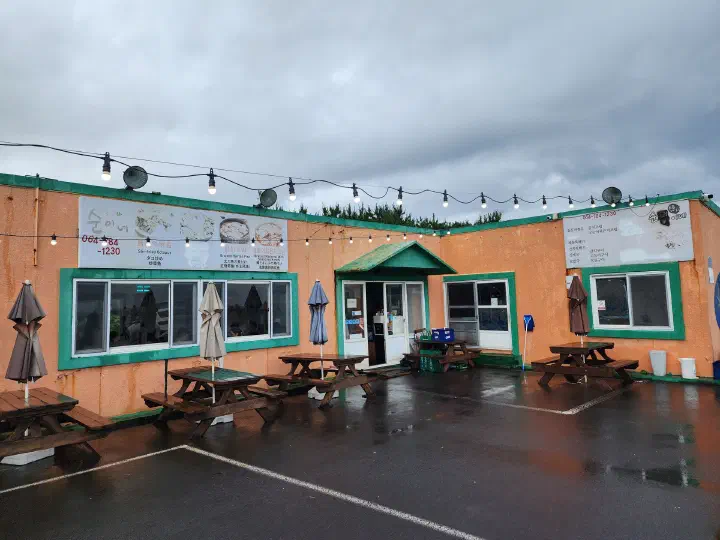
Sogeumbachi Sooninae (소금바치순이네) sits in Jongdal-ri, Gujwa, a weathered local place that has held a Blue Ribbon for four years running.
That’s Korea’s homegrown restaurant award, roughly the local answer to the Michelin Guide.
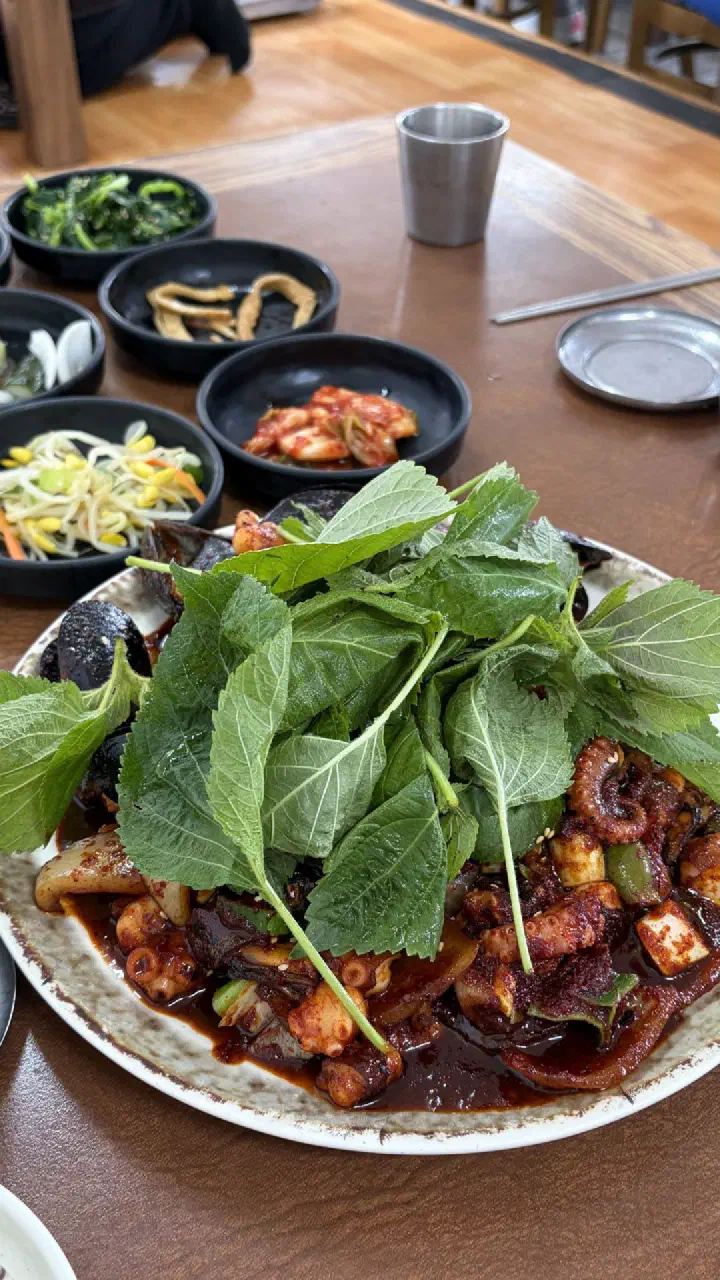
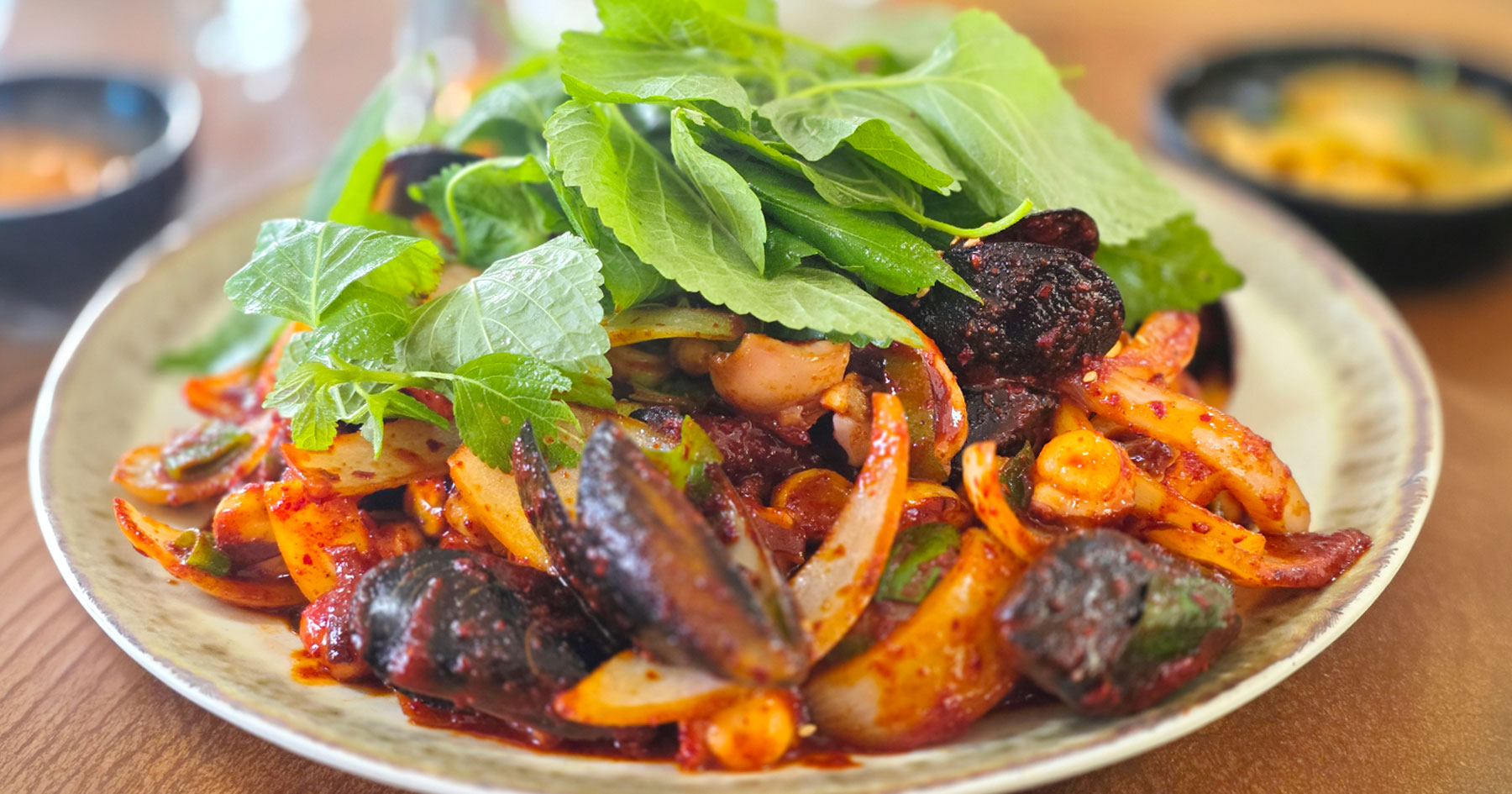
Almost every table orders the same thing: dolmuneo-bokkeum (돌문어볶음), stir-fried rock octopus in a sweet-spicy sauce with a smoky wok flavor.
The taste has a clear personality, and not everyone loves it.
More on that below, because it matters for deciding whether to come.
The basics
Address: 2196 Haemaji Haean-ro, Gujwa-eup, Jeju City.
Open 9:30 a.m. to 7:30 p.m., closed every Thursday.
The kitchen closes for an afternoon break from 3:00 to 4:30, and last orders are at 7:00 p.m.
The kitchen sometimes closes early when ingredients run out, so do not cut it close for dinner.

📍 View Sogeumbachi Sooninae (소금바치순이네) on Google Maps →
One practical note: Google Maps is unreliable for walking and transit directions in Korea.
Naver Map or Kakao Map will serve you much better here, and Kakao T is the app everyone uses for taxis.
Realistically, most visitors reach this part of Jeju by rental car.
The restaurant sits on a rural coastal road, and buses out here are infrequent.
How the wait works
No reservations.
No remote-queue apps either, which is unusual for a place this popular in Korea.
Many famous restaurants use apps like Catchtable, but here you simply show up, pull a numbered ticket from the machine, and wait until staff call your number out loud.
The room is loud, so stay near the entrance or you will miss your turn.
Weekend lunchtime around noon is the worst, easily an hour.
On weekdays the first hour after opening usually means no wait at all, and seats start filling from about 11:30.
The quiet windows are mid-afternoon around 2 p.m. and the last hour before closing.
The kitchen is fast and tables turn over quickly, so even a long line moves better than it looks.
At least the wait comes with a view.
The sea is right across the road, with Udo Island and Seongsan Ilchulbong, the famous sunrise peak, in plain view.
The octopus, and the right way to eat it
The stir-fried rock octopus costs 30,000 won for a small (feeds 2-3) and 40,000 won for a large (3-4).
Rice is a separate order with everything on the menu.
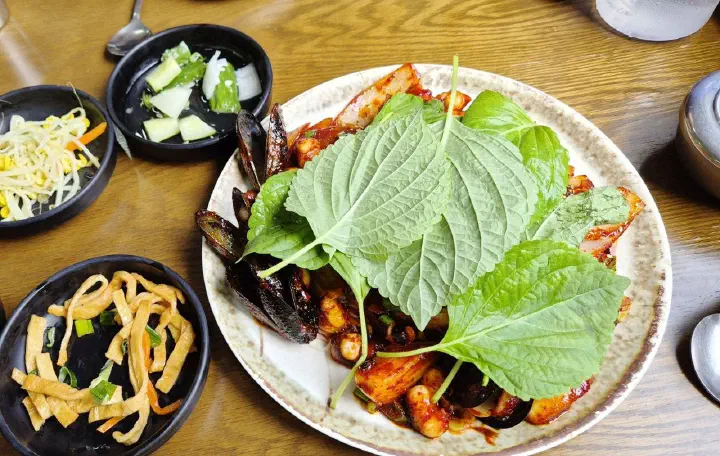
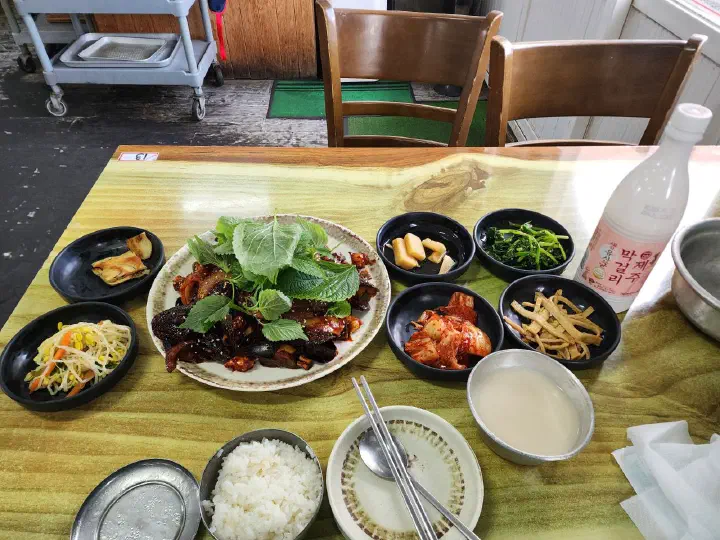
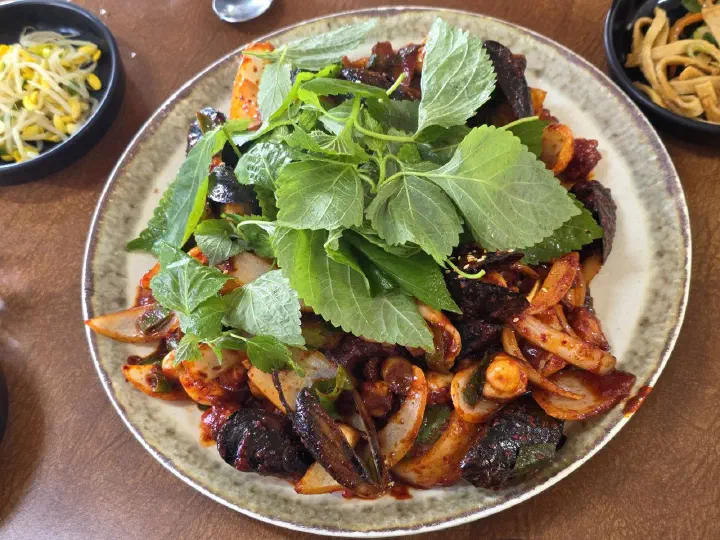
The platter arrives looking almost like a salad.

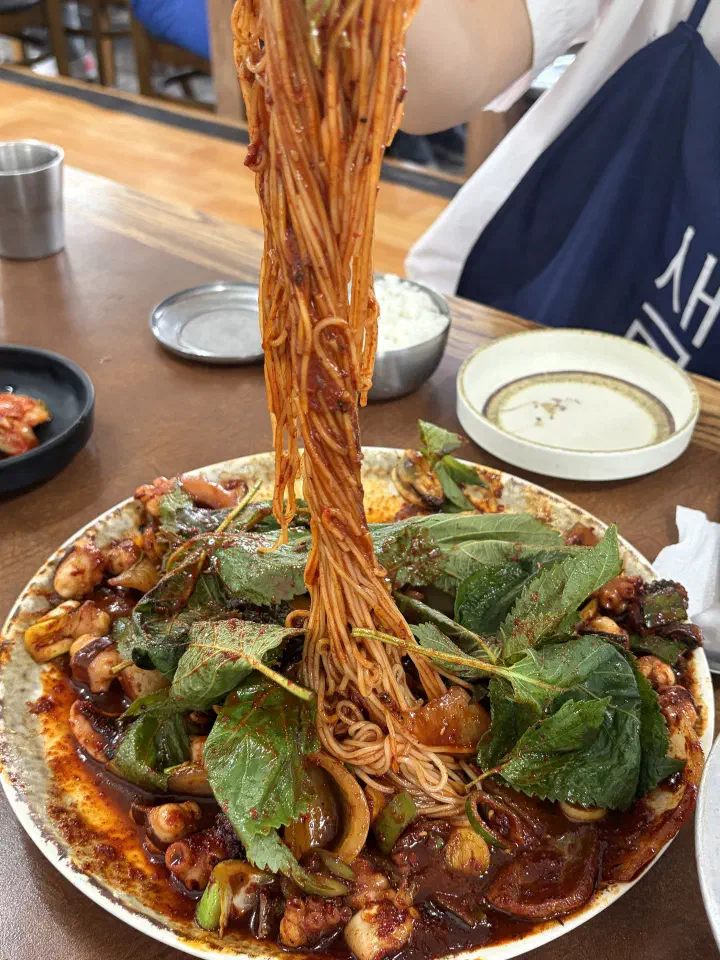
A thick layer of fresh perilla leaves hides the octopus, mussels, and onions, with thin somyeon noodles buried at the bottom.
There is a proper sequence, posted on the wall in Korean, and it really does change the experience.

First, pick the mussel meat out of the shells into the empty bowl they give you.
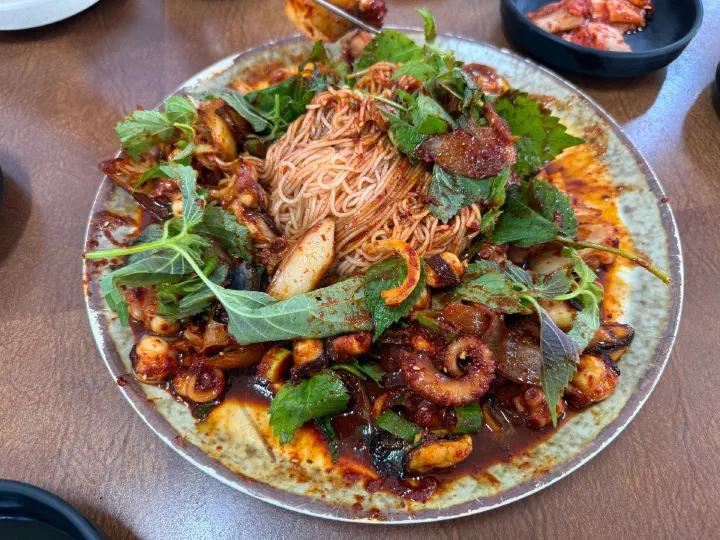
Second, mix the perilla leaves and noodles into the sauce and eat the noodles early.
They soak up the sauce fast, and if you wait, nothing is left for the finale.
Third, once the octopus is gone, stir rice into the remaining sauce.
One platter turns into three courses: noodles, octopus, then a kind of spicy fried-rice finish.
Extra noodles can be added mid-meal.

The octopus itself is the technical achievement here.
Octopus turns rubbery with even slight overcooking, but this kitchen lands it springy and tender every time.
It even stays tender after takeout has gone cold.
Now the part that divides people: the sauce.
The heat is what Koreans consider medium — think standard Korean instant-noodle spicy — but sweetness hits before the heat, and the seasoning is strong overall.
If you enjoy Korea’s sweet-spicy red sauces, this is a very good version with real smokiness.
If sweet-leaning savory food puts you off, this dish will feel like too much.
And a fair warning: Korean “medium spicy” can be genuinely hot if you are not used to Korean food.
Keep rice close.
What to order alongside
Nothing soupy comes with the octopus, and the sauce builds up on your palate, so one soup for the table is the right move.
Bomal-guk (보말국, 12,000 won) is a seaweed soup with small top shells, simmered thick.
It’s exactly what you want for washing down the spice.
Seongge-guk (성게국, sea urchin soup) at 13,000 won is the other option.

The braised hairtail (galchi-jorim, 갈치조림) at 35,000-45,000 won is better than a side dish has any right to be.
The grilled mackerel comes out with properly crisp skin.
For bigger groups there is a 90,000-won set with the octopus, braised hairtail, grilled mackerel, and bomal-guk together.
It is posted on the wall, not the menu, so look around before ordering.
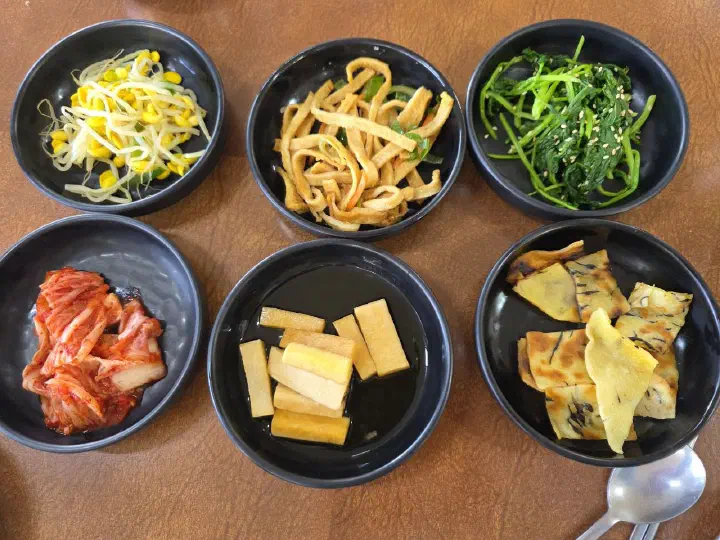
About six banchan (side dishes) come with the meal.
On some days they include beonhaengcho (번행초), a wild green that grows in the sandy beach soil of Jeju.
The lineup shifts with the seasons.

Kids, seating, and the room
The room mixes floor seating and regular tables, and high chairs are available.
For most kids the octopus is simply too spicy, which is why families with small children usually order jeonbok-juk (전복죽, abalone porridge, 12,000 won) — mild, soft, and safe.
The space is big enough for large groups, and the crowd is a mix of tourists and locals.
This is an old, worn building with zero interior design ambitions.
The charm is the chaos: a very gentle dog in the yard, a swallow’s nest above the entrance, staff moving at full speed.
The flip side: the facilities show their age, and if you are particular about spotless restaurants, this place will test you.
Service can get brusque at peak hours too.
The food comes out fast and the cooking holds up, which is why the line keeps forming anyway.
Payment, parking, takeout
Credit and debit cards work fine here, including international ones, as they do almost everywhere in Korea.
No need to carry much cash for this stop.
Korea also has no tipping culture, and leaving a tip would only confuse everyone.
English is limited at this restaurant.
Ordering is still easy: the menu is short, most tables get the same dish, and pointing at the menu while holding up fingers for small or large gets the job done.
Parking is in the lot right in front, with a small overflow area across the road when it fills up at peak times.
If the line looks hopeless, takeout is the workaround.
Phone orders (064-784-1230) can be placed in advance for pickup, though expect the call to be in Korean, and leftovers get packed up too.
The porridges (abalone and tot seaweed) can even be shipped domestically, though the octopus itself cannot.

Where it fits in an east Jeju day
The location makes route planning easy.
Seongsan port, where ferries leave for Udo Island, is close by.
Sehwa Beach and Bijarim Forest are easy to string together along the same coast.
A reliable pattern: eat here right at opening, then catch the Udo ferry.
That dodges both the restaurant line and the boat crowds.
After the meal, a boardwalk runs along the water across the road, good for a slow walk with the sunrise peak on the horizon.
In June, the famous hydrangea road of Jongdal-ri blooms along this same coastal stretch.
Mind the 3:00-4:30 p.m. kitchen break when planning around ferry schedules.
It catches a lot of people out mid-afternoon.
📍 View Sogeumbachi Sooninae (소금바치순이네) on Google Maps →
Verdict

One dish, done with real skill, in a scruffy building by the sea.
The sweet-spicy sauce divides opinions.
Lovers of Korean red-sauce stir-fries will be very happy, while anyone averse to sweetness in savory food should order the grilled fish instead.
Time it right, on a weekday at opening or mid-afternoon after the break, and the famous line barely exists.
As a lunch stop on an eastern Jeju loop, it earns its place.