If you only eat black pork once on Jeju, this is one of the names that keeps coming up.

Haeoreum sits right in front of the Jeju Folk Five-Day Market, about ten minutes by car from the airport. That location does a lot of work. It lands neatly on the route to and from the rental car lots, which makes it an easy first or last meal of a trip. And it built its reputation with locals first, before tourists found it, which tells you something.

The basics first

  • Address: 21 Oiljang-seo-gil, Jeju-si, Jeju (in front of the Folk Five-Day Market)
  • Hours: Mon-Fri 11:00-23:00, Sat-Sun 17:00-23:00
  • Break time: weekdays 15:00-17:00, last order around 21:00
  • Parking: large private lot out front, room for tour buses, plus the market public lot next door (except on market days)
  • Instagram: jeju_happy_drinker

One thing to know: this place has two faces. Dinner is about grilled pork, while lunch leans toward soups and rice dishes. Same kitchen, different menu depending on the hour.

📍 View Haeoreum (해오름식당) on Google Maps →

Open since 1995, and they raise the pigs themselves

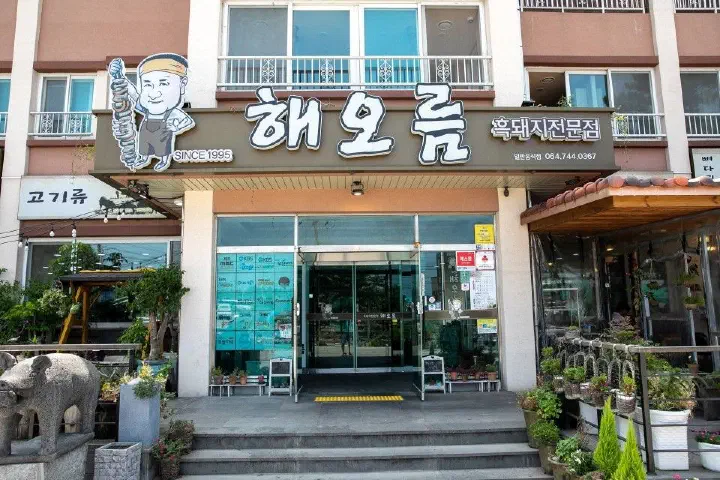
Exterior and SINCE 1995 signboard of Haeoreum black pork restaurant in Jeju

Haeoreum opened in 1995, so it’s past the 30-year mark now. It used to be in the Nohyeong area and moved to this purpose-built spot by the market a little over a decade ago, which is when the big parking lot appeared. More recently they renovated the second-floor hall, so there’s plenty of room for groups.

The thing that sets this place apart is that they don’t just buy their meat, they raise it. The owner runs two black pork farms and a processing facility directly, cutting out the middle steps so the pork arrives fresh. Their premium label, “Rasan,” comes out of this operation, and you’ll see black pork jerky, charcuterie, and even house-cured ham (jamon, 하몽) displayed near the entrance. They ship nationwide too.

The walls tell the rest of the story. They’re covered in signatures from Korean celebrities and athletes, and there’s even a photo of former President Moon Jae-in. The restaurant has been on national TV more than once: KBS2’s 2TV Saengsaeng Information featured the rib slab and giant skewer in August 2023, and in April 2026 it appeared on TV Chosun’s Heo Young-man’s Baekban Travels with golf instructor Lim Jin-han. Since the broadcasts, evenings fill up fast, so keep that in mind.

The signature: yetnal tonggalbi (옛날 통갈비)

If you make me pick one dish, it’s the old-style rib slab, yetnal tonggalbi (옛날 통갈비). In the Jeju dialect this cut is called jeopjjak-bone (접짝뼈), and there isn’t much of it on a single pig, so they sell it in limited quantity.

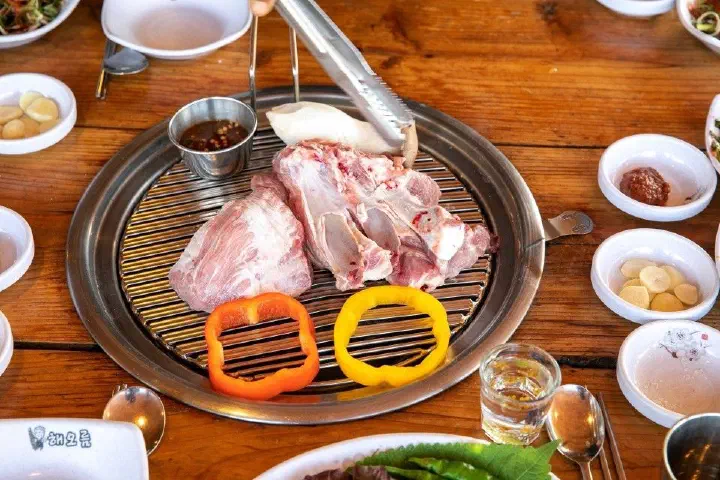
Raw black pork rib slab (yetnal tonggalbi) pre-seared on the charcoal grill at Haeoreum, Jeju

It comes pre-seared over charcoal, already carrying that smoky aroma, so all you really do at the table is finish it off. The pieces are thick, which makes them a little tricky to grill, so the staff (and sometimes the owner) often handle it for you. The best part is pulling the meat off the bone with your hands. It’s leaner than samgyeopsal, with a deep savoriness around the bone rather than a fatty richness. Expect two or three rib bones per order, enough for two or three people.

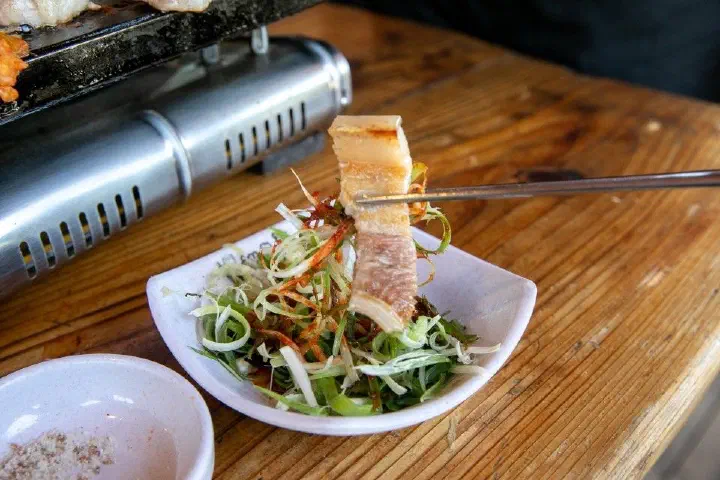
A piece of charcoal-grilled Jeju black pork placed on shredded green onion salad at Haeoreum

Prices run about 29,000 won for the rib slab, and 21,000 won each for samgyeopsal (pork belly) and kkot-moksal (collar).

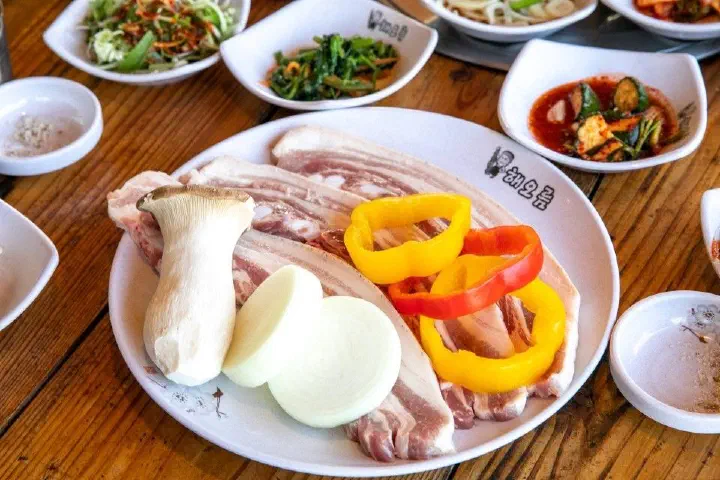
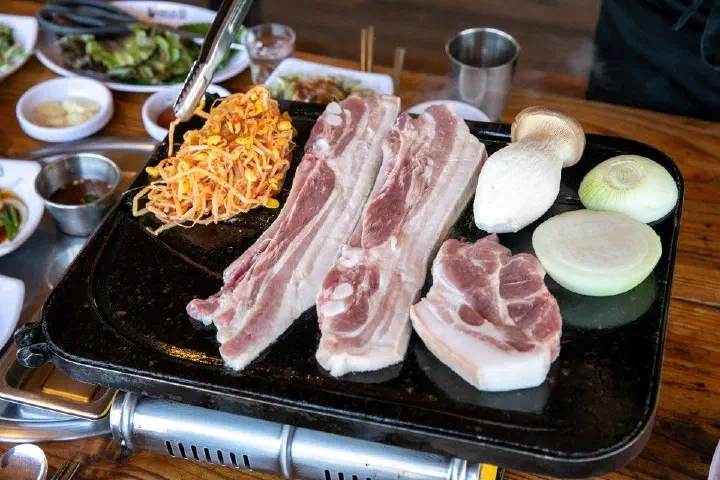
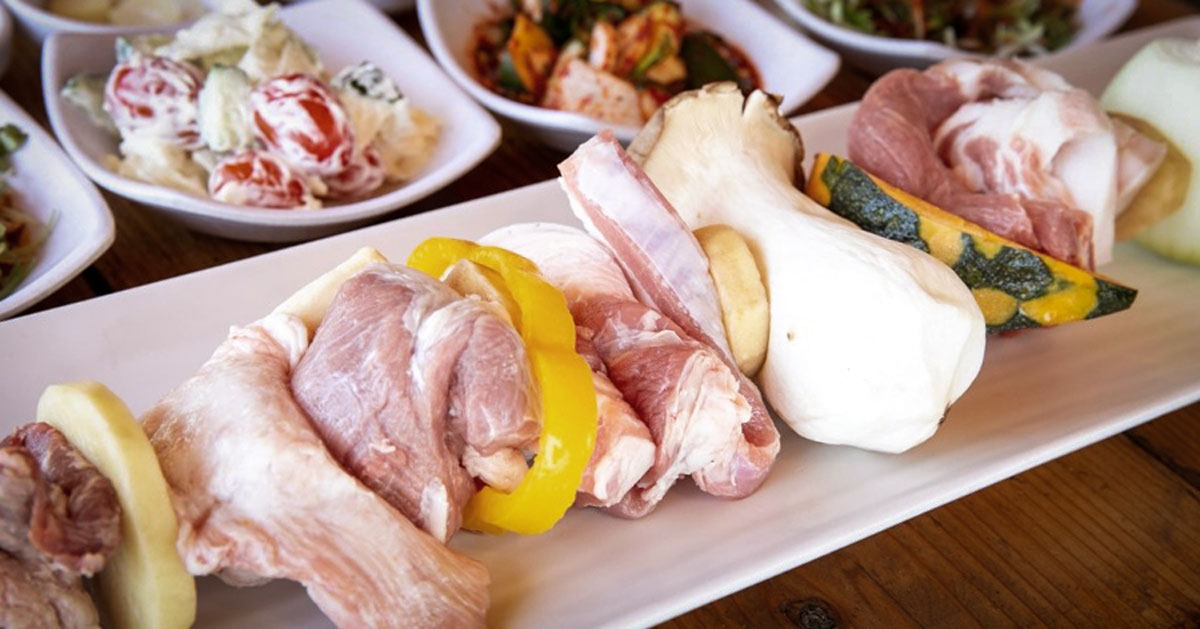
Raw Jeju black pork belly (ogeopsal) with king oyster mushroom, onion, and bell pepper at Haeoreum

Jeju black pork belly grilling on the griddle with seasoned soybean sprouts

The skewers, if you’re a group

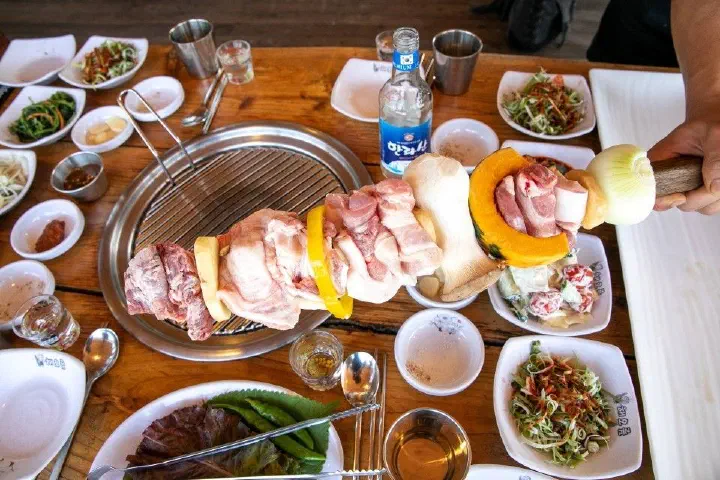
With more people, the skewers make more sense. The couple skewer is for two or more, the assorted skewer for four or more, and the 160 cm giant skewer is a set piece for groups of eight or more.

Each skewer threads together special cuts like hangjeongsal (jowl), galmaegisal (skirt), and gabrisal, plus collar and belly, with grilled vegetables in between. The owner usually has one person at the table hold the skewer up for a moment, which is when everyone reaches for their phones. The different cuts give you a range of textures, and the vegetables keep it from feeling heavy.

Giant black pork skewer with assorted special cuts and grilled vegetables and a bottle of Hallasan soju at Haeoreum

One catch: the giant and assorted skewers take time to pre-sear, so reservations are basically required. Call at least one or two hours ahead. The couple skewer is about 55,000 won, the assorted around 100,000 won.

At lunch, the soups take over

Come during the day and the rice dishes outshine the grill. Jeopjjak-bbeoguk (접짝뼈국) is a Jeju specialty: pork ribs simmered for a long time, then thickened with buckwheat flour. It looks a bit like a pale gamjatang, rich and almost stew-like. The savory broth carries a hit of black pepper that cuts the richness, which makes it a great hangover meal. The meat on the bone is tender enough to pull apart easily.

The black pork duruchigi (두루치기) uses only front-leg and rib meat, so it stays soft and juicy. The seasoning isn’t aggressive, which makes it good with plain rice, and the portion is generous. If you want something spicier, the gosari-dakgyejang (fern and chicken soup) is loaded with bracken fern and worth trying. Lunch dishes run around 10,000 won, with the duruchigi at 11,000.

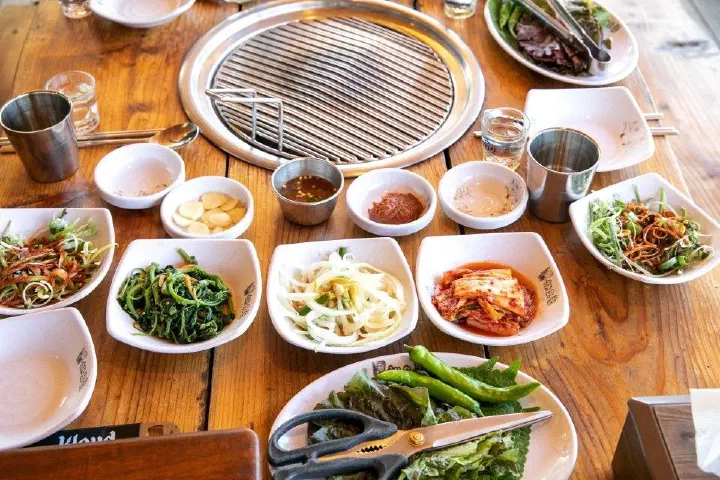
Table spread of Korean side dishes (banchan) served with black pork BBQ at Haeoreum, Jeju

The banchan (side dishes) center on a fresh kimchi they mix daily, along with green onion kimchi, stir-fried anchovies, japchae, and seasonal greens. There’s a self-serve bar for refills, but note that the kimchi has to be requested separately. At lunch, if you serve yourself and clear your own tray, you get a small discount.

Mood, service, and the honest downsides

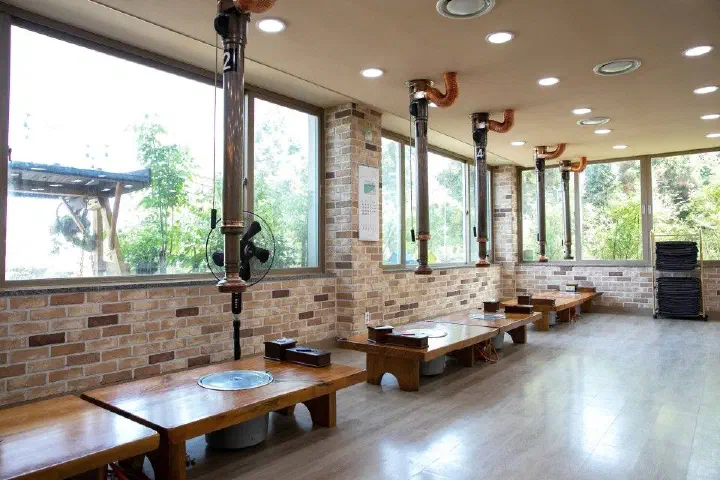
Interior of Haeoreum Restaurant with window-side seating and individual ventilation ducts at each table

The space is big with standing tables, which works well for groups and families. Each table vents well, so smoke is less of an issue even with kids, and they wipe down high chairs before bringing them over. The owner and staff check in often, and that attentiveness shapes a lot of the goodwill this place earns.

To be fair about the rough edges: the meat is thick, so grilling it yourself takes some patience. If you arrive very hungry, the wait for pre-seared meat to finish can feel long. And since the TV appearances, dinners and market days get crowded enough that you may not be seated right away. Opinions on the lunch duruchigi are a little mixed, so for a first visit the rib slab or the bone soup is the safer bet.

For travelers

A few practical notes if you’re visiting from abroad:

  • Card payment is fine here, as it is at almost every restaurant in Korea, so any internationally accepted card should work. It’s still smart to keep a little cash on hand, since stalls inside the five-day market are often cash-only.
  • Korea has no tipping culture. You don’t tip, and trying to can actually fluster the staff.
  • English isn’t widely spoken, but ordering is easy. You can point at the menu and hold up fingers for how many portions you want, and the staff help cook the thicker cuts at your table anyway.
  • Black pork itself isn’t spicy, but the gosari-dakgyejang and some lunch soups can run hot. Korean “mild” is often spicier than visitors expect, so go in prepared.
  • For directions, use Naver Map or KakaoMap rather than Google Maps, which is unreliable for walking and transit in Korea. For taxis, the Kakao T app works well.

It’s not a polished tourist-trap restaurant. It’s a place that has handled Jeju-raised black pork the same way for 30 years, and that consistency is why people come back. Tonggalbi if you want to dig into the grill, jeopjjak-bbeoguk if you want a simple, warming meal. Remember those two and Haeoreum is an easy call.

📍 View Haeoreum (해오름식당) on Google Maps →