If there’s one dish that says Jeju, it’s gogi-guksu (고기국수), pork noodle soup. And Jamae Guksu (자매국수) is usually the first name people throw out when you ask where to get it.

It sits about ten minutes by car from Jeju Airport, which makes it an easy first meal when you land, or a last one before you fly out.

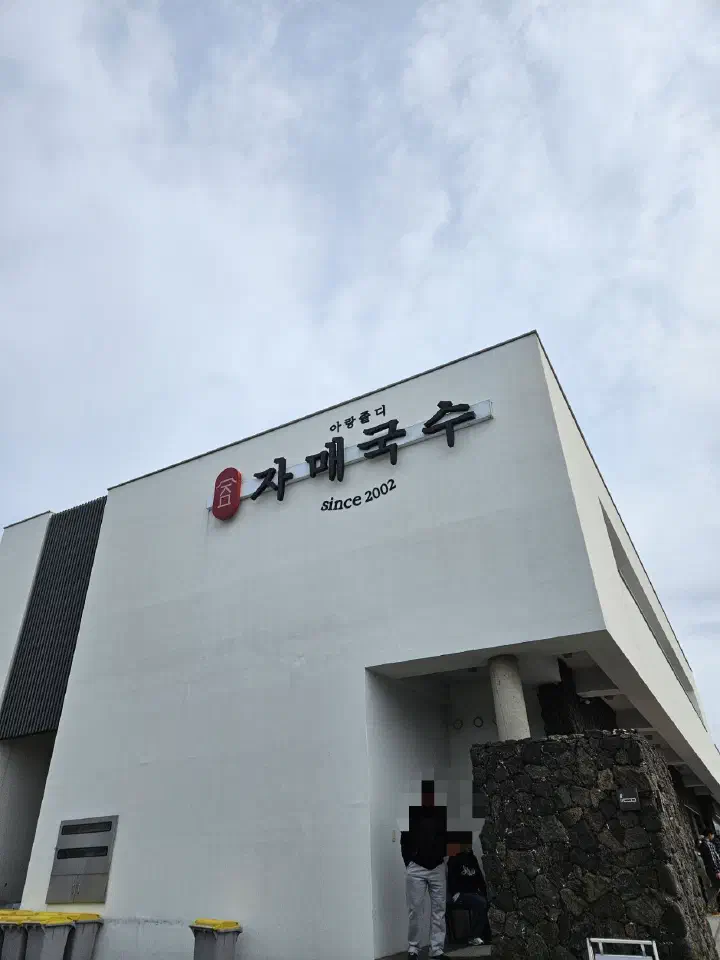
Here’s the thing nobody warns you about: the size. You picture a tiny noodle shop and instead pull up to a huge building running like a machine. People half-jokingly call it the Korean Ichiran, and once you’re inside the comparison makes sense.

Exterior of the large Jamae Guksu main building in Jeju with its since 2002 signboard

The basics first

The address is 46 Hanggol-namgil (항골남길 46), in the Iho-ildong area of Jeju City.

It’s open 9:00 a.m. to 6:00 p.m., last order at 5:50 p.m. There’s a mid-afternoon break from 2:30 to 4:10, and the place is closed every Wednesday. That Wednesday closure trips up a lot of travelers, so it’s worth pinning down before you build your day around it.

One more quirk: lunch service can close early depending on how long the queue runs. If you’re aiming for the slot right before the afternoon break, a quick phone call to check is the safe move. The number is 064-746-2222.

📍 View Jamae Guksu (자매국수) on Google Maps →

About that wait

You can’t really talk about this place without talking about the line. The parking lot starts filling before the 9 a.m. open, and around the noon peak the wait can stretch to 40 or 50 groups.

It moves faster than that number suggests, though. The menu is short and tables turn over quickly, so the actual wait is shorter than the crowd makes it look.

The trick is the CatchTable app (캐치테이블) for remote queuing. The day’s list opens around 8:20 a.m. Put your name down while you’re picking up your rental car at the airport, and most of the wait is gone by the time you arrive.

If you’d rather skip the app, the calmest window is mid-morning, roughly 9 to 10 a.m. Right after the afternoon break reopens at 4:10 is another good bet; on-site sign-up for that round starts at 3:20 p.m.

Gogi-guksu, the one to order

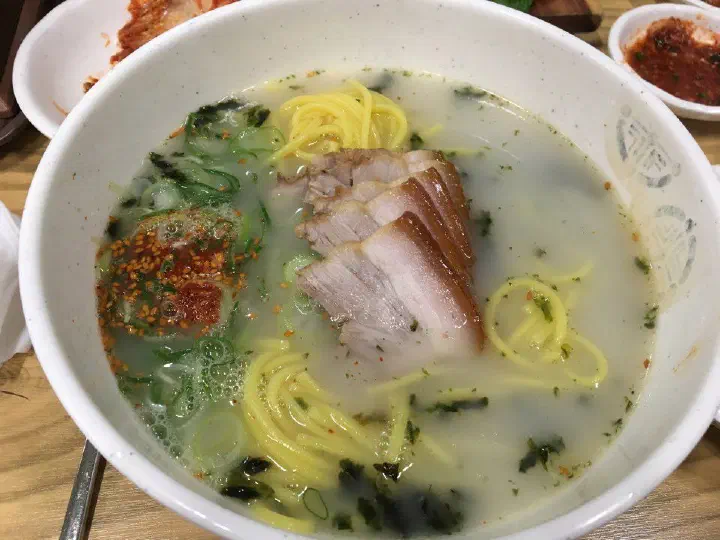
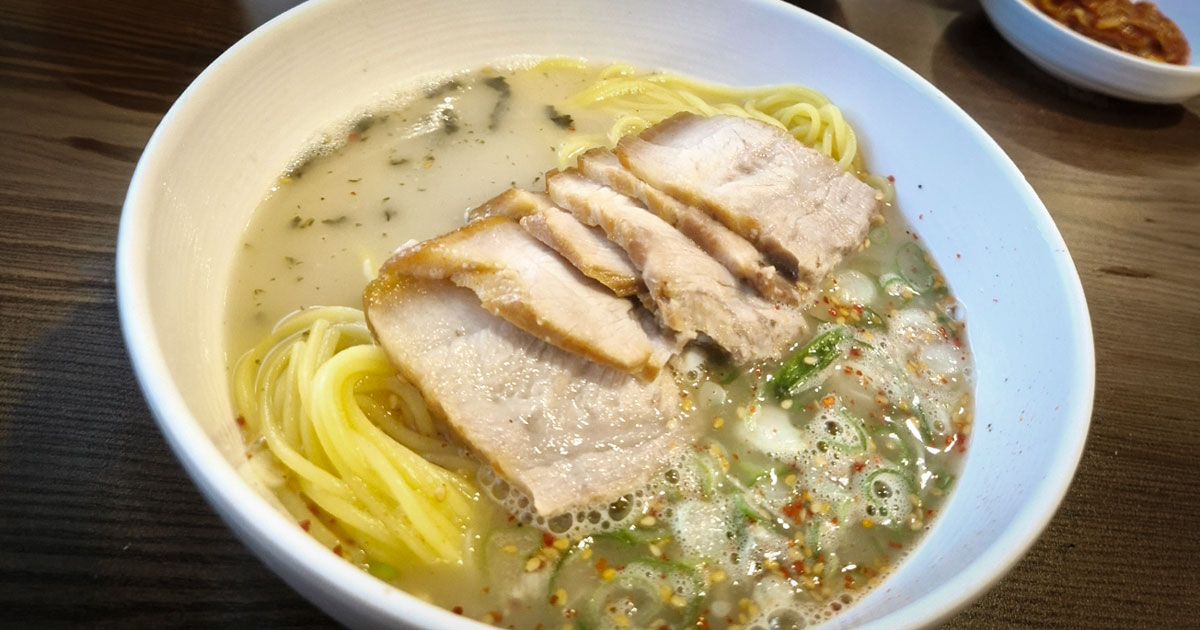
Gogi-guksu is built on a deep pork-bone broth. It has the heft of a bowl of seolleongtang or dwaeji-gukbap, but what sets this kitchen apart is how clean it stays - very little of the porky funk that throws some people off.

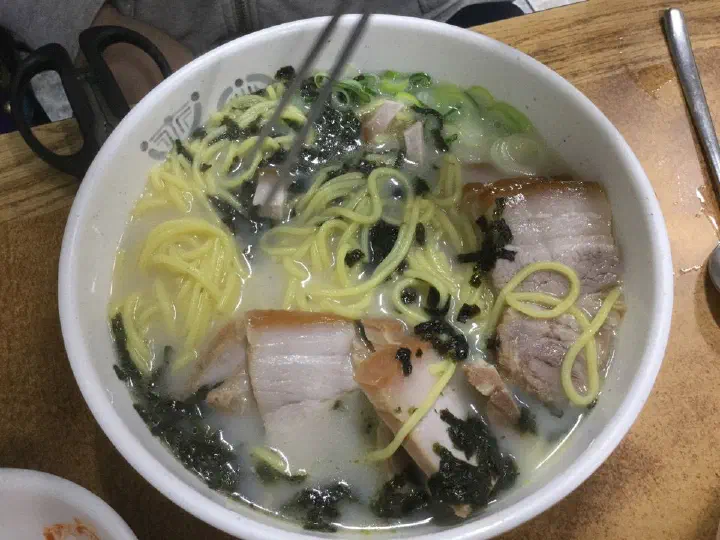
The noodles are springy medium-thick wheat noodles, and the bowl comes piled with maybe seven slices of pork. They’re generous with the meat here, more so than most gogi-guksu spots, so one bowl is genuinely filling.

Close-up of Jamae Guksu gogi-guksu, rich pork-bone broth topped with sliced boiled pork

Top-down view of Jamae Guksu gogi-guksu with several slices of pork and dried seaweed

A fair warning: the seasoning runs on the salty side. Great if you like your broth bold, a little much if you were hoping for something gentle. There’s pepper and chili flakes on the table, but honestly the broth doesn’t need them.

If you’re with kids, you can ask for the gogi-guksu without chili flakes (고춧가루). Even the regular version isn’t very spicy, but the plain one is an easy call for little ones.

Bibim-guksu and dombae-gogi

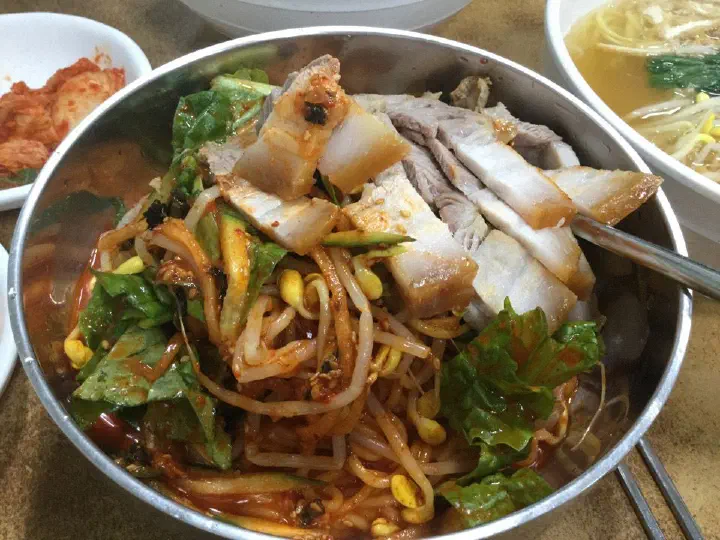
Bibim-guksu (비빔국수), the cold spicy mixed noodles, is the one that divides people. Sweet, tangy and a bit spicy, with cucumber, bean sprouts and lettuce, it lands closer to spicy jjolmyeon than a classic bibim noodle. Jjolmyeon fans tend to love it; others shrug and call it ordinary. A small bowl of warm broth comes with it, which is nice for cooling off the heat.

Jamae Guksu bibim-guksu, spicy sweet-and-tangy mixed noodles with bean sprouts, cucumber, lettuce and pork

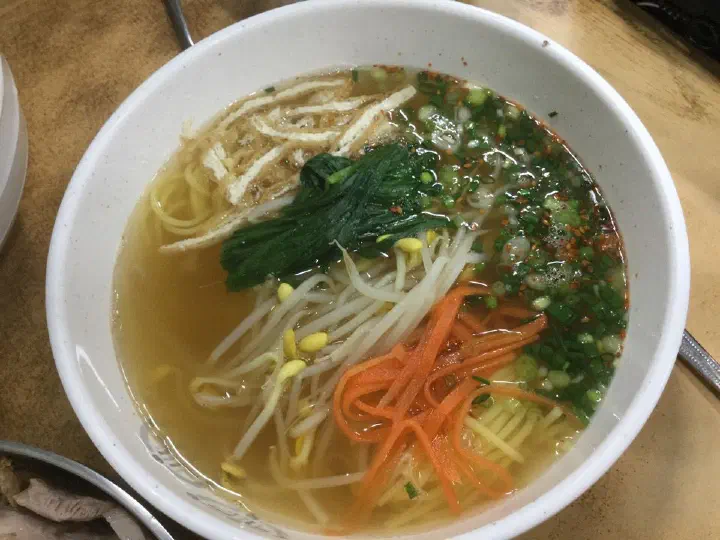
Bowl of clear warm broth noodles served alongside the bibim-guksu at Jamae Guksu, with bean sprouts, carrot, spinach and fried tofu

If there are two of you, one gogi-guksu and one bibim-guksu to share is the safe play.

Dombae-gogi (돔베고기) is sliced boiled pork served on a wooden board. “Dombae” is the Jeju word for cutting board, hence the presentation. It’s pork belly with the skin still on at the edge, chewy and tender, boiled clean without any off smell.

That said, the pork already heaped on top of the gogi-guksu covers most of what you’d want, so if you have an average appetite you can skip the separate dombae order. Get it when you really want to focus on the meat - the standalone plate is clearly better than the slices in the soup. One honest note: a few longtime visitors say the dombae slices have gotten thinner over the years. The flavor’s the same, but the portion feels a touch smaller.

The mul-mandu (물만두), boiled dumplings, are a quiet surprise that a lot of people end up liking more than they expected. And don’t sleep on the kimchi - the cabbage kimchi and kkakdugi that come as banchan are good enough that they sell the kimchi separately online.

The room and the little things

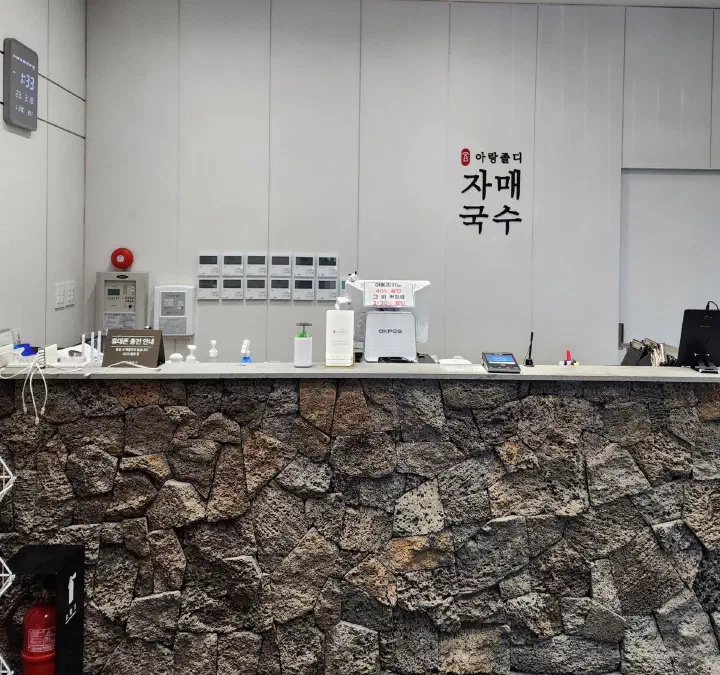
After a series of expansions and a move, it’s now a big, bright building with floor-to-ceiling windows. Being new, the restrooms and self-service bar are spotless. You’ll find water, cups, aprons and wet wipes at the bar; water and banchan are self-serve.

Jamae Guksu interior counter finished with a Jeju basalt stone wall

You order from a tablet at the table, and if that’s awkward, the staff will take it for you. One menu per adult is the rule.

It’s genuinely thoughtful about kids. Children under 36 months eat a baby noodle dish for free, there are high chairs, and there’s even a microwave for warming baby food.

Because it’s so busy, the staff calling numbers can look harried, and it’s not always easy to ask a long question. A few reviews read the service as brusque, but it’s really just the rhythm of a high-turnover place.

Parking and a few tips

The lot is large but can fill up around 9 a.m. It’s one-way, and there’s more space if you drive all the way to the back. With a single attendant on duty, things get tangled at peak, so take it slow.

There’s a small cafe at the entrance - Sangha Farm (상하목장) ice cream and coffee, with a discount if you’ve eaten. They also sell cheonhyehyang citrus grown by the owners’ parents, plus tangerine hats and sunglasses that make for cheap, fun Jeju photo props - cheaper here than at the airport or the markets. And there’s a resident cat in the parking lot that keeps kids happy while you wait.

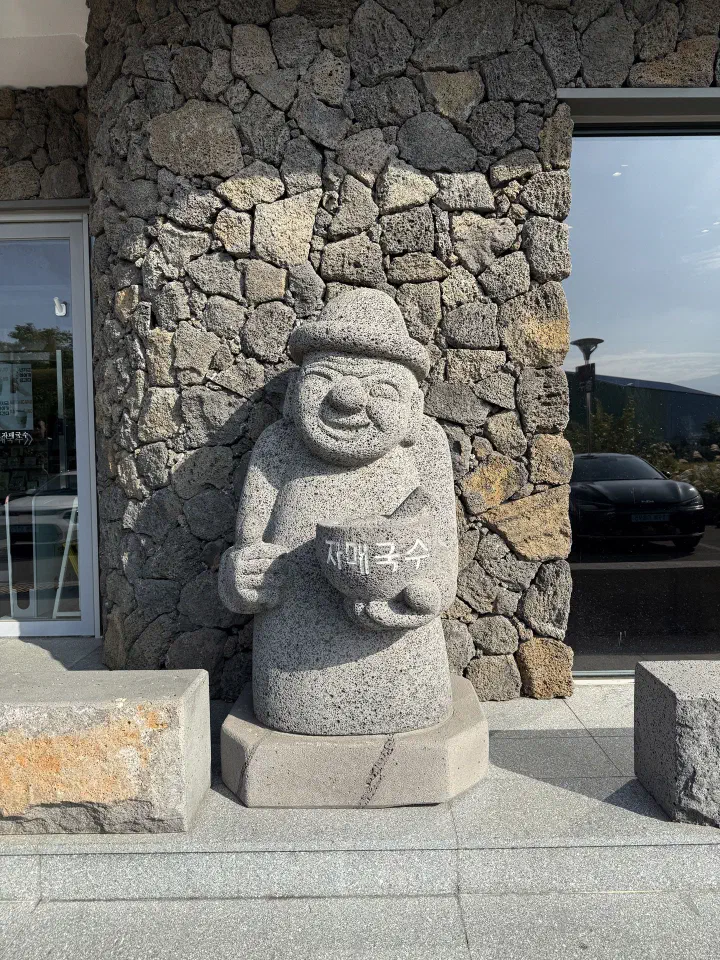
Jeju dol hareubang statue holding a bowl of Jamae Guksu noodles at the restaurant entrance photo spot

Notes for visitors from abroad

Like almost every restaurant in Korea, Jamae Guksu takes cards, so any internationally accepted card should be fine. Korea doesn’t have a tipping culture - you don’t need to tip, and trying to can actually confuse the staff.

English isn’t really spoken here, but ordering is simple: the tablet menu is mostly pictures and prices, and worst case you can point to what you want. Just brace yourself a little on spice - what reads as mildly spicy to Koreans can hit harder if you’re not used to it, though the plain gogi-guksu is an easy, non-spicy choice.

For getting here without a car: it’s a short taxi ride from the airport, and the KakaoT app works like a local ride-hailing app if you don’t speak Korean. For directions, skip Google Maps for walking and transit in Korea - it’s unreliable - and use Naver Map or KakaoMap instead. Cards work nearly everywhere, but keep a little cash for markets and street stalls where foreign cards occasionally get declined.

Worth a second visit?

It opened in 2002 and grew from a small downtown shop, through Tap-dong, to this big building in Iho-ildong, expanding more than once along the way. Foreign visitors have become a big part of the crowd, and it’s held a Blue Ribbon for several years.

Deep, clean broth, generous pork, fast turnover and a big parking lot - it’s an easy, low-risk meal to slot into a Jeju itinerary. As long as you’re okay with bold seasoning and a line out front, it’s the kind of place you end up coming back to, whether as your first bite on the island or your last.

📍 View Jamae Guksu (자매국수) on Google Maps →

To find it: about ten minutes by car from Jeju Airport, tucked between Iho Tewoo Beach and Dodubong. The red-and-white horse lighthouses at Iho Tewoo are another ten minutes on, so timing your meal before sunset makes for an easy photo stop afterward.