If you ask around in Seogwipo about gimbap, this little place comes up almost every time.

It looks plain. People keep coming back anyway. That contradiction is sort of the whole story here.

So let me walk through what kind of gimbap (김밥) this actually is, how the rolls differ, and the part everyone struggles with most - getting a reservation.

What kind of place it is

Oneunjeong Gimbap (오는정김밥) is a takeout-only shop. There’s no dining room, no tables. You reserve by phone or in person, then pick up.

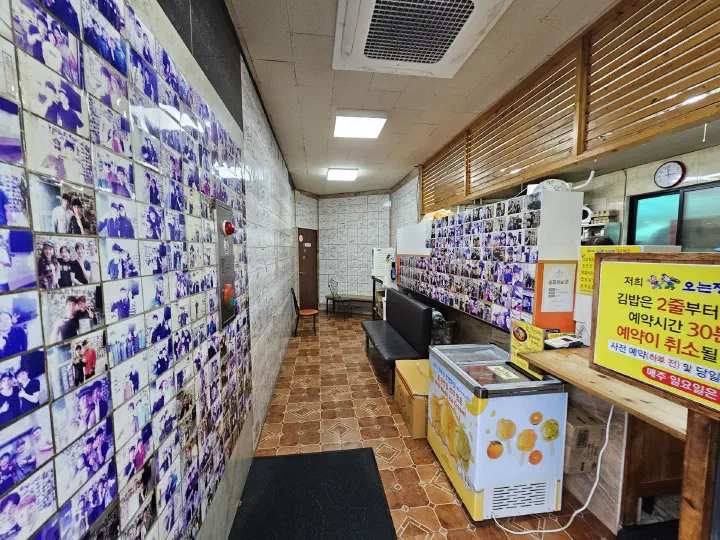
The space is small, but the walls tell you something. One side is plastered with autographs and photos of Korean celebrities.

The comedian Yoo Se-yoon (유세윤) shows up the most. He’s apparently dropped by on nearly every Jeju trip and left a new note each time, so regulars half-jokingly call it “Yoo Se-yoon’s gimbap shop.” It’s been filmed for TV and food vlogs too.

You feel the reputation the moment you step in, before you’ve even tasted anything.

Interior wall of Oneunjeong Gimbap covered with Korean celebrity autographs and photos

The basics

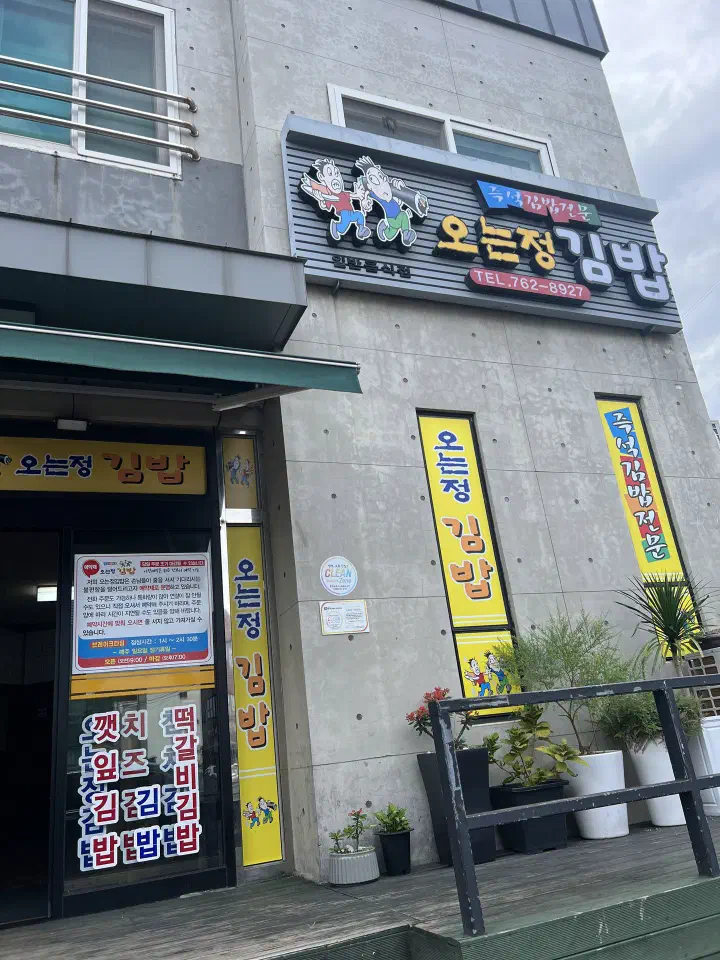
Exterior storefront and sign of Oneunjeong Gimbap in Seogwipo, Jeju

The address is 2 Dongmundong-ro, Seogwipo-si, Jeju. It’s about a 10-minute walk from Seogwipo Maeil Olle Market, so it slots into a day downtown easily.

Hours are 9 a.m. to 7 p.m., Monday through Saturday, with a break from 1 p.m. to 2:30 p.m. It’s closed on Sundays.

The phone number is 064-762-8927. One thing to know up front: there’s a two-roll minimum, so solo travelers can’t just grab a single roll.

For directions, Korea’s own map apps work far better than Google Maps for walking and transit here, so I’d use Naver Map or KakaoMap.

📍 View Oneunjeong Gimbap (오는정김밥) on Google Maps →

The signature: fried tofu

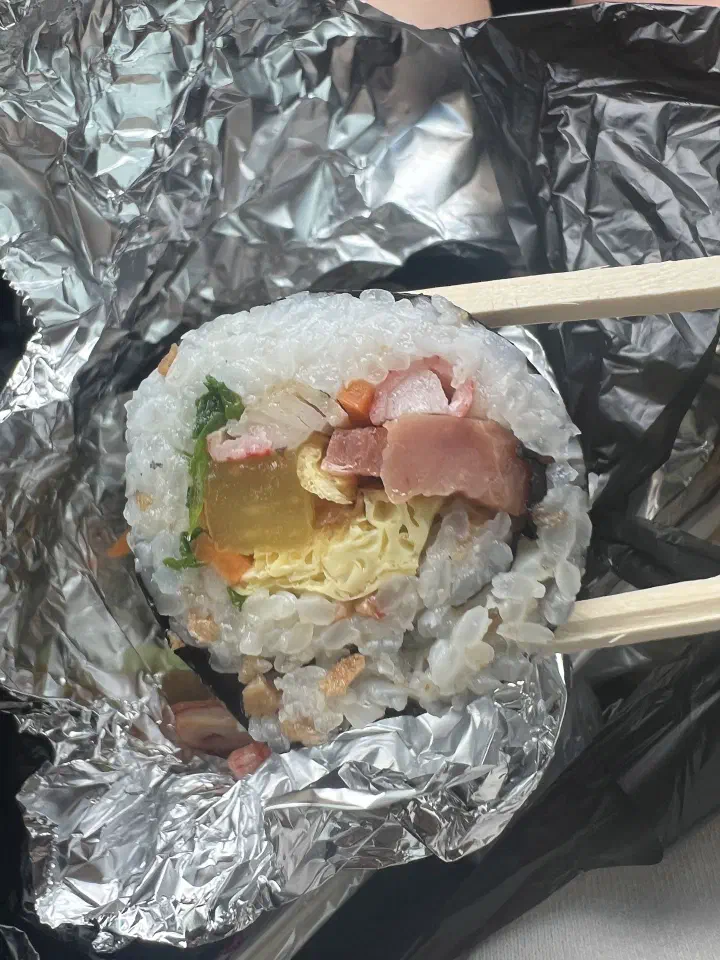
Cross-section of an Oneunjeong gimbap roll held with chopsticks, showing fried tofu and ham

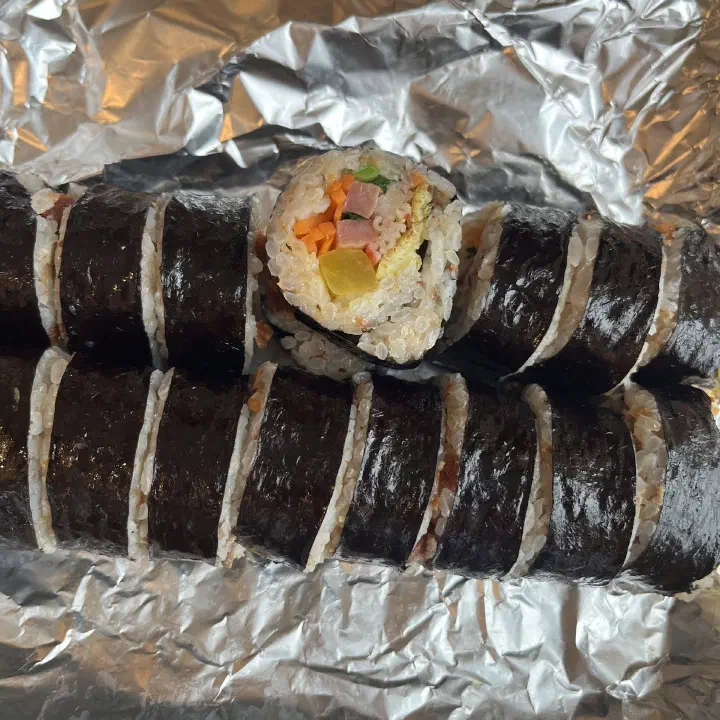
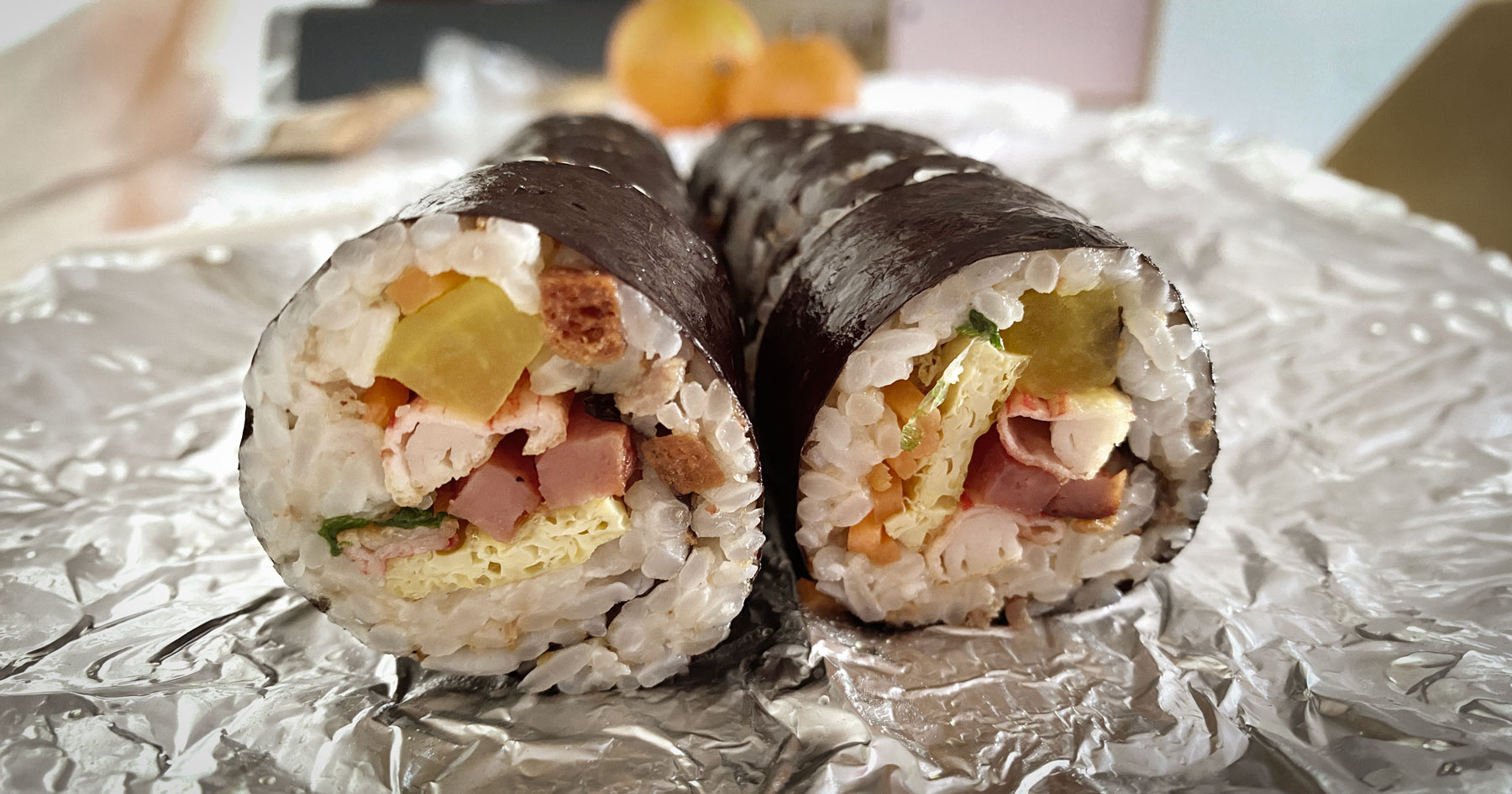
The thing that defines this gimbap is fried tofu (튀긴 유부). Finely chopped tofu is fried until crisp, then mixed right into the rice.

That’s where the texture comes from. You get little crunchy, nutty bites scattered through each piece, and it’s nothing like the soft tofu you might expect in a tofu gimbap.

Some people swear the ham and imitation crab taste lightly fried too. The exact method isn’t public, but that crunch is what sets it apart.

The rice is on the firm side rather than soft, and it’s clearly seasoned. Not aggressive, just savory enough that you keep reaching for the next piece.

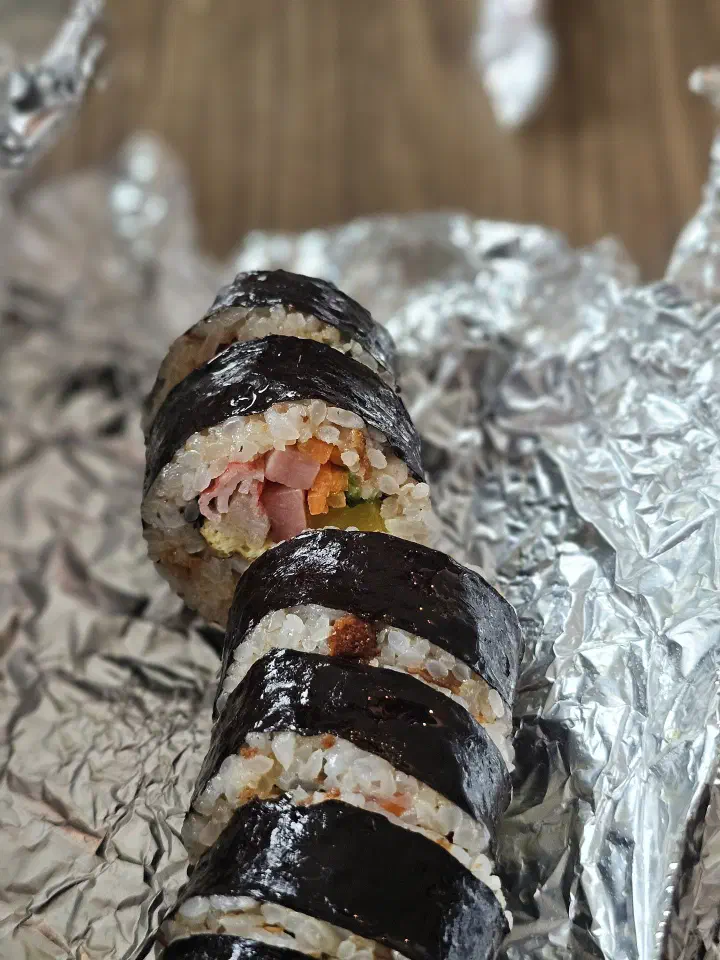
Close-up cross-section of Oneunjeong gimbap showing pickled radish, carrot, ham, and egg fillings

Roll by roll

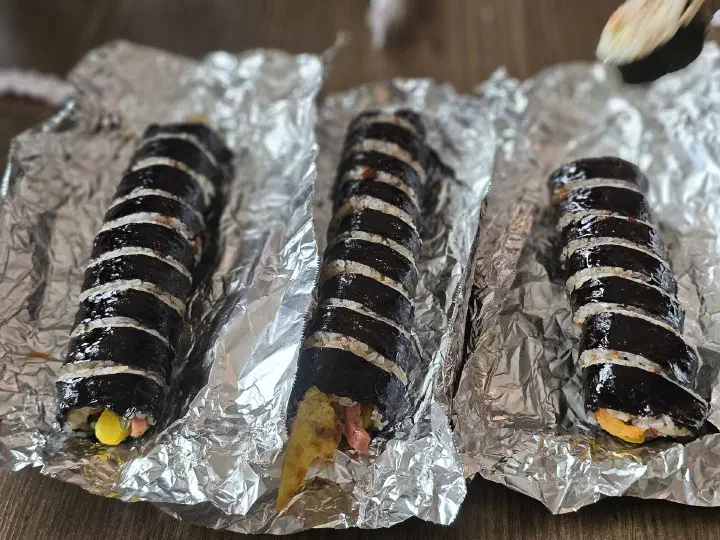
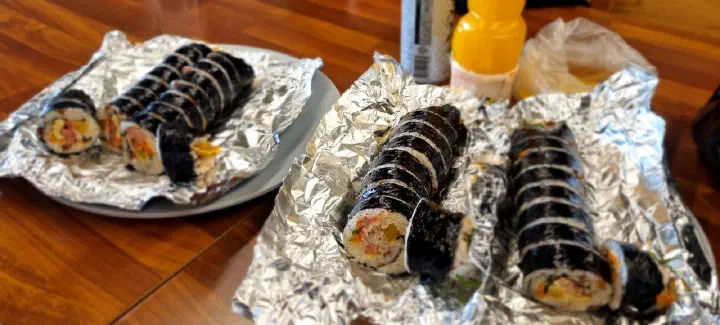
Three Oneunjeong gimbap rolls lined up on aluminum foil

The original Oneunjeong gimbap (오는정김밥) is 4,500 won. It’s the most popular roll, and the one to start with.

Honestly, the first bite can feel ordinary. By the second and third, the savory note builds and the roll disappears faster than you’d expect.

The perilla-leaf roll, kkaennip gimbap (깻잎김밥), is 5,500 won. The same base plus fragrant perilla and a little mayo, and plenty of people prefer it to the original.

The mayo is restrained, so it isn’t heavy, and the perilla lifts the nuttiness of the tofu one more notch.

The tuna roll, chamchi gimbap (참치김밥), is 6,000 won. It’s fine, but the tuna comes through strong and tends to bury that signature crunch.

Unless you’re a real tuna fan, the original-plus-perilla combo is the better first-visit pairing.

There’s also a cheese roll at 5,500 won and a tteokgalbi (grilled short-rib patty) roll at 6,000 won. The cheese one is mild; the tteokgalbi is a touch sweet and good for kids.

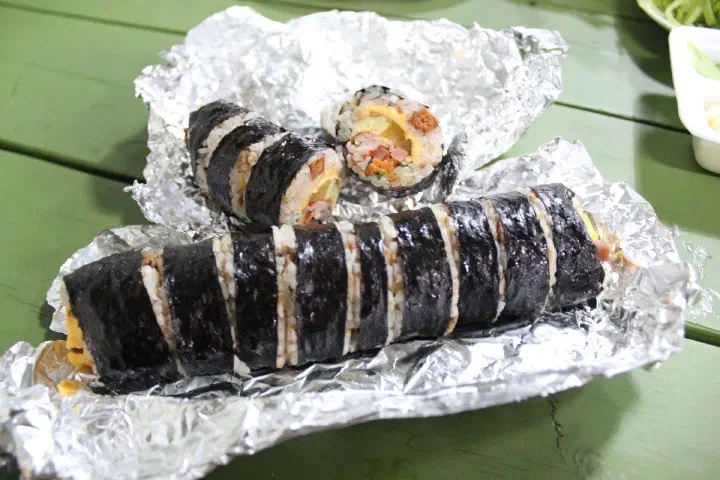
Two sliced Oneunjeong gimbap rolls on foil revealing the cross-section

It’s best while warm

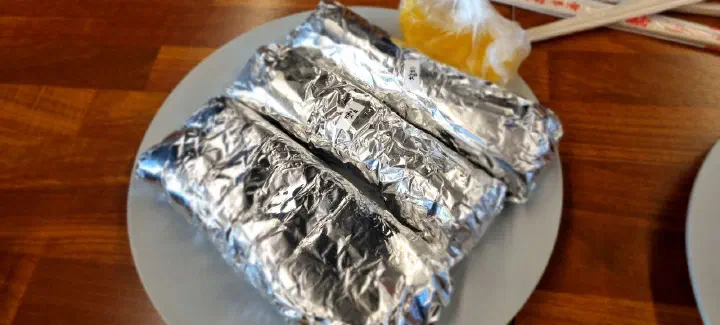
Oneunjeong gimbap rolls wrapped in aluminum foil for takeout

This gimbap is at its best fresh and warm, while the fried tofu still has its crunch.

It’s still decent cold, and many people happily eat it back at their accommodation. But if you end up with a long-cooled cancellation roll, it won’t match a freshly rolled one.

So line your pickup time up with your schedule and eat it soon after collecting it. It comes wrapped in foil, which makes it easy to eat in the car - pulling over by the sea with a roll in hand is a very Jeju thing to do.

Close-up cross-section of a freshly rolled, warm Oneunjeong gimbap

Reservations - read this part

The real hurdle isn’t the food, it’s getting through on the phone. Stories of dozens of missed-call attempts are not exaggerations.

Reservations are taken for the same day or one day ahead, either by phone or by stopping in. If the line won’t connect, an automated system lets you register for a text alert, and you call back to book once a slot opens.

One practical tip: weekday mornings are noticeably easier. Try a quick call around the 9 a.m. opening, and lock in a pickup time the moment you connect.

On weekends and in peak season, even a morning order can push your pickup to mid-afternoon. If you’re more than 30 minutes late for pickup, the order is automatically cancelled, so keep the time.

At the counter you just give the last four digits of your phone number and collect. Turnover is quick, so pickup itself is fast.

Parking, payment, and a useful tip

Several Oneunjeong gimbap rolls spread out on a table with drinks

There’s no dedicated parking. You can briefly pull up out front to grab your order, but you can’t leave a car there long, and the area is patrolled.

If you’d rather park and stroll, the Olle Market public parking lot nearby is the easier choice.

Payment is at the shop. Like almost everywhere in Korea, internationally issued credit cards are accepted without trouble, and there’s no tipping culture here - leaving a tip would just confuse the staff.

English isn’t really spoken, but ordering is simple: you can point at the menu and hold up fingers for how many rolls you want, and that’s enough. If you want a place to sit, the Kkoran Cafe (꼬란카페) right next door sells black-pork ramen (about 7,000 won), and ordering there lets you eat your gimbap on the spot.

The honest downsides

It isn’t all upside. A steady stream of people find it on the salty side, so if you like mild gimbap, take note.

Walk in with sky-high expectations and you may decide it isn’t worth a long wait. It’s not a flashy roll - it’s a familiar taste with a crisp twist, and that’s the point.

The two-roll minimum is a small hassle for solo travelers, and at the busiest times the service can feel curt. Other visitors found the staff friendly, so it seems to vary by the day.

Final thought

Oneunjeong isn’t a roll that overwhelms you on the first bite. It’s the kind you find yourself thinking about afterward.

The crunch of the fried tofu and the clear seasoning are what keep a plain-looking gimbap on people’s must-eat lists.

Sort out the reservation and you can enjoy it with almost no waiting, so if you have a Seogwipo day planned, start with one easy phone call in the morning.

For context, locals often group Jeju’s “big three” gimbap shops as Oneunjeong, Dajeongine (다정이네), and Kimmanbok (김만복). They’re quite different in style, so preferences split - if Oneunjeong isn’t for you, some people like Dajeongine more.

📍 View Oneunjeong Gimbap (오는정김밥) on Google Maps →