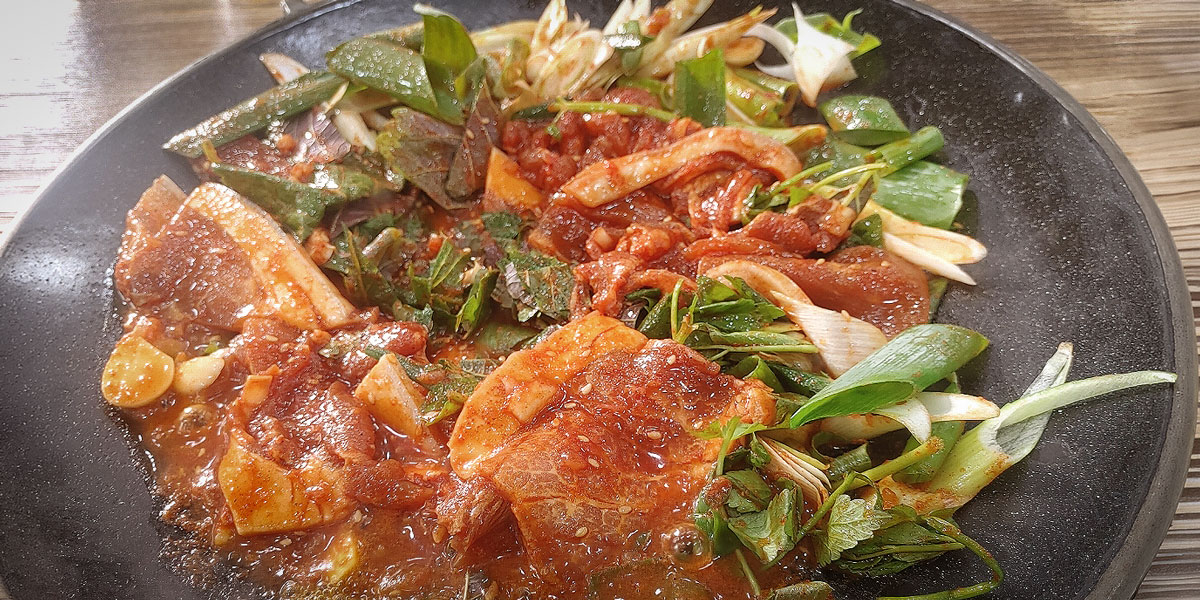
If you land in Jeju and want a first meal that actually tastes like Jeju, this old place near the airport comes up again and again.
Not black pork barbecue, not pork noodle soup. The thing to get here is hanchi jumeokmuk (한치주물럭), Jeju squid tossed in a sweet-spicy sauce and grilled at your table. It’s hard to find this exact dish anywhere else, which is half the reason people make the trip.
The walls covered in celebrity autographs and Blue Ribbon stickers tell you the rest. This restaurant has been around for a long time, and it shows.
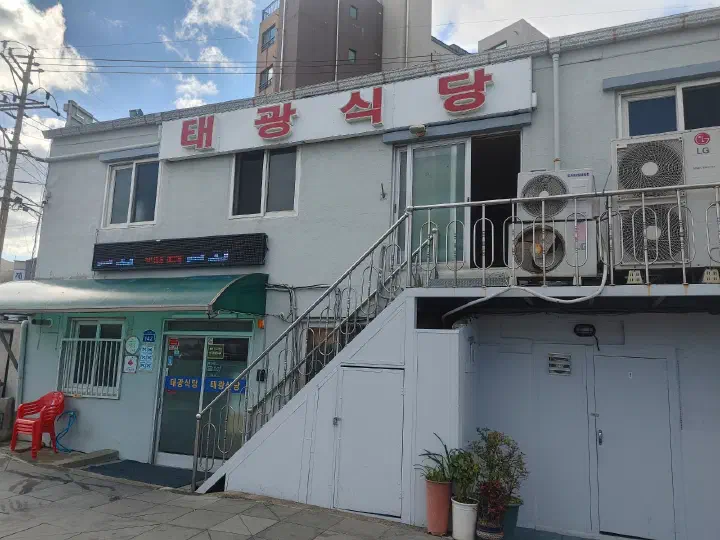
Who it suits
It’s about a 10 to 15 minute drive from Jeju Airport, which makes it an easy first stop after you land or a last meal before you drop off the rental car.
It sits on a road near the Tapdong waterfront, close to Dongmun Market and Yongduam Rock, so it slots neatly into an old-town day.
This isn’t a tourists-only place. In the evening a lot of locals come in for dinner with a drink, which gives it a real neighborhood feel. Solo diners are welcome and there’s seating for groups too.
The basics
- Address: 142 Tapdong-ro, Jeju-si, Jeju
- Phone: 064-751-1071
- Hours: Mon-Sat 10:30-21:30 (break 15:00-17:00, last order around 20:40)
- Closed: Sundays
- Good to know: solo dining, group tables, takeout, nationwide delivery, baby chairs, parking
📍 View Taegwang Sikdang (태광식당) on Google Maps →
A place TV made famous
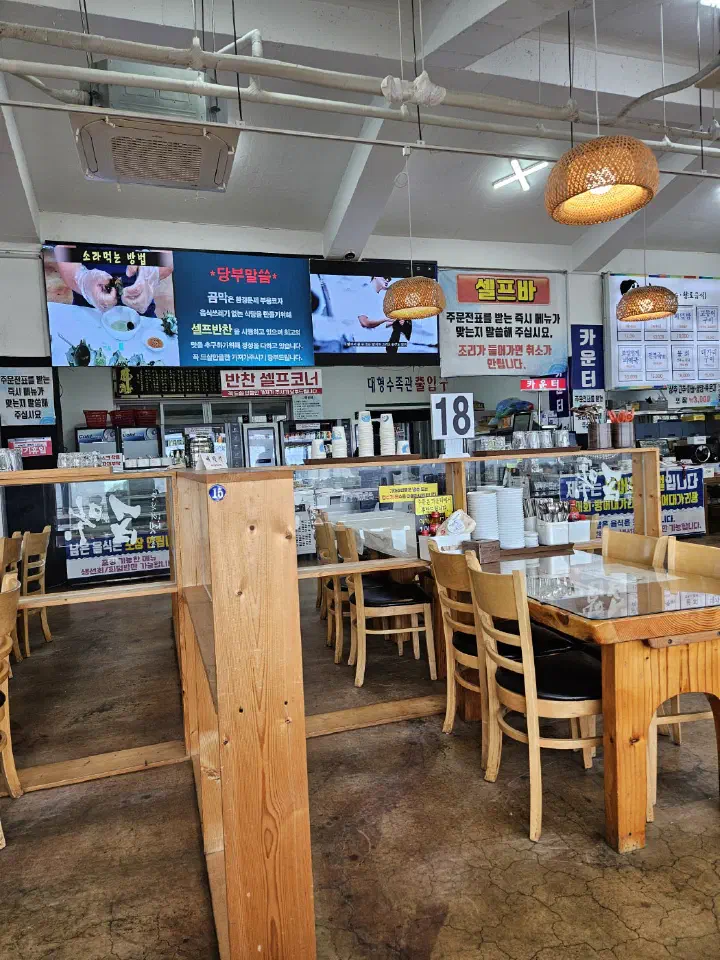
The sign outside is old and the building looks a little worn, but step inside and the mood changes. The walls are packed with autographs and seven Blue Ribbon stickers.
It has a long TV history too, from Baek Jong-won’s Top 3 Chef King to several morning and local-information shows on Korean broadcast channels. More recently the actor Park Byung-eun and the singer-actor D.O. (Doh Kyung-soo) visited for Na Young-seok’s YouTube channel Channel Fifteen Nights, and it was featured on the 2025 cable series Danggoljip. So lately you’ll see a lot of people who came after watching a video.
Hanchi and pork, half and half
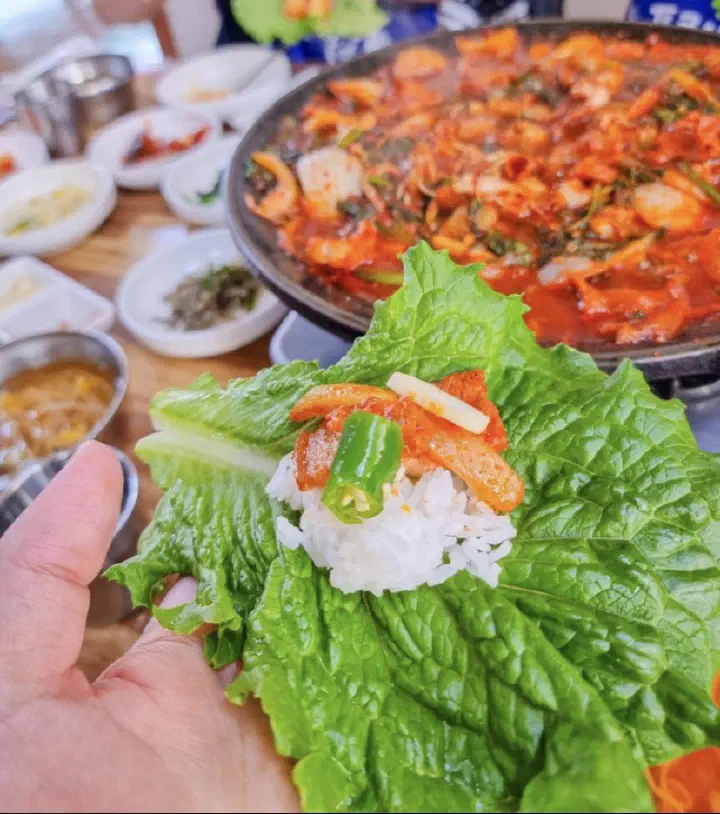
The most popular order by far is one portion of hanchi jumeokmuk (한치주물럭) and one portion of pork jumeokmuk (돼지고기주물럭), mixed together. Most tables get exactly this.
The staff cook everything for you on the tabletop griddle, so you just wait and eat. They lay the pork down first, and once it’s partway cooked they add the squid with enoki mushrooms and perilla leaves. Squid turns rubbery if it cooks too long, so going in later is on purpose.
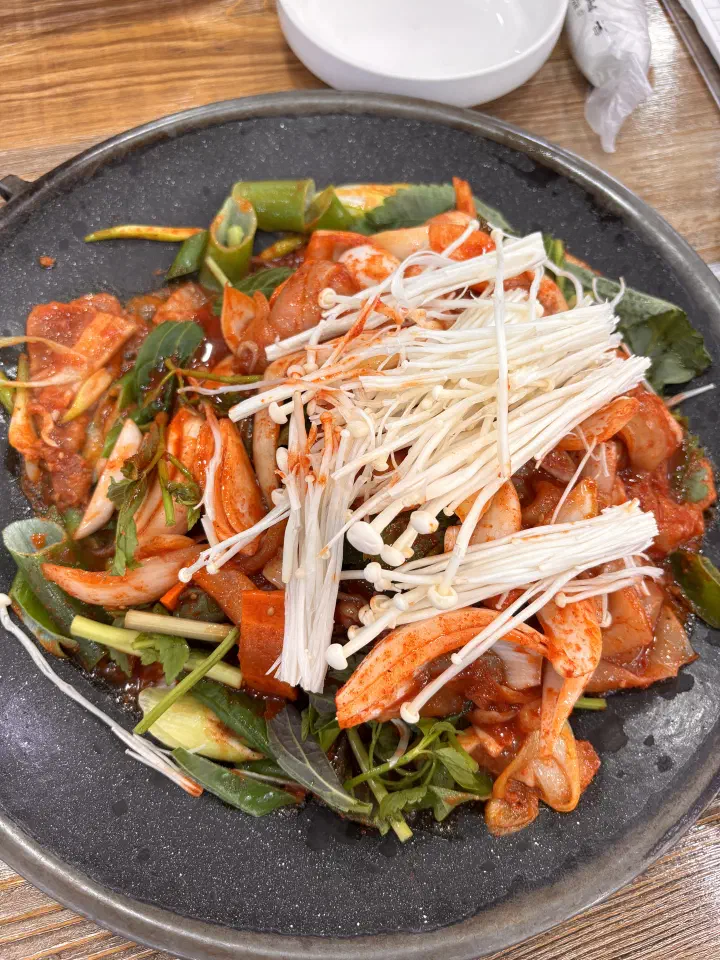
The sauce looks fiery but isn’t that hot. Think of mild instant-noodle heat with a touch of sweetness, a gochujang base that makes you want rice immediately. The Jeju pork is thick and tender with almost no gaminess, and the squid stays plump and springy rather than chewy. It reads a bit like ojingeo bulgogi but feels a step more special because of the squid.
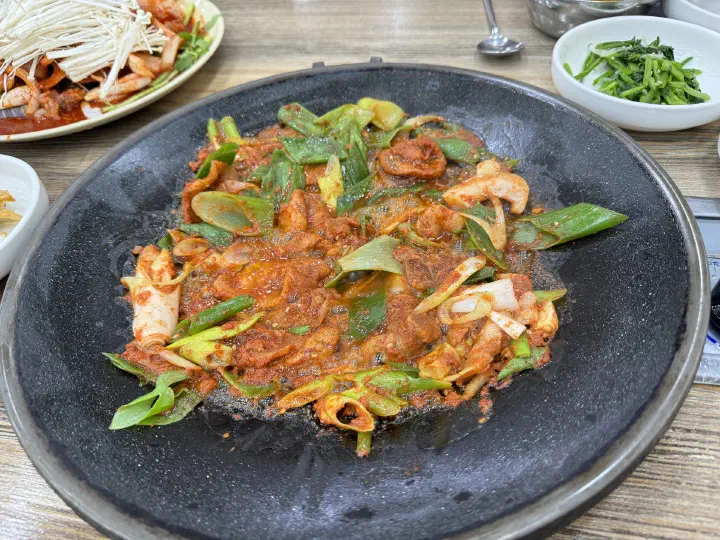
Squid bulgogi and tilefish too
There’s also hanchi bulgogi (한치불고기), where whole squid is grilled first and brushed with sauce as it cooks, a different look from the jumeokmuk and a good way to taste the squid on its own.
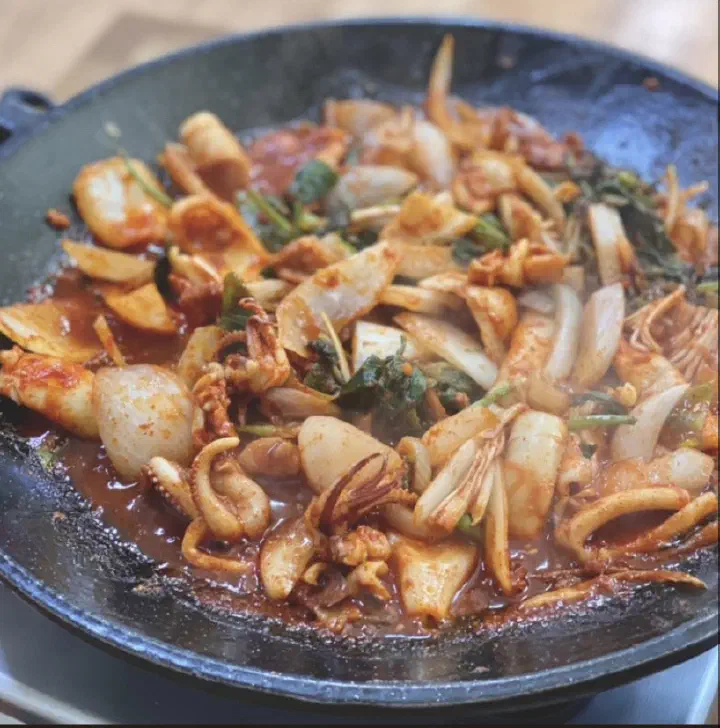
If you’re with a child, the okdom-gui (옥돔구이) tilefish set is a safe pick. The jumeokmuk has a little heat, so ordering one mild dish covers the kids. The tilefish is crisp outside with a meaty interior. There are also various mulhoe (물회), cold raw-fish soups, for hot days.
Noodles and fried rice are the real finish
When the meat is mostly gone, they add somyeon noodles (국수사리) to the leftover sauce and toss them again, finishing with sesame oil. People say you haven’t really done the meal until you’ve had this part.
That said, the noodles divide people. They come pre-boiled, so if they sit in the sauce too long they go soft, and a heavy hand with sesame oil can flatten the flavor.
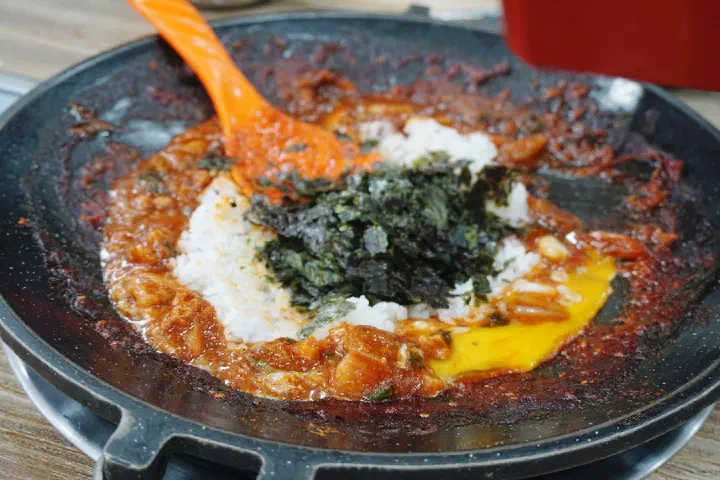
The fried rice (볶음밥), on the other hand, gets near-universal love. They fold a raw egg into the leftover sauce with seaweed flakes and sesame oil, press it down until it crisps, and that’s the part most people remember. If both feels like too much, just save room for the fried rice.
Side dishes and service
The banchan is simple: seasoned bean sprouts, kimchi, cabbage salad, fish cake, pickles, and lettuce for wraps, which you can refill yourself. The bean sprout soup (콩나물국) leans spicy and savory, almost like a drinking-snack broth, and the kimchi is refreshing against the rich meat.
Since the staff handle the grilling and the fried rice, there’s very little for you to do, and service stays quick even when it’s busy.
The honest downsides
It isn’t all upside.
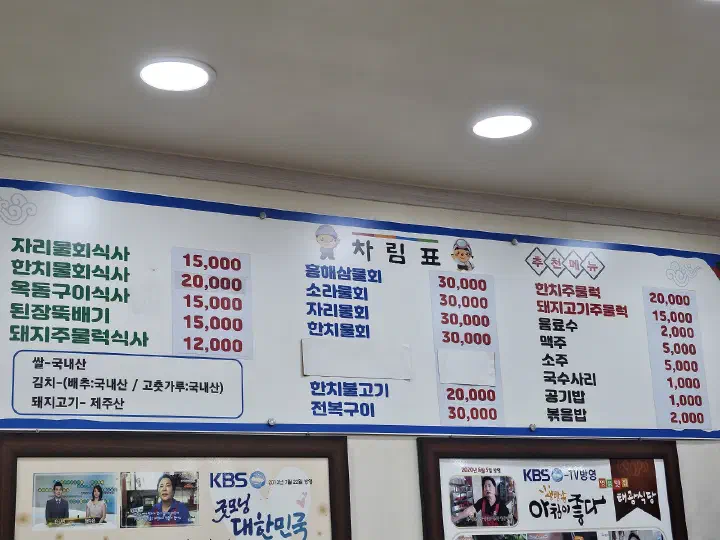
First, it isn’t cheap for the portion. Squid is expensive, so a single portion of hanchi jumeokmuk runs 20,000 won, up from 18,000 won not long ago, and some people feel the squid portion is small. To leave full, plan on adding noodles, fried rice, or a bowl of rice.
Second, the room is small and tables are close together, so it gets cramped when it fills up.
Third, the squid jumeokmuk isn’t for everyone. Some locals will tell you squid is better eaten raw, so it’s a dish that splits opinion.
What’s changed, what hasn’t
This place has held the same corner in Jeju’s old town for close to forty years. It used to be floor seating where you took your shoes off, but it’s all been switched to regular tables now, which is far more comfortable, and the restrooms are clean and indoors. The look has aged, but regulars say the sauce and the way it’s cooked haven’t really changed.
Parking and waiting
Parking takes a little planning. There are about two spots beside the restaurant and marked parking lines along both sides of the road. There’s also a public lot within about 150 meters, free for the first 30 minutes and around 1,000 won per 30 minutes after that. Don’t just park in a random alley, since you can get ticketed.
Lines form at lunch peak and on weekends, but turnover is fast and a second floor opens on busy days, so unless the queue is very long you won’t wait too long. The quieter windows are before noon and before 6 p.m.
Notes for travelers
Cards work fine here, so any internationally accepted card should be no problem. Korea doesn’t have a tipping culture, so there’s no need to tip, and staff may be a little puzzled if you try.
English isn’t really spoken, but ordering is easy. Most tables get the half-and-half squid and pork, so you can simply point at the menu and hold up your fingers for how many portions. One thing to keep in mind: what Koreans call mildly spicy can still be fairly hot for visitors, though this sauce sits on the gentler end.
For getting around, Google Maps is unreliable for walking and transit directions in Korea, so use Naver Map or KakaoMap instead, and KakaoT is the local taxi app. From the airport a taxi is quick and inexpensive. It’s worth carrying a little cash as a backup, even though cards are widely accepted.
Final thoughts
If you want a Jeju-only dish cooked for you while you sit back, this fits the bill. The portion-to-price can feel steep, but run it as a full course with the noodles and fried rice and the meal fills out nicely.
It’s less fine dining and more the familiar, comforting taste of an old neighborhood spot, the kind of place worth penciling into a Jeju trip and remembering afterward.