Ten minutes by car from Jeju Airport, there’s a soup house that hands out three-digit waiting numbers from 6 in the morning.
Ujin Haejangguk (우진해장국) has spent decades building its reputation on one dish: gosari yukgaejang, a thick soup of bracken fern and pork.
The short version: you won’t find this soup anywhere on the Korean mainland, the line is the only real obstacle, and the line has holes in it.

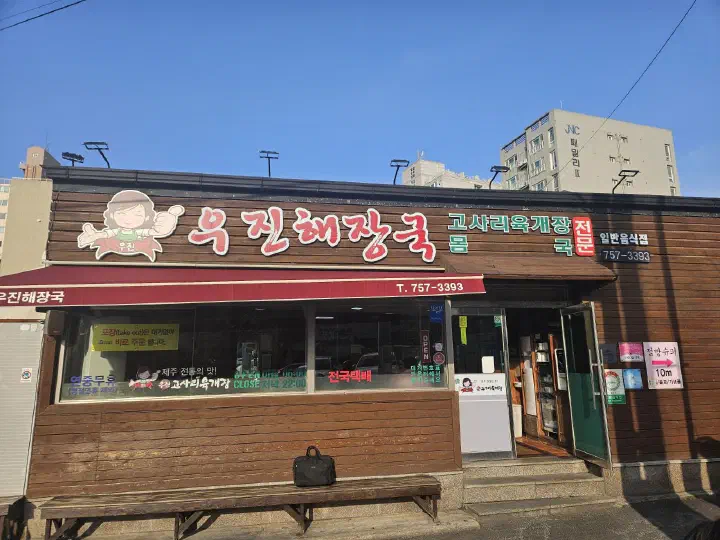
Wooden storefront and signboard of Ujin Haejangguk, a gosari yukgaejang specialist in Jeju

The basics

The address is 11 Seosa-ro in Jeju-si, in the old downtown area, a short drive from the airport.
The main building opens daily from 6 a.m. to 10 p.m.
The annex, one building over, runs 8 a.m. to 4 p.m. and closes on Tuesdays.

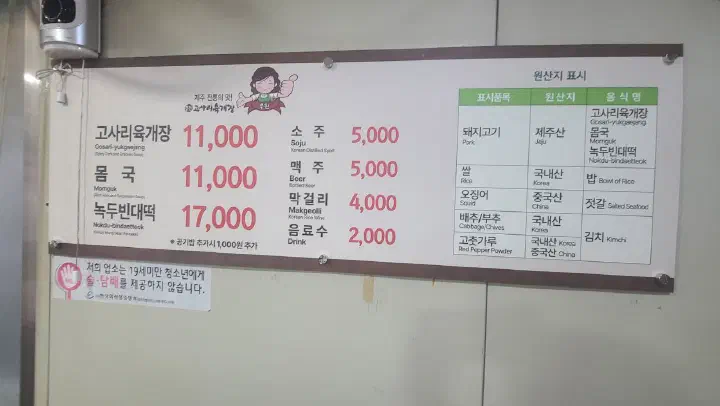
The menu is tiny.
Gosari yukgaejang is 11,000 won, momguk 11,000 won, beef-bone haejangguk 11,000 won, and a mung bean pancake is 17,000 won.
The beef-bone option is only sold in the main building.
Prices went up by 1,000 won this year, which still feels reasonable for a tourist-heavy island.

Price board at Ujin Haejangguk listing gosari yukgaejang, momguk, and nokdu bindaetteok

📍 View Ujin Haejangguk (우진해장국) on Google Maps →

Why people line up

Korean TV came here twice, once in 2015 for a restaurant-review show and again in 2019.
The Naver listing carries over 23,000 visitor reviews and still holds a 4.4 rating.
A TV bump doesn’t last ten years; the line outside is a mix of tourists and locals, which usually tells you what you need to know.

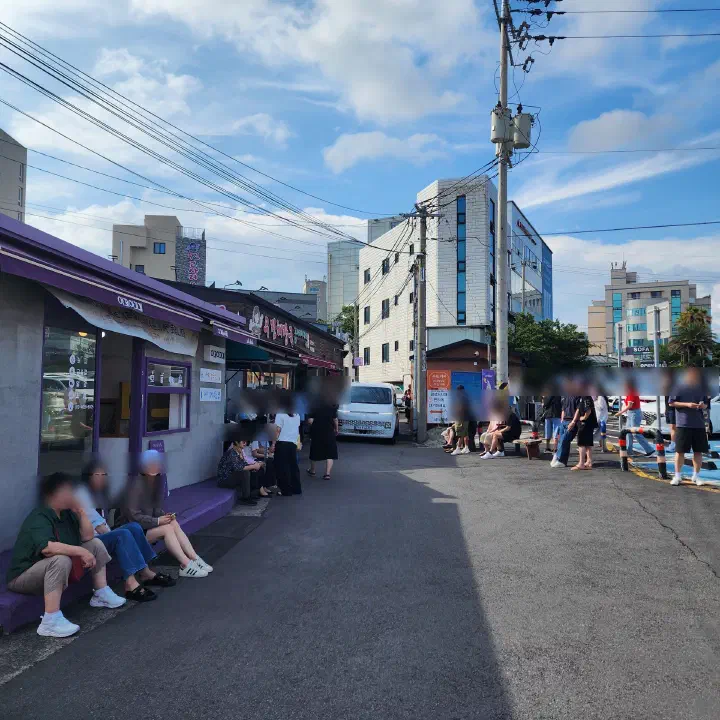
Customers waiting in line in the alley outside Ujin Haejangguk in Jeju

Reading the line

The worst window is 9 a.m. to 1 p.m.
Even on weekdays the line can hit 100 groups, which means a wait of 90 minutes to two hours.

The good news is the pattern is predictable.
Right after opening, 6 to 7 a.m., you can usually walk straight to a table.
Around 8 a.m. the wait is about ten minutes.
Mid-afternoon, 2 to 4 p.m., and evenings after 7 p.m. are the other quiet stretches.
Turnover is fast for a soup restaurant, so 25 groups clear in about half an hour.

The two buildings run different systems.
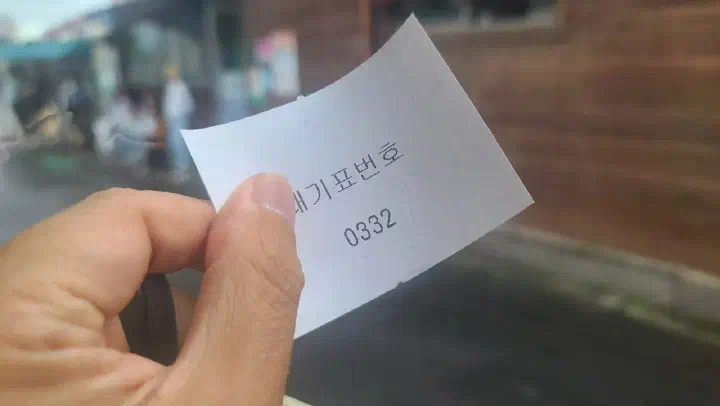
At the main building you pull a paper number at the counter, then wait across the street in a climate-controlled waiting room while a loudspeaker calls numbers.
The waiting room even has a small cafe counter, so you can nurse a drink while you wait.
The annex uses a CatchTable kiosk instead.
You can’t join remotely through the app; registration is on-site only, but your phone shows how many groups are ahead of you.
Regulars register at both buildings and take whichever calls first.

Paper waiting-number ticket pulled at the counter of Ujin Haejangguk’s main building

The soup itself

Forget the red, spicy yukgaejang you may have seen elsewhere in Korea.
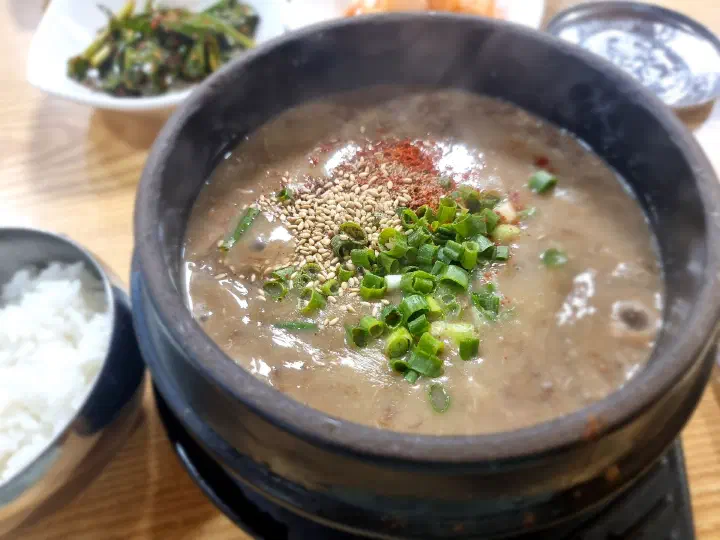
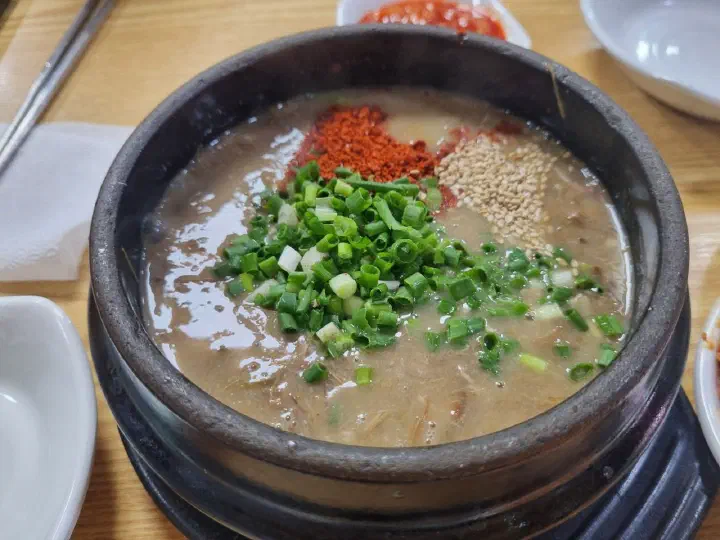
This one arrives brown, closer to a thick porridge than a broth, boiling hard in an earthenware pot.
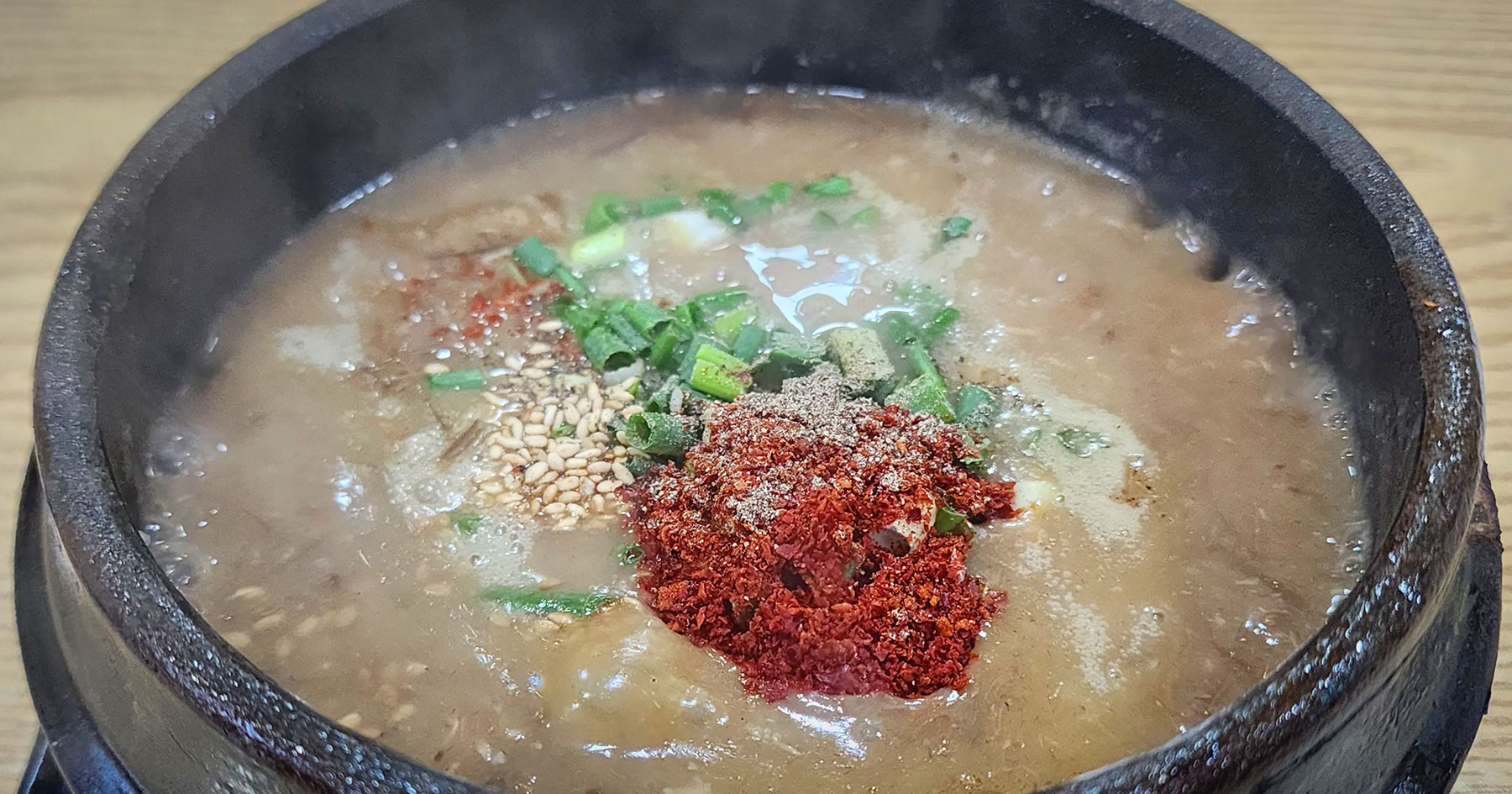
Jeju bracken fern is simmered down and shredded so fine that it chews like pork; telling fern from meat is genuinely difficult.
The flavor is deep and savory rather than fiery, the kind of bowl that warms you from the inside.

Gosari yukgaejang served boiling in an earthenware pot, topped with chili powder, sesame, and scallions

A few ordering notes help here.
A scoop of chili-powder seasoning goes on top by default.
It’s mild by Korean standards, but you can ask for it left off, which also makes the bowl kid-friendly.
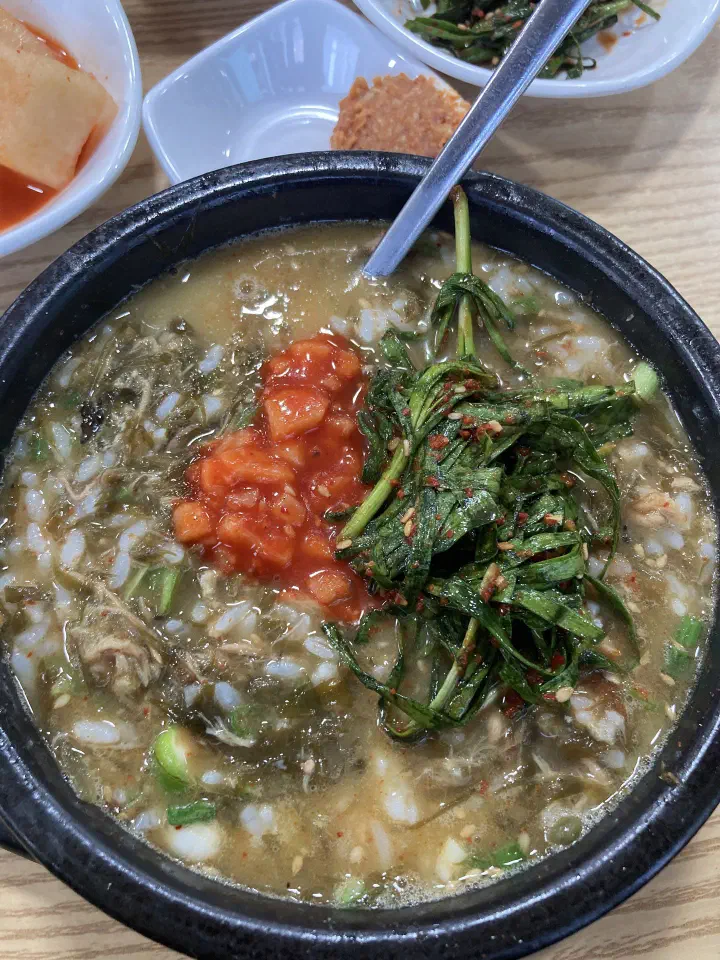
Hold off on the rice at first, taste the soup on its own, then stir it in; the starch thickens everything fast.
Halfway through, ask for minced green chili (dajin gochu, 다진 고추) and stir it in.
The heat resets your palate for the second half.
That chili is the real deal, so pace yourself if spice isn’t your thing.

Side dishes are radish kimchi, fresh cabbage kimchi, salted squid, and raw chilies with soybean paste, all refillable at a self-serve counter.
The tangy radish kimchi is the right counterweight to the thick soup.

A thick bowl of gosari yukgaejang with rice stirred in and minced green chili on top

The other bowls

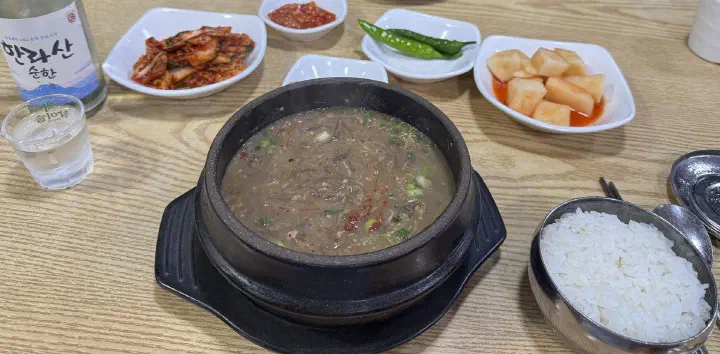
Momguk (몸국) is the other Jeju specialty here: pork broth simmered with gulfweed, a local seaweed.
It has a faint ocean note; seafood lovers tend to prefer it over the fern soup, though some find it slightly fishy.
For a first visit, the gosari yukgaejang is the safer order.

Momguk at Ujin Haejangguk served with side dishes and a bottle of Hallasan soju

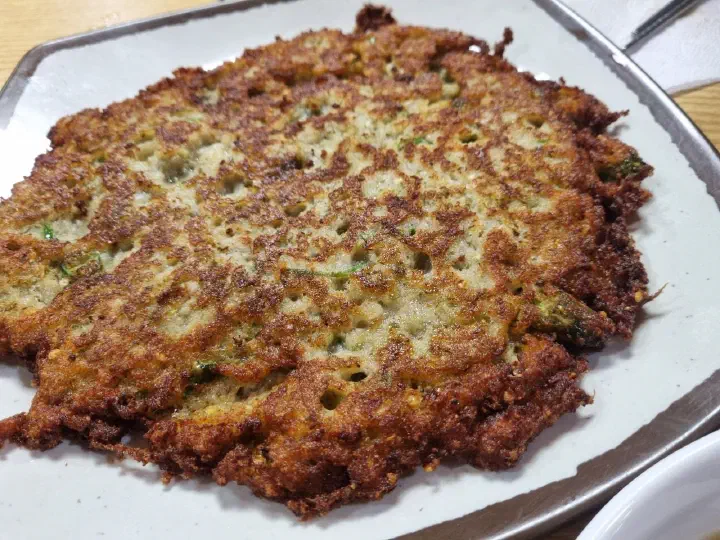
The mung bean pancake (nokdu bindaetteok, 녹두빈대떡) comes thick, crisp at the edges and heavy with meat in the middle.
Split it three or four ways as a side; it’s too rich as a solo order.

Nokdu bindaetteok mung bean pancake at Ujin Haejangguk, crisp at the edges and thick in the center

Space, service, ordering

The main building feels like a converted old house, smaller than the reputation suggests, with tables packed close.
The annex has more breathing room.
Service is brisk rather than warm; staff are moving fast to keep the line flowing.
The menu is short enough that pointing at it works fine even with zero Korean, and the staff are used to travelers.
Cards are accepted without issue, including international ones.
There’s no tipping in Korea, here or anywhere else, so just pay the listed price at the counter.

Parking and getting there

The public parking lot directly in front is the one to use.
Give your plate number when you pay and the restaurant will validate an hour of free parking; Sundays and holidays the lot is free all day.
The lot behind the building isn’t covered by the deal, so don’t park there expecting a free hour.
One practical tip for the area: Google Maps is unreliable for walking and transit directions in Korea.
Use Naver Map or Kakao Map instead, and the Kakao T app if you need a taxi from the airport.

Takeout that flies

If the line defeats you, takeout skips it entirely; orders are taken immediately with no waiting number.
The main building handles warm takeout for eating the same day.
The annex’s first floor does frozen packing and nationwide shipping.
Tell them when you plan to eat and they pack it chilled or deep-frozen to match.
Frozen packs with ice packs are solid enough to carry onto a domestic flight, and plenty of travelers haul them home as edible souvenirs.
Bags cost 100 won; a styrofoam box costs extra, and bringing your own cooler bag saves both.
Domestic shipping is arranged through KakaoTalk, though the shop pauses orders when demand piles up.

The verdict

The seasoning runs salty, the texture is thick and unfamiliar, and the service is all business.
Those are the honest caveats.
On the other side of the ledger: a bowl you can only eat on Jeju, a fair price, and a line that disappears if you show up at the right hour.

Close-up of Ujin Haejangguk’s gosari yukgaejang, thick with finely shredded Jeju bracken fern
It works especially well as a first meal after landing or a send-off breakfast before a morning flight, which is exactly how repeat visitors treat it.

📍 View Ujin Haejangguk (우진해장국) on Google Maps →