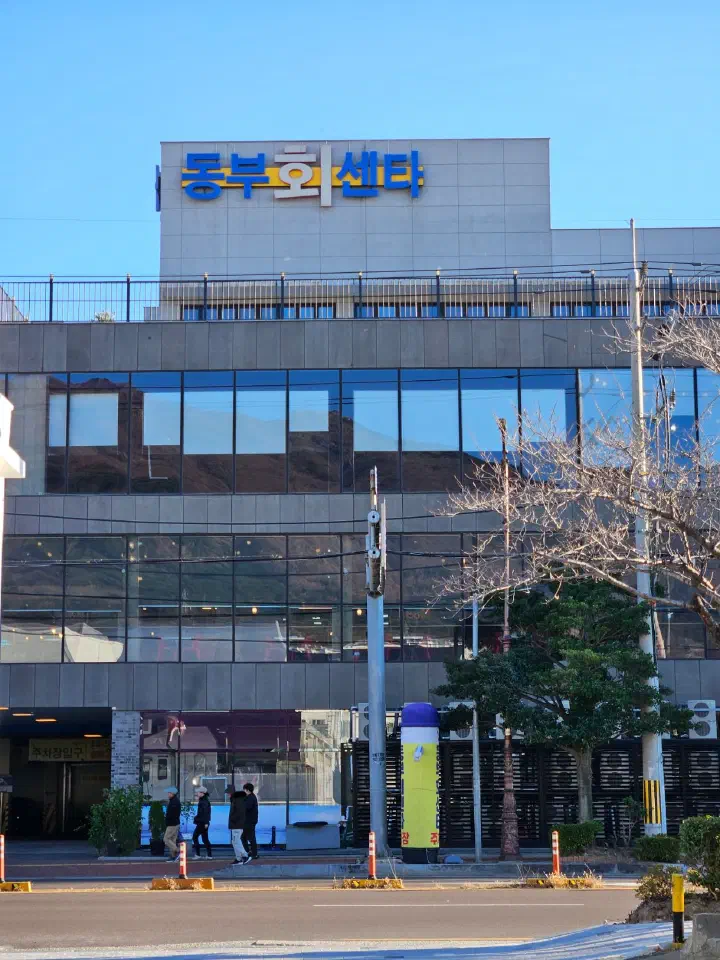
If you ask anyone in Jinhae where to eat raw fish,
this place comes up almost every time.
A small platter of modeumhoe (모듬회) is 11,000 won, a medium is 20,000.
The first time you read the menu you wonder if there’s a typo.
But the portions are generous, and it doesn’t take long to see why locals keep coming back.

What kind of place it is
Dongbu Hoe Center sits in the Idong area of Jinhae, near the local Homeplus.
This isn’t a small fish restaurant - it takes up a whole three-story building.
People half-joke that it might be one of the largest single hoe restaurants in the country.
It started years ago in a smaller spot in the Pungho-dong area,
then moved here and put up this big building.
There are no franchise branches, so this Jinhae location is the one and only.
The first floor holds the tanks and the takeout counter,
and the dining happens up on the second and third floors.

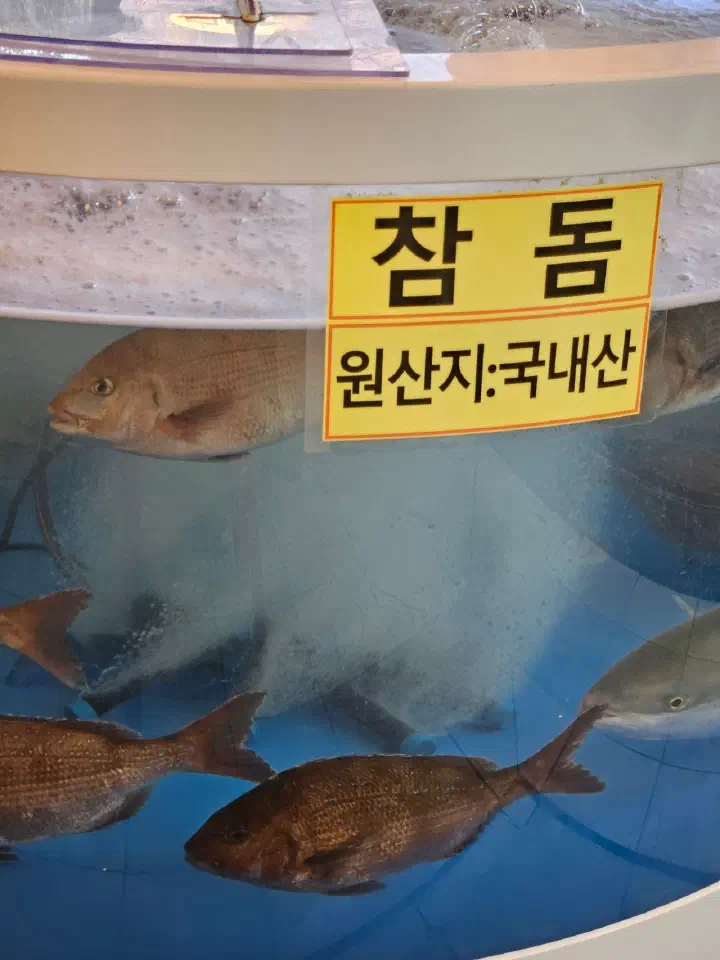
The ground-floor tanks are packed with sea bream, flounder, rockfish,
and also snow crab, abalone, and live octopus.
Delivery trucks pull in several times a day, so the turnover is fast -
at this scale, freshness more or less takes care of itself.
The basics
- Address: 5 Cheonja-ro, Jinhae-gu, Changwon, Gyeongsangnam-do
- Phone: 055-541-0932
- Hours: 11:30 - 22:00 (last order 20:20)
- Break time: 15:00 - 16:00 on weekdays, 14:30 - 16:00 on weekends
- Closed: every Tuesday (dining room closed; takeout still available)
- Parking: building lot (expect a queue at peak hours)
📍 View Dongbu Hoe Center (동부회센타) on Google Maps →
There’s a mid-afternoon break, so the kitchen pauses roughly between 3 and 4 pm.
Just avoid that window and you’re fine.
A quick note for visitors from abroad: like almost everywhere in Korea, internationally issued cards work here without trouble, and there’s no tipping - staff may actually be confused if you try. English isn’t really spoken, but ordering is easy: the menu has photos and prices, and you can point to what you want.
Modeumhoe first - quantity over decoration
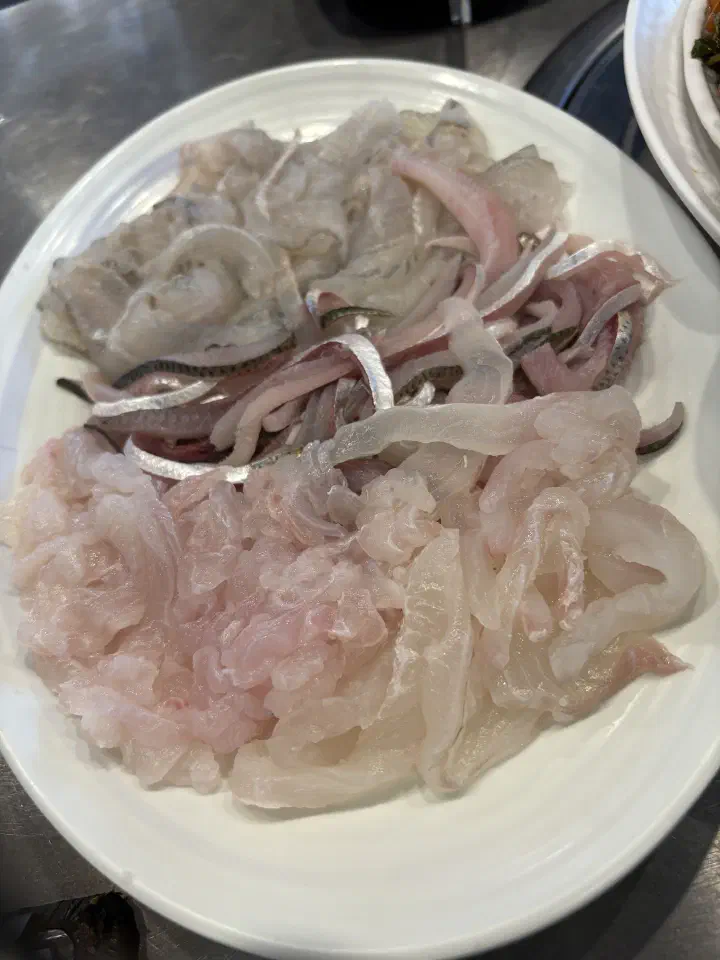
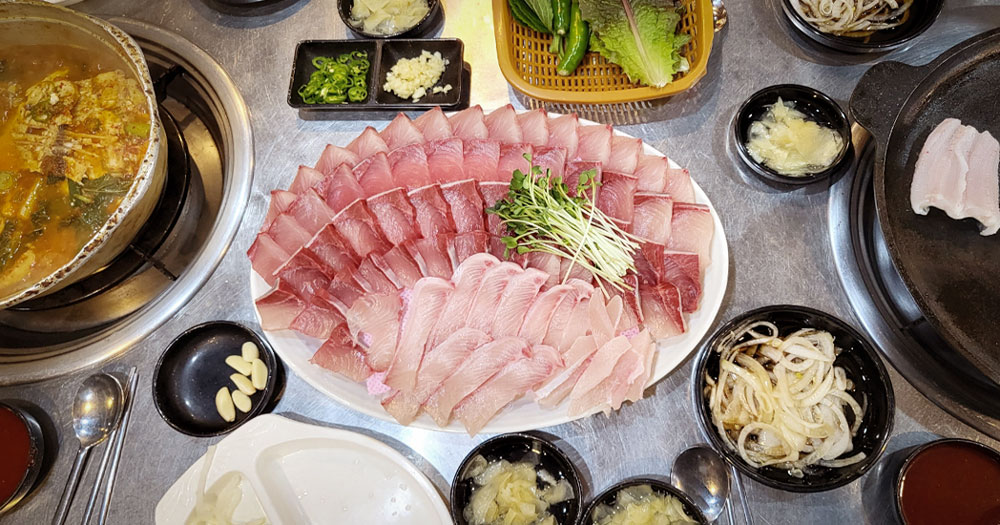
The signature dish is the modeumhoe, the assorted sashimi platter.
Small 11,000 won, medium 20,000, large 30,000, extra-large 40,000.
Two adults do well with a medium; three or more should go for the large.

This place doesn’t spend money making the plate look fancy.
That budget goes straight into the amount of fish, so the platter comes piled high.
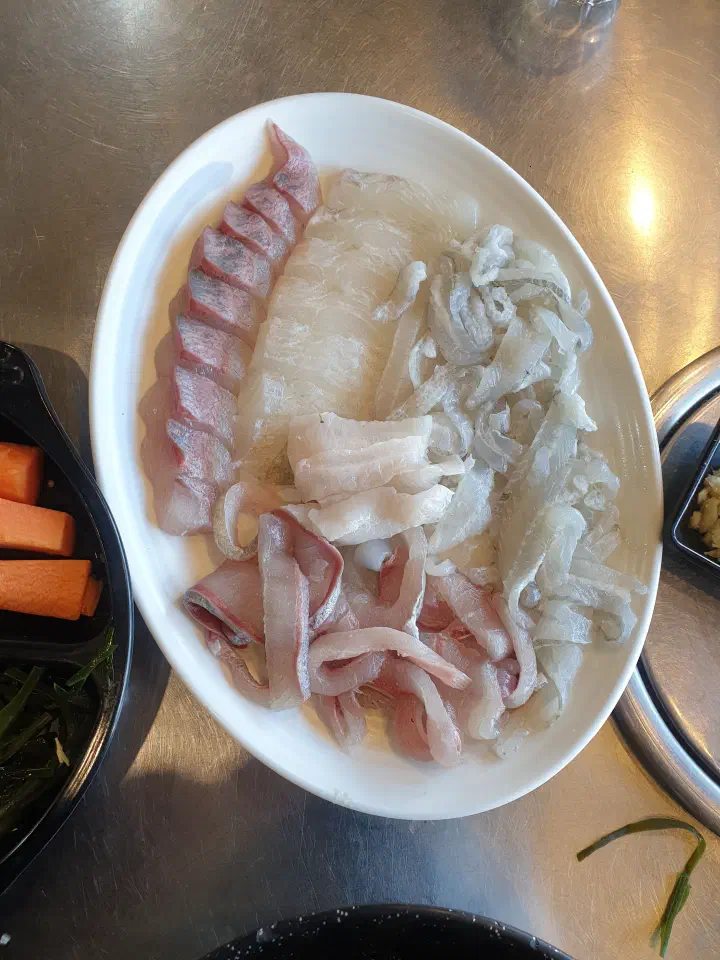
You’ll mostly get white fish - flounder, sea bream, rockfish, mullet -
cut on the thick side, so there’s a real bite to it.
One honest heads-up: order the large and a good share comes as sekkosi (세꼬시),
thin slices cut through the bone.
If that’s not your thing, just ask for it sliced thick (“dukkeobge” / 두툼하게) when you order.
It’s a common little surprise for first-timers, so it helps to know in advance.
Daebangeo in winter
The fish changes with the seasons, which is half the fun of coming back.
Flounder and mullet in spring, conger eel in summer, gizzard shad in autumn,
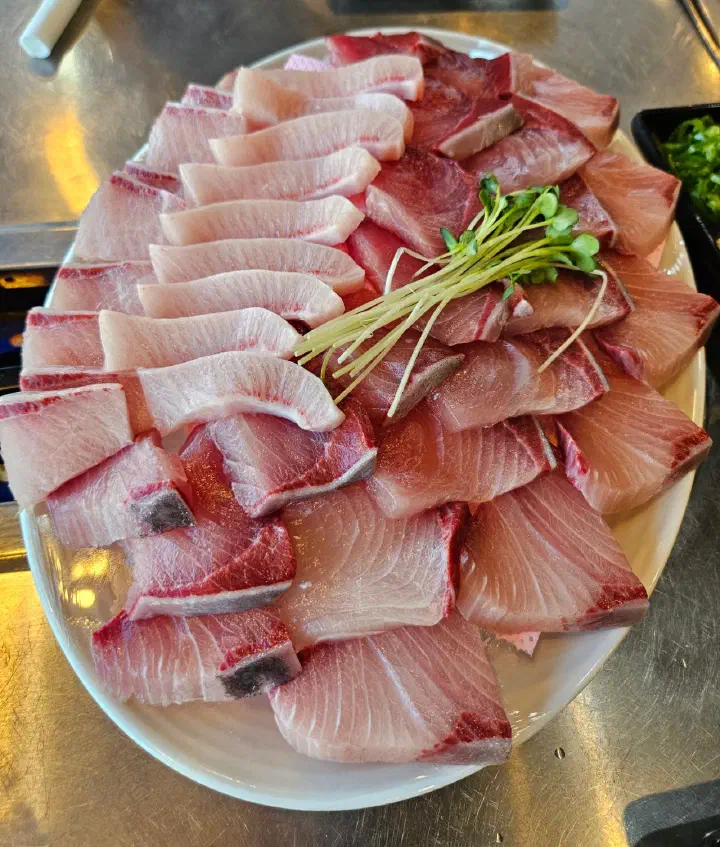
and big winter yellowtail - daebangeo (대방어) - in the cold months.

The winter daebangeo, around 50,000 won for a large,
comes thick-cut and rich with fat.
It tastes something like tuna crossed with mullet - nutty and smooth -
so it’s an easy entry point even if you’ve never had yellowtail before.
Maeuntang is practically part of the meal
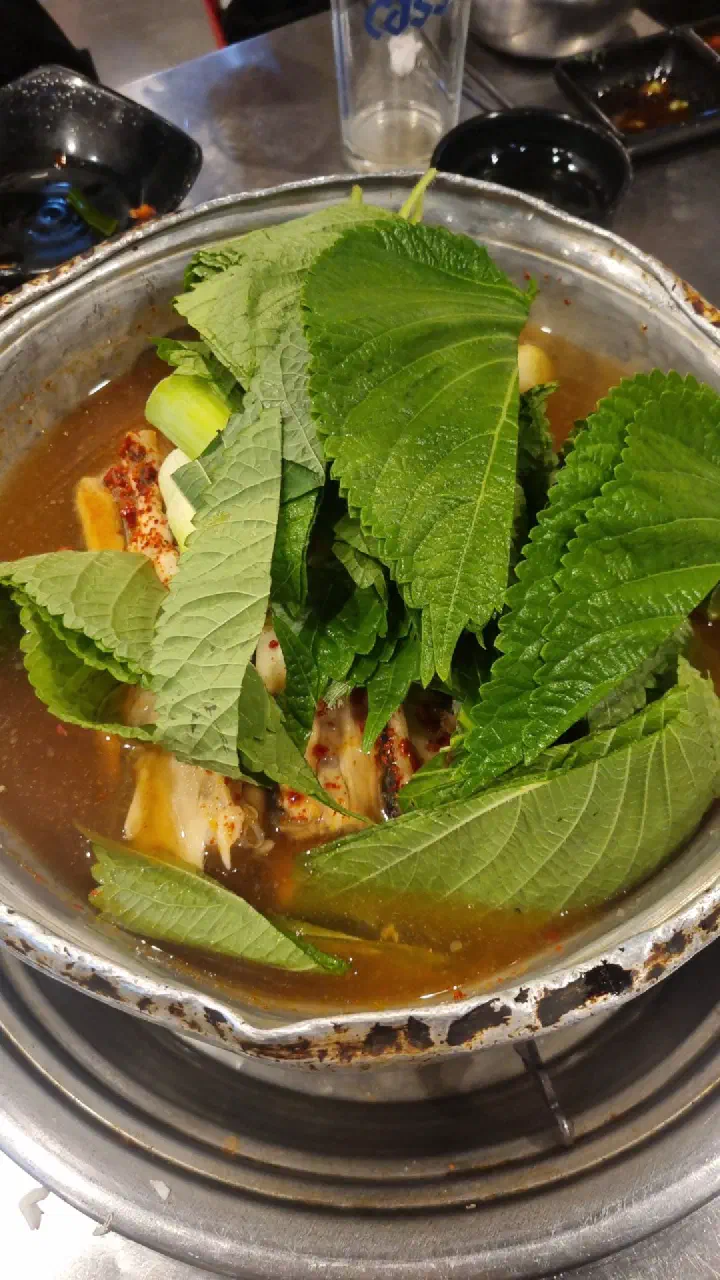
Almost as talked-about as the fish is the maeuntang (매운탕), the spicy fish stew.
It’s a 6,000 won clear-broth version, and the price belies how full the pot is.

A whole fish goes in, bones and all,
and the longer it simmers the deeper the broth gets.
Regulars swear by adding a little garlic, fresh chili, and soybean paste,
then letting it boil hard for a richer flavor.
It can taste a touch mild at first, but it rounds out as it cooks.
Finish your fish, then close the meal with a bowl of this and you’ll leave full.
A small warning on spice: Korean “spicy” already runs hot, and this stew can hit harder for visitors not used to it - go in ready.
Mulhoe and shellfish are worth a look too
In summer, people come for the mulhoe (물회), cold raw fish in a tangy iced broth.
It runs from 23,000 won for a medium jabeo (mixed-fish) mulhoe through
mixed-seafood, sekkosi, and gizzard-shad versions.
This isn’t the kind with a few slices floating on top -
it’s loaded with fish and shellfish, almost a dish in itself.
The portion is so big you put on a plastic glove and mix it by hand,
and two people sharing a medium will likely have some left over.

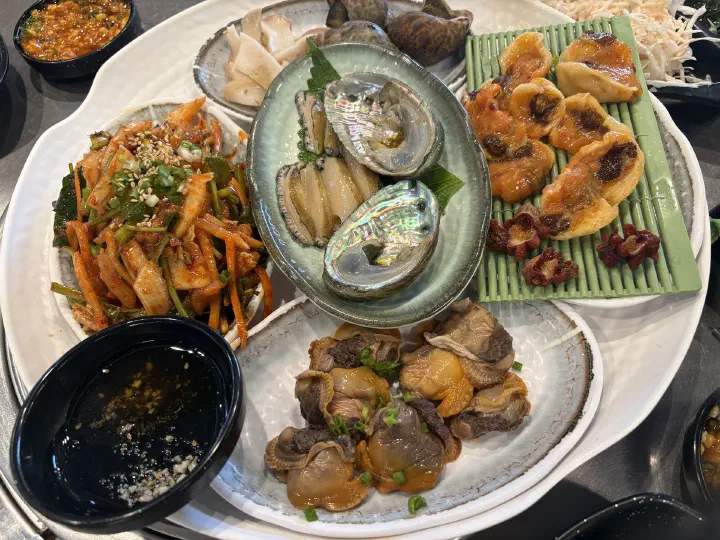
You can also order shellfish à la carte.
Seafood platter 20,000 won, sea squirt 8,000, live octopus 15,000,
plus grilled clams, scallops, abalone, and eel.

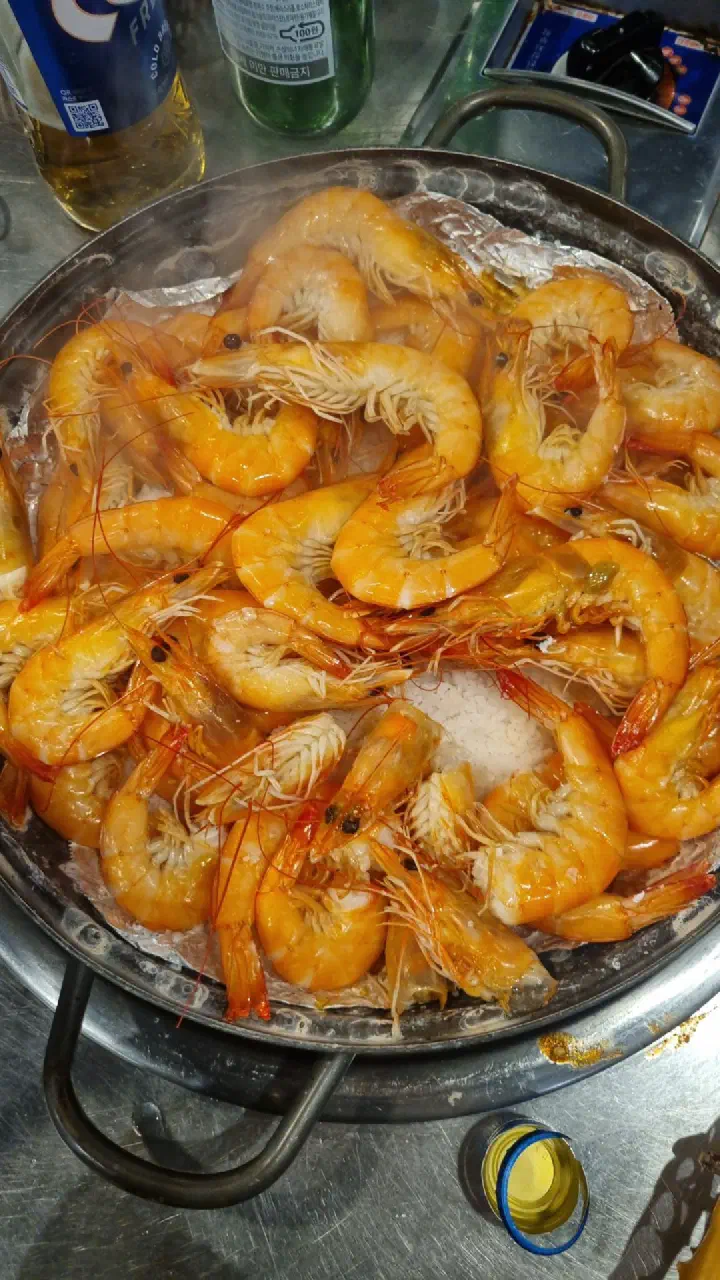
In autumn, plenty of tables are grilling plump fresh shrimp.
Crisp the heads up and they make a great side with a drink.

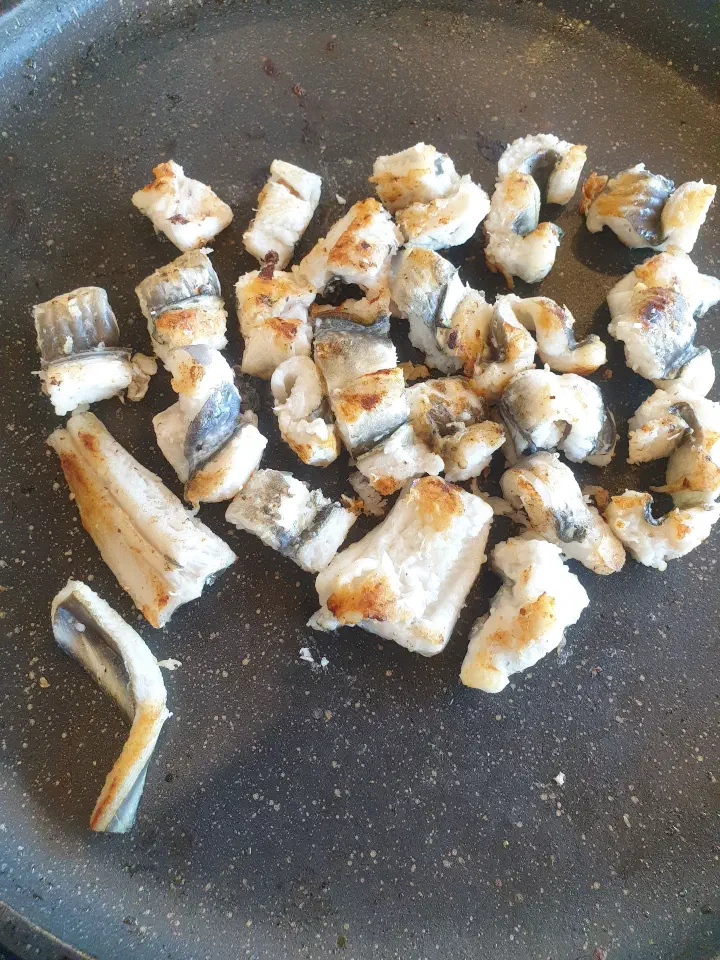
Grilled eel is 14,000 won for half a kilo, 28,000 for a full kilo.
Selling by the half-kilo is one of this place’s real strengths -
you can sample several things in small amounts.

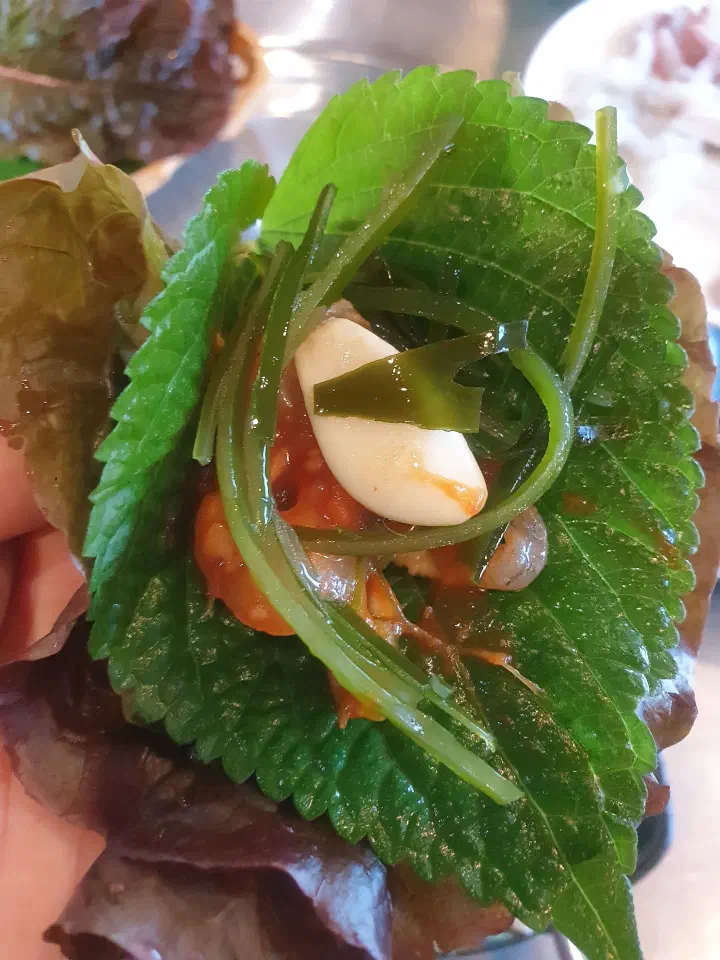
Wrap a piece of grilled eel in a perilla leaf with a slice of garlic
and you get a heartier counterpoint to the raw fish.
How ordering works
Once you sit down, you order yourself from the kiosk on the table.
A serving robot brings the food, and you pay all at once on the way out.
There are no free side dishes laid out; instead there’s a 2,000 won per person table charge.
In return, the wrap vegetables, drinks, water, and alcohol are all self-serve.
Soju and beer are 3,000 won each, which keeps the bill friendly -
one more reason locals keep this place on rotation.

With kids, the gyae-bibimbap (crab-roe rice bowl, 2,000 won) is handy -
it comes with seaweed, flying-fish roe, and sesame oil, easy to mix into rice balls.
For children who don’t eat raw fish, live octopus, grilled shrimp, or eel make a fine meal.
Waiting and parking - worth knowing first
Big as it is, this place draws crowds, so there’s almost always a wait.
The key is to put your name in remotely through the Tabling app before you arrive.
You get a six-digit code, then enter it at the machine in the store to hold your spot.
Saturday around 6 pm is the busiest, and waitlist registration can even close then.
Still, the hall is huge and turns over fast -
even with number 54 ahead of you, you’ll often be seated in under an hour.
For a calmer visit, even on weekends, early afternoon around 1 pm or right after the break is quieter.
The building has a large lot, but cars line up for it at peak times.
When it’s full, parking at the nearby Idong stadium lot and walking over is an easy backup.
A practical tip in Korea: Google Maps can be unreliable for local directions, so Naver Map or KakaoMap will route you better, and the Kakao T app is the simplest way to grab a taxi.
Takeout is popular too, and calling your order ahead lets you skip the table charge entirely.
On weekends takeout can still take an hour or two, so phone early.
The honest downsides
Only listing the good parts would be half a review, so here’s the straight talk.
One, the service isn’t what you’d call warm.
It’s a packed, busy place, and if you expect attentive hospitality you may feel let down.
Two, the dining hall is loud, market-loud.
You can barely hear the next table, so it’s not the spot for a quiet meal.
If that bothers you, takeout is the answer.
Three, there are almost no free side dishes, and there’s that table charge.
If you’re picturing a spread of complimentary banchan, it can feel bare.
But that’s the trade-off for how cheap the fish is - that’s simply what this place is about.
In short
This isn’t where you go for an elegant spread or a quiet room.
But for fresh fish and seafood, piled high at an easy price,
it’s hard to beat in Jinhae.
The large modeumhoe was 30,000 won a decade ago and it still is today -
that kind of price consistency builds a lot of trust over the years.
Soju with friends, a family gathering, even hosting guests -
when you just want a generous spread of raw fish without the worry, this is the one you come back to.