Walk into the Gyedong-gil lanes from Anguk Station and there’s a Korean spot tucked on a second floor that blends right into the old-neighborhood mood.
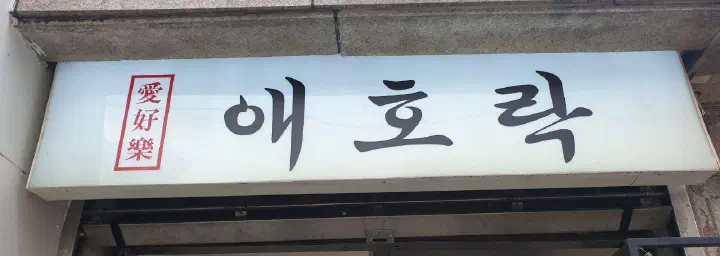
This is Aehorak Anguk (애호락 안국본점), the place that made its name on a single dish: a stew built around young squash.
A stew where squash is the main act sounds a little odd at first.
One spoonful in, though, and it’s clear why this became the house signature.

Who it suits
By day it’s a lunch place; by evening it shifts into a drinking spot.
Lunch pulls in office workers after the well-priced set menus, and dinner fills with small groups pairing food with traditional liquor.
It works for a date, a small gathering, or a family meal.
Bukchon Hanok Village is right next door, so it slots neatly into a day of wandering the area.
It sits on the second floor of the building across from the Hyundai Building public parking lot, a straight walk from Exit 2 of Anguk Station. From Exit 3 it’s about a four-minute walk.
For getting around, skip Google Maps for walking and transit directions in Korea – it’s often unreliable. Use Naver Map or KakaoMap instead, and the Kakao T app is the easy way to grab a taxi.
📍 View Aehorak Anguk (애호락 안국본점) on Google Maps →
The dishes, one by one

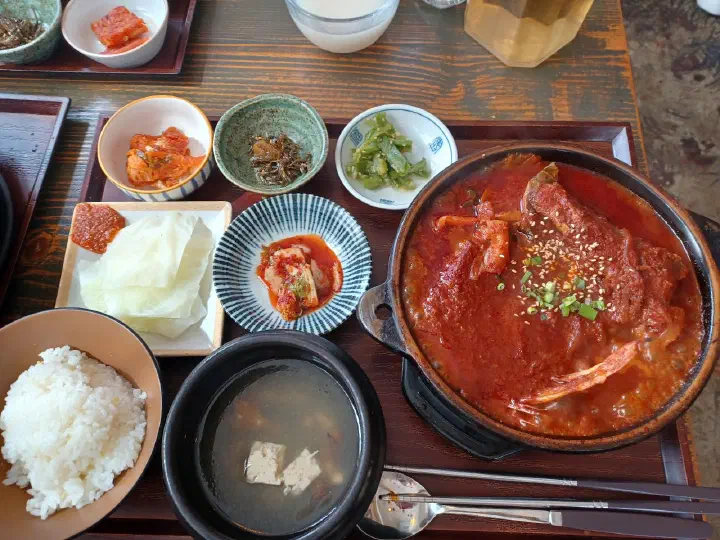
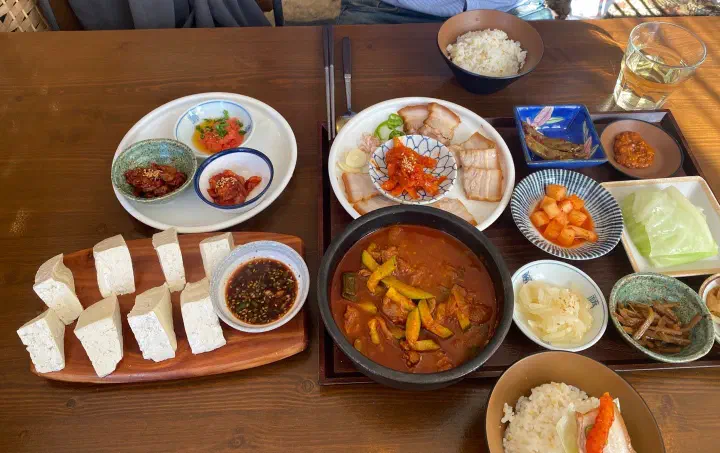
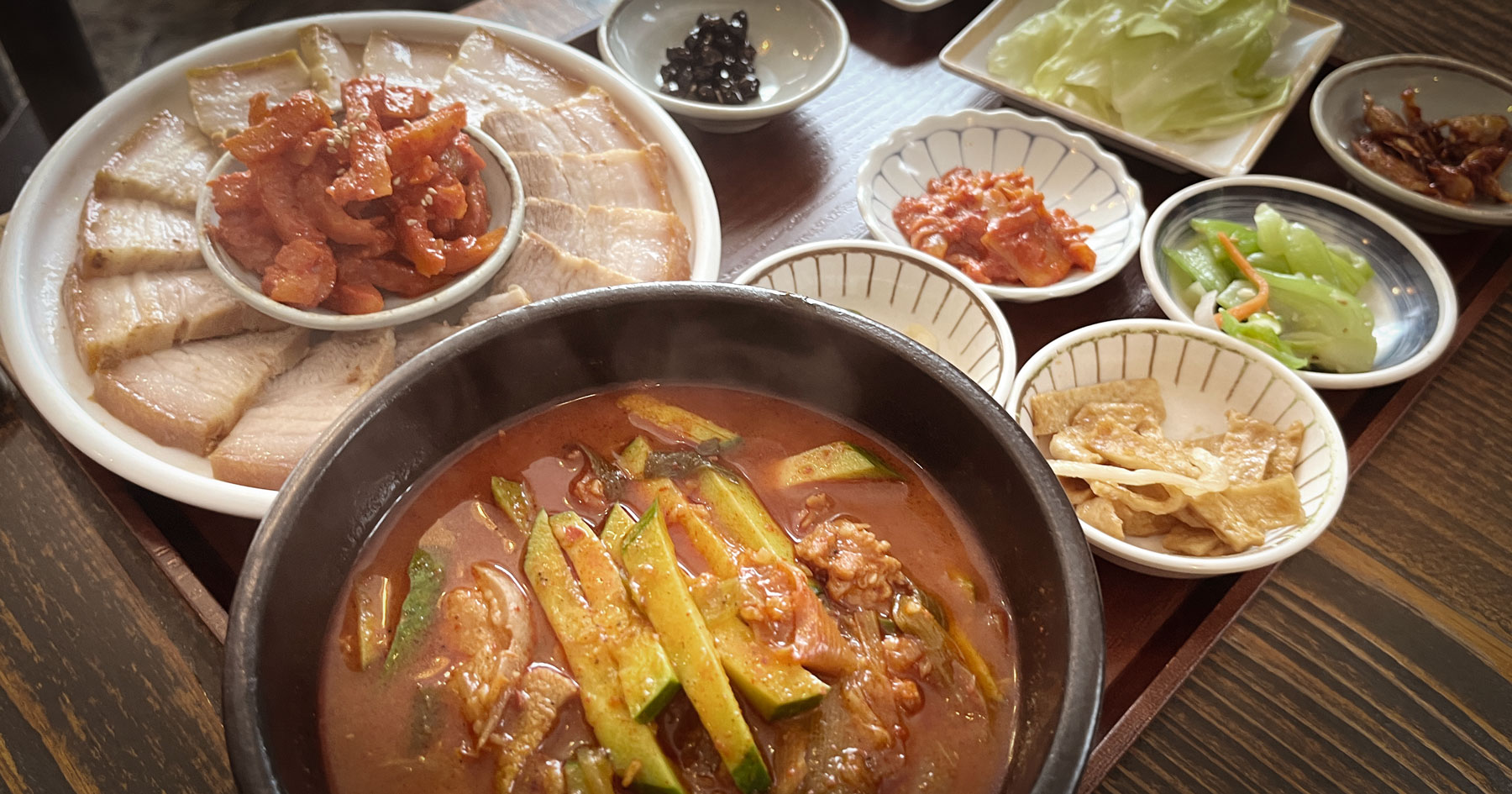
Start with the aehobak-jjigae (애호박찌개), the young-squash stew.
Thin-sliced squash and plenty of pork go in, so the broth turns out deep and rich.
It’s spicy in a measured way – lighter than jjamppong, richer than a soft-tofu stew.
Some regulars compare it to the Gwangju style of squash stew.
The squash stays slightly crisp instead of going mushy, which keeps the texture interesting.
One honest note: the seasoning can swing a bit day to day. Some find it on the salty side, others slightly mild.

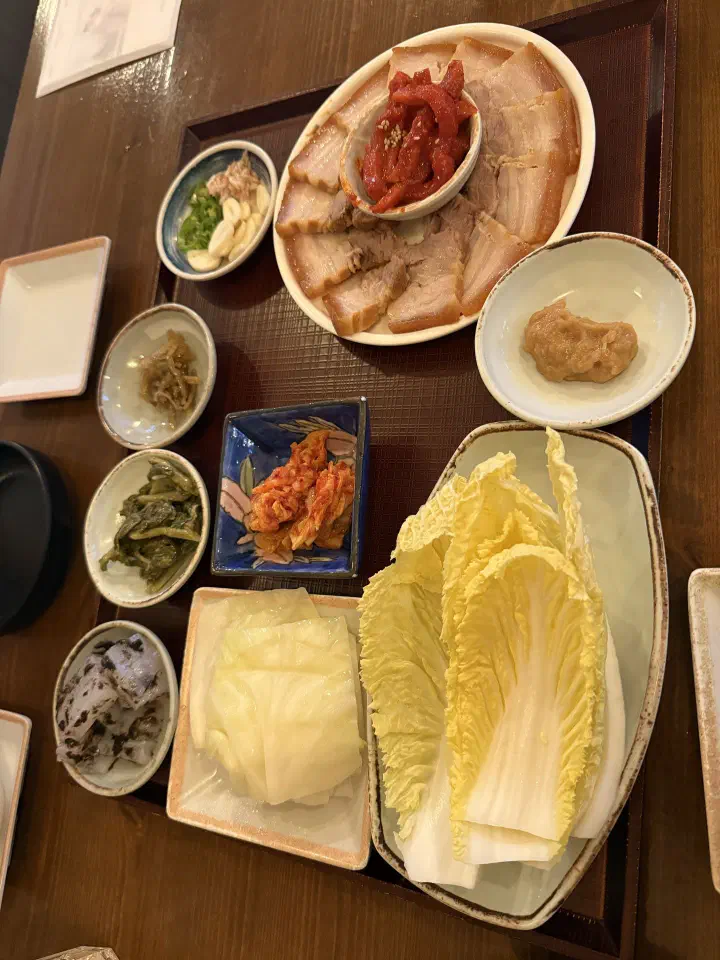
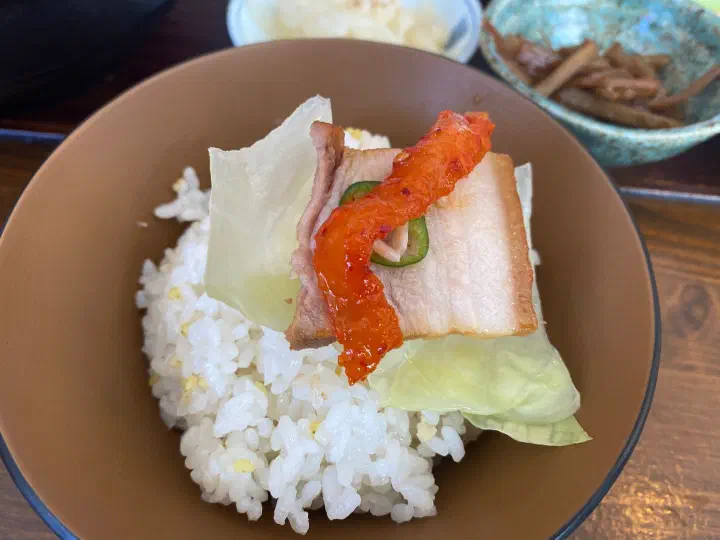
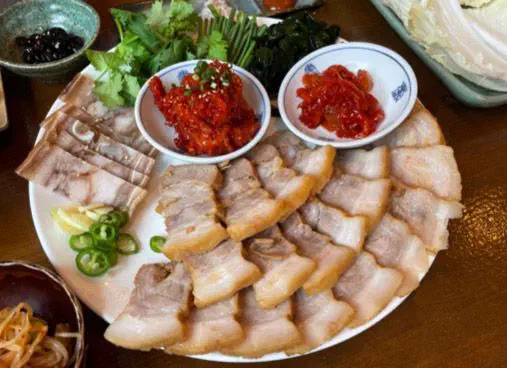
The signature 5-hap bossam (5합보쌈) is a looker.
The pork is simmered and aged in country-style soybean paste, so there’s no gaminess – the skin is springy, the lean meat tender.
The pork is good on its own, but the sides are the real story here.
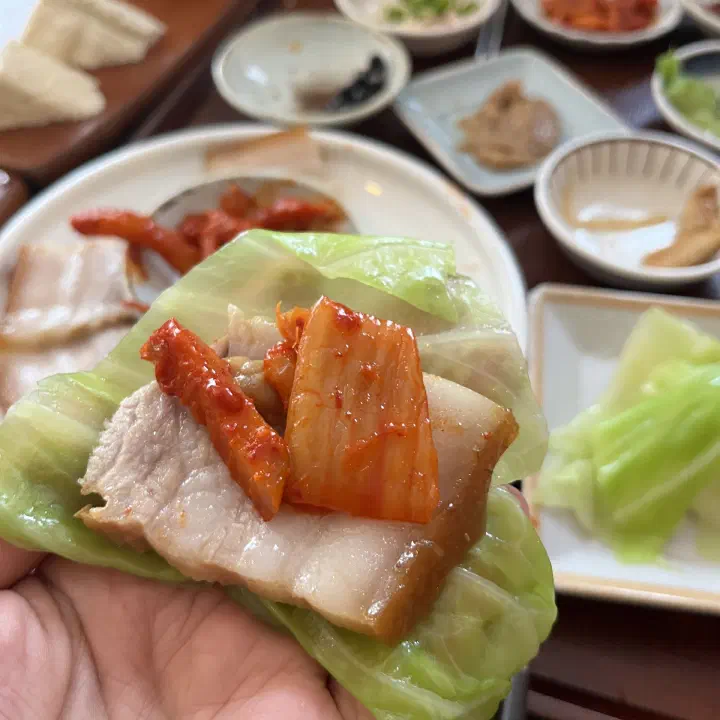
You get a spread of wrappers – seaweed, steamed cabbage, white kimchi, baby napa – plus aged kimchi, and two seasonal seafood items on the side.
That might be seasoned cockles or a chewy pollock salad, and it rotates with the season.
They’ll even bring cilantro if you want it.

Don’t skip the saeng-saeujeon (생새우전), pan-fried fresh shrimp.
Each piece holds two shrimp, and because they’re fresh rather than pre-processed, they’re springy and burst a little when you bite in.
It comes with tartar sauce and a soy-based dipping sauce.
The soy one pairs better when you’re eating it alongside the stew.
A few people find it pleasant rather than dazzling, so set expectations accordingly.

If you like tofu, order the gamasot saengdubu (가마솥 생두부), tofu made in a cauldron.
It’s made from Korean soybeans and sliced to order, so catch it while it’s still steaming – nutty, soft, almost melting.
Top it with one of the three jeotgal (salted seafood: pollock roe, octopus, or pollock tripe) and it doubles as a drinking snack.
There’s also a semi-dried grilled fish flown in from Sokcho three times a week, plus stir-fried pork, bulgogi, and abai-sundae.
Lunch sets and weekend specials

Weekday lunch is where the value is.
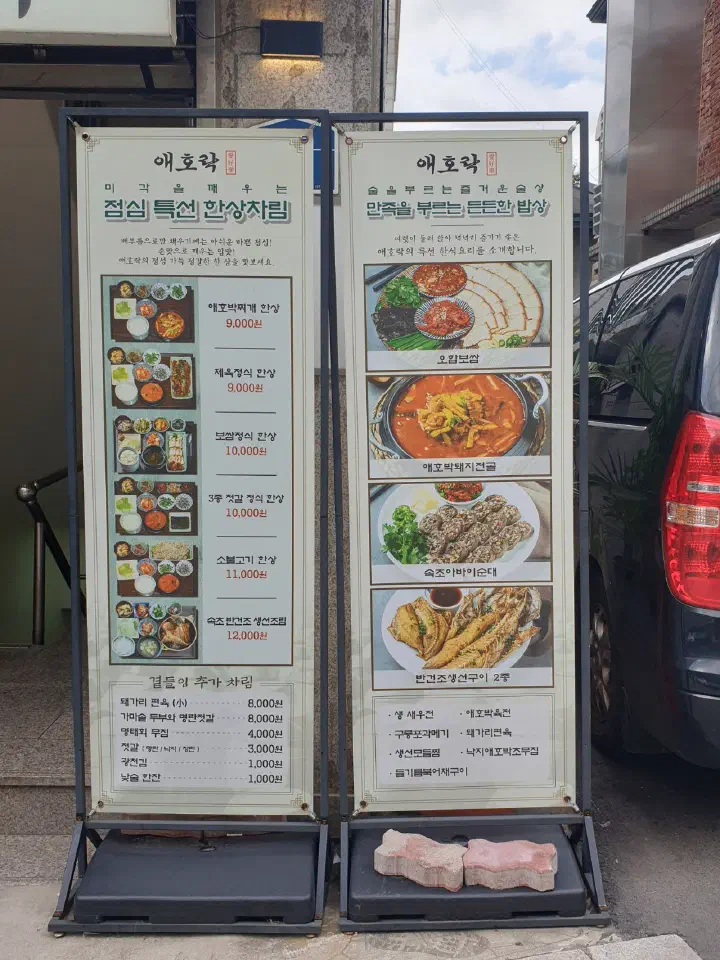
The squash stew set runs 11,000 won, bossam set 12,000 won, stir-fried pork and the three-jeotgal set around 11,000 won, bulgogi 13,000 won.
Each comes with the soup of the day, and rice and side dishes refill for free.
Lunch sets are served until 2:30 p.m.
The rice deserves a mention – cooked fresh in a pressure cooker, fluffy, and a perfect match for that rich stew.

On weekends and holidays the lunch specials replace the weekday sets: bundles of bossam, the squash stew, and tofu in the low-to-mid teens (won, thousands), with unlimited rice. Weekends generally require a minimum of two orders.
For dinner or a group, the full course (four or more) or the couple/friends set lets you sample a bit of everything.
The room and a drink

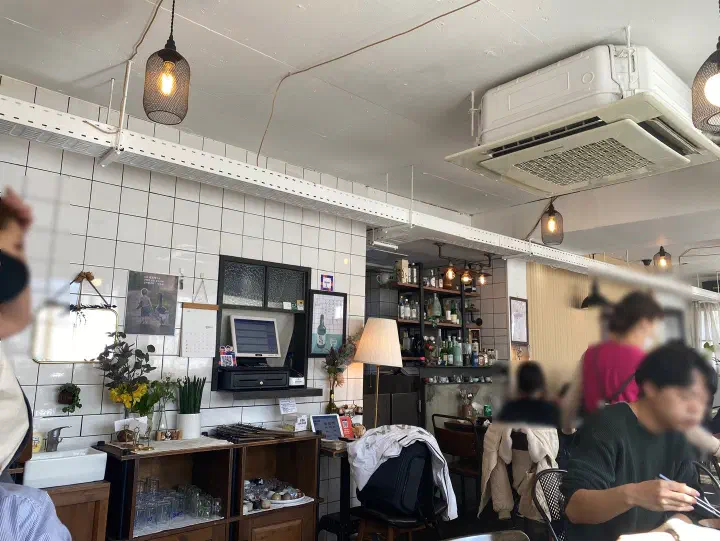
The interior is a converted hanok-and-house space with a modern touch.
Quiet jazz plays, and the curtains, frames, and lamps give it a café-like ease.
That said, there are only about six or seven tables, so it isn’t roomy.
Tables sit close together, so you’ll hear your neighbors, and the music runs a touch loud.
If you need a quiet conversation, reserving ahead helps.
In summer it can feel a little warm even with the AC on.

It’s a solid spot for a drink, too.
Makgeolli by the glass is just 1,800 won – easy to pair with lunch – and the house-made makgeolli comes by the liter, crisp with real fizz.
There’s a good range of traditional liquors and regional makgeolli to pair with the food.
A quick note for visitors: nearly every restaurant in Korea takes internationally accepted credit cards, so card payment is no worry here. There’s no tipping culture, and leaving a tip can actually fluster the staff. English isn’t always spoken, but ordering is easy enough – and the staff do speak a little.
Parking, waiting, and reservations
If you’re driving, brace yourself a bit on parking.
There’s no lot of its own.
The closest option is the Hyundai Building public parking lot right across the street, about a one-minute walk.
It runs roughly 3,000 won per 30 minutes, so a long meal adds up.
Some people use the Hyundai Gyedong office lot or the Jeongdok Library lot instead.
Waiting is part of the deal here.
Peak lunch and dinner draw a line on both weekdays and weekends.
The office-lunch rush from about 11 a.m. to 1 p.m. is busiest, and on holiday lunches the wait can stretch to 30-40 minutes.
You add your name by hand to a list at the second-floor door.
For a while the first- and second-floor lists got mixed up, which caused some confusion, so reserving is the safer bet.

Reservations open at 11 a.m.
Dinner takes Naver reservations from 5 p.m. (4 p.m. for weekend dinner) for two or more; lunch reservations are only for the full course, four people and up.
The regular lunch sets aren’t reservable – those are walk-in only.
On CatchTable, web reservations open after 1 p.m. on weekdays.
If you’d rather skip the line, the lull around 2-3 p.m. – after lunch, before dinner – is your window. You can usually be seated right away then.
📍 View Aehorak Anguk (애호락 안국본점) on Google Maps →
The bottom line
Aehorak isn’t a place that knocks you out with fireworks; it’s a place that does honest Korean home cooking, plated cleanly.
It had its ups and downs after a 2020 TV feature, and service drew some complaints for a while, but a feature on singer Kang Min-kyung’s YouTube channel put it back in the spotlight – these days it’s packed with international and younger diners.

It’s the kind of place that comes to mind when you want a comforting, filling Korean meal.
Just plan around the tight seating and the wait: book ahead or aim for the quiet hours, and it’s a far more relaxed visit.