When people in Anguk talk about where to get a bowl of noodles, this is the name that keeps coming up.

Shilla Jemyeon started as a line-out-the-door spot in Gyeongju and opened here in Anguk in late 2024. Since then it has quietly become the go-to noodle place around Bukchon.

It’s the kind of restaurant where the building does half the talking. But the food is genuinely divisive, so I’ll keep both the good and the not-so-good in here.

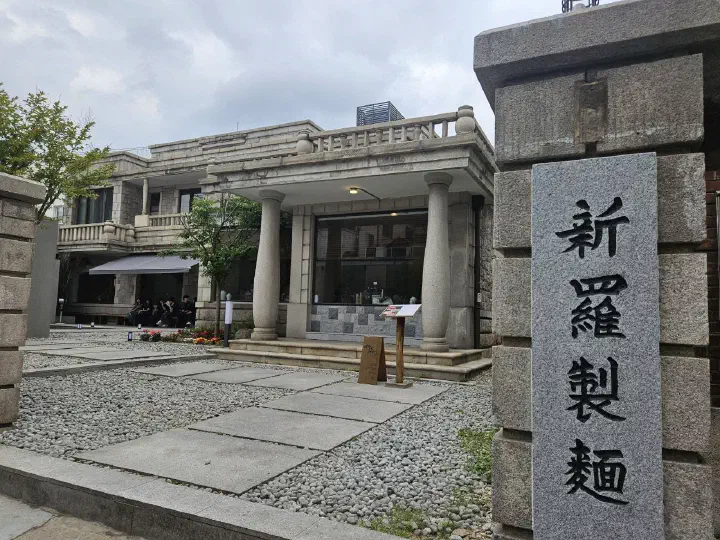
Alley entrance and sign of Shilla Jemyeon Anguk

The basics

  • Address: 19-6 Gyedong-gil, Jongno-gu, Seoul
  • Getting there: about a 3-minute walk from Anguk Station (Line 3), Exit 3, tucked into a side alley
  • Hours: 10:30-21:00 daily (last order 20:20)
  • Break time: 15:30-17:00 on weekdays (no break on weekends/holidays)
  • Parking: no private lot - use nearby paid garages
  • Waiting: remote waitlist through the Tablering app

📍 View Shilla Jemyeon Anguk (신라제면 안국점) on Google Maps →

From Exit 3, head toward the Hyundai Gyedong building and turn into the alley. Map pins land a little vaguely here, but there are signs along the way, so it’s easy enough once you’re close.

One small heads-up: the place right next door, Dotori Garden, also has a morning line, and it’s easy to mistake that queue for this one. The Shilla Jemyeon line is the one further in.

A quick navigation tip for visitors: Google Maps walking and transit directions are often unreliable in Korea. Use Naver Map or KakaoMap instead - they’ll route you here far more accurately.

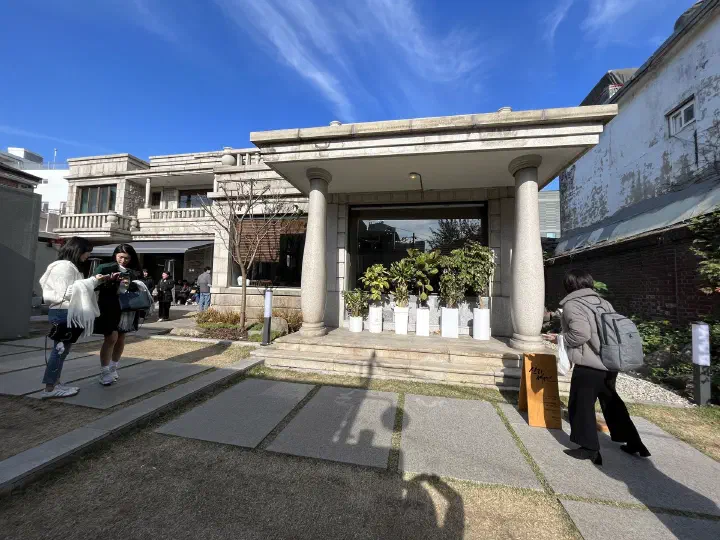
Stone facade of Shilla Jemyeon Anguk

A mansion turned noodle house

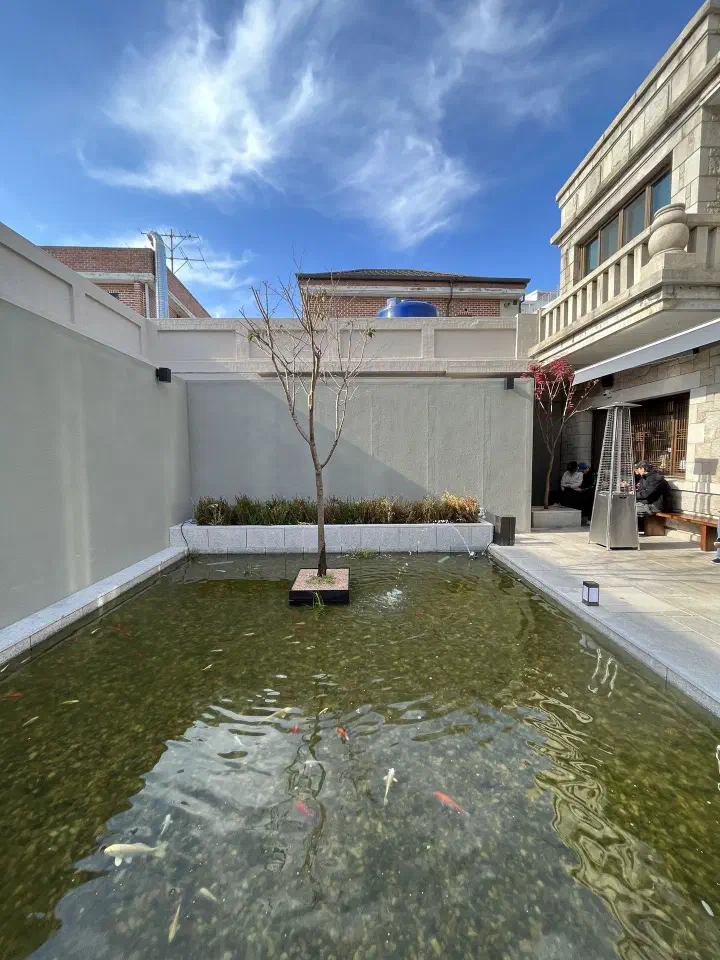
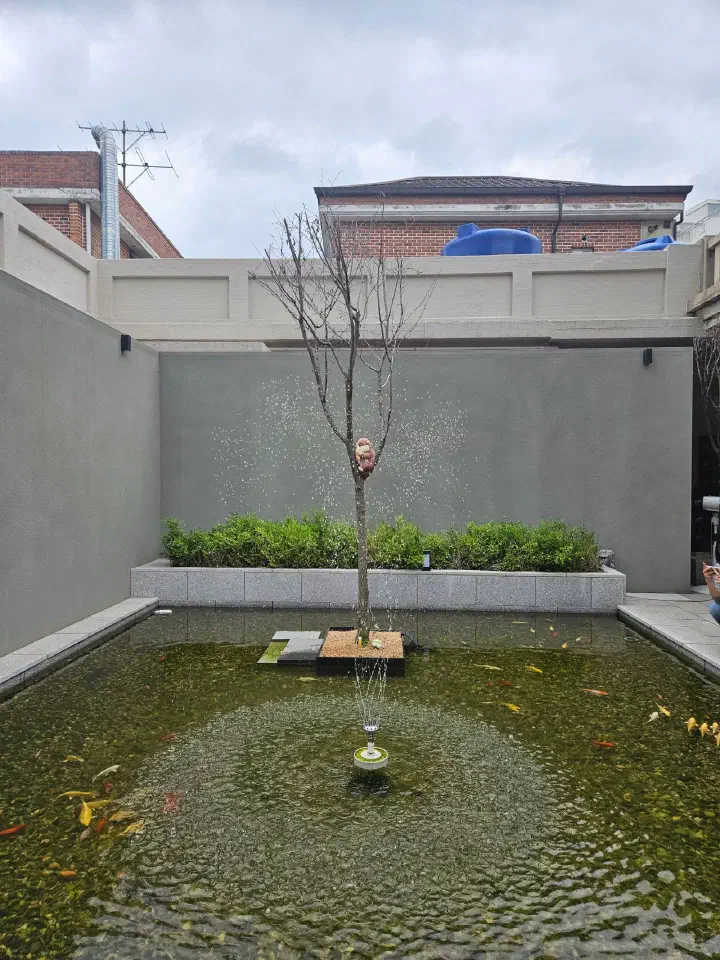
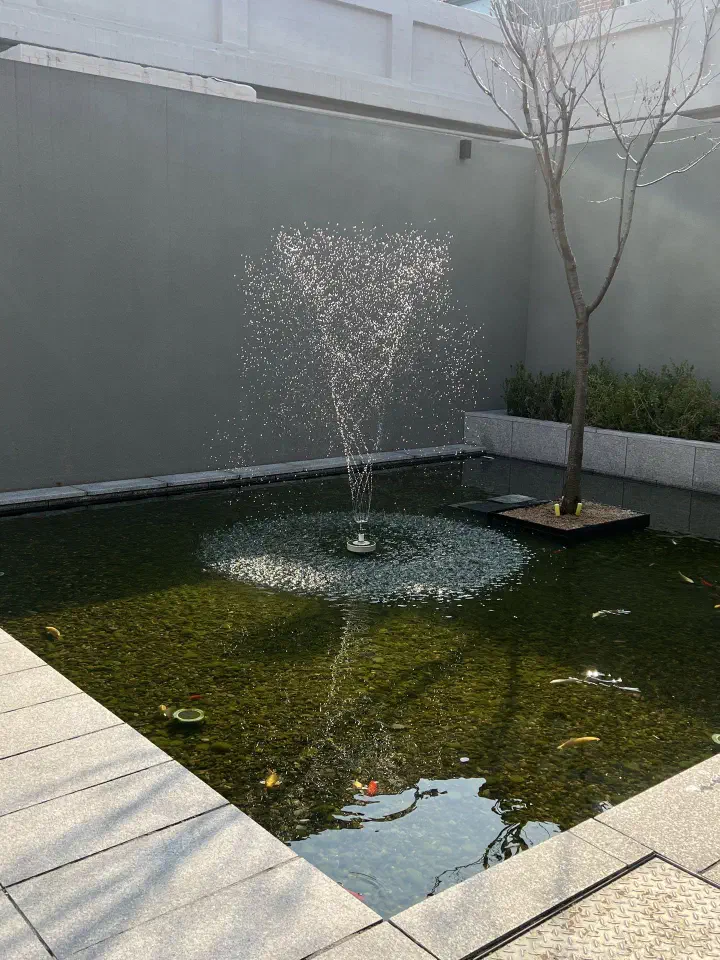
You’d never guess this was a noodle shop from the outside. It’s a former corporate chairman’s mansion, kept mostly intact, so the approach has stone walls, trees, a little fountain, and a pond. There are goldfish in the pond, which is a nice thing to stare at while you wait.

Garden and pond in the outdoor space at Shilla Jemyeon Anguk

Inner courtyard with the Shilla Jemyeon sign

Small fountain in the courtyard of Shilla Jemyeon Anguk

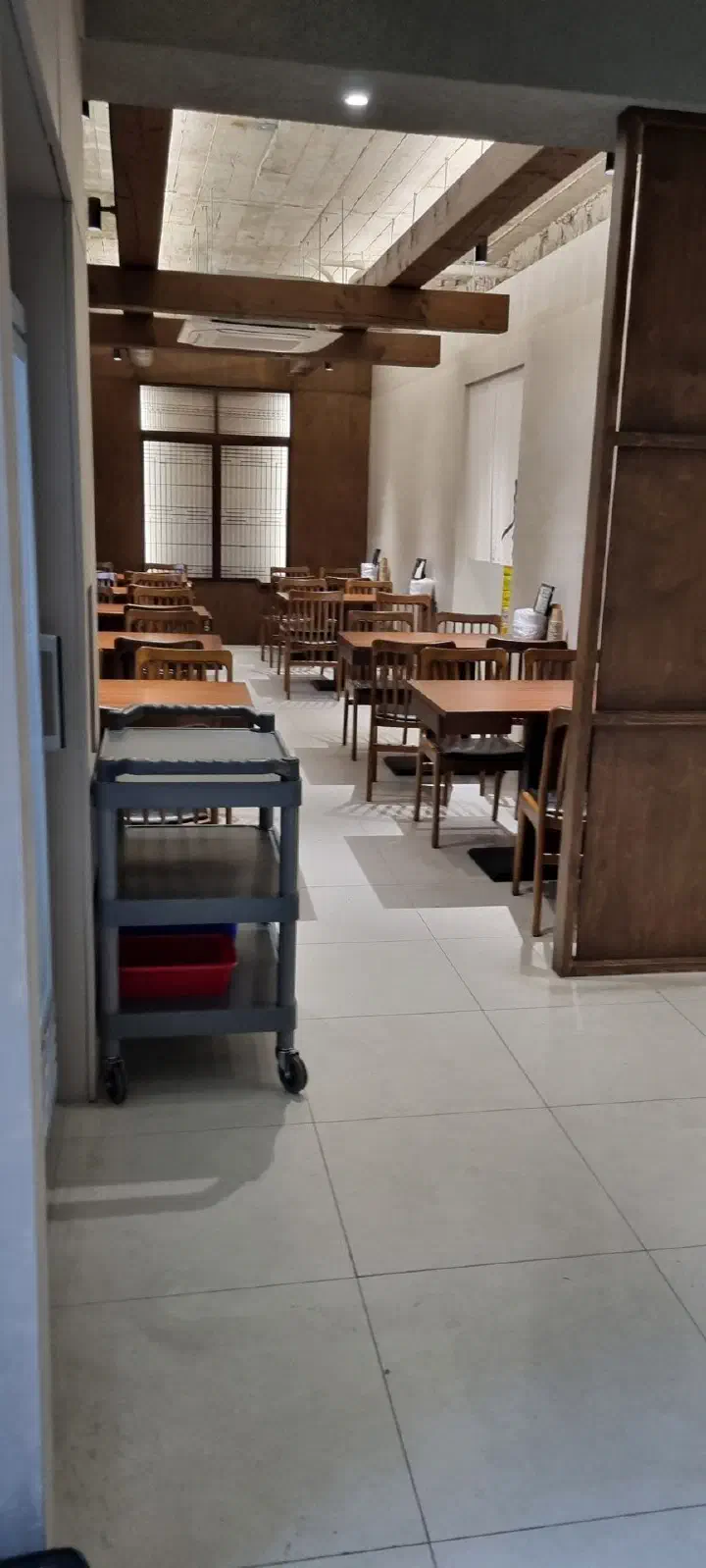
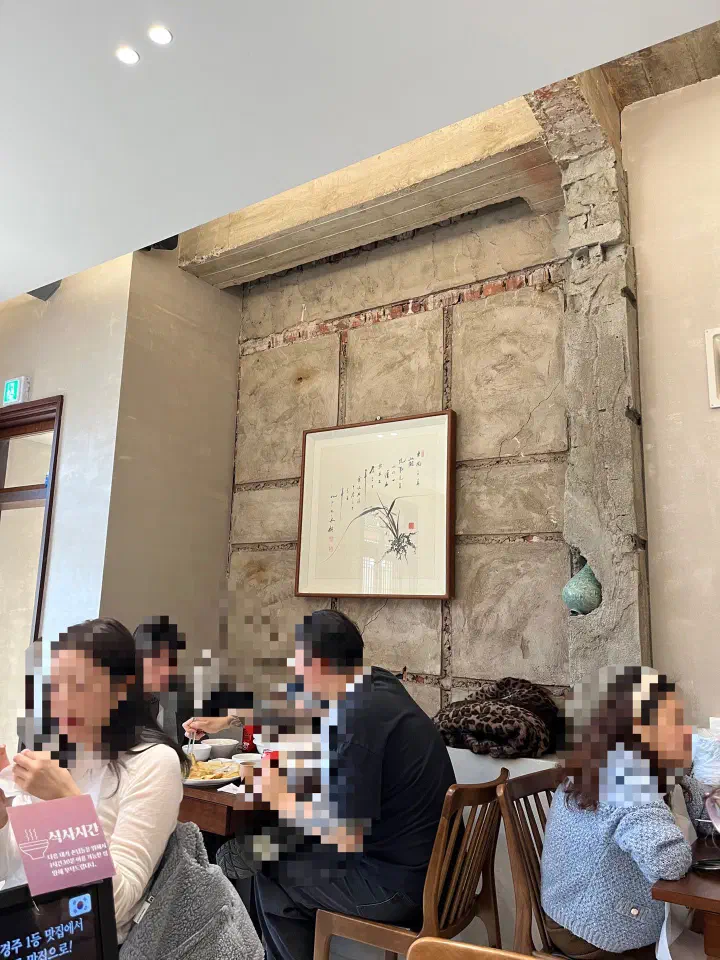
The exterior is stone, but inside it switches to warm wood. The hall is wide with big windows, so it feels more like a polished Korean restaurant than a casual noodle joint. Tables aren’t crammed together, which makes it fine for bringing parents or a larger group.

Wood-toned dining hall at Shilla Jemyeon Anguk

Window seats by the large glass wall at Shilla Jemyeon Anguk

Busy main hall at Shilla Jemyeon Anguk

Kalnakji, and a real warning about the spice

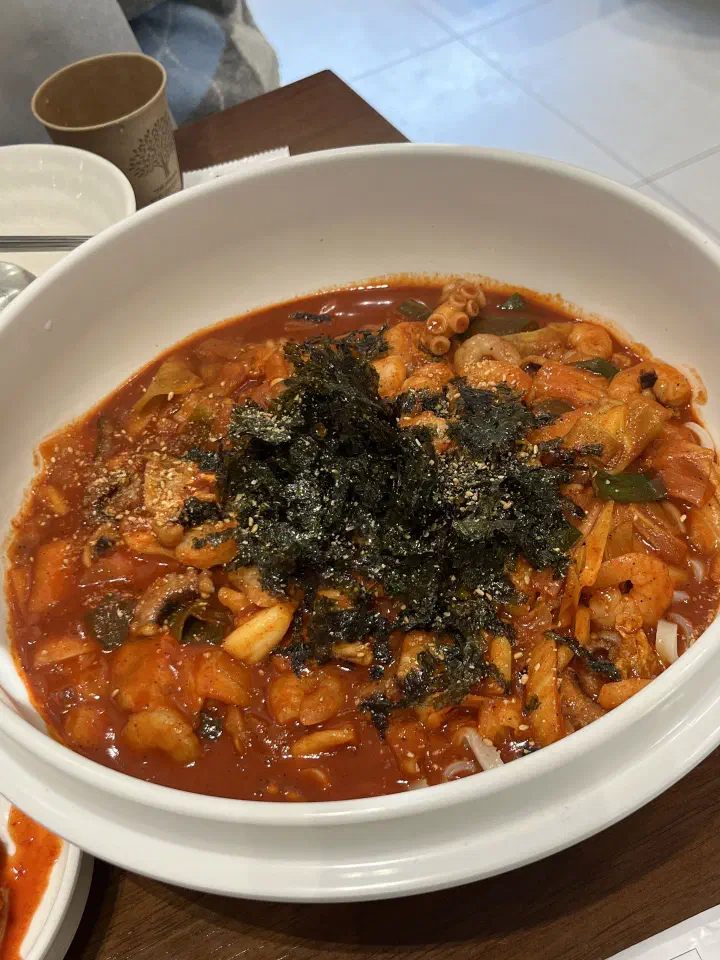
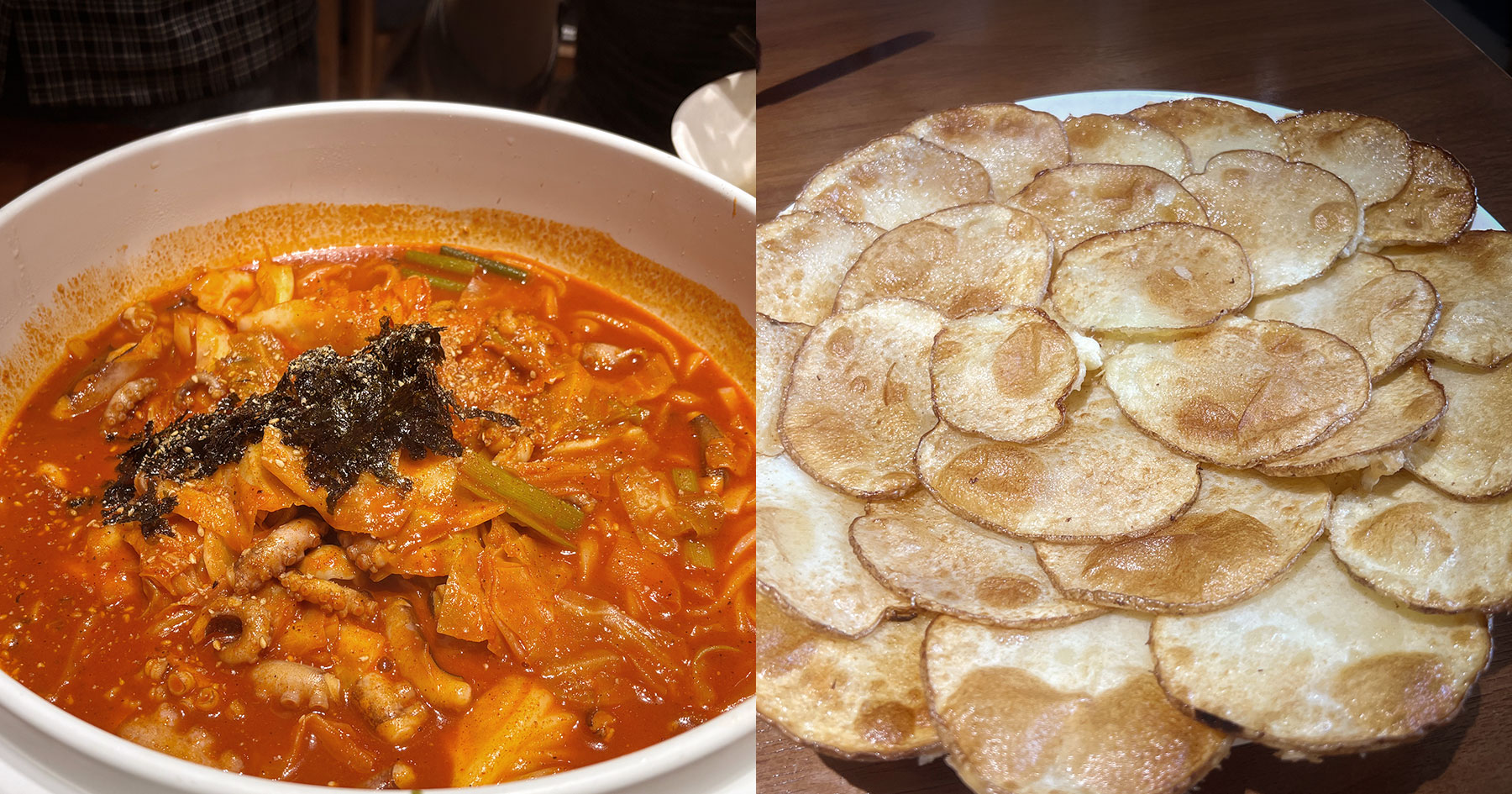
The signature dish is kalnakji (칼낙지), spicy octopus knife-cut noodles. If you come expecting a hot noodle soup, this is something else entirely. It’s a stir-style bowl, knife-cut noodles tossed in a sweet-and-spicy sauce that sits closer to tteokbokki sauce than to broth.

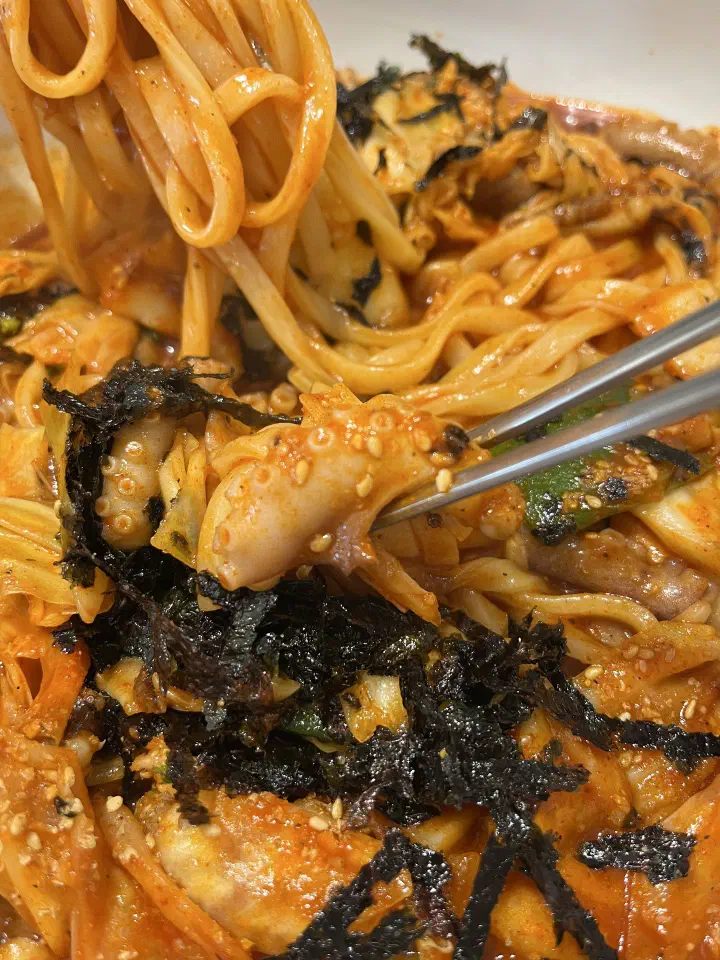
The noodles are flatter and smoother than usual, so the sauce clings well, and there’s a decent amount of plump octopus. Portions are generous - an order for two can stretch to three people.

You choose a spice level: mild, medium, or hot. Here’s the part to know in advance. Even “mild” runs hotter than Shin Ramyun.

And this matters more if you’re visiting from abroad. Korean “mild” is already spicy for many non-Korean palates, and this dish leans into it. Under the layer of dried seaweed there’s a hidden mound of chili paste that comes regardless of the level you picked, so if you’re spice-sensitive, scoop a little of it off before you mix. When in doubt, order mild and brace yourself a bit.

📍 View Shilla Jemyeon Anguk (신라제면 안국점) on Google Maps →

Close-up of kalnakji spicy octopus noodles at Shilla Jemyeon Anguk

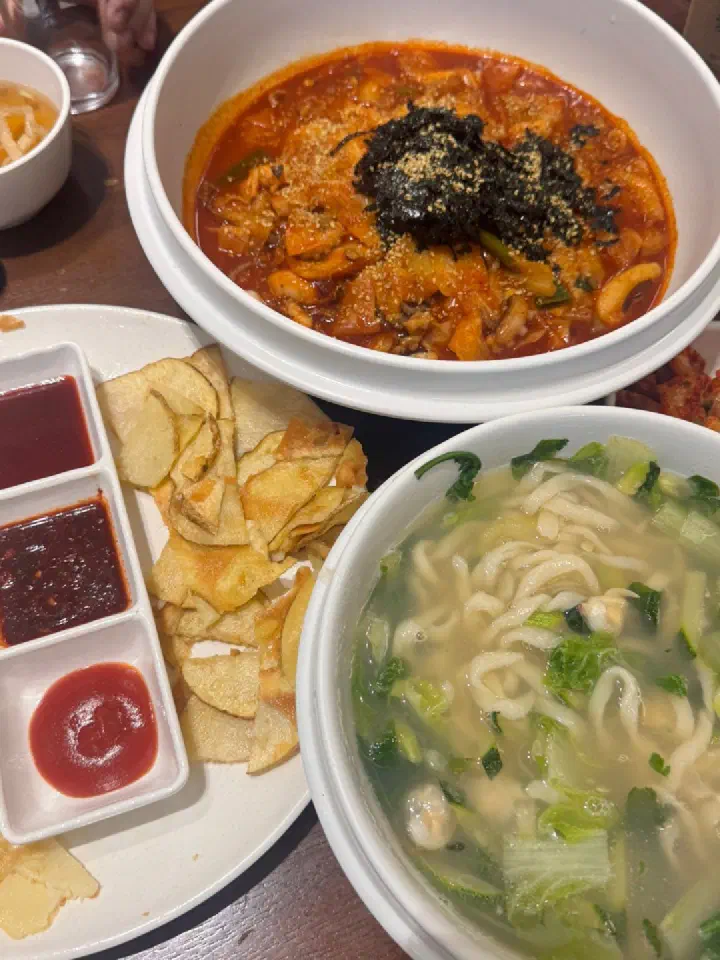
A bowl of kalnakji served with side dishes at Shilla Jemyeon Anguk

Tossing kalnaksae noodles in the sauce at Shilla Jemyeon Anguk

There’s also kalnaksae (칼낙새), which adds shrimp alongside the octopus. It was added in early 2026, sits a bit closer to a stir-fried noodle, and is a good pick if you like shrimp.

The sides are basically part of the meal

Kalnakji is intense enough that eating a whole bowl on its own can wear you out, so most people pair it with a side.

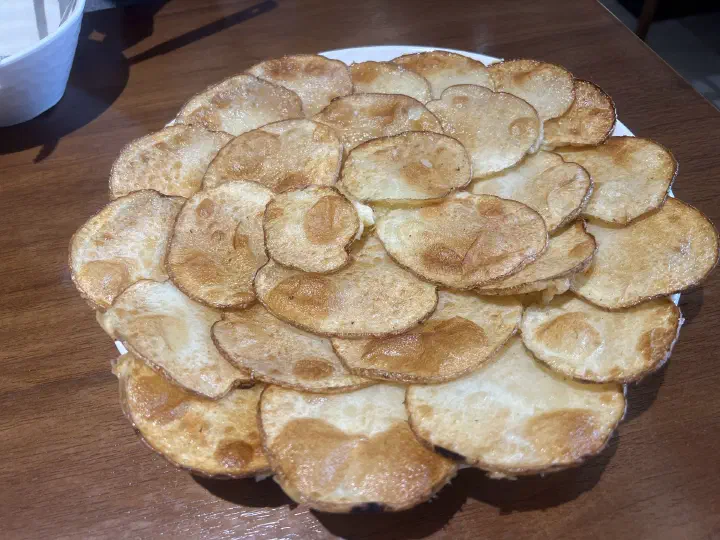
First, the potato pancake (감자전, gamjajeon). Instead of grated batter, the potato is thinly sliced and layered into something that fries up crisp on the outside and chewy inside, almost like a potato chip. It cools the heat of the noodles nicely and is the one dish almost everyone agrees on. It comes with ketchup and holds up even after it cools.

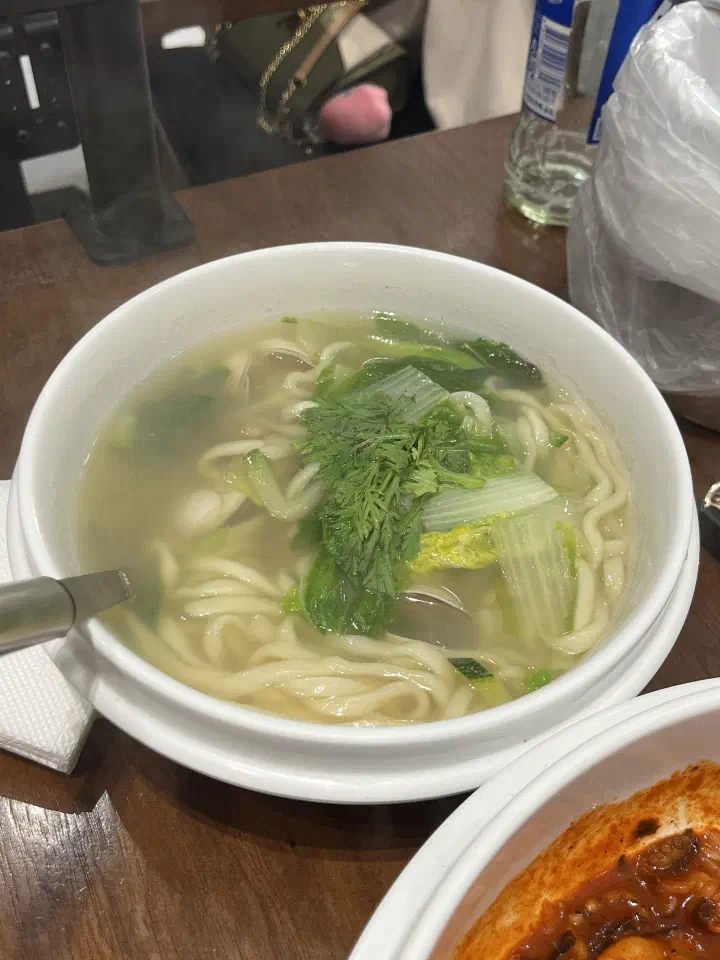
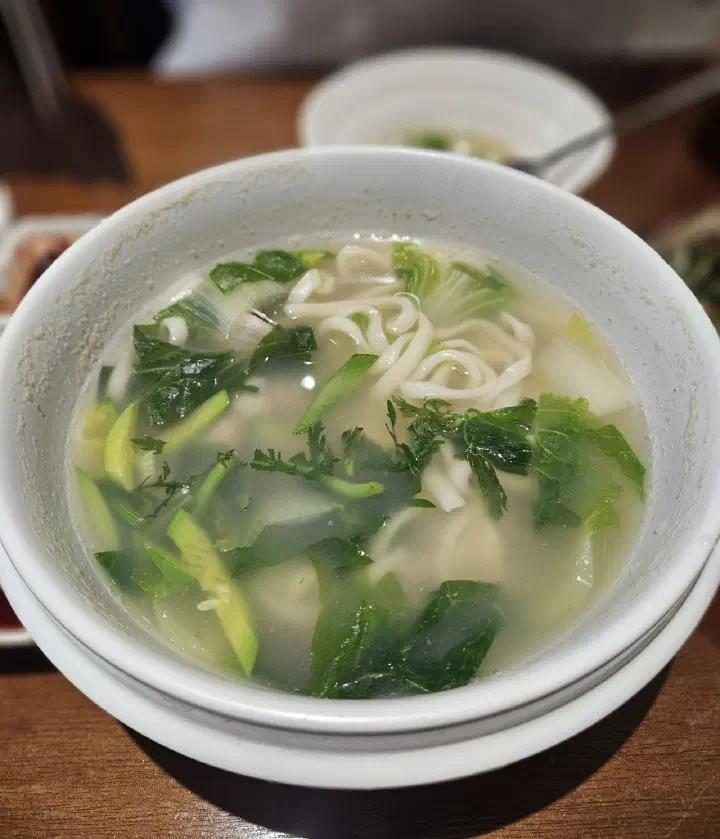
Then dongjuk-kalguksu (동죽칼국수), a clear noodle soup made with surf clams brought in fresh each morning. It’s clean and light, and a spoonful between bites of the spicy kalnakji gives your mouth a break. Note that kalnakji and kalnaksae need a minimum order of two, but the clam soup can be ordered for one, which makes planning easier.

Thinly layered potato pancake at Shilla Jemyeon Anguk

Clear surf clam noodle soup, dongjuk-kalguksu, at Shilla Jemyeon Anguk

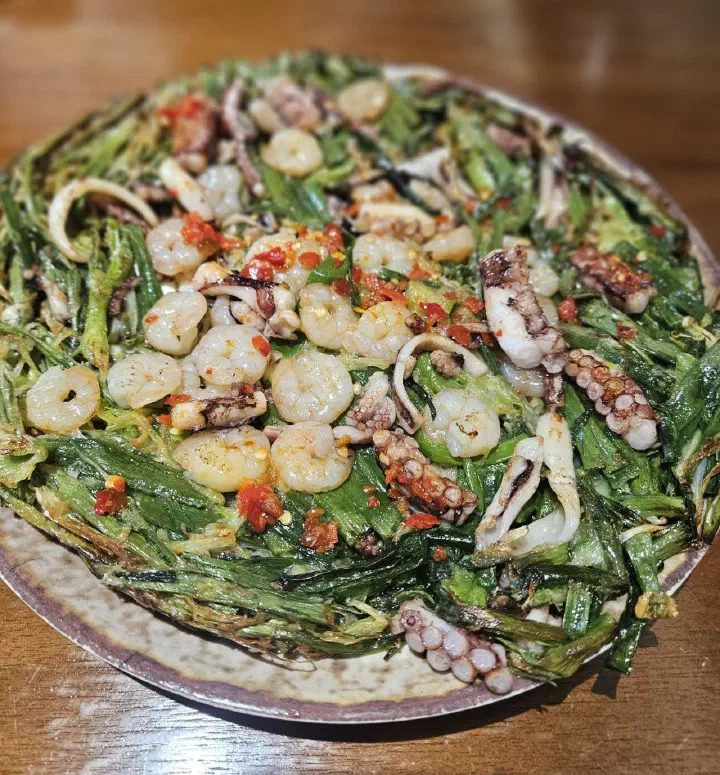
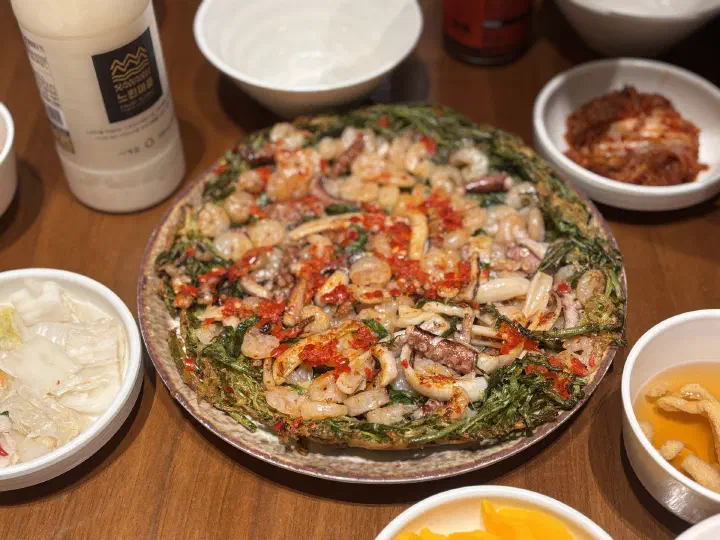
Seafood scallion pancake topped with shrimp and squid at Shilla Jemyeon Anguk

There’s also a seafood scallion pancake (해물파전) loaded with more shrimp and squid than scallion. It’s big and a little oily, so eat it while it’s hot - it gets heavy once it cools.

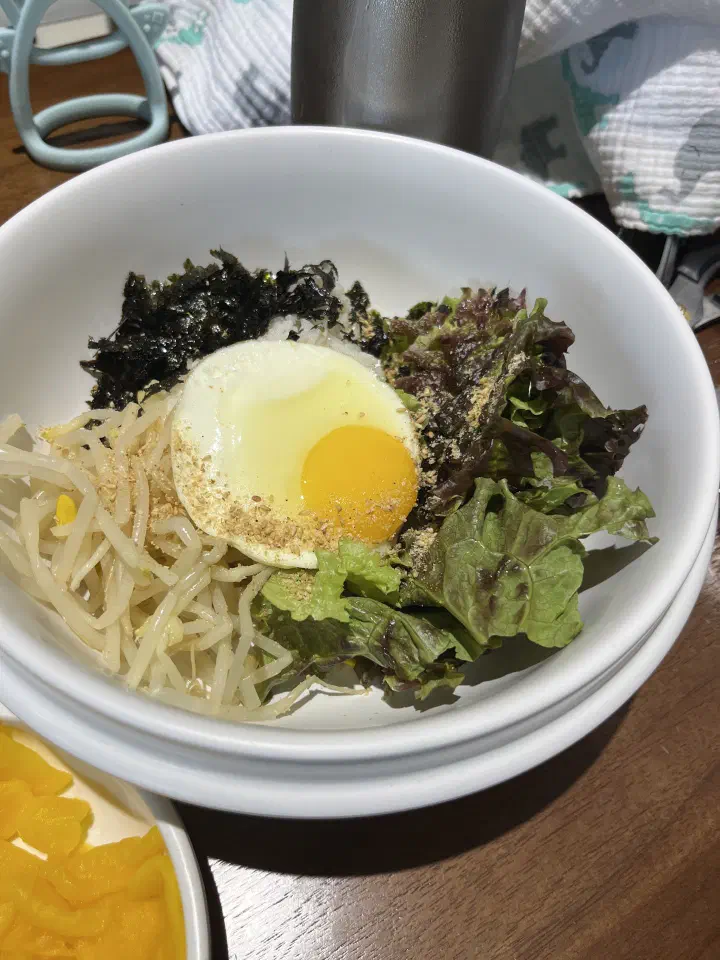
And when you’ve worked through most of the kalnakji, add a small bowl of rice (3,000 won) and mix it into the leftover sauce. Locals treat this as the proper finish; the sauce soaks into the rice and the seasoning balances out. You’ll be very full, though.

Rice mixed into leftover kalnakji sauce at Shilla Jemyeon Anguk

Ordering, waiting, and parking

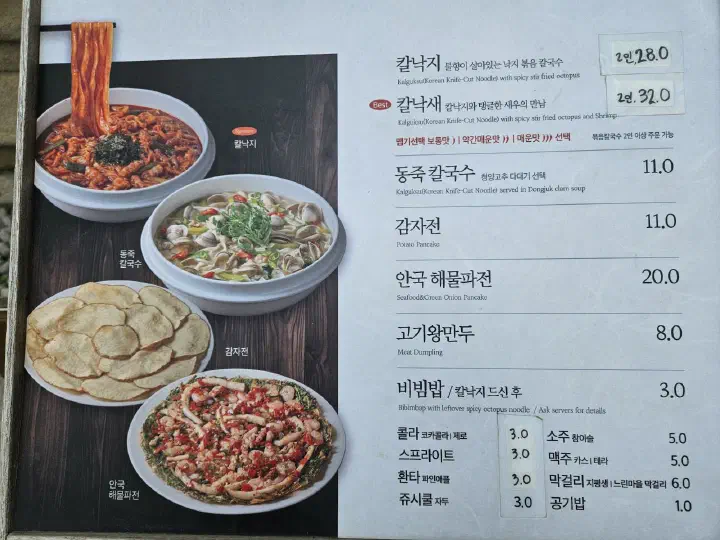
Menu board at Shilla Jemyeon Anguk

Basic side dishes including white kimchi and pickled radish at Shilla Jemyeon Anguk

You order from a tablet at the table, and there’s a call button for extra side dishes or plates. Don’t worry too much about the language barrier - the menu is printed in Korean, English, Japanese, and Chinese, and you can point at what you want. Staff may not speak much English, but ordering is straightforward. You pay on the way out at the counter, and as in almost all restaurants in Korea, internationally issued credit cards work fine. There’s no tipping culture here, so no need to leave one - it can actually leave staff puzzled.

For the wait, the restaurant uses the Tablering app for remote queuing. You put your name in as you head over, then enter a confirmation code at the machine on arrival to hold your spot - skip the code and it cancels automatically. Weekday lunches and early hours can be walk-in now, but weekend evenings fill up fast past 6 p.m. Turnover is quick, so dodging the peak helps a lot. Seating is capped at 90 minutes.

Parking is the weak point. There’s no lot and no valet, so you’ll rely on paid garages nearby - the Hyundai Gyedong building out front is closest, and the Jeongdok Library lot is a bit cheaper. Honestly, public transit is the easier call here. If you do drive, apps like Modu Parking or iParking let you buy cheaper parking passes in advance. A little cash on hand is handy in this neighborhood too, though most places take cards.

A few honest downsides

This is a love-it-or-shrug-at-it place. The seasoning is bold, and a recurring complaint is that it tastes strongly of instant-noodle powder or black pepper. Plenty of people enjoy that savory punch, but if you’re after the natural flavor of the ingredients, you might raise an eyebrow.

Some reviews mention the octopus being less abundant than the name suggests, or occasionally chewy. During busy stretches the service can feel brisk. The rules are also fairly strict - no broth refills, no taking leftovers home - so it helps to know that going in.

So, worth it?

The space carries a lot of the appeal, and the run from kalnakji to gamjajeon to clam soup to that final bowl of mixed rice does add up to a satisfying spread. It fits a day when you want atmosphere and a spicy, hearty meal together.

If you prefer gentle, subtle flavors or you’d rather not queue, aim for a quiet weekday slot. It sits right in the middle of a Bukchon and Gyeongbokgung walking route, so with a little planning it slots neatly into a day out.

📍 View Shilla Jemyeon Anguk (신라제면 안국점) on Google Maps →