Walk along the old stone wall of Jongmyo Shrine into Seosulla-gil, and just off the main lane there’s a small alley where Curry Culture Club sits.
If you love spices, this place will probably win you over. If you came expecting the mild, gravy-style curry you might know from a Japanese diner, it could throw you off a little.
Here’s where that line gets drawn, plus the practical stuff like parking and waits.

The basics
The address is 14-2 Donhwamun-ro 10ga-gil, Jongno-gu. It’s about a 3-minute walk from Jongno 3-ga Station, exits 7 and 8, and only around 120m from exit 8, so the subway is honestly the easiest way in.
Hours are 11:00 to 20:30, every day. Back when it was called Yellow Dragon Curry there was a 4-to-5 p.m. break, but that’s gone now, so the kitchen runs straight through. That awkward mid-afternoon window is actually a nice quiet time to drop by.
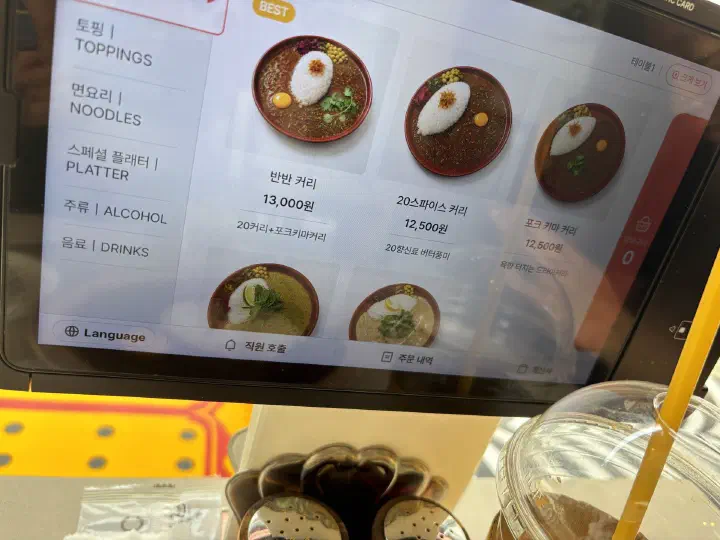
A quick note for international visitors: like most restaurants in Korea, they take cards without any fuss, so an internationally accepted card works fine. There’s no tipping culture here, so you don’t need to leave one, and staff may even be a little puzzled if you try. English isn’t always spoken, but ordering is done through a tablet at each table, so you can browse the menu with photos and tap what you want. It’s genuinely low-stress.
📍 View Curry Culture Club (커리컬처클럽) on Google Maps →
From Yellow Dragon Curry to Curry Culture Club
For a while this spot went by Yellow Dragon Curry, or YDC. When it became Curry Culture Club, the menu shifted along with the name.
The older version leaned Japanese: a base curry topped with pork cutlet, beef belly, or chashu. These days it’s built around a 20-spice curry, with newer additions like a vegan green curry. Prices crept up too. The banban curry was 10,900 won under the old name and runs 13,000 won now. It’s the same address, but if you visited years ago, the menu will read differently.

Who it suits
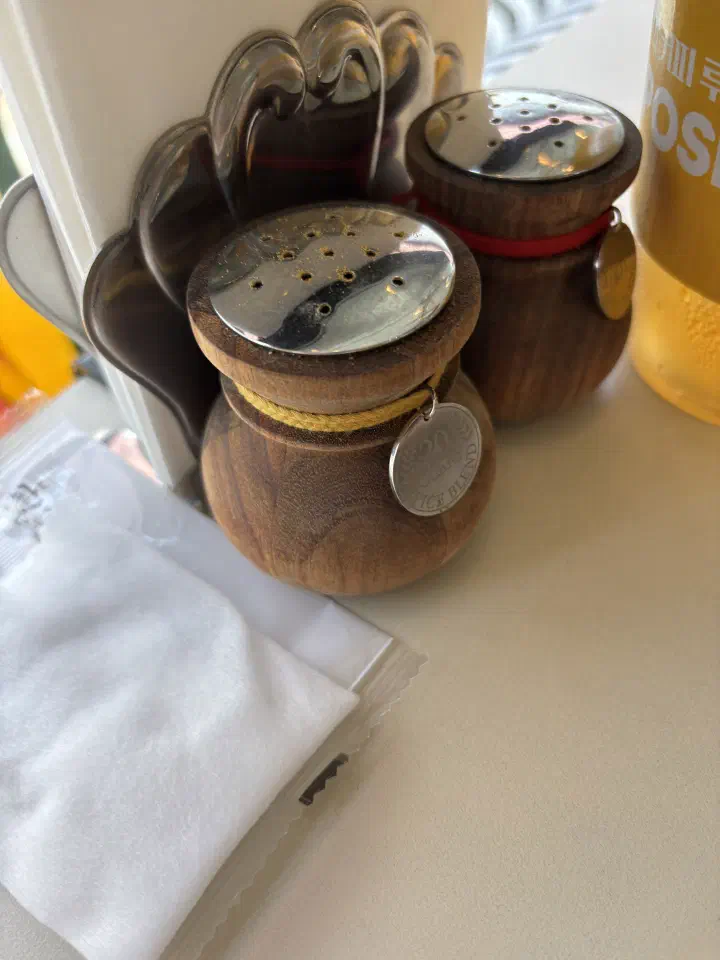
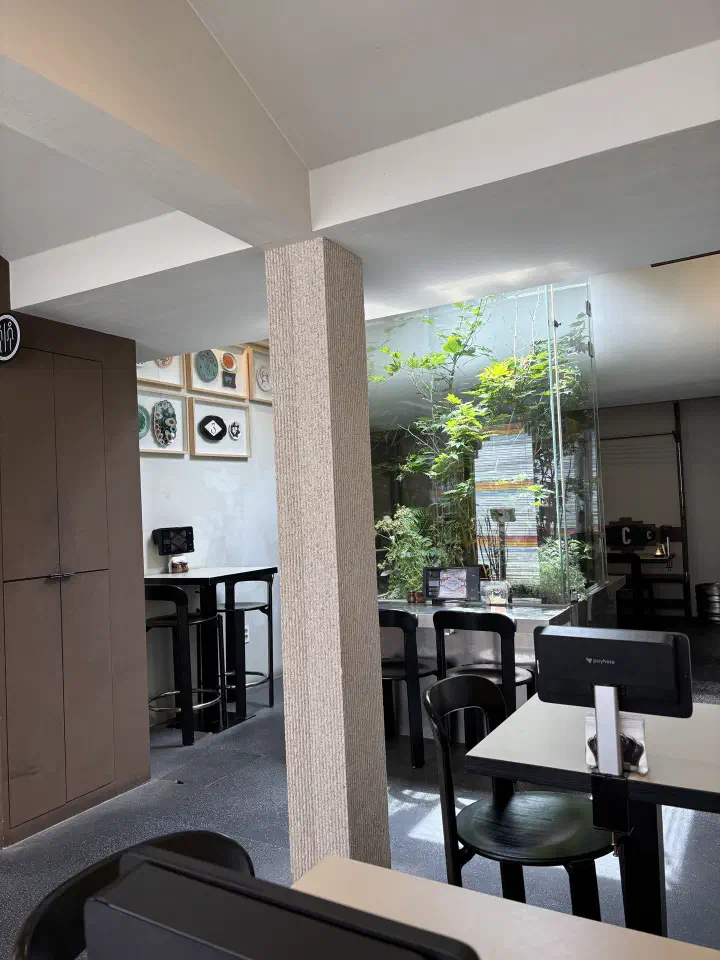
Inside, rows of spice jars are displayed along the wall, and there’s an open courtyard seat right in the middle of the room where the ceiling opens up. That center spot gets natural light and tends to be the most popular.
Most tables are two-tops, with a few four-tops tucked in the back. The two-seaters are a bit small, so once you pile on toppings, plate space gets tight.
It works for eating alone, and just as well for a date or a meal with family. The kitchen is open, so you can watch the cooking, and the staff are attentive in a quietly charming way (they’ll even ask which side you want your spoon on).

Start with the banban curry
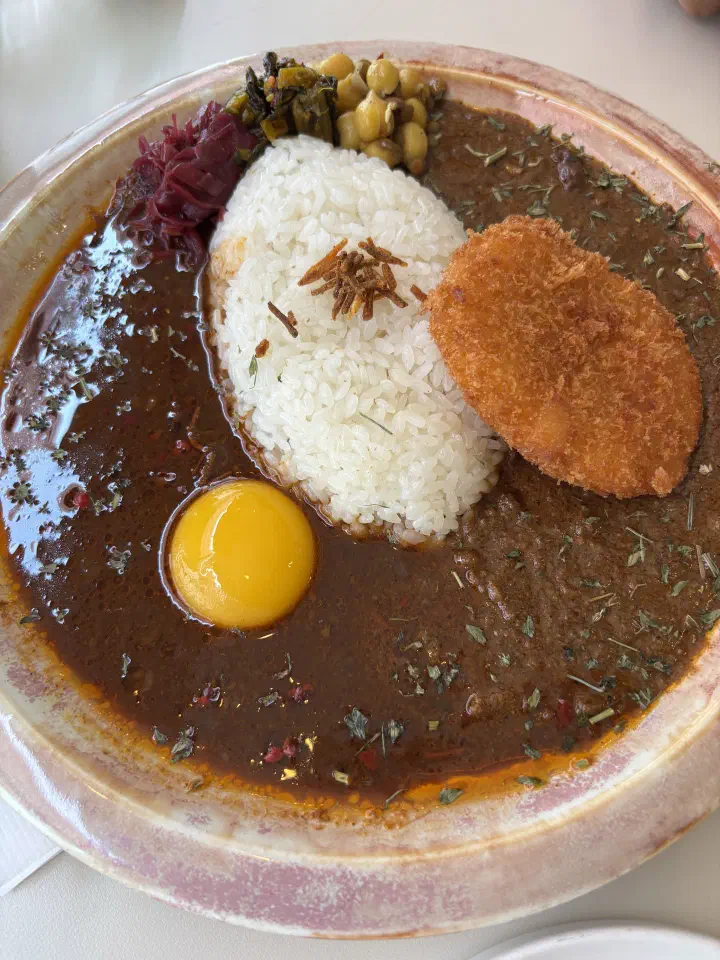
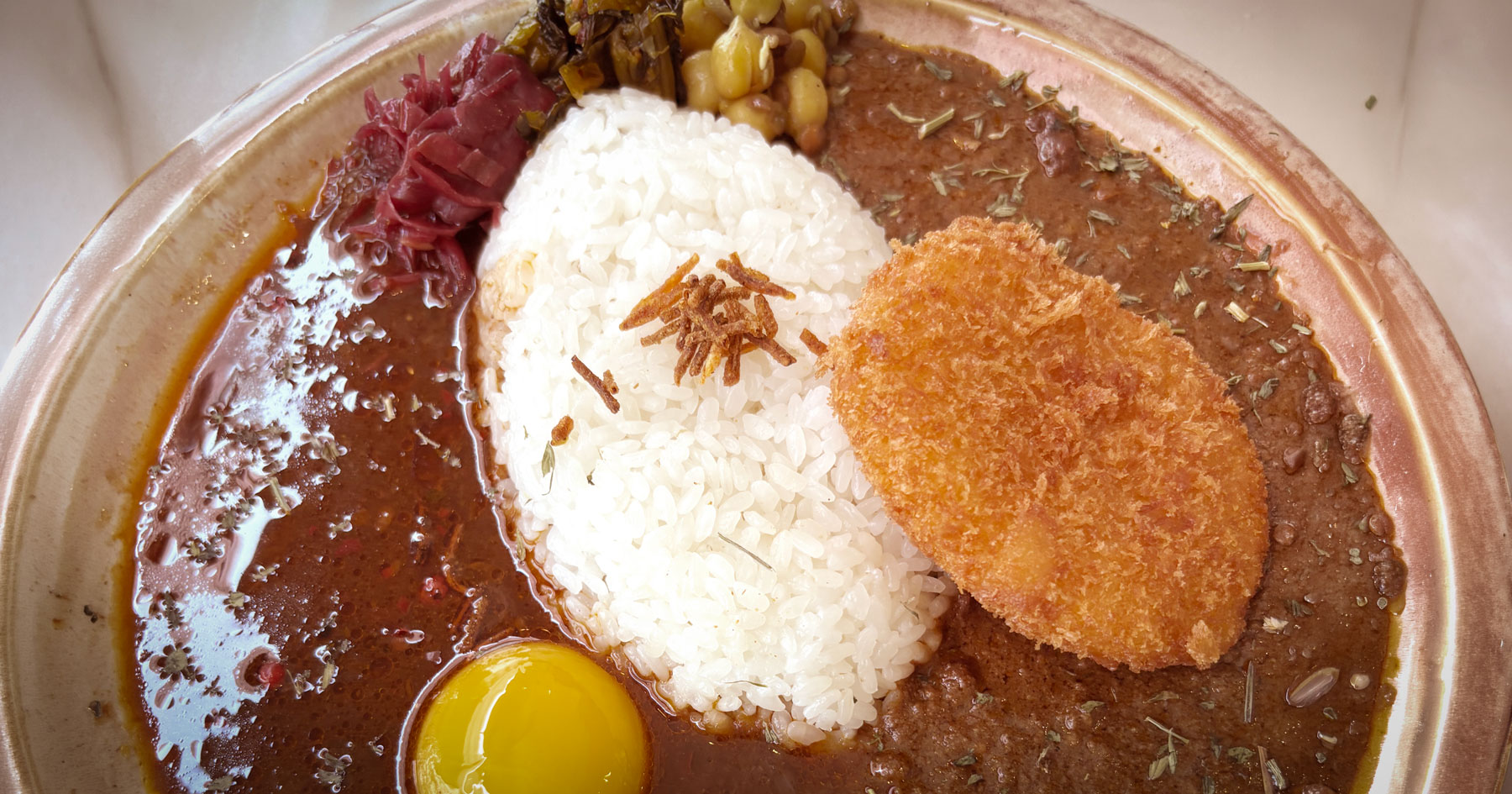
If it’s your first time, go for the banban curry. It puts two signature curries on one plate, so you can taste both side by side.
The 20-spice curry (20스파이스 커리) is a thinner, looser style with a sharp wave of spice. Heat-wise it’s around the level of a spicier instant ramen, and the aroma is strong enough that this is the dish that divides people the most.
The pork keema curry (포크 키마 커리) is a dry curry with minced pork. It has a nice chew, and a lot of people find it slightly hotter than the 20-spice.
If you’re not great with heat, the white chicken curry (화이트 치킨 커리) is the safe pick. It’s creamy like a pasta sauce with just a faint spice finish, so even spice newcomers tend to be fine. One honest heads-up: Korean “mild” can still register as fairly hot for visitors who aren’t used to it, so go gently with the spicier bowls.
The vegan green curry (비건 그린 커리) leans on fresh herbs and a citrusy lift, creamy and easy to swallow. It’s a good call for vegetarians or anyone wanting something lighter.

Don’t skip the sides. The golden fried fish (골든 프라이드 피쉬) is crisp outside, soft inside, and pairs well with a drink. The grilled mixed vegetables (모듬 야채) carry a real char that softens the spice when you spoon them over the curry.
Things worth knowing
Rice and curry each come with one free refill. With the banban curry, you pick one of the two curries to top up. The seasoning runs a touch bold, so rather than mixing all your rice at once, eat it in small spoonfuls and use the refill to balance things out.
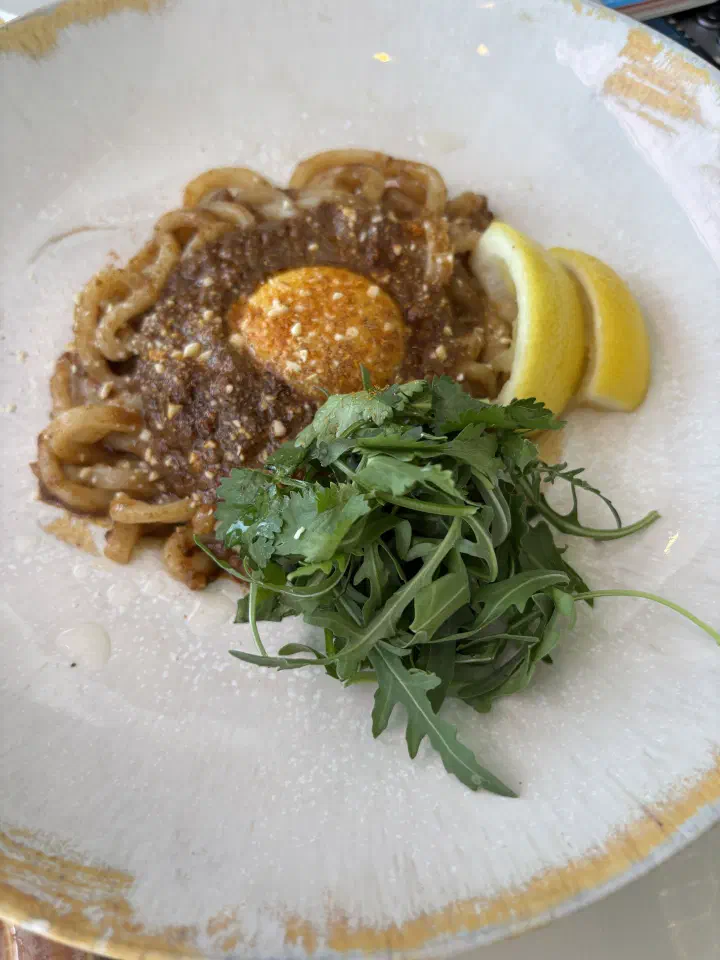
Cilantro (고수) comes standard, and in a generous amount. If you’d rather skip it, just ask when you order.
Promise a receipt review and they’ll add a croquette topping on the house. Corkage is free, so bringing a bottle of wine for a casual drink is welcome too.

Parking and waits
If you’re thinking of driving, lower your expectations on parking. There’s no dedicated lot and you can’t park out front. You’ll need the Jongmyo public lot or the Ikseon public lot, with Jongmyo usually the cheaper of the two, running roughly 400-500 won per 5 minutes. Honestly, with the station this close, public transit is the calmer choice.
Waits swing a lot by timing. On weekday afternoons or in the cold off-season, you’ll often walk right in. Weekend lunch peaks are another story: lines can reach around ten groups and run 30 to 40 minutes. Evenings fill up too once you pass 6:30.
The upside is fast turnover. Food comes out quickly, so even a line clears sooner than you’d guess. There’s a check-in kiosk out front, and you can join the queue remotely through the CatchTable app, so putting your name down while you’re still walking over saves time. At peak hours there can be a two-hour table limit.
One quick tip for getting around: Google Maps walking and transit directions are often off in Korea, so use Naver Map or KakaoMap to find the alley.
The honest take
Spice is the star here, so if you like bold, aromatic curry, you’ll want to come back. If you were hoping for something mellow, you may think “this isn’t the curry I pictured.” For a first visit, the banban curry lets you sample two styles, and adding the white chicken curry is a smart hedge if heat worries you.
It’s down a side alley, so you might wander a bit at first. Pair it with a stroll along Seosulla-gil or a visit to Jongmyo Shrine and it fits neatly into the day.