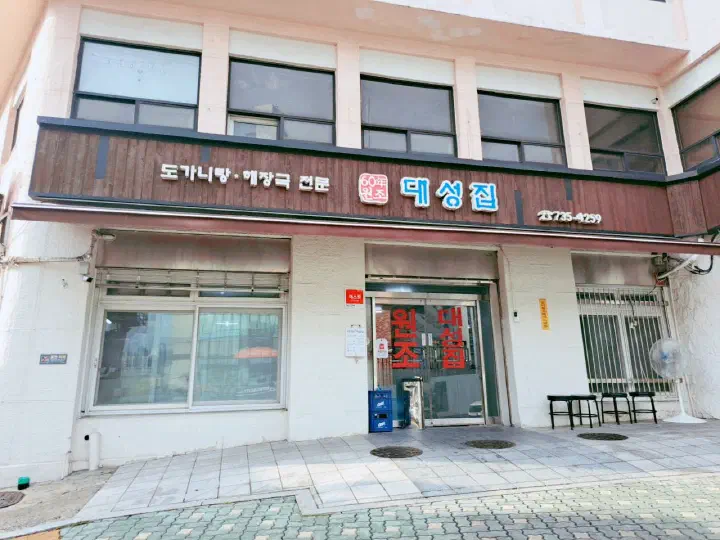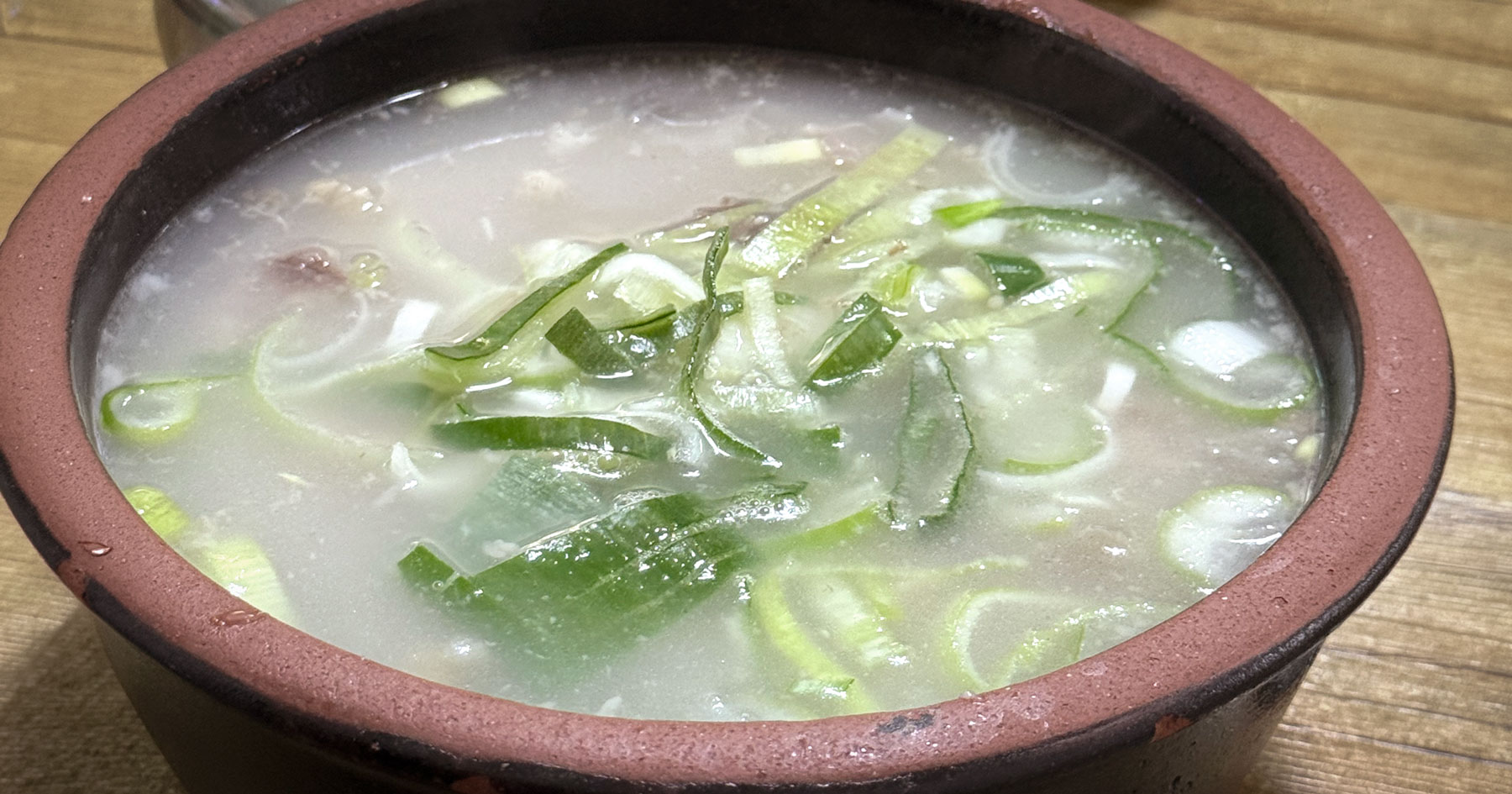
Near Dongnimmun in Seoul, if someone says “dogani-tang,” Daesungjip is usually the first name that comes up.
It has held the same corner for close to seventy years, and it keeps things simple: a clear broth loaded with ox-knee cartilage.
This is the bowl people reach for when they want something warm and restorative.
The basics first
The address is 5 Sajik-ro, Jongno-gu, Seoul, about a five-minute walk from Dongnimmun Station (Line 3), Exit 3.
The phone number is 02-735-4259.
It opens 10:30 to 20:00 on weekdays and until 19:00 on Saturday, with a break from 15:00 to 17:00.
It closes on Sunday.
When the day’s ingredients run out they close early, even inside opening hours, so a late evening visit is a gamble.
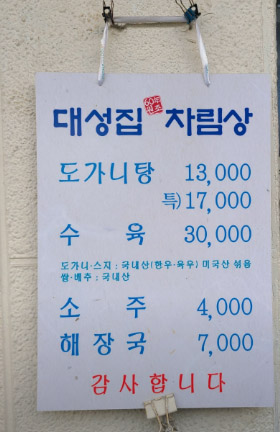
The menu is short.
Dogani-tang (도가니탕) is 13,000 won, the larger “special” is 17,000 won, suyuk (수육, a boiled meat platter) is 30,000 won, and haejang-guk (해장국, hangover soup) is 7,000 won.
Soju is still 4,000 won.
A couple of practical notes for visitors: almost every restaurant in Korea takes cards, and an international card works fine here, so you don’t need to carry much cash.
There’s also no tipping culture in Korea, so don’t tip; the staff may actually be confused if you try.

📍 View Daesungjip (대성집) on Google Maps →
For walking or transit directions, Naver Map or KakaoMap is far more accurate than Google Maps in Korea.
Expect a line
Between an early TV appearance and the Michelin Bib Gourmand listing, the queue here has grown noticeably.
There’s often a wait even at weekday lunch.
On weekend mornings the line can run past sixty people right at opening.
You’ll see elderly regulars waiting with canes before the doors open, which tells you how long this place has been a fixture.
The upside is fast turnover, since there are only three dishes to make.
A weekday lunch wait usually lands under 20-30 minutes.
If crowds bother you, aim for a weekday afternoon, or around 17:00 when the break ends.
Weekdays are clearly easier than weekends.
The broth: clear, not milky
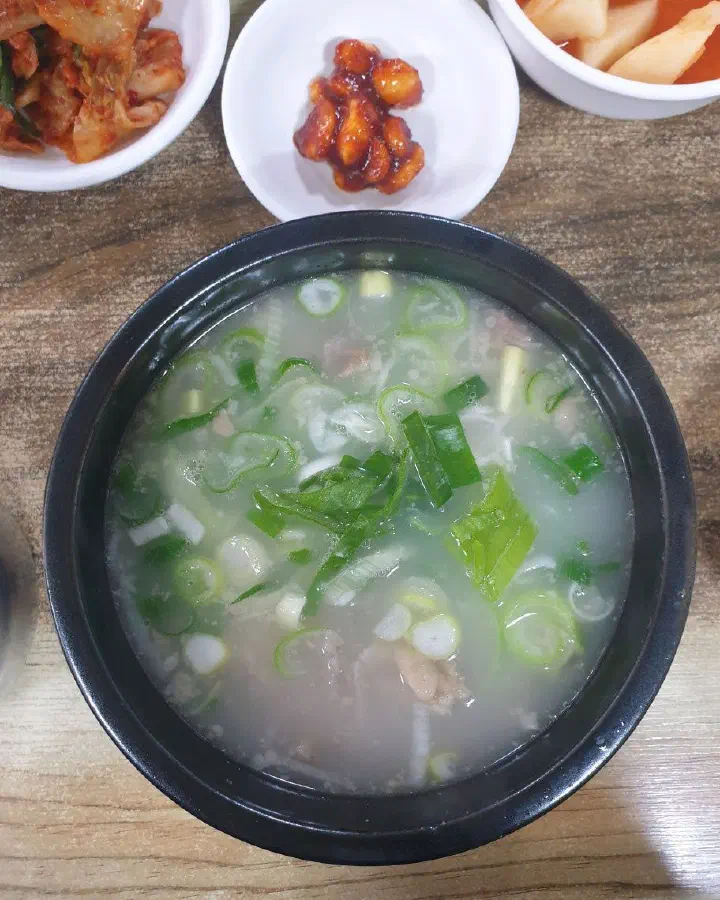
The first surprise is the color.
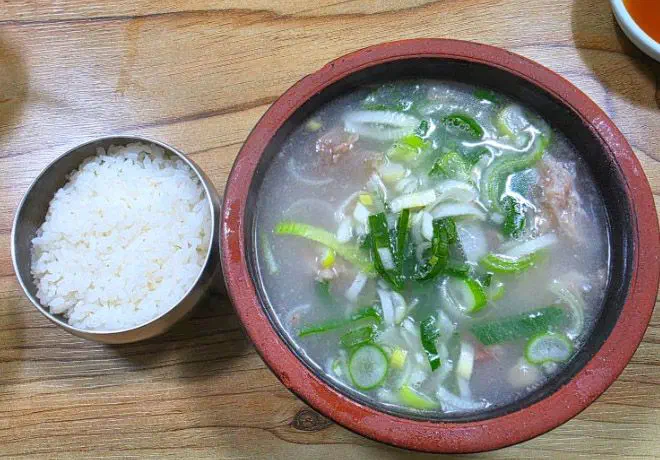
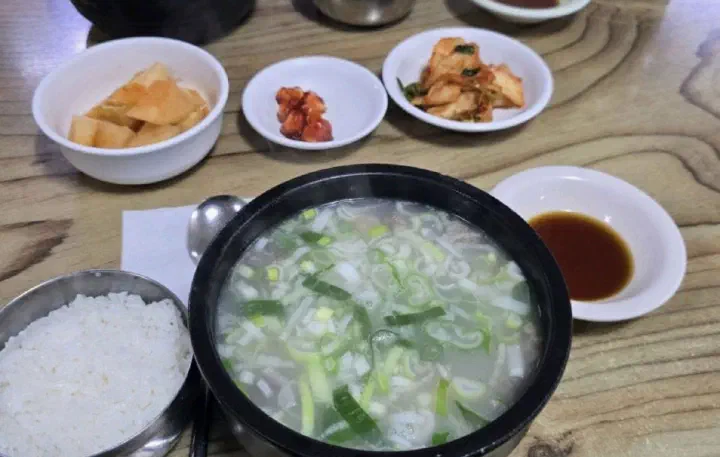
Instead of the usual cloudy, bone-white soup, this one comes out clear and almost translucent, and it still tastes deep.
It’s simmered from ox-knee cartilage alone, with no mixed bones, so there’s next to no gamey smell.
It arrives lightly seasoned, so you tune it with salt and pepper.
A little of the chili powder on the table adds a sharper edge if you want one.

The bowl is more generous than it first looks.
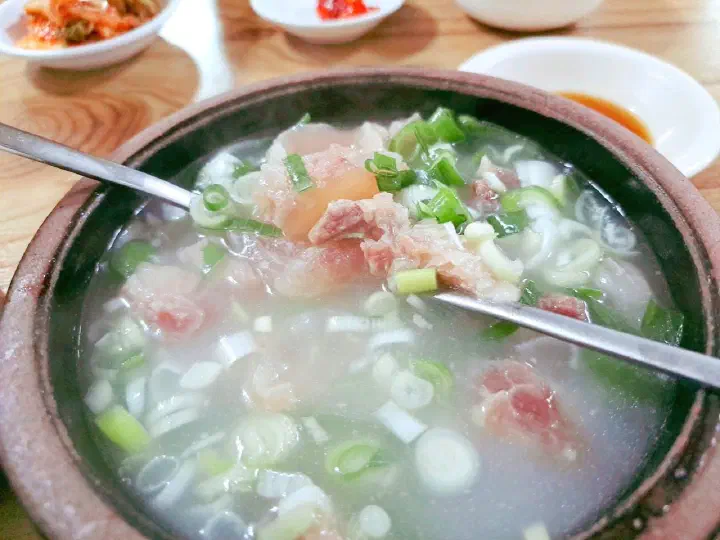
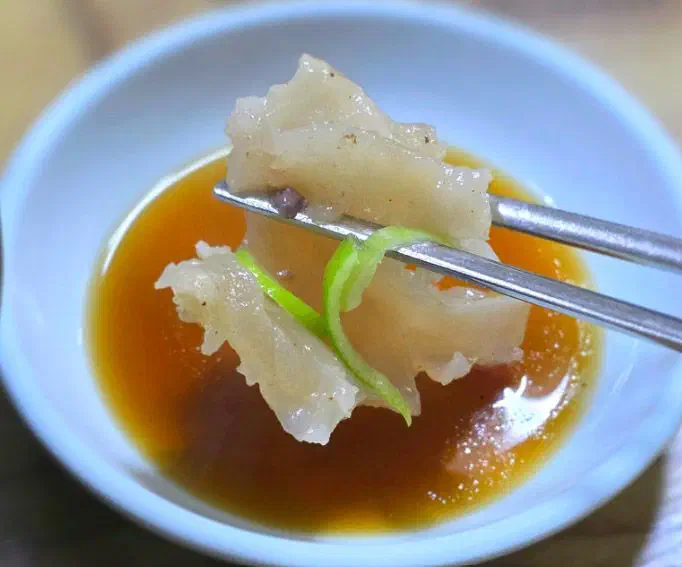
Even the regular size comes packed with dogani (cartilage) and sseoji (tendon), so portion is rarely the problem.
Go for the “special” only if you want it genuinely heavy.
The cartilage is soft and jelly-like when hot, then turns chewy as it cools.
That soft, gelatinous texture is a bit of an acquired taste, so a first-time dogani eater may or may not take to it.

Suyuk and a drink
The real signature is arguably the dogani suyuk.
It comes with cartilage and lean brisket together, plus a bowl of the milky broth on the side.

With soju at 4,000 won, it’s an easy plate to sit and drink over.
The dipping sauce starts as a plain, mild soy sauce, but stir in the chili-seed paste from the table and it turns spicy.
A solo diner can add a bowl of rice to the suyuk and more or less build a small dogani meal out of it.

The banchan, led by the garlic
Three side dishes come out: cabbage kimchi, kkakdugi (cubed radish kimchi), and a seasoned whole-garlic dish.
The garlic is the one to watch.
Whole cloves tossed in red seasoning, sharp and crisp, and they cut through the richness of the cartilage well.
The kkakdugi is sweet-and-sour and works nicely with the broth.

To be fair about the weak spots: the cabbage kimchi is fairly spicy. It’s spicy by Korean standards, which means it can hit hard for many foreign visitors, so brace a little if you’re not used to Korean heat.
The banchan also leans sweet overall, which not everyone will love.
The rice itself is nothing special.
Room and service
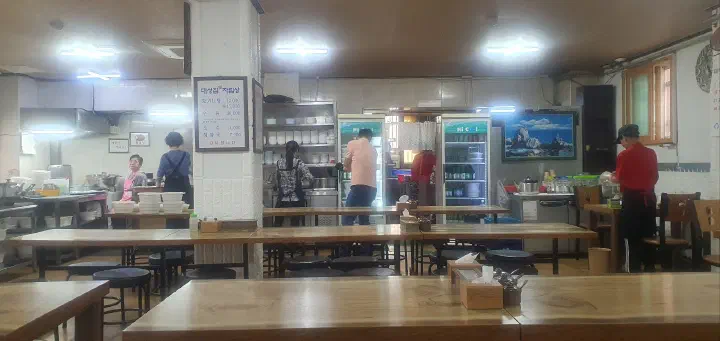
The room is tidy for an old place, with plenty of four-tops seating well over fifty people.
The crowd is mixed, from older regulars to families and couples.
Coming alone for a single bowl doesn’t feel awkward here.
The staff move quickly even when it’s slammed, and they seat people by group size without fuss.
English isn’t really spoken, but ordering is easy: point at what you want on the menu and hold up how many servings.

Parking, takeout, and a heads-up
There’s space for roughly four to six cars along the road out front, first come first served.
If it’s full, a nearby public lot is the calmer choice, though honestly walking from the station beats driving.
Takeout is available with one catch: it’s the soup only, no rice or side dishes, so keep some kimchi at home if you go that way.
One more practical note: there are similarly named places nearby.
“Eomeoni Daesungjip” and “Daesung Dogani-tang” are different restaurants, and the latter sits inside Yeongcheon Market.
When you set a meeting point, specify the Daesungjip by Exit 3 of Dongnimmun Station, next to Daesin High School.

Worth it?
Daesungjip isn’t out to wow anyone with bold flavor.
It’s a clean, mild broth under a generous heap of cartilage, an old place that sticks to the basics.
If you want something rich and punchy, it may read as plain, and the sweet banchan and soft cartilage are genuinely down to taste.
But for a big serving of clean, odor-free dogani at 13,000 won, the value is hard to argue with.
It’s the kind of bowl you end up coming back to when you want something warm and restorative.
The Seodaemun Prison History Hall and Dongnimmun Park are both close by, so it drops easily into a walking day around Dongnimmun.
Getting there
It’s about a five-minute walk from Exit 3 of Dongnimmun Station on Line 3.
The shop sits at the mouth of an alley across from Yeongcheon Market, so it isn’t hard to find.