If people in Yaksu start talking about ibuk-style steamed chicken, this place comes up almost every time.

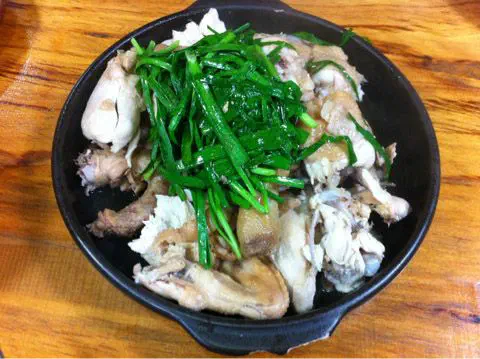
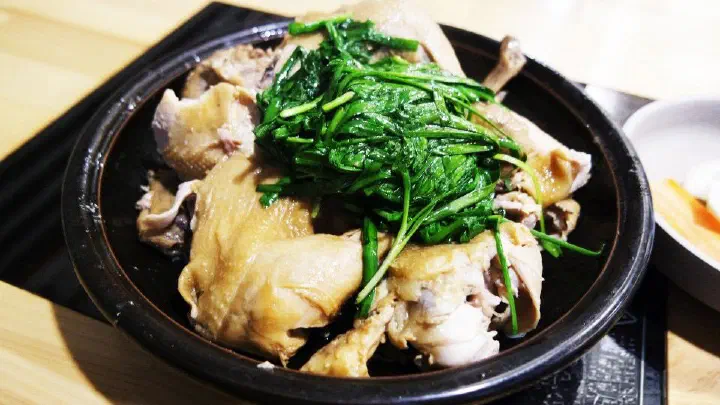
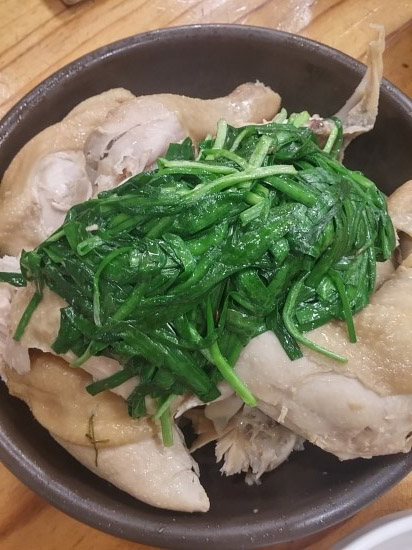
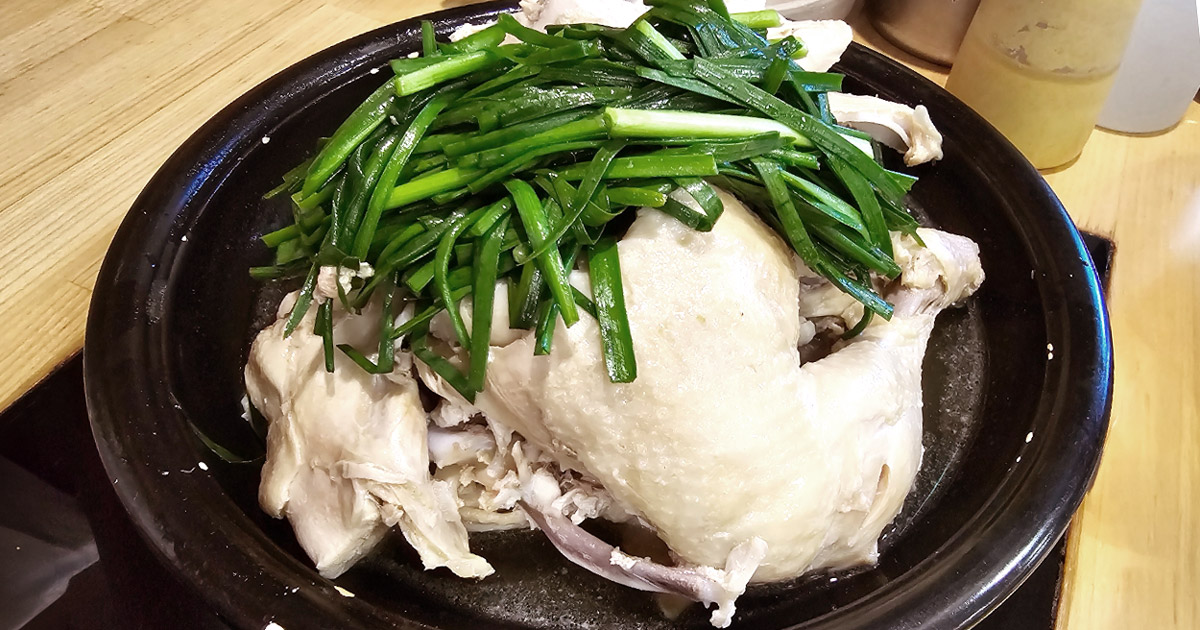
Come expecting the dark, soy-braised Andong jjimdak and you’ll do a double take. The chicken here arrives pale white, piled with garlic chives, sitting in a pool of clear, light broth. It looks more like a poached chicken than anything braised.

It isn’t a loud, bold dish. The flavor is clean and gentle, almost plain, and that splits people. But if you’re into that quiet kind of cooking, it’s the sort of place that keeps coming back to mind.

The basics

The address is 108 Dasan-ro, Jung-gu, less than a minute on foot from Exit 7 of Yaksu Station. It’s on the second floor of the Cheongna Building, with both an elevator and stairs.

Open daily from 11:30 to 22:00, last order at 21:00, and there’s no afternoon break, so you can wander in between lunch and dinner and still get a table. It usually closes for the big holidays (Seollal and Chuseok), so call ahead if you’re going around then. The number is 02-2252-2457, and reservations or larger groups are handled by phone.

A quick note for travelers: in Korea, the city’s own map apps work far better than Google Maps for walking and transit directions, so Naver Map or KakaoMap will get you here more reliably.

📍 View Jinnampo Noodle (진남포면옥) on Google Maps →

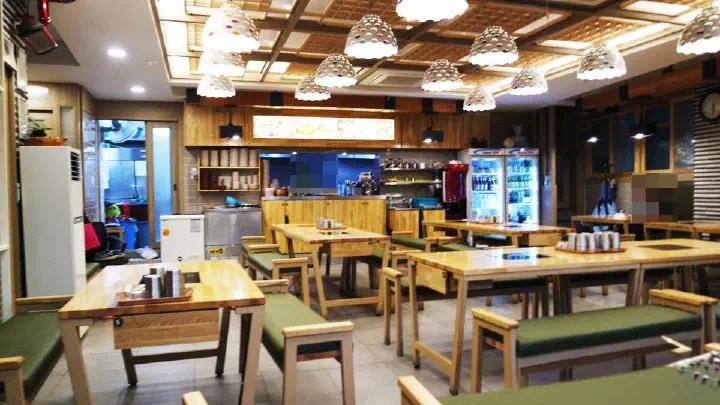
The hall and the alley by Yaksu Station outside Jinnampo Noodle

Why Yaksu has so many of these places

The Yaksu and Cheonggu area was settled long ago by people who came down from the North, so platter buckwheat noodles, northern-style dumplings, and this kind of steamed chicken have been easy to find around here for decades.

Jinnampo Noodle is one of the older ones. The name comes from the owner’s hometown, Jinnampo, in the North, and the recipe was passed down from a mother-in-law and kept going for more than fifty years. They cook to order and don’t do delivery, a rule they’ve held onto for a long time.

You can read all of that off the walls, really. The entrance is covered in Blue Ribbon stickers and traces of TV appearances, including the well-known food shows Wednesday Food Talk and Amazing Saturday.

Broadcast and Blue Ribbon marks at the entrance of Jinnampo Noodle

The signature: ibuk-style steamed chicken

The steamed chicken (이북식 찜닭) is the whole point. There’s only one size, priced at 35,000 won, and it’s generous, roughly enough for two, so it’s a sharing dish rather than a solo meal.

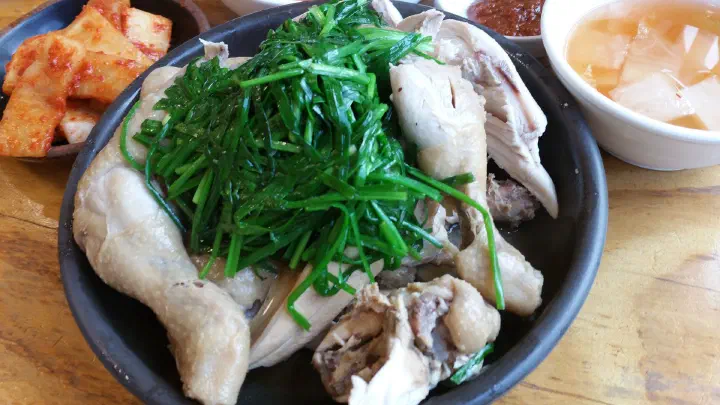
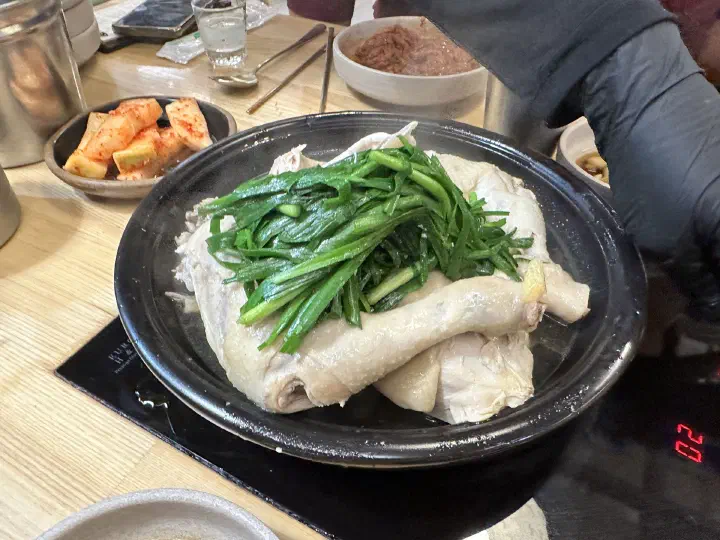
Ibuk-style steamed chicken topped with a mound of chives

It looks nothing like the jjimdak most people picture. No soy glaze at all, just pale steamed chicken under a heap of fresh chives. Ask for more chives and they’ll usually top you up.

Tender chicken that pulls apart along the grain

The meat has been steamed long enough that it falls apart with a touch of the chopsticks. Even the breast stays moist rather than dry, so people who normally skip plain boiled chicken often find themselves going back for more.

The clear broth served under the steamed chicken

The clear broth pooled at the bottom tastes close to samgyetang (ginseng chicken soup). There’s an induction burner in the middle of the table to keep it warm, and you can ask for refills of the broth, which only gets deeper as it reduces.

A close look at the chive-topped steamed chicken

The real trick is the sauce

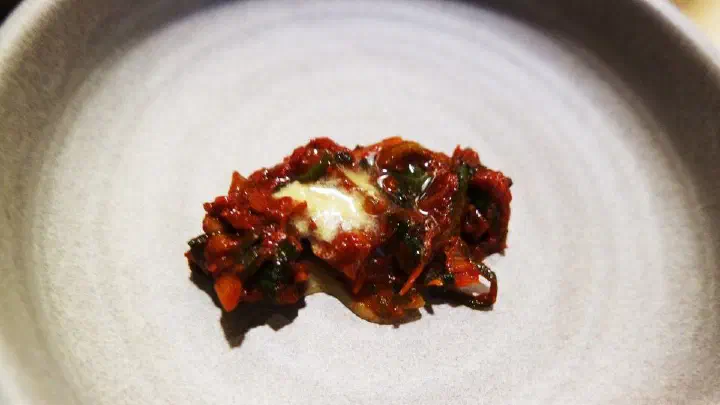
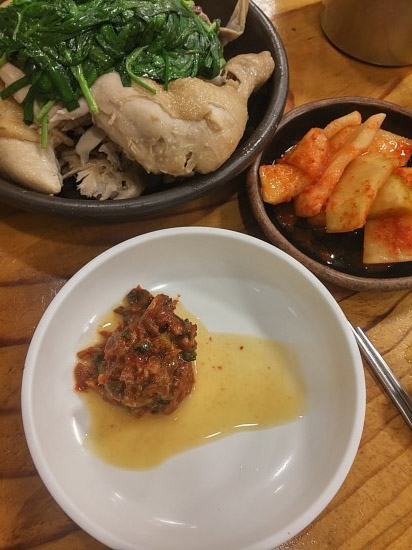
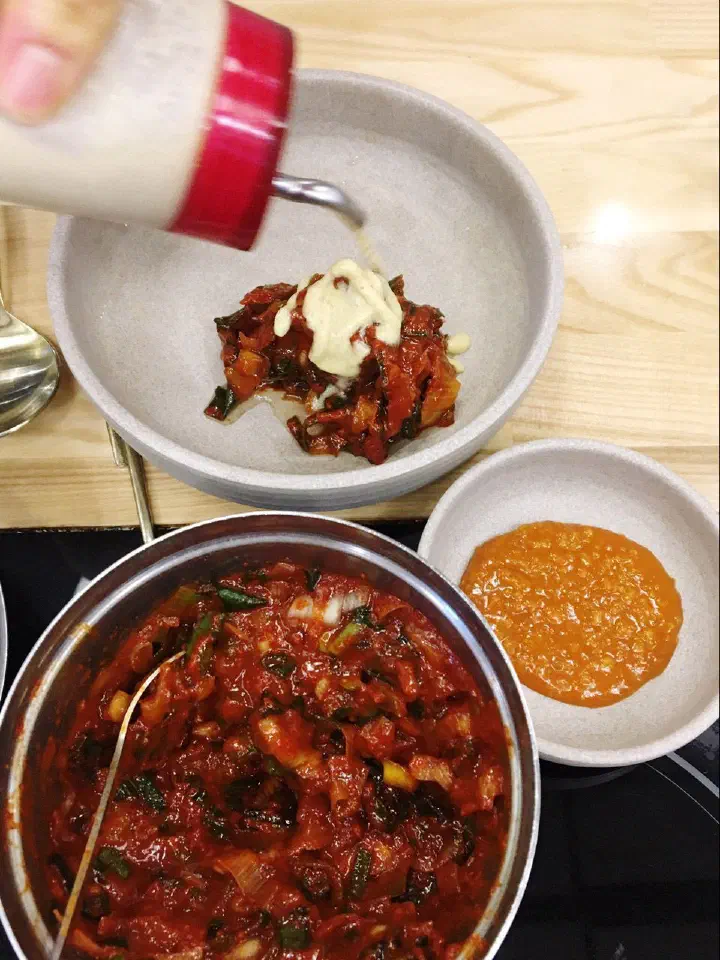
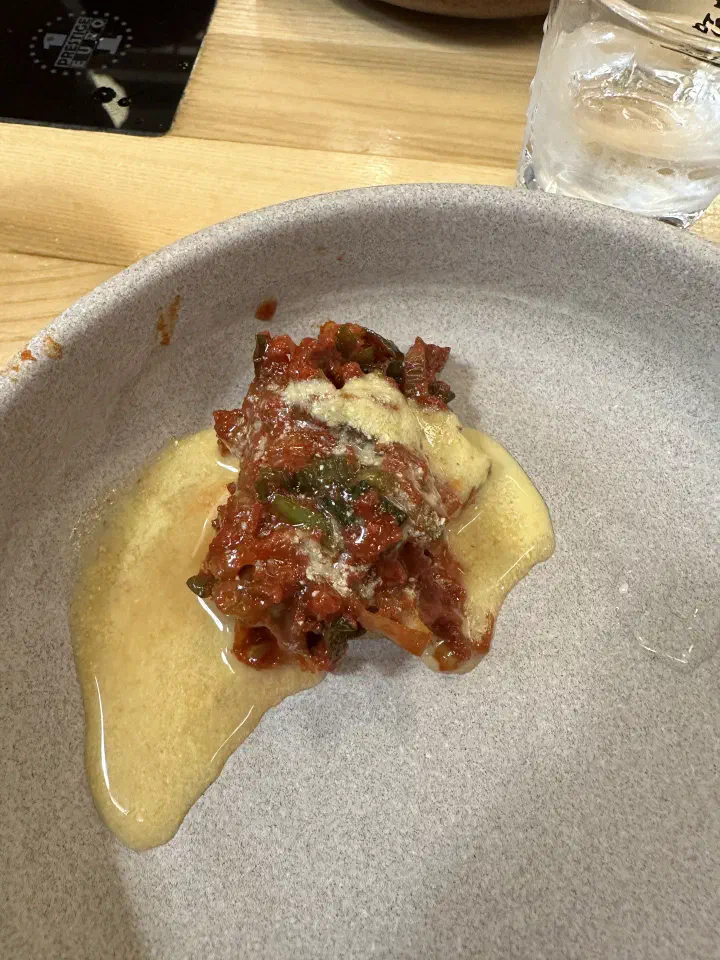
When you first arrive, a server shows you how to mix the sauce. You take a spoonful of the chopped-scallion-and-chili paste (dadaegi) onto a small dish, then add vinegar and mustard to taste. That’s it.

The dadaegi, vinegar and mustard for the chicken

Honestly, that sauce is half the dish. Coat the mild chicken in it, wrap a chive around the meat, and the savory kick comes alive. A little extra mustard adds a sharp tingle that keeps it from ever feeling heavy. Fiddling with the ratio as you go is part of the fun, the same chicken ends up tasting different from one person to the next.

Mixing the chicken sauce to taste

A full plate of the chive-topped steamed chicken

Hand-folded dumplings

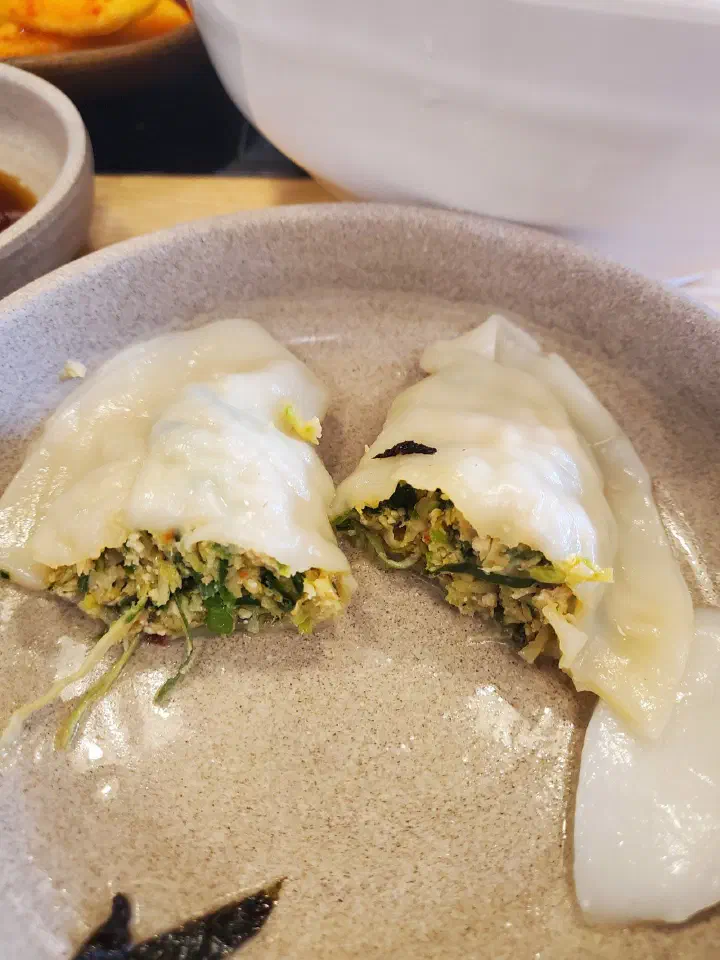
After the chicken, the dumplings are what people love most. They’re folded by hand in a corner of the restaurant, and they taste clearly different from the factory kind.

Dumplings folded by hand at Jinnampo Noodle

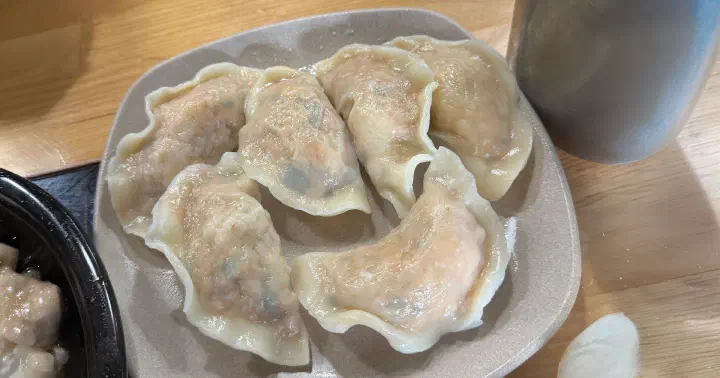
The plate of dumplings (jeopsi mandu, 접시만두) is six pieces for 12,000 won. Each one is big, about the size of two soup spoons together, and packed full, so two will already fill you up. The wrapper isn’t too thick and the filling is dense, which wins over even people who usually pass on dumplings.

The fat, generously filled plate dumplings

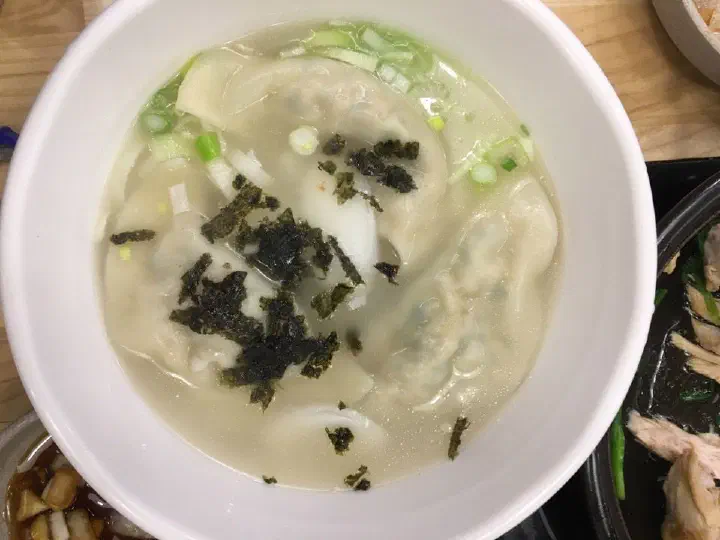
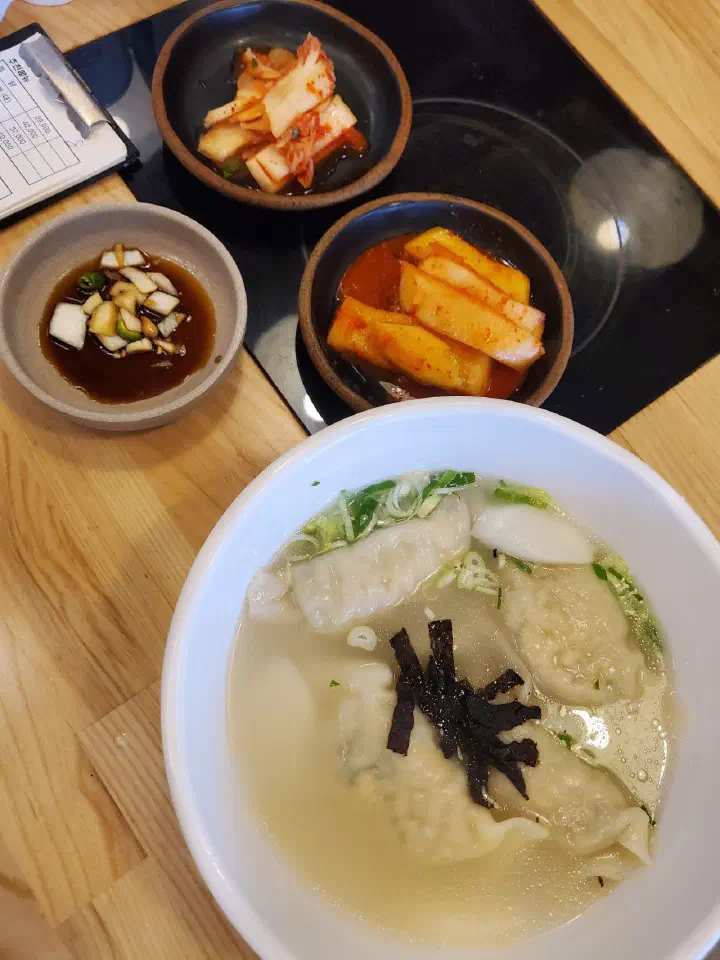
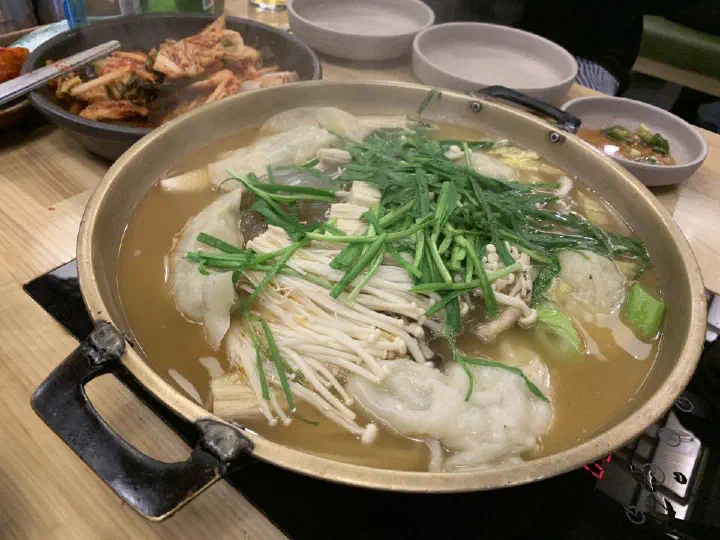
The same dumplings carry over into dumpling soup and dumpling hot pot. The soup is a gentle solleongtang-style broth that suits the northern dumplings and sits easy on the stomach, while the hot pot, simmered with mushrooms and chives, turns spicier the longer it bubbles.

Generously sized hand-folded dumplings

Dumplings simmered in a beef-bone broth

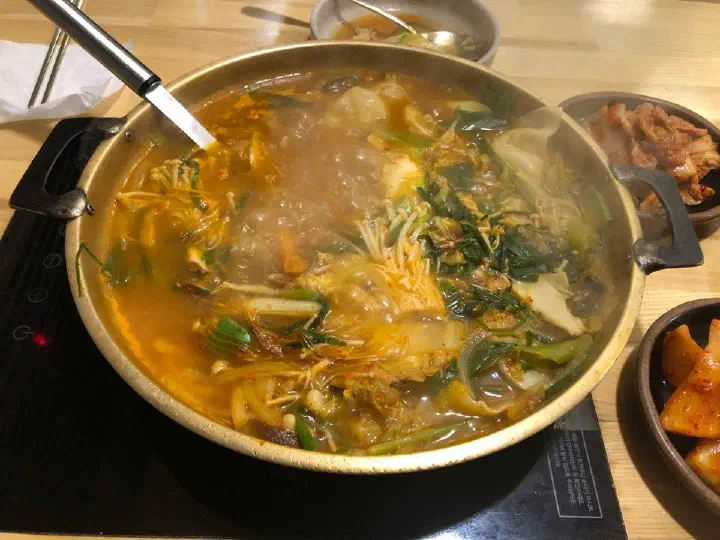
Dumpling hot pot with mushrooms and chives

The noodles are a toss-up

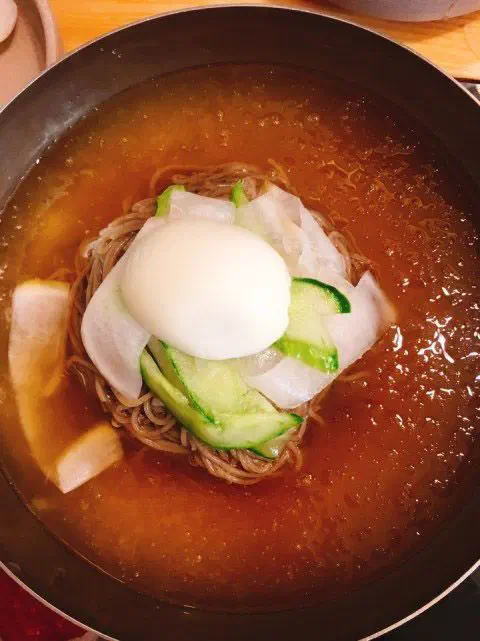
I’ll be honest, the makguksu divides people. The water version (mul makguksu, 11,000 won) leans plain, closer to Pyongyang naengmyeon. It’s house-pulled buckwheat noodles in a cool dongchimi-style broth mixed with beef stock, and a lot of people come for that coolness in summer.

House-pulled buckwheat noodles in the water makguksu

The catch is that the broth runs a touch sweet, so if you’re expecting the tart, icy cold-noodle broth, it can feel unfamiliar. Some get hooked after a confused first bite; others never quite warm to it. It’s that kind of fork-in-the-road dish.

The platter makguksu loaded with vegetables

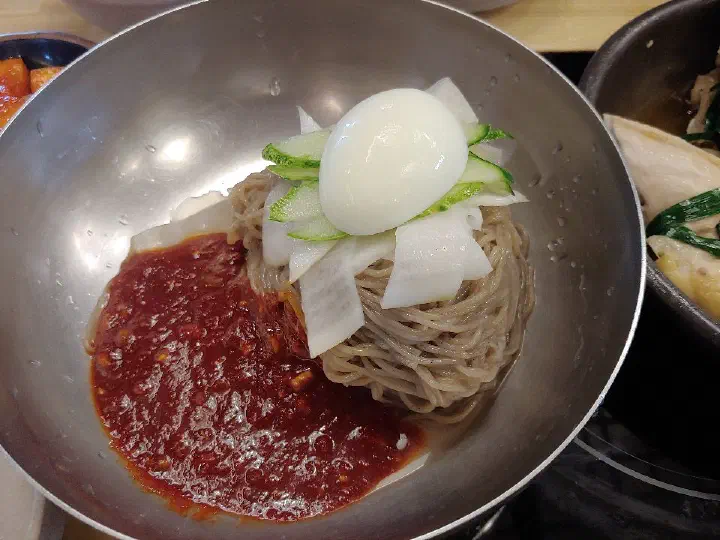
The platter makguksu (jaengban makguksu, 26,000 won) comes on a big tray heaped with vegetables, and you pour the sauce over and toss it. The dressing skews sweet rather than spicy, so it can read as merely fine if you wanted something punchy. The chicken is so clearly the star that it’s easiest to treat the noodles as a light side.

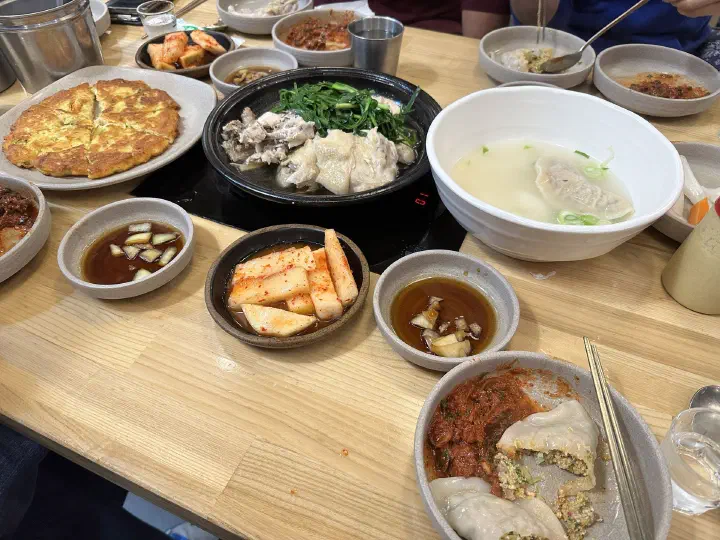
Makguksu served alongside the steamed chicken

Bossam and the mung bean pancake

With a bigger group, the Gaeseong bossam (boiled pork) shows up a lot. It’s 43,000 won for the medium and 48,000 for the large, served with its own bossam kimchi, which is crisp and refreshing.

Gaeseong bossam with its own kimchi

The pork itself is a little more old-fashioned and firm than the melt-in-your-mouth style that’s everywhere now. If you like very soft bossam, it might feel a touch chewy; if you miss the older, springier kind, it’s a treat.

The firmer, springier Gaeseong bossam

The mung bean pancake (nokdu bindaetteok, 13,000 won) comes out thick, crisp outside and moist within. Pancake lovers go for it, though some find it ordinary, so it’s best as an add-on when there are enough of you to share.

Thick, crisp mung bean pancake

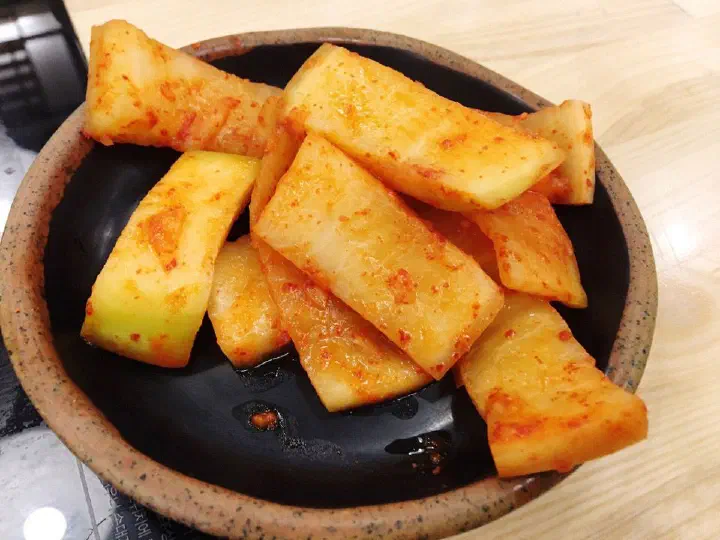
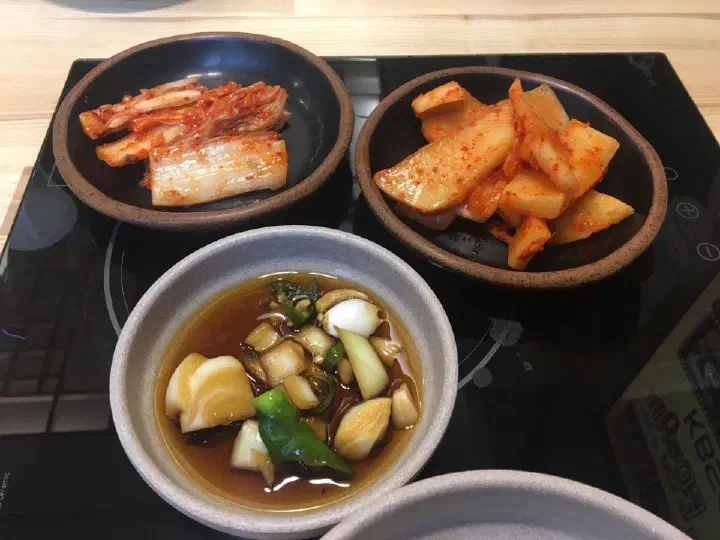
The side dishes are simple: kkakdugi and seokbakji (radish kimchi), plus onion, carrot and ssamjang. The radish kimchi is tart and crunchy and works as well with rice as it does alongside the chicken.

The tart, crunchy banchan at Jinnampo Noodle

Waits, parking, and tips

The room is large, so there’s usually no real line. That said, weekday evenings fill up after about 6:30, and weekend lunch goes fast once it’s past noon. For a calmer meal, aim for before 6 on a weekday or right at lunch opening on weekends. For a bigger party, call about a week ahead.

Parking is a small ground-floor lot under the building, room for maybe three to six cars in a single tight row, so it fills quickly. There’s public parking nearby, but since it’s right by the station, transit is the easy choice.

A couple of honest caveats. The service can be brisk rather than warm; at busy times it’s a bit gruff, and near last order they may start wrapping up. The first round of makguksu has sometimes come out slow, so if you’re short on time, order the chicken and dumplings first.

A few practical notes if you’re visiting from abroad. Almost every restaurant here takes internationally issued credit cards, so paying is rarely an issue. There’s no tipping culture in Korea; you don’t need to leave anything, and it can actually fluster the staff if you try. English isn’t really spoken, but there’s a simple order sheet you can point to, and ordering a couple of dishes that way is easy enough. The chicken itself isn’t spicy, which makes it a comfortable pick if you’re not used to Korean heat, though if you load up the dadaegi sauce, the chili and mustard do bite.

In short

This is the place when you want something clean and restorative without heavy seasoning, or an easy meal with older family or kids. Chicken plus a plate of dumplings, or chicken plus noodles, is the standard move, and as long as you build the dipping sauce well, you won’t go wrong.

If you like gentle, understated food, it’s the kind of spot that comes to mind every change of season. If you prefer bold flavors, one visit might be enough. Either way, if you’re curious about ibuk-style steamed chicken near Yaksu, this is a solid place to start.

📍 View Jinnampo Noodle (진남포면옥) on Google Maps →