If you visit Miryang and only have time for one bowl, my pick is always dwaeji-gukbap — Korean pork soup with rice. Busan’s milky white version gets all the attention, but Miryang’s clear, lighter style has a charm of its own. On my latest trip I finally made it to Jeilsikdang, a small shop tucked into Susanjungang-ro in Hanam-eup.

It’s well known to locals since being featured on cartoonist Heo Young-man’s TV show Baekban Travels, but the place has the kind of quiet, lived-in feel that only a thirty-year-old neighborhood spot can pull off.

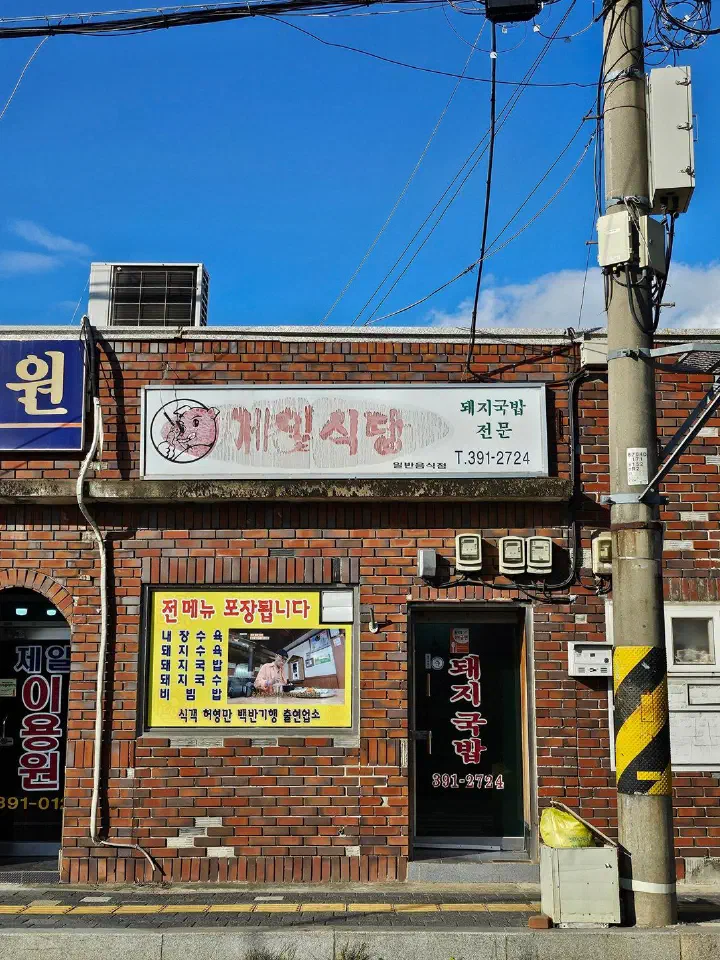
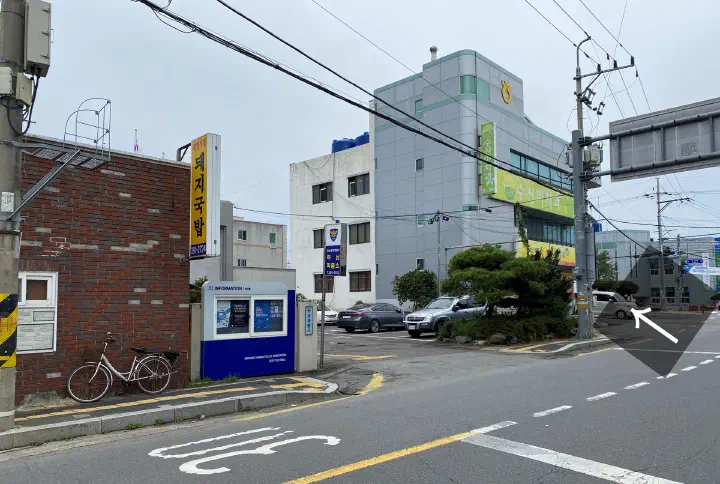
Front view of Jeilsikdang with its little pig mascot signboard

Quick info

  • Address: 41 Susanjungang-ro, Hanam-eup, Miryang, Gyeongsangnam-do
  • Phone: +82-55-391-2724
  • Hours: 11:00–20:00 daily (closes earlier if ingredients run out)
  • Closed: First and third Tuesday of each month
  • Parking: No private lot; use side alleys or the Nonghyup parking area behind the building

📍 View Jeilsikdang (제일식당) on Google Maps →

Evenings can be quiet enough that the owner sometimes wraps up around 7 p.m., so if you’re planning a late dinner, a quick phone call ahead is a good idea.

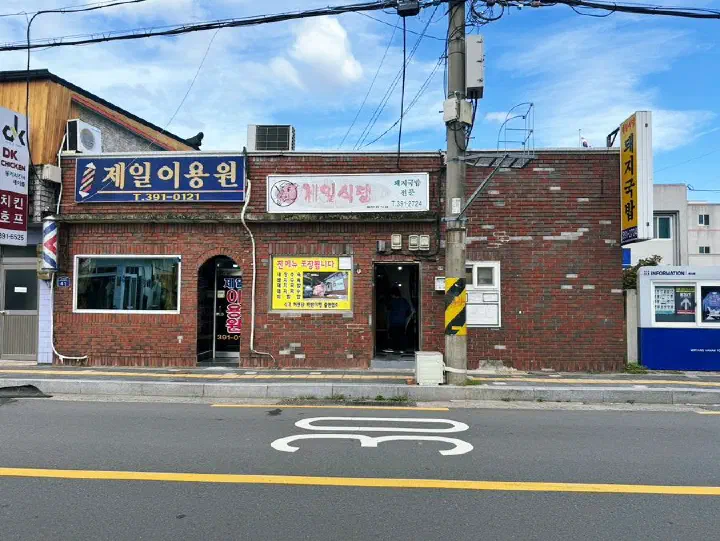
Jeilsikdang sits next to a barber shop run by the owner’s husband

A fun detail: the Jeil Barber Shop right next door is run by the owner’s husband. The couple even installed a tiny window between the two shops so they can keep an eye on each other while working. Once you know that, every little nook inside the restaurant starts to feel warmer.

Getting there

The shop is about a five-minute walk from Susan Bus Terminal. The red-brick exterior could be easy to miss, but the sign with Heo Young-man’s smiling face acts as a perfect landmark.

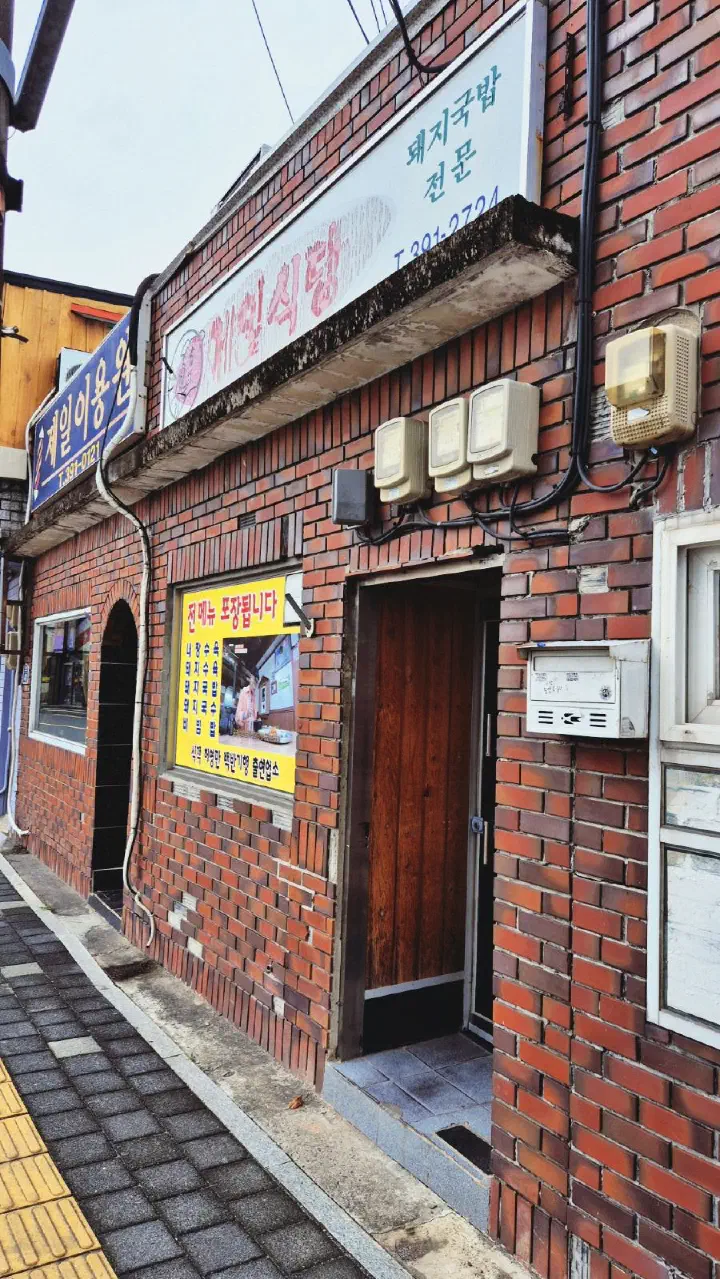
Vintage alley leading to the entrance of Jeilsikdang

Because there’s no dedicated parking, I was a little nervous at first, but you’ll find plenty of free street parking one block behind the building. On days when the local Nonghyup branch is closed, the owner says you’re welcome to use their lot too.

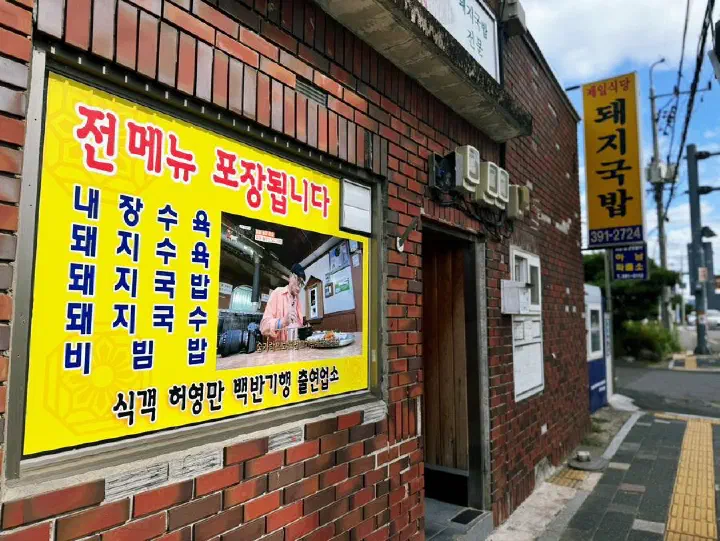
A yellow signboard listing all dishes available for takeout

A bright yellow sign on the side wall lets you know every dish is available for takeout — soup in medium (20,000 KRW) or large (30,000 KRW) portions. I saw quite a few neighbors picking up bowls to bring home.

The nearby parking lot looks like this. Head toward the Nonghyup building and you’ll find it easily.

Free parking area near Jeilsikdang

📍 View Jeilsikdang (제일식당) on Google Maps →

Stepping into a true neighborhood institution

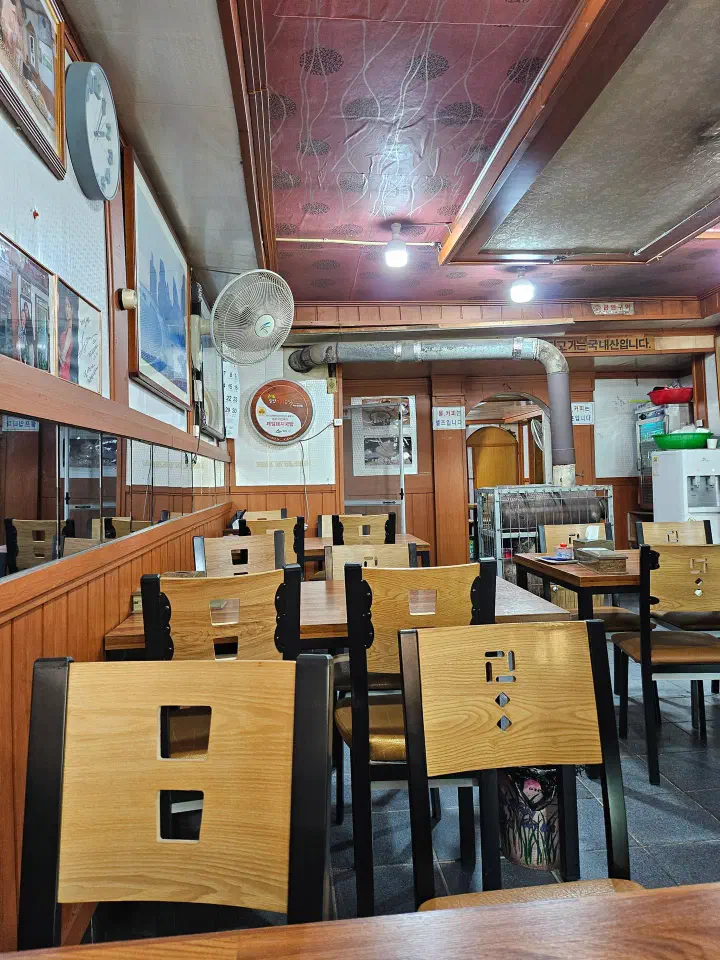
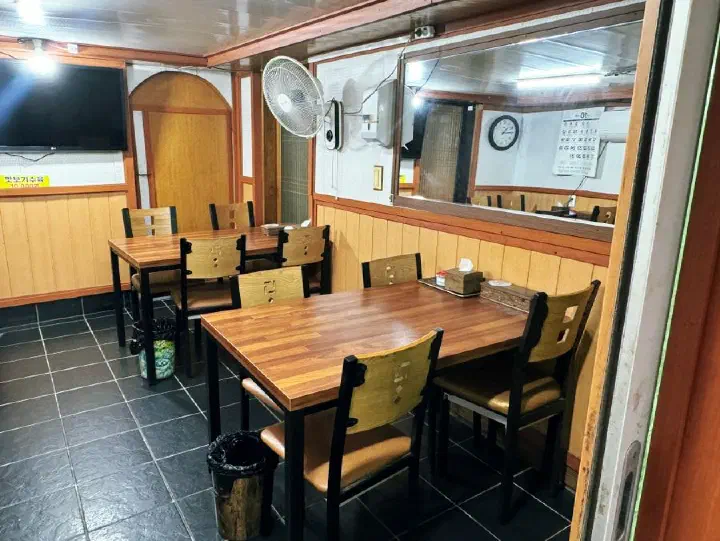
There’s no fancy interior — just an honest, weathered space that has clearly been loved for decades. The front hall has about five tables, and another six or so sit deeper inside through an arched doorway.

Wooden tables and worn walls inside Jeilsikdang’s front hall

Lunchtime fills the place with elderly regulars and family groups, so I’d recommend coming a little before noon or after the rush if you’d rather not wait.

A quiet view of the inner dining hall

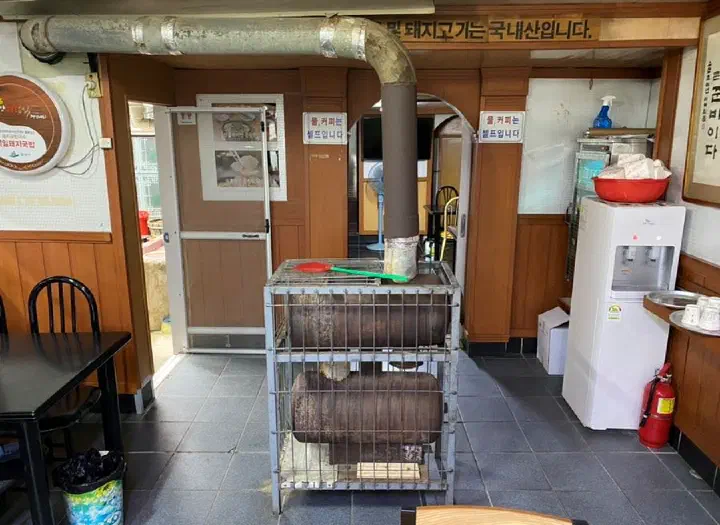
In the middle of the room stands a cast-iron coal stove that has clearly seen a few winters. Regulars say the seat next to it is the prize during cold months.

An old cast-iron stove standing in the middle of the dining room

A small window into the kitchen lets you peek at pots and ladles polished smooth by three decades of use.

A glimpse into the open kitchen at Jeilsikdang

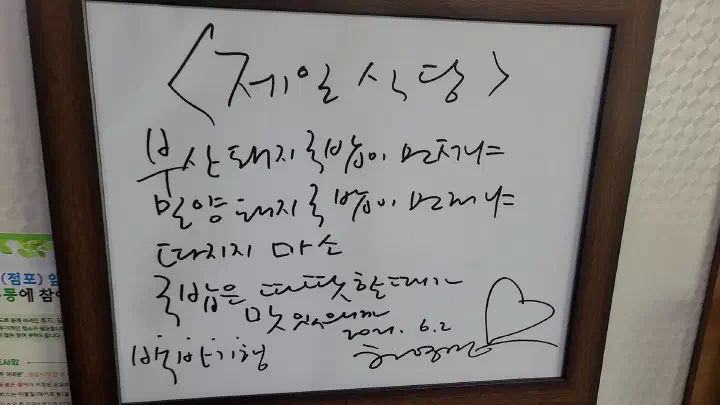
On the wall, a framed handwritten note from cartoonist Heo Young-man reads roughly:

Does it matter whether Busan’s pork soup came first, or Miryang’s?
Don’t bother arguing.
Soup tastes best when it’s piping hot.

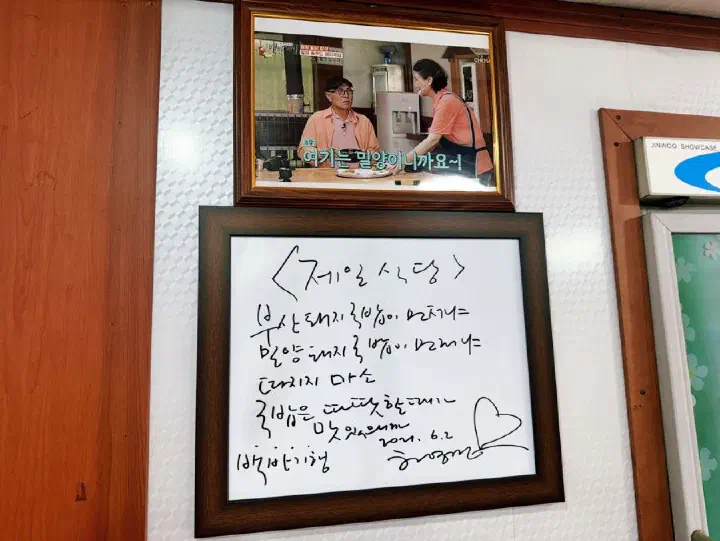
Heo Young-man’s handwritten message framed on the wall

That single line really does warm up the whole room. Just above it, a still from the TV episode hangs proudly.

A still from Baekban Travels mounted above the autograph frame

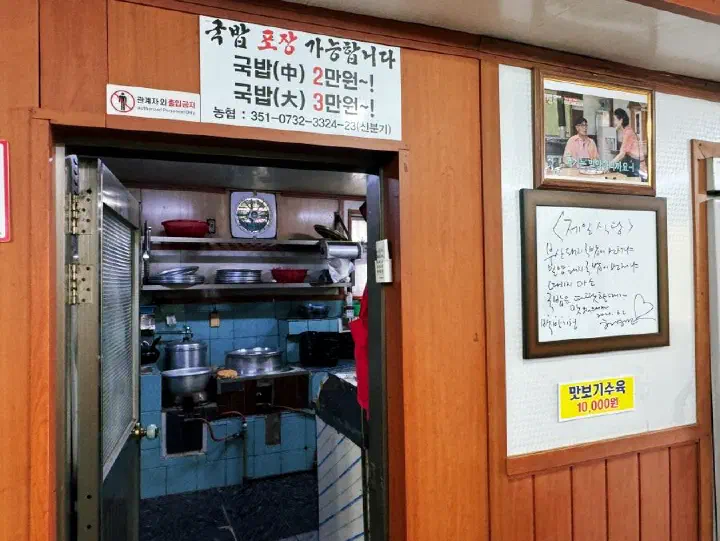
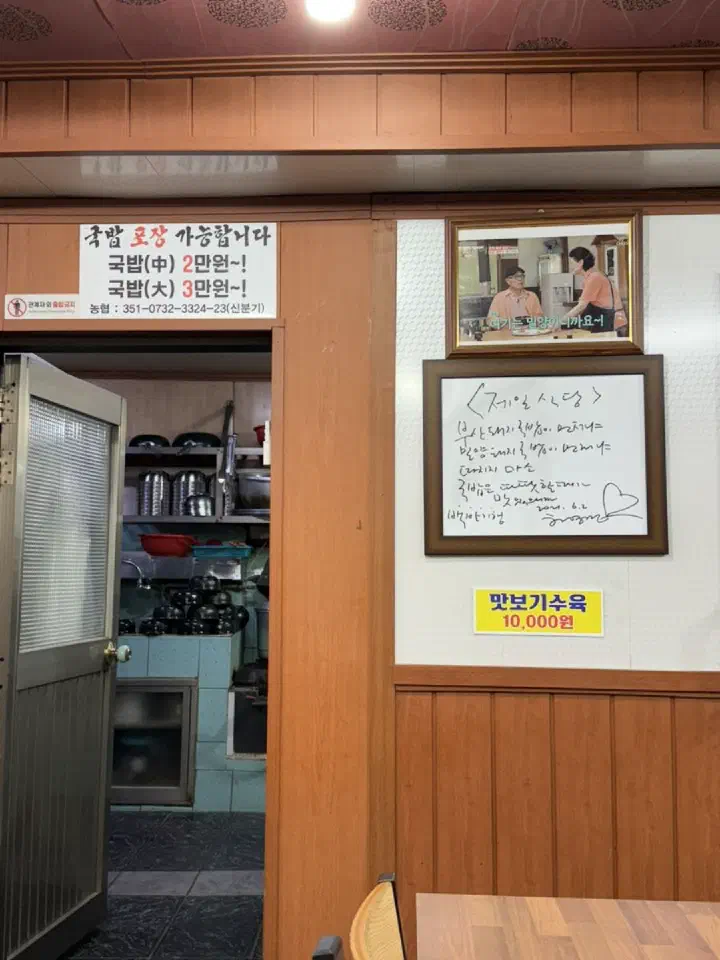
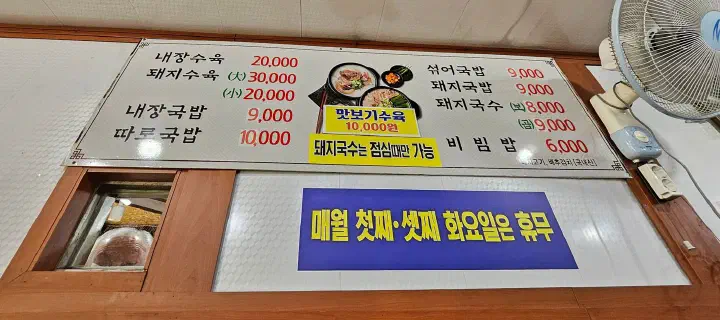
Right next to the kitchen doorway, you’ll spot a small notice listing takeout prices and the matbogi suyuk (sampler boiled pork) option for 10,000 KRW.

Notices and the autograph display by the kitchen doorway

The menu is short and focused, which is exactly what you want from a pork soup specialist.

Menu board listing soups, noodles, and boiled pork

  • Dwaeji-gukbap (pork soup with rice): 9,000 KRW
  • Naejang-gukbap (offal soup): 9,000 KRW
  • Seokeo-gukbap (mixed pork and offal): 9,000 KRW
  • Ttaro-gukbap (rice and soup served separately): 10,000 KRW
  • Dwaeji-guksu (pork noodle soup): 8,000 KRW (lunch only)
  • Bibimbap: 6,000 KRW
  • Matbogi suyuk (sampler boiled pork): 10,000 KRW
  • Dwaeji suyuk (boiled pork platter): 20,000 KRW (small) / 30,000 KRW (large)
  • Naejang suyuk (boiled offal platter): 20,000 KRW

Prices have crept up a bit in recent years, but considering how generous the portions are, it still feels fair.

If you don’t read Korean, no need to worry. The menu is short, and the owner is patient — just point at a line on the board or a dish you see on a neighboring table, hold up fingers for how many, and you’ll be set.

A side dish spread to envy

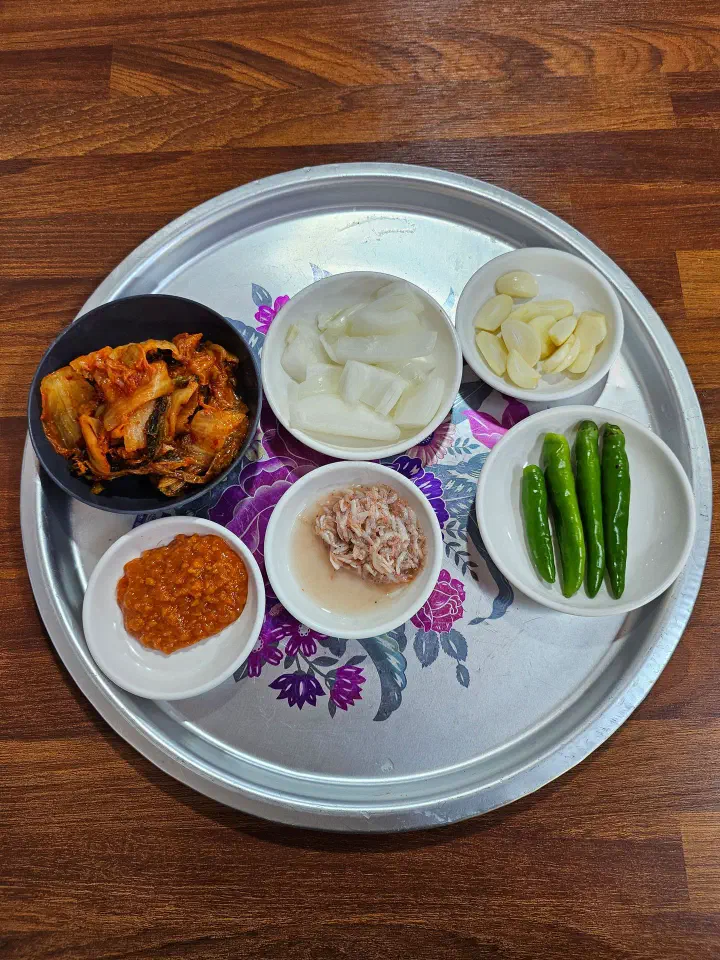
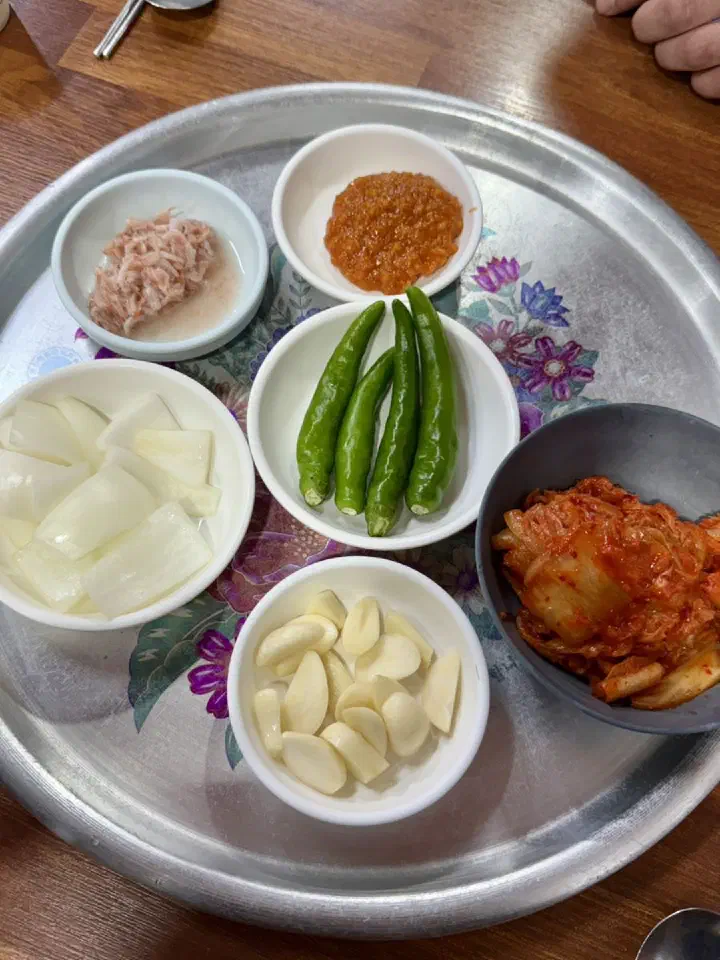
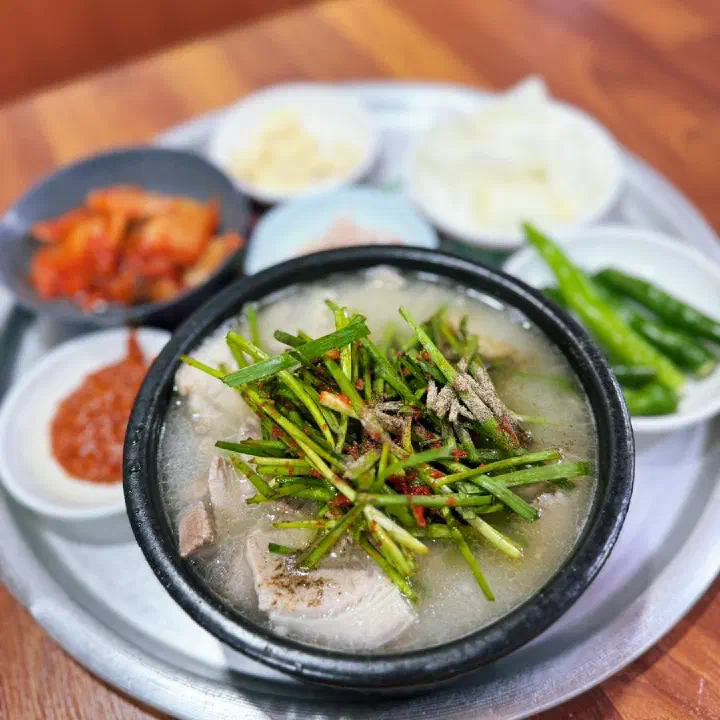
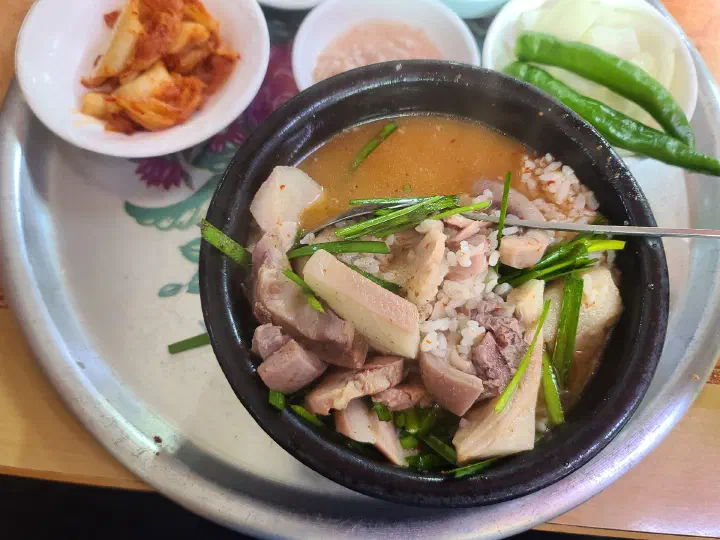
As soon as you sit down, a round metal tray arrives heavy with banchan: kimchi, raw onion, green chili peppers, garlic slices, salted shrimp, and a fiery chili paste.

A tray of traditional side dishes at Jeilsikdang

The well-aged napa cabbage kimchi is the unmistakable star here. House-made, with none of that overly sweet, mass-produced taste, it pairs beautifully with the rich pork broth. I honestly considered asking for a second plate.

Close-up of well-aged kimchi alongside other banchan

The headline bowl: dwaeji-gukbap

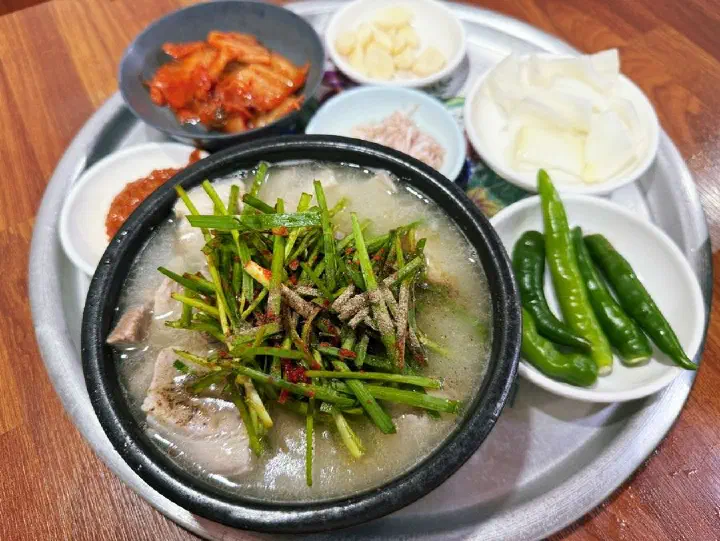
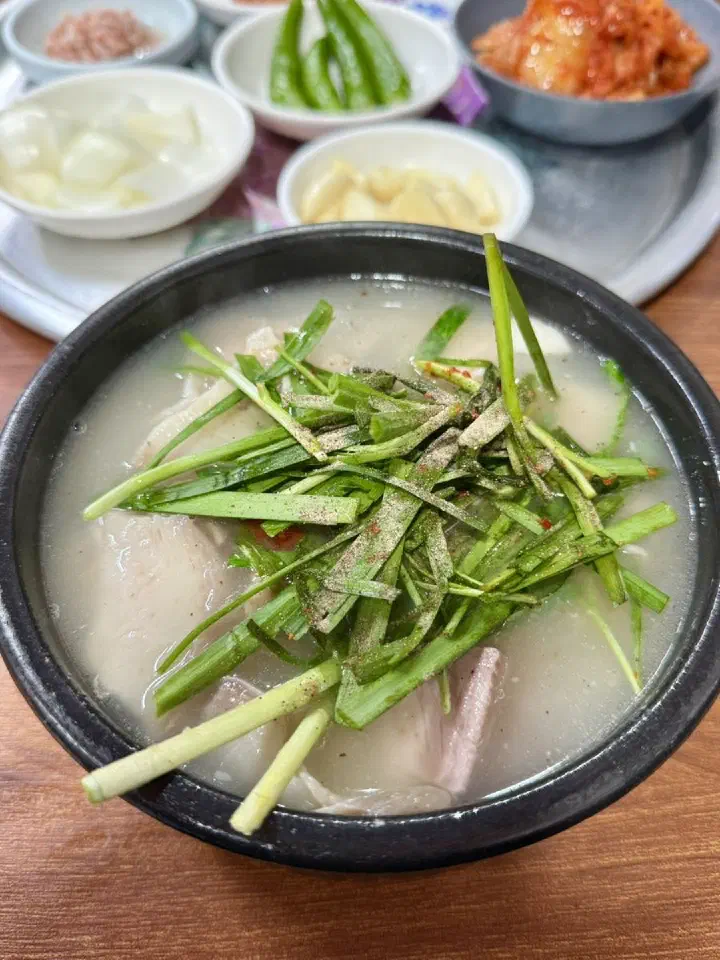
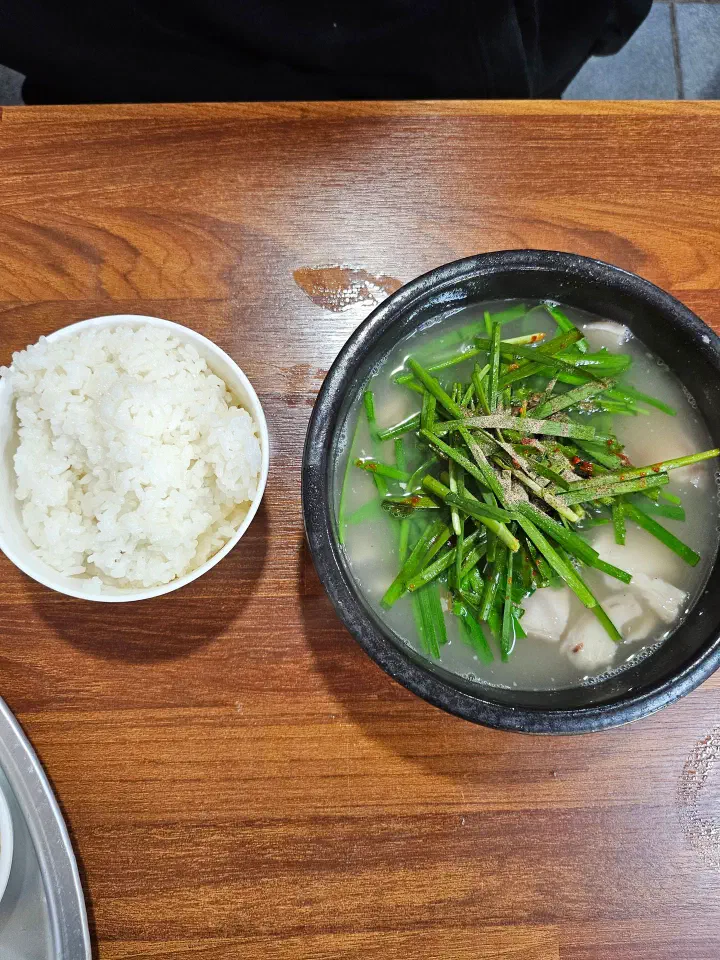
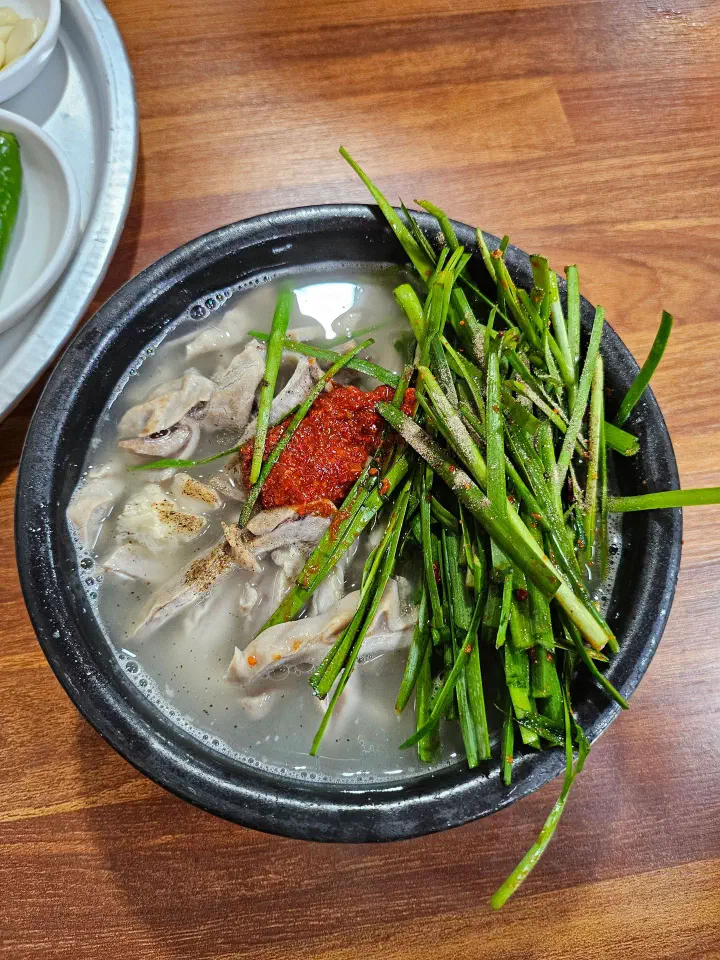
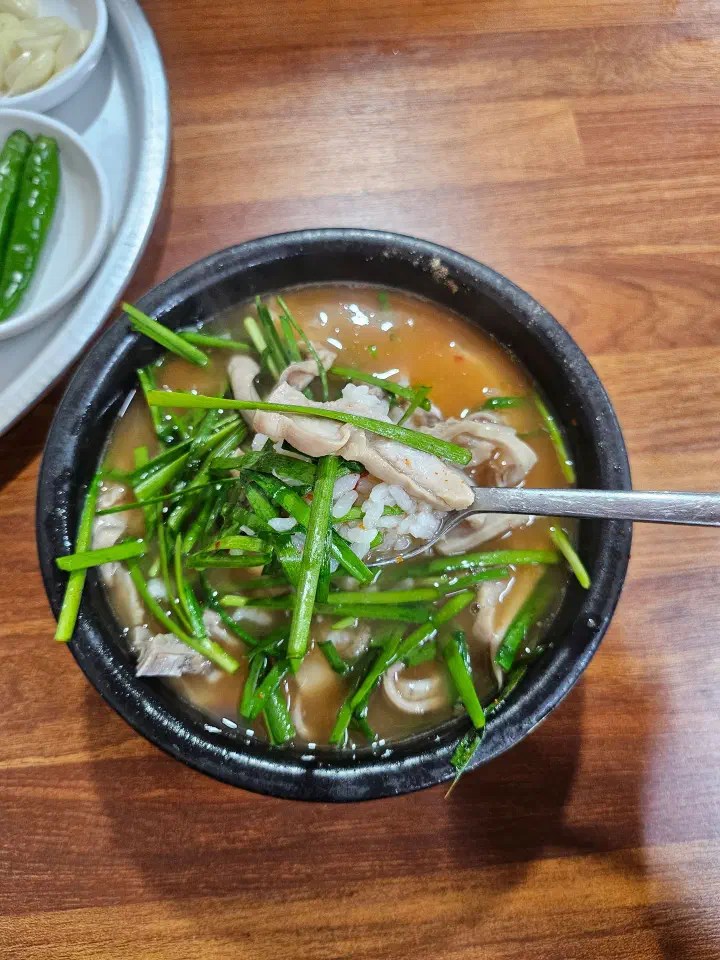
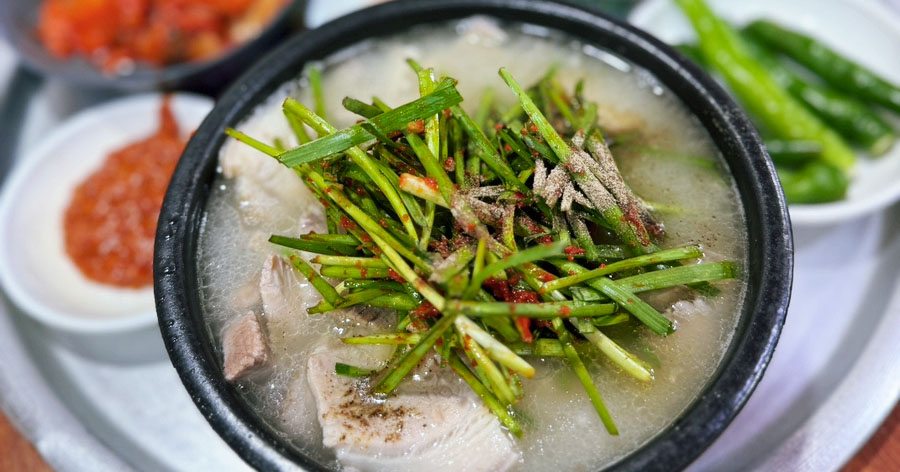
And then the main event arrives. A tall earthen bowl crowned with a generous tangle of fresh garlic chives and a sprinkle of black pepper.

Pork soup, rice, and side dishes laid out across the table

Unlike the milky Busan version, Miryang-style broth is clear and light in color. But don’t let that fool you — the pork fat lends a wonderfully rich, savory depth that fills your mouth with every spoonful.

Garlic chives piled high on a bowl of Miryang-style pork soup

The rice is torum-style, already swirled into the broth so it arrives warm and ready. I usually prefer rice served on the side, but each grain here was so well infused with broth that I quickly came around.

Spoonful of broth-soaked rice from the gukbap bowl

Stir the chives through the soup and the whole thing turns aromatic and green-sweet.

A clear, fragrant broth speckled with chives and pepper

Mix in a spoonful of the housemade chili paste to dial up the heat and depth.

The bowl after stirring in chili paste and chives

Pork that feels like suyuk

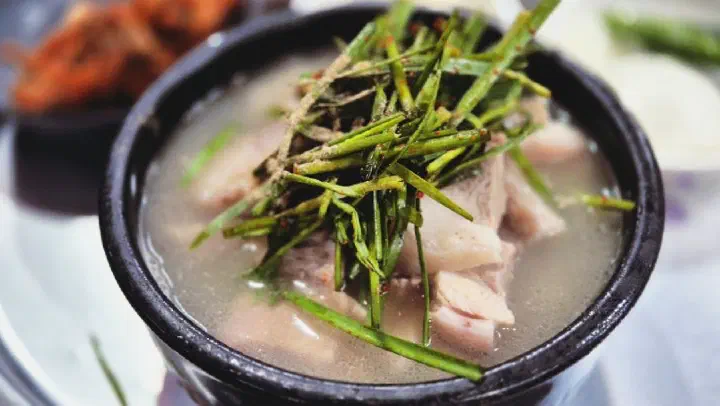
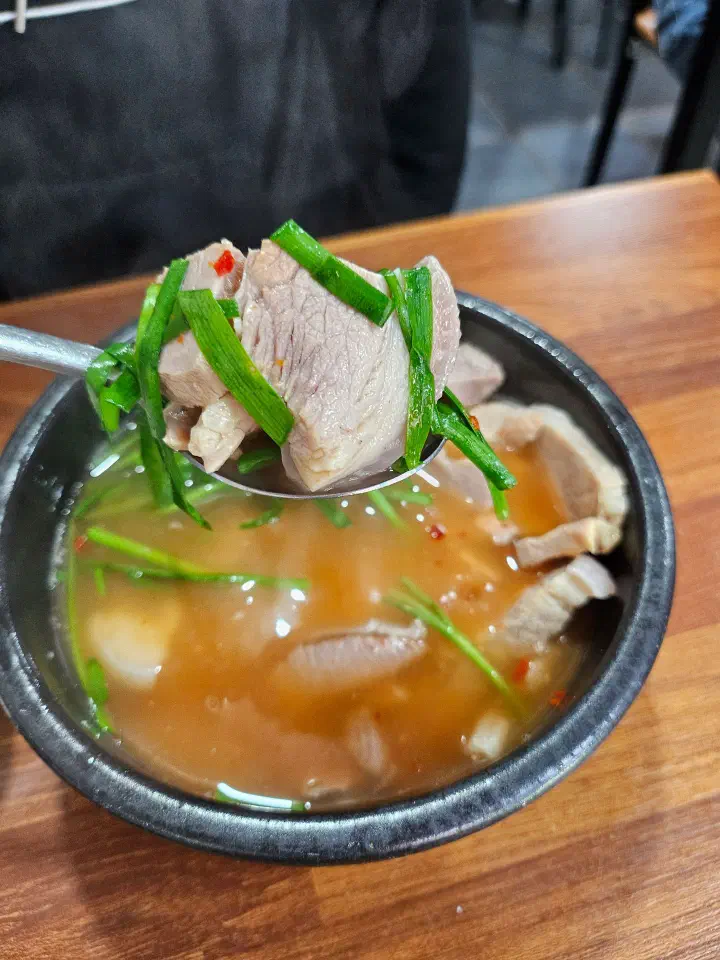
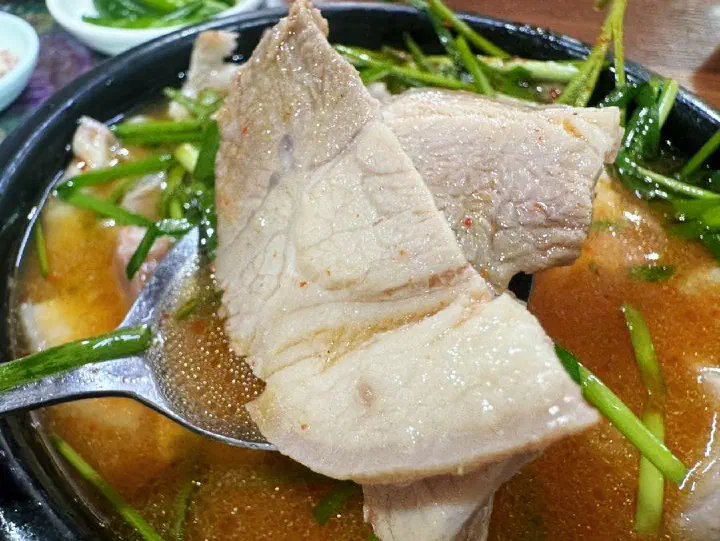
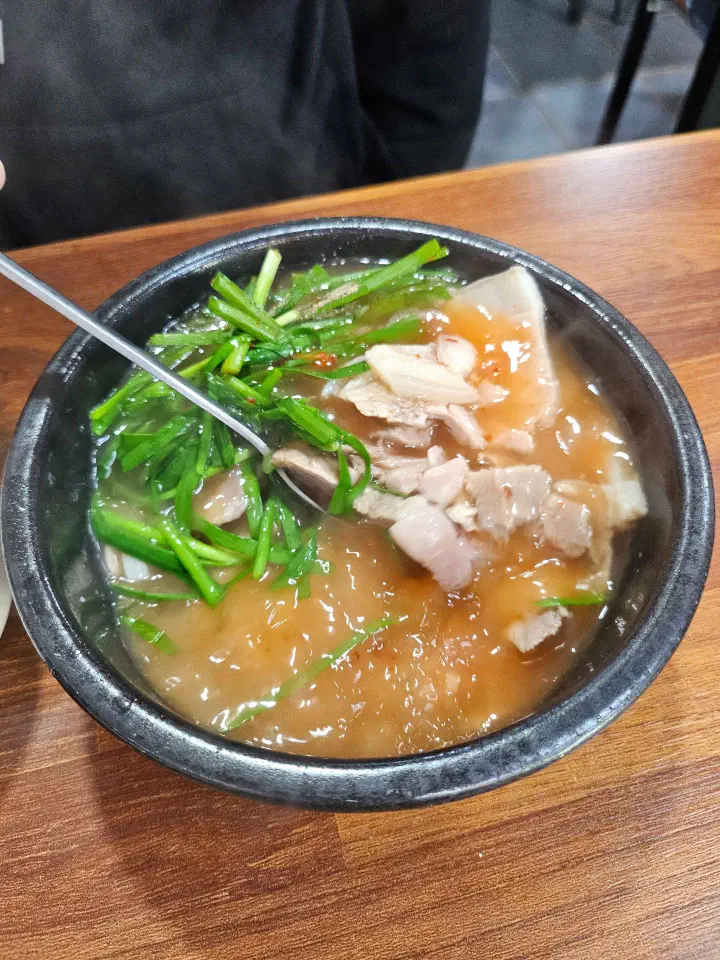
The real show-stealer is the pork itself. Each slice is so thick it could pass for suyuk (boiled pork platter) on its own.

A thick slice of pork lifted out of the gukbap broth

Lean meat, soft fat, and even a touch of pork skin are layered into every piece. There’s no gamey funk at all — the meat is tender but still has bite, which is a hard balance to strike.

Tender, thick-cut pork pieces in the broth

Even friends who usually skip pork fat told me they happily ate every piece here. The owner often asks ahead about your preferences, which makes the whole meal feel a little more personal.

A close-up of a freshly served bowl of Miryang dwaeji-gukbap

Beyond the classic bowl

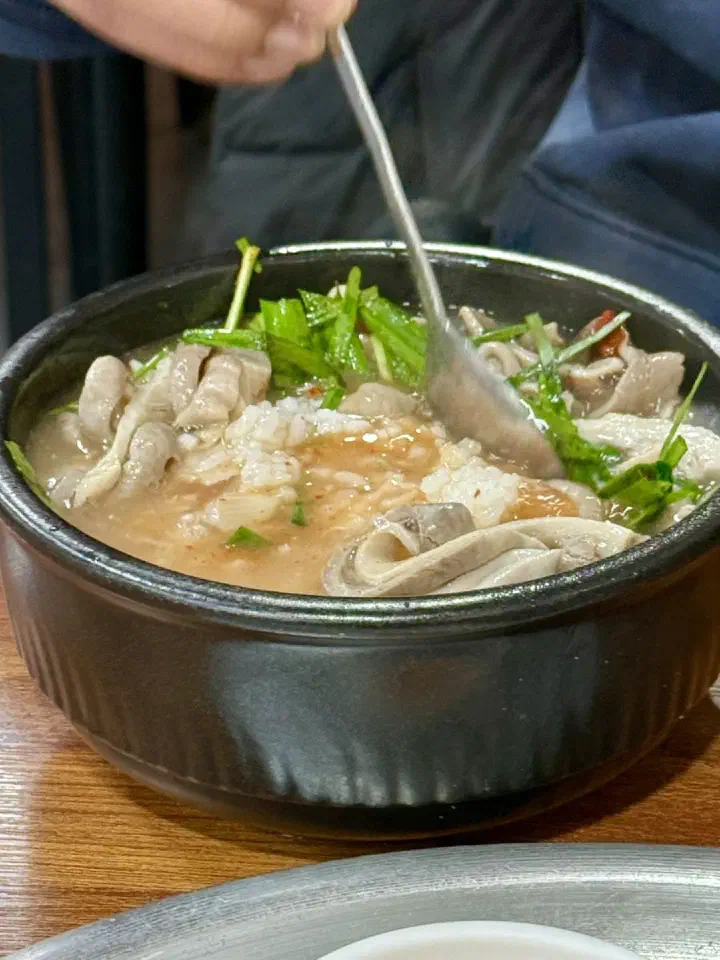
If you come back, do branch out into the other options. The naejang-gukbap is packed with bouncy, well-cleaned offal — mostly oxori-gamtu (pork stomach) — in portions that genuinely test your appetite.

A generous bowl of offal soup at Jeilsikdang

Stir in the chili paste and the broth deepens into something a touch spicier and richer.

The same bowl after fully stirring in the seasonings

Ttaro-gukbap keeps the rice and broth apart, perfect if you like to dip rather than swim. The soup bowl arrives crammed with thick lean meat — incredibly hearty.

Rice and soup served separately as ttaro-gukbap

Seokeo-gukbap combines pork and offal in one bowl. If you can’t decide between textures, this is the one to order.

A mixed bowl of pork and offal in a clear broth

A kitchen run with real warmth

The owner is roughly the age of my own mother. She comes out of the kitchen herself to check on every table, asking softly whether the broth tastes right and whether you’d like more.

When families bring children, she’ll often divide the soup into a smaller bowl with the spice left out. She also keeps an eye on noisy neighbors so quieter guests can enjoy their meal in peace. Her granddaughter sometimes helps out, which only adds to the feeling of stepping into a grandmother’s countryside kitchen.

My honest takeaway

You won’t find trendy plating or curated playlists here. What you will find is three decades of confident, patient cooking, generous slabs of pork, and the kind of warm, unhurried hospitality that’s getting harder to come by.

If your itinerary brings you anywhere near Hanam-eup, please save an appetite for lunch. I’m already planning to swing back the next time I visit Maneosa Temple nearby.

A quick heads-up for visitors from abroad: card payments are accepted here, as they are at almost every restaurant in Korea, so you really don’t need to carry cash. And please don’t worry about tipping — Korea simply doesn’t have a tipping culture, and the staff may actually feel a little awkward if you try to leave one.

Jeilsikdang — the bowl I’ll keep coming back for.