There is no menu to read at Mokhyangwon (목향원).
The staff count how many people are at the table, and that’s the whole ordering process.
One set meal, 19,000 won a head, served since 1997 on a hillside between Bulamsan and Suraksan.
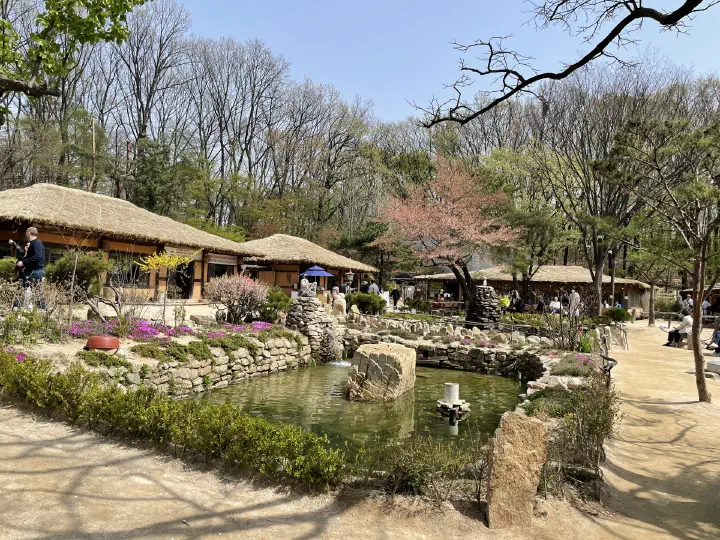
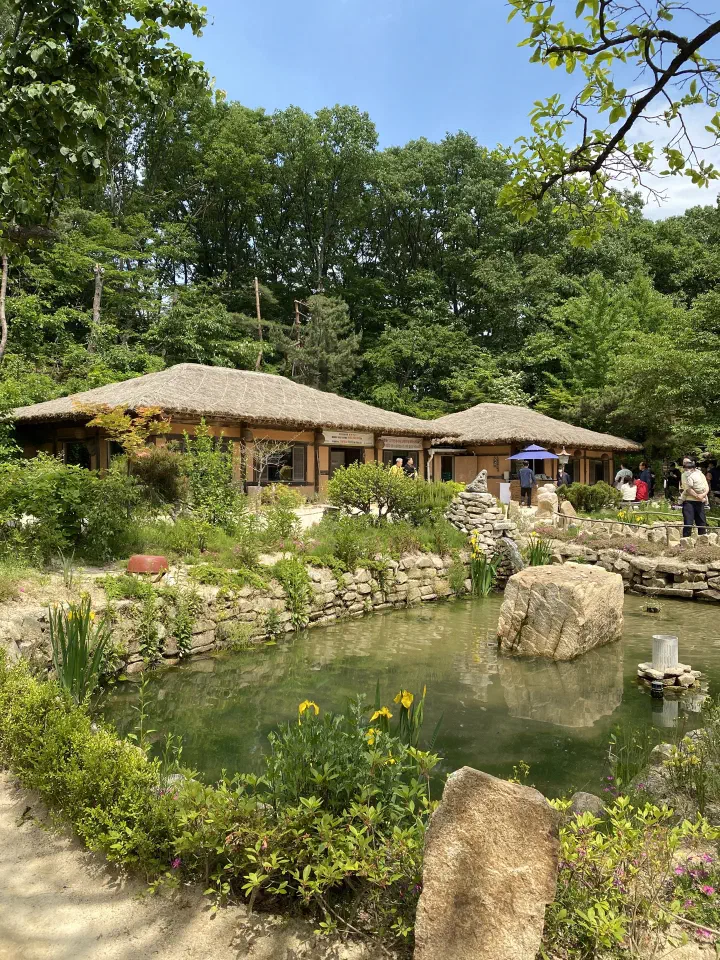
Thatched roofs, a pond, a wall of clay jars, and a parking lot that fills up with Seoul plates by noon.

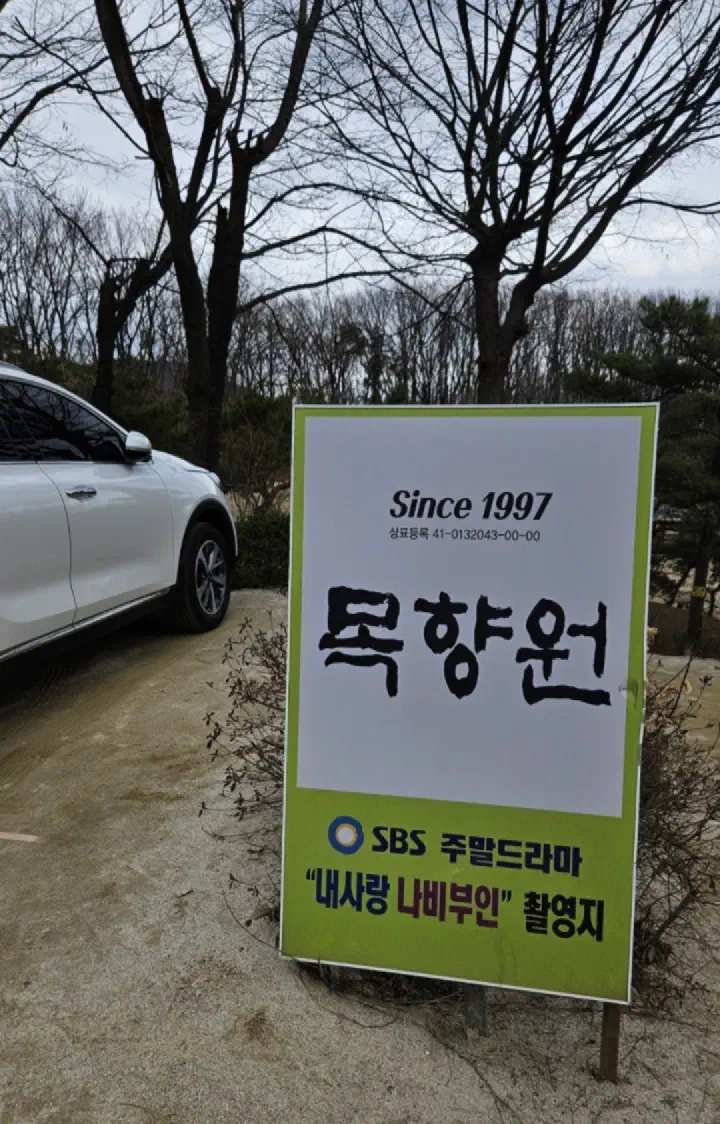
Mokhyangwon entrance sign reading Since 1997 with a notice that the SBS weekend drama My Love Madame Butterfly was filmed here

It’s about 10 kilometers from northern Seoul, roughly 30 minutes by car.
That drive is why the place packs out on weekends.
It’s also why some people leave disappointed, because half an hour in the car raises expectations that a quiet plate of grilled pork doesn’t always meet.

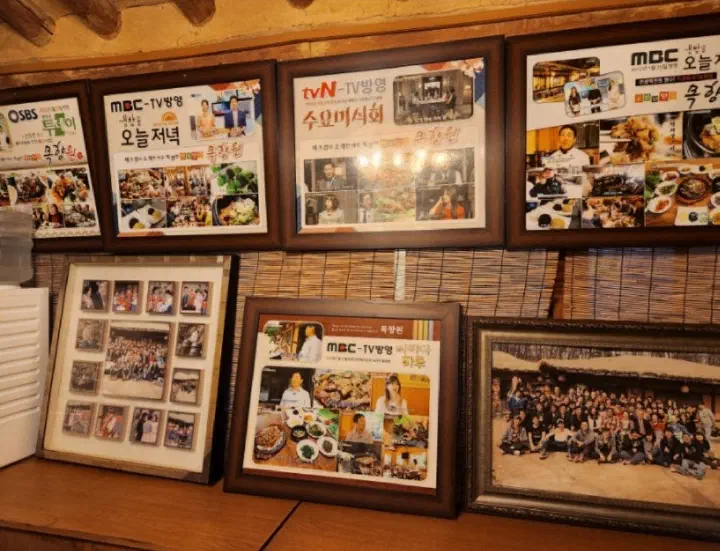
The walls inside are covered in framed press clippings, and there are a lot of them.
Korean food shows have been out here more than ten times between 2015 and 2024, including tvN’s Wednesday Food Talk and evening programs on KBS2, MBC, and SBS, and the Blue Ribbon Survey has listed it year after year.
The 2012 SBS weekend drama My Love, Madame Butterfly used the courtyard as a main location.
Worth knowing, and worth discounting a little, because this isn’t the same kitchen those cameras filmed.

Framed Korean TV show features on the wall of Mokhyangwon, including tvN Wednesday Food Talk and MBC evening programs

The name is a small puzzle even for Koreans.
Most people assume the middle syllable means fragrance. It doesn’t - the three characters are tree, countryside, and garden, so the name reads as something like “a country garden full of the smell of wood.”
The founder came from Namwon in the southwest and built the thatched houses to look like the village he grew up in.

What you actually get

The set is called seoksoe bulgogi ssambap (석쇠불고기 쌈밥정식).
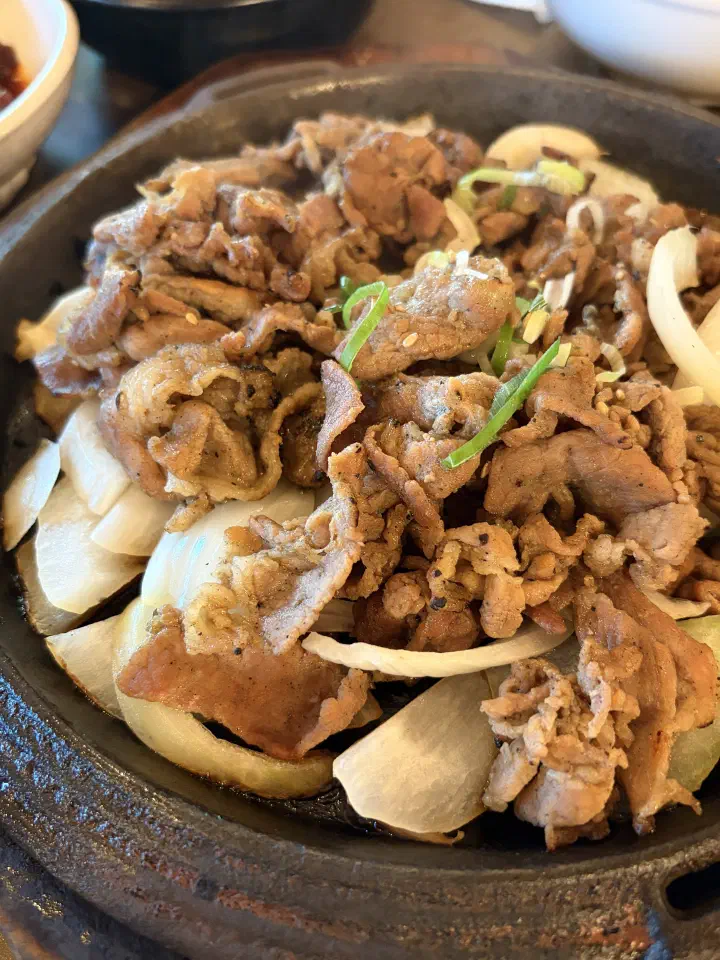
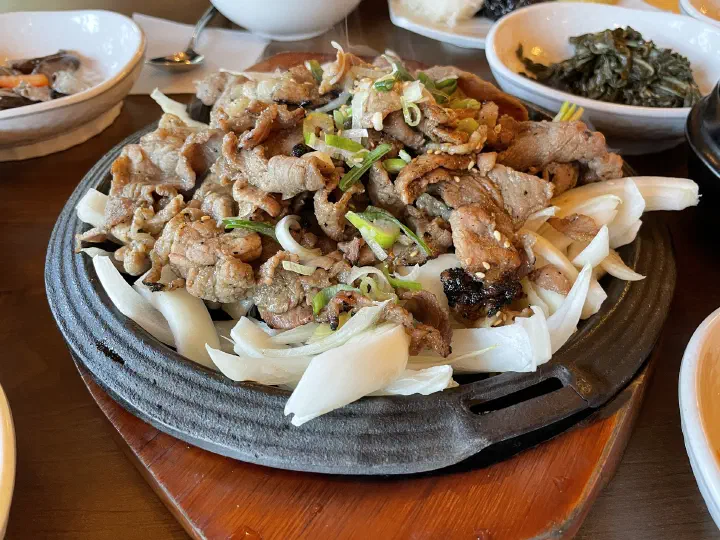
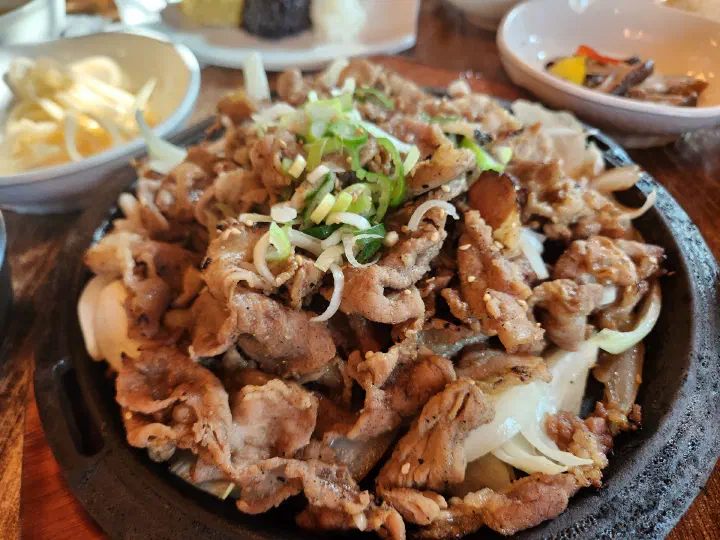
Thin slices of Korean pork shoulder go over an oak charcoal fire first, then arrive on a hot iron plate with a bed of onions underneath.
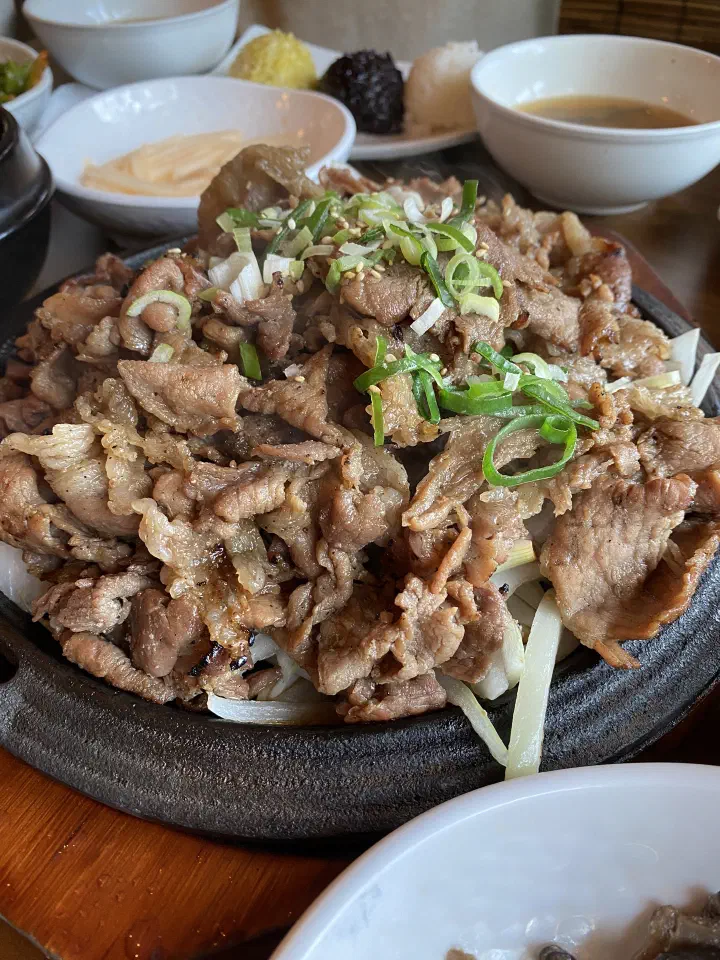
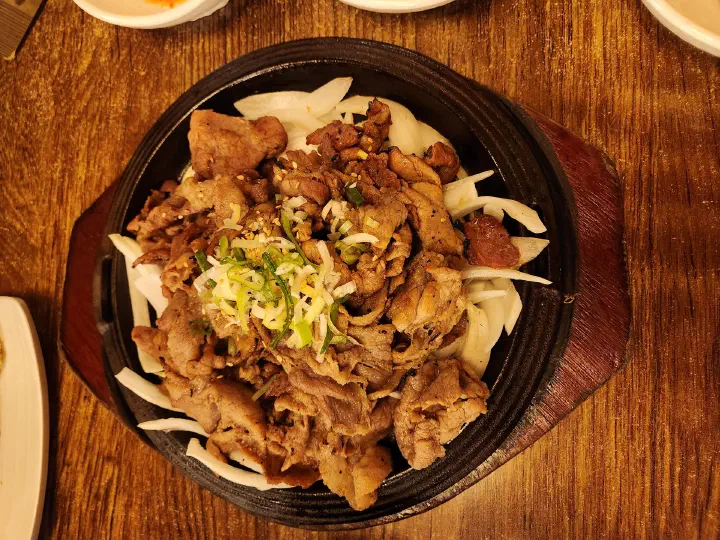
The portion is 200 grams per person, weighed raw.
As the plate sits, the onions sweeten and start to caramelize. Scoop them up with the meat.

Thin slices of charcoal-grilled Korean pork shoulder over a bed of onions on a hot iron plate at Mokhyangwon

The marinade is soy sauce cut with the kitchen’s own aged soy sauce and sweetened with plum extract.
It reads mild rather than sweet or salty, which is exactly why the place fills up with grandparents and small children.
If you came expecting a punchy, sticky Korean barbecue glaze, this will taste underseasoned.
That’s the single biggest thing to know before driving out here.

A 200 gram serving of seoksoe bulgogi topped with scallions and sesame seeds at Mokhyangwon

Then the rice, which is what the restaurant is really known for.
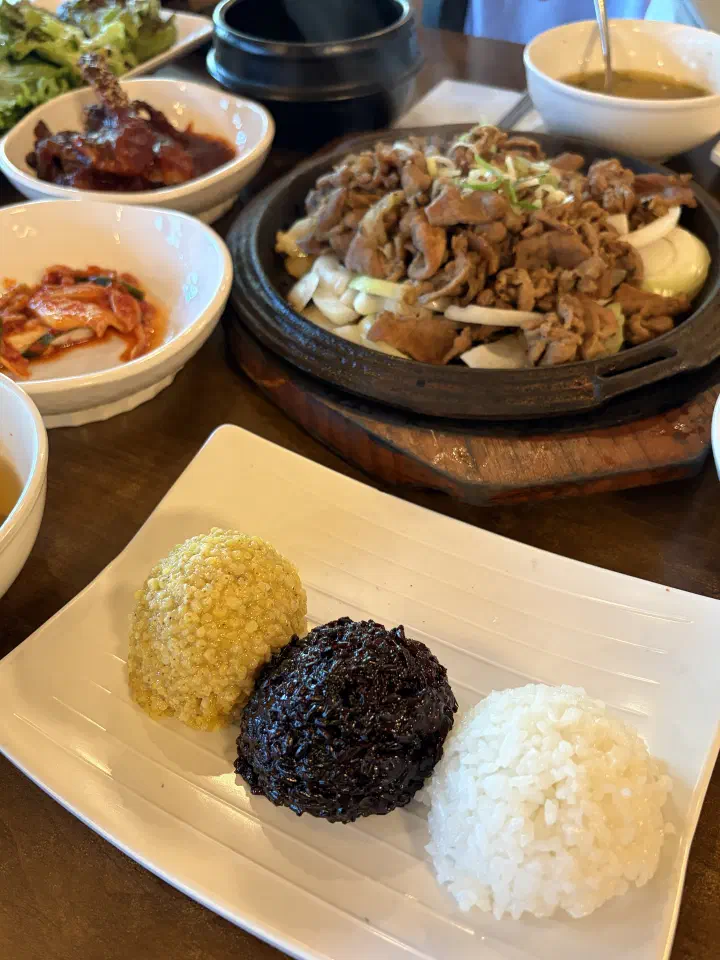
Three scoops arrive, shaped like scoops of ice cream: white rice, black rice, and millet.
They’re packed tight and eat almost like rice cake, chewy and dense.
It looks like a small serving. It isn’t.

Samsaekbap at Mokhyangwon, three scoops of white rice, black rice, and millet served beside the grilled pork plate

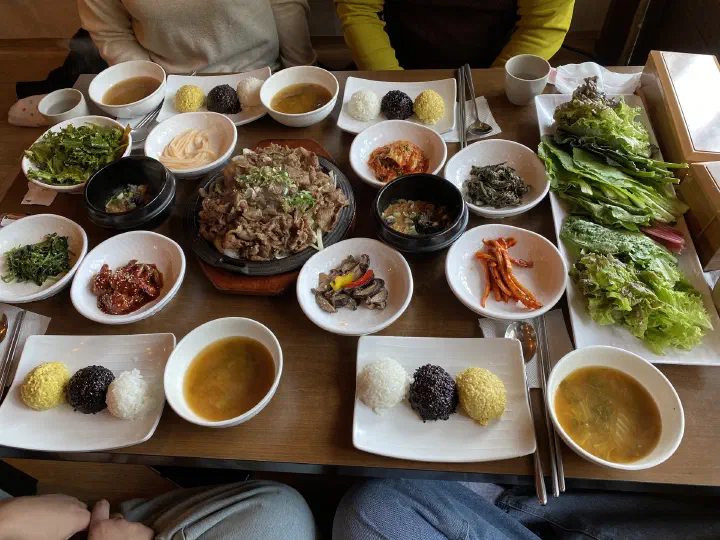
Lettuce and wrap greens come pre-set on the table, and staff will bring more at no charge.
The leaves are large enough that most people tear them in half.
The restaurant built its name on organic greens, and the sign on the wall still says so, but a smaller notice underneath admits they’ve gotten hard to source and ordinary greens are now mixed in.
Longtime regulars notice.

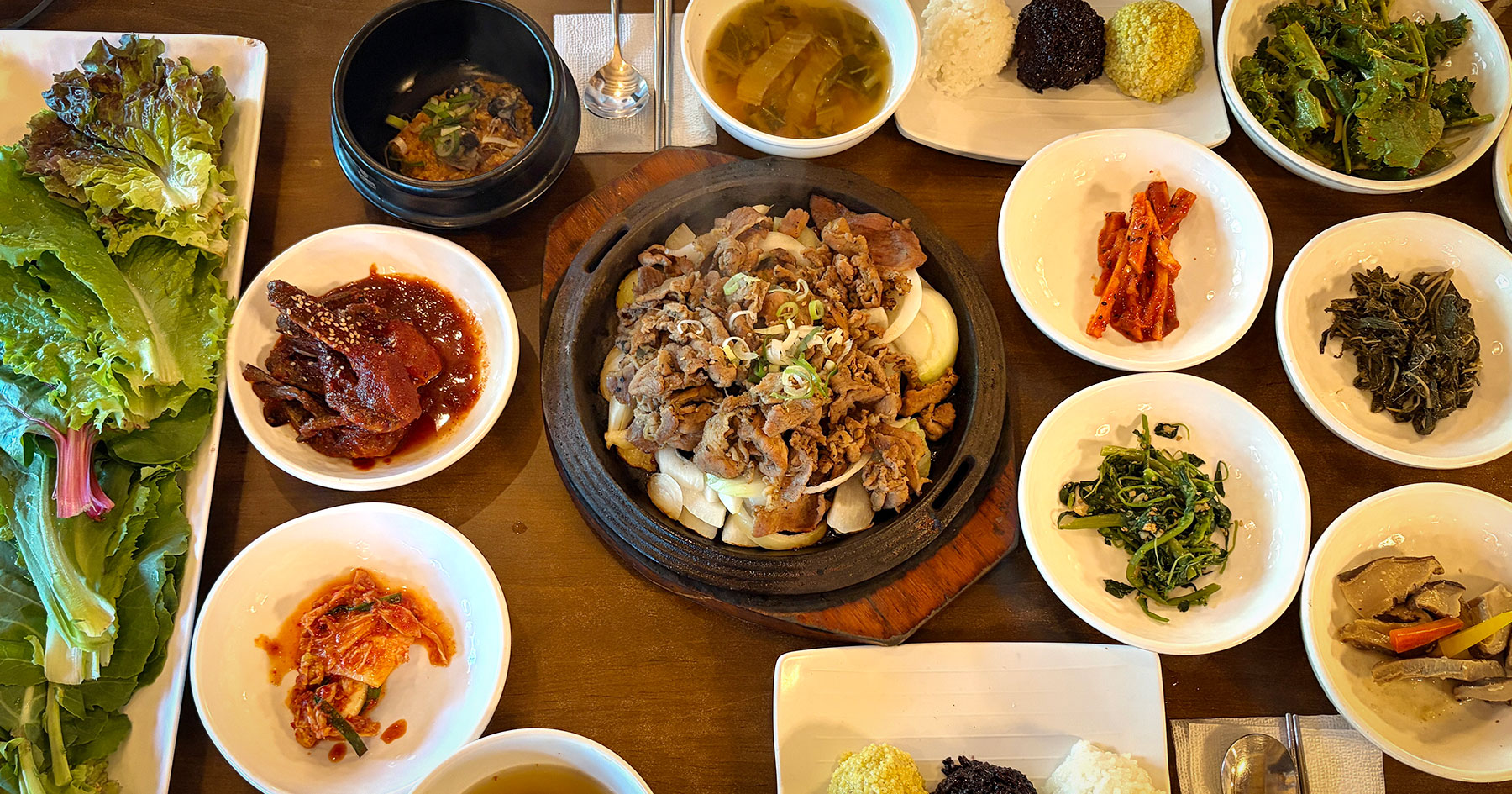
Full ssambap set for two at Mokhyangwon with lettuce wraps, tricolor rice, soybean paste soup, and eight side dishes

Side dishes run to about eight: seasoned radish, bellflower root, spinach, sauteed mushrooms, kimchi, plus a soybean paste soup.
You refill everything yourself at a side bar, soup included, so there’s no flagging anyone down.
The ureong ssamjang (우렁쌈장) is a soybean paste sauce cooked down with freshwater snails, ground onion, radish, and nuts, and it’s meant to be spooned on generously since it’s nutty rather than salty.
There aren’t many snails in it, which is a small letdown when the sauce is named after them.

Mokhyangwon grilled pork plate surrounded by Korean side dishes of seasoned greens and mushrooms

One side dish does not refill: the yangnyeom gejang (양념게장), spicy marinated crab.
One plate per table, and more costs 8,000 won.
It’s the sharpest-tasting thing there and the one people go back for.

The ordering trap

There’s no meat-only add-on.
If the table runs short, you order another full set at 19,000 won, and another tray of rice and greens comes with it.
So decide at the first order rather than halfway through.
For a table of hungry adults, one extra set is the usual move.

Overhead view of one 200 gram portion of Mokhyangwon seoksoe bulgogi piled on sliced onions

Two people come to 38,000 won, four to 76,000 won.
The price has climbed steadily: it was 18,000 won as recently as early 2025.
Cards work fine, foreign-issued ones included.
Nobody tips in Korea, and cash left on the table would just confuse the staff.

Getting a table

Reservations are only taken for groups of six or more.
Everyone else signs in on the spot, so head to the desk in the middle of the courtyard before you look around.
You give a headcount and take a number - look for the red parasol.

The rule that catches people off guard: your whole party has to be there before they seat you.
Since parking takes a few minutes, send one person up to grab a number first.

Guests waiting in the Mokhyangwon courtyard by the pond and thatched dining halls on a spring afternoon

The wait itself is shorter than the crowd suggests.
Several buildings, a lot of seats, and quick turnover, because everyone’s eating the same thing.
Eight to ten groups ahead usually means ten to twenty minutes at weekend lunch, five to ten on a weekday.
The gap between lunch and dinner is the easiest window of all.

Weekends and holidays are a different story at opening.
Arriving 30 minutes before the 11:00 opening can still put you eighth or ninth in line.
And the waiting area is the outdoor garden, which is lovely in spring and fall and genuinely rough in July or January.
July here is brutal, so in the hot months aim for opening and skip the standing around.

The driveway is the real warning

The road up from Deokneung Pass toward Heungguksa temple narrows badly near the restaurant.
Part of the approach was blocked off by a neighboring landowner, so what is left is tight and steep.
If a car comes the other way, there isn’t much room to work with.
Take it slowly, and after rain expect some soft dirt underfoot.

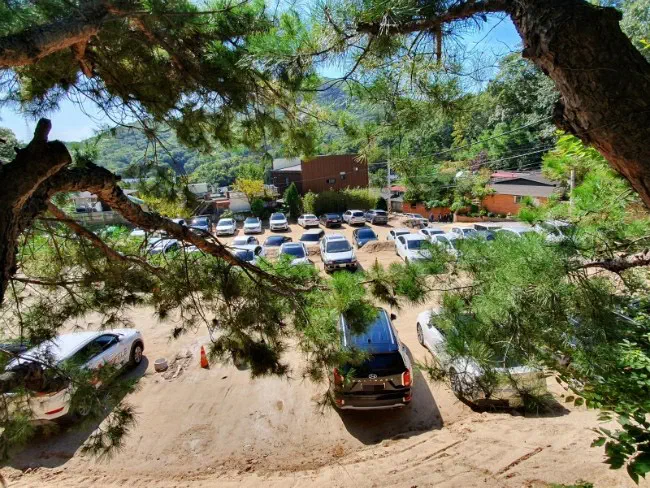
The parking lot itself is generous and free, spread across several tiers with attendants directing traffic.
The lower lot is flatter but a longer walk; the upper ones are closer but steeper.
Either way there’s an uphill path of straw matting between the cars and the tables, which is charming, and worth thinking about if anyone in your group has trouble on their feet.

Free tiered parking lot at Mokhyangwon seen through pine branches, filled with cars

Without a car, buses run nearby and the stop leaves you a five-minute walk uphill.
Kakao T is the taxi app that actually works in Korea.
Use Naver Map or KakaoMap for directions rather than Google Maps, which handles Korean walking and transit routes poorly.

📍 View Mokhyangwon (목향원) on Google Maps →

The buildings and the yard

Four thatched buildings sit around the courtyard.
Three are dining rooms, one’s a cafe.
You keep your shoes on in the main hall; the annex asks you to leave them at the step, though the tables are still standard height rather than floor seating.
Which one you get depends on your group size and whoever is running the desk.

Thatched roof dining halls and the courtyard pond at Mokhyangwon surrounded by summer greenery

Inside, the exposed wooden rafters are the good part, and the tables are set far enough apart that a big group does not feel on top of anyone.
It’s not quiet, though.
Large tables and a lot of families mean a fair amount of noise at peak hours.

The yard is why people linger.
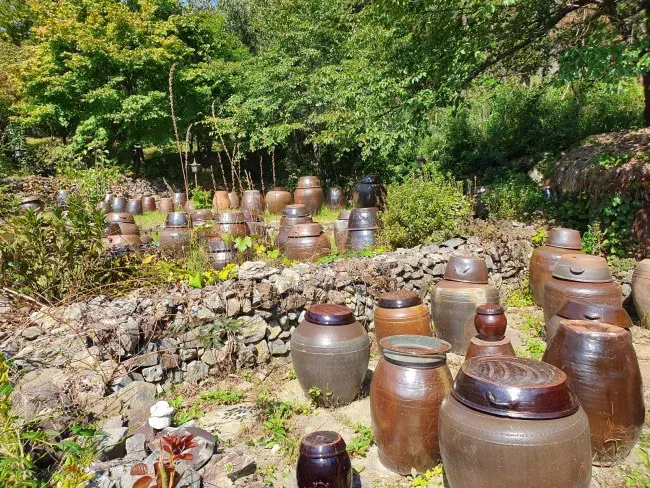
Clay jars line the stone wall, and the pond holds what look like mountain stream fish rather than the usual goldfish. Kids park themselves over it.
Rows of traditional Korean clay fermentation jars lining the stone wall in the Mokhyangwon yard

There is a fire pit in the courtyard that gets lit in cold weather, and the cafe sells marshmallows for 1,000 won and dried filefish for 2,500 won to roast over it.

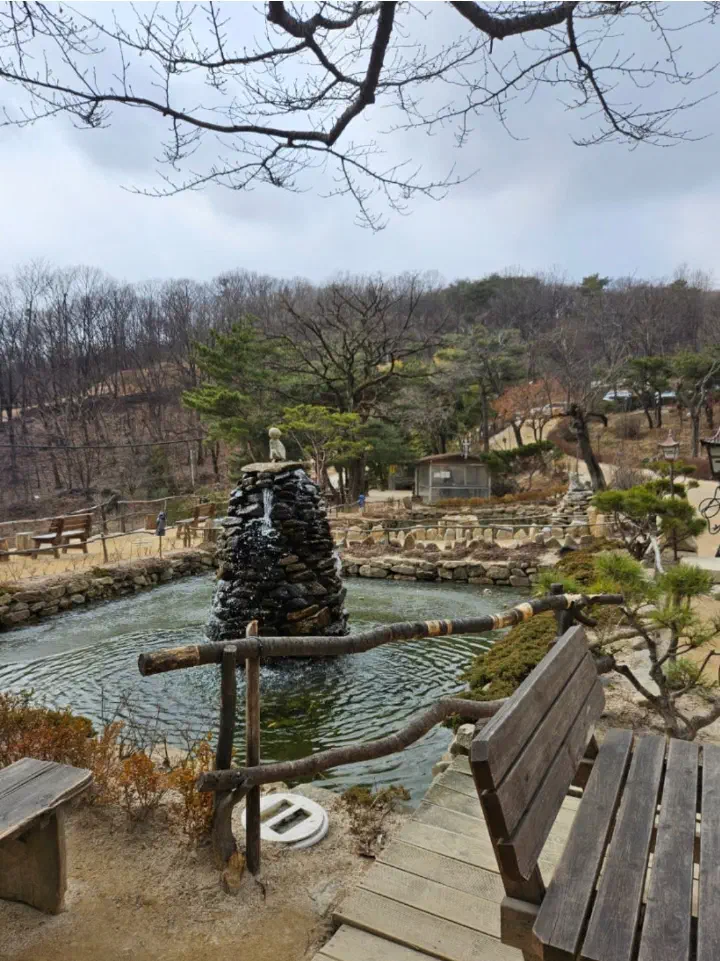
Wooden benches beside the stone tower fountain and pond in the Mokhyangwon garden

The cafe across from the dining hall pours Americanos at 4,500 won and lattes around 5,000 won.
On busy weekends it sometimes runs takeout only, because the cafe space gets pressed into service as extra dining room.
Heungguksa temple is right up the road, so pairing lunch with a short walk there is a common plan.

The complaints, fairly stated

Service is the recurring sore point.
At peak hours plates land on the table without a greeting, and staff sometimes give conflicting directions when the floor is slammed.
It isn’t hostility, just a kitchen running flat out, and it still lands badly on people who drove out from the city.

The restroom path has uneven stone steps and a raised threshold at the door.
For a restaurant whose customers skew older, that’s a real oversight.

Close-up of Mokhyangwon charcoal-grilled pork with onions and scallions on the iron plate

Consistency has also drifted.
The meat can arrive unevenly cut depending on the day, and greens occasionally still have soil on them, so give the leaves a look before wrapping.
Leftovers can be boxed up, but the fresh greens cannot be taken away.

There is no English on the menu board, and the staff don’t speak much English, but none of that matters here.
You hold up fingers for how many people, and the food arrives.
It may be the easiest restaurant in Korea to order in.

Nothing on the tray is spicy except the marinated crab, which has a real chili kick.

Where I land on it

Mokhyangwon does not win on flavor.
The seasoning is gentle by design, and at 19,000 won some people walk out feeling the view did more work than the cooking.
That reaction is fair, and it comes up often enough to say plainly.

What it does have is a table that suits everybody at once.
Older parents, small children, and anyone who just wants vegetables and rice all eat well here, and the refills mean nobody counts what they are taking.
Add a courtyard you can walk the meal off in, and it makes sense as a family lunch in a way a better bulgogi place downtown wouldn’t.

Come at 11:00 on a weekend, take the driveway slowly, and settle the meat order the first time around.
Get those right and it’s a good afternoon.

Getting here

The address is 34-11 Deokneung-ro 1071beon-gil, Namyangju-si, Gyeonggi-do.
Open daily from 11:00 to 21:00 with last orders at 20:30, no break time, and no closing days through the year.
The phone number is 031-527-2255, though calling is only useful for group bookings.

📍 View Mokhyangwon (목향원) on Google Maps →