If you ask anyone in Nonsan where to get makguksu (막국수), cold buckwheat noodles, this place keeps coming up.
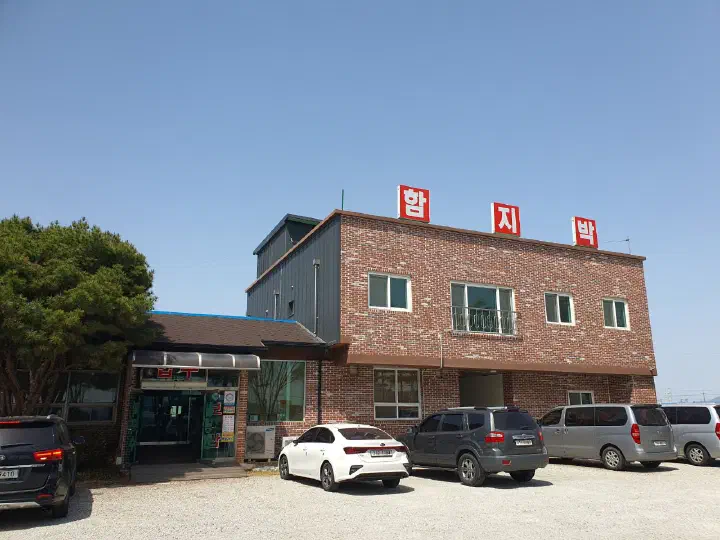
Lately it gets mentioned even more, since word spread that the TV show Pungja’s Ttoganjip filmed here. But don’t expect a flashy hotspot. Hamjibak (함지박) is a big plain building out on the road to Ganggyeong that serves basically two things: noodles and pork. That’s the charm.

Who it suits
It works for a quick solo bowl, and it works for a family spreading out bossam and a few bowls of noodles. The crowd skews older, which says something. The seasoning is gentle and the noodles are soft, so older diners eat here comfortably.
It’s fine with kids too. There’s a separate floor-seating room where you take your shoes off, good for family gatherings or larger groups.
One thing to know up front: it’s outside the town center, on the way toward Ganggyeong. Public transport barely reaches it, so you’ll really want a car. In Korea, by the way, Google Maps is unreliable for local driving and transit directions. Naver Map or KakaoMap works much better, and the Kakao T app is the easy way to grab a taxi.
📍 View Hamjibak (함지박) on Google Maps →
The basics
Address - 5 Gyebaek-ro 665beon-gil, Nonsan-si
Hours - 10:30-21:00 daily (last order 20:30), no break time, open almost year-round
Parking - private lot in front
The sign is big but the entrance is a little easy to miss from the road. First-timers, just follow the small entry sign in.

A quick note for visitors: the menu is in Korean only, but ordering is easy. Point at what you want and hold up fingers for how many, and you’re set. Almost every restaurant in Korea takes cards, including international ones, so you won’t need much cash. And there’s no tipping culture here, so don’t leave a tip. It can actually confuse the staff.
Waiting and timing
Summer lunch is the busy stretch. From June on, the tables fill fast around noon. The good news is the food moves quickly, so lines rarely drag. Go right at opening or around 2-3 p.m. and you’ll usually walk straight in. In the colder months it’s quiet, which is honestly a nice way to taste the noodles.
Mul-makguksu - the one to order
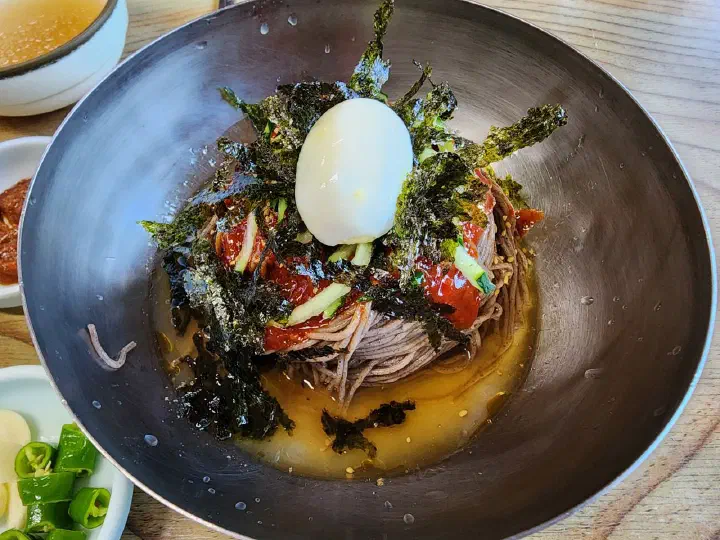
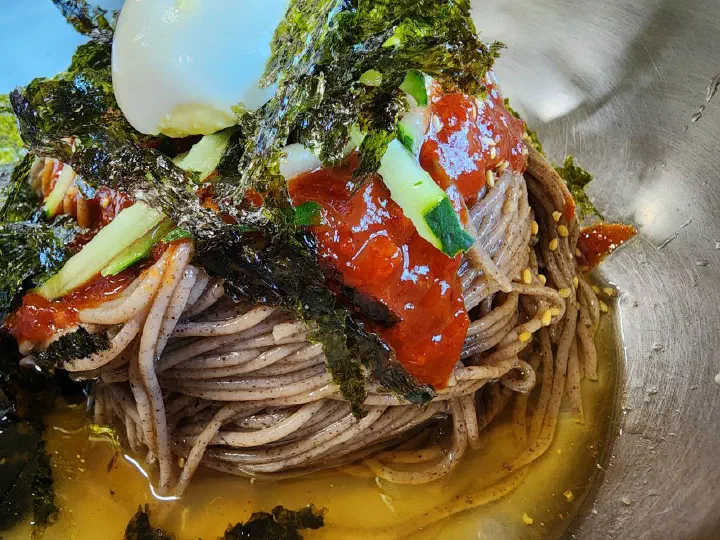
If you’re torn on what to get, the cold mul-makguksu (물막국수) is the answer.

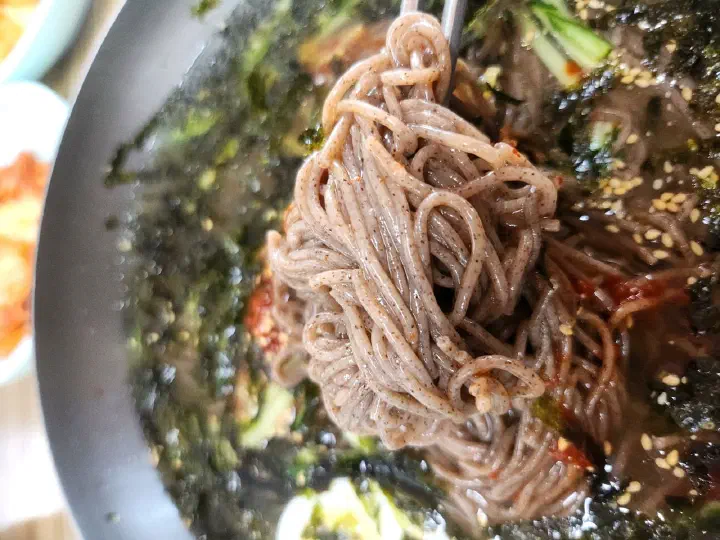
The noodles are high in buckwheat, dark in color, and that nutty buckwheat smell hits first. The broth is cold, lightly sweet and savory, with a faint perilla-oil note that sets it apart from other places.
Here’s the thing: you don’t need the vinegar, mustard, or sugar on the table. First time, try a few bites with nothing added.

They make the noodles in-house, so the texture is soft but with a chew. You can finish a big bowl without feeling heavy, and the broth doesn’t leave you thirsty afterward.

Bibim-makguksu - more divisive
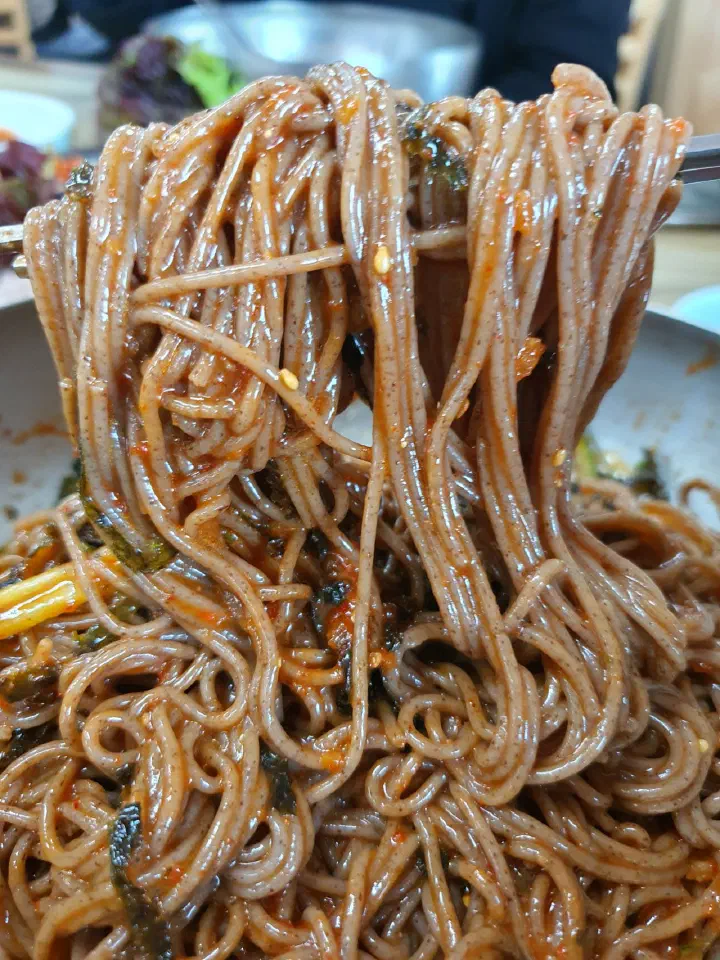
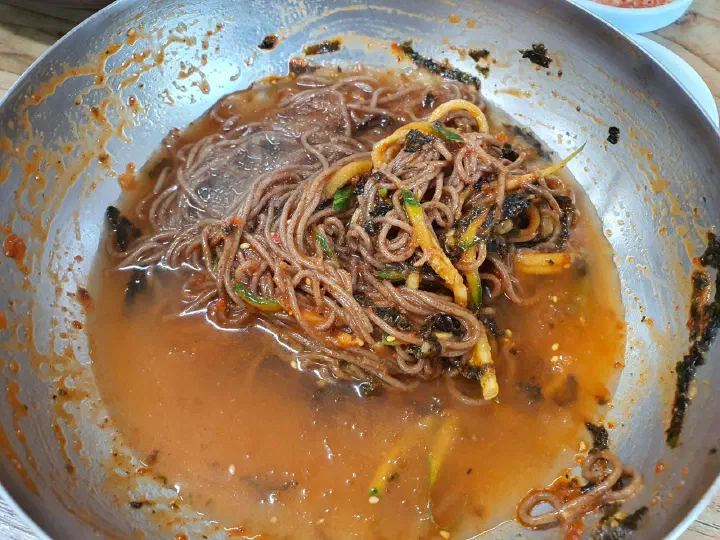
The spicy bibim-makguksu (비빔막국수) coats the noodles in a sweet-tangy sauce. It isn’t really hot, so it’s friendly even if you don’t do spice.

It comes with a small dish of icy broth on the side. Eat half mixed, then pour the broth over the rest for a second version of the dish. That said, opinions split on the bibim. Some find it a touch flat compared to the cold one. If it’s your first visit, order one of each and trade bites.

Bossam - the noodle’s partner, though portions run small
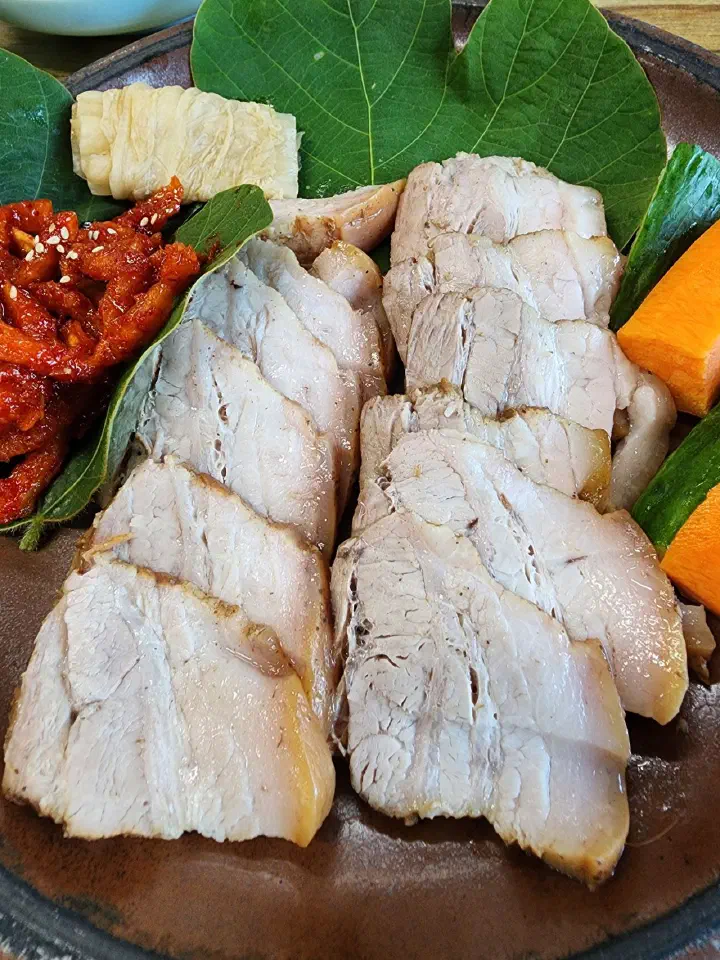
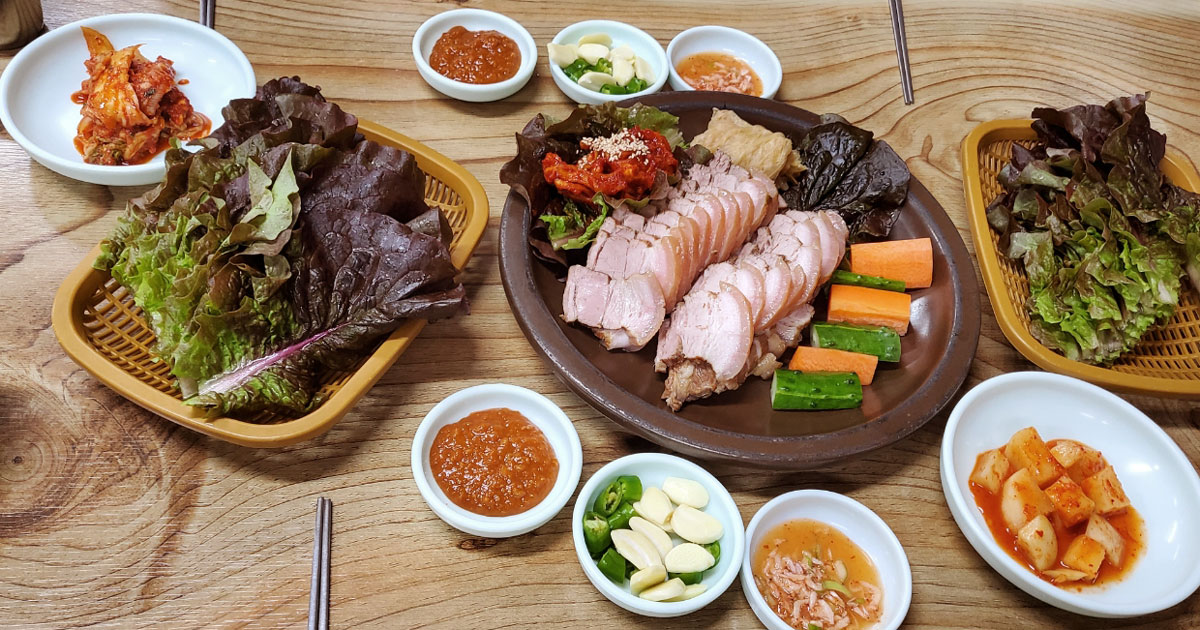
At a makguksu place, bossam (보쌈), boiled pork, is almost a given.

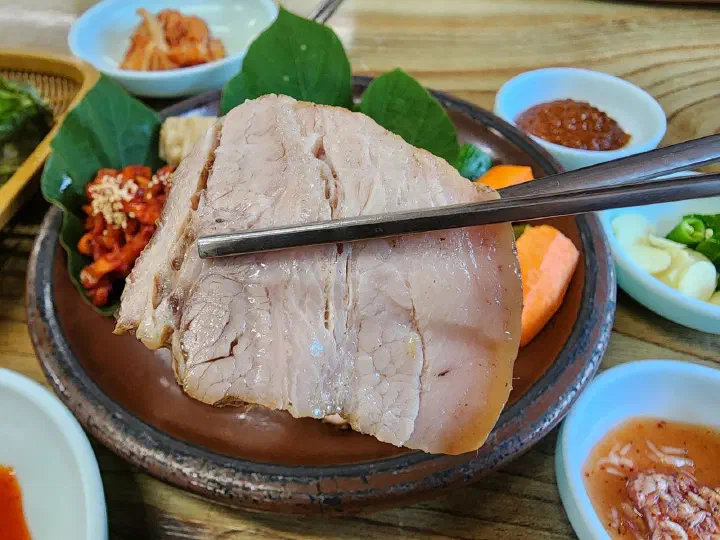
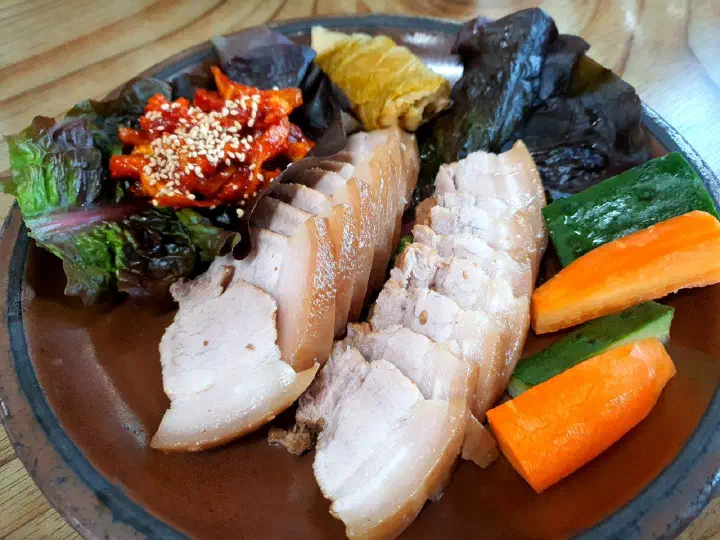
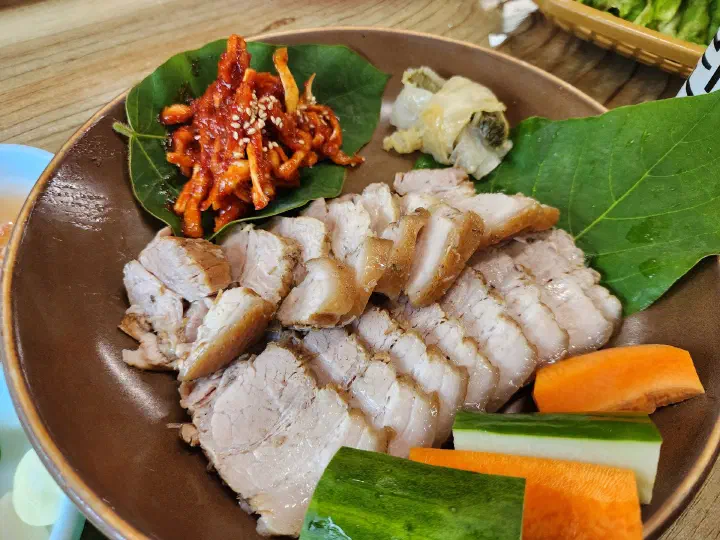
It’s domestic pork, freshly boiled, barely any gaminess, and tender. There’s a gentle medicinal-herb note to it, mild enough that kids eat it happily.

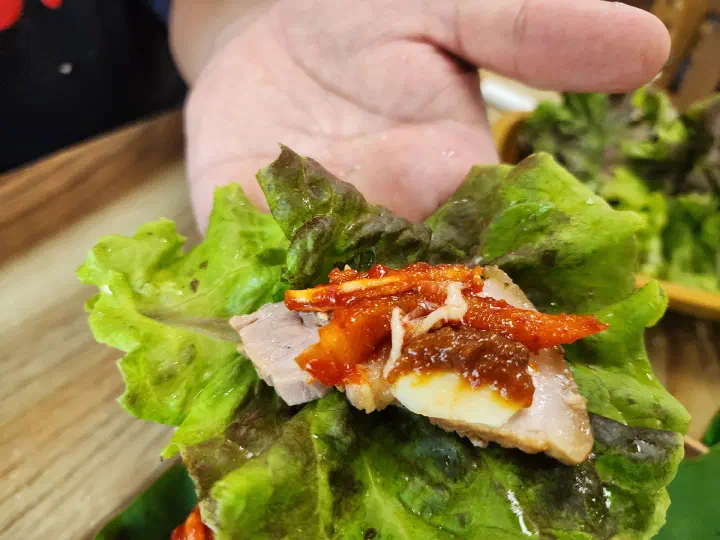
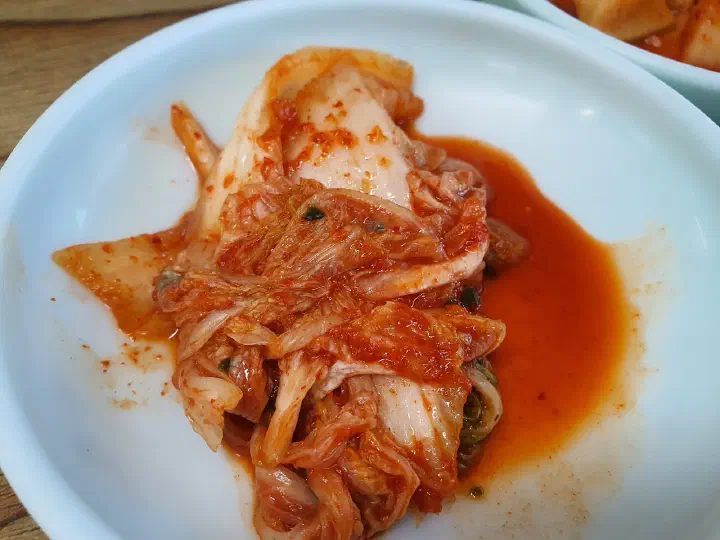
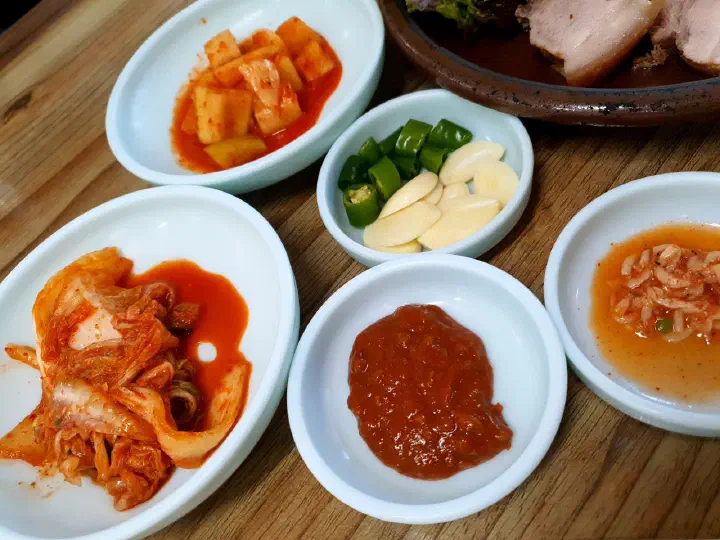
The plate comes with tidy white kimchi, dried radish strips, cucumber, and carrot. The best bite: lettuce, white kimchi, a slice of pork, then dried radish and garlic on top.

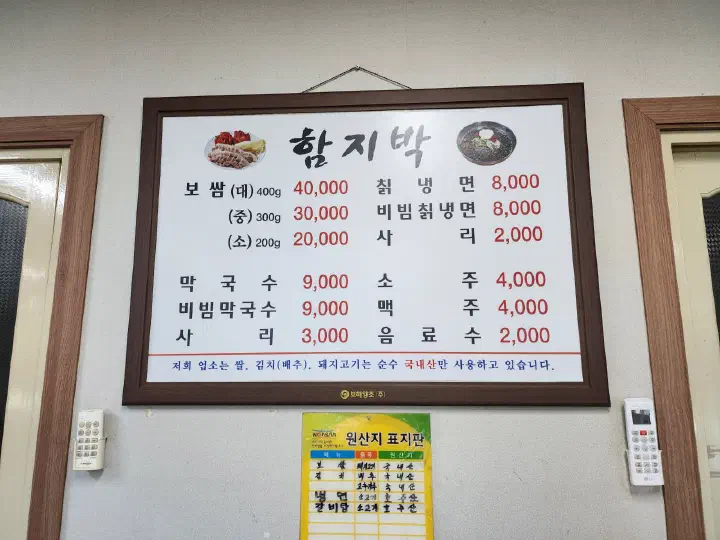
Honest downside: the bossam tastes good but runs a bit pricey for the amount. The small is 20,000 won and isn’t huge, so think of it as a side for two people eating noodles rather than a main.

Chik-naengmyeon and the rest
The chik-naengmyeon (칡냉면), arrowroot cold noodles, arrives with ice floating on top and looks instantly refreshing. It’s earthy, but the noodles are on the chewy-tough side, so older diners and kids may find them hard to cut. With family, makguksu is the safer pick.

There’s also a buckwheat pancake (메밀전, 4,000 won) that’s a nice cheap thing to nibble while you wait, and in winter they run a warm seasonal dish or two.

Room and service
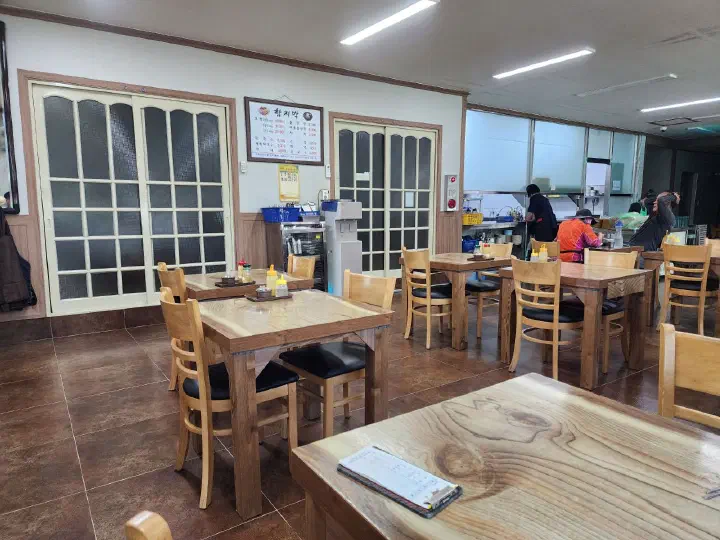
The dining room is big and clean, split between regular tables and a floor-seating room, with comfortable spacing. The open kitchen lets you watch them cook, and the staff wear caps and masks even on hot days, which is reassuring.

Food comes out fast, and they often refill side dishes before you ask. During the lunch rush it can feel a little hectic, so a quieter hour makes for a calmer meal.
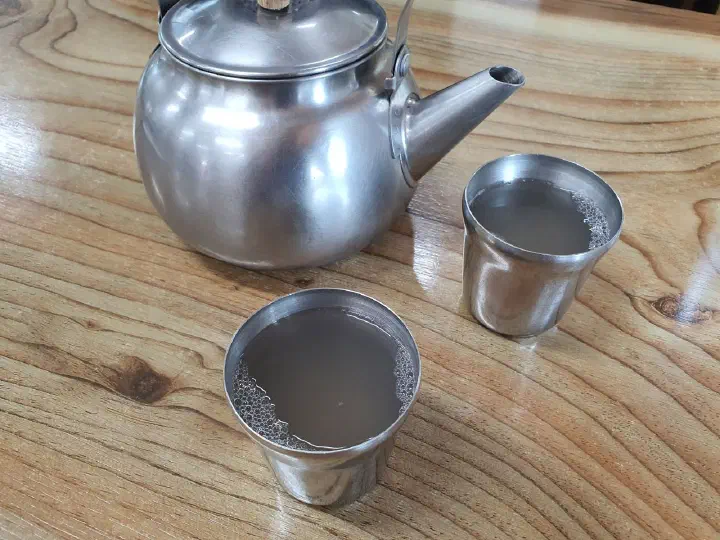
After eating, don’t skip the warm myeonsu (the cloudy buckwheat noodle water) they bring. When the cold food leaves you a bit chilled, that warm cup settles your stomach nicely.

Parking and tips
The private lot out front is large, so even groups are fine. On a busy summer lunch it can fill up, and then you use the alley or the open lot nearby.
A few things worth knowing:
- The makguksu comes with cucumber. If you don’t eat cucumber, just ask them to leave it out when you order.
- No takeout. The noodles go soft quickly, so they don’t pack it.
- An extra portion or a noodle refill is 3,000 won if one bowl isn’t enough.

Around the area
Hamjibak sits on the way to Bomyeongsa, known for its crape myrtle trees. In summer you can string together Jonghakdang, Yubongyeongdang, and Bomyeongsa into a drive. The Tapjeongho suspension bridge is about 20 minutes away by car.
Final thoughts
It isn’t a polished destination restaurant. What it has is a cold mul-makguksu with real buckwheat character, one of the better bowls in Nonsan. There’s a plain, steady quality that comes from a noodle house that’s held one spot for a long time, and it’s the kind of bowl you think about again when the weather turns hot. The only real caveat is the small bossam portion. Past that, prices are easy and it makes for a satisfying meal.
Once the show airs it’ll likely get busier, so if you’d rather enjoy it quietly, now might be the better window.