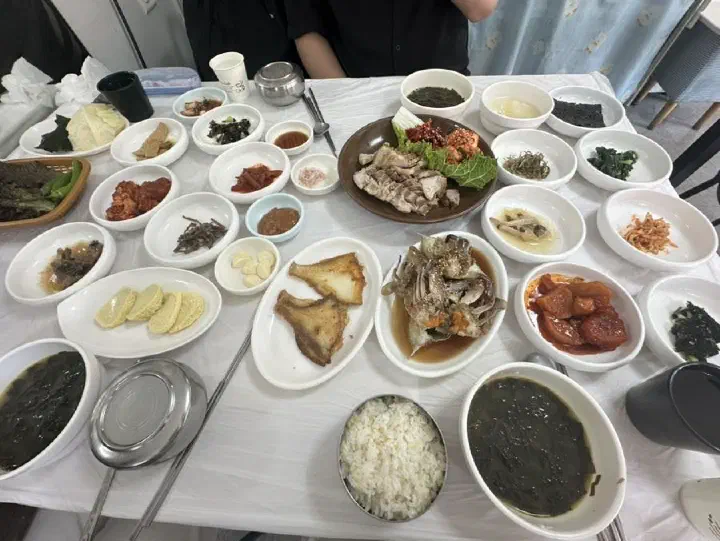
If you ever spend a few days in Ulsan, there is one restaurant locals will keep telling you about — Onggigol Sikdang.
I had heard about this place near Gongeoptap (the industrial monument roundabout) for ages before I finally made it through the door, and I left wondering why I waited so long.
This is one of those rare places that gives you a 20-dish Korean meal for the price of a single takeaway pizza back home.
Here is my honest review of one of the best-known budget-friendly hanjeongsik (Korean set-menu) restaurants in southern Ulsan.

Where to find Onggigol Sikdang
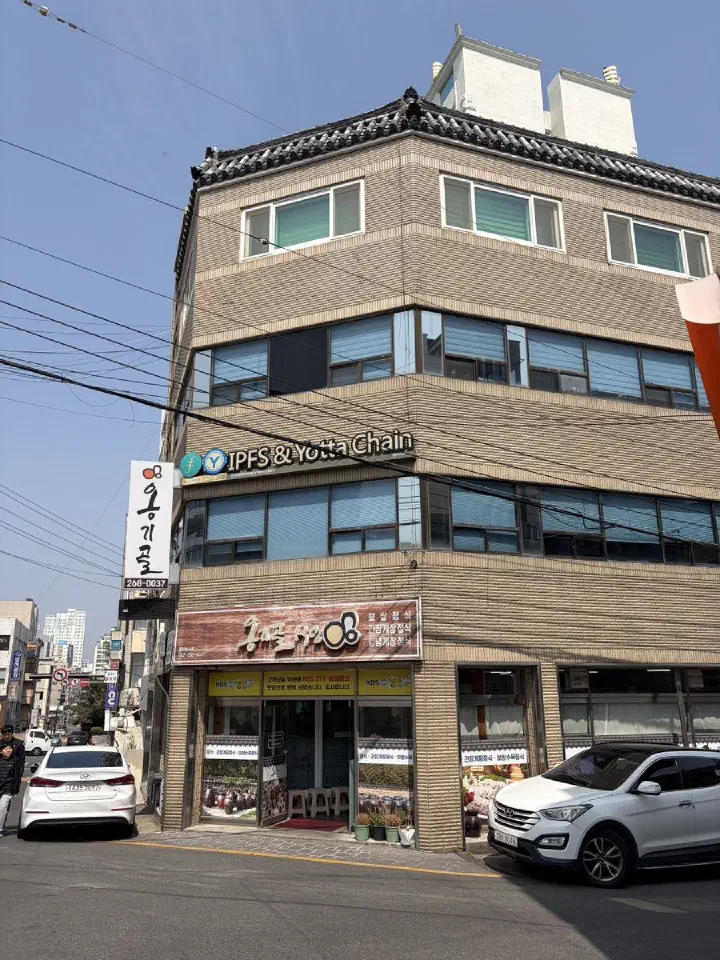
Onggigol Sikdang sits on a quiet corner at 42 Samsan-ro 35beon-gil, Nam-gu, Ulsan.
It is a short walk from Gongeoptap roundabout and tucked into a neighborhood where locals — Ulsan City Hall staff, police officers from the nearby southern precinct — fill the tables every lunch hour.
If you are visiting Ulsan Children & Youth Library with kids, it is the perfect lunch stop after a morning of reading.

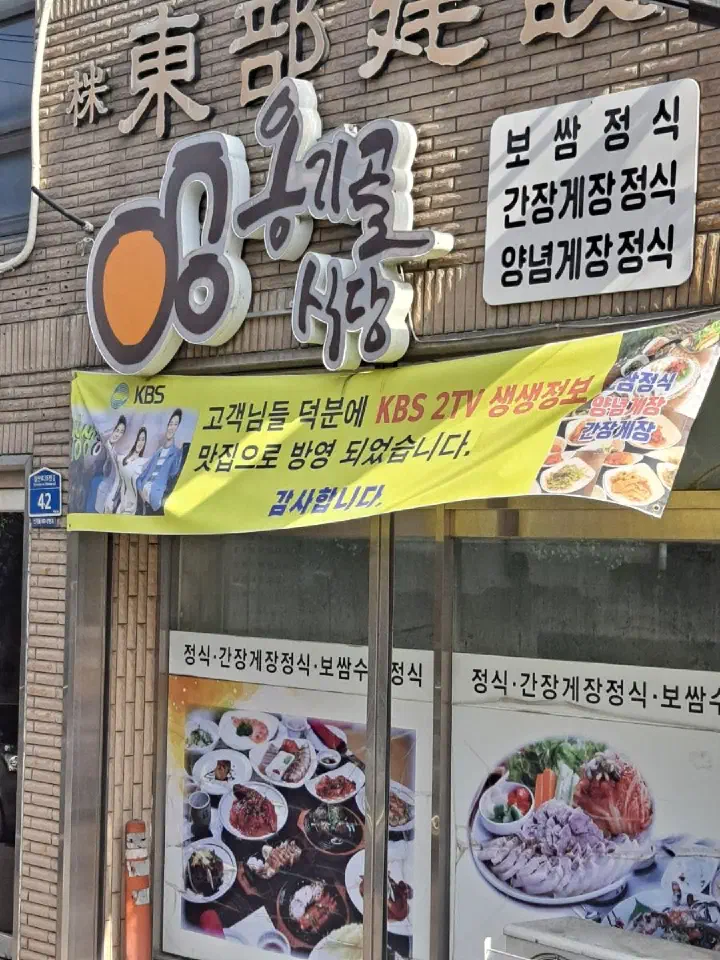
You will notice a small KBS 2TV broadcast banner near the entrance.
A TV feature does not always mean great food, but this place absolutely earns the praise.

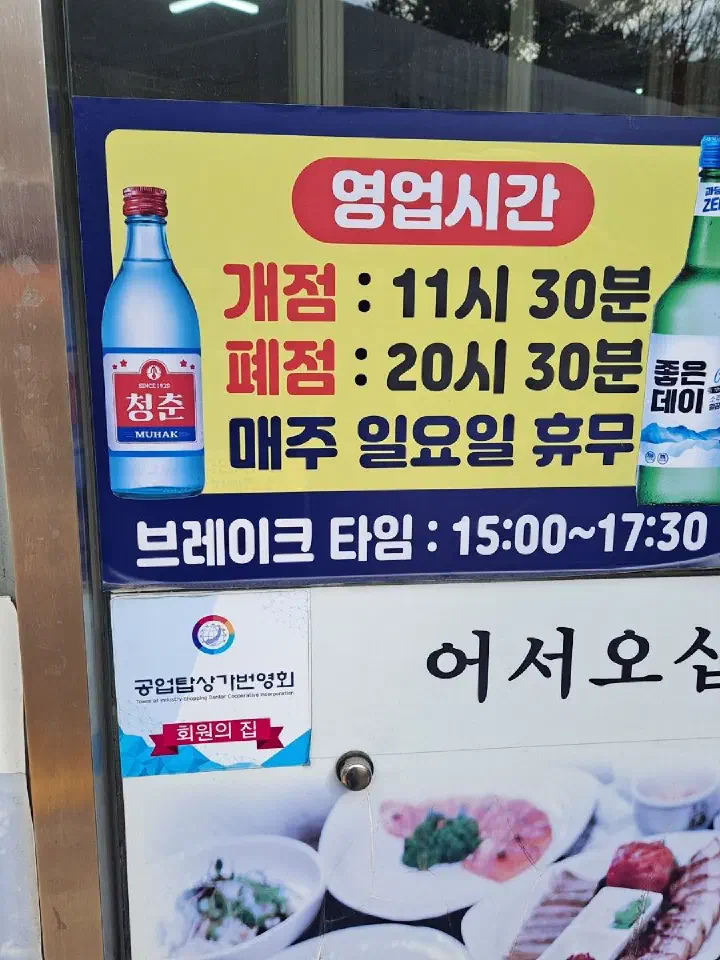
The restaurant opens at 11:30 a.m. and closes at 8:30 p.m., but it takes a long break from 3:00 to 5:30 p.m.
It is closed every Sunday, so plan accordingly.
I arrived just after 1:00 p.m. on a weekday and the dining room was still nearly full.
If you come at peak lunch hours, expect a short wait.
📍 View Onggigol Sikdang (옹기골식당) on Google Maps →
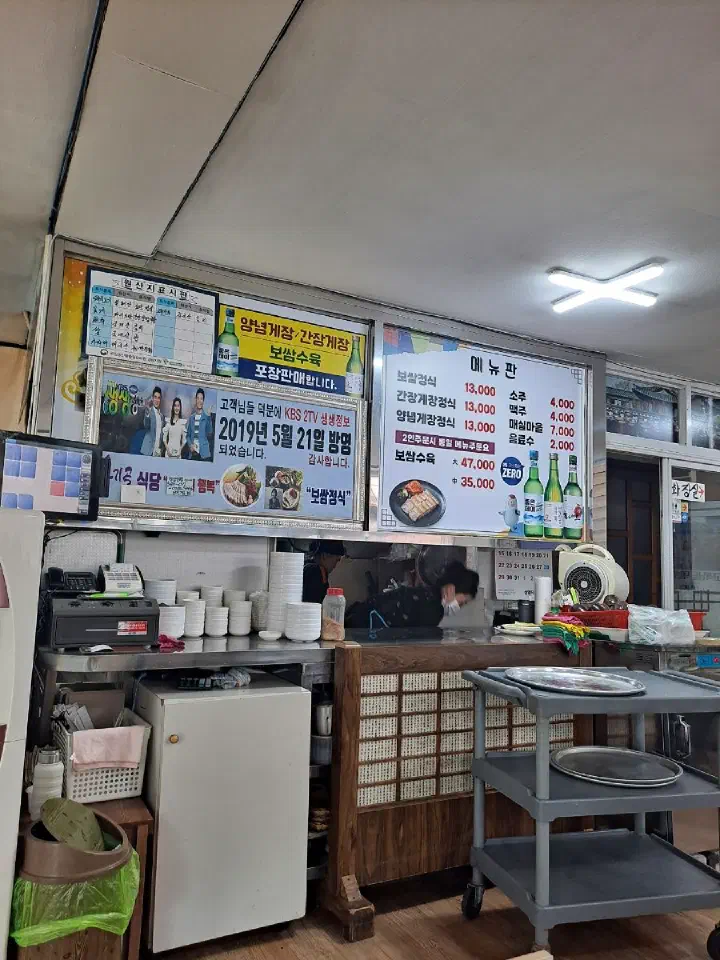
The menu — just 13,000 won per person

The menu is refreshingly simple.
- Bossam jeongsik (boiled pork belly set) — 13,000 won
- Ganjang gejang jeongsik (soy-sauce marinated crab set) — 13,000 won
- Yangnyeom gejang jeongsik (spicy marinated crab set) — 13,000 won
- Bossam suyuk (pork belly à la carte) — 35,000 / 47,000 won
That is it.
Three set menus and one shareable platter.
For roughly nine US dollars per person, you get a full Korean spread that would cost three times as much at most Korean restaurants overseas.
Just keep in mind that parties of two or more need to order the same set menu.
We went with the bossam jeongsik for two.
If you don’t speak Korean, ordering here is still easy. The menu is just four items, and you can point at the menu board or simply say the dish name—bossam jeongsik, ganjang gejang jeongsik—and hold up fingers for how many. The owner will take care of the rest.
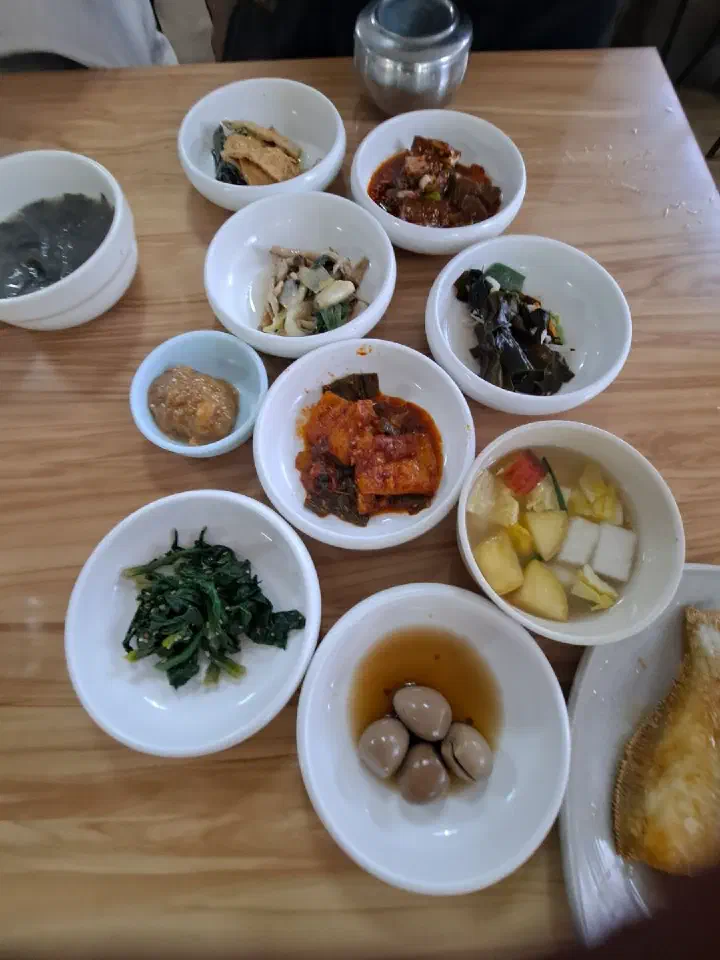
A table full of banchan

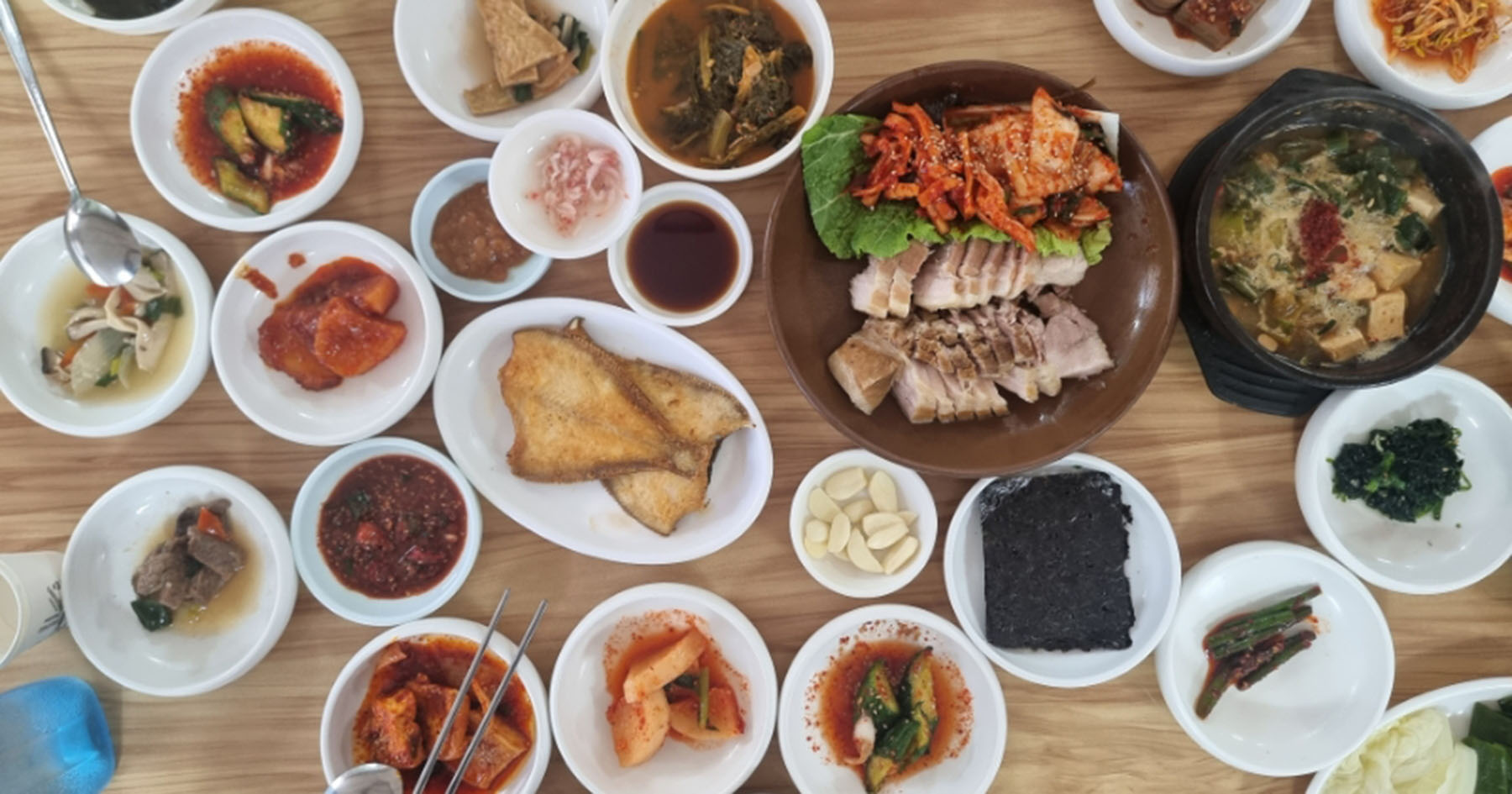
Within five minutes of ordering, the table started filling up — and it kept filling up.
I counted close to twenty small dishes before I lost track.
There is barely room to set down your spoon.

Each banchan tastes carefully made, not slapped together for volume.
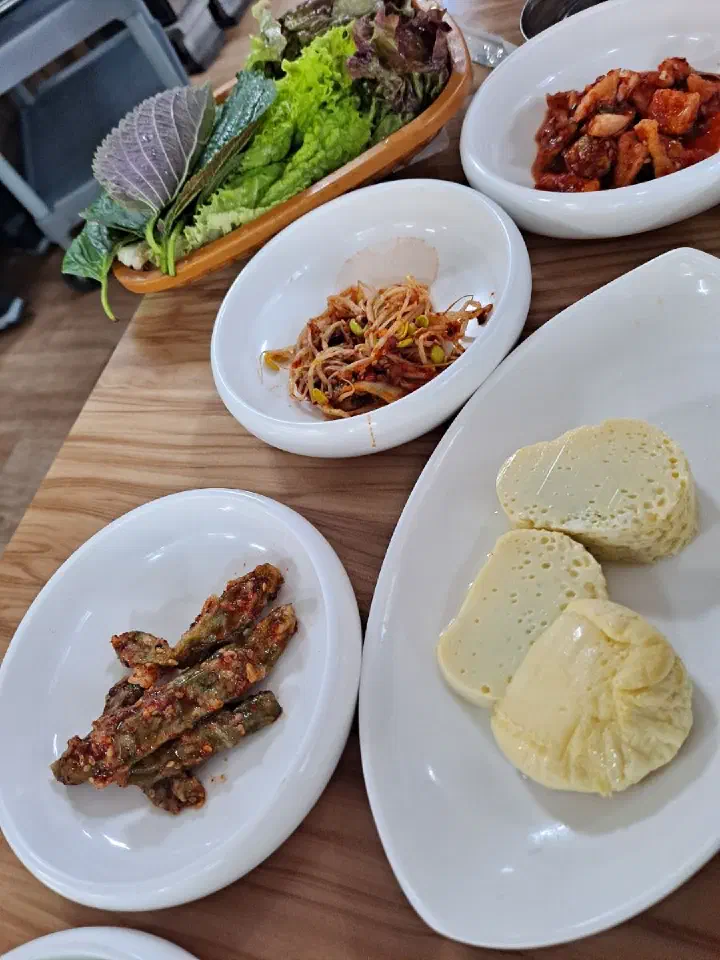
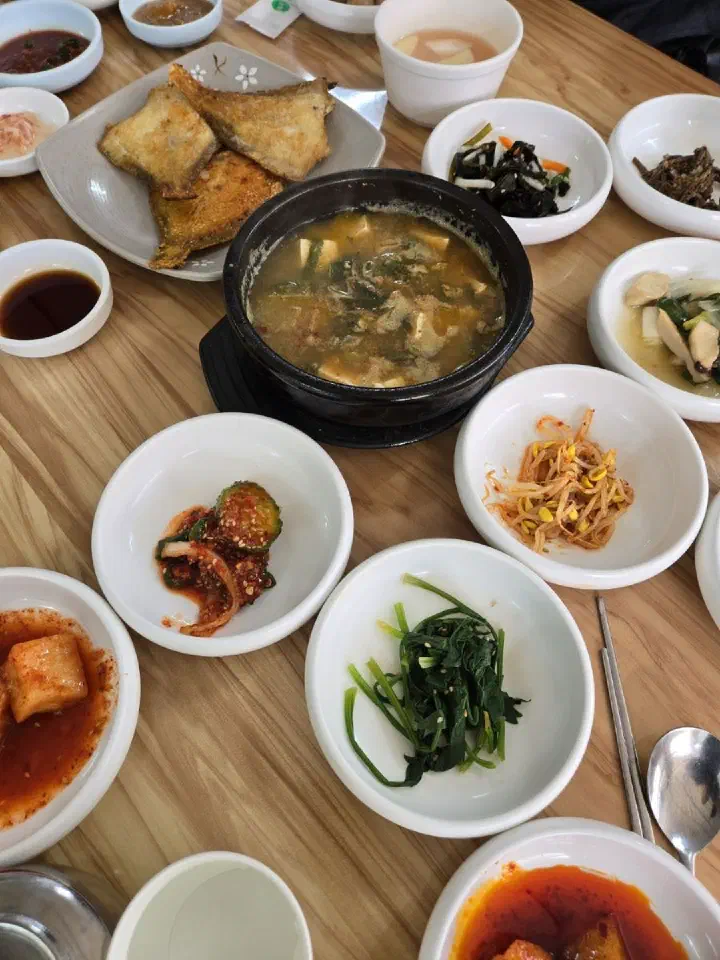
You get braised quail eggs, soy-glazed pumpkin, spinach, eggplant, dotori-muk (acorn jelly), three kinds of kimchi, julienned radish, and seasoned seaweed stems.
The braised dishes are the standouts.
Both the potato and the tofu jorim could be a meal on their own.

The gyeranjjim — steamed egg custard — arrives soft and pillowy.
Some Koreans love it, some find it too plain, but I genuinely enjoyed how mild and comforting it was.

The doenjang jjigae here is more delicate than the heavy, salty versions you might know.
It is lighter and almost soup-like, packed with tofu and zucchini.
After a few spoonfuls with rice, the bowl disappears.
The bossam — generous and clean-tasting

The main event finally arrives.
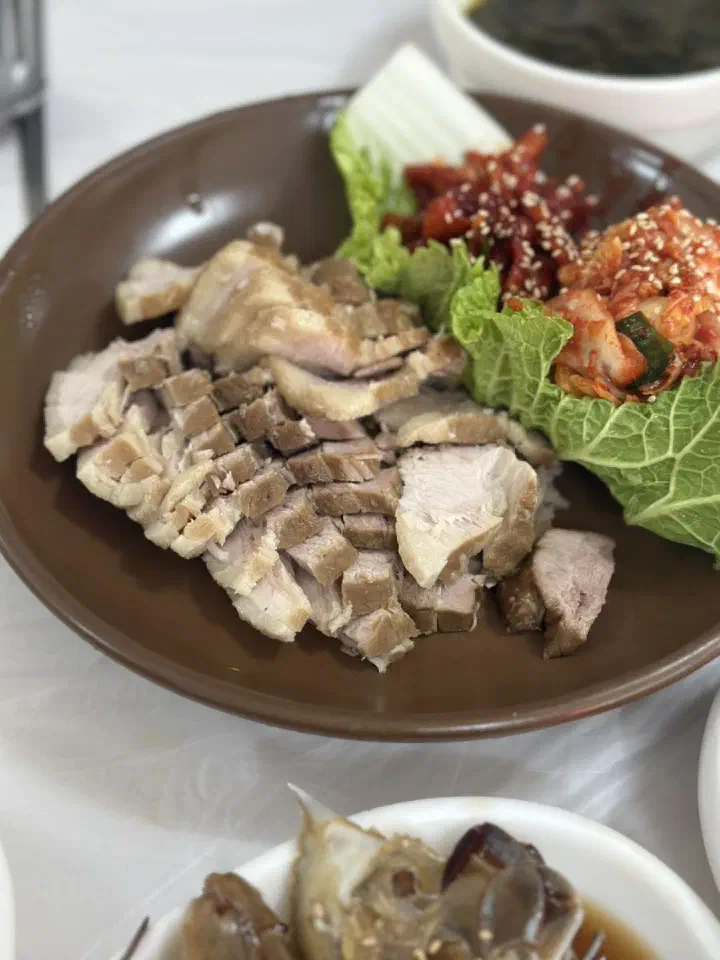
The portion is honestly larger than I expected for a two-person set.
The pork is tender, juicy, and free of that “barnyard” smell that ruins so many bossam dishes.
It comes with two kinds of seasoned kimchi and salted shrimp dipping sauce.

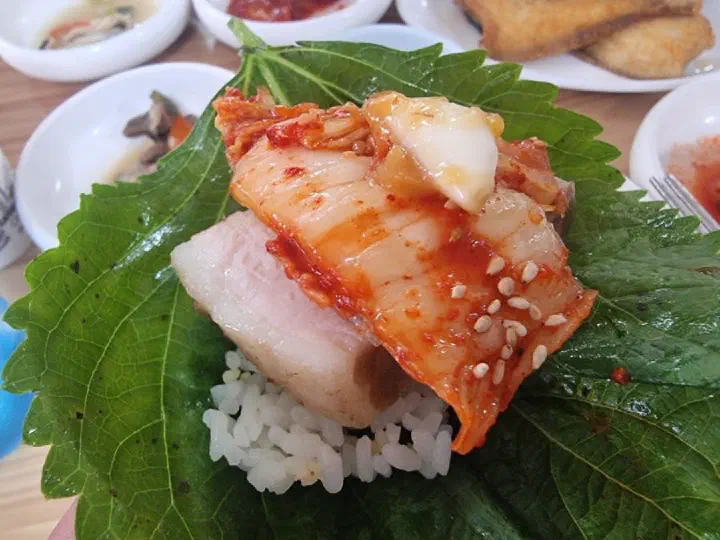
Build the perfect ssam: a perilla leaf or a leaf of lettuce, a spoonful of rice, a slice of pork, and a piece of that spicy kimchi on top.
That single bite explains why locals keep coming back.
If you are new to Korean food, this is the dish that will make you understand the ssam ritual.
The supporting cast

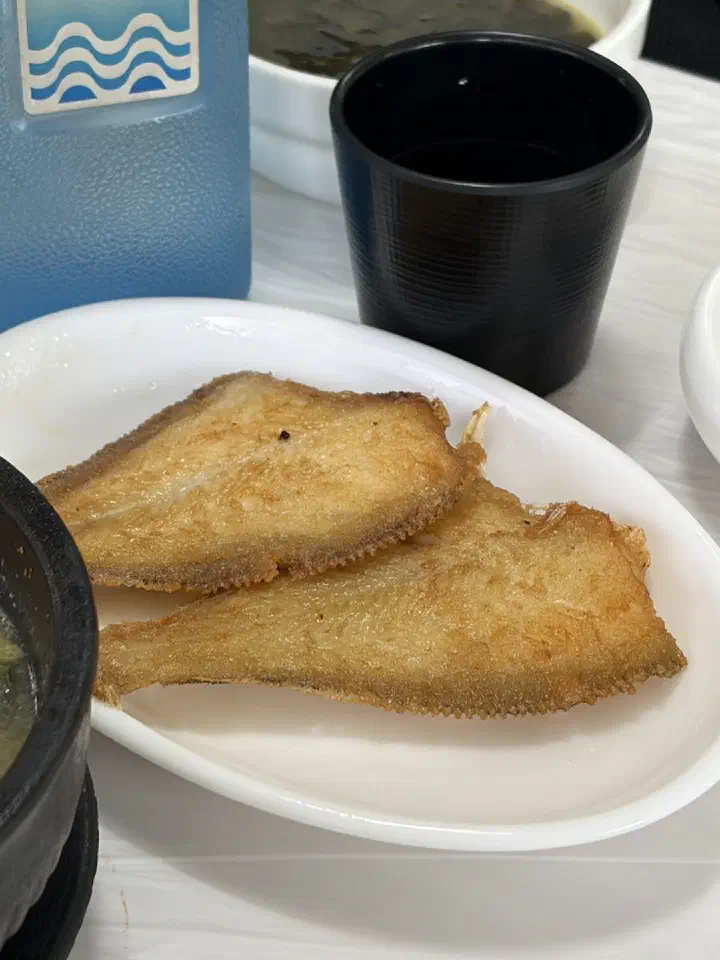
Pan-fried gajami (flatfish) shows up as a side, not the main — which still feels like a small luxury.
The skin is crisp, the flesh is mild and flaky.

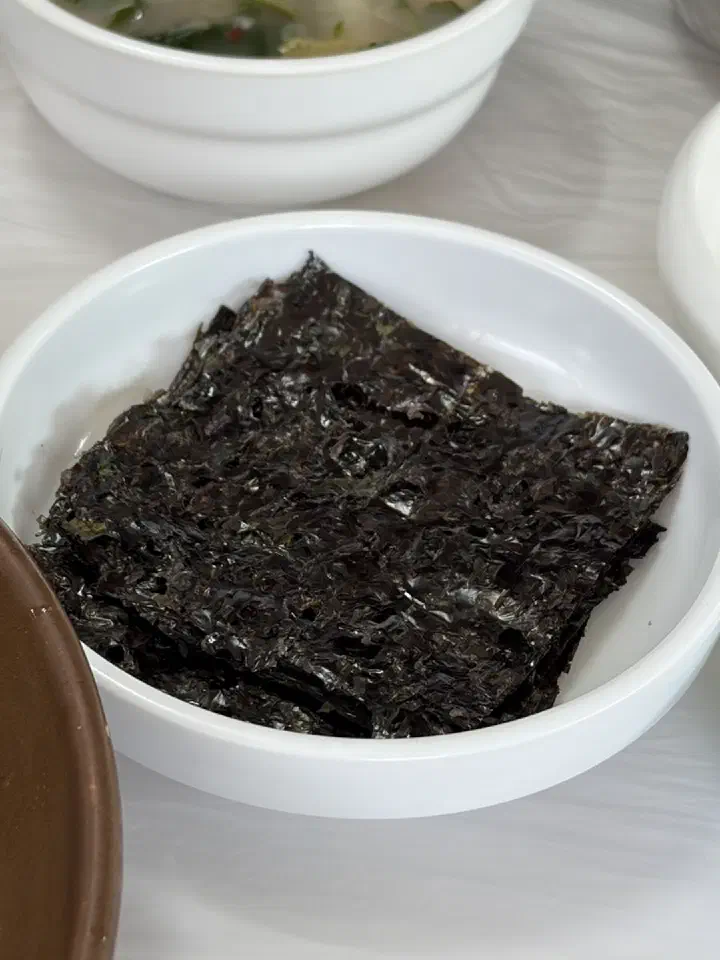
You also get a bowl of dried, roasted gim (seaweed sheets).
Wrap a bit of rice, dab on some seasoned kimchi, and you have a whole new bite.
It is a small detail many budget places skip these days.
A quick peek at the crab set

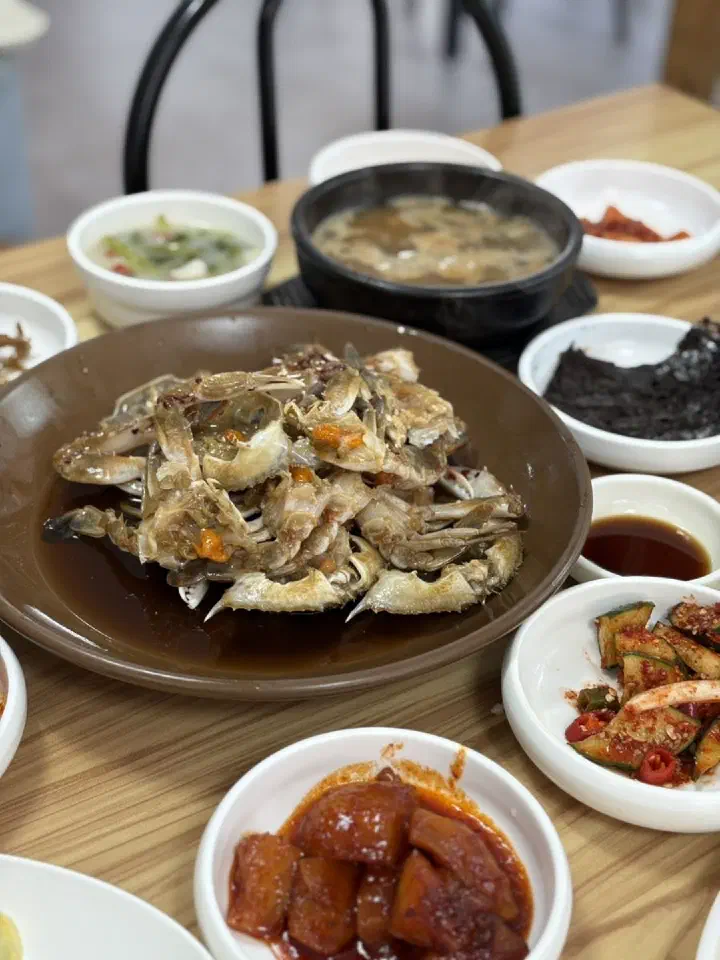
I have my eye on the ganjang gejang jeongsik for next time.
A couple at the table beside us ordered it and the crab roe looked stunning.
These are smaller swimmer crabs, so the legs are mostly for sucking out the briny sauce, but the body shells are perfect for that beloved “rice in the shell” finale.
A free coffee on the way out

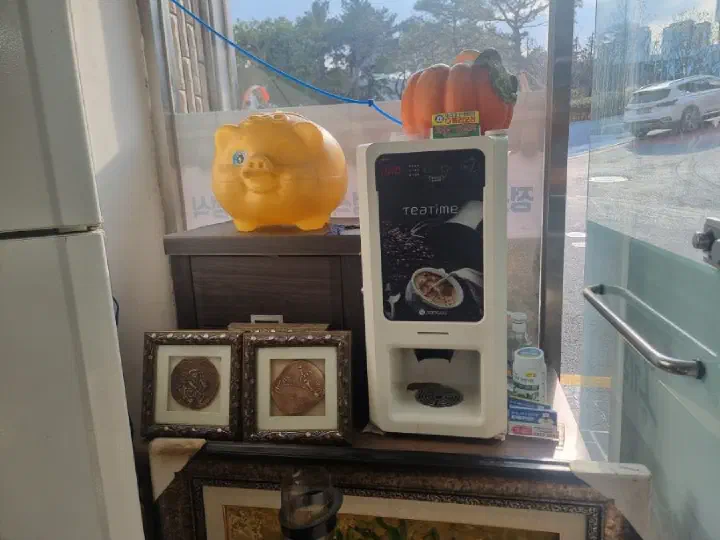
There is a self-serve coffee machine by the door.
A free post-meal coffee at a 13,000-won restaurant feels like a quiet bonus.
It is vending-machine coffee, sure, but a warm cup after a meal like this never disappoints.
Final thoughts
What I loved:
- Twenty-ish side dishes for around 9 USD per person
- Carefully made banchan, not filler
- Generous, clean-tasting bossam
- Surprising depth in the doenjang jjigae
- A free, friendly coffee on the way out
A few honest caveats:
- There is no parking lot — you will need to find street parking nearby
- Expect a short wait during peak lunch
- Closed every Sunday
If you are visiting Ulsan and want one meal that feels distinctly Korean and distinctly local, Onggigol Sikdang in Sinjeong-dong is hard to beat.
This is the kind of place where the food is honest, the portions are kind, and you leave already planning your second visit.
A quick note for visitors from abroad: card payments are accepted here, as they are at almost every restaurant in Korea, so you really don’t need cash. And please don’t worry about tipping — Korea doesn’t have a tipping culture, and the staff may actually feel a little awkward if you try to leave one.
I will be back — next time for the spicy marinated crab.
Location & How to Get There
Onggigol Sikdang is on Samsan-ro 35beon-gil in Nam-gu, near Gongeoptap roundabout and Ulsan City Hall.