If you ask around Daegu for a proper tonic meal near Palgongsan Mountain, this place keeps coming up.

It’s Byeoku Palgongsan (벽우 팔공산점), a haesintang restaurant on the lower slopes of the mountain. It got a fresh wave of attention in June 2026 after appearing on KBS2’s food show with its signature king-galbi version, but it had already built a quiet reputation long before that.

Haesintang (해신탕) is a Korean “sea-god” hot pot: a big bubbling pot where seafood meets meat or chicken in a deep medicinal broth. It’s the kind of meal Koreans eat to recover their energy, especially in the heavy heat of summer.

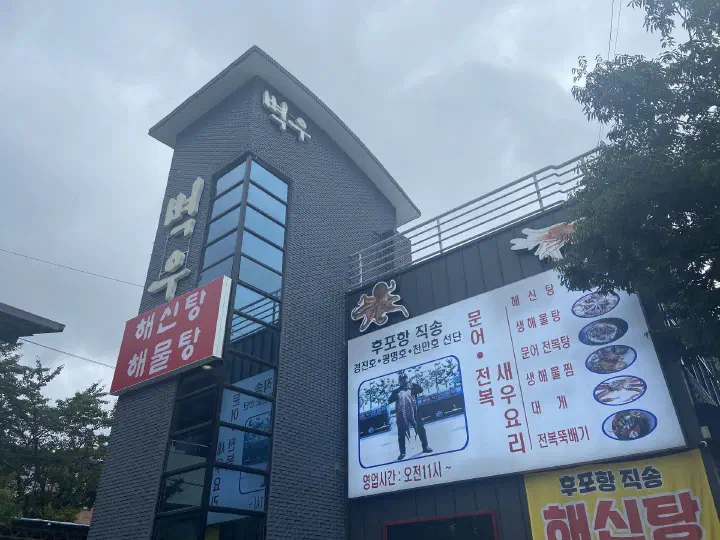
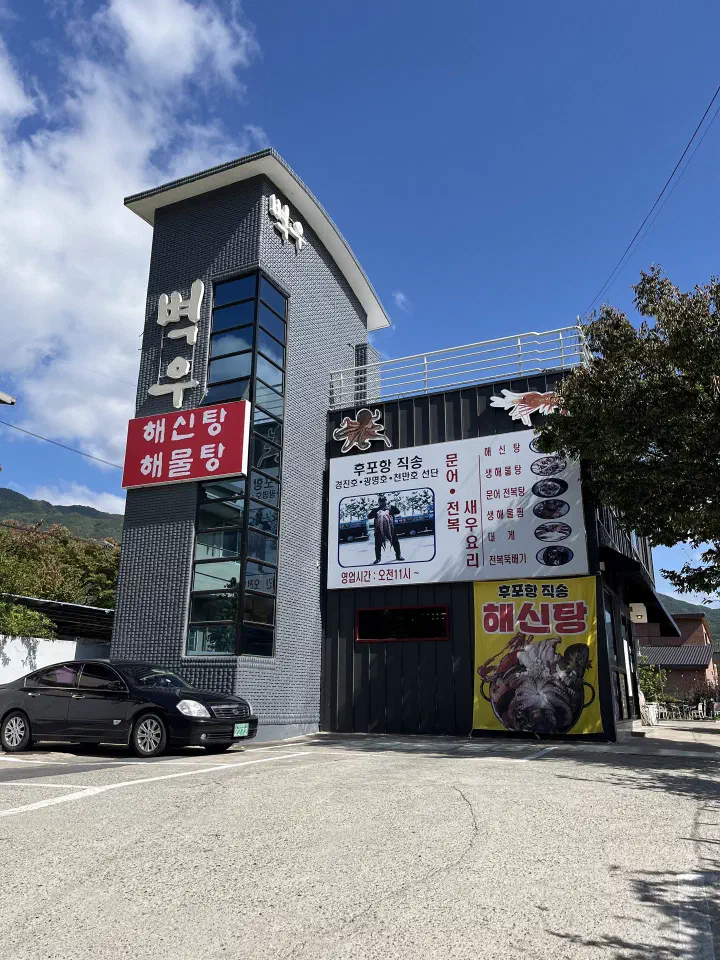
Exterior of Byeoku Palgongsan with the mountain behind it

Who it suits

This is a place for a slow, shared meal rather than a quick solo lunch.

Families bring their parents here, and it’s a common stop for a birthday lunch or a small gathering. The pots take time to simmer, so plan to sit and linger.

A lot of people fold it into a drive around Palgongsan, since the area is full of cafes and scenery.

Byeoku Palgongsan storefront sign

Getting there and parking

The restaurant sits between the Daegu Bank training center and Simcheonland, near an S-OIL gas station.

This part of Palgongsan is hard to reach by public transport, so most people drive. If you don’t have a car, a taxi is the easiest option. The Kakao T app is the standard way to call one in Korea, since you can set the destination without speaking Korean.

A quick note on maps: Google Maps is unreliable for walking and transit directions in Korea. Use Naver Map or KakaoMap instead for getting around.

The good news is parking is easy here. There’s a large private lot right in front, with plenty of room even for groups, which isn’t always the case on this mountain.

📍 View Byeoku Palgongsan (벽우 팔공산점) on Google Maps →

The basics

  • Address: 84 Palgongsan-ro 2-gil, Dong-gu, Daegu
  • Hours: 11:00-21:00, every day
  • Phone: 053-982-9059
  • Good for: reservations, private rooms, groups, kids’ chairs, Wi-Fi, large parking lot

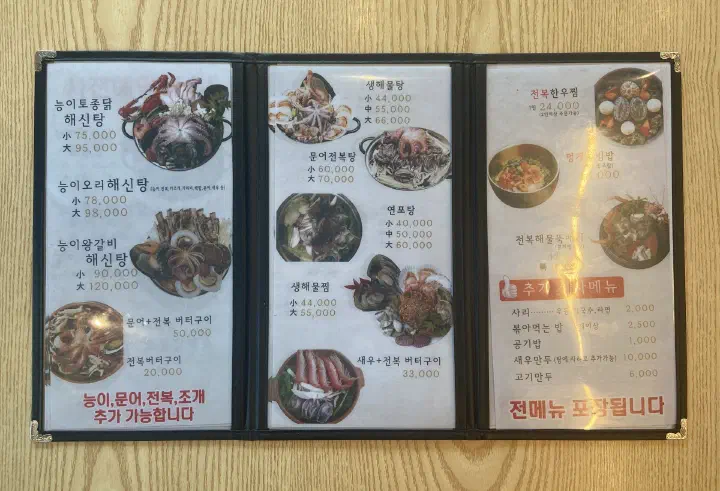
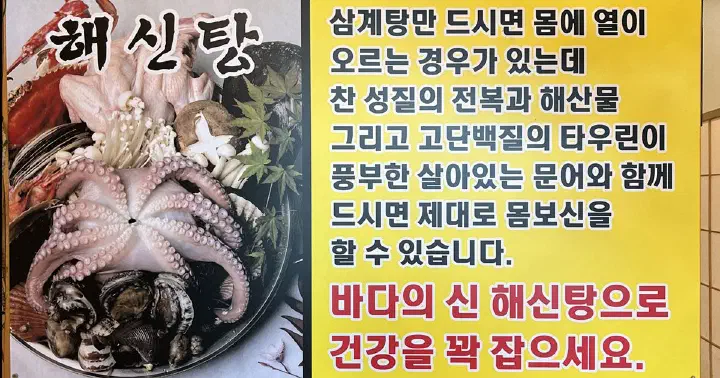
Byeoku Palgongsan menu board

What to order

The star is neungi wanggalbi haesintang (능이왕갈비해신탕), the king-galbi seafood hot pot. A small (for three to four people) runs around 99,000 won, a large around 129,000 won.

For any haesintang, you choose the main protein: chicken, duck, or king galbi (beef ribs). The ribs are the most popular choice and the one the show featured.

Other options include muneo jeonbok tang (문어전복탕, octopus and abalone soup), saeng haemultang (생해물탕, a fresh seafood pot with no chicken), nurungji baeksuk (누룽지백숙, a porridge-style chicken or duck soup), and jeonbok hanu jjim (전복한우찜, braised abalone with premium beef).

Prices aren’t low, but a large pot easily feeds four, so split per person it makes sense for a tonic meal like this.

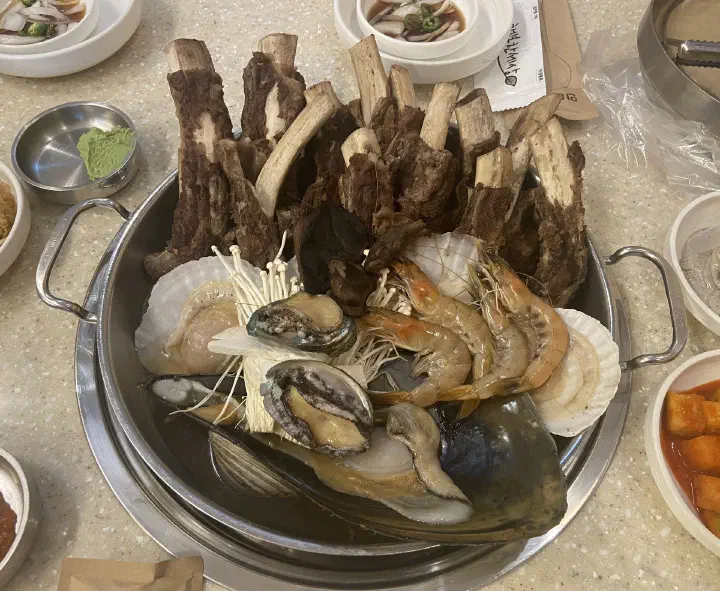
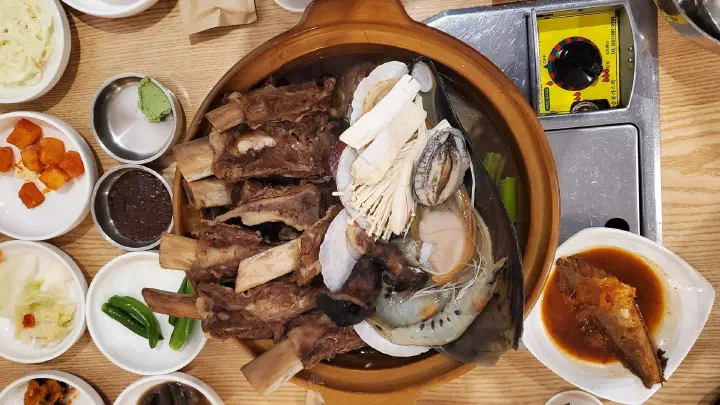
Ingredients for the king galbi seafood hot pot

The king-galbi hot pot

This is the dish to get at least once.

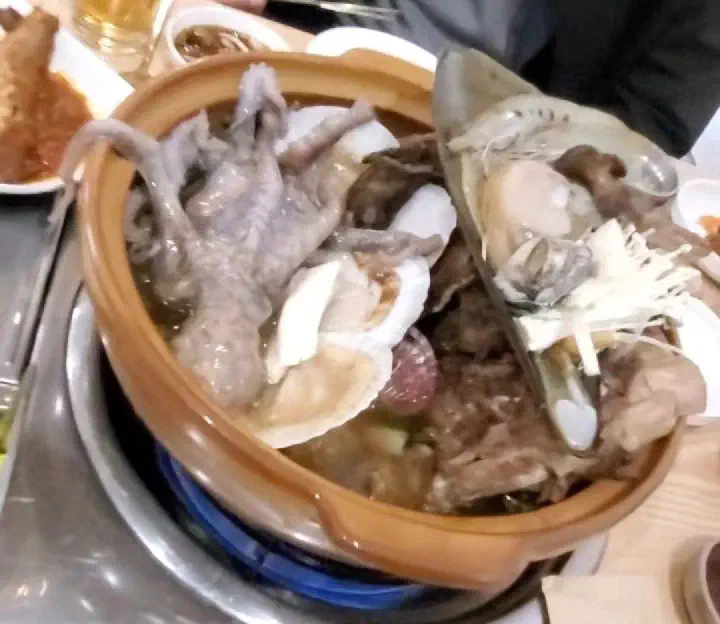
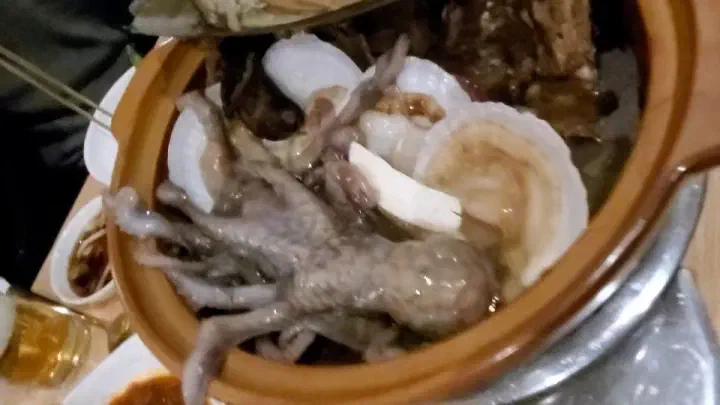
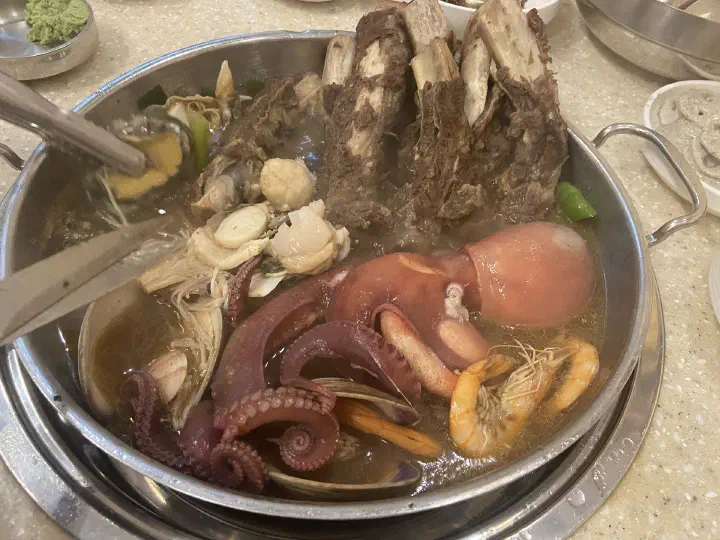
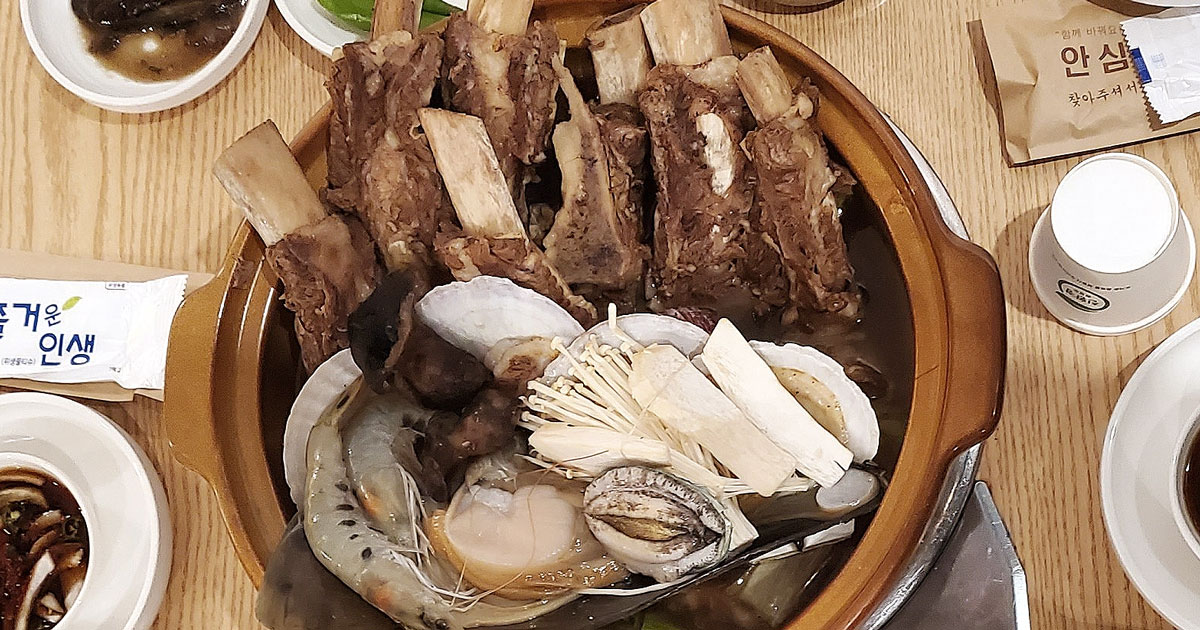
A pile of huge beef ribs comes topped with octopus, abalone, comb pen shell, scallop, and shrimp. The ribs are genuinely big, about the length of a hand, and the kitchen trims off the tough membrane so the meat comes apart softly.

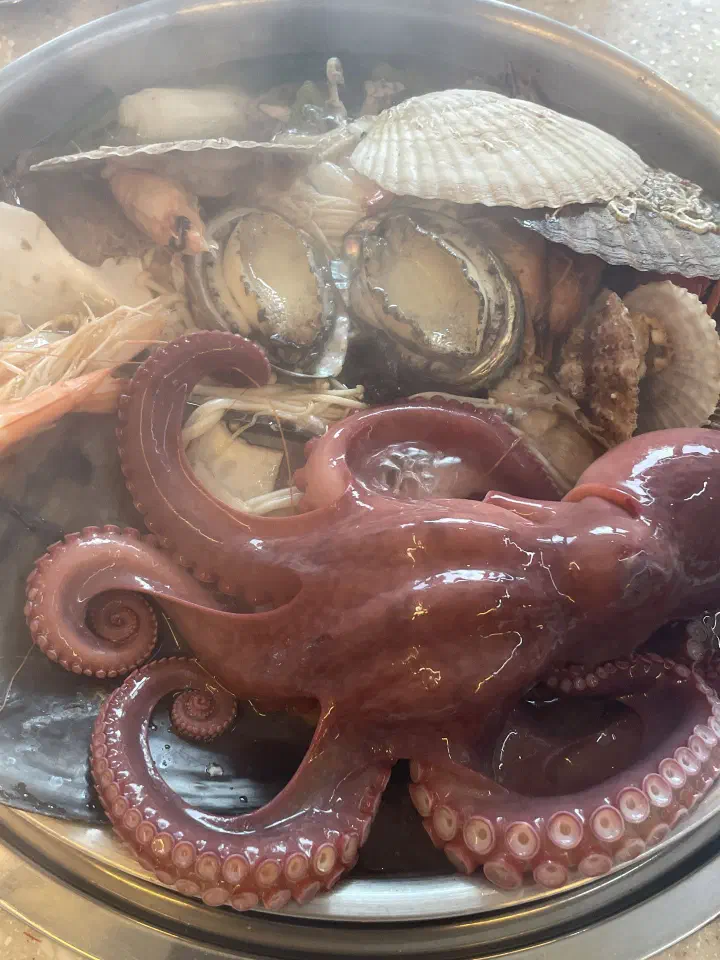
The seafood is shipped in fresh from Hupo Port (후포항) on the east coast, so there’s very little fishy smell. The octopus goes in live, and the staff handle and cut it for you at the table.

Close-up of the king galbi ribs

The broth is simmered for a long time with neungi mushroom, herbs, and vegetables. It’s a clean, savory depth that comes from the ingredients rather than seasoning.

One tip: if you let it boil too long, the broth turns salty. There’s even a note about this in the restaurant, so ladle some out while it’s at its best.

King galbi ribs in the hot pot

It isn’t a spicy dish, so most visitors are fine with it. If anything it leans clean and mild, which is part of why older diners like it.

Lighter seafood pots

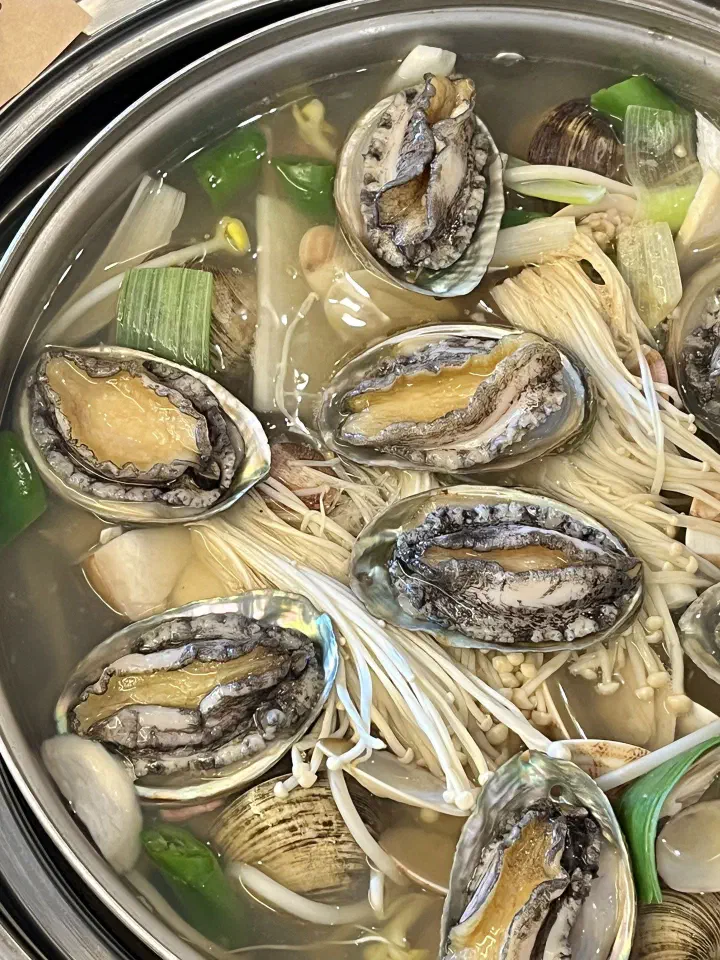
If the full haesintang feels like a lot, the saeng haemultang is a good alternative. It skips the chicken and leans on seafood, so the broth is clearer and brighter, with abalone, octopus, and shrimp over a bed of bean sprouts.

Octopus and abalone soup at Byeoku

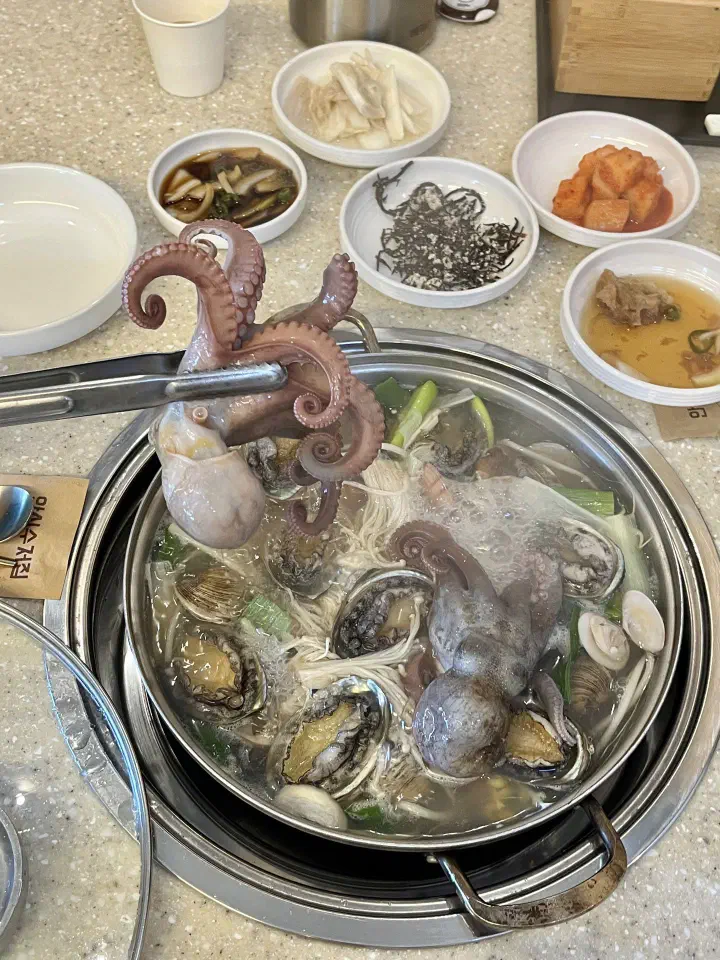
The muneo jeonbok tang pairs octopus, abalone, and shellfish in a deep, cooling broth. It’s a comfortable size for two to share.

Octopus and abalone soup served with side dishes

Porridge soups and the beef braise

The baeksuk dishes are popular too. With the chicken version, the soup, broth, and rice porridge each arrive separately instead of all jumbled in one pot, which keeps things tidy. The chicken stays moist rather than dry.

Whole octopus over baeksuk

The jeonbok hanu jjim is the pick when you want seafood and meat together: tender premium beef with live abalone and shrimp, sometimes with a whole octopus on top.

Side dishes and how the meal ends

The banchan (side dishes) are simple and well made. The aged kkakdugi (radish kimchi) and a cool white kimchi go nicely with the rich broth.

Banchan side dishes at Byeoku

Sides are self-serve from a small bar, so you can refill what you like. There are even snacks like rice crackers and jelly you can pick up there.

Seafood hot pot simmering with octopus

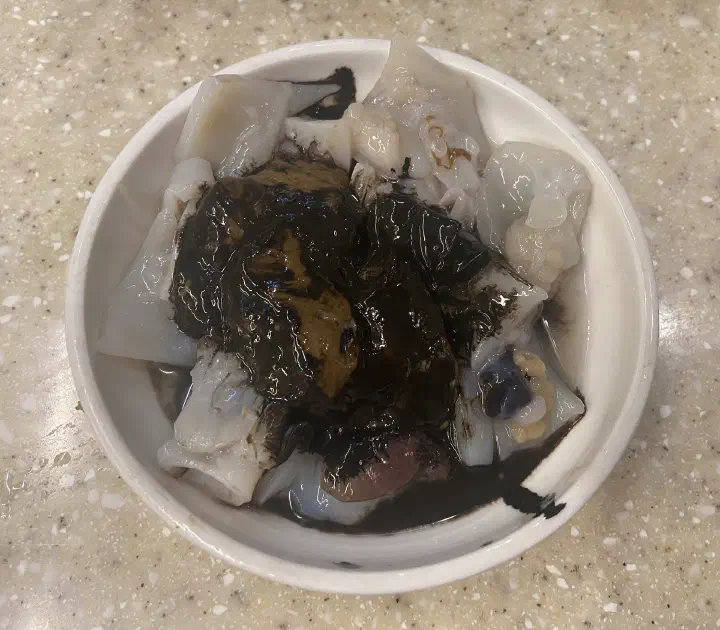
To finish, you go one of two ways: add kalguksu (knife-cut noodles) to the concentrated broth, or make a porridge from the rice they set aside. Burst the octopus ink sac into the porridge and it turns black and nutty. Some love it, some find it salty, so it’s a matter of taste.

Octopus ink rice porridge

Space and facilities

The dining room is wide and tall-ceilinged, so it never feels cramped. Beyond the open tables there are private rooms and group seating for parties of eight to fifteen, which makes it a solid choice for family gatherings. Reserve ahead and you’ll usually be seated in a room.

There’s a hand-washing sink at the entrance, disposable aprons for the soupy dishes, several kids’ chairs, and a ramp at the door for strollers and wheelchairs.

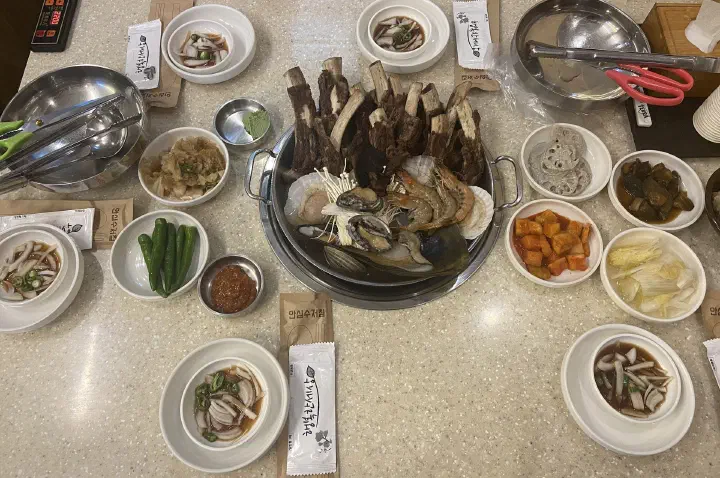
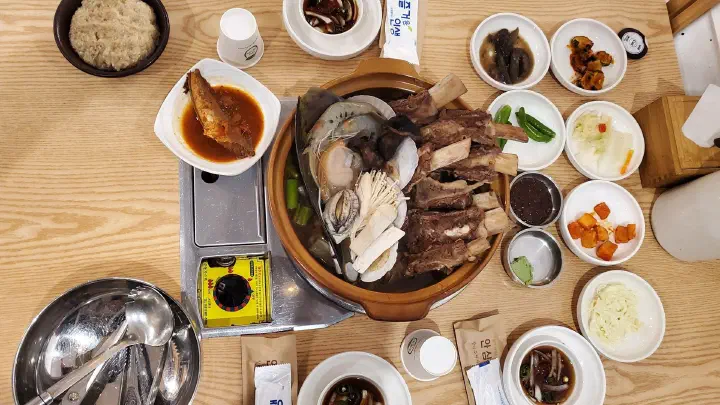
Full table setting of the king galbi hot pot

Practical notes for visitors

Reserve ahead for haesintang. The ingredients take time to prep, so walking in on the day can mean a wait. When you book, tell them whether you want chicken, duck, or galbi so it’s ready when you arrive.

Ordering itself is easy even without Korean. The staff may speak only a little English, but you can point at the menu board and hold up fingers for how many. Cards are no problem here, as in almost every Korean restaurant, so any international card should work. And there’s no tipping culture in Korea; leaving a tip can actually confuse the staff, so you don’t need to.

Staff preparing the live octopus

A couple of honest downsides. As a tonic restaurant, it isn’t cheap. The broth can get salty if it boils too long, so keep an eye on it. And the kalguksu noodles can be slow to arrive when the place is busy.

Full haesintang table

Final thoughts

Byeoku is about clean, ingredient-driven flavor rather than anything loud: fresh seafood from Hupo Port, soft king galbi, and a broth with real depth.

It costs a bit, but for a meal with parents or a family get-together, most people feel it earns its price. It’s the kind of place that comes back to mind when the season turns or you’re feeling run-down.

📍 View Byeoku Palgongsan (벽우 팔공산점) on Google Maps →